This post contains affiliate links. We may earn a small commission when you buy through our links — at no extra cost to you.
Many parents discover the hard way that budget fitness trackers often stop charging or crack within weeks, while pricier brands like Fitbit and Garmin come with their own headaches—frustrating setup on iOS or screens too dim to read indoors. The market is full of lookalike watches that promise the world but deliver inconsistent results. This guide cuts through the noise by focusing on proven durability and real-world usability. Whether you prioritize a no-phone standalone design, long battery life, or a vibrant display, these picks balance cost, features, and dependability. The right tracker for your child depends on how much you value charging frequency, water resistance, and the simplicity of a device that works right out of the box.


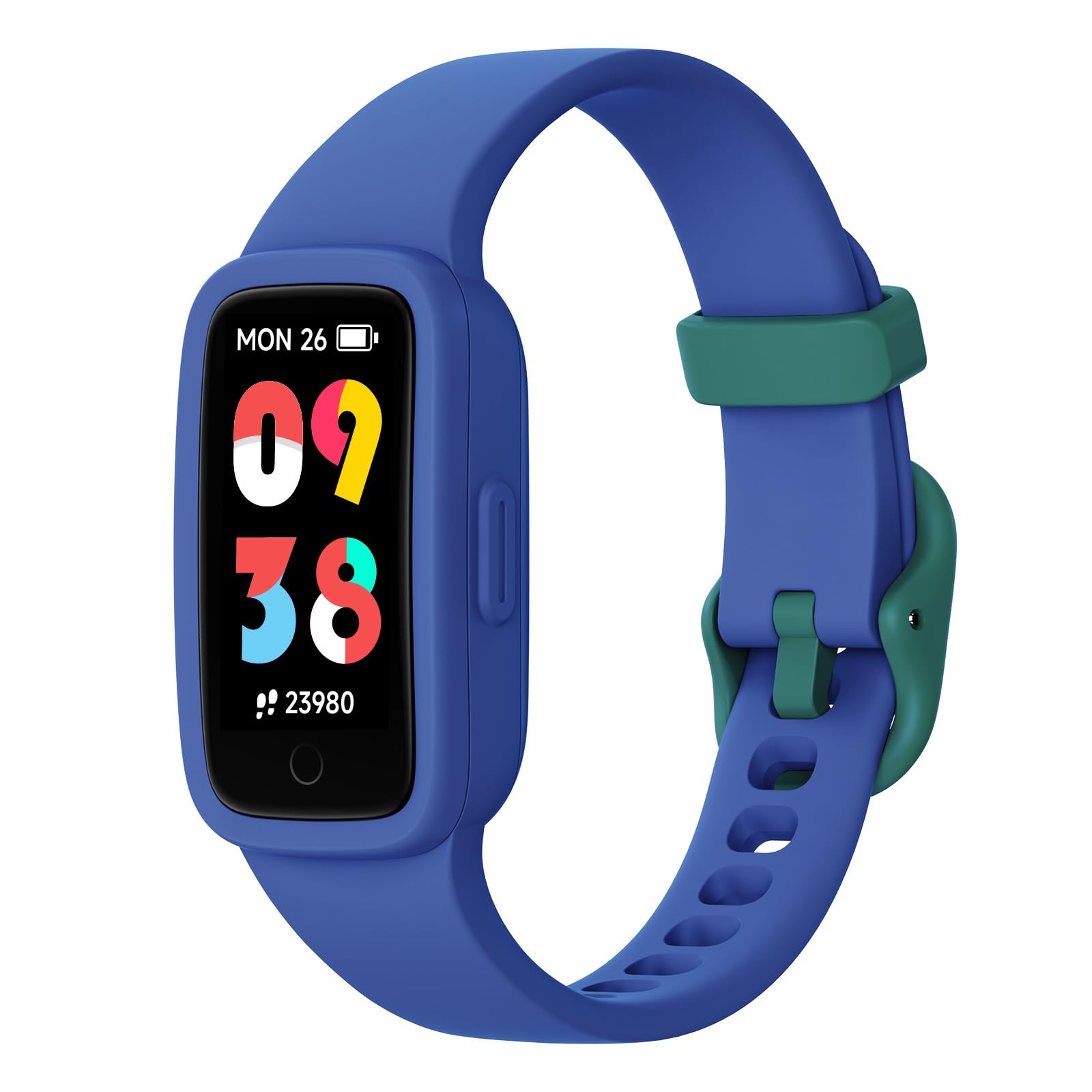
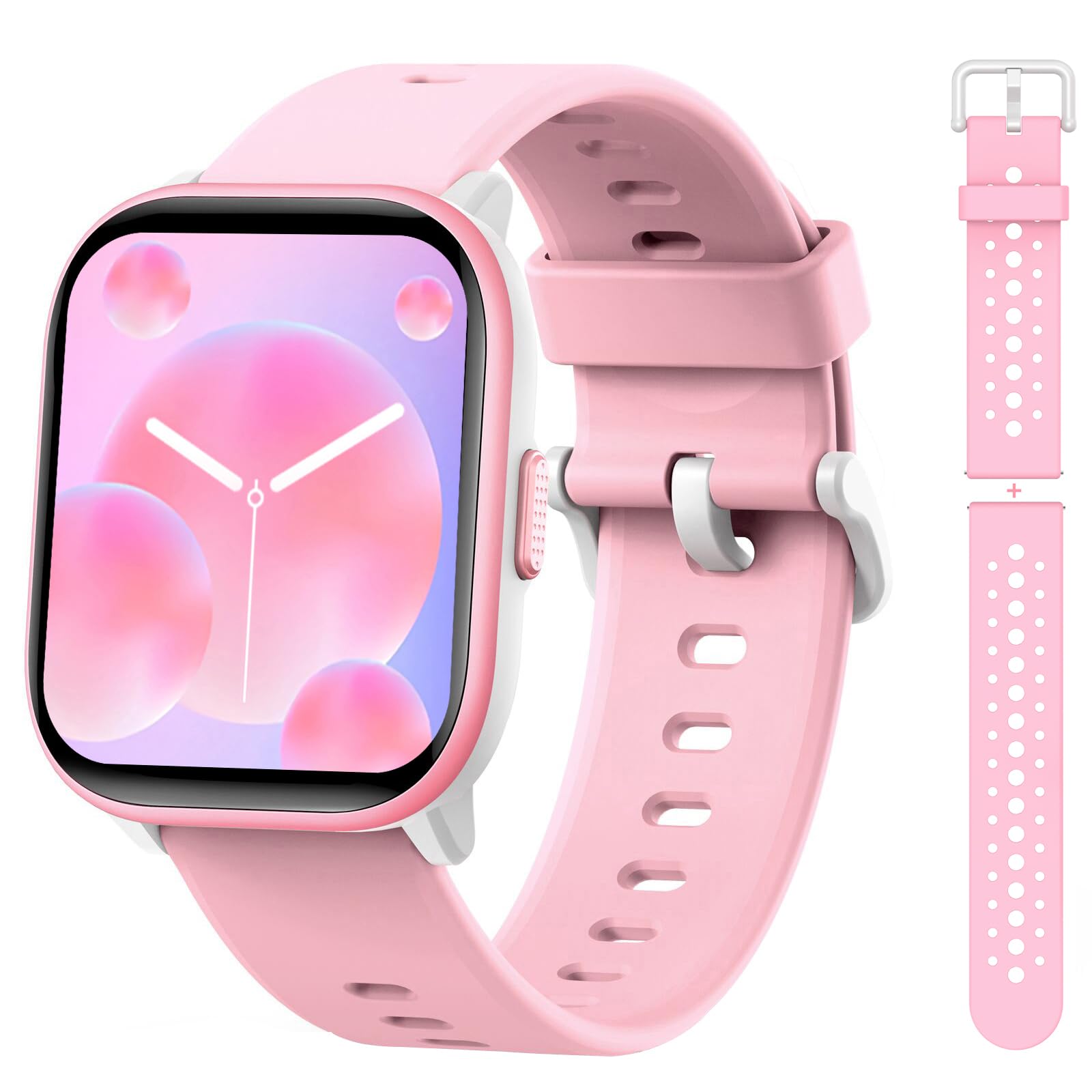

Best for First Smartwatch
BIGGERFIVE BRAVE 2
Key Features
- Water Resistance: IP68
- Phone Requirement: No phone
- Screen Quality: 1.8-inch
- Price: $
80 sports modes and a 1.8-inch display mean your child can track anything from running to dance without needing a phone nearby. The watch runs standalone, so there is no dependency on a paired device or app for basic step counting, sleep tracking, or heart rate monitoring. Battery life stretches multiple days and recharges quickly, reducing the friction of daily charging that plagues many budget wearables.
Real-world feedback from hundreds of families confirms that setup takes minutes and kids as young as five navigate the touchscreen and menus independently. The activity and sleep data aligns reasonably well with more expensive trackers for casual use, though the screen is the main vulnerability – scratches appear on the exposed glass without a protector. A handful of units also show charging failures after weeks of ownership, but the majority experience solid long-term operation.
This watch fits parents who want an affordable, phone-free first smartwatch for children aged 5–16. It trades a rugged display for a larger, more readable screen at a budget price, so adding a screen protector is a necessary step. If you need ruggedized build or competition-grade fitness accuracy, look higher in the market.
Pros
- No phone needed for step, sleep, and heart rate tracking – 92% of parents called it a great starter watch (160 mentions)
- Battery lasts multiple days and recharges quickly – 79% positive feedback (48 mentions)
- Kids operate it independently thanks to the intuitive interface – 89% positive (54 mentions)
- Activity and sleep data gives a useful daily picture without a premium price – 86% positive (71 mentions)
- 80 sports modes encourage varied movement and play
Cons
- Screen is susceptible to scratches; a protector is recommended to keep it clear – 38% negative (68 mentions)
- Occasional charging failures reported after several weeks of use – minority of units affected (10 mentions)
Buy this if you want a no-phone smartwatch for your child that offers reliable tracking, long battery life, and a large screen at a budget-friendly price. Skip it if you need a rugged, scratch-proof display or precise fitness metrics for competitive sports.
Best for Fitbit Ecosystem
Fitbit Ace 3
Key Features
- Battery Life: 2-4 weeks
- Water Resistance: 50m
- Phone Requirement: Requires phone
- Screen Quality: OLED small
- Price: $$
The Ace 3 gains consistent step and sleep tracking with swim-friendly 50m water resistance, plus family account controls through the Fitbit app. Battery life often reaches three to four weeks, far exceeding the rated eight days. But you give up the convenience of a device that never needs charging; the Ace 3 requires recharging every few weeks. The biggest trade-off is setup: on iOS, this process requires creating a supervised Google Kids account, a hurdle many reviewers describe as deeply frustrating. On Android, setup is smoother. For parents already in the Fitbit ecosystem, the family controls work well.
This tracker fits parents comfortable with Android or existing Fitbit owners who want a durable, long-lasting kids tracker with minimal charging. It’s also good for families who value water resistance for pool use. Skip it if you primarily use iOS and expect a simple setup; the Google Kids account requirement can be a dealbreaker. Additionally, the included charger has been reported to fail within months—a third-party replacement may be necessary—and the band can feel flimsy over time.
Pros
- Battery easily outlasts the advertised 8 days, often reaching 3–4 weeks.
- Accurate step and sleep tracking with fun animated clock faces.
- 50m water resistance allows swimming and splashing without worry.
- Centralized family controls let parents monitor activity from their own Fitbit app.
Cons
- iOS setup requires a supervised Google Kids account, a process many find deeply frustrating.
- Original charger can stop working; a third-party charger is a reliable workaround.
- Band feels thin and may break under rough use.
Buy this if you’re an Android parent in the Fitbit ecosystem who wants a swim-ready kids tracker with long battery and family controls. Skip it if you use iOS and need a simple, out-of-box setup, or if you want a device that doesn’t require a phone for full features.
Best for No-Charge Tracking
Garmin vivofit jr. 3
Key Features
- Battery Life: 1 year
- Water Resistance: 50m
- Phone Requirement: Requires app
- Screen Quality: 0.7-inch transflective
- Price: $$$
Unlike the top pick’s weekly charging routine, the Garmin vivofit jr. 3 frees parents from worrying about yet another device to plug in. Its replaceable coin-cell battery keeps it running for up to 365 days – no cables, no reminders. The companion app transforms everyday tasks into a themed adventure, letting families assign chores, set step challenges, and unlock rewards. What you lose compared to the top pick: a bright, always-on display. The transflective screen is sharp outdoors but becomes nearly unreadable in low-light rooms, so kids often need to step into sunlight to check their steps or time.
This tracker suits families who prioritize zero maintenance and app-based motivation over screen clarity. Be aware: the screen is dim indoors, and some units develop loose bands over months of wear, occasionally letting the tracker fall out. A few users also mention mild skin irritation under the watch face – a known trade-off with some silicone bands. If your child spends most of their time outside and you’re already managing chores through a shared family app, the vivofit jr. 3 fits naturally. Skip it if you need a readable indoor display or if a cracked band would cause frequent replacements.
Pros
- Up to a year of battery life eliminates charging hassles entirely.
- Swim-friendly 50m water resistance holds up to daily rough play.
- App-based chore management and adventure game keep kids motivated.
- Step and sleep tracking are consistent enough for basic activity monitoring.
Cons
- Screen is very dim indoors, especially in bedrooms or classrooms.
- Tracker can come loose from the band after months of use.
- Occasional reports of skin irritation under the watch face.
Buy this if you never want to charge a kid’s tracker and love app-driven chore motivation. Skip it if your child needs a bright indoor display or you worry about wear-and-tear on the band.
Best for Amoled Fans
BIGGERFIVE Vigor 3
Key Features
- Battery Life: 10 days
- Water Resistance: 3ATM
- Phone Requirement: No phone
- Screen Quality: AMOLED
- Price: $
The BIGGERFIVE Vigor 3 stands apart with its bright AMOLED screen and built-in virtual pet, two features you won’t find on the top pick in this category. The trade-off: the clasp is prone to breaking within days or weeks, and the step counter needs an app update out of the box to register accurately. You get a more engaging display and interactive motivation, but durability takes a backseat.
This tracker is best for kids who want a colorful, screen-first experience and parents comfortable with a few setup quirks. The virtual pet gamifies movement, and the habit reminders help build routines — all without needing a phone nearby. However, expect to handle the clasp with care and update the step tracking via the companion app shortly after unboxing. It’s a fit for families willing to trade some ruggedness for a brighter interface and a fun digital companion.
Pros
- Bright AMOLED screen that stands out clearly in sunlight
- No phone needed for daily use; simple setup and operation
- Good battery life (10 days) with quick charging
- Virtual pet feature encourages kids to stay active
Cons
- Clasp can break after days or weeks of normal wear
- Step count may be inaccurate initially; requires app update to fix
- Some units stop charging after a few weeks
Buy this if your child wants a screen-first tracker with a virtual pet and you’re willing to manage a delicate clasp and a one-time step-calibration update. Skip it if you need rugged build quality and out-of-the-box accuracy.
Best for Active Kids
meoonley Kids Watch
The meoonley Kids Watch packs 19 sports modes and IP68 waterproofing into a sub-$30 package, giving active kids more activity variety and worry-free wear in pools or rain. Compared to the top pick’s larger screen and 80 modes, this watch focuses on core features at a lower entry point. However, that price comes with trade-offs in consistency: step tracking shows occasional discrepancies, and heart rate or sleep data may not function on some units.
This watch is best for families who want a low-cost activity tracker for young kids and don’t need clinical-level accuracy. One important caveat: the pink color variant has been reported to lack the camera, calendar, and a working heart rate sensor found on other colors. If you choose a different color, the feature set is more complete, but quality control variance means verifying the unit upon arrival is wise.
Pros
- 19 sports modes give kids plenty of activity options from running to jump rope.
- IP68 waterproof rating allows swimming and everyday wear without worry.
- Very easy for children to navigate independently after initial setup.
- Strong value for the price, offering a robust feature set at a low cost.
Cons
- Quality control varies by color – the pink model may lack camera, calendar, and working heart rate sensor.
- Step tracking accuracy is inconsistent, with some users noting discrepancies.
- Heart rate and sleep tracking may fail on certain units across color variants.
Buy this if you want a low-cost kids activity tracker with many sports modes and IP68 waterproofing. Skip it if consistent performance across all features is a priority.
Best for Budget Notifications
Nyonio H97 Kids Watch
Key Features
- Battery Life: 5-7 days
- Water Resistance: IP68
- Phone Requirement: No phone
- Screen Quality: 1.5-inch
- Price: $
Unlike the top pick’s no-phone setup, this Nyonio watch connects to a parent’s phone for call and text notifications, plus offers 19 sport modes and DIY watch faces. The added features come at the cost of build quality—plastic components show wear within months, making it less durable than alternatives that prioritize ruggedness.
This watch fits families who want a grown-up-looking device with notifications for kids ages 6–14, on a budget. However, accept that the plastic casing may crack after a few months, and the language setting occasionally defaults to non-English (check before first use). Not ideal if you need a watch to survive rough daily play or expect years of service.
Pros
- Phone notifications and 19 sport modes at a budget price.
- Very simple setup that kids can manage on their own.
- Step and heart rate tracking sufficient for basic activity monitoring.
- Stylish Apple Watch–like design that kids love to wear.
Cons
- Delicate plastic casing; chips and band cracks appear within months.
- Some units stop charging or become defective after a few months of use.
Buy this if you want an affordable kids smartwatch with phone notifications and multiple sport modes, and are okay with replacing it within a year. Skip it if you need a durable device for rough use.
How to Choose
The biggest mistake is buying the cheapest option – spending a little more on a proven model often saves money in the long run.
Battery Life
Battery life varies widely from a few days to a full year. Trackers that need weekly charging are fine for most families, but if you want to avoid constant reminders, look for models that last at least a week. The trade-off is that longer battery often means dimmer screens or fewer interactive features.
Water Resistance
Splash resistance isn’t enough for swimming or pool play. Look for a rating of at least IP68 or 3ATM if your child wears it in the water. Even swim-friendly trackers may have bands that degrade faster with chlorine exposure.
Phone Requirement
Many trackers claim ‘no phone needed’ but still require an app for initial setup, parental controls, or firmware updates. If you want a truly independent device, check that it can set time and alarms without a smartphone. Models that sync only at setup are simpler overall.
Screen Quality and Durability
Screen readability varies dramatically. AMOLED displays look great indoors but can be overkill for outdoor use, while transflective screens shine in sunlight but are dim indoors. The biggest complaint across budget trackers is scratches – a screen protector is a smart add-on.
Activity and Sleep Tracking Accuracy
Basic step counting and sleep duration are usually consistent, but heart rate and sport-specific tracking can be off. For casual motivation, any tracker works. If you need precise data for training, step up to a Garmin or Fitbit – but expect extra setup steps.
FAQ
Why does my kid’s fitness tracker stop charging after a few months?
This is a common issue with ultra-budget trackers that use cheap charging ports or batteries. Poor contact between the charger and pins, along with low-quality cells, leads to early failure. Stick to models with consistent positive feedback over thousands of reviews – they tend to have better charging reliability.
Can a kids fitness tracker work without a phone or app?
Yes, several models operate fully standalone – you set them up with the watch itself and never need a phone for daily use. However, you may still need an app for initial configuration or firmware updates. Check the product description for ‘no app required’ and read reviews to confirm it truly works offline.
How long should a kids fitness tracker battery last?
Expect 5–10 days from most budget to mid-range models. Premium options like Garmin’s vivofit jr. 3 last up to a year on a replaceable coin cell. If you hate charging devices, a year-long battery is worth the higher price. For everyone else, weekly charging is manageable.
What is the most durable kids fitness tracker for active children?
The Garmin vivofit jr. 3 and Fitbit Ace 3 both offer 50m water resistance and robust build quality, but the Garmin’s band can crack over time and the tracker may pop out. The BIGGERFIVE BRAVE 2 has a large number of positive reviews for everyday durability, but its screen scratches easily – a protector is wise.