This post contains affiliate links. We may earn a small commission when you buy through our links — at no extra cost to you.
Many parents discover their child’s first smartwatch stops charging within weeks or requires an unexpected monthly fee for core features like GPS tracking. The gap between marketing promises and real-world performance makes it hard to separate the genuinely useful models from those that cause frustration. A smartwatch that fails after a few months means a lost investment and a disappointed child.
This guide focuses on watches that balance reliable hardware, accurate battery life estimates, and clear cost expectations. The selections here separate models that deliver on their promises from those that disappoint. We highlight options serving different ages and needs — from simple fitness trackers for young kids to full communication watches with parental controls. The right choice depends on whether durability, communication reliability, or pure entertainment matters most for your child. Whether you need a simple toy or a communication tool, the watches below have been selected for their track record.


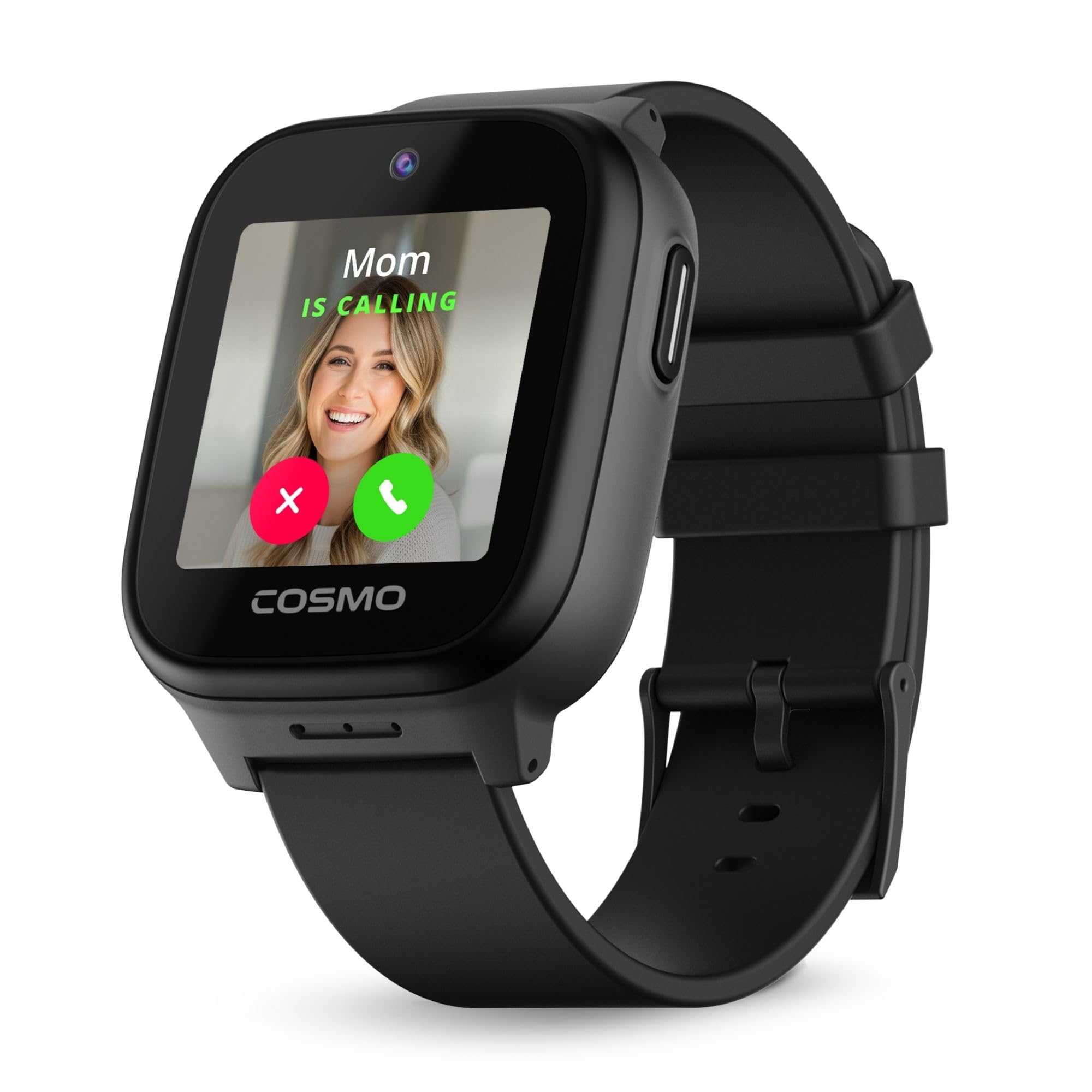

Best for Communication & Gps
TickTalk5
Key Features
- Battery Life & Reliability: 48 hours
- Water Resistance: IP67
- GPS & Cellular Calling: GPS, 4G calling
- Screen & Durability: 1.54 inches
- Price: $$$
The TickTalk5’s 4G LTE calling and video feature lets kids make live calls and video chat with pre-approved contacts, all managed through a parental app. This gives children independence without the distractions of a smartphone. The interface uses large icons and simple menus, making it easy for young users to operate, and the watch body handles everyday bumps and splashes thanks to its IP67 rating. Across thousands of reviews, the design and build quality are consistently praised by parents.
GPS tracking works well outdoors for general location, but can be less precise indoors or in dense urban areas — something to keep in mind if room-level accuracy is needed. Battery life with moderate use requires a nightly charge, so expect to plug it in each evening. A small number of units have experienced performance issues after a few weeks, which underscores the value of a good warranty. The watch runs on any compatible 4G network, giving families flexibility in carrier choice.
This watch is best for parents of children ages 6–12 who want a communication device that isn’t a smartphone. The ongoing data plan (starting around $10/month) and daily charging routine are real commitments. Indoor GPS accuracy isn’t always precise, so it’s not ideal for hyper-specific location tracking inside buildings. But for dependable calling, video, and parental oversight, the TickTalk5 delivers the most complete package in this category.
Pros
- 4G LTE calling and video chat with approved contacts, no smartphone needed.
- Quick setup and a kid-friendly interface that children can navigate independently.
- Build quality holds up to daily wear and tear.
- Parental app gives detailed control over contacts, usage schedules, and location.
Cons
- GPS accuracy can be inconsistent indoors and in dense areas.
- Battery life requires nightly charging with moderate use.
- Some units have reported functionality issues after a few weeks of use.
Buy this if you want a durable communication smartwatch for your child that works with any carrier and offers full parental control. Skip it if you’re not open to a monthly data plan or need accurate indoor GPS tracking.
Best for Young Kids Toys
VTech KidiZoom DX2
Key Features
- Battery Life & Reliability: 72 hours advertised
- Water Resistance: IPX4 splash proof
- Screen & Durability: 1.4 inches
- Price: $$
The DX2 swaps GPS and calling for two cameras and a game library, making it a pure entertainment device for young kids. With over 23,000 reviews averaging 4.6 stars, it’s far more engaging than typical toy watches — and costs less than cheaper VTech alternatives that lack the second camera or game variety. The trade-off is no cellular features, so this isn’t a communication tool; it’s a creative play gadget that keeps children occupied without worrying about online exposure.
Best for parents who want a no-phone toy smartwatch for kids ages 4–8, especially as a screen-time alternative to tablets. Keep in mind that some units develop charging issues or band wear after several months of use — these are not daily‑duty watches for rough outdoor play. The IPX4 splash rating handles hand washing but not swimming or heavy rain.
Pros
- Dual cameras and games keep kids creatively occupied without internet.
- Proven gift appeal among parents and relatives of young children.
- Vast library of built‑in games means no additional purchases needed.
Cons
- Charging port can fail; some units stop charging after a few months.
- Band and rubber cover are delicate and may break under normal wear.
- Battery life degrades over time; some units no longer hold a charge.
Buy this if you want a camera‑and‑game watch for indoor play with zero internet risks. Skip it if you need GPS tracking or a device that survives daily outdoor use.
Best for Budget Fitness
BIGGERFIVE BRAVE 2
Key Features
- Battery Life & Reliability: 3-5 days reported
- Water Resistance: IP68
- GPS & Cellular Calling: GPS via app, no calls
- Screen & Durability: 1.8 inches
- Price: $
Unlike communication-focused smartwatches, the BIGGERFIVE BRAVE 2 strips away calling and GPS to offer a simple fitness tracker that works independently of a smartphone. The large 1.8-inch screen shows steps, heart rate, and sleep data, and the IP68 rating lets kids wear it through rain and puddle jumps. Families gain a no-subscription device that stays offline, but lose the ability to message or locate a child remotely — a focused trade-off for those prioritizing activity tracking over connectivity.
This watch fits best as a first tracker for children aged 8–12 who are curious about their daily movement but don’t need phone-like features. The setup is quick and the interface is straightforward enough for a child to navigate. However, the screen is easily scratched and some units stop responding after a few months of use; a screen protector is essential, and parents should plan for potential replacement within a year if the watch sees rough daily wear.
Pros
- Good starter smartwatch with step counting and heart rate monitoring
- Appeals to kids ages 5–16 as a first watch
- Strong value for the feature set at a budget price
- Simple setup and easy daily use
Cons
- Screen is delicate; a screen protector is needed to avoid scratches and cracks
- Occasional quality control variances leading to units that stop working within months
- Some charging failures reported, requiring cable replacement
Buy this if you want a low-cost, no-frills fitness tracker for your child without the complexity of a phone-connected watch. Skip it if you need GPS tracking or two-way calling.
Best for Value Gps Watch
JrTrack5
Key Features
- Battery Life & Reliability: 24 hours
- Water Resistance: IP68
- GPS & Cellular Calling: GPS, 4G calling
- Screen & Durability: 1.4 inches
- Price: $$
JrTrack 5 offers a lower-cost entry into GPS communication watches with Cosmo’s dedicated carrier plan, compared to the more flexible TickTalk. The IP68 water resistance and school-friendly Focus Mode add practical value for everyday use. However, the trade-off comes in battery life—expect nightly charging—and occasional quality control variances that leave some units non-functional within months.
This watch fits parents who want a straightforward, no-fuss dedicated carrier service and are willing to charge the device each night. It works best for kids aged 6-12 who need basic calling, text, and GPS tracking. Keep in mind that heavy use can drain the battery by afternoon, and a minority of units have shown early failures, making this a budget-conscious choice with known compromises.
Pros
- Easy setup and parent app simplifies managing the watch.
- GPS tracking works well enough to keep tabs on kids during usual outings.
- Good value for a GPS communication watch compared to premium alternatives.
Cons
- Battery life requires nightly charging; heavy use drains by afternoon.
- Some units stop working after a few months, indicating quality control variances.
- GPS accuracy can lag, making real-time location less precise than expected.
Buy this if you want an affordable GPS calling watch for your child and are comfortable with a dedicated carrier plan and nightly charging. Skip it if you need all-day battery life or expect long-term durability without quality variances.
Best for Active Gaming
Fitbit Ace LTE
Key Features
- Battery Life & Reliability: 16+ hours
- Water Resistance: 50 meters
- GPS & Cellular Calling: GPS, LTE calling
- Screen & Durability: 1.6 inches OLED
- Price: $$$
Activity-based games set the Fitbit Ace LTE apart from other kids’ smartwatches, using movement to unlock play and keep kids engaged. This motivational focus comes with real trade-offs: battery life under active use often falls short of a full school day, and the mandatory Ace Pass data subscription adds a recurring monthly cost to the premium purchase price. On the plus side, calling, messaging, and GPS tracking work well, and the build quality feels sturdy for active play.
This watch fits families who prioritize activity motivation and are already comfortable with Fitbit’s ecosystem. It’s a good match for parents who don’t mind nightly charging and an ongoing data subscription to get the full LTE functionality. However, if your child needs a watch that reliably lasts from morning pickup to bedtime without a mid-day charge, or if you want to avoid monthly fees, the top pick offers better battery life and carrier flexibility without the same gaming focus.
Pros
- Reliable calling and messaging keep parents connected with kids throughout the day.
- Movement-based games turn exercise into fun, motivating kids to stay active.
- Accurate step and location tracking provides peace of mind for parents.
Cons
- Battery drains quickly; active use may require midday recharging to last the day.
- Some units develop reliability issues after a few months of regular use.
- Ongoing monthly subscription required for LTE features adds to the total cost.
Buy this if your child thrives on movement-based gaming and you’re already in the Fitbit ecosystem; skip it if battery endurance or monthly subscription costs are priorities.
Best for Cheaper Dx2 Alternative
VTech KidiZoom DX4

Key Features
- Battery Life & Reliability: Not specified
- Water Resistance: Splash proof
- Screen & Durability: 1.4 inches
- Price: $$
The VTech KidiZoom DX4 brings dual cameras, a music composer, and educational games at a slightly lower price than the top-selling DX2. Young children (ages 4–7) engage with creative play and learn to tell time without internet access. However, user reports highlight occasional screen glitches, charging port breakage, and battery degradation within months—the same weaknesses as the cheaper DX2. Without GPS or calling, it remains a toy watch with upgraded features, best for indoor play where rough handling is minimal. The reliability variances prevent it from being a daily driver for active kids.
Pros
- Teaches time-telling and creative skills through games
- Packed with features: camera, games, and a music composer
- Kid-friendly interface that’s easy to navigate
Cons
- Occasional screen glitches or failures within the first weeks
- Charging port and screen are delicate under daily handling
Worth considering if you want a budget-friendly toy smartwatch for indoor creative play and are comfortable with occasional durability trade-offs.
Best for Ultra-Budget Games
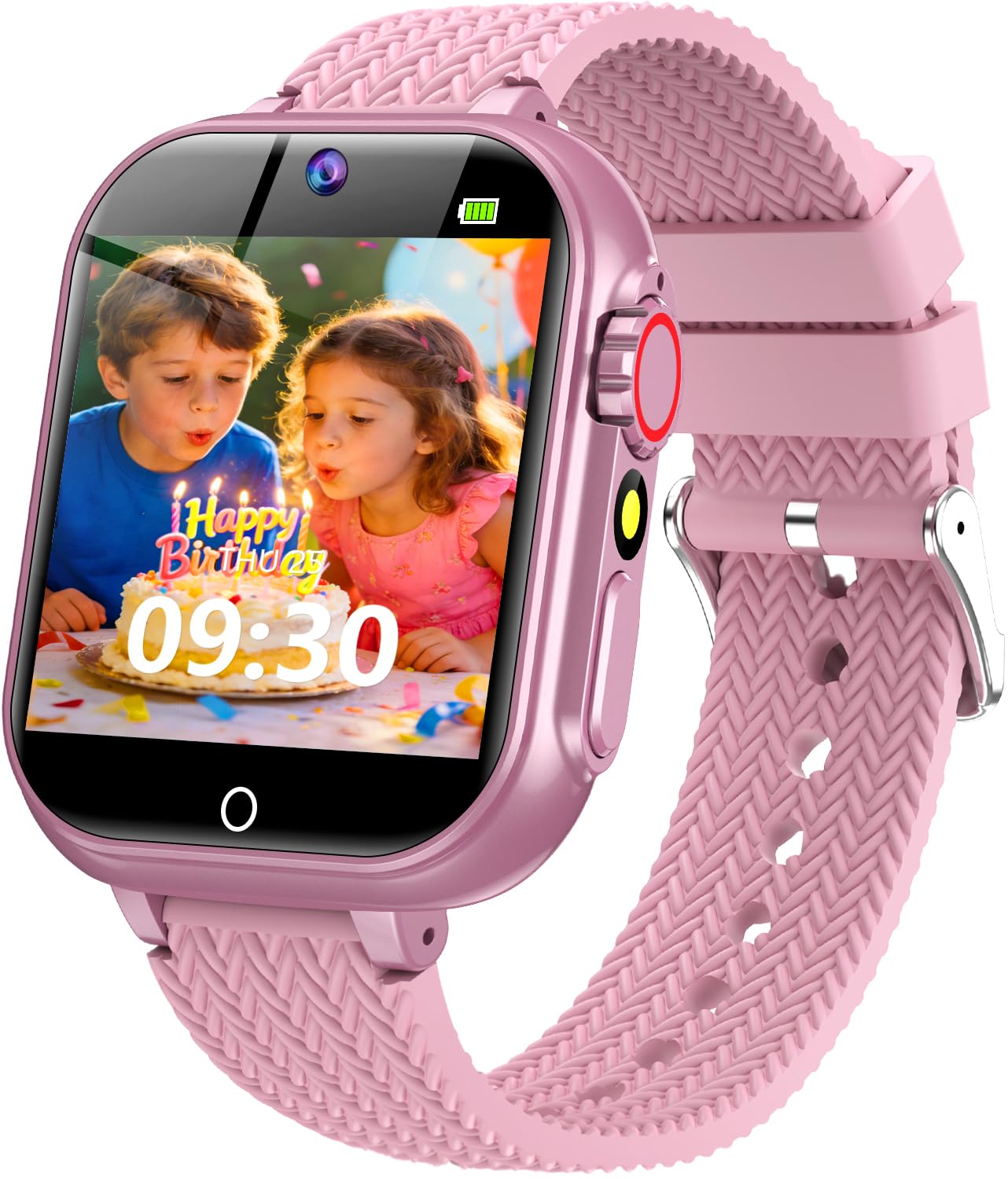
wepfum D15
Key Features
- Battery Life & Reliability: 7-14 days standby
- Screen & Durability: 1.5 inches
- Price: $
The wepfum D15 packs 32 games, a camera, and music player into a cute design at a budget-friendly price – ideal as a short-term indoor toy. Parents praise the feature density and value, but the trade-off is reliability: a notable portion of units stop working within weeks, and there is no water resistance. This watch works best as an occasional play device, not a daily companion for outdoor adventures.
Pros
- Cute, kid-friendly design that children enjoy wearing.
- Lots of built-in games plus camera and music for entertainment.
- Impressive feature set for the low price point.
Cons
- Some units stop working after a few weeks of use.
- Not water resistant, limiting use to dry indoor settings.
Worth considering if you need a very inexpensive indoor toy watch with plenty of games and can accept the risk of early failure.
Best for Budget Heart Rate
Nyonio H97

Key Features
- Battery Life & Reliability: 5-7 days
- Water Resistance: IP68
- Screen & Durability: 1.5 inches
- Price: $
The Nyonio H97 is a budget fitness tracker for kids that offers IP68 water resistance, heart rate monitoring, and sleep tracking at an entry-level price. Setup is simple and it’s well-suited for ages 6-14 who want basic activity tracking. However, the plastic casing and band are prone to chipping and breaking after a few months of use, and some units experience charging failures. These durability concerns, along with a lower overall review volume, keep it behind higher-rated budget alternatives.
Pros
- Good value for money with essential fitness tracking features.
- Easy setup and kid-friendly interface for ages 6-14.
- Very suitable for children with basic step and heart rate tracking.
Cons
- Plastic casing and band may chip or break after a few months of normal use.
- Some units experience charging failures or battery issues within months.
Worth considering if you need a simple, low-cost fitness tracker for a child and are comfortable with potential durability limitations.
How to Choose
The most common pitfall in kids smartwatches is that budget models often fail within months, while premium models require ongoing subscription costs that catch parents off guard.
Battery Life and Reliability
Battery life varies widely, from a day to a week, but actual usage often falls short of advertised claims. Look for watches with at least 400 mAh capacity and read recent reviews for real-world battery performance. Reliable charging ports are essential; many failures stem from poor charging connections.
Water Resistance
Water resistance ratings range from splash-proof (IPX4) to swim-proof (IP68). If your child will play outdoors or near water, choose at least IP67. Note that even ‘splash-proof’ watches can fail from a single hand wash if the seal is poor.
GPS and Cellular Calling
For communication-focused watches, GPS and cellular calling require a data plan — typically $10-15 per month. Some watches lock you into a specific carrier (like Cosmo for JrTrack5), while others accept any SIM. Check carrier compatibility before buying to avoid surprises.
Screen Size and Durability
Screen size between 1.3 and 1.85 inches is common. Larger screens are easier for kids to use but more prone to cracking. Many budget watches have screens that scratch easily; a screen protector is a smart investment regardless of model.
Parental Controls and App
Parental apps allow you to manage contacts, set school time modes, and monitor location. Look for watches that let you control who your child can call or text. Without these controls, the watch may be as distracting as a smartphone.
FAQ
Why does my kid’s smartwatch stop charging after a few months?
Cheap charging ports and cables are the most common culprit. Many budget watches use proprietary magnetic chargers that lose contact over time. To avoid this, choose a watch with a standard USB charging tab or one known for durable ports. If it stops charging within weeks, it’s likely a manufacturing defect.
Can kids smartwatches make calls without a phone plan?
No, watches with cellular calling require a data plan. Some models offer Bluetooth calling connected to a parent’s phone, but that’s not independent. For true standalone calling, you’ll need a cellular plan, typically $10-15 per month.
What is the best smartwatch for a 5-year-old without a phone?
For a 5-year-old, a toy smartwatch like the VTech KidiZoom DX2 is ideal. It offers cameras, games, and time-learning without internet access or monthly fees. Avoid GPS communication watches for that age — they require a phone plan and are often too complex.
Do kids smartwatches need a SIM card for GPS tracking?
It depends. Some GPS watches use a SIM card to transmit location data, requiring a cellular plan. Others use Bluetooth to connect to a parent’s phone, which limits range. If you want real-time GPS tracking away from home, the watch needs its own SIM and data plan.