This post contains affiliate links. We may earn a small commission when you buy through our links — at no extra cost to you.
A kids phone watch can seem like the perfect bridge between a toy and a smartphone — a way for children to stay connected without the full glare of social media. In practice, many parents discover the opposite: proprietary data plans that lock you into a single network, GPS that lags or shows a general area, and batteries that drain before the school bus arrives home.
The watches in this article cut through those frustrations. They offer real phone numbers and SMS so any family member can reach your child directly, carrier flexibility that avoids surprise monthly fees, and tracking that actually refreshes when you check the app. Whether you’re looking for a rugged fitness buddy or a budget-friendly first watch, the ones that truly work treat the watch as a real phone, not a locked gadget.


Best for Parental Controls
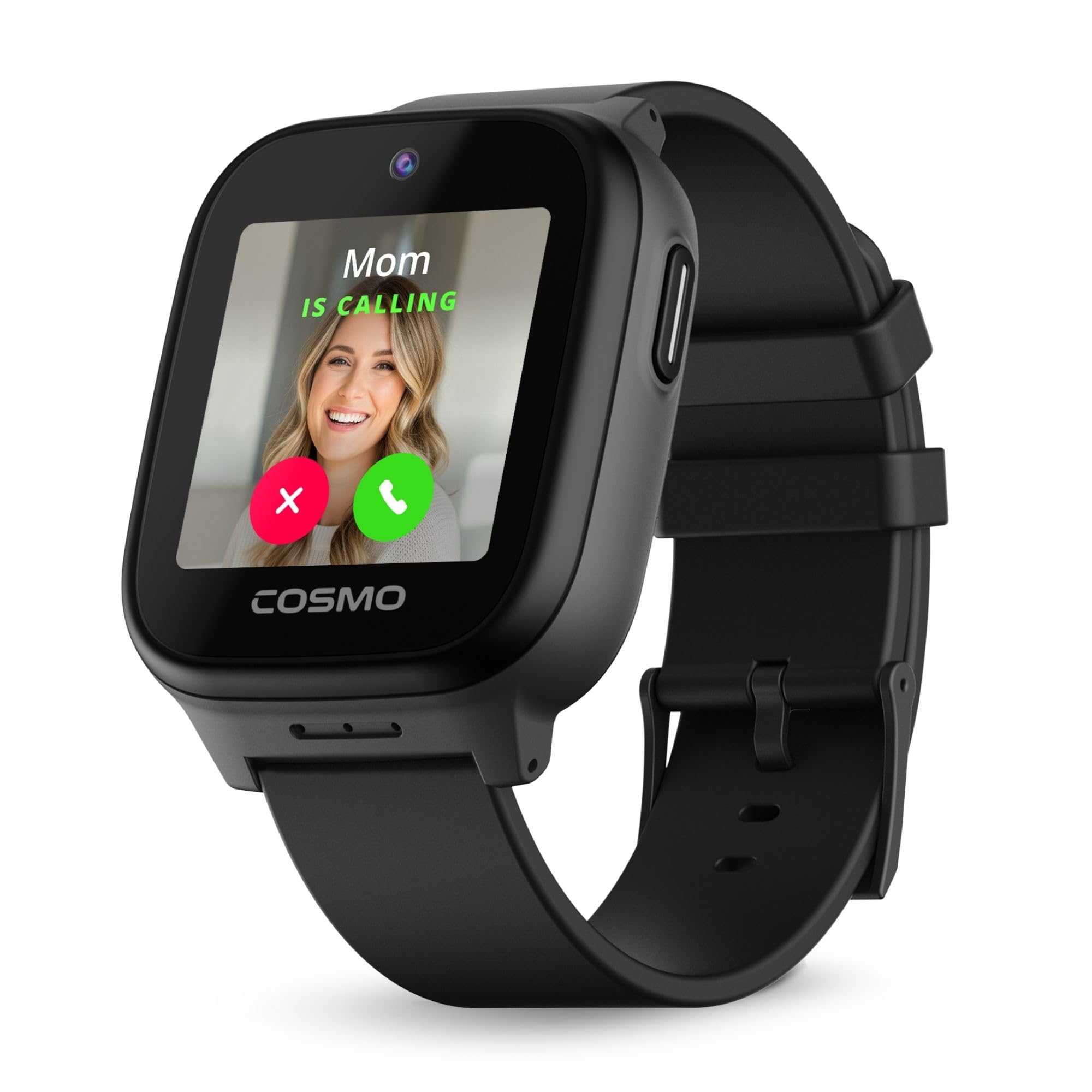
JrTrack 5
Key Features
- Phone Number Type: Real number (Cosmo only)
- GPS: HaloGPS real-time
- Battery Life: Up to 24 h
- Water Resistance: IP68
- Carrier Flexibility: Cosmo Mobile only
- Price: $$
The JrTrack 5 trades carrier flexibility for a tightly integrated service that arrives pre‑configured and ready to use. Where the top pick in this category lets parents shop around for a GSM plan, this watch runs exclusively on Cosmo Mobile, which handles activation and billing in one place. The trade‑off is a curated experience: every contact must be approved by a parent, and Spotify Kids comes baked in as a safe music player. This removes the friction of managing a separate carrier, but it also means you can’t switch networks down the road.
This watch fits families who value simplicity and strict boundaries over open‑ended configurability. The calling and texting features are walled off from unapproved numbers, and the Spotify integration gives kids a reason to wear it without turning it into a distraction. Parents should know that the battery rarely stretches past a full day—12 to 18 hours is typical—so daily charging is a must. A small number of users report units failing within months, though the volume suggests a manageable quality variance rather than a systemic issue. For households ready to commit to Cosmo’s ecosystem and a nightly plug‑in routine, the JrTrack 5 delivers a polished, music‑friendly phone watch that keeps kids connected on a tight leash.
Pros
- Kids and parents both appreciate the sleek, grown‑up design.
- Setup takes minutes, with prompts simple enough for a 6‑year‑old to follow.
- Age‑tailored features fit elementary schoolers perfectly, holding their interest.
- Calls and texts connect only to approved contacts, keeping communication contained.
Cons
- Battery typically lasts 12–18 hours; nightly charging becomes part of the routine.
- GPS can drift or show delays in certain areas, causing temporary reporting lag.
- A minority of units may stop working within weeks, requiring a warranty exchange.
Buy this if you want a fully managed watch with Spotify and strict parental controls, and you’re fine with Cosmo’s network. Skip it if you need multi‑day battery or carrier flexibility.
Best for Active Gamification
Fitbit Ace LTE
Key Features
- Phone Number Type: App-only calls, no number
- GPS: Built-in GPS
- Battery Life: Up to 16 h (real-world less)
- Water Resistance: IP67
- Carrier Flexibility: Fitbit Ace Pass required
- Price: $$
Unlike the full-phone watch that leads this category, the Fitbit Ace LTE prioritizes activity gamification over traditional calling. Its Fitbit Arcade games use the built-in accelerometer to turn steps, jumps, and shakes into in-game currency, letting kids unlock more playtime by moving. The trade‑off is that calling works only through the Fitbit Ace app to parent‑approved contacts, and there’s no camera for video chats or photos. The 4G LTE connection handles calls and messages reasonably well when signal is strong, but connectivity can be spottier than a standard phone watch, and the battery often drains before the school day ends.
This watch fits families already in the Fitbit ecosystem who want to make physical activity a game. Kids who respond to badges and screen‑time rewards will be motivated, but those who need a straightforward communication tool may find it limiting. The battery rarely lasts a full day with active use—expect to recharge before after‑school activities. And without a camera, video goodbyes and photo sharing aren’t possible. Parents seeking a multi‑carrier phone watch with a real number and always-on connectivity should look to the top pick instead.
Pros
- Turns physical activity into game time with motion-powered arcade challenges.
- Kid-friendly design with lightweight band and easy-to-navigate interface.
- Call quality and messaging remain clear and consistent where LTE coverage is solid.
Cons
- Battery life often can’t stretch a full school day; gaming accelerates the drain.
- Some units experience sporadic signal dropouts that require a restart to fix.
- No camera means no video calls or snapshots — a deliberate trade-off for fitness focus.
Buy this if your kid loves earning screen time through movement and you’re already using Fitbit trackers. Skip it if you need an always‑connected phone watch with video calling and battery life that lasts from morning bell to bedtime.
Best for First-Time Trial
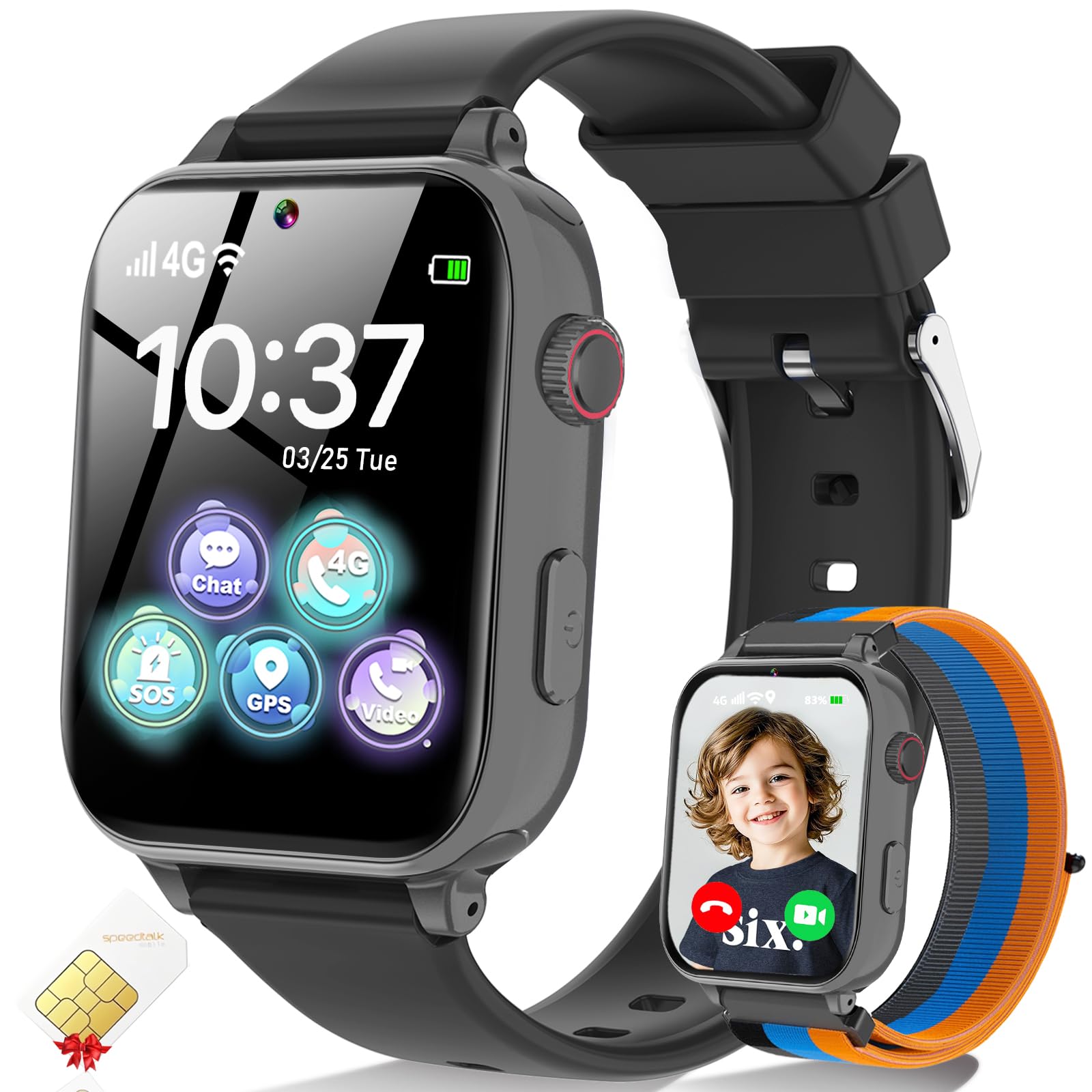
MOKAST X38
Key Features
- Phone Number Type: Real number (Speedtalk)
- GPS: Dual GPS + LBS
- Battery Life: Not rated
- Water Resistance: Not rated
- Carrier Flexibility: Speedtalk SIM included
- Price: $
Compared to the rock-bottom-priced alternative in this set, the MOKAST X38 feels more thoughtfully assembled for a child’s first experience. The responsive 1.57" touchscreen and a setup process parents repeatedly call painless remove the intimidation factor, making it easy for a 5-year-old to start video calling a grandparent within minutes of opening the box. You gain that smoother introduction and a build that most reviewers say survives daily tumbles, but you trade away any water resistance—a sacrifice many families will accept only if the watch stays indoors and away from splashes.
The X38 makes sense for parents of 4- to 7-year-olds who want to test whether their child is ready for a watch phone without spending much up front. The included Speedtalk SIM and straightforward parental controls let you approve contacts and monitor GPS location, but moisture is this watch’s vulnerability: rain, handwashing, or a spilled drink can end it. A minority of units also stop charging or turning on within a few months, so treat it as a short-term trial rather than a daily driver that will last for years. If your child plays outside often or needs a watch that can handle wet conditions, you’ll want a water-resistant model instead.
Pros
- Interface so intuitive that even 4-year-olds navigate calls and games independently.
- Setup is quick, with an included SIM that activates calls and video within minutes.
- Build feels sturdy for a budget watch, surviving daily tumbles and bumps.
- Withstands typical kid play without immediate damage, earning parent trust.
Cons
- Cannot handle rain, handwashing, or spills; exposure may cause failure.
- Occasional quality control variances cause early shutdowns or charging failures.
Buy this if you need an ultra-affordable first watch with a bundled SIM for a young child to try calling, and you’ll keep it away from water. Skip it if you want a device that lasts beyond the trial period or one that can handle rain and splashing.
Best for Short-Term Trial
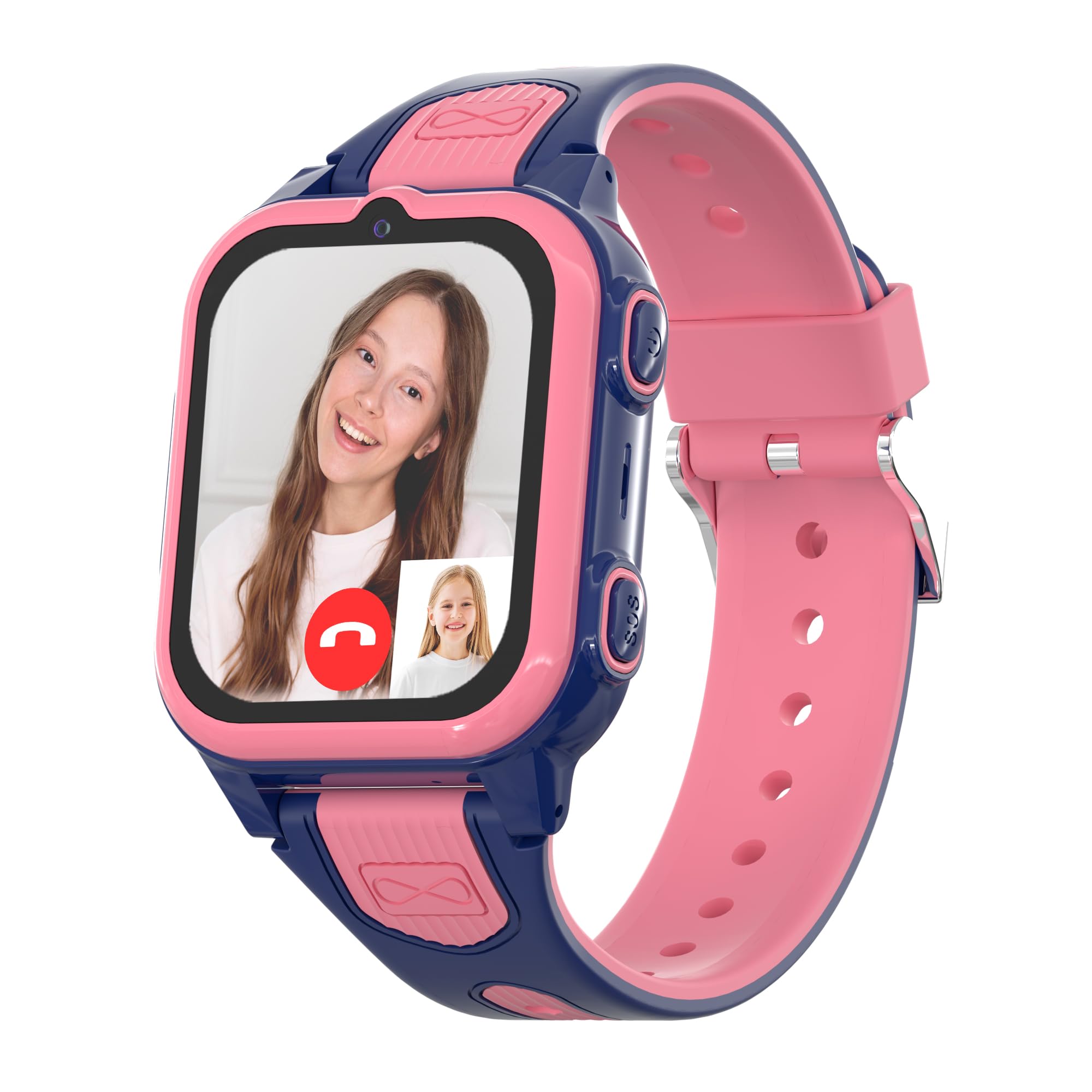
Citfis C6
Key Features
- Phone Number Type: Real number (Speedtalk)
- GPS: GPS + LBS
- Battery Life: Not rated
- Water Resistance: Not rated
- Carrier Flexibility: Speedtalk required
- Price: $
At the lowest price in this roundup, the Citfis C6 delivers 4G video calling, a camera, and GPS tracking — features that usually cost more. Compared to the other budget starter, which bundles a SIM for instant activation, this watch expects you to source a Speedtalk Nano SIM and set it up yourself, but that small extra step is the trade-off for the rock-bottom entry fee. The 1.54-inch LCD scratches quickly in pockets or backpacks, and the power button requires an unusually firm press that frustrates many parents. Build quality feels adequate for light, supervised use, but the materials and switchgear are plain. If you’re willing to treat this as a disposable experiment to see if your child will use a phone watch before investing more, it covers the fundamentals at a minimal outlay.
This watch is for extremely price-sensitive caregivers who want a temporary introduction to a phone watch and can accept the risk of early breakdowns. The power button may stop responding consistently, the screen accumulates scratches within days of normal use, and there is no water resistance — so even a splash or sweaty wrist poses a hazard. Active kids, playgrounds, and wet hands are not its territory. But as a low-stakes, short-term test of calling, texting, and location features, it packs more functionality than anything else near its cost. Just plan to monitor it closely and keep expectations modest about longevity.
Pros
- Video calling, voice calls, and camera bundled at an entry-level price
- GPS + LBS location tracking for basic check-ins
- Build quality holds up for supervised, light indoor use
Cons
- Power button can be unresponsive; requires firm, prolonged pressing to turn on
- Screen scratches easily, showing marks within a week of normal use
- No water resistance; rain, splashes, or sweat can damage the watch
Buy this if you want the absolute lowest-cost trial of a kids’ phone watch with video calls and GPS, accepting possible early wear. Skip it if you need a durable daily watch that can survive active play or water exposure.
How to Choose
The single most impactful choice you’ll make isn’t the brand — it’s whether the watch gives kids a real mobile number with standard texting, or only works inside a locked app ecosystem.
Calling and Texting Capabilities
A true phone watch assigns a 10-digit number that anyone can call, just like a smartphone. Watches that only support in‑app voice messages or video calls limit who can reach your child. Look for watches that fully replace a basic flip phone; when the watch relies on a proprietary app and a single carrier’s data plan, you lose flexibility and often face higher monthly costs.
GPS Accuracy and Real‑Time Tracking
Kids’ GPS watches use a mix of satellite and cell‑tower positioning, so precision varies. Marketing phrases like ‘pinpoint location’ rarely hold up indoors or in dense areas. Prioritize watches with dual GPS+LBS or AI‑assisted correction to improve reliability, but accept that occasional approximate locations are normal.
Battery Life
LTE connectivity drains small batteries quickly. Even watches advertising 48‑hour standby will likely need nightly charging with active use. A capacity of 680 mAh or higher helps the watch last through a school day plus after‑school activities. Turning off continuous music streaming or frequent video calls stretches the runtime.
Durability and Water Resistance
A watch that will survive mud, rain, and handwashing needs at least an IP67 rating — IP68 adds brief submersion protection. Watches with no water resistance rating can be damaged by a splash. Check screen scratch resistance, too; many budget models develop scuffs within the first week.
Carrier Flexibility and Monthly Costs
The biggest hidden expense isn’t the watch price; it’s the required plan. Some brands lock you to a single network, which may carry higher recurring fees. Watches that accept any GSM carrier let you choose an inexpensive prepaid plan, often saving money each month. Confirm that the SIM is user‑replaceable if you value long‑term flexibility.
FAQ
Do kids smartwatches need a monthly phone plan?
Yes — every 4G LTE kids watch needs an active data plan to enable calling, texting, and GPS tracking. Some brands bundle the plan with the watch; others include a prepaid SIM that you renew separately. Without an active plan, the watch becomes a basic media player with no connectivity.
Why does my child’s GPS watch location sometimes show the wrong place?
GPS depends on satellite and cell‑tower triangulation, so buildings, trees, and poor signal can cause position drift. Most watches fall back to less precise Location Based Services (LBS). A watch with dual GPS+LBS and AI‑assisted correction reduces the problem, but occasional approximate locations are normal.
How long does the battery really last on a kids smartwatch with GPS tracking?
Even the best models drain within 12–18 hours of active use — heavy GPS tracking, video calls, and games accelerate drain. Expect to charge every night. Watches with batteries under 500 mAh rarely make it through a full school day, so prioritize higher capacity if your child has long after‑school activities.
Can a kids smartwatch make calls without a phone number?
Some watches let you place calls through a companion app, but only to other app users — they cannot receive calls from a standard phone line. A true phone watch assigns a real mobile number so anyone can dial it. Check this specification before buying if you want full calling capability akin to a basic flip phone.
Is the Fitbit Ace LTE worth it for a 7‑year‑old?
The Ace LTE shines at motivating physical activity through movement‑based games that unlock playtime. However, it lacks a camera and doesn’t make traditional phone calls — it uses in‑app calling only. If fitness gamification is your priority and you’re already in the Fitbit ecosystem, it’s a fun pick. If you need a true phone replacement, choose a watch with a dedicated number.