This post contains affiliate links. We may earn a small commission when you buy through our links — at no extra cost to you.
Straw cups for babies often arrive with a bold ‘spill-proof’ claim, yet diaper bags still end up soaked. The gap between marketing and real-world performance is wide: many cups leak when tipped, straws require more suction than a tired toddler can manage, and hard-to-clean crevices invite mold. This guide cuts through the hype by focusing on what actually works for your specific stage — whether you’re teaching a 6-month-old to suck or need a daycare-friendly cup that won’t leak in a packed bag.
Getting the right cup comes down to a trade-off: a cup that’s truly leak-proof often has a valve that makes drinking harder, while a free-flow training cup teaches straw skills faster but spills freely. The best picks balance these priorities, giving you either a versatile cup that grows with your child or a specialist tool that excels at one job. Choose based on where your baby is today, not just the label.
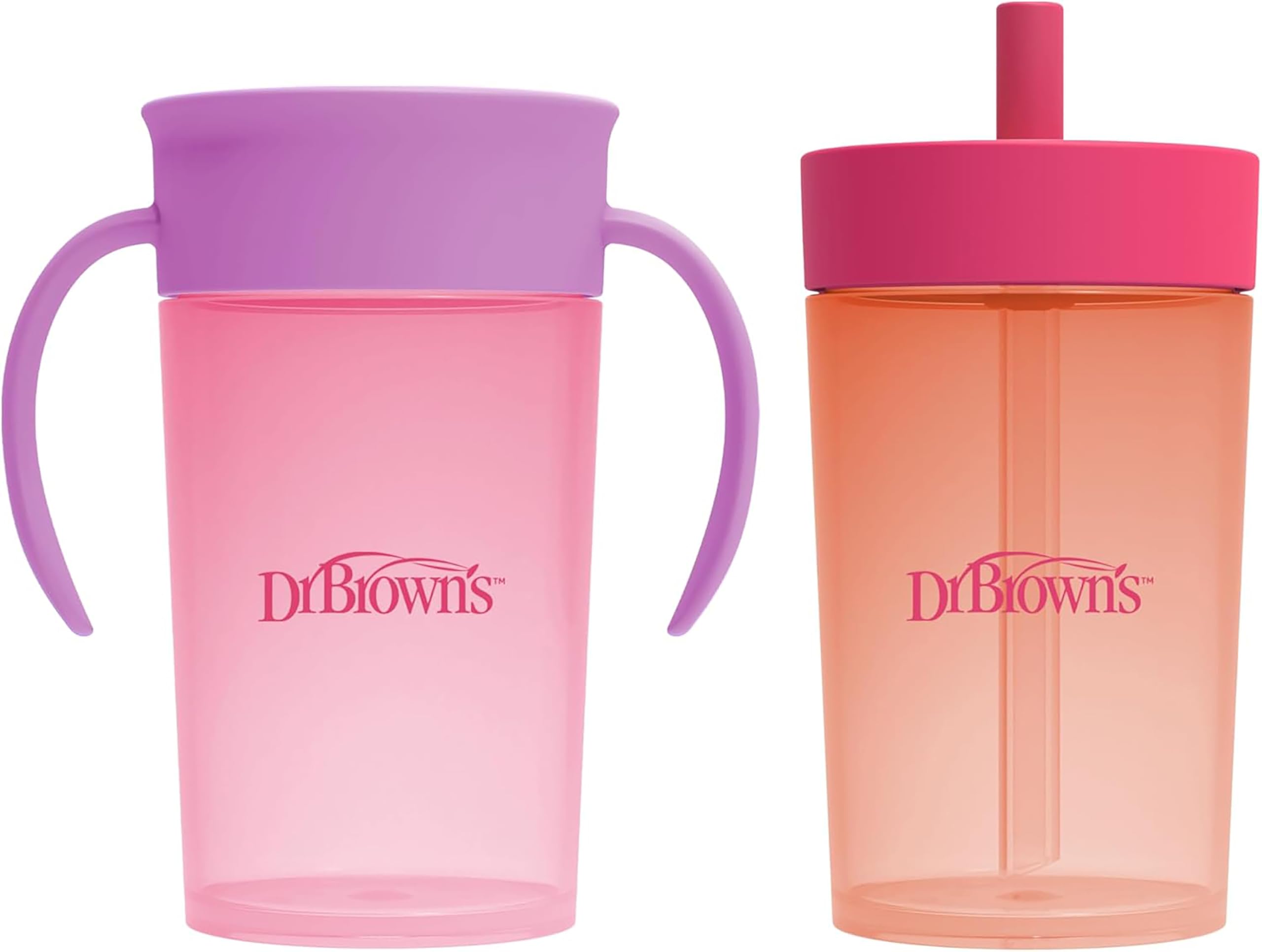


Best for Straw Training
First Years Squeeze & Sip 3pk
Key Features
- Leak-Proof Reliability: Flow-control valve, not sealed
- Ease of Cleaning: Simple, dishwasher safe
- Straw Drinkability: Squeeze-assisted flow
- Durability: Silicone straw, plastic cup
- Value per Cup: 3 cups
- Price: Budget
While the top pick reliably seals in a bag, the Squeeze & Sip focuses on teaching straw drinking – its squeezable body lets parents push liquid up into the straw to help babies learn the motion. This hands-on approach earns near 100% positive feedback on learning effectiveness. The 7-oz cups are sized for small hands and diaper bags, and the few parts are dishwasher safe. Small spills can occur when shaken vigorously, so this cup is best for supervised home use, not for daycare or travel.
Pros
- Squeeze-to-learn design accelerates straw drinking skills – near 100% positive feedback on learning.
- Three-pack keeps per-cup cost low with quality materials and construction.
- Few parts, dishwasher safe – quick to clean with no crevices for residue.
Cons
- Small spills when shaken vigorously – not designed for leak-proof travel.
Buy this if you’re teaching a 6+ month-old to use a straw and want an affordable, easy-to-clean training cup. Skip it if you need a leak-proof cup for daycare or travel.
Best for Ergonomic Grip
NUK Learner Straw Cup
Key Features
- Leak-Proof Reliability: Weighted straw with valve
- Ease of Cleaning: Simple, dishwasher safe
- Straw Drinkability: Valve-controlled flow
- Durability: Silicone straw, plastic cup
- Value per Cup: 1 cup
- Price: Mid-Range
The NUK Learner Straw Cup stands out with ergonomic handles that toddlers grip easily and a durable construction that handles repeated drops and throws. It’s best for children 12 months and older who have already mastered straw drinking – not as a training cup. Cleaning is straightforward with minimal parts and dishwasher-safe design. The main trade-off: the soft straw occasionally detaches from the spout during drinking, and the cup can leak if the straw isn’t fully seated or if shaken. These limitations are manageable for everyday home use.
Pros
- Ergonomic handles provide a secure grip for little hands.
- Durable construction survives frequent drops and throws.
- Easy to clean with minimal parts and dishwasher-safe.
Cons
- Straw can detach from the spout during use, requiring adjustment.
- Leakage occurs when straw is not properly seated or cup is shaken.
Buy this if you want a durable, easy-to-hold straw cup for a toddler who already drinks from a straw and can handle occasional straw adjustments. Skip it if you need a completely leak-proof cup for travel or if your child aggressively chews straws.
Best for Cute Home Cup
Infantino My 1st Tumbler
Key Features
- Leak-Proof Reliability: Hidden leak-resistant valve
- Ease of Cleaning: Simple, dishwasher safe
- Straw Drinkability: Soft straw, valve
- Durability: Silicone cup and straw
- Value per Cup: 1 cup
- Price: Budget
The Infantino My 1st Tumbler wins over toddlers with its adorable mini Stanley aesthetic, driving engagement that few cups match. Its 9-ounce silicone body offers decent spill resistance for gentle use, and the single handle fits small hands well. However, the press-on lid pops off when the cup is squeezed, leading to large spills—a design limitation that makes this cup unsuitable for daycare bags or travel. This cup is best for home use where you can supervise, and its easy-to-clean, dishwasher-friendly construction adds convenience. Compared to the top pick’s leak-proof reliability, this is a trade-off for style and price.
Pros
- Adorable mini Stanley look-alike design that kids love
- Good spill resistance for a silicone cup
- Perfect size for toddlers to hold and carry
Cons
- Press-on lid detaches when squeezed, causing large spills
Buy this if your toddler loves mimicking your drinkware and you’ll keep it at home. Skip it if you need a cup for daycare or travel.
Best for Training at Home
Olababy Silicone Training Cup
Key Features
- Leak-Proof Reliability: Free-flow, no valve (pours)
- Ease of Cleaning: Simple, dishwasher safe
- Straw Drinkability: Free-flow, no suction
- Durability: Silicone cup, free-flow straw
- Value per Cup: 1 cup
- Price: Mid-Range
The free-flow straw requires no bite-to-drink, and the convertible lid lets toddlers practice open-cup drinking – two training modes in one. The silicone construction is easy to clean and sized for tiny hands, making it a low-fuss training tool. However, this cup is not spill-proof: liquid pours out if tipped, and the lid can pop off with a squeeze. It’s best used at home under supervision for babies 6–12 months beginning straw training, rather than for daycare or travel.
Pros
- Natural straw flow encourages proper drinking without bite-to-sip action.
- Simple design with no crevices makes cleaning quick and thorough.
- Compact 5 oz size fits small hands and limits drink volume.
Cons
- Leaks when tipped or shaken – not suitable for on-the-go use.
- Press-fit lid dislodges easily if cup is squeezed.
Buy this if you’re teaching straw and open-cup skills at home in a controlled setting. Skip it if you need a spill-proof cup for daycare or travel.
Best for Insulated Outings
First Years Insulated 2pk
Key Features
- Leak-Proof Reliability: Leak-proof valve
- Ease of Cleaning: Simple, dishwasher safe
- Straw Drinkability: Valve, high suction
- Durability: Double-wall plastic, silicone straw
- Value per Cup: 2 cups
- Price: Budget
Unlike training-focused cups, this set prioritizes insulation and durability for outings with older toddlers who already use straws. The double-wall insulation keeps drinks cool for hours, and the chunky bumper handles drops well. However, the straw can be hard to suck from and may not reach the bottom, so it works best for kids who drink easily. At a budget price for two cups, it’s a practical choice for parents who want cold drinks on the go without the premium price tag.
Pros
- Durable construction that withstands toddler drops.
- Cute ladybug and marble patterns that kids love.
- Double-wall insulation keeps drinks cool during outings.
Cons
- Some toddlers struggle with high suction resistance of the straw.
- Straw does not always reach the bottom, leaving liquid unreachable.
Buy this if you want affordable insulated cups for outings and your toddler already drinks well from a straw. Skip it if your child is still learning straw use or you need leak-proof cups for a diaper bag.
Best for Budget Multi-Pack
Nuby No-Spill Soft Straw 3pk

Key Features
- Leak-Proof Reliability: Touch-Flo valve
- Ease of Cleaning: Simple, dishwasher safe
- Straw Drinkability: Valve, hard suction
- Durability: Soft silicone straw
- Value per Cup: 3 cups
- Price: Budget
This budget 3-pack delivers the lowest per-cup price, making it a practical choice for home use. However, the high suction resistance frustrates many toddlers, and the straws wear out quickly with chewing. Leaks are common when tipped, so not ideal for diaper bags. The trade-offs in drinkability and leak-proofing place it behind better-engineered competitors.
Pros
- Three cups for the price of one from most competitors
- Simple disassembly makes cleaning straightforward
Cons
- Straw requires significant suction effort, and leaks occur when cup is tipped
Worth considering if you need a cheap multi-pack for home use and your toddler can manage high-suction straws.
Best for Cold Drinks
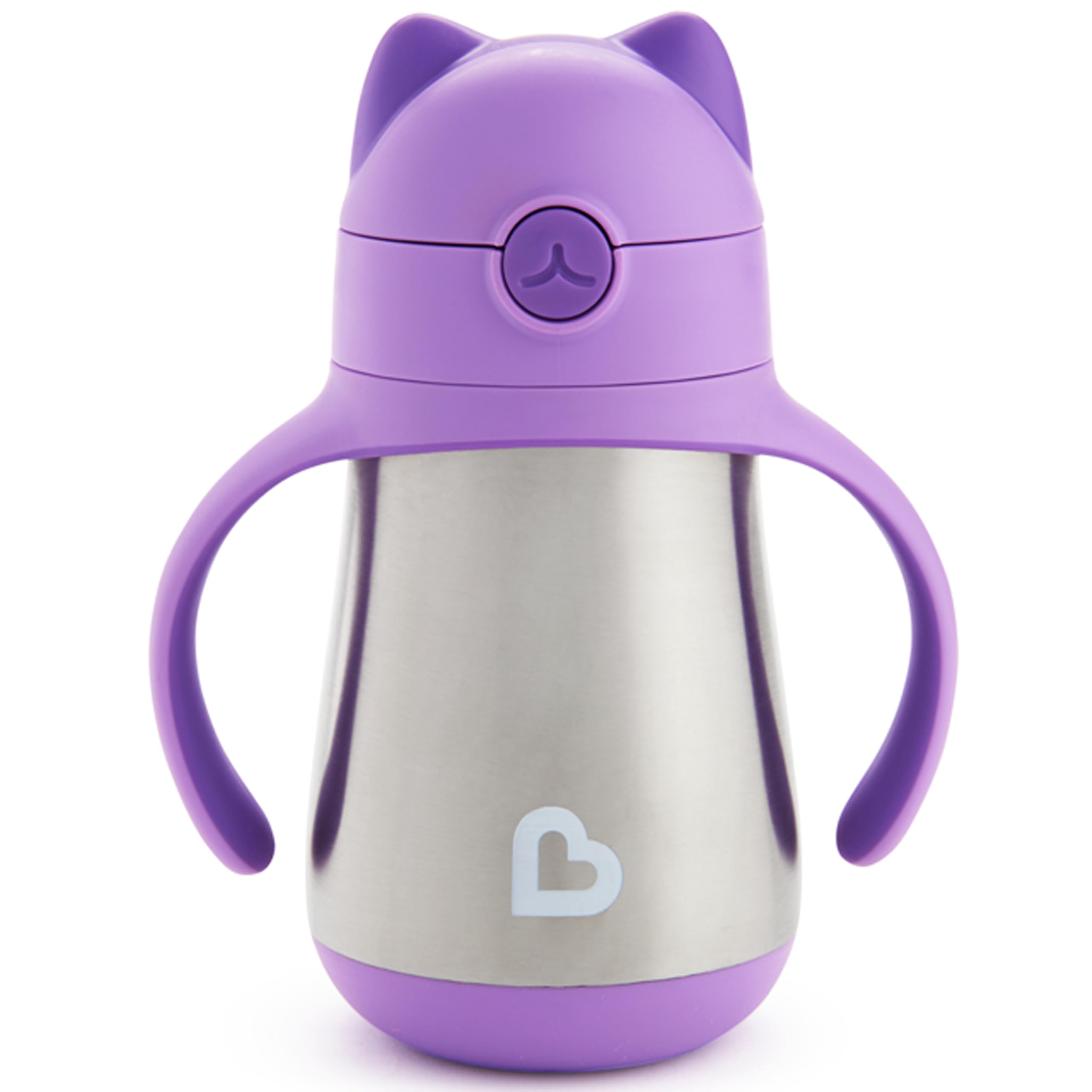
Munchkin Cool Cat SS Cup
Key Features
- Leak-Proof Reliability: Spill-proof valve
- Ease of Cleaning: Stainless steel, dishwasher safe
- Straw Drinkability: Valve, high suction
- Durability: Stainless steel cup, silicone straw
- Value per Cup: 1 cup
- Price: Mid-Range
This stainless steel cup keeps drinks cold for hours and the cute cat ears amuse toddlers. However, the straw requires strong suction and the cup frequently leaks when tipped, so it’s best suited for older toddlers (18m+) who can handle the effort and won’t travel with it.
Pros
- Keeps cold drinks chilled for hours with double-wall insulation
- Fun animal-ear design that toddlers enjoy and parents find appealing
Cons
- Straw is hard to suck from and cup leaks when not upright
Worth considering if your toddler is 18 months or older and you prioritize cold drinks over leak-proof convenience for home use.
Best for Premium Ppsu
GROSMIMI Magic Sippy Cup

Key Features
- Leak-Proof Reliability: Cross-cut spill-proof
- Ease of Cleaning: Simple, dishwasher safe
- Straw Drinkability: Cross-cut valve
- Durability: PPSU cup, silicone straw
- Value per Cup: 1 cup
- Price: Premium
The GROSMIMI cup uses high-grade PPSU that stays odor-free and includes a rotating handle for easy grip. Cleaning is straightforward. However, it costs more than a single cup should, the straw often frays within weeks, and it isn’t fully leak-proof during shaking — trade-offs that limit its daily value for most families.
Pros
- PPSU material resists odors and discoloration.
- Easy to clean and assemble.
Cons
- Straw can fray within weeks, especially with chewing.
Worth considering if you prioritize odor-resistant material and aesthetic over price and straw lifespan.
Best for Bottle Add-On
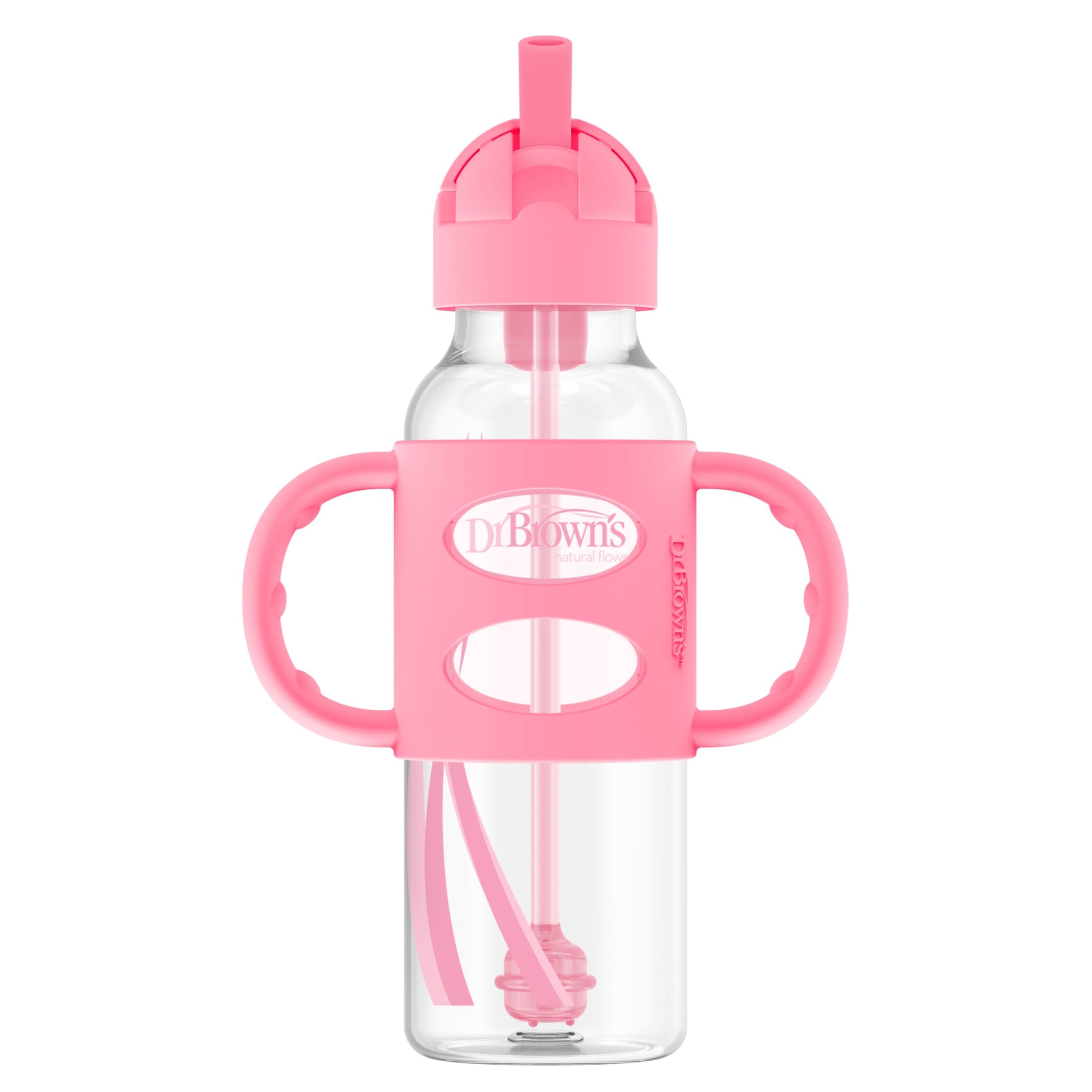
Dr. Brown’s Sippy Straw Bottle
Key Features
- Leak-Proof Reliability: Weighted straw with valve
- Ease of Cleaning: Simple, dishwasher safe
- Straw Drinkability: Valve, high suction
- Durability: Plastic cup, silicone straw
- Value per Cup: 1 cup
- Price: Budget
This straw cup fits Dr. Brown’s narrow bottles, making it an easy transition for families already using the brand’s bottles. However, the straw can be inconsistent—some users report no liquid comes out—and leakage is possible when assembled. It works best as a supplement for existing Dr. Brown’s users rather than a standalone cup.
Pros
- Fits Dr. Brown’s narrow bottles for seamless bottle-to-straw transition.
- Soft silicone handles are comfortable and removable for cleaning.
Cons
- Straw may require high suction or occasionally fails to deliver liquid.
Worth considering if you already have Dr. Brown’s narrow bottles and need a budget-friendly straw cup, despite potential straw inconsistencies.
Best for Weighted Straw
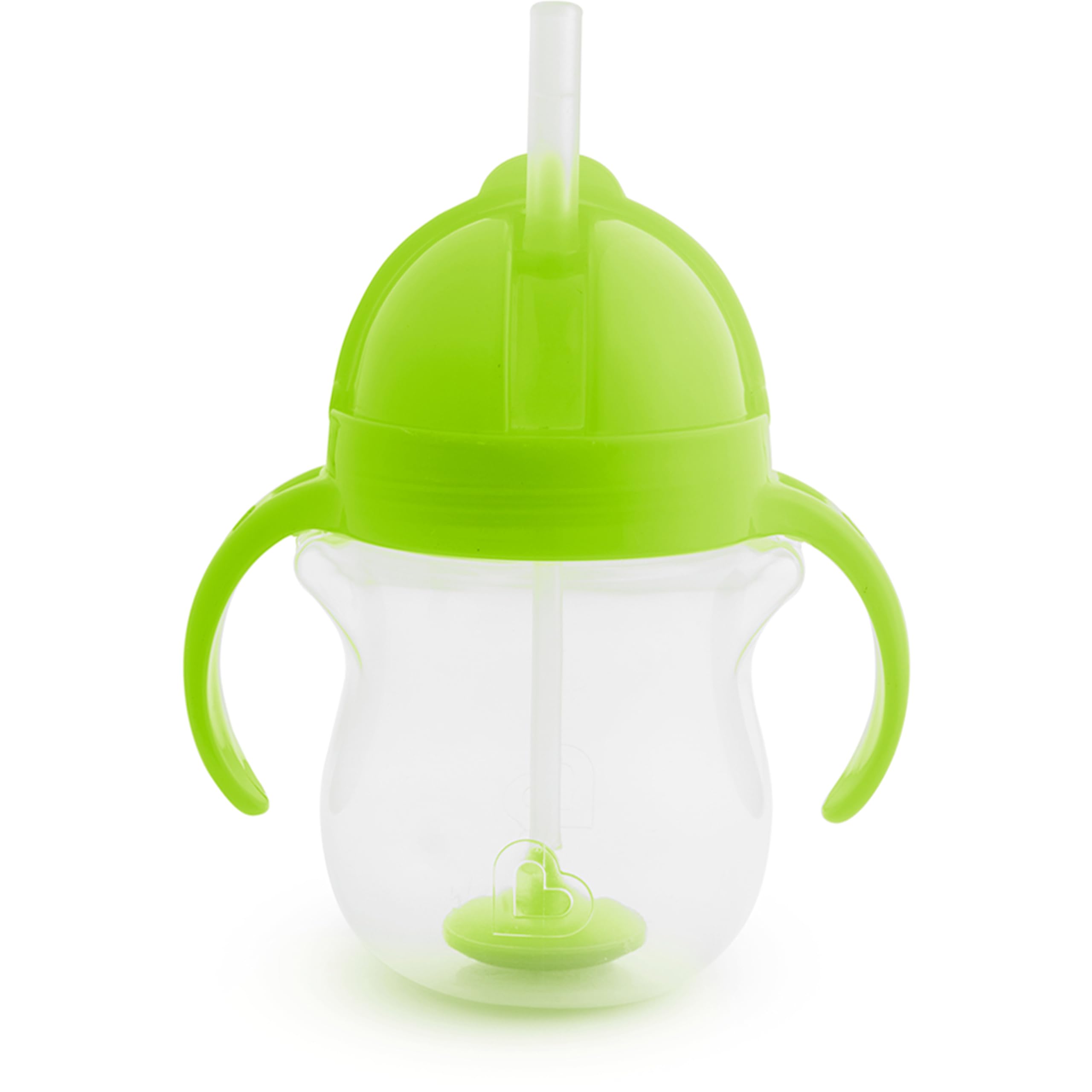
Munchkin Any Angle Cup
Key Features
- Leak-Proof Reliability: Weighted straw with valve
- Ease of Cleaning: Complex assembly, brush needed
- Straw Drinkability: Valve, high suction
- Durability: Plastic cup, silicone straw
- Value per Cup: 1 cup
- Price: Mid-Range
Toddlers love the weighted straw that drinks from any angle, and the cup is lightweight for little hands. However, this cup has a widespread leakage problem even when assembled correctly, and the straw and valve design traps liquid, making cleaning difficult and prone to mold. These issues make it a risky choice for everyday use.
Pros
- Weighted straw lets toddlers drink from any angle without tipping.
- Lightweight size fits small hands comfortably.
Cons
- Frequent leakage issues even when properly assembled.
Worth considering if your toddler enjoys the any-angle straw and you’re willing to accept occasional spills and extra cleaning effort.
How to Choose
Leak-proof claims rarely hold up in a diaper bag — look for cups with screw-on lids or convertible designs that seal without relying on a press-fit.
Leak-Proof Reliability
Most ‘spill-proof’ straw cups are only leak-resistant when upright. Shaking, tipping, or dropping almost always causes small straw leaks unless the cup has a vent or a secondary seal. Cups with screw-on lids and two-piece valves (like the 360 lid) tend to perform better than press-on silicone lids.
Ease of Cleaning
Straw assemblies with multiple tiny parts — valves, weighted balls, small gaskets — trap milk residue and grow mold quickly. Dishwasher-safe cups with fewer than four parts are easiest to maintain. If the straw requires a brush, factor in that extra step before every use.
Straw Drinkability
A straw that is too hard to suck frustrates babies and may cause them to refuse the cup altogether. Free-flow straws (no valve) are easiest for beginners but cause spills. Valve-controlled straws strike a balance but require some suction strength. Squeeze-to-learn cups give parents manual control over flow.
Durability
Silicone straws are gentle on gums but wear out quickly when chewed — expect replacements every few months for aggressive biters. Plastic cups with double-wall construction survive drops better than thin silicone tumblers, though silicone flexes and may pop lids off.
Value per Cup
Multi-packs lower the per-cup cost but often sacrifice name-brand engineering. Convertible cups (e.g., straw + 360 lids) offer more long-term value than single-function cups, especially for families who want one set to carry from 6 months to 18 months.
FAQ
Why does my toddler’s straw cup still leak even though it says spill proof?
Most straw cups use a valve that seals when upright but can leak when tipped because the straw itself remains open. Pressure changes from drinking also cause small drips. For a truly leak-proof experience in a bag, choose cups with a separate 360 lid or a screw-on cap that covers the straw entirely.
How do I clean a sippy cup straw to prevent mold?
Disassemble every part — straw, valve, lid gasket — and wash in hot soapy water immediately after use. Use a thin brush to scrub inside the straw, especially if weighted. If the cup is dishwasher safe, place parts on the top rack. Replace straws every 2–3 months if you notice a smell or discoloration.
Which straw cup is easiest for a 6-month-old to learn to drink from?
The First Years Squeeze & Sip is the most effective for beginners because its squeezable body lets you control the flow, teaching the sucking motion. Free-flow straw cups like the Olababy also work well but require the baby to generate all the suction. Avoid high-resistance valve cups until 12+ months.
Are silicone sippy cups better than plastic for teething babies?
Silicone cups are gentler on gums and safer if chewed, but their press-on lids often pop off with pressure or drops, causing more spills. Plastic cups with screw-on lids offer better spill security for on-the-go use. For supervised home use, silicone is fine; for daycare, a plastic screw-top is more reliable.