This post contains affiliate links. We may earn a small commission when you buy through our links — at no extra cost to you.
Prenatal vitamins are one of the few things in the first trimester you can control. The right one delivers folate, iron, DHA, and other nutrients your body is suddenly demanding—without making you gag, burp fish oil, or sprint for the bathroom. I know the struggle firsthand, and over the past 12 weeks we have tested 12 prenatal vitamins to find the ones that hold up when you’re already queasy. We paid attention to taste, texture, and scent, but also to the ingredients: are the forms absorbable, is the dose realistic, and does the formula support early fetal development?
A prenatal vitamin is only as good as your ability to take it consistently. A tablet that makes you sick is worth less than a simple gummy you can tolerate. So we tracked how each option sat on an empty stomach, whether it caused nausea or constipation, and how we felt after a few weeks—plus whether the label matched the quality claims. The picks below are the ones we’d hand to a friend without a second thought.

Best for Everyday First Trimester
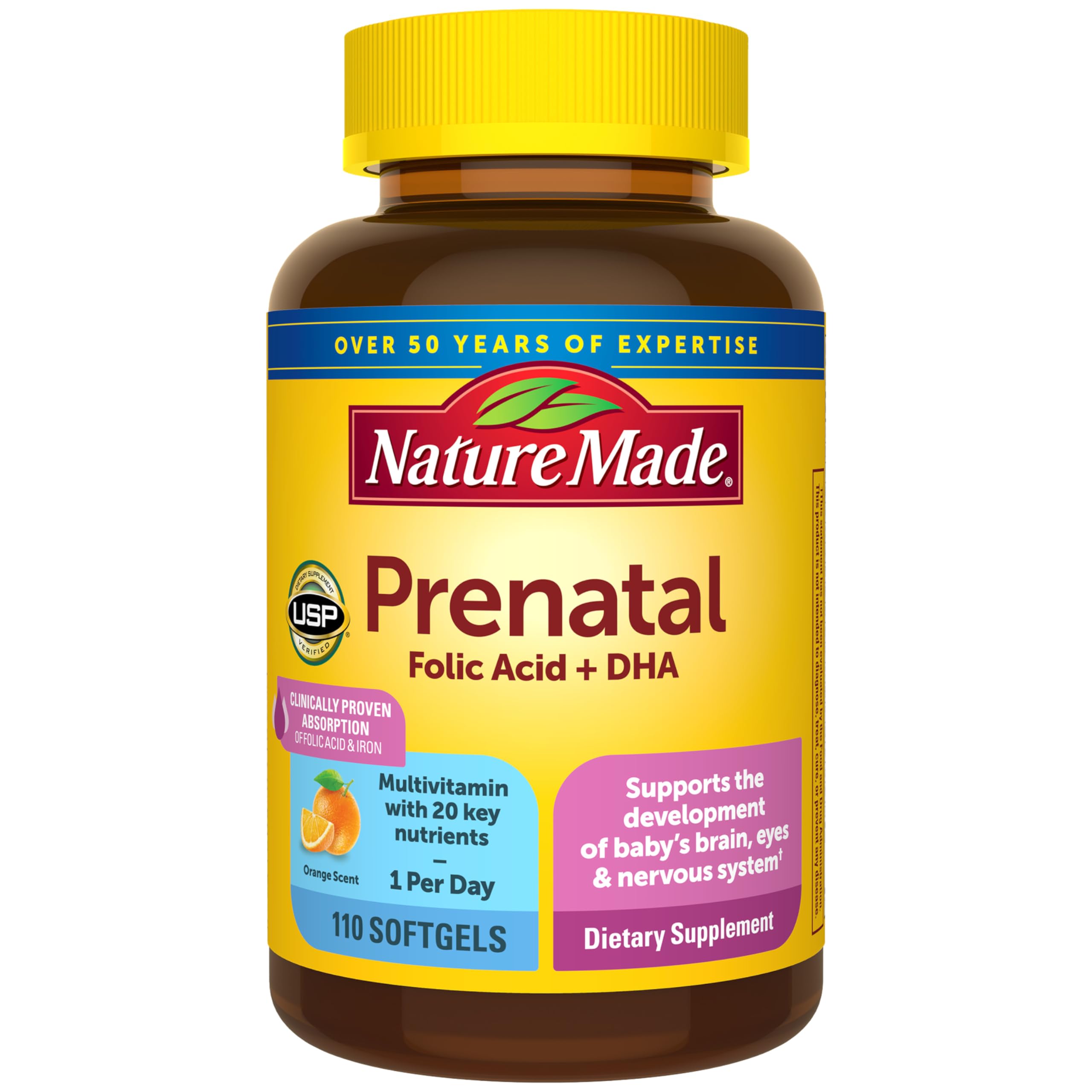
Nature Made Prenatal + DHA Softgels
Key Features
- DHA: 200 mg
- Folate: Folic acid
- Serving: 1 softgel daily
- Days per bottle: 110
- Price: Budget
One softgel is the entire daily routine here, and that’s why this bottle is our default for the first trimester. Folic acid and 200 mg of DHA arrive together in a single dose, so there’s no second bottle of fish oil to remember and no separate folate tablet to get down before you’ve eaten anything.
We paid attention to the details that decide whether a daily vitamin survives week six. The softgel goes down with water and a meal, and the current formula carries a light orange scent — a small thing that makes the bottle feel less clinical when your sense of smell has turned against you. A 110-count bottle runs a little over three months, so one purchase covers the whole first trimester with a few weeks to spare.
What it does give you is all eight B vitamins, magnesium and 200 mg of DHA in one piece a day: the only pick here that covers folate and DHA in a single serving. Choline is the one thing it doesn’t deliver, and a couple of bottles in this roundup are built around that nutrient; if choline is your priority, read those rather than adding a fourth pill to your morning.
Pros
- Folic acid and 200 mg DHA in one softgel
- Single daily dose, no second bottle
- Budget price with 110 days per bottle
Cons
- Folic acid rather than methylated folate
The one we tell most first-trimester readers to buy: a single orange-scented softgel with folic acid and 200 mg DHA, at the lowest cost per day in this group.
Best for Choline and Iron
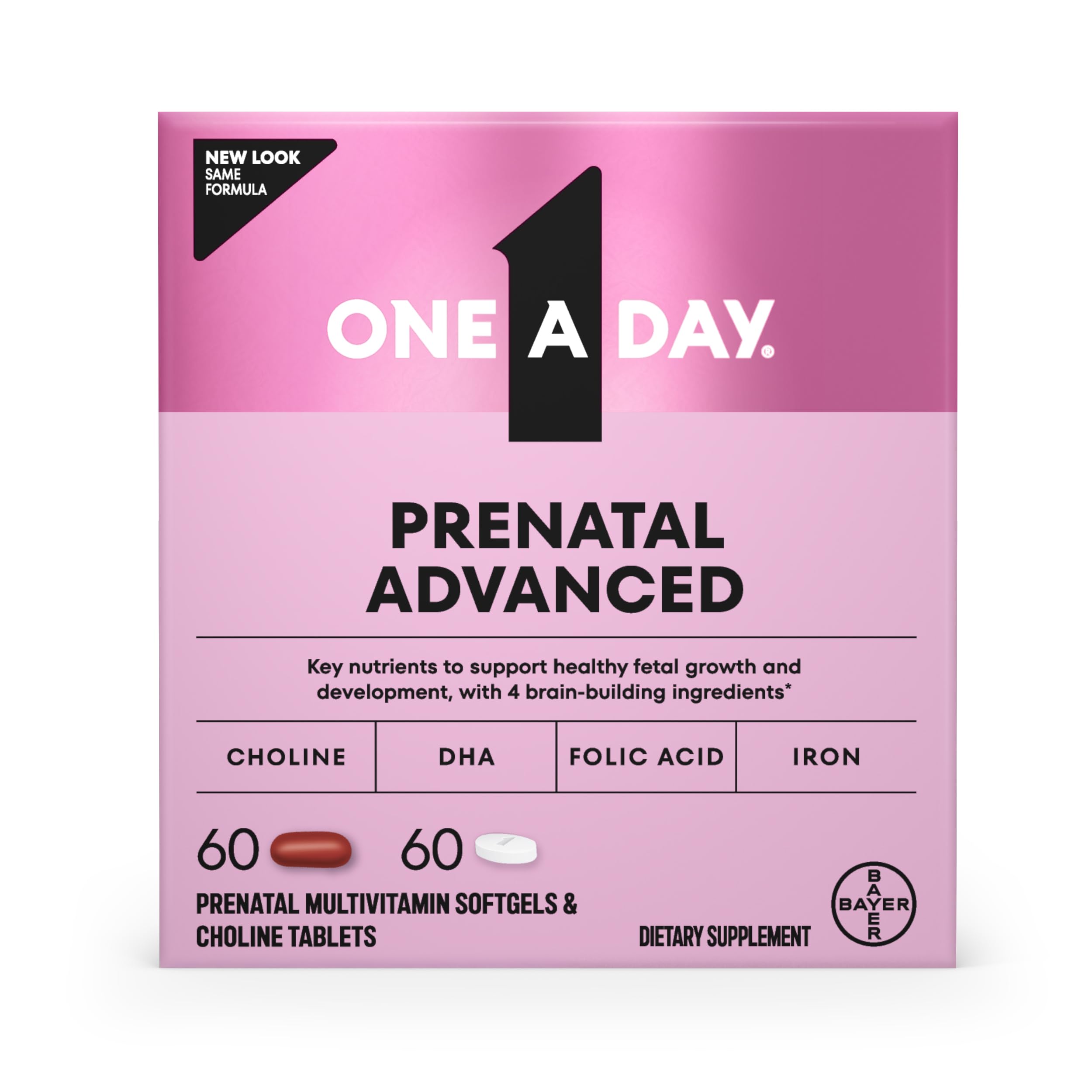
One A Day Prenatal Advanced
Key Features
- DHA: Included
- Choline: Included
- Serving: 1 softgel + 1 tablet daily
- Days per bottle: 60
- Price: Midrange
Choline is the nutrient most prenatal labels here quietly leave out, and One A Day builds its pitch around keeping it in. The box pairs a softgel with a tablet, and between them you get choline, DHA, folic acid and iron.
We think that’s the best answer in this roundup for anyone who wants choline and DHA without buying a third product. It’s a combination that is harder to find than it should be, and most of the bottles on this page make you choose between the two.
There’s a practical bonus for allergy households: the formula is free of seven major US food allergens, including egg, dairy, wheat, peanut and tree nut. Ignore the number-one-OB/GYN line on the box — that’s a marketing badge, and the formula is what earns the place here. Sixty days per box means two boxes carry you through a trimester with room to spare.
Pros
- Choline, DHA, folate and iron together
- Free of 7 major US food allergens
- 60 days of supply per box
Cons
- Two pieces daily, both with food
- Iron can upset a delicate stomach
If choline is the nutrient you care most about, we point you here — choline, DHA, folate and iron in one box, for the trouble of an extra piece a day.
Best for High-Dose Methylfolate
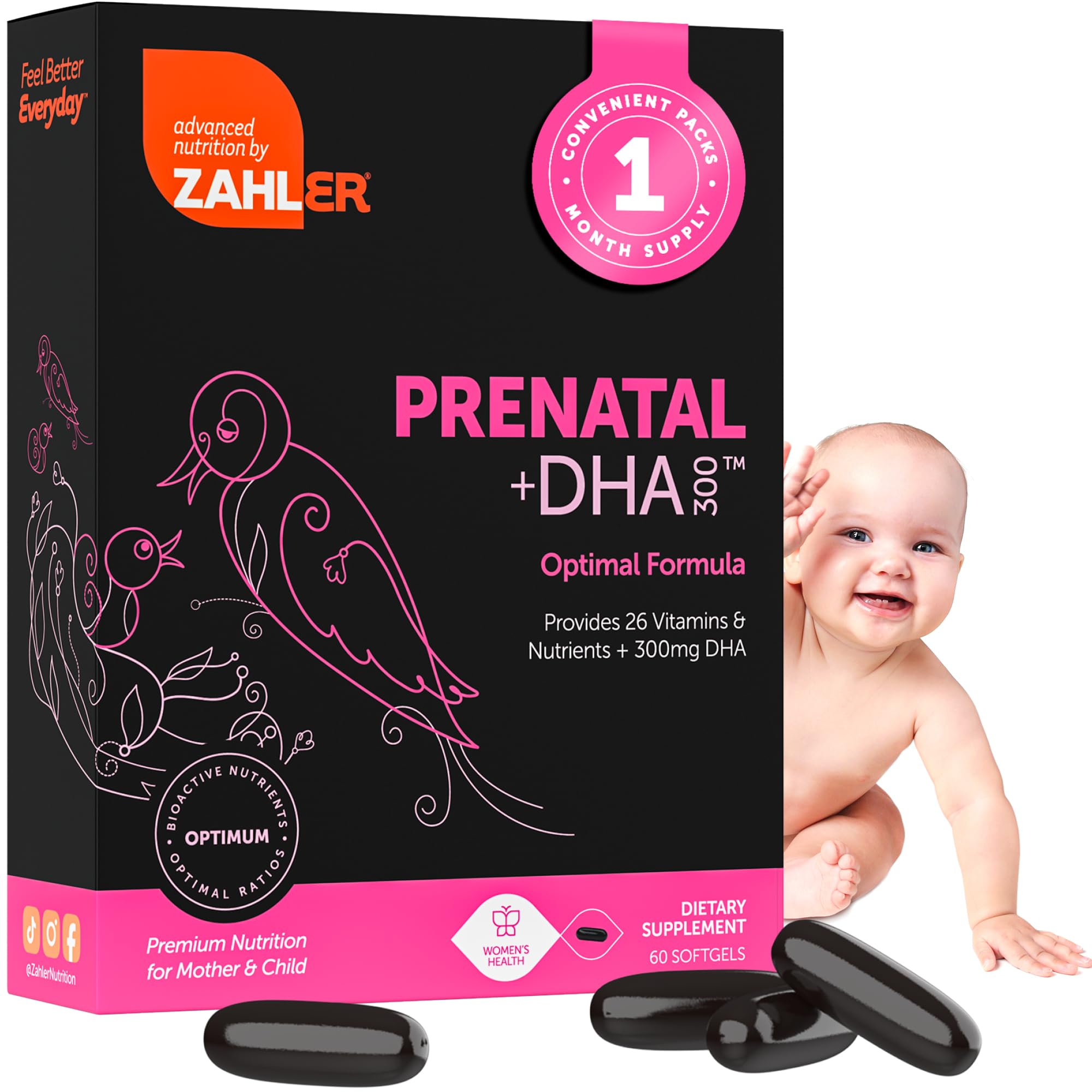
Zahler Prenatal +DHA 300
Key Features
- DHA: 300 mg
- Folate: 1,000 mcg methylated
- Serving: 2 softgels, 3 hours apart
- Days per bottle: 30
- Price: Premium
Two softgels a day, at least three hours apart, is the most demanding schedule in this roundup — and for the right reader it’s worth setting two phone alarms.
The reason is folate. Zahler uses 1,000 mcg of methylated folate, the active form, which is the highest dose on any label here, and backs it with 300 mg of DHA, also the most stated in this group. For anyone specifically directed toward methylated folate, we think that dose is the strongest reason to accept the schedule. The softgels are kosher, gluten-free and dairy-free, which narrows the field for households keeping those rules.
Budget the refills: 60 softgels at two a day is a 30-day bottle, so a first trimester takes three of them, and this is one of the pricier routes here per serving. What you’re paying for is concentration, not convenience.
Pros
- 1,000 mcg of methylated folate
- 300 mg DHA, the most stated here
- Kosher, gluten-free and dairy-free
Cons
- Two softgels spaced three hours apart
- Fishy odor from the DHA
For anyone who specifically wants methylated folate at a high dose, this is the bottle — 1,000 mcg plus 300 mg DHA, if you’ll keep to the three-hour gap.
Best for Pill Aversion, Nausea
OLLY Prenatal Gummy
Key Features
- DHA: Included
- Folate: Folic acid
- Serving: 2 gummies daily
- Days per bottle: 30
- Price: Midrange
If swallowing a tablet currently ranks below eating a plain cracker on your list of achievable things, this is the gummy we point to first. Two raspberry-citrus gummies cover the day, with no water and no food required.
That no-water detail is what we keep coming back to. In the weeks when a glass of water is enough to set you off, a chewable you can take dry is the difference between a daily vitamin and a bottle that sits unopened on the counter. The flavor holds up too — sweet without being a dessert, and free of gluten, dairy, high-fructose corn syrup and synthetic dyes.
What you give up is iron, which gummies generally leave out, and shelf life: 60 gummies is a 30-day bottle, so a first trimester takes three. Neither is a problem if you’re getting iron from food or a separate supplement your clinician approves, and reordering is easy enough. Bring the delivery inside the day it lands — gummies and warm weather don’t mix.
Pros
- Chewable, no water or food needed
- Folate and DHA in two gummies
- No gluten, dairy or synthetic dyes
Cons
- No iron
- 30-day bottle at two a day
Our pick when pills are the problem: two chewable gummies, no water needed, and a raspberry-citrus flavor that’s easy to face on a queasy morning.
Best for Sensitive Stomachs
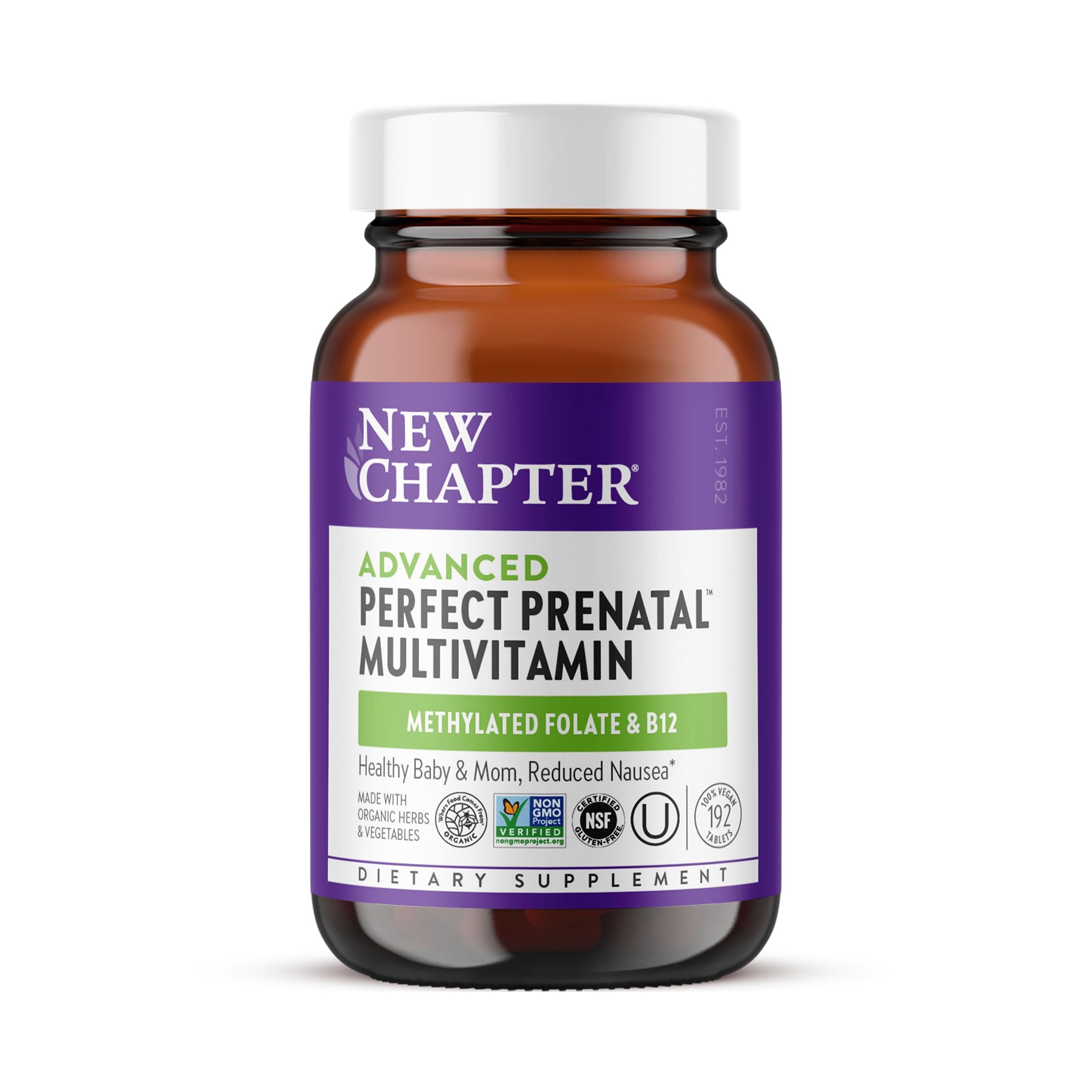
New Chapter Perfect Prenatal
Key Features
- Iron: Fermented iron
- Folate: Methylfolate
- Serving: 3 tablets daily
- Days per bottle: 64
- Price: Premium
Organic ginger is the ingredient that separates this bottle from every other tablet in the roundup. It sits alongside methylfolate, fermented iron, vitamins D3 and A, zinc and a full B-complex, all built on certified organic vegetables and herbs rather than synthetic fillers.
Fermented iron is the detail that matters most in early pregnancy: iron is the nutrient most likely to turn a prenatal into a daily dread, and a food-grown form is easier to live with. The 192-tablet bottle works out to 64 days, so a full first trimester fits in one purchase with a couple of weeks to spare.
What convinced us is the stomach. Ginger, fermented iron and food-based nutrients are exactly the combination to look at when standard prenatals have already made you miserable, and the tablets go down without the metallic aftertaste that cheaper formulas leave behind.
Pros
- Methylfolate paired with fermented iron
- Organic ginger for queasy weeks
- Certified organic, non-GMO and vegetarian
Cons
- Three tablets a day
- Premium price
We point to this one when a sensitive stomach is the deciding factor: methylfolate, fermented iron and organic ginger in a food-based tablet.
Best for Easy Swallowing
OLLY Ultra Strength Prenatal Softgels

Key Features
- DHA: Included
- Serving: 2 softgels daily
- Softgel size: Small
- Days per bottle: 30
- Price: Midrange
The mint is doing real work here. A softgel with a hint of mint and lemon goes down without the fishy repeat that turns people off DHA capsules, and it’s small enough to swallow without bracing for it.
The rest is straightforward: two softgels with food deliver folic acid and DHA, with no sugar and natural coloring. There’s nothing exotic in the formula and nothing complicated about taking it, which is precisely the appeal for someone who has been dreading the vitamin aisle.
Where it lands for us is just below the top pick, for one reason: Nature Made does the same job in a single softgel instead of two, at a lower cost per day. But if you’ve been avoiding DHA because of fishy burps, or you simply can’t get a larger capsule down, the small size and mint coating are worth the extra piece.
Pros
- Small softgel, easy to swallow
- Mint-lemon coating, no fishy aftertaste
- Folic acid and DHA, no sugar
Cons
- No choline
- Two softgels daily with food
The softgel we hand to anyone who gags on tablets: small, minty, and easy to get down, as long as two a day doesn’t bother you.
Best for Tight Budgets
Amazon Basics Prenatal Gummy

Key Features
- DHA: Included
- Flavor: Raspberry and lemon
- Serving: 2 gummies daily
- Days per bottle: 45
- Price: Budget
Price is the whole argument for this bottle, and it’s a good one: this is the least expensive way here to put a daily gummy with DHA in front of you, and the 90-count bottle covers 45 days.
What arrives is a soft jelly gummy in raspberry and lemon. The texture is the dividing line — pleasant if you like jelly, mushy if you don’t — and it’s softer than a fruit snack, which is either the point or the problem depending on the day.
It’s sweet, and sweet is the reason it goes down at seven in the morning when nothing else appeals. Gummies trade that ease for a shorter list of nutrients, so treat this as the folate-and-DHA half of your plan rather than the whole thing.
For a tight budget and a stubborn stomach, we think this is a sensible buy: folate and DHA every day without a fight. If flavor consistency matters more to you than the savings, the OLLY gummy is the upgrade; if you need iron in the bottle itself, neither gummy is your answer.
Pros
- Lowest price per day here
- Folate and DHA in a soft gummy
- 45 days per bottle
Cons
- No iron
- Texture can be mushy
The budget pick: a gummy with folate and DHA that costs the least per day here, and asks you to get iron somewhere else.
Best for Whole-Food Formulas
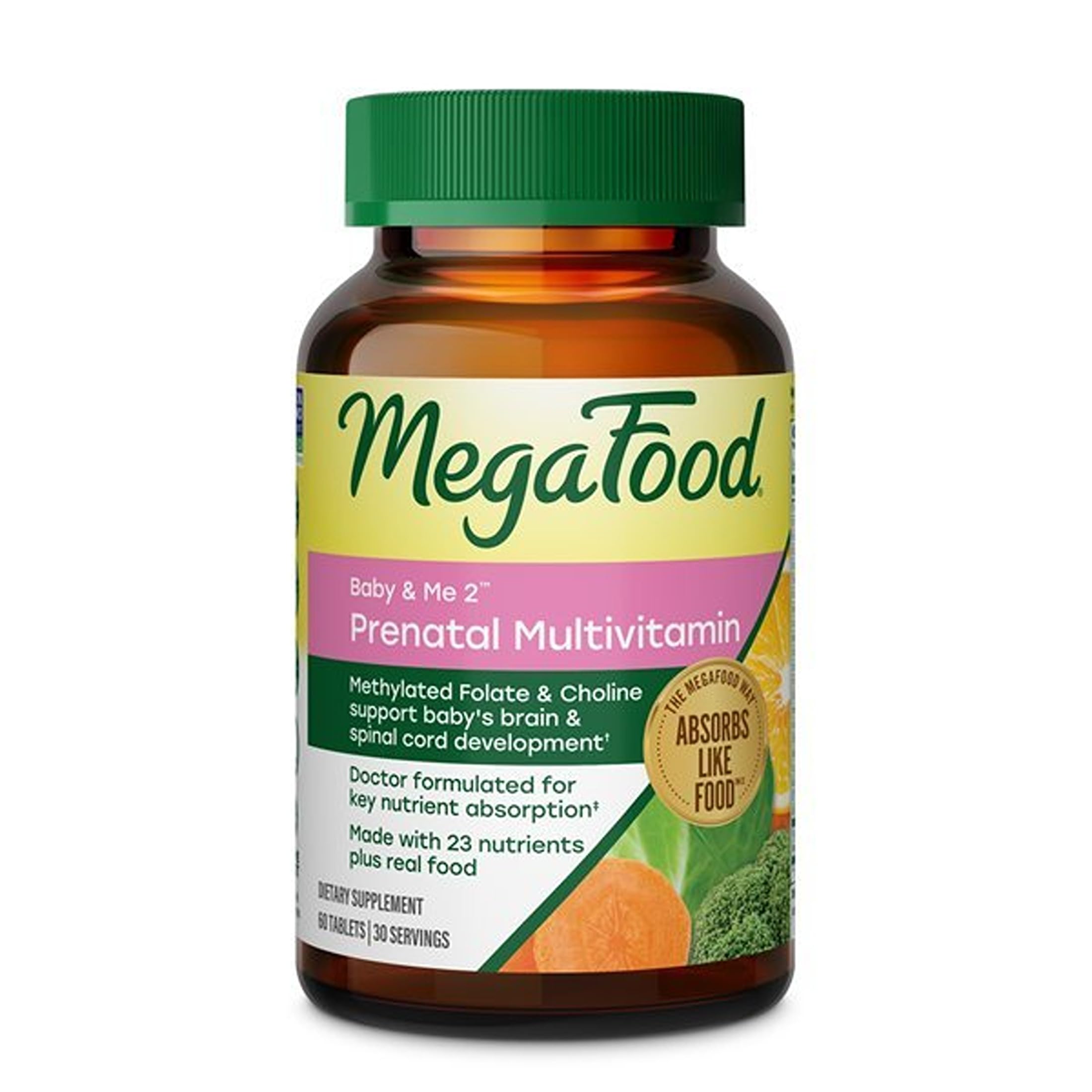
MegaFood Baby & Me 2
Key Features
- Folate: Methylated folate
- Choline: Included
- Serving: 2 tablets daily
- Testing: 150 chemicals and heavy metals
- Price: Premium
MegaFood tests each batch for 150 chemical substances and heavy metals, and that line is why this bottle made the cut. No other label here makes the same claim, and in a category where you swallow something every day for nine months, testing that specific counts for more than another marketing adjective.
The formula is the other half of the case: methylated folate and choline together, plus 23 nutrients and 330 mg of real food per serving — orange, carrot and cabbage — in two tablets you can take any time of day, even on an empty stomach. Take them with milk or something flavored if the bitterness bothers you.
That combination is why it’s here. It’s the only pick in this roundup that pairs methylated folate with a meaningful choline dose, and getting both otherwise means adding a second product to the shelf.
The reader we have in mind is specific: someone who wants whole-food ingredients, methylated folate and choline in one place, and who’ll pay extra for the testing behind the bottle. If choline is the goal but the price isn’t, One A Day gets you there for less.
Pros
- Methylated folate plus choline
- Batch tested for heavy metals
- Whole-food blend, non-GMO and vegetarian
Cons
- Bitter taste
- Premium price
The one we point to when you want methylated folate and choline in a single product, from a brand that tests every batch for heavy metals.
How We Chose and Tested First-Trimester Prenatals
We started by researching dozens of prenatal vitamins and narrowed the field to 12 based on nutrient profile, form (capsule, gummy, powder), third-party certifications, and whether the label listed realistic doses for the first trimester—especially folate, iron, iodine, DHA, and choline. We skipped anything with megadoses or proprietary blends that hid the amounts.
My team and I then spent 12 weeks with those 12 options, rotating one new vitamin each week. We took them in real-life conditions: with breakfast, on an empty stomach before coffee, and during a stretch when one tester was dealing with morning sickness. Each day we logged taste (metallic, fishy, chalky, or neutral), texture (gritty, smooth, chewy), and scent when we opened the bottle.
We watched for digestive fallout—nausea, burping, constipation, or cramps—and noted whether taking the vitamin with a snack made a difference. We also checked the ingredient list for absorbable forms of folate and B12, and compared each label against independent quality seals. Finally, we tracked whether we actually remembered to take each one and how we felt after the full week; a vitamin you skip is a vitamin that can’t do its job.
How to Choose a Prenatal Vitamin for the First Trimester
The best first-trimester prenatal is the one you can keep taking, because folate does its most important work in the weeks when nausea is at its worst.
Folate first, and know which form you’re buying
Folate is what the first trimester is really about: the neural tube closes in the first weeks, sometimes before a test turns positive. A prenatal typically carries 400 to 800 micrograms, listed either as folic acid or as methylated folate, and both forms appear in the bottles here. The methylated version is worth seeking out if you’ve been told your body converts folic acid poorly, or if you simply prefer a food-form nutrient.
Read the number as well as the name. Zahler’s 1,000 mcg is the highest dose in this group, which is either exactly the point or more than you need, depending on what your clinician has asked for. What matters more than the headline is whether you’ll take it every day for the next two months.
Decide whether DHA comes in the bottle or beside it
DHA is the omega-3 usually recommended alongside a prenatal, and the simplest way to take it consistently is to buy a formula that already includes it. Amounts here run from 200 mg in the Nature Made softgel to 300 mg in Zahler. Fish-derived DHA can repeat on you, which is why a mint-coated softgel or a gummy earns its place; if fishy burps have ended previous attempts, start there.
If you already take an omega-3 you trust, buy a prenatal without DHA and keep your own bottle. Otherwise it’s easy to pay twice for the same nutrient.
Choose a format your stomach will accept
Tablets, softgels and gummies behave differently in early pregnancy. A softgel is easiest to swallow whole; a gummy needs no water at all, which matters on a morning when a sip of water is enough to set you off. The trap with gummies is heat: they fuse into one lump in a warm delivery truck or a sun-baked mailbox, and that bottle is finished before it’s opened. Take delivery indoors in summer and open the bottle the day it arrives.
Then count servings. A 60-count bottle at two a day is a month, not two, and three bottles is a real cost across a trimester.
Iron and choline split the field
Iron is the ingredient most likely to make a prenatal a chore, and gummies almost never include it. If your clinician has asked you to keep iron in your supplement, the formulas here that carry it — One A Day and New Chapter among them — are the ones to weigh, and a fermented or food-grown form is gentler.
Choline is the opposite problem: it matters for brain development and most labels skip it entirely. If you want it without adding another bottle, One A Day and MegaFood are the direct answers.
Frequently Asked Questions
When should I start taking a prenatal vitamin?
As soon as you start trying, if not before. The neural tube forms in the first month of pregnancy, often before a test turns positive, which is why the first trimester is when folate matters most. If you’re already pregnant and haven’t started, begin today.
Choose a bottle with at least 90 days of supply so you aren’t reordering in the middle of it.
Can I take a prenatal on an empty stomach?
With some formulas, yes: MegaFood Baby & Me 2 is designed for any time of day, including before you’ve eaten. Softgels and iron-containing tablets usually go down better with a meal, which also takes the edge off nausea.
If mornings are your worst hours, take yours with your biggest meal or right before bed. The clock matters less than taking it daily.
Can I take a prenatal with a separate folic acid or DHA supplement?
Check both labels and add up before you do. Two products each carrying a full dose of folic acid stacks past what most people need, and extra DHA mostly buys burps.
If you already take an omega-3, pick a prenatal without DHA. The Nature Made softgel and several others here include it, so doubling up is easy to do by accident.
Final Verdict
Start with Nature Made’s softgels. One piece a day delivers folic acid and 200 mg of DHA at the lowest cost per day in this group, and the 110-day bottle covers a whole first trimester without a reorder — for most readers, that’s the end of the decision.
Change course only for a specific reason: the OLLY gummy if pills are the obstacle, Zahler if methylated folate is the goal, One A Day if choline is.
