This post contains affiliate links. We may earn a small commission when you buy through our links — at no extra cost to you.
Every parent wants a balance bike that won’t tip over, but many discover that the stable 4-wheel bike their toddler loves becomes too small within months. Meanwhile, 2-wheel options that promise years of use can feel wobbly for a first-time rider. The real trick isn’t finding the perfect bike—it’s matching the design to your child’s current walking ability and your expectations for how long it should last.
This guide focuses on the two biggest factors: stability during those first wobbly steps and adjustability for the months that follow. We’ve separated bikes that excel at immediate safety from those that offer true balance training and a longer lifespan. For a 1-year-old, the safest choice often trades long-term growth for instant confidence—but a few options manage to deliver both.



Best for First Bike Indoor
SEREED 4-Wheel Balance Bike
The SEREED’s four-wheel configuration gives toddlers a genuinely stable platform to learn balancing—no tipping, no frustration. Assembly takes minutes without tools, and the lightweight aluminum frame makes it easy for little ones to maneuver. The retro appearance is a hit with kids, adding to the appeal.
This bike is best for 12-18 month olds using indoors on hard floors. The fixed seat means most children outgrow it by 18 months, so it’s a short-term first bike rather than a long-term investment. For caregivers wanting a safe, no-fuss introduction to riding, this fits the bill precisely.
Pros
- Very stable 4-wheel design prevents tipping
- Tool-free assembly in minutes
- Size suited for 12-18 month old beginners
Cons
- Seat not adjustable; bike becomes too small for many toddlers after 18 months
Buy this if you need a stable first balance bike for a 12-18 month old using indoors. Skip it if you want a bike that grows with your child beyond 18 months.
Best for Ages 1-4
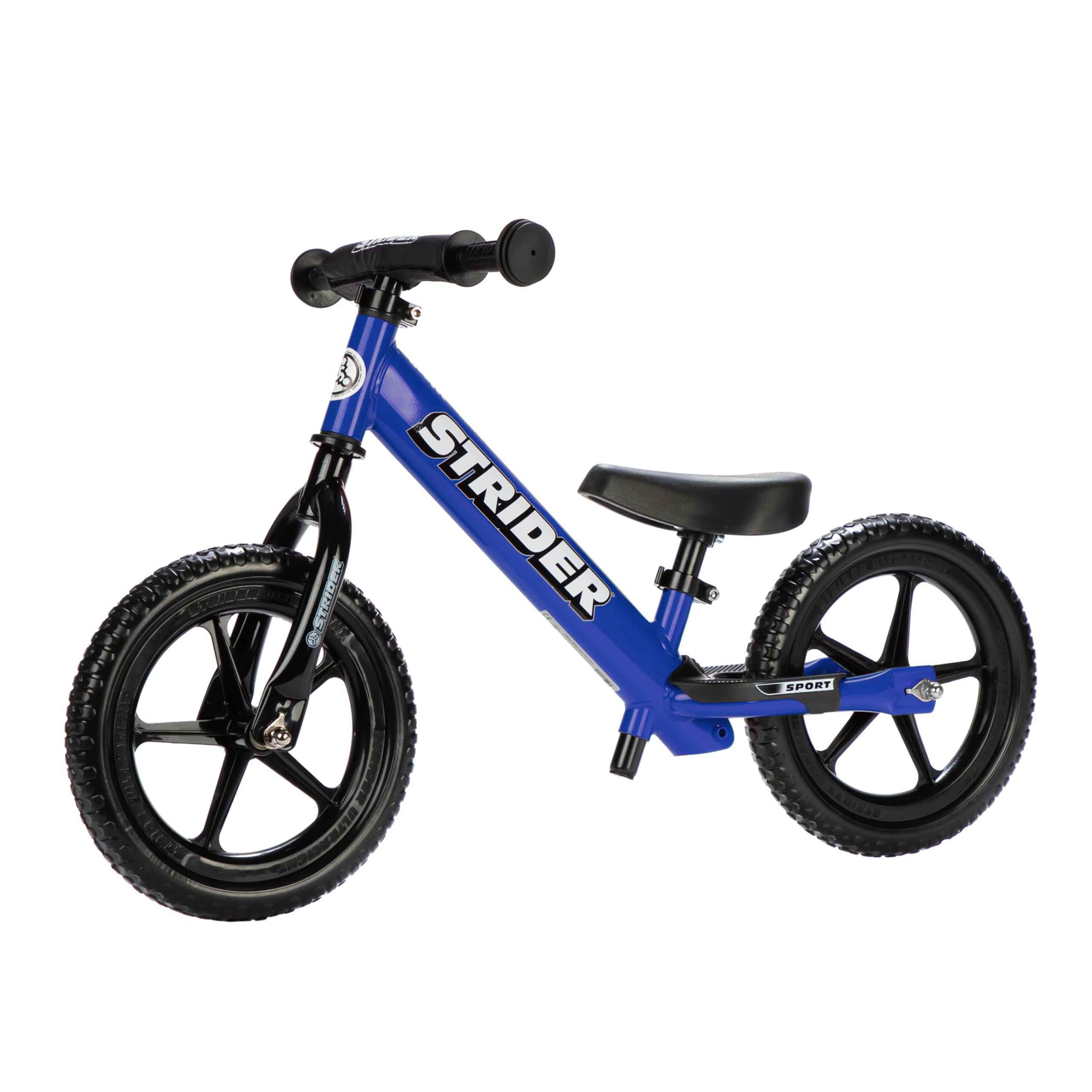
Strider 12 Sport Balance Bike
The Strider 12 Sport is the long-term investment pick. Unlike the top-rated 4-wheel models that max out at 18 months, this steel‑frame 2‑wheeler grows with your child via tool‑free seat and handlebar adjustments (11–17 in seat height). At 6.7 lbs it’s light enough for toddlers to manage, and the flat‑free tires roll easily on grass, gravel, and pavement. The trade‑off: it demands some walking ability — it’s not as stable for non‑walkers as a 4‑wheel bike. A few owners also note the grips can slip on very small hands, though the vast majority find it teaches true balance and coasting better than any 4‑wheel option.
Pros
- Adjustable seat and handlebars extend use from age 1 through 4+
- Tool‑free assembly and adjustments simplify setup and daily tweaks
Cons
- Handlebar grips may slip on very small hands
- Not as stable for non‑walkers as 4‑wheel balance bikes
Buy this if you want one bike that lasts from first steps to preschool, can handle outdoor use, and will survive hand‑me‑downs.
Best for Budget, Interactive
Umatoll Adjustable Balance Bike
Unlike the fixed-seat top pick, this bike’s three-position adjustable seat lets a child use it from early waddling through later cruising, and the light-up rear wheels and small basket add genuine entertainment. At 3.3 pounds, it’s easy for a one-year-old to steer and for parents to carry. The size still works best for the 12-18 month range; taller toddlers may outgrow the frame before the seat reaches its highest setting. It’s a smart, affordable choice for families who want interactive fun and a bit more room to grow than the SEREED offers.
Pros
- Adjustable seat accommodates growth over several months
- Light-up wheels and basket add novelty without extra batteries
- No-tool assembly snaps together in minutes
Cons
- Some toddlers surpass the frame before reaching 18 months
- Wheel lights can appear dim and need moderate speed to activate
Buy this if you want a budget balance bike with an adjustable seat that keeps up with your 12–18 month old, plus fun light-up wheels. Skip it if your child is already on the taller side or you need a bike that lasts well past 18 months.
Best for Indoor, Beginner
Gamfeiny Light-Up Balance Bike
The Gamfeiny’s light-up rear wheels glow with motion (no batteries required), making it the most visually stimulating bike for young toddlers. Assembly takes about three minutes without tools. However, compared to the top pick, it has more stability issues on tight turns—some kids tip when steering sharply. Also, the small frame fits best up to about 18 months; many 2-year-olds outgrow it. This bike works well for 12-18 month olds who are just learning balance, especially for indoor play where turns are gentler.
Pros
- No-battery light-up rear wheels provide entertainment during movement.
- Tool-free assembly takes about three minutes out of the box.
Cons
- Some toddlers tip when making sharp turns due to stability limits.
- Small frame fits best for children up to about 18 months.
Buy this if you want a visually engaging first bike for a 12-18 month old who will ride mostly indoors. Skip it if your child is over 18 months or needs stable steering on sharp turns.
Best for Novelty, Indoor
YGJT Spotty Dog Balance Bike
The YGJT Spotty Dog stands out with a moving-eyes design that captures toddlers’ attention and makes playtime fun. Assembly takes just minutes, and the carbon steel frame feels sturdy for indoor use. However, unlike the top pick’s 4-wheel stability, this 2-wheel bike tips easily when turning due to the narrow wheelbase — best suited for children who already have some balance and will use it on carpet. The seat is hard and narrow, which some kids find uncomfortable. It works as a novelty gift for 1-year-olds who are past the wobbly stage.
Pros
- Adorable design with eyes that move with handlebars
- Easy assembly in just a few minutes
- Sturdy build quality for a 2-wheel bike
Cons
- Narrow wheelbase makes the bike tip easily during turns
- Seat is hard and narrow, causing discomfort for some children
Buy this if you want a hilarious novelty bike for a child who already has some balance and will mostly ride indoors. Skip it if your toddler is still wobbly or needs maximum stability.
Best for Young Toddler
Retrospec Cricket Balance Bike
The Retrospec Cricket wins on looks and low-center stability, making it a natural first bike for babies still perfecting their walking—but the fun is brief. The 4-wheel design keeps wobbling to a minimum, and the vintage aesthetic is widely praised. However, most children outgrow the tiny frame by 15 months, and several owners report hub caps or axle parts loosening after a few weeks. This is best seen as a short-term indoor confidence builder for 9- to 15-month-olds, not a bike that will see a second year of use.
Pros
- Stable 4-wheel design with low center of gravity
- Retro appearance that toddlers and parents enjoy
- Arrives 95% assembled, ready in minutes
Cons
- Hub caps and axle parts can come loose with regular use
- Fits only 9–15 months; most outgrow it before age two
Buy this if you want a stylish, stable first bike for a very young toddler (9–15 months) used mostly indoors. Skip it if you need a longer-lasting bike or plan regular outdoor play.
Best for Girls, Budget
BEKILOLE Princess Balance Bike
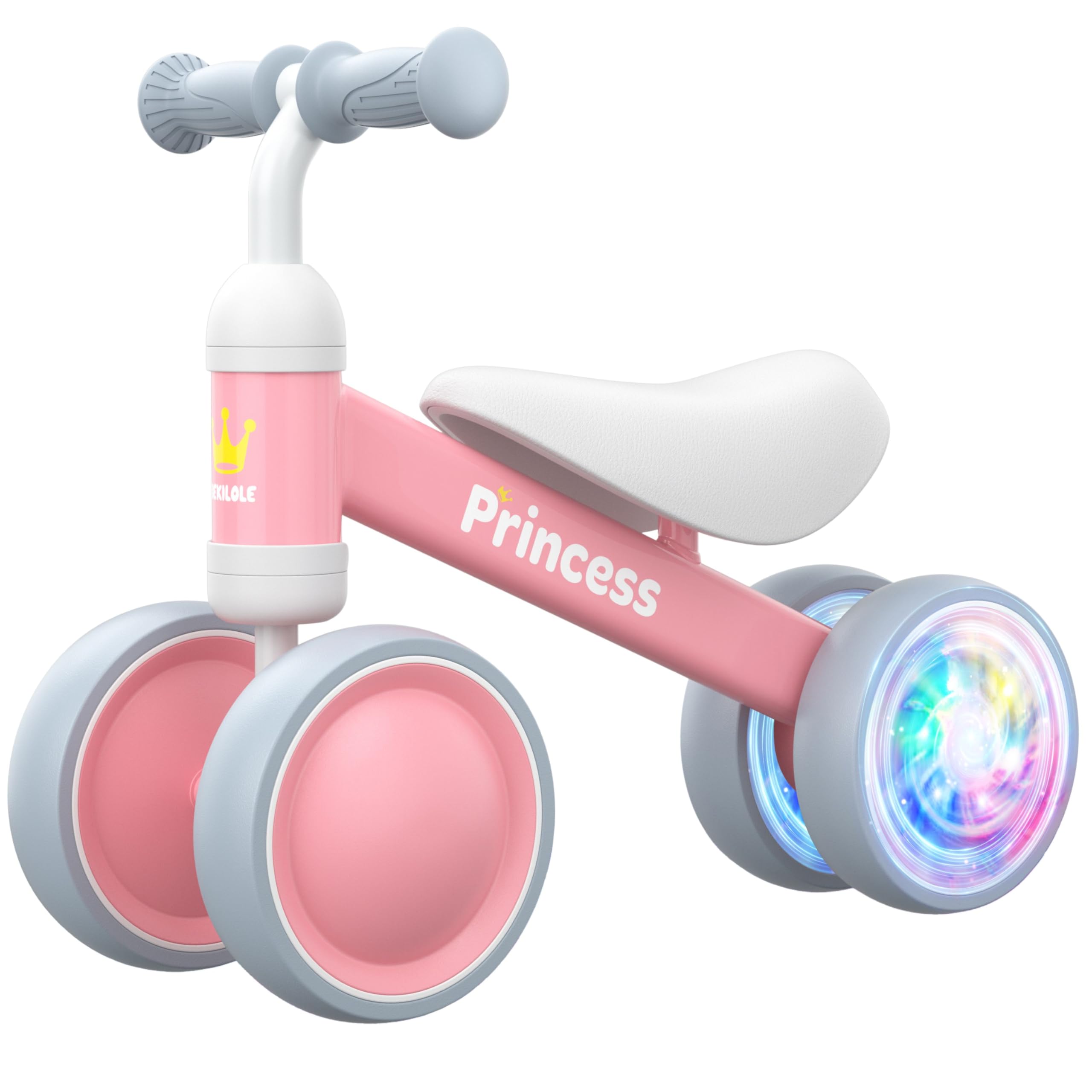
The pink princess theme and flashing wheels delight toddlers, and assembly takes two minutes. However, durability is a gamble — some units break within a month — and the small frame only fits until around 18 months.
Pros
- LED wheels engage toddlers without batteries.
- Assembly completes in under two minutes.
Cons
- Fits only up to 18 months; some buyers report breakage within a month.
Worth considering if you need an ultra-budget first bike for indoor princess-themed play and are okay with it lasting only a few months.
Best for Boys, Indoor
WETIFY Light-Up Balance Bike

The WETIFY offers solid carbon steel construction and tool-free assembly at a budget price. Rear wheels light up for visual appeal. However, the fixed seat and small frame fit an average child only until 18 months, and similar options like the Umatoll provide adjustable seats for longer use. The SEREED also has a more extensive track record with over 15,000 reviews.
Pros
- Sturdy construction and solid feel
- Easy tool-free assembly
Cons
- Fits only up to 18 months for average child
Worth considering if you want an affordable indoor first bike for a 12-18 month old boy who enjoys light-up wheels.
Best for Girls, Indoor
WETIFY Pink Balance Bike

This pink version delivers the same solid build and no-battery light-up rear wheels as the black model, with tool-free assembly that takes minutes. It’s suited for indoor play and brings a fun color option for toddlers. But like its sibling, the small frame limits use to roughly 12–18 months, and lights only appear on the rear wheels.
Pros
- Pink color variant specifically marketed for girls.
- Easy tool-free assembly with light-up rear wheels.
Cons
- Same limitations as black version: small size, lights only on rear.
Worth considering if you want a pink balance bike for a 12–18 month old girl who will primarily ride indoors and you value quick setup and light-up fun.
Best for Eco, Indoor
Hape Wooden Scoot Around Bike
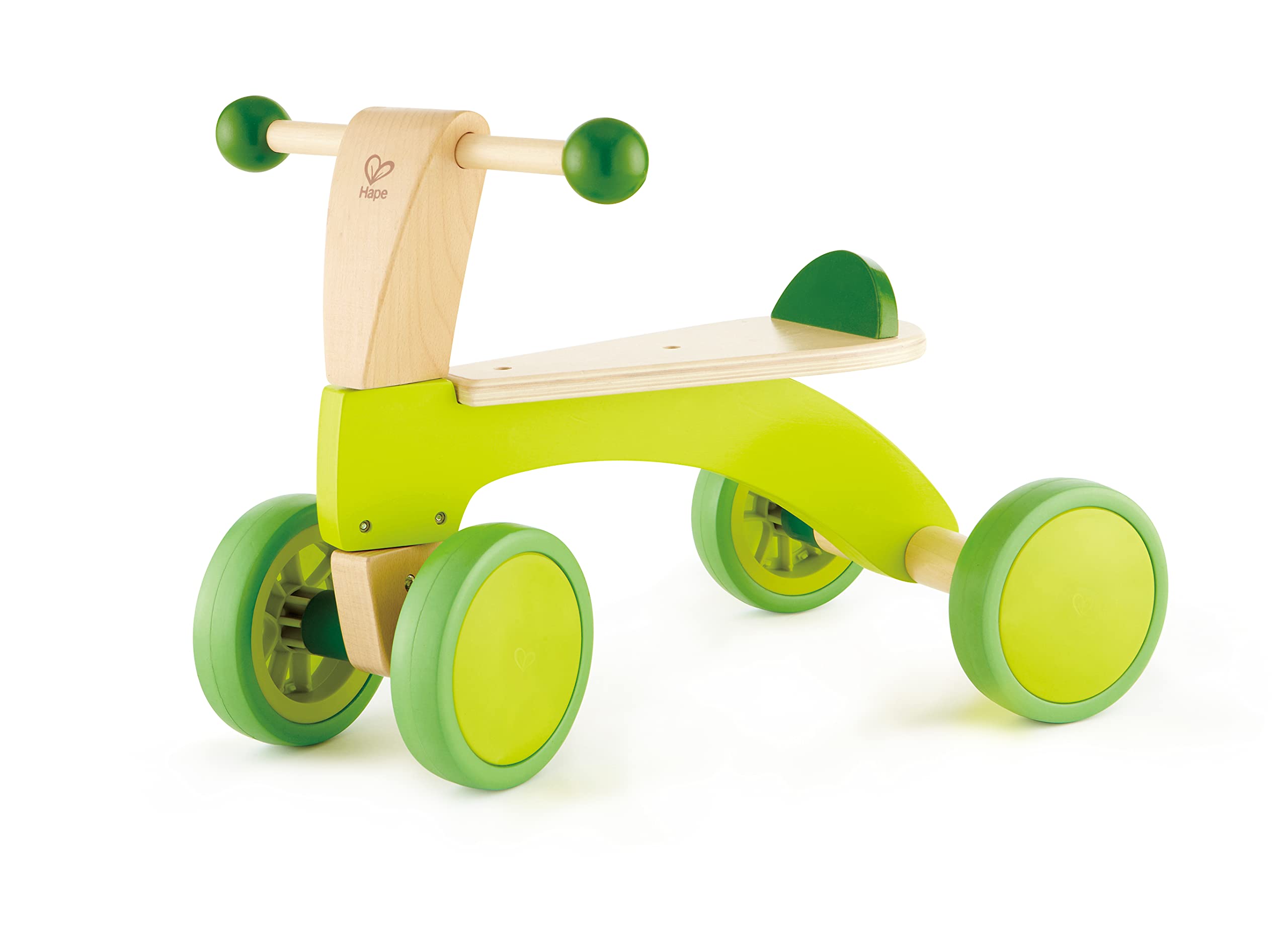
The Hape Scoot Around impresses with its wooden build, award-winning design, and floor-friendly rubberized wheels. It’s best for indoor cruising by young toddlers. However, multiple owners report the handlebars loosening over time, and the wheels struggle on grass. Given the premium price for a short indoor-only lifespan, it’s a niche pick for design-focused parents rather than a practical first bike.
Pros
- Beautiful wooden construction with eco-friendly materials.
- Silent rubberized wheels protect indoor floors from scratches.
Cons
- Handlebars can loosen over time, causing wobbliness during use.
Worth considering if you’re an eco-conscious parent seeking a beautiful indoor display bike for a 1-year-old who won’t ride outdoors.
How to Choose
The most important factor is not the bike’s stability today but how long it will still fit after your child grows.
Number of Wheels: 4 vs 2
Four-wheel bikes offer a stable platform that prevents tipping, making them ideal for toddlers who are still learning to walk confidently. Two-wheel balance bikes encourage true balancing skills but require the child to already have some coordination. For a 1-year-old, a 4-wheel design is typically the safer starting point, though it won’t teach coasting as effectively.
Weight
Lighter bikes are easier for toddlers to lift, steer, and stop without frustration. A bike over 5 lbs can feel cumbersome for a 1-year-old. Look for aluminum frames or ultralight plastic options. The lightest models around 3.3 lbs allow even the smallest children to maneuver independently.
Seat Adjustability
A fixed seat limits the bike’s usable life to the child’s current leg length. Adjustable seats let the bike grow with your toddler, often extending use from 12 months to 2 years or more. Measure your child’s inseam before buying—a bike that fits now may be too small in three months.
Wheel Material and Noise
Hard plastic or rubberized wheels are quiet on indoor floors and protect surfaces. Foam-filled tires are best for outdoor use but can be noisy on pavement. For indoor play, silent wheels are a must to avoid disturbing others. Light-up wheels add fun but don’t affect performance.
Steering Limit
A steering limiter (often 135 degrees) prevents the front wheel from turning too sharply, reducing the risk of tip-overs. This is especially important for 4-wheel bikes where a sudden turn can catch the rider off guard. Models without a limiter require more coordination from the child.
FAQ
What size balance bike is best for a 1-year-old?
For a 1-year-old, look for a bike with a seat height between 8 and 11 inches. Most 4-wheel bikes have a fixed seat around that range. Measure your child’s inseam while they’re standing in shoes. If the inseam is 9-10 inches, a standard 4-wheel bike should fit. If they’re taller, consider a 2-wheel bike with an adjustable seat that can go lower.
Are 4-wheel balance bikes safer for toddlers?
Yes, 4-wheel bikes are more stable and less likely to tip over when a toddler turns or leans. They are the safest choice for beginners who are still mastering walking. However, they don’t teach true balancing skills as effectively as 2-wheel bikes, so children may need to transition to a 2-wheeler later. For a 1-year-old, the added stability outweighs the long-term learning benefit.
Do balance bike light-up wheels need batteries?
Most light-up wheels use kinetic energy—they light up when the wheels spin, requiring no batteries. This means they only activate when the bike is moving fast enough. For slow indoor scooters, the lights may not turn on, which can disappoint some kids. The lights are visible to parents and onlookers, not the rider.
How long does a 1-year-old typically use a balance bike?
Most 4-wheel budget bikes are outgrown by 18 months because the seat is fixed. A premium 2-wheel bike with an adjustable seat can last from age 1 up to 4 years. If you want a single bike for multiple children, invest in one with a wide seat height range. Otherwise, expect to replace a budget bike within six months.