This post contains affiliate links. We may earn a small commission when you buy through our links — at no extra cost to you.
Newborns arrive with a built-in contradiction: they sleep best upright and moving, attached to a person, which leaves you one-handed for the coffee and empty-handed for everything else. That’s the gap a wrap or sling fills. It also means an 8-pound wriggler is held against your chest by fabric and knots alone, and the differences between one wrap and the next surface fast — the one that feels deliciously soft in the package can be sagging below your waistband by the second errand.
I’ve tied on plenty that were adorable and then needed redoing every ten minutes, so my team and I spent six months with 12 wraps and slings to find the ones that actually hold. The surprise, for me, was that stretch is a trade-off rather than a spec to max out: a little give keeps a newborn snug and forgives a sloppy tie, but too much and you’re retying in a parking lot. The picks below run the full range, from quick ring slings to long stretchy wraps.


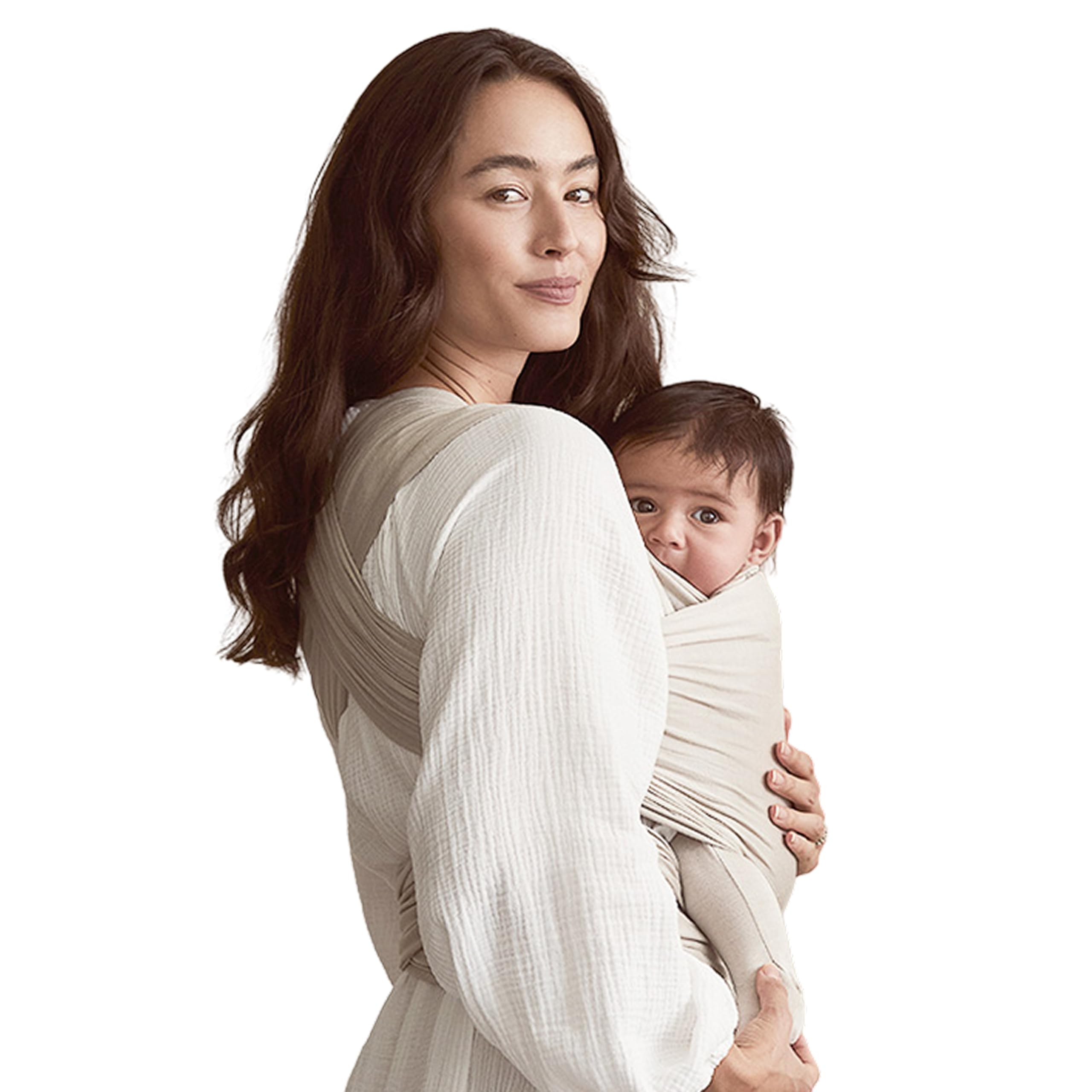
Best for Everyday All-Rounder
KeaBabies Original Wrap
Key Features
- Care: Machine wash cold, tumble low
- Fabric width: 21.5 in
- Fabric length: 202.5 in
- Stated weight range: 7 to 35 lb
- Price: Midrange
A wrap that starts at 7 lb and runs to 35 lb is doing two jobs: it holds a newborn who cannot yet support their head, and months later it becomes a hip carry for a baby who wants to see the world. KeaBabies gets that range out of 202.5 inches of fabric, and the length is what makes the one-size claim honest — there is enough tail left to knot whether you are petite or broad across the shoulders.
This is the wrap we recommend first, and the reason is dull in the best way: nothing about it gets in the way. The stretch blend ties snug and stays there through a nap, the 21.5-inch width covers a newborn from shoulder to knee, and it goes in the machine on cold with a low tumble — which matters more than any specification once a wrap has been spat up on twice in a week. Tie it tighter than feels natural. The fabric relaxes as the baby settles, and a loose tie is the difference between a carry that holds and one you are hitching up all afternoon.
The one thing we would change is the tail. Two hundred inches is a lot of fabric to keep off a wet sidewalk while you are tying, so put it on before you leave the house rather than in a parking lot. Otherwise this is the wrap that suits the most people: the softest-feeling of the tie wraps here, and one of the less expensive ones.
Pros
- Stated 7 to 35 lb range covers newborn through toddler
- 202.5-inch length fits a wide spread of body sizes
- Machine wash cold with low tumble, no hand washing
- Stretch holds a snug tie without constant readjusting
Cons
- Long tail is awkward to manage while tying
We tell first-time parents to start here: it ties snugly, survives the washing machine, and its stated 7 to 35 lb range keeps working long after the newborn fog lifts.
Best for Cold-Weather Contact Naps
Boba Baby Wrap
Key Features
- Fabric: 95% cotton, 5% spandex
- Length: 198 in
- Fabric width: 18 in
- Stated weight range: 7 lb to 10 kg
- Price: Midrange
Boba’s wrap is a cold-weather carrier, and we mean that as praise. The 95% cotton, 5% spandex blend is the most substantial fabric of the tie wraps here — it has a heft that feels reassuring when you are tying it around a two-week-old in November, and it is the one we put away in a heatwave. Warmth is the trade you make for that hold.
What the weight buys is a carry that stays put. Tie it once and the four-way stretch keeps its shape through a nap and a walk, the 198-inch length leaves a generous tail for taller wearers, and it is certified hip healthy by the International Hip Dysplasia Institute. Comfort across the shoulders is near the top of this group: the fabric spreads the baby’s weight rather than digging in at one point.
The ceiling is the detail to check before you buy. Boba lists the top of the range at 10 kg, so plan on a first-year wrap rather than one you will still be knotting at 18 months — plenty for a newborn and a six-month-old, not much beyond. Everything else about it is a classic for a reason: the tie is well documented, the fabric keeps its shape through repeated washing, and it is the wrap we hand to anyone whose baby is due in the cooler half of the year.
Pros
- Substantial cotton blend holds a firm, stable carry
- Hip-healthy certified by the International Hip Dysplasia Institute
- 198-inch length leaves a generous tail for taller wearers
Cons
- Traps heat in warm weather
- Stated 10 kg ceiling ends toddler use early
This is the wrap to buy for a baby arriving in autumn: the most substantial cotton blend here holds a beautiful carry, and it is genuinely too warm for August.
Best for Hot Weather and Errands
Boba Ring Sling
Key Features
- Size: 78 by 27 in
- Fabric: 52% bamboo viscose, 48% linen
- Carry styles: Front and hip
- Stated weight range: 3.6 to 15.8 kg
- Price: Midrange
A ring sling does the thing a tied wrap cannot: it goes on in a parking lot without re-tying six feet of fabric, and you snug it by pulling the tail through the rings. Boba’s version is 78 by 27 inches of bamboo and linen, and it is the pick here for quick ups and downs.
The weave is the other half of the argument. Bamboo viscose and linen is a cooler, lighter fabric than the cotton wraps in this group, and it drapes rather than clings — which makes it the one to pack for a summer trip or a warm-climate errand. It folds small enough to live in a diaper bag, so it earns a place even if you already own a stretchy wrap.
What you accept in return is asymmetry: all the weight sits on one shoulder. For a quick shop or the walk to the school gate that is a fair trade, and the fabric spread across your back helps; for a two-hour nap it is not, and that is when we go back to a two-shoulder wrap. It also takes a few goes to seat a newborn deep enough without the fabric bunching, so practice with a doll before the baby arrives.
Pros
- Adjusts with a pull instead of a full re-tie
- Bamboo-linen weave is the coolest fabric in this group
- Folds into a diaper bag for errands
Cons
- One shoulder carries the whole load on long walks
- Newborn seating takes practice to avoid bunching
For quick errands and hot afternoons we reach for this one: a bamboo-linen ring sling that goes on without re-tying anything and packs into the diaper bag.
Best for Solo Newborn Duty
Koala Babycare Cuddle Band
Key Features
- Care: Hand wash only
- Design: Two bands, no tying
- Fabric: Cotton
- Stated weight range: 2 to 9 kg
- Price: Premium
If you will be alone with a newborn — nobody to hold the fabric taut while you slide a sleeping baby into a tie — the Koala Cuddle Band is the one to get. It is two cotton bands you pull on like a T-shirt, with an outer band that goes over to snug the baby against your chest. No tail, no knot, nothing dragging on a public floor.
It is the easiest carrier here to get on and off unaided, and the difference shows at 3 a.m. when you are doing it in the dark. The cotton is soft and breathable, and the two-band tension gives a snug hold without the guesswork of a tie. The limits are real, though: the stated range runs 2 to 9 kg, the lowest ceiling in this group, so this is a newborn-and-infant carrier rather than something you will still use at 18 months, and it is hand wash only. If that matches your first year, the trade is worth making every time.
Pros
- Goes on and off without help or tying
- Soft cotton with good back and shoulder support
- Fits a wide range of wearers in one size
Cons
- Stated 9 kg ceiling is the lowest here
- Hand wash only, no machine cycle
If you will be alone with a newborn, buy this: it pulls on like a T-shirt with no tying at all, as long as you accept a 9 kg ceiling and hand washing.
Best for Summer Newborns
Solly Baby Wrap
Key Features
- Fit: One size
- Care: Machine wash
- Fabric: 100% TENCEL Modal
- Stated weight range: 8 to 25 lb
- Price: Premium
The Solly is 100% TENCEL Modal, and you notice it the moment you unfold it: thinner and airier than the cotton wraps here, with a drape closer to a favorite T-shirt than to a carrier.
That is the whole case for it. A heavy cotton wrap turns a July walk into a sweat for both of you; this one keeps air moving, and it is the wrap we hand to anyone due in June or July. It is certified hip healthy and ties the same way as the others, so there is no new technique to learn.
Two things temper that. The stated range stops at 25 lb, so this is a baby carrier rather than a toddler one, and the Modal is light enough that you need to be fussy about getting the tie tight — a thin fabric forgives less than a thick cotton blend. Get it right and the reward is a carry that feels like almost nothing on a hot day.
Where it lands: the best wrap here for heat and the nicest fabric against a newborn’s skin, at the highest price in this group and with a shorter run than the cotton wraps. Buy it for a summer baby; buy the KeaBabies if you want one wrap that lasts into toddlerhood.
Pros
- Breathable TENCEL stays cool in summer heat
- Hip-healthy certified by the International Hip Dysplasia Institute
- Machine washable, unlike the other premium pick
Cons
- 25 lb ceiling ends carrying at the baby stage
- Highest price of the picks here
The summer-baby wrap: the lightest, airiest fabric here against a newborn’s skin, worth the premium only if breathability matters more to you than a long life.
Best for Budget Everyday Wrap
Cuddlebug Baby Wrap

Key Features
- Care: Machine wash
- Size: 180 by 18 in
- Fabric: Cotton-polyester blend
- Stated weight range: 3.2 to 16 kg
- Price: Budget
Cuddlebug’s wrap does the thing a stretchy wrap exists for: a fussy newborn settles against your chest within a minute or two, and you get both hands back for the next few hours. The fabric is a plain cotton-polyester blend, 180 by 18 inches, and it ties like wraps that cost noticeably more.
It is certified hip healthy, and the carry stays snug enough to cook, fold laundry, or push a stroller one-handed. Convenience is what makes it worth owning — this is the wrap that turns a contact-napping newborn into a portable one, and the fabric held up through repeated washing without going shapeless.
Fit is the caveat. At 180 inches it is shorter than the KeaBabies and Boba wraps, and it runs snug, so larger wearers run out of tail before they run out of wrap. Average-sized wearers will not notice. Given it is one of the least expensive wraps here, that is a limitation rather than a dealbreaker — just do not buy it for a body it was not cut for.
Pros
- Hip-healthy certified cotton-polyester stretch
- Snug carry that frees both hands for chores
- One of the least expensive full-size wraps here
Cons
- Runs snug, with little tail for larger wearers
A sensible mid-priced wrap that ties like the expensive ones, with one caveat worth taking seriously: it runs snug, so larger wearers run out of tail.
Best for Lowest-Cost Starter Wrap
Jeroray Baby Wrap

Key Features
- Care: Machine wash
- Fabric: Rayon and spandex
- Closure: Tie
- Stated weight range: 8 to 35 lb
- Price: Budget
The Jeroray is the least expensive wrap here, and it is the one we point people toward when they are not sure they will take to wrapping at all. It is a long rayon-spandex tie with plenty of stretch, and it does the same job as wraps selling for noticeably more: soft against a newborn, easy to snug, and long enough for most body sizes.
The fabric is thick, which cuts both ways. It is cozy in cool weather and it runs warm on a humid afternoon — of the wraps here, this is the one least suited to summer. The stretch also gives over a long carry, so check the passes and re-tighten before you head out rather than halfway around the block.
None of that makes it a bad buy; it makes it a first wrap. If you are buying one carrier to see whether wrapping works for you and your baby, this is the cheapest way to find out, and it holds a newborn as well as anything else on this page.
Pros
- Least expensive wrap in this group
- Soft, stretchy fabric that snugs a newborn easily
- Long length suits a range of body sizes
Cons
- Thick fabric runs warm in summer
The cheapest way to find out whether wrapping suits you and your baby — soft, long, and thick enough that we keep it out of the summer bag.
Best for Learning Carry Positions
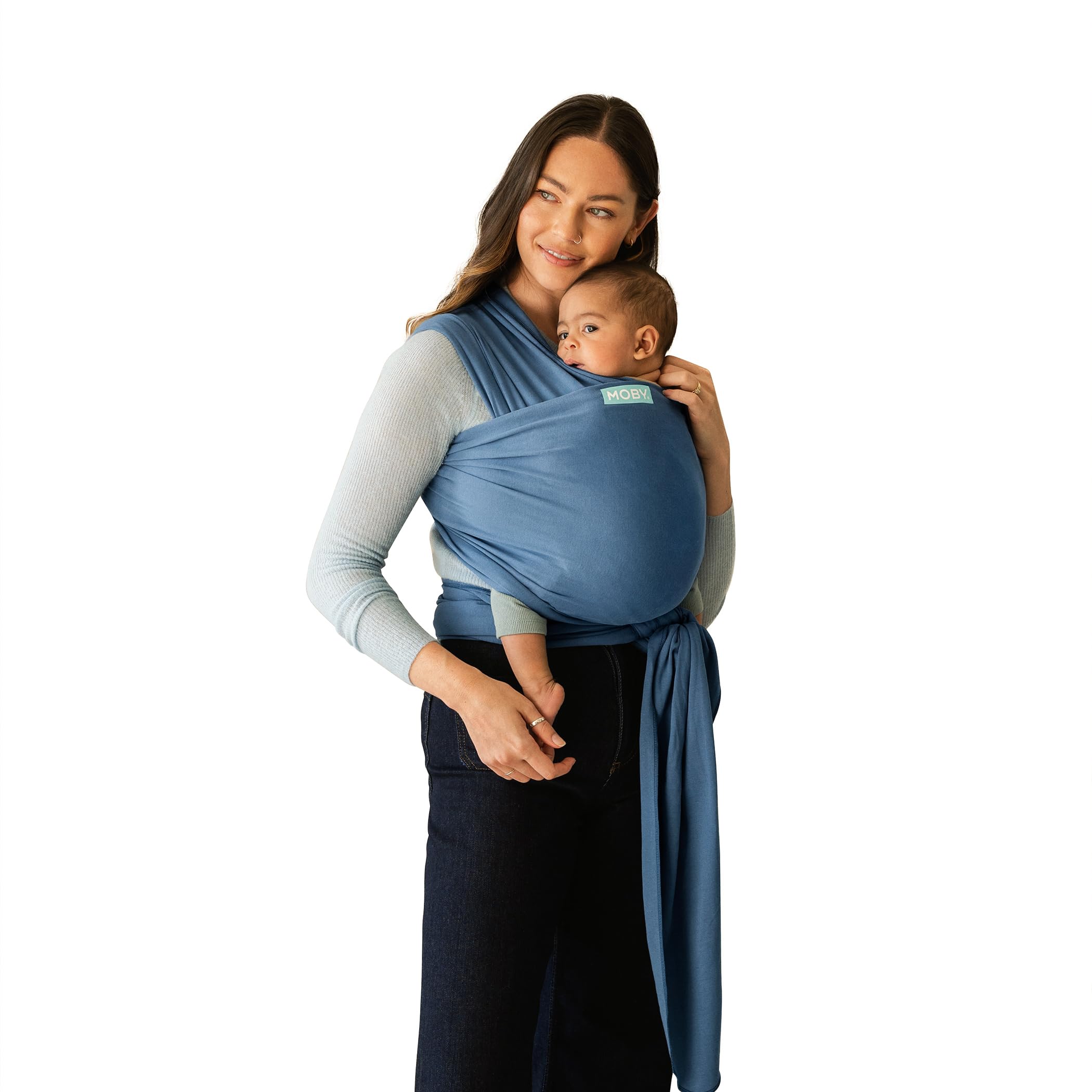
Moby Classic Wrap
Key Features
- Fabric: Cotton
- Length: 18 ft
- Positions: Five documented holds
- Stated weight range: 8 to 33 lb
- Price: Midrange
Moby’s instructions walk you through five carries — newborn hug, hug hold, hip hold, kangaroo, and a pregnancy sling — and that guidance is the reason to pick it over the other cotton wraps here. If you want to learn more than one way to hold a baby, this is the wrap that teaches you.
The wrap itself is 18 feet of soft cotton with a stated range of 8 to 33 lb. Wrapped well, it holds a newborn snugly and converts to a hip or back carry as the baby grows, and the fabric softens further after the first wash.
The 18 feet is also the rub. Learning the tie takes several sessions with the video, and getting it tight enough is the entire skill: even passes, light pressure, and a final tug before you lift the baby in. Left loose, it works its way slack over a long carry and needs re-tying rather than tugging.
So this is the wrap for someone who wants options and does not mind practicing. If you want the shortest path from box to a sleeping baby, the Koala band is quicker and the KeaBabies is more forgiving while you learn.
Pros
- Instructions cover five different carries
- Soft cotton with a stated 8 to 33 lb range
- Front, hip, and back positions as the baby grows
Cons
- Several practice sessions before the tie feels secure
The wrap that teaches you the most carries — five documented holds and 18 feet of cotton — provided you are willing to practice the tie.
How We Tested These Wraps and Slings
We began with a shortlist of about 30 stretchy wraps, woven wraps, and ring slings, then narrowed it by fabric content, weight range, and price, favoring options that worked for a newborn and still had room at six months. Twelve made the cut. Two parents on the team wore each one over six months with babies ranging from 6 pounds to just over 20, and a 5-foot-2 tester and a 6-foot-1 tester tied the same carries so we could see what adjustable really meant.
Testing happened where these products live: a 6 a.m. kitchen sway, a two-week checkup, a grocery run, and a nap that had to happen on a walk. We timed how long each tie took to put on solo with a fussy baby and whether we could manage it in a dim room without looking. Safety got the unglamorous checks — nose and mouth clear, chin off the chest, knees above hips — plus a lean-over-the-crib test to see if the fabric shifted.
Then the daily grind. We wore each one through a warm apartment afternoon to see how much sweat collected on the baby’s back, washed every wrap ten times, and checked seams, edges, and color for pilling or fading. Softness was rated out of the package and again after washing, since some fabrics stiffen. We measured how far each one stretched under a 15-pound load and whether it bounced back, compared price against the months of use it would realistically get, and noted which prints we kept reaching for.
How to Choose a Baby Wrap or Sling
The right carrier is the one you can put on without help, in the season your baby arrives — settle those two things before you fall for a fabric.
Pick the form you can put on alone
A tie wrap gives the closest, most adjustable fit and is the slowest of the three forms to put on. A two-band carrier like the Koala Cuddle Band pulls on like a T-shirt with no knotting at all, and a ring sling threads and tightens with a single pull on the tail. If someone will be home with you for the first month, the tying gets learned quickly and a wrap earns its place. If you expect to be alone with a newborn from day one, choose the form that needs no second pair of hands. The costliest mistake in this category is a tie wrap you never use because it takes two hands and a mirror.
Match the weight range to how long you want it
Stated ranges in this group run from 9 kg up to 35 lb, and that gap is the difference between a carrier you use for six months and one you use for two years. A 9 or 10 kg ceiling suits the newborn stage and little beyond it; a 35 lb range covers a toddler. Decide which you are buying before you compare anything else.
Read the stated maximum on the specifications rather than the range in the product name — they do not always agree, and the spec panel is the number to plan around. A newborn-only carrier plus a second carrier later is a legitimate plan; it just means buying twice.
Fit is about your body as much as your baby’s
Fabric length is the fit specification nobody reads, and it decides who a wrap actually works for. The tie wraps here run from 180 to 202.5 inches, and length is what leaves a knot with enough tail on a larger body or a taller wearer. A shorter wrap is quicker to handle and easier to keep off a wet floor; a longer one fits more people. Ring slings sidestep the question entirely, since they adjust by pulling rather than knotting. If you are larger or taller, start with the longest wrap here or a ring sling, and practice the tie before the baby arrives — a wrap that will not knot is a wrap that stays in the drawer.
Fabric, heat, and how often you’ll wash it
Fabric choice is a seasonal decision more than a quality one. Cotton blends are the warmest of the picks here and the most forgiving to tie; bamboo-linen and TENCEL are noticeably cooler and lighter, which is what you want for a summer due date and much less of a concern in December.
Then look at care, because the carrier you can wash is the carrier you use. Most of these go in the machine on cold, the Solly included, while the Koala band is hand wash only. Something that has to be hand washed at midnight after a spit-up tends to stay folded in the drawer.
Frequently Asked Questions
Can you use a baby wrap from the day you bring your baby home?
Yes, as long as your baby meets the carrier’s stated minimum weight. Most of the picks here start at 7 or 8 lb; the Koala Cuddle Band is the lowest at 2 kg, which suits smaller newborns. Check the minimum on the specifications before the first use, and keep the early sessions short while you both get used to the position.
How do you tell whether a wrap is tight enough?
Tie it tighter than feels natural, then lean forward. If the baby stays against your chest without sagging away from you, the carry is snug. You should also see the face clearly, be able to kiss the head without straining, and never have the chin pressed down into the chest. If any of that fails, take the baby out and re-tie rather than tugging at the fabric with them still inside.
Can you breastfeed with a baby in a wrap or sling?
Often, yes. Loosen the carry, bring the baby down to the breast, and re-tighten once they are latched and positioned. A ring sling is the easiest of these picks to adjust one-handed, and the two-band carriers give some privacy. A stretchy tie usually needs redoing afterwards, and the carry should never stay loose once feeding is finished.
Final Verdict
Buy the KeaBabies Original Wrap. It handles the widest spread of situations — a newborn who needs to be held constantly and a heavier baby who wants to look around — stays snug through a nap, and goes in the washing machine. It is the one we recommend to a first-time parent without knowing anything else about them.
Two requirements change that answer. If you will be alone in the first weeks, the Koala Cuddle Band removes the tying problem entirely, at the cost of a 9 kg ceiling and hand washing. If your baby is due in summer, the Boba ring sling is what belongs in the diaper bag.
