This post contains affiliate links. We may earn a small commission when you buy through our links — at no extra cost to you.
A baby carrier is meant to free your hands and soothe your baby — yet many parents end up with aching shoulders, a sweaty back, and a baby who seems to sag lower by the minute. The problem isn’t that carriers fail; it’s that most are sold as one-size-fits-all solutions, when in reality, the right carrier depends on your body type, climate, carrying style, and how long you plan to wear it.
This guide groups carriers by what they actually deliver: breathable wraps for hot weather, structured workhorses for all-day wear, hip seats for quick pick-ups, and designs cut for larger frames or chronic back pain. Matching a carrier to your real-world days — not the idealized photo shoot — gives you the freedom you expected. The goal isn’t the carrier with the most features; it’s the one you reach for every time.



Best for Versatile All-Arounder
Infantino Flip 4-in-1
Key Features
- Weight Range: 8–32 lbs
- Hip-Healthy Certification: M-position
- Carry Positions: 4 (in, out, back)
- Material Breathability: Polyester-cotton blend
- Price: Budget
Four carry positions—facing-in narrow and wide, facing-out, and back carry—pair with an adjustable seat that promotes a natural M-position for hip health from 8 to 32 lbs. The carrier’s build quality mirrors more expensive models, using a machine-washable polyester-cotton blend that holds up to daily use. Parents switching between caregivers appreciate how quickly the straps and panel adjust without rethreading. For errands, walks, and brief outings under 30 minutes, the support feels balanced and comfortable. Push past that window, though, and the shoulder straps can start to dig into your neck or collarbone, reminding you this isn’t padded for all-day wear.
This carrier suits families on a budget who want true multi-mode carrying without paying a premium. It fits a range of body types and lets partners trade off with minimal fuss. The panel easily transitions from newborn to toddler, making it a cost-effective bridge through the baby-wearing months. Just don’t expect it to replace a dedicated hiking carrier or a luxe wrap for marathon sessions. The shoulder strap pressure becomes noticeable after 30+ minutes of continuous wear, so this is best for shorter trips, errands, and around-the-house use. If you prioritize all-day cushioned comfort or plush materials, you’ll outgrow this before your baby does.
Pros
- Strong value for money
- High-quality construction for the price
- Easy to adjust across different body types
Cons
- Shoulder straps may dig in after 30+ minutes of continuous wear for some users
- Straps can tangle if not pre-adjusted before placing baby in
Buy this if you need a multi-position carrier that adjusts easily between caregivers and won’t stretch your budget. Skip it if you plan all-day carrying sessions without breaks or want plush, padded straps for extended wear.
Best for Long-Term Use
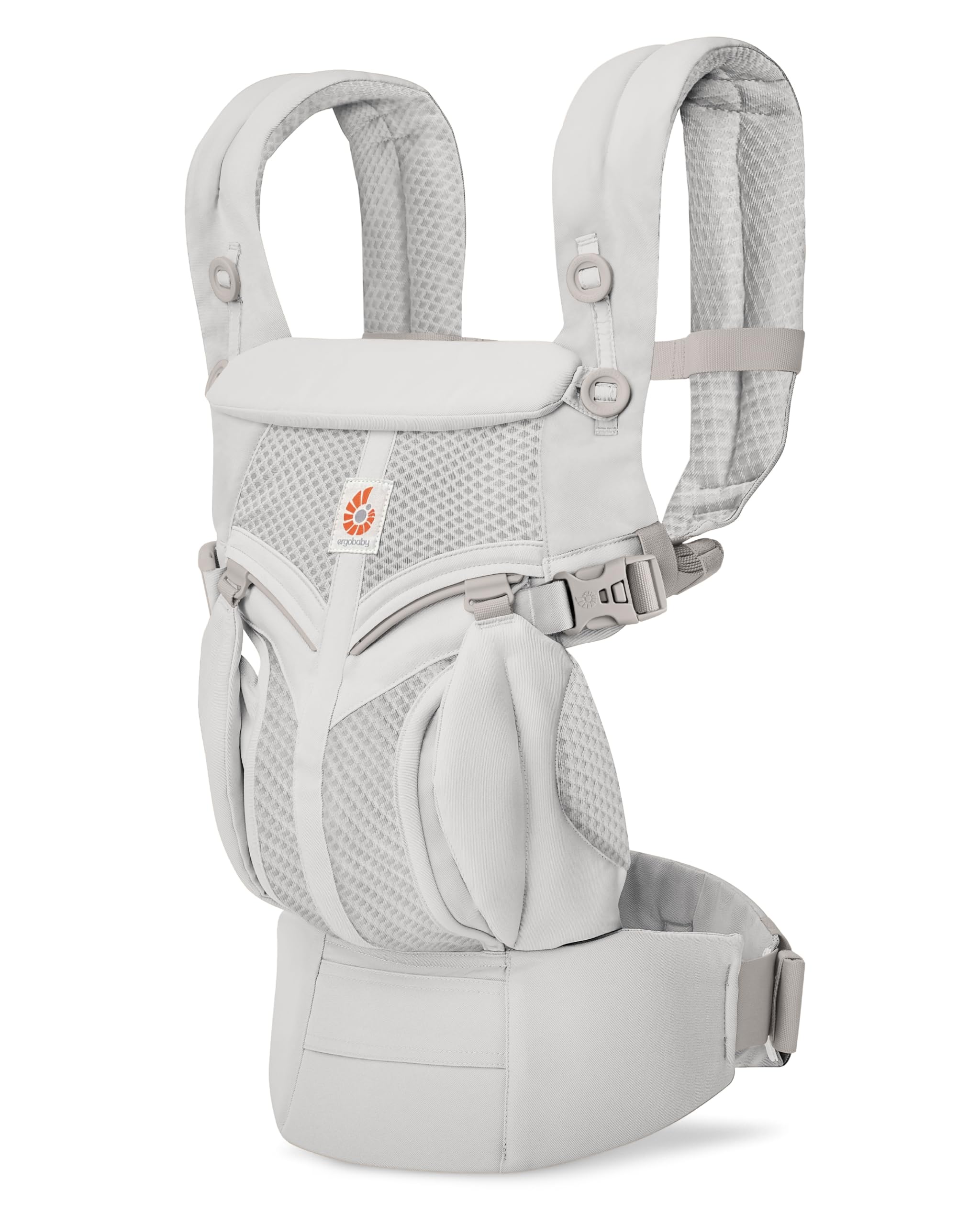
Ergobaby Omni Classic
Key Features
- Weight Range: 7–45 lbs
- Hip-Healthy Certification: IHDI
- Carry Positions: 4 (in, out, hip, back)
- Material Breathability: Mesh panel
- Price: Premium
Where the entry-level top pick offers a low-risk entry to baby carrying, the Omni Classic goes all-in on long-term durability and certified hip support. Its structured build and breathable mesh handle daily use for years, supporting up to 45 lbs with an adjustable seat that grows from newborn to toddler. The shoulder straps feel bulky and require precise adjustment to prevent digging; learning to buckle and tighten the carrier alone takes practice. Parents who plan for multiple children or extensive outdoor walks will value that robust support, but anyone wanting a grab-and-go, lightweight option will find the bulk and fuss frustrating.
Pros
- Adjustable seat and four carry positions support 7–45 lbs for lasting use
- Build withstands daily wear through multiple children
- Sturdy hip and back support reduces fatigue on long carries
Cons
- Straps feel bulky and may dig in if not adjusted exactly right
- Solo buckling and strap adjustments need practice to master
Buy this if you want a carrier that handles years of daily use, supports up to 45 lbs, and prioritizes hip-healthy, all-position carrying. Skip it if you need something ultra-light and quick-on for short errands or find fussy strap adjustments a dealbreaker.
Best for Newborn Softness
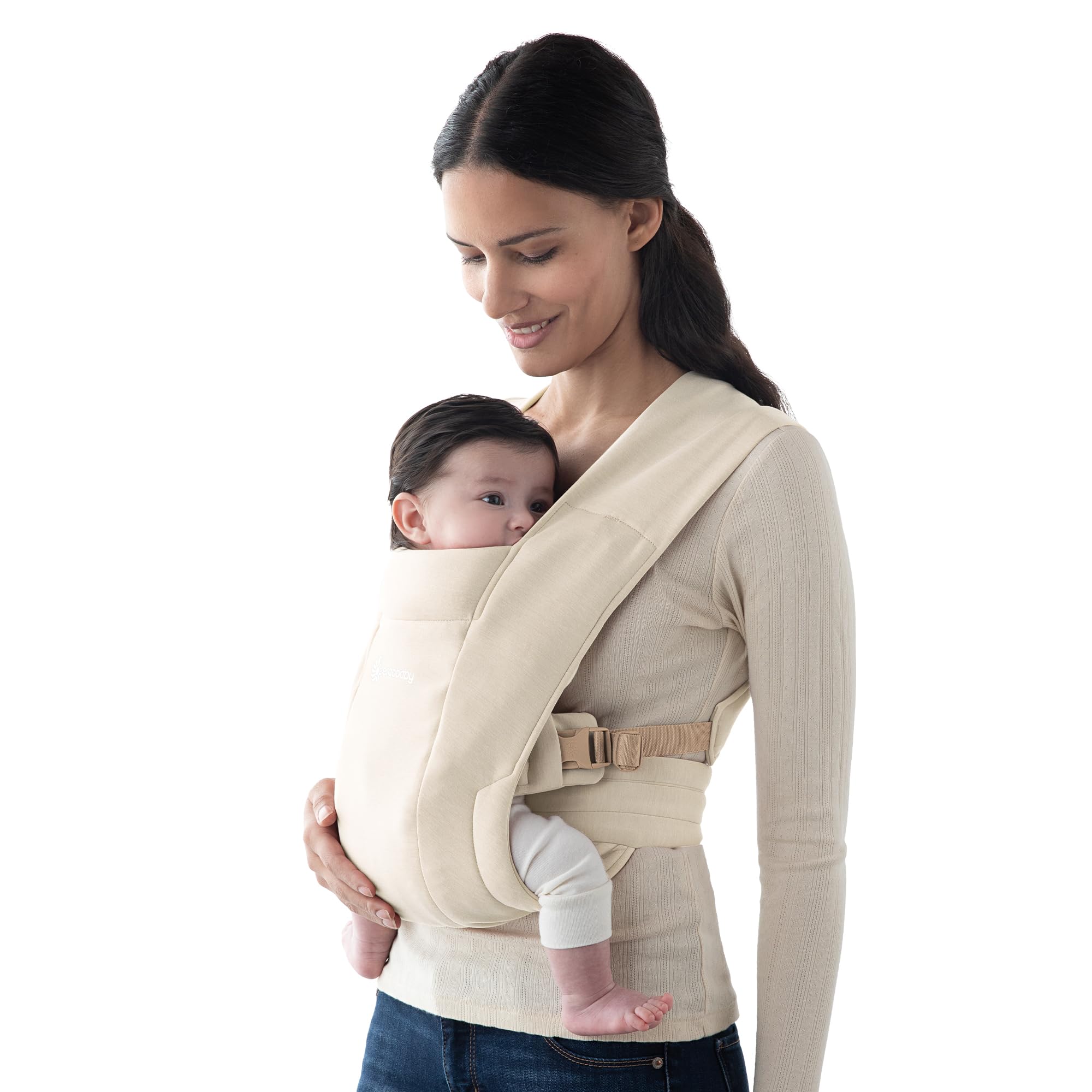
Ergobaby Embrace
Key Features
- Weight Range: 7–25 lbs
- Hip-Healthy Certification: IHDI
- Carry Positions: 2 (in, out)
- Material Breathability: Soft knit
- Price: Mid-Range
Unlike a multi-position structured carrier, the Embrace doubles down on the early months with a stretchy-knit fabric that feels closer to a wrap than a traditional buckled carrier. It’s easier to slip on solo than a multi-adjustment system, but the trade-off is a short shelf life: most families find it becomes uncomfortable once babies approach 20–25 pounds, typically by 9–12 months. Those recovering from a c-section will appreciate the high waistband, which won’t press on an incision. It’s best for parents who want a dedicated newborn carrier and are willing to invest in a second option later.
Pros
- Exceptionally soft knit fabric wraps newborns in cozy, secure comfort.
- Simple buckle design allows one-person on-and-off in seconds.
- Snug, motion-dampening hold calms fussy infants without a complicated tie.
Cons
- Outgrown by around 9–12 months; comfort drops significantly as baby approaches 25 lbs.
- Head and neck support requires careful adjustment for small newborns to avoid head lolling.
Buy this if you want a supremely soft, easy carrier for the early months and are prepared to switch to a sturdier option once your baby gets heavy. Skip it if you need one carrier to last through toddlerhood.
Best for Quick Ups & Downs
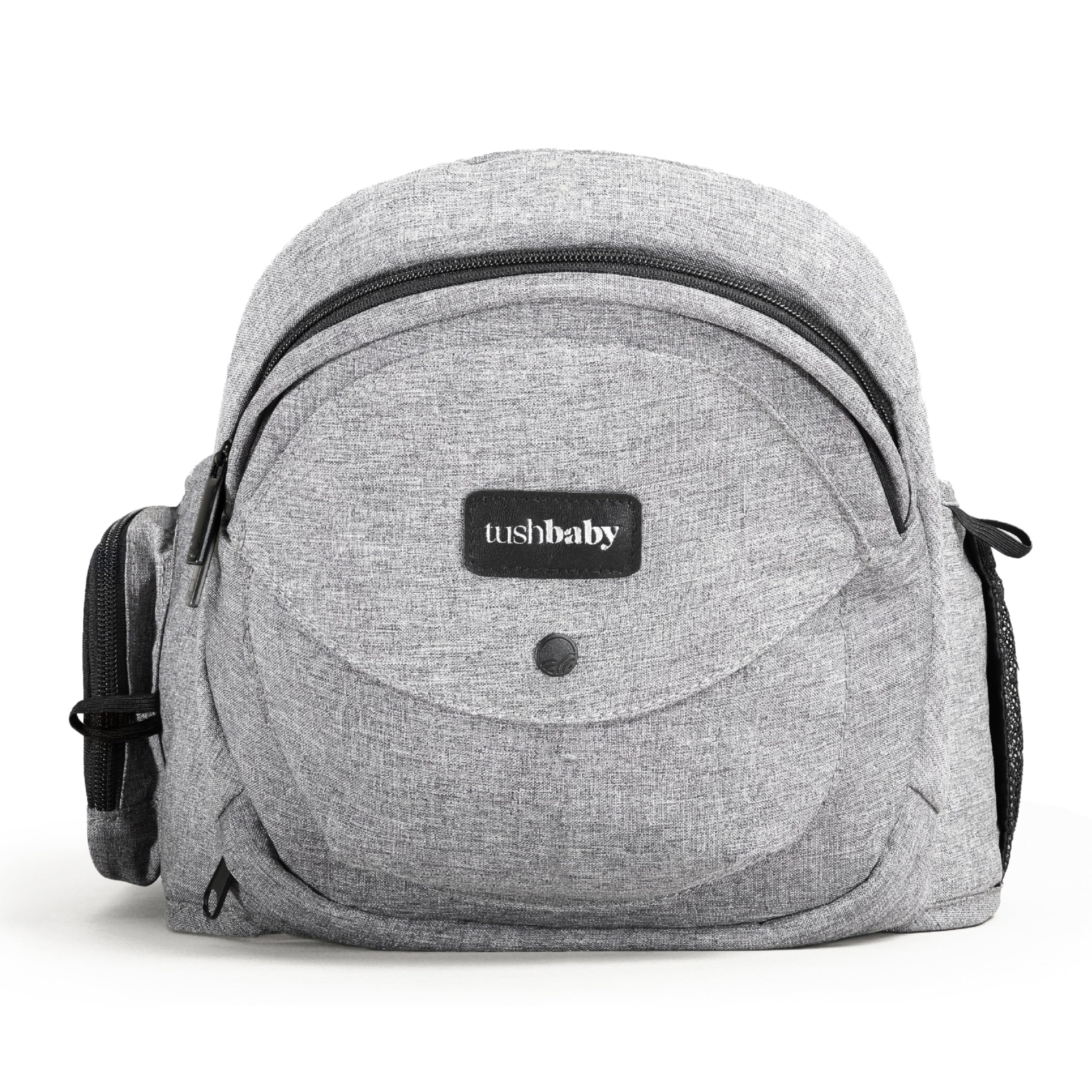
TushBaby Hip Seat
Key Features
- Weight Range: 8–45 lbs
- Carry Positions: 4-way hip seat
- Material Breathability: Polyester, no-foam
- Price: Premium
Unlike the top pick’s full-body carrier design, the TushBaby hip seat focuses on quick transfers and storage rather than all-day hands-free comfort. Shifting baby’s weight from arms to hips drastically reduces back strain during frequent ups and downs, and the five integrated pockets hold diapers, wipes, and a bottle — no separate bag needed. The buckle-on design is fast to don and remove, earning praise for durability. These benefits come with a clear limit: it offers no shoulder support, so it’s not suited for extended walks or hiking. A minority of users also find the seat digs into the hip after prolonged wear.
Pros
- Exceptional back and arm relief for frequent ups and downs.
- Built-in storage eliminates diaper bag for short trips.
- Quick buckle-on, buckle-off design.
Cons
- Not designed for all-day walks; lacks full upper-body support.
- Seat can dig into hip during prolonged wear.
Buy this if you need rapid hip relief for constant lifts and want to carry baby essentials without a bag. Skip it if you need a hands-free carrier for long walks.
Best for Back Pain Relief
LÍLLÉbaby Complete
Key Features
- Weight Range: 7–45 lbs
- Hip-Healthy Certification: IHDI
- Carry Positions: 6 (fetal, in, out, back, hip)
- Material Breathability: 3D mesh air panel
- Price: Premium
The dedicated lumbar pad shifts weight off the shoulders, a tangible difference during extended wear that matters more than the top pick’s all-purpose design. The 3D mesh panel opens for ventilation in heat, closing for cooler days—the carrier truly spans seasons. Six carry positions cover fetal to back carry, yet the multitude of straps and buckles demands patience to dial in a secure fit. This complexity is the trade-off for that back-saving support. It suits parents willing to invest time in tuning the harness, particularly those with chronic back strain. The seat width can overextend newborn legs even on the narrow setting, and the standard waistband won’t fit larger bodies without an extender. For hot climates or lumbar pain, the extra effort often pays off.
Pros
- Lumbar pad noticeably reduces back strain during long carrying sessions
- Six carry positions adapt from newborn to toddler and front to back
- Machine-washable cotton with a zip-open mesh panel for hot weather
Cons
- Many straps and buckles create a steep learning curve for new users
- Seat may be too wide for newborns; waistband fits smaller frames better without an extender
Buy this if you need maximum lumbar relief and all-season versatility and don’t mind a longer setup learning curve. Skip it if you want a simple, quick-adjust carrier or wear larger clothing without buying an extender.
Best for Hot Weather Wrap
Boba Wrap Carrier
Key Features
- Weight Range: 7–35 lbs
- Hip-Healthy Certification: IHDI
- Carry Positions: Front (inward)
- Material Breathability: Bamboo-cotton blend
- Price: Mid-Range
The Boba Wrap’s bamboo-viscose blend stays noticeably cooler than standard cotton carriers, making it a standout for hot-weather newborn wearing. Its stretchy fabric molds easily to a baby’s body, providing a snug, womb-like hold that IHDI certifies as hip-healthy. The trade-off: wrapping takes practice, and the fabric’s stretch works against you if not cinched tightly enough — sagging becomes an issue, particularly once babies exceed 15–20 lbs. Long tails can also pick up dirt when tying outdoors. This wrap suits parents who value breathability and softness over quick buckles and are willing to master the tie technique for the first six months, though it’s not designed for heavy, prolonged carries.
Pros
- Exceptionally soft, breathable bamboo fabric ideal for hot-weather wearing.
- Stretchy yet supportive fit that conforms to a newborn’s body when tied snugly.
- IHDI-certified for hip health with a high-quality construction that holds up wash after wash.
Cons
- Sagging can occur with heavier babies if the wrap isn’t tied extremely tight.
- Long fabric tails may drag on the ground when wrapping outside.
Buy this if you want an ultra-breathable, soft wrap for carrying a newborn in warm weather and don’t mind a tie closure. Skip it if you prioritize speed with buckles or plan to carry a baby over 20 lbs for extended periods.
Best for Dads & Big Builds
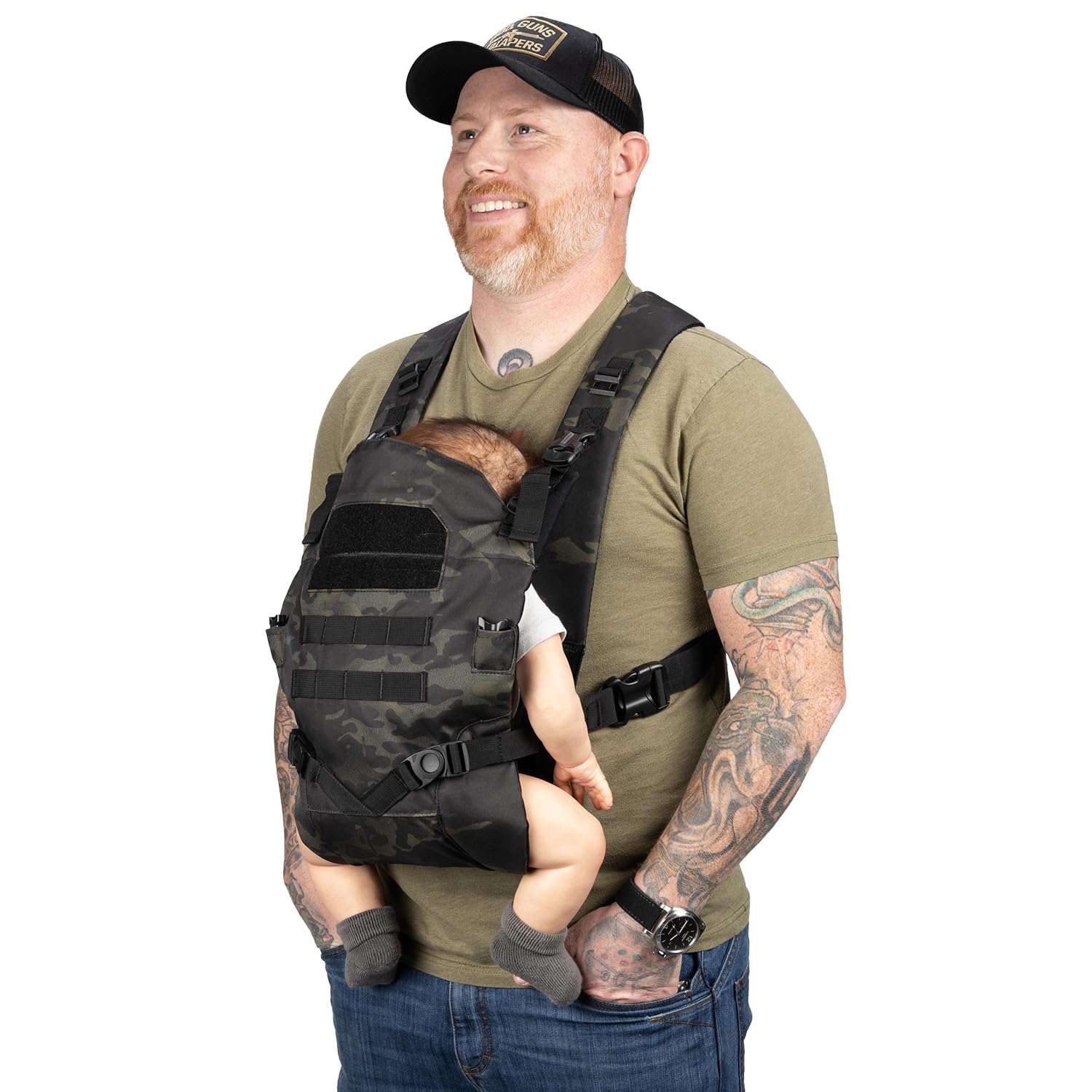
TBG Tactical Carrier
Key Features
- Weight Range: 8–33 lbs
- Hip-Healthy Certification: IHDI
- Carry Positions: Front (inward)
- Material Breathability: Cotton
- Price: Premium
Where the top pick excels at multiple carry positions, the TBG Tactical Carrier narrows its focus to dad-specific fit and military-inspired utility. Wide, long straps and a substantial waistband accommodate bigger builds that often feel squeezed in unisex carriers. Molle webbing lets you attach pouches or carabiners for walks or outdoor errands. The trade-off is clear: this is a front-carry-only design with a 33-pound weight limit, and comfort reports grow mixed past 30 minutes. It’s best for active, larger-framed dads who see a carrier as durable gear, not a nursery accessory, and who don’t mind the forward-inward constraint.
Pros
- Rugged cotton construction stands up to daily use and active outings.
- Extra-long straps and wide waistband comfortably fit larger-framed dads.
- Molle webbing and tactical styling offer genuine utility and a dad-focused aesthetic.
Cons
- Strap adjustments require initial patience to dial in correctly.
- Front-carry-only design limits versatility as baby grows past 33 lbs.
Buy this if you’re a larger-built dad seeking a rugged, gear-style front carrier with functional storage for shorter outings. Skip it if you need multi-position carry or hours-long comfort.
Best for Budget Soft Wrap
KeaBabies Original Wrap

Key Features
- Weight Range: 7–35 lbs
- Hip-Healthy Certification: IHDI
- Carry Positions: Front (inward)
- Material Breathability: Stretchy breathable fabric
- Price: Budget
Soft, jersey-knit fabric holds a newborn in a womb-like carry that frees both hands for light housework. The tying sequence requires practice and fabric can stretch and sag once babies near 20 lbs, limiting its usable window compared to more supportive structured carriers.
Pros
- Gentle, stretchy material that keeps baby comfortable and close for short carries.
- IHDI-certified hip-healthy design at a budget-friendly price point.
Cons
- Tying and adjusting takes practice, with many first-time users finding the method unintuitive.
- Fabric can stretch and sag over wear sessions, especially with babies nearing the weight limit.
Worth considering if you want a soft, budget-friendly newborn wrap for short carries and are willing to master the tie.
Best for Quick Errands
Infantino Swift Classic

Key Features
- Weight Range: 8–25 lbs
- Carry Positions: 2 (in, out)
- Material Breathability: Polyester
- Price: Budget
The Infantino Swift Classic folds flat and buckles on in seconds, perfect for stashing in a car or diaper bag for short errands. But shoulder comfort declines quickly once babies approach 20 lbs, and the 25-lb weight cap restricts use to early infancy. It’s a short-term solution, not an all-day carrier.
Pros
- Folds compactly for easy diaper bag storage.
- Buckles on quickly for grab-and-go errands.
Cons
- Shoulder comfort declines as babies near the 25-lb limit, limiting to short errands.
Worth considering if you need an ultra-compact backup carrier for short errands with a baby under 20 lbs.
Best for Budget Hip Seat
Bellababy Hip Seat Carrier

Key Features
- Weight Range: 7–33 lbs
- Hip-Healthy Certification: M-position claimed
- Carry Positions: 6 (hip seat, front, back)
- Material Breathability: Cotton-poly blend
- Price: Mid-Range
The Bellababy Hip Seat Carrier pairs a removable hip seat with a structured harness, offering six carry modes and a lightweight, budget-friendly design. The back buckle is hard to fasten alone, and the waistband may not extend far enough for plus-size frames. These trade-offs limit its appeal for solo, all-day wear.
Pros
- Detachable hip seat offers quick up-and-down versatility for errands.
- Even weight distribution and padding keep short to moderate carries comfortable.
Cons
- Back clip is tricky to fasten solo; often needs a second person.
Worth considering if you’re a parent of small-to-average build who wants a hip seat combo for quick outings and doesn’t mind occasional assistance with the back buckle.
Best for Soothing Home Wrap
Sleepy Wrap

Key Features
- Weight Range: 7–35 lbs
- Carry Positions: Front (inward)
- Material Breathability: French terry cotton
- Price: Budget
The Sleepy Wrap’s soft French terry fabric calms newborns and frees your hands for tasks at home. The stretchy material cradles babies comfortably, but it traps heat and can sag as your child approaches 35 lbs. Tying securely also takes a few tries to master.
Pros
- Calms fussy babies and enables hands-free tasks around the house.
- Soft, stretchy fabric many find comfortable for both parent and baby.
Cons
- Requires practice to tie securely; prone to overheating and sagging.
Worth considering if you want an affordable wrap to soothe a newborn and free your hands at home, but skip it for warm weather or all-day wear.
Best for Plus-Size Quick Wrap
Koala Babycare Wrap

Key Features
- Weight Range: 4.4–20 lbs
- Carry Positions: Cradle
- Material Breathability: Poly-cotton-spandex
- Price: Mid-Range
The Koala Babycare Wrap lives up to its easy-on promise with a ring closure that avoids long fabric wraps. Soft blend suits sensitive skin and generous length fits plus-size frames well. However, the 20-lb weight limit restricts it to the first 4–5 months, and occasional slipping during wear means readjustment is needed, keeping it from being fully hands-free.
Pros
- Pulls on easily with ring closure — no long fabric to wrap or re-tie.
- Generous length accommodates plus-size body types comfortably.
Cons
- Baby can slip down gradually, requiring periodic repositioning.
Worth considering if you’re a plus-size parent wanting an easy ring-closure wrap for the newborn phase, and can accept the short lifespan and occasional readjustment.
Best for Budget Ring Wrap
Momcozy Adjust Wrap

Key Features
- Weight Range: 8–35 lbs
- Hip-Healthy Certification: M-position claimed
- Carry Positions: Front
- Material Breathability: Polyester-spandex
- Price: Budget
The Momcozy Adjust Wrap uses a ring closure to speed up fitting compared to traditional wraps, and its soft fabric keeps things comfortable. However, the fit runs snug on larger bodies, the polyester blend can trap heat, and support may feel uneven with heavier babies, which is why it didn’t rank higher.
Pros
- Ring closure eliminates wrestling with long fabric for quicker wrapping.
- Soft polyester-spandex blend stays gentle against newborn skin.
Cons
- Fit is snug for plus-size or large-busted frames.
Worth considering if you’re a smaller-framed parent who wants a quick, budget wrap for short indoor sessions with a lightweight baby.
How to Choose
A baby carrier only works if it fits your body and your climate — everything else is secondary.
Weight Range and Longevity
A carrier may claim to hold up to 45 lbs, but comfort often degrades well before the max. If you plan to babywear past 6 months, pick a higher weight ceiling and robust straps to avoid shoulder digging. Check the minimum weight too — some carriers don’t cradle a newborn safely without extra inserts.
Hip-Healthy Design
Look for IHDI certification or an adjustable M-position seat that keeps knees above the bum. A narrow seat forces straight legs, which isn’t healthy for developing hips. When a carrier mentions ‘M-position’ without certification, verify with user photos that the seat actually supports a deep squat.
Carry Positions You’ll Actually Use
Most parents use only two or three positions regularly — typically inward-facing front for early months and back carry once the baby can sit. A 6-in-1 carrier sounds versatile, but if you never use hip or forward-facing mode, the extra straps just add bulk. Choose based on the carries you’ll genuinely need.
Breathability and Material
Polyester blends trap heat more than natural fibers. In warm climates, seek mesh panels or bamboo-cotton blends that wick moisture. Even in cooler weather, a back panel with ventilation prevents sweat buildup during longer wearing sessions.
FAQ
Why does my baby carrier hurt my shoulders?
Shoulder pain usually means the straps are too loose or the carrier’s weight is riding on your shoulders instead of your hips. Tighten the shoulder straps so the waistband takes most of the load, and check that the baby is seated deeply in an M-position. If pain continues, a carrier with a dedicated lumbar pad redistributes weight more effectively.
How do I keep my baby from slipping down in a wrap carrier?
Sagging happens when the wrap isn’t tied tightly enough or the fabric stretches beyond its limit. Start with newborn-level snugness — the fabric should feel like a fitted T-shirt before you place the baby. For heavier babies, a double-layer carry or a wrap with less stretch holds position longer without constant retying.
What is the best baby carrier for hot weather?
Carriers with mesh panels or bamboo-cotton blends breathe better and wick moisture away from both parent and baby. Avoid thick polyester and multiple layers. Single-layer wraps or structured carriers with a vented back panel keep you cooler, but in extreme heat, limit wearing to short stints indoors or during cooler morning and evening hours.
Can I breastfeed while wearing a baby carrier?
Many stretchy wraps and soft carriers allow discreet breastfeeding in a cradle hold, while structured carriers often require loosening straps to reposition the baby. Practice at home first and always keep the baby’s chin off their chest with a clear airway. Not every carrier supports nursing, so check the manufacturer’s guidance before attempting.