This post contains affiliate links. We may earn a small commission when you buy through our links — at no extra cost to you.
Many parents grab a soft carrier thinking it’ll work for hiking, only to find themselves juggling a diaper bag and feeling shoulder strain after the first mile. A proper hiking carrier needs a frame that shifts weight to your hips, plenty of pockets for water and snacks, and a sun canopy for your child. The best options in this guide deliver exactly that.
But not every trail demands a full backpack. For easy, well-groomed paths, a soft carrier with robust lumbar support can handle the job if you carry gear separately. The trade-off in this category often comes down to weight capacity versus build quality — carriers built for heavier toddlers may have a shorter lifespan on hardware, while lighter models sacrifice some storage. We’ve matched each carrier to a specific trail style so you can pick the one that fits your hikes.


Best for Serious Day Hikes
Luvdbaby Hiking Backpack
Key Features
- Weight Capacity: 16-40 lbs
- Storage: Multiple pockets, insulated, changing pad
- Lumbar Support: Padded hip belt
- Weather Protection: Sun hood, rain cover
- Frame / Kickstand: Frame + kickstand
- Price: $$$
This carrier bundles the storage and weather protection most families need for day hikes: a full changing pad, insulated bottle pocket, sun visor, and rain cover are all included. The kickstand lets you set it down without removing the pack, a convenience that matters when you need a break or to adjust your toddler. Reviewers consistently note that the combination of these features rivals what Osprey and Kelty offer at nearly double the price, and the padded seat and adjustable harness keep both wearer and child comfortable on moderate trails.
The main trade-off for the lower price is that some units have durability weaknesses: a minority of owners report chest strap breakage, stiff zippers, or netting tears after several months of use. The carrier is also hefty at about 5.5 lbs and doesn’t fold flat, so it takes up trunk space and won’t work as a travel carry-on. This carrier is best for parents who want a full-featured hiking setup without paying premium-brand prices, and who are willing to inspect and possibly reinforce a few components. It’s not for those expecting the same ruggedness as an Osprey or seeking an ultralight pack.
Pros
- Complete kit with changing pad, insulated pocket, sun hood, and rain cover
- Price-to-features ratio well below premium hiking carriers
- Stable on moderate hikes with kickstand for breaks
Cons
- Occasional quality control: chest strap breakage, stiff zippers, netting tears
- Bulky and heavy (5.5 lbs); not foldable for storage or travel
Buy this if you want a full-featured hiking carrier with integrated storage and weather protection without spending premium-brand money. Skip it if you need rugged durability for frequent heavy use or an ultralight pack for travel.
Best for Heavy Toddlers
ClevrPlus Canyonero
Key Features
- Weight Capacity: 5-42 lbs
- Storage: Large compartment, insulated pocket
- Lumbar Support: Padded hip belt
- Weather Protection: Sun canopy, rain cover
- Frame / Kickstand: Frame + kickstand
- Price: $$
The ClevrPlus Canyonero stands out for its 42 lb weight limit, well above most budget hiking backpack carriers, so parents can keep using it as a toddler grows. Comfort and adjustability suit a wide range of parent heights (5’0" to 6’2"), and reviewers report carrying a 28 lb child for miles without discomfort. The trade-off: some units have finicky zippers or a chest buckle that can break after a few outings, and the kickstand takes practice to deploy smoothly on uneven ground. This carrier is best for families who want one budget-friendly option that lasts from babyhood to preschool years, and who are comfortable with mild hardware quirks at this price point.
Pros
- 42 lb weight limit accommodates heavy or tall toddlers longer than most alternatives.
- Comfortable for long hikes, even with heavier children, according to parent feedback.
- Adjustable harness fits a wide range of parent heights from 5’0" to 6’2".
Cons
- Occasional quality control variances with chest buckle and zipper durability.
- Kickstand can be tricky to deploy and less stable on uneven ground.
Buy this if you need a budget-friendly hiking backpack that can carry a heavy toddler up to 42 lbs. Skip it if you prioritize ultralight weight or need rock-solid durability for frequent rough use.
Best for Light Packability
ClevrPlus Cross Country
Key Features
- Weight Capacity: 5-33 lbs
- Storage: Pockets, insulated, changing pad
- Lumbar Support: Padded hip belt
- Weather Protection: Sun canopy, rain cover
- Frame / Kickstand: Frame + kickstand
- Price: $$
At 5.5 lbs with a foldable frame, this is the most packable hiking backpack carrier on the list — purpose-built for parents who want to stash it in the trunk or carry it on a plane. You give up some weight capacity (33 lbs cap) and hardware refinement compared to heavier models with higher limits. The zippers and buckles feel less robust than premium alternatives, and several owners note stiffness that can be annoying one-handed. Best suited for light day hikes with a toddler under 30 lbs, especially if storage space is tight.
Pros
- Lightweight 5.5 lb frame folds down for easy transport and storage.
- Comes with sun canopy, rain cover, insulated pocket, and changing pad.
- Adjustable seat and harness accommodate growing toddlers comfortably.
Cons
- Zippers on storage compartments can be stiff and hard to operate one-handed.
- Stitching and buckle durability fall short of premium carriers over time.
Buy this if you need a lightweight, packable carrier for day hikes and travel. Skip it if you have a heavy toddler or want rugged build quality for years of use.
Best for Moderate Trails, Everyday
LILLEbaby Complete All Seasons
Key Features
- Weight Capacity: 7-45 lbs
- Storage: Small front pocket only
- Lumbar Support: Removable pad
- Frame / Kickstand: No frame, no stand
- Price: $$
The LILLEbaby’s standout feature is its removable lumbar support and breathable mesh panel, which together keep both parent and baby comfortable on moderate trails and everyday errands. Compared to other soft carriers, the weight distribution is noticeably better for extended wear, and the six carrying positions add flexibility as your child grows. However, the seat runs narrow — parents of chunky babies or toddlers with larger thighs may find it snug. And unlike a dedicated hiking backpack, there’s no integrated storage for gear; you’ll need to add pouches or carry a separate bag.
Pros
- Outstanding lumbar support for hours of comfortable wear.
- Breathable mesh panel adapts to warm or cool conditions.
- Sturdy build holds up to years of daily use.
Cons
- Narrow seat can be uncomfortable for chunky babies or heavy toddlers.
- No built-in pockets or water bottle holders for gear.
Buy this if you want the most comfortable soft carrier for daily wear and moderate hikes, and can accept carrying gear separately. Skip it if you need a dedicated hiking backpack with integrated storage.
Best for Ergonomic Daily Carry
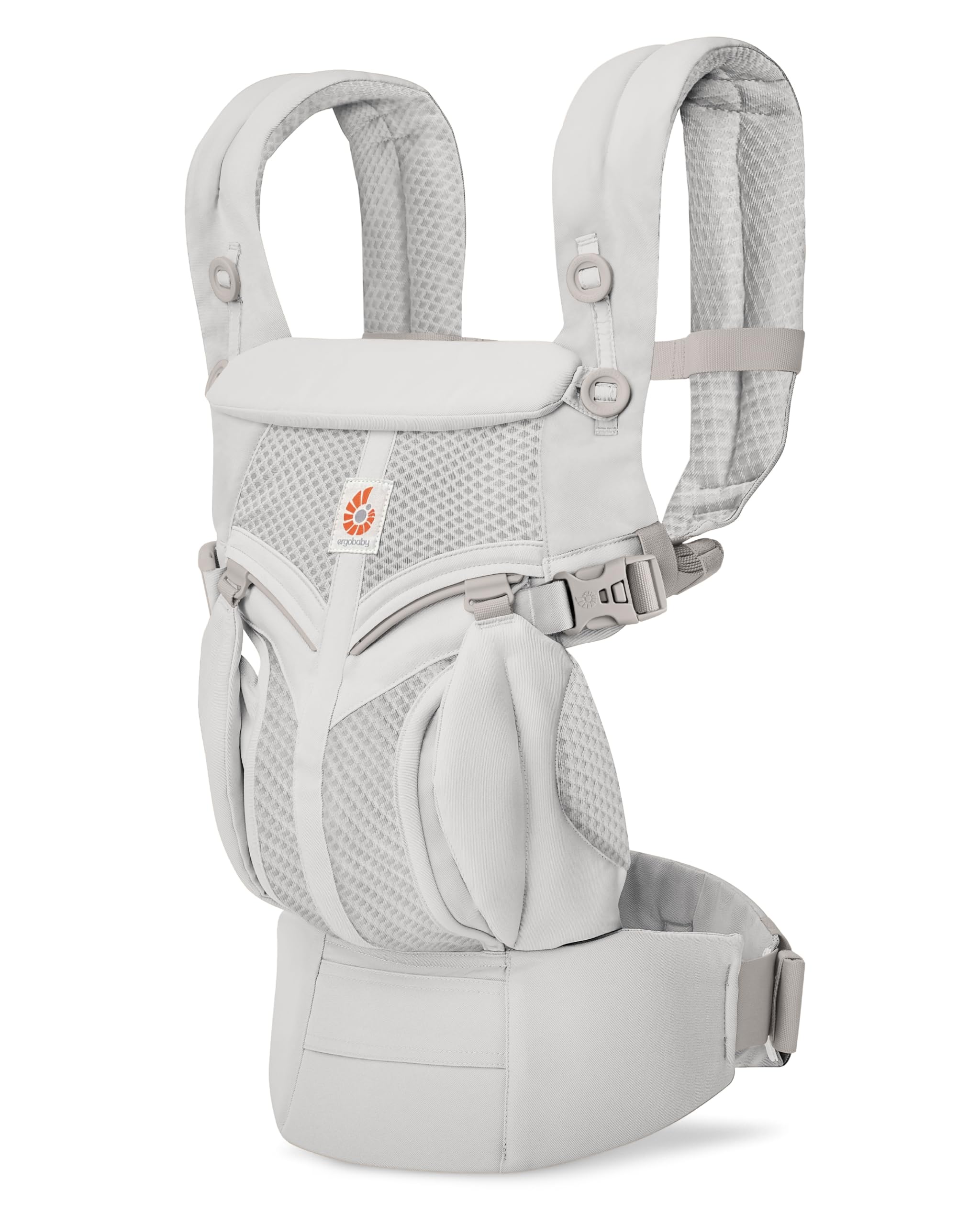
Ergobaby Omni Classic
Key Features
- Weight Capacity: 7-45 lbs
- Storage: None (accessories separate)
- Lumbar Support: Padded belt
- Frame / Kickstand: No frame, no stand
- Price: $$$
Where the top pick (Luvdbaby) packs in storage and weather gear for the trail, the Ergobaby Omni Classic focuses on what makes a soft carrier great: ergonomic support that keeps parents pain-free for hours. With 7,300+ reviews, parents consistently report no back strain even after two to three hours of wear. The trade-off is clear — you won’t find pockets, a sun canopy, or rain cover built in, and the padded shoulder straps are bulky enough to interfere with wearing a backpack. This suits caregivers who prioritize everyday comfort over hiking-specific features and are willing to buy separate accessories for trail use.
Pros
- Hip-healthy design with four carry positions from birth to toddler
- High-quality materials that outlast cheaper carriers
- Wide adjustability for sharing between caregivers
Cons
- Bulky shoulder straps that may not fit under a pack or jacket
- No integrated storage or weather protection; requires separate accessories for hiking
Buy this if you want a premium everyday soft carrier with proven long-term comfort for walks and moderate hikes, and you don’t mind buying add-ons for gear or rain. Skip it if you need a single all-in-one solution with integrated storage and weather protection for serious trail days.
Best for Short Walks, Errands
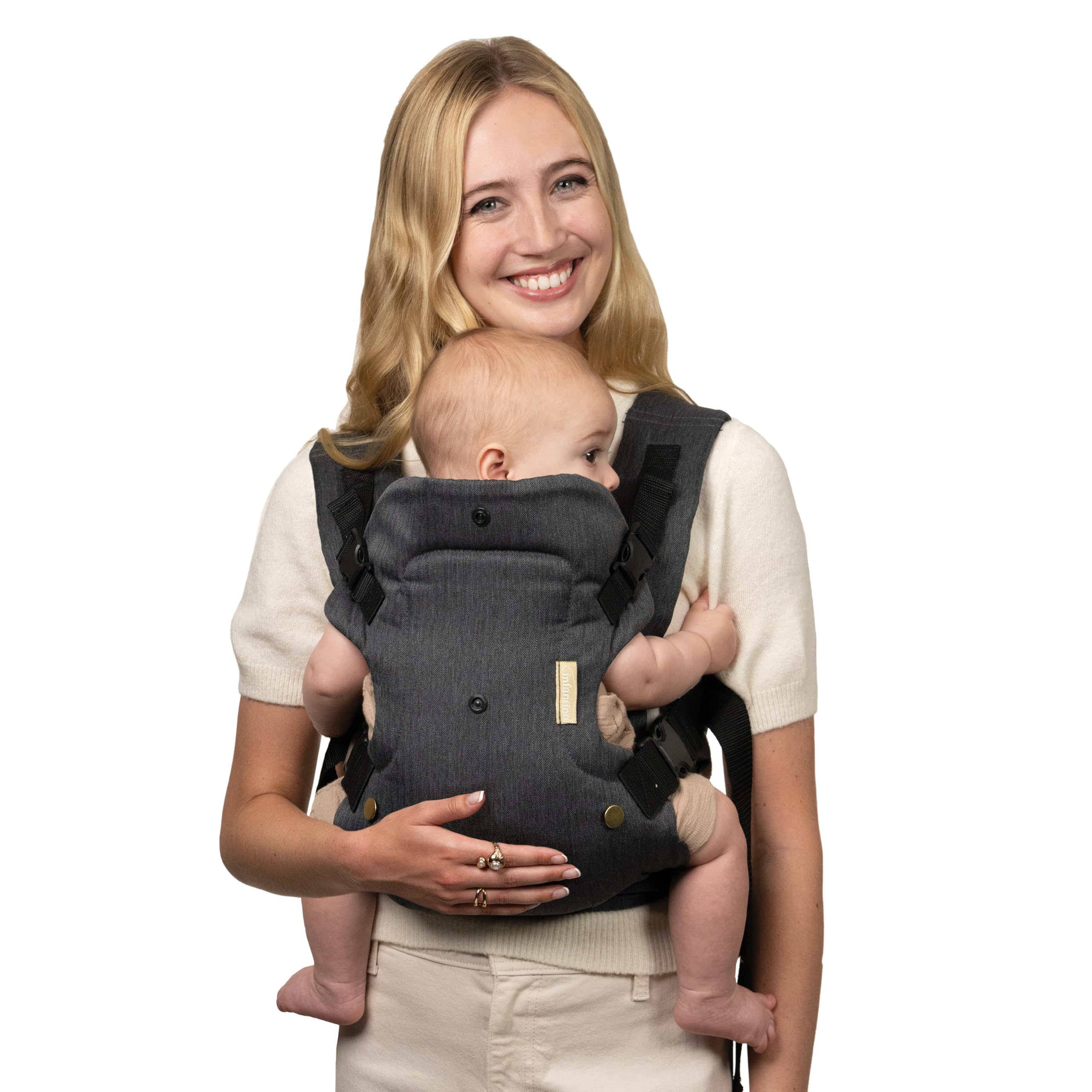
Infantino Flip Luxe 4-in-1
Key Features
- Weight Capacity: 7-35 lbs
- Lumbar Support: Updated belt
- Frame / Kickstand: No frame, no stand
- Price: $
The Infantino Flip Luxe delivers an unbeatable price-to-feature ratio with four carry positions and updated lumbar support — ideal for grocery runs, indoor chores, and short walks. However, it lacks the frame, storage, and weather protection needed for actual trail days. For toddlers over 25 lbs on uneven ground, shoulder strain and back pain become noticeable. This is a smart pick for parents who want an affordable, everyday carrier and know they won’t be hiking; those needing a true outdoor companion should look to a framed hiking backpack carrier.
Pros
- Budget-friendly with 4 carry positions from newborn to toddler; 95% of users praise the value.
- Padded straps and lumbar belt reduce strain for short outings; 81% report comfort.
- Quick buckles and simple adjustments make solo use easy; 86% find it straightforward.
Cons
- No frame or storage for outdoor essentials; fine only for errands.
- Shoulder dig and back pain reported with toddlers above 25 lbs on uneven terrain.
Buy this if you need an affordable, versatile carrier for short daily use. Skip it if you plan to hike or carry a heavy toddler on uneven trails.
Best for Ultra-Budget Backup
Momcozy Purehug Carrier

Key Features
- Weight Capacity: 7-44 lbs
- Lumbar Support: EVA waist support
- Frame / Kickstand: No frame, no stand
- Price: $
This budget carrier excels for everyday use and short walks, thanks to its lightweight cross-back design and lumbar support. But it’s not a hiking option — it lacks storage, weather protection, and struggles with heavy toddlers on uneven terrain. The black cotton also collects lint quickly.
Pros
- Lightweight and easy to put on solo with cross-back design for weight distribution.
- Great value among soft carriers, offering lumbar support that helps prevent back pain during short walks.
Cons
- Black cotton exterior attracts lint quickly, requiring regular cleaning.
Worth considering if you need an affordable carrier for short daily walks, household chores, and quick errands without hiking ambitions.
Best for Around-The-House Use
MOMTORY 6-in-1 Hip Seat

Key Features
- Weight Capacity: 7-50 lbs
- Lumbar Support: Detachable hip seat
- Frame / Kickstand: No frame, no stand
- Price: $$
The detachable hip seat provides strong back support for carrying toddlers around the house and during airport stops. But the carrier is heavy, and the seat can loosen during active use, making it unsuitable for trails. A practical helper for everyday chores, not a hiking companion.
Pros
- Hip seat relieves back strain during extended carrying sessions.
- Six carry positions adapt as baby grows, with detachable seat for quick breaks.
Cons
- Bulky and heavy build limits portability; not suitable for packing into a backpack.
Worth considering if you need a hip seat for around-the-house carrying and travel, but skip it for hiking.
Best for Tactical Dads
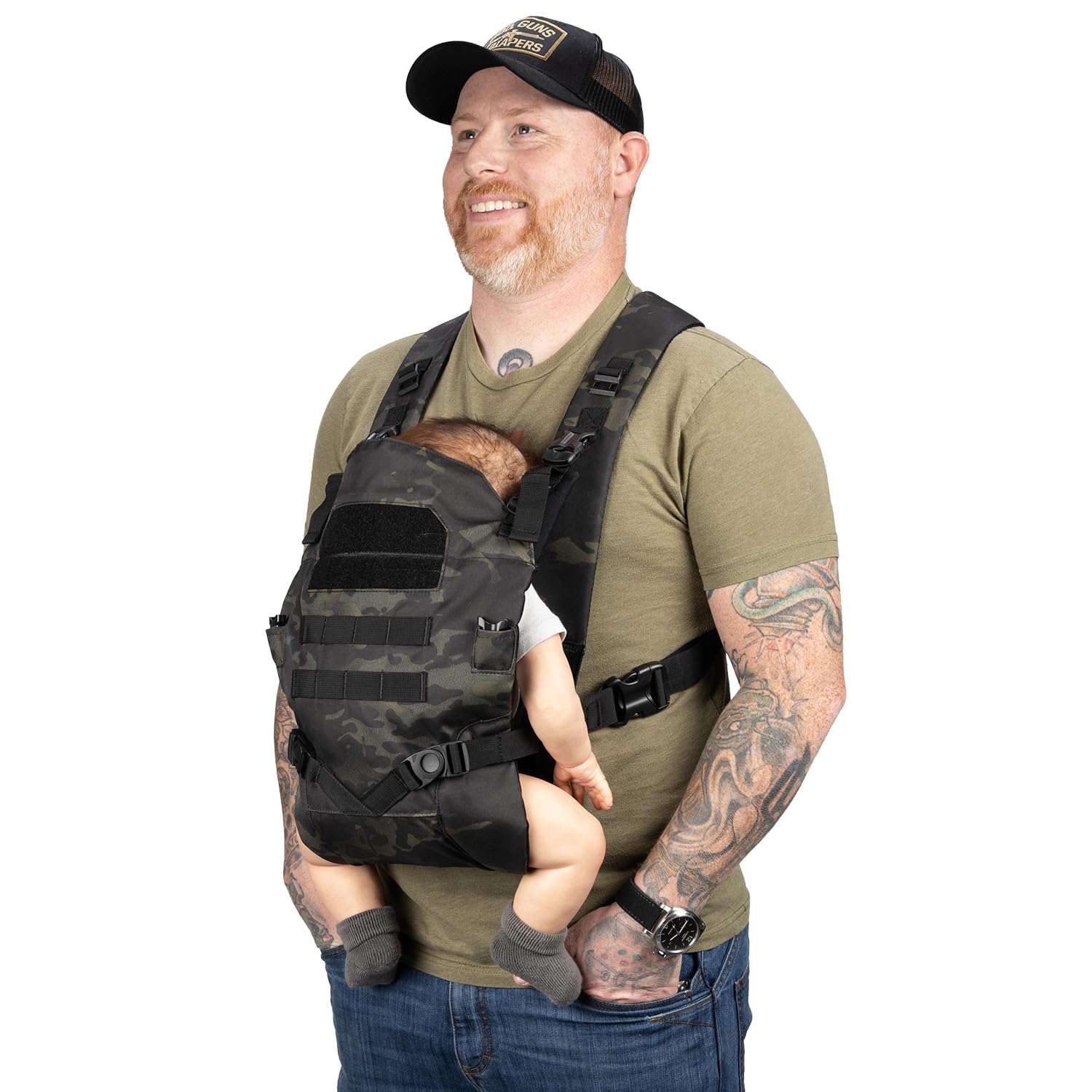
TBG Tactical Carrier
Key Features
- Weight Capacity: 8-33 lbs
- Lumbar Support: None (cross-strap)
- Frame / Kickstand: No frame, no stand
- Price: $$$
This carrier excels for tall or plus-size dads seeking a durable, minimalist carrier with accessory attachments. But lacking a waist belt and limited to front carry only, it causes shoulder strain within 30 minutes, making it unsuitable for hiking or extended wear.
Pros
- Very durable construction with MOLLE system for attaching accessories.
- Fits big and tall parents comfortably.
Cons
- No waist belt — weight rests on shoulders, causing strain after 30 minutes.
Worth considering if you’re a big or tall dad wanting a stylish, rugged carrier for short errands, but skip if you need hiking support or back carry.
Best for Stylish Soft Carrier
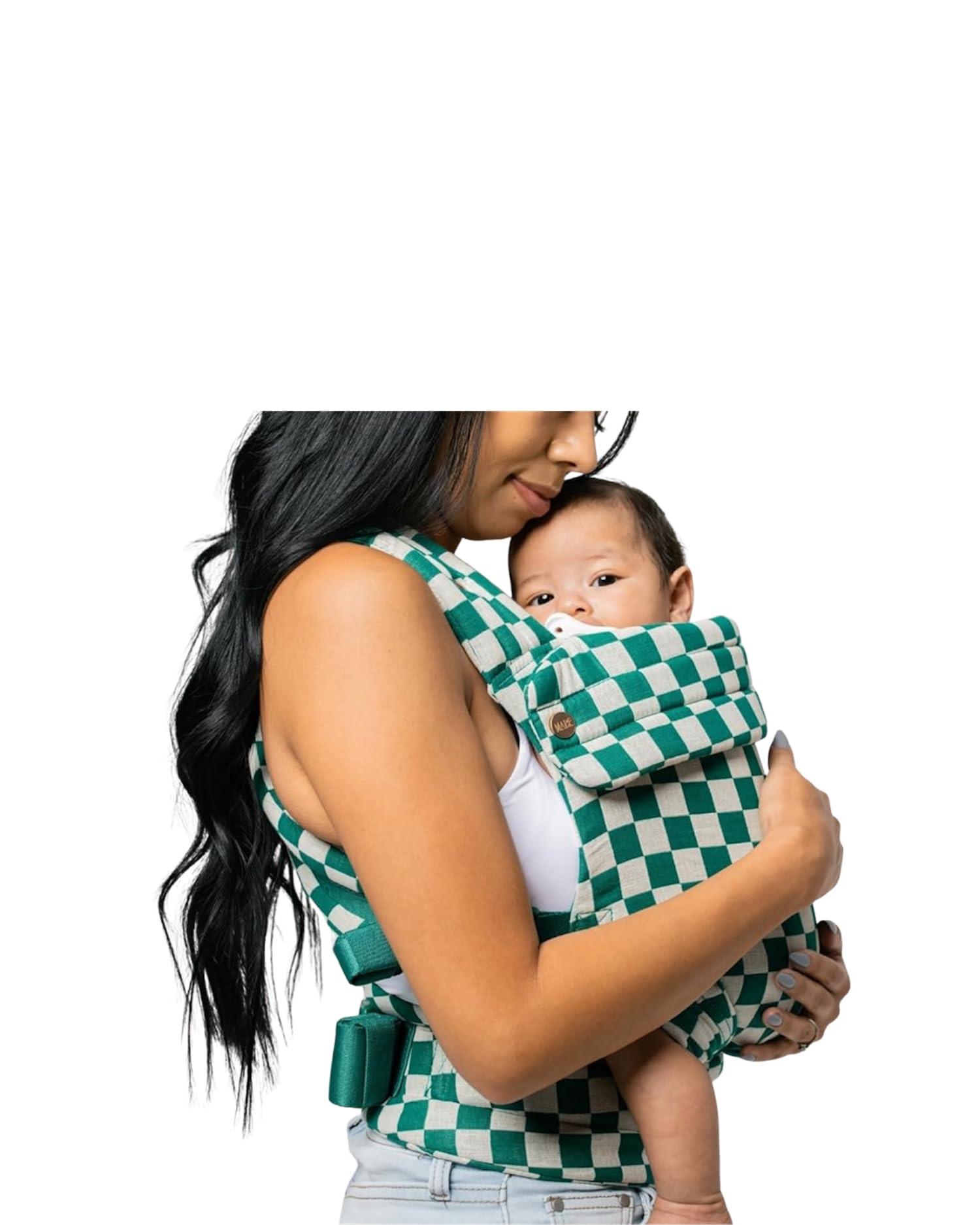
Mabē Monarch
Key Features
- Weight Capacity: 7-35 lbs
- Lumbar Support: Padded waist belt
- Frame / Kickstand: No frame, no stand
- Price: $$$
The Mabē Monarch offers a premium cotton-linen blend with beautiful patterns and high comfort for daily wear and short outings. However, its thick fabric gets warm on hot days, and it has no integrated storage or weather protection, limiting it to urban use rather than trails.
Pros
- Beautiful cotton-linen design that draws compliments from other parents.
- Comfortable for both parent and baby with good lumbar support and easy adjustments.
Cons
- Thick fabric can overheat baby on warm days; no storage pockets or sun canopy for outdoor use.
Worth considering if you prioritize stylish daily wear and short urban outings over hiking features.
Best for Affordable Style Dupe
Nest Blanche Carrier

Key Features
- Weight Capacity: 7-35 lbs
- Lumbar Support: Padded waist belt
- Frame / Kickstand: No frame, no stand
- Price: $$
This carrier matches the look and feel of premium brands like Mabē at a lower price, with a comfortable cross-back design and stylish houndstooth pattern. However, it lacks hiking features such as storage or weather protection, and some units have missing chest strap clips. With only 479 reviews, it’s a solid everyday option but not a trail companion.
Pros
- Mimics premium soft carriers like Mabē at a budget-friendly price.
- Cross-back design is comfortable and easy to use for daily carrying.
Cons
- Occasional missing chest strap clip for H-style conversion.
Worth considering if you want a stylish, affordable everyday carrier for urban errands and short walks, but skip it if you need hiking features or a perfectly consistent build.
How to Choose
The most critical feature for a hiking baby carrier is a padded hip belt that transfers weight off your shoulders — without it, even a 20-pound toddler will leave you sore within a mile.
Weight Capacity
Look for a carrier that supports your child’s current weight plus room to grow. Many budget carriers top out at 33 lbs, while premium models hold up to 45 lbs. If you plan to hike into toddlerhood, a 40+ lb limit avoids buying a second carrier.
Storage Capacity
Hiking requires carrying water, snacks, diapers, and a change of clothes. Backpack carriers with multiple pockets and an insulated bottle holder let you skip the diaper bag. Soft carriers rarely have built-in storage, so plan to wear a separate pack.
Lumbar and Hip Support
A stiff waist belt with load-lifter straps transfers weight to your hips, saving your shoulders and lower back. Look for a belt that wraps around your hips, not just your waist, and that’s thick enough to distribute pressure evenly.
Weather Protection
A built-in sun canopy shields your child from UV exposure and light rain. A detachable rain cover is even better for unexpected downpours. Soft carriers rarely include these, so you’ll need to buy separate accessories.
Frame and Kickstand
A rigid frame keeps the carrier stable on uneven trails and prevents your child from leaning too far. A kickstand allows you to set the carrier down without removing it — invaluable for rest breaks or adjusting gear.
FAQ
Can I use a soft baby carrier for hiking on beginner trails?
Yes, for short, flat trails under an hour, a soft carrier with good lumbar support (like the LILLEbaby or Ergobaby) can work. But you’ll need to carry a separate backpack for water and supplies. For longer or uneven hikes, a frame backpack carrier is safer and more comfortable for both you and your child.
What should I look for in a baby hiking backpack carrier?
Prioritize a padded hip belt with load-lifter straps, a torso that adjusts to your height, a sturdy kickstand, and at least one insulated bottle pocket. Weight capacity matters if your toddler is already heavy — aim for 40+ lbs to get multiple seasons of use.
How do I prevent my baby from getting too hot in a hiking carrier?
Choose a carrier with a mesh panel or breathable fabric. Avoid thick cotton or padded soft carriers. Use the sun canopy for shade, and dress your child in lightweight, moisture-wicking layers. Take frequent breaks in the shade and offer water.
Are hiking baby carriers safe for infants under 6 months?
Most frame backpack carriers are designed for babies who can sit upright unassisted (typically 6 months+). Soft structured carriers with a newborn insert may be used for very short, flat walks, but always check the manufacturer’s minimum weight and age. For serious hiking, wait until your baby has good head control.