This post contains affiliate links. We may earn a small commission when you buy through our links — at no extra cost to you.
Most budget baby carriers advertise weight limits up to 40 pounds, but real-world feedback shows many become uncomfortable well before that. The challenge isn’t finding a cheap carrier—it’s finding one that actually distributes weight and stays secure as your baby grows. This guide focuses on carriers that maintain their support across the most common use range, whether you prioritize newborn snugness or toddler-friendly hip support. The biggest trade-off in this price range: wraps offer unmatched closeness for early months but require practice, while structured buckle carriers are easier for quick errands but can run hot. Knowing which trade-off matters more for your daily routine is the key to a carrier you’ll actually use.



Best for Versatile Value
Infantino Flip 4-in-1
Key Features
- Weight Range: 8–32 lbs
- Carrying Positions: 4
- Solo Ease: Buckle
- Breathability: Cotton/polyester
- Support: Padded waist belt
- Price: Budget
With over 81,000 reviews and four carrying positions, the Infantino Flip delivers what most budget carriers promise but don’t deliver: a structured seat that transitions from newborn to toddler without a second carrier. Padded shoulder straps and a wide waist belt distribute weight well enough for daily walks and household tasks, though the initial buckle setup takes a few tries before it clicks. The 80% polyester / 20% cotton blend holds up through machine washing and regular use, and once adjusted, solo donning is straightforward.
This carrier fits multiple caregivers thanks to adjustable straps, making it a practical choice for families who share carrying duties. The learning curve with the buckles and straps is real — plan for a short practice session before first use. For hot climates, the fabric can trap heat, so it’s better suited for temperate weather or air-conditioned environments.
Pros
- Padded straps and waist belt keep long walks comfortable for both parent and baby.
- Four carry positions adapt from newborn to toddler without needing a new carrier.
- Consistent quality across tens of thousands of reviews; holds up to daily use.
Cons
- Buckle and strap system can feel overwhelming at first; needs practice to use quickly.
- Fabric traps heat, making it less comfortable in very warm weather.
Buy this if you need a budget-friendly carrier that adapts from newborn to toddler with multiple positions and shared use among caregivers. Skip it if you want a lightweight, ultra-breathable wrap or a no-buckle design.
Best for Newborn Snugness
KeaBabies Wrap Carrier
Key Features
- Weight Range: 7–35 lbs
- Carrying Positions: 1 (wrap)
- Solo Ease: Self-tie wrap
- Breathability: Stretchy fabric
- Price: Budget
Unlike structured carriers that prioritize quick transitions, the KeaBabies Wrap focuses on deep newborn comfort with its proprietary stretchy fabric and IHDI-certified hip-healthy design. Backed by over 28,000 reviews, it delivers a custom, womb-like fit that soothes babies in those early months – and can also serve as pregnancy support or a nursing cover. The trade-off is a steeper learning curve: wrapping evenly takes practice, and the fabric loses tension with heavier toddlers, making it best for parents committed to the tying process.
Pros
- Extremely soft fabric calms newborns with a snug, womb-like feel.
- Multi-purpose design works as pregnancy support, postpartum wrap, and nursing cover.
- Budget-friendly price for a stretchy wrap with strong value ratings.
Cons
- Requires practice to get a secure, even wrap – not grab-and-go.
- Fabric stretches over time and sags with babies over 20 lbs.
Buy this if you want an affordable, cozy wrap for the newborn months and are willing to learn the tying technique. Skip it if you need quick on/off or plan to carry a toddler regularly.
Best for Back Pain Relief
MOMTORY 6-in-1 Carrier
Key Features
- Weight Range: 7–45 lbs
- Carrying Positions: 6
- Solo Ease: Buckle (back clip hard)
- Breathability: Cotton/polyester mesh
- Support: Hip seat + lumbar
- Price: Mid-Range
Unlike cheaper hip seat carriers, the MOMTORY combines a supportive hip seat with a bottle holder and zippered pocket, eliminating the need for a separate diaper bag on short trips. Reviewers consistently note the back relief from the weight-distributing seat, making it ideal for parents of toddlers who struggle with lower back strain. However, the snap buttons on the hip seat attachment can slip open (a minor annoyance, not a safety risk), and the back buckle is positioned high, making solo fastening tricky — best for outings where a second person is available to help.
Pros
- Hip seat reduces back strain during toddler carrying
- Built-in bottle holder and pocket replace diaper bag for quick errands
- Comfortable for both parent and baby across multiple positions
Cons
- Snap buttons on hip seat attachment can come undone during use
- Back buckle sits high, difficult to fasten alone
Buy this if you prioritize back support and storage for toddler outings and don’t mind occasional adjustments to the hip seat snaps.
Best for Hot Weather
Momcozy AirMesh
Key Features
- Weight Range: 7–44 lbs
- Carrying Positions: 2 (front only)
- Solo Ease: Buckle
- Breathability: AirMesh + cooling
- Support: EVA waist support
- Price: Mid-Range
The Momcozy AirMesh swaps cotton for an open polyester mesh body and neck-cooling contact fabric, making it noticeably cooler than the cotton version (B0CDQ2KVJD) during warm walks. At 7–44 lbs and inward/outward front carry only, it lacks the top pick’s four-position range but delivers steady comfort for daily use. Side buckles can be awkward to tighten solo, and the mesh offers less padding for heavier toddlers. Best for parents in warm climates who want a lightweight, breathable carrier and don’t need extreme lumbar support or multiple caregivers adjusting fit.
Pros
- Keeps both parent and baby noticeably cooler in hot weather
- Lightweight build suits long daily walks without overheating
- Easy to dial in a good fit straight out of the box
Cons
- Side buckles require extra effort to tighten when putting it on alone
- Mesh provides less support for heavier toddlers than padded premium carriers
Buy this if you live in a warm climate and want a lightweight, breathable structured carrier for daily walks. Skip it if you need heavy-toddler support or prefer the softer feel of cotton.
Best for Newborn Ease
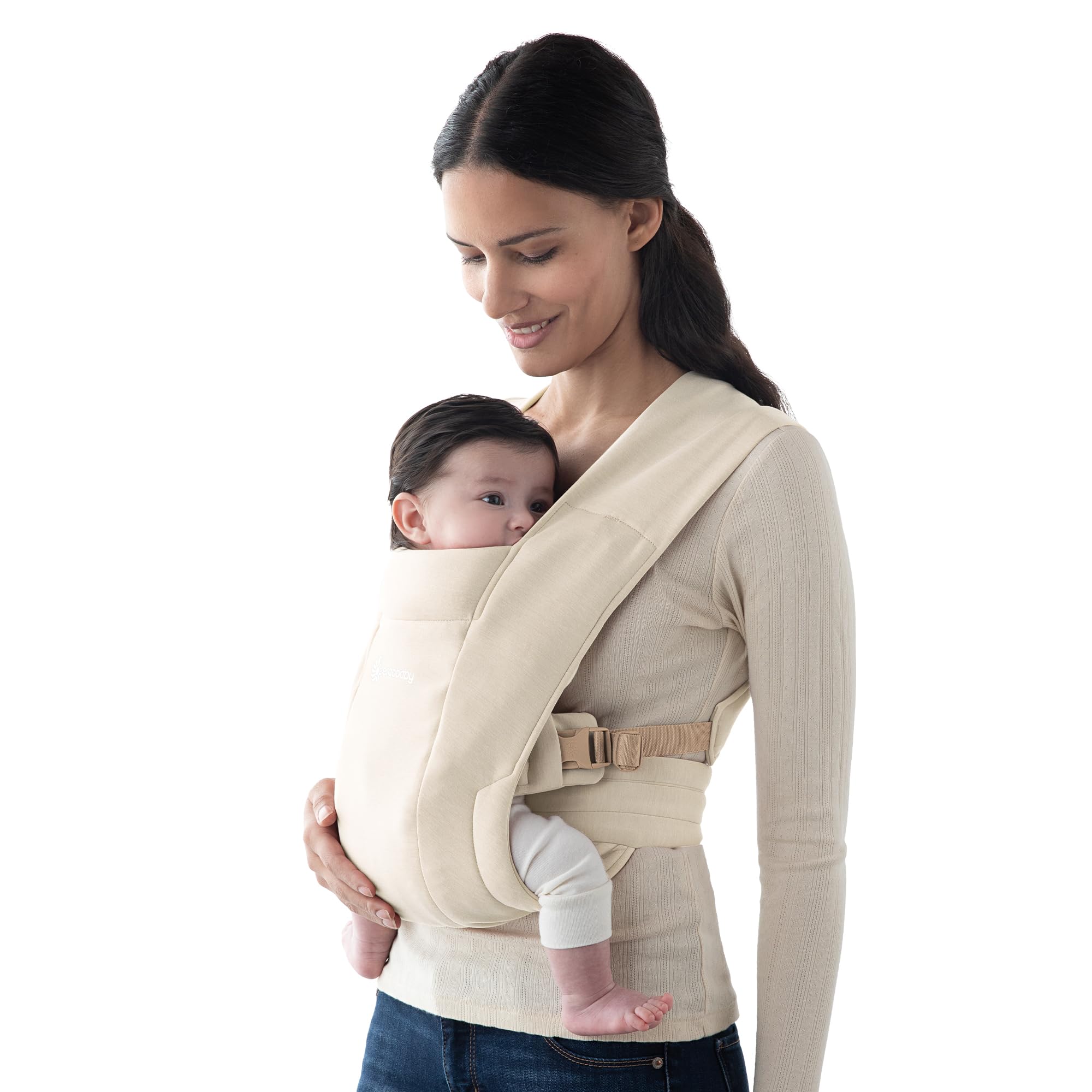
Ergobaby Embrace
Key Features
- Weight Range: 7–25 lbs
- Carrying Positions: 2
- Solo Ease: Buckle (easy)
- Breathability: Soft knit
- Support: Padded headrest
- Price: Mid-Range
Unlike the Infantino Flip’s multi-position versatility, the Ergobaby Embrace focuses entirely on making the newborn phase effortless: a single buckle, soft knit fabric, and padded headrest that takes seconds to put on solo. Reviewers consistently praise its low learning curve and comfortable fit across body types, including petite and plus-size parents. The trade-off is a strict 25-lb limit (baby outgrows it around 12–18 months) and knit material that traps heat in warm weather — this is a dedicated first-year carrier, not a long-term investment.
Pros
- Exceptionally easy on/off with one buckle — no wrapping or threading.
- Soft knit fabric feels cozy like a wrap but with structured support.
- Good adjustability that fits a wide range of parent body sizes.
Cons
- Limited to 25 lbs — baby will outgrow it around 12–18 months.
- Knit fabric retains heat, making it uncomfortable in hot climates.
Buy this if you want the easiest structured carrier for the newborn stage and don’t mind buying a second carrier for later. Skip it if you need one carrier to last through toddlerhood or live in a warm climate.
Best for Storage Errands
Infantino Carry On Active
Key Features
- Weight Range: 8–40 lbs
- Carrying Positions: Front/back
- Solo Ease: Buckle (back clip hard)
- Breathability: Polyester
- Support: Padded lumbar belt
- Price: Mid-Range
The Carry On Active’s standout feature is its integrated storage — elastic front pockets and a lumbar belt can hold a phone, keys, and even diapers, reducing the need for a separate diaper bag. The extra-wide waist belt accommodates plus-size parents comfortably, and the padded lumbar support helps distribute weight. However, the carrier is bulky when not in use and does not pack down small. Additionally, the top back clip is difficult to reach alone, making back carry setup tricky without help. Best suited for parents who prioritize convenience and a larger fit over compact storage.
Pros
- Built-in pockets and lumbar belt stash phone, keys, and diapers hands-free.
- Waist belt adjusts generously, comfortable for plus-size parents.
- Padded lumbar belt provides solid back support during longer wears.
Cons
- Bulky shape doesn’t compress for storage or diaper bag packing.
- Top back clip is hard to reach solo, requires help for back carry.
Buy this if you need a carrier with ample storage and a comfortably adjustable waist belt for larger frames. Skip it if you want a packable carrier or often carry alone for back carry.
Best for Cotton Budget
Momcozy Purehug Carrier

Key Features
- Weight Range: 7–44 lbs
- Carrying Positions: Front inward/outward
- Solo Ease: Buckle
- Breathability: Cotton (OEKO-TEX)
- Support: EVA waist support
- Price: Budget
This carrier provides solid lumbar support and easy solo buckling at an entry-level price. The cotton fabric feels soft against baby but attracts lint quickly, and side buckles can be tricky to tighten solo. It’s outclassed by the Infantino Flip 4-in-1 for versatility and cleaner appearance, but remains a strong budget pick for front-carry use.
Pros
- Comfortable with good lumbar support, reducing back strain.
- Easy to put on and adjust solo using the buckle system.
Cons
- Cotton fabric attracts lint easily; side buckles can be tough to tighten alone.
Worth considering if you want a soft cotton carrier with lumbar support for front-carry and can tolerate lint buildup and occasional help with side buckles.
Best for Toddler Hip Seat
Bellababy Hip Seat Carrier

Key Features
- Weight Range: 7–40 lbs
- Carrying Positions: 6
- Solo Ease: Buckle (back clip hard)
- Breathability: Cotton/mesh panels
- Support: Hip seat
- Price: Budget
The Bellababy’s detachable hip seat offers meaningful back relief for parents of toddlers, and its 6-in-1 design provides flexibility for various carry positions. However, the back buckle is difficult to fasten alone, and the hip seat adds bulk. For stronger back support and easier solo use, the MOMTORY carrier receives more consistent positive feedback.
Pros
- Hip seat reduces back strain for toddlers.
- Affordable 6-in-1 design works as hip seat and structured carrier.
Cons
- Back buckle requires help or flexibility to fasten solo.
- Hip seat is bulky, not compact for storage.
Worth considering if you need back relief on a budget and can manage the solo fastening hassle.
Best for All-Seasons
LILLEbaby Complete All Seasons

Key Features
- Weight Range: 7–45 lbs
- Carrying Positions: 6
- Solo Ease: Buckle (many adjustments)
- Breathability: Zip-down mesh panel
- Support: Removable lumbar support
- Price: Mid-Range
The LILLEbaby Complete All Seasons delivers strong lumbar support and an all-seasons zip panel that vents heat when needed. Its 6 carry positions cover newborn to toddler. However, the waist belt can be too short for plus-size parents, and the many straps require patience to learn. These limitations keep it from taking the top spot in a budget-focused lineup.
Pros
- Removable lumbar support reduces back strain during long carries.
- Zip-down mesh panel adjusts ventilation for hot or cold weather.
Cons
- Waist belt may not accommodate plus-size parents comfortably.
Worth considering if you need a high-support carrier with all-seasons versatility and are comfortable with an initial adjustment learning curve.
Best for Long Wear
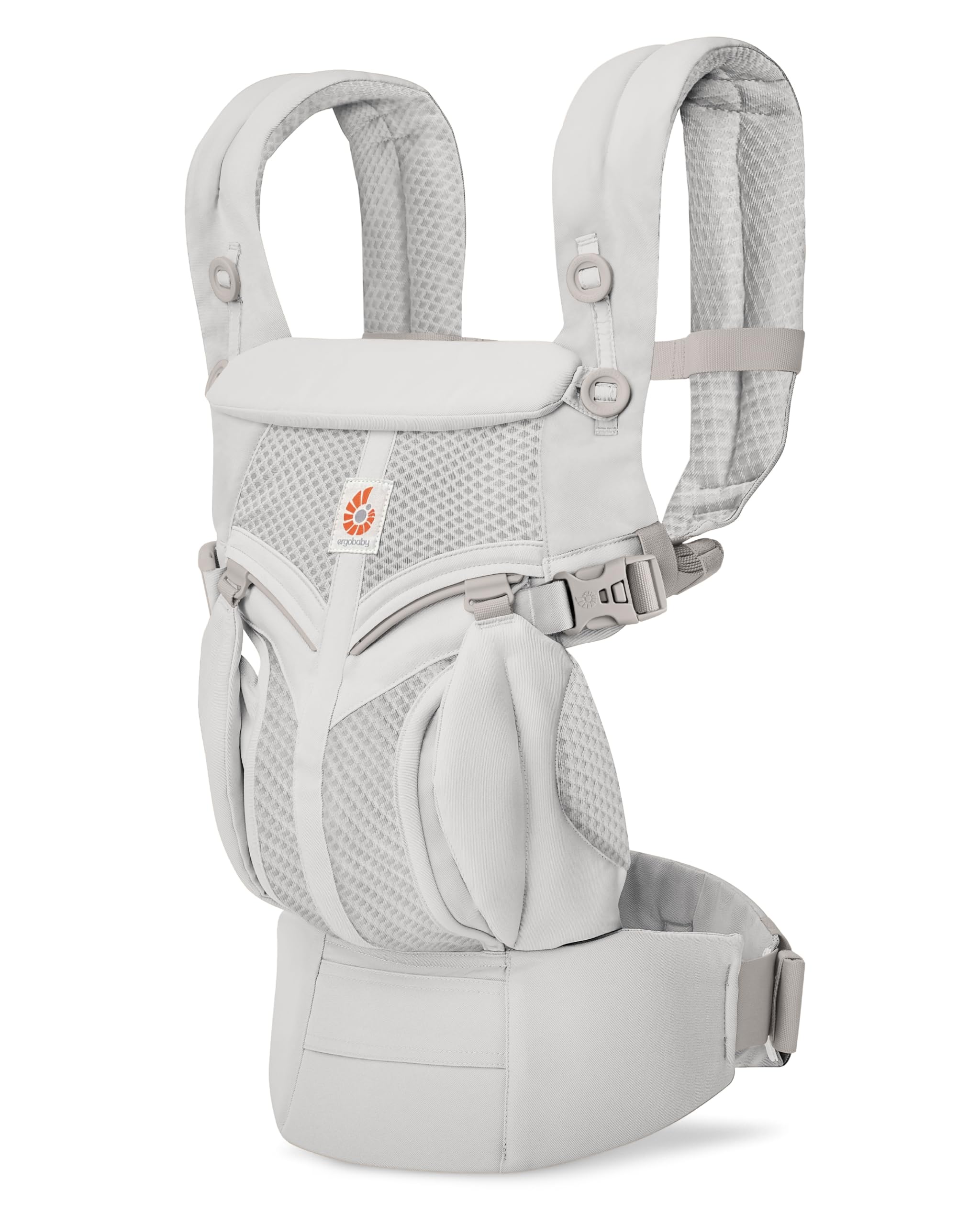
Ergobaby Omni Classic
Key Features
- Weight Range: 7–45 lbs
- Carrying Positions: 6
- Solo Ease: Buckle
- Breathability: Cotton mesh
- Support: Lumbar pad
- Price: Premium
The Ergobaby Omni Classic offers six carrying positions, built-in lumbar support, and IHDI certification, making it exceptionally comfortable for extended daily wear. However, its premium price and bulky build make it overkill for budget-focused shoppers or those needing a compact carrier for quick errands.
Pros
- Distributes weight well with lumbar support for hours of wear.
- Durable construction holds up to years of daily use.
Cons
- Premium price compared to budget alternatives.
Worth considering if you babywear for hours daily and prioritize long-term comfort over cost. Skip if you need a lightweight, budget-friendly carrier.
Best for Easy Wrap
Koala Babycare Wrap

Key Features
- Weight Range: 4.4–22 lbs
- Carrying Positions: 1 (wrap)
- Solo Ease: Ring sling
- Breathability: Cotton/poly blend
- Support: Ergonomic backrest
- Price: Mid-Range
This wrap’s ring closure makes it the easiest in the category to put on—like slipping on a shirt, with no long fabric to drag. The soft, stretchy blend fits plus-size frames comfortably. However, the lack of a locking mechanism means babies can gradually slide down, and there’s no built-in head or neck support for newborns.
Pros
- Easiest wrap to put on – simple ring adjustment, no long tails.
- Great for plus-size parents – accommodates larger frames well.
Cons
- Baby can gradually slip down over time; straps loosen without locking mechanism.
Worth considering if you prioritize easy on/off and are plus-size, and you’re willing to provide your own head support and monitor for slipping.
Best for Ultra Cheap
Infantino Swift Classic

Key Features
- Weight Range: 8–25 lbs
- Carrying Positions: 2
- Solo Ease: Buckle
- Breathability: Polyester
- Price: Budget
The Infantino Swift Classic is the most budget-friendly option in this set – lightweight, compact, and easy to stash in a diaper bag for quick errands. However, it’s uncomfortable for extended wear (straps dig in) and has a low weight limit of 25 lbs, so it’s best reserved as an emergency backup rather than a primary carrier.
Pros
- Budget-friendly – costs less than most alternatives.
- Lightweight and compact – easy to stash in a diaper bag.
Cons
- Uncomfortable for extended wear – straps dig in for some, especially larger-chested women.
Worth considering if you need an ultra-cheap backup carrier for occasional short outings.
Best for Dads Rugged
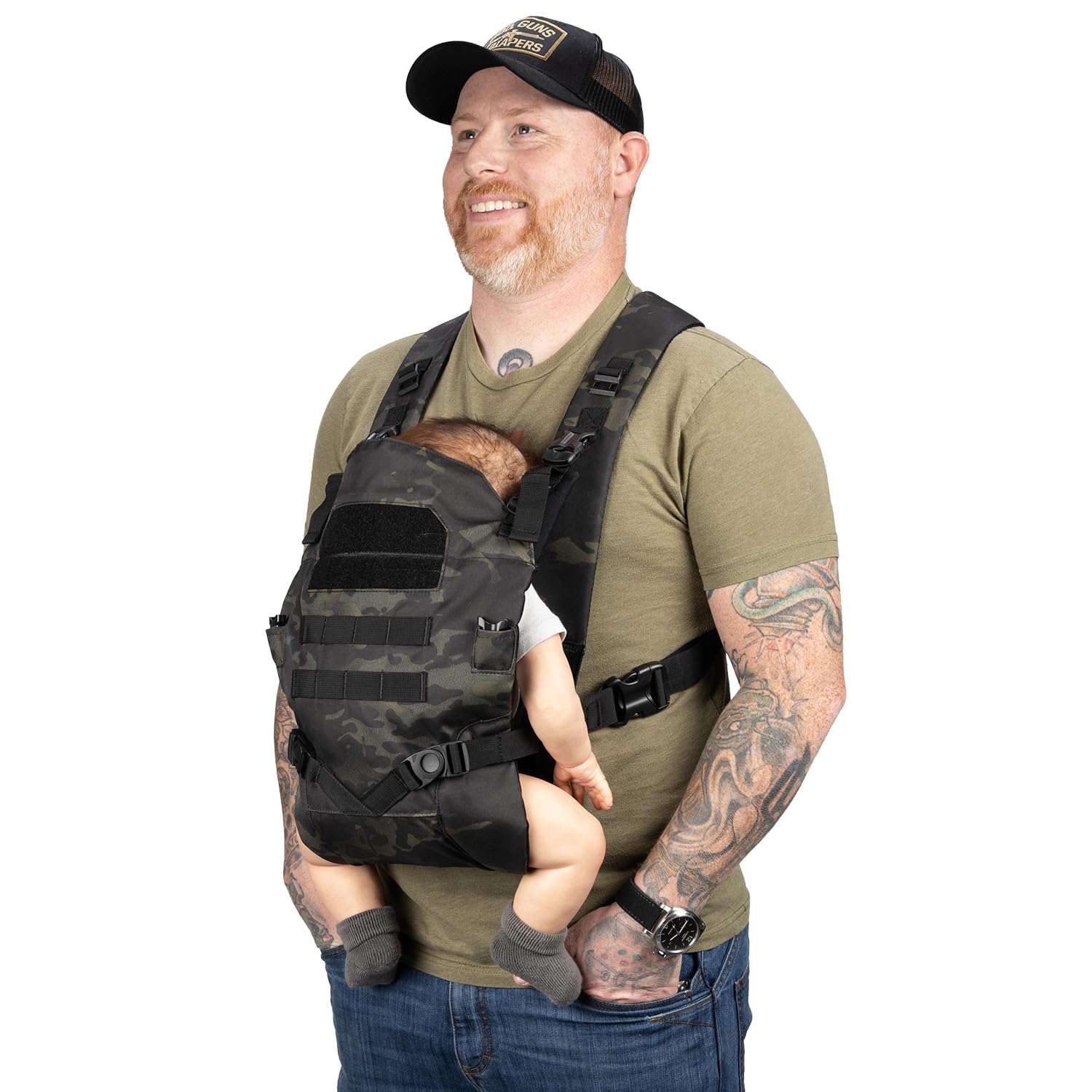
TBG Tactical Carrier
Key Features
- Weight Range: 8–33 lbs
- Carrying Positions: Front inward/outward
- Solo Ease: Buckle
- Breathability: Cotton
- Price: Premium
Built for rugged outdoor use, this carrier fits larger dads up to 6’3" and 300 lbs. The MOLLE webbing allows attaching gear, and the sunshade is included. However, the premium price and absent waist belt make it less suited for all-day comfort or budget buyers.
Pros
- Accommodates larger frames up to 6’3" and 300 lbs.
- MOLLE webbing lets you attach bags or gear for hands-free carrying.
Cons
- Premium cost and no waist belt shift weight to shoulders.
Worth considering if you’re a tall or plus-size dad seeking a rugged carrier with MOLLE storage and don’t mind paying for a niche design.
Best for Water Activities
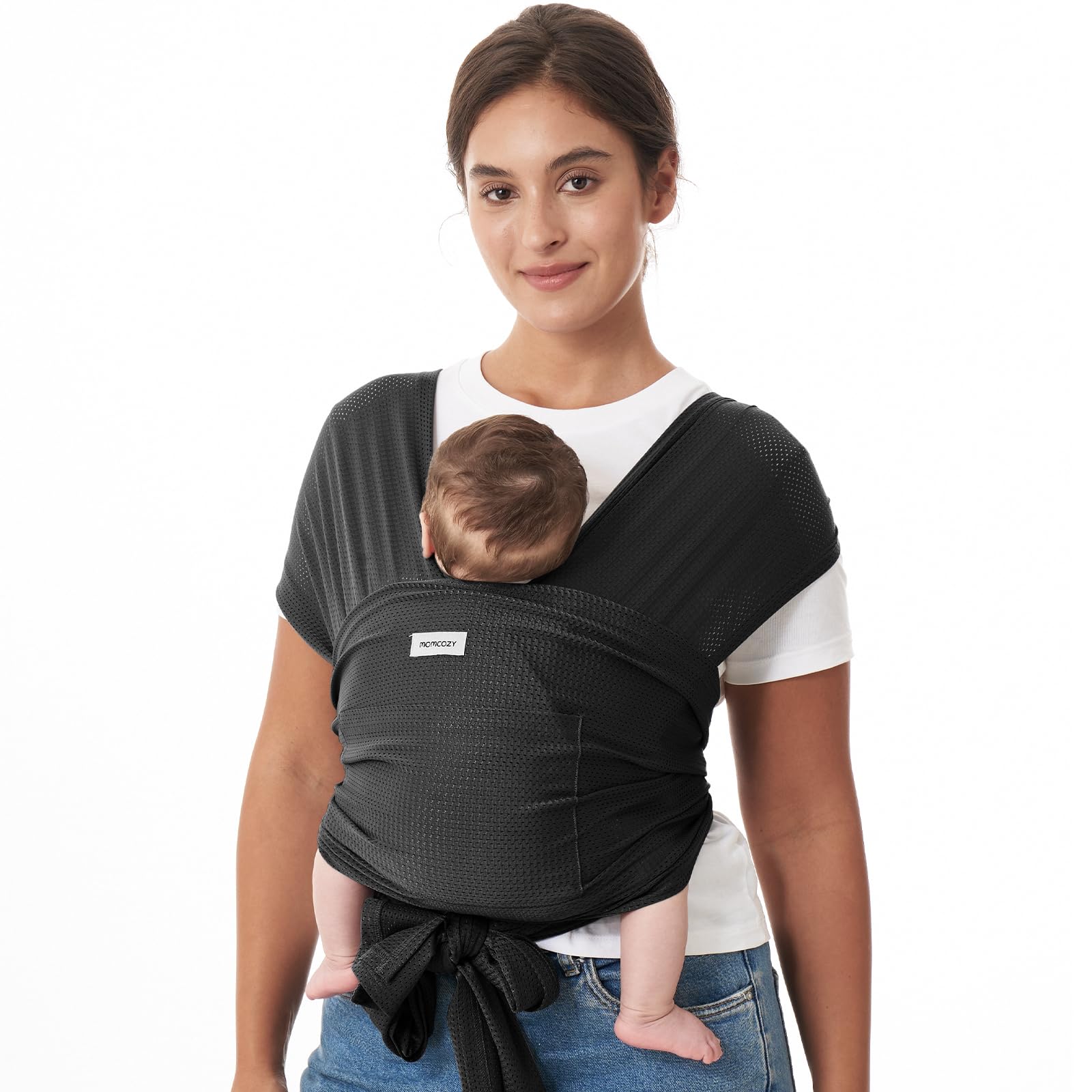
Momcozy AirMesh Sling
Key Features
- Weight Range: 8–35 lbs
- Carrying Positions: 1 (ring sling)
- Solo Ease: Ring sling
- Breathability: AirMesh
- Support: One-shoulder
- Price: Budget
This ring sling shines at the pool or beach – its AirMesh fabric dries quickly and keeps baby cool. However, the one-shoulder design lacks support for long walks or heavier toddlers, and some caregivers find it insecure with bigger babies. It’s best reserved as a secondary carrier for water activities.
Pros
- Simple pull-on design – no wrapping or buckles to learn.
- Breathable mesh fabric stays cool in heat and dries fast.
Cons
- Weight rests on one shoulder, leading to fatigue on longer outings.
- Can feel insecure for babies over 20 lbs – sagging reported.
Worth considering if you need a lightweight, easy-to-use carrier for occasional pool or beach trips. Skip it if you need a primary carrier for daily walks or heavier toddlers.
How to Choose
The advertised weight limit often feels optimistic; real comfort fades well before the max number.
Weight Capacity and Age Range
Most budget carriers claim 7–45 lbs, but support drops off significantly above 30 lbs. Focus on carriers that maintain a secure fit for your baby’s current size—especially if you plan to use them daily. For newborns, look for carriers starting at 7 lbs with a narrow seat setting.
Carrying Positions
Structured buckle carriers typically offer 2–6 positions (inward, outward, back, hip). Wraps only allow front inward. More positions mean greater longevity but often add bulk. Decide if you need back carry early—many budget carriers require assistance to reach the back clip.
Ease of Solo Use
Buckle carriers win on speed: you can get baby in and out in under a minute once adjusted. Wraps require practice—expect 3–5 tries before getting a comfortable, even tension. Ring slings are the fastest of the wrap styles but can loosen over time.
Breathability and Material
Cotton and polyester blends trap heat; mesh panels or airflow designs are essential for warm climates or heavy use. Stretchy wraps are cozy but can overheat in summer. Check for machine-washable care—hand-wash-only carriers are less convenient for daily use.
Back and Shoulder Support
Padded waist belts and lumbar support transfer weight from shoulders to hips, reducing back strain. Hip seat carriers are especially effective for toddlers over 15 lbs. Wraps and ring slings offer no built-in support—comfort depends entirely on your wrapping technique.
FAQ
Is a baby carrier or wrap better for a newborn?
Wraps provide a closer, womb-like feel and are ideal for skin-to-skin contact, which soothes newborns effectively. Structured carriers offer easier on/off and multiple positions but may feel less cozy. For the first 3–4 months, a wrap is generally more comfortable for the baby and easier for breastfeeding, though it requires practice to tie securely.
How do I know if a baby carrier fits me as a plus-size parent?
Look for carriers with a wide, adjustable waist belt that can accommodate your torso length and waist circumference. Wrap carriers often come in one size that stretches, but plus-size parents frequently report that structured buckle carriers with extended straps (like those from Infantino or Momcozy) fit better. Check reviews for specific mentions of plus-size comfort before buying.
Can I breastfeed while using a structured baby carrier?
Yes, but it depends on the carrier’s design. Wraps and ring slings allow easy sliding down the shoulder for discreet access. Structured buckle carriers require you to loosen the straps and lower the baby slightly—some models with a wide seat panel make it easier. Practice at home first to find a comfortable, safe position.
What is the safest baby carrier for hip development?
Carriers certified by the International Hip Dysplasia Institute (IHDI) ensure the baby’s hips are in a natural M-position with knees higher than bottom. Many budget carriers like the KeaBabies Wrap and Infantino Flip are IHDI certified. Always adjust the seat width to your baby’s leg length to avoid dangling legs.