This post contains affiliate links. We may earn a small commission when you buy through our links — at no extra cost to you.
Packing a carrier for a trip always feels like a gamble. The ultra-compact ones make your shoulders ache by lunch; the supportive ones bulk up your carry-on and are impossible to put on by yourself in an airplane aisle. You want a carrier that disappears into your diaper bag without disappearing your spine support.
This guide solves that balancing act. We focused on carriers that fold flat or roll small, yet still distribute weight across your back, hips, or both—so you can navigate terminals and cobblestone streets without regret. You’ll also find picks that go on solo in seconds, because juggling a baby and a boarding pass shouldn’t require help.
For newborns, softness and head support matter most; for toddlers, quick up-and-down hip seats save your back. Knowing which carrier fits your stage makes all the difference.


Best for Travel All-In-One
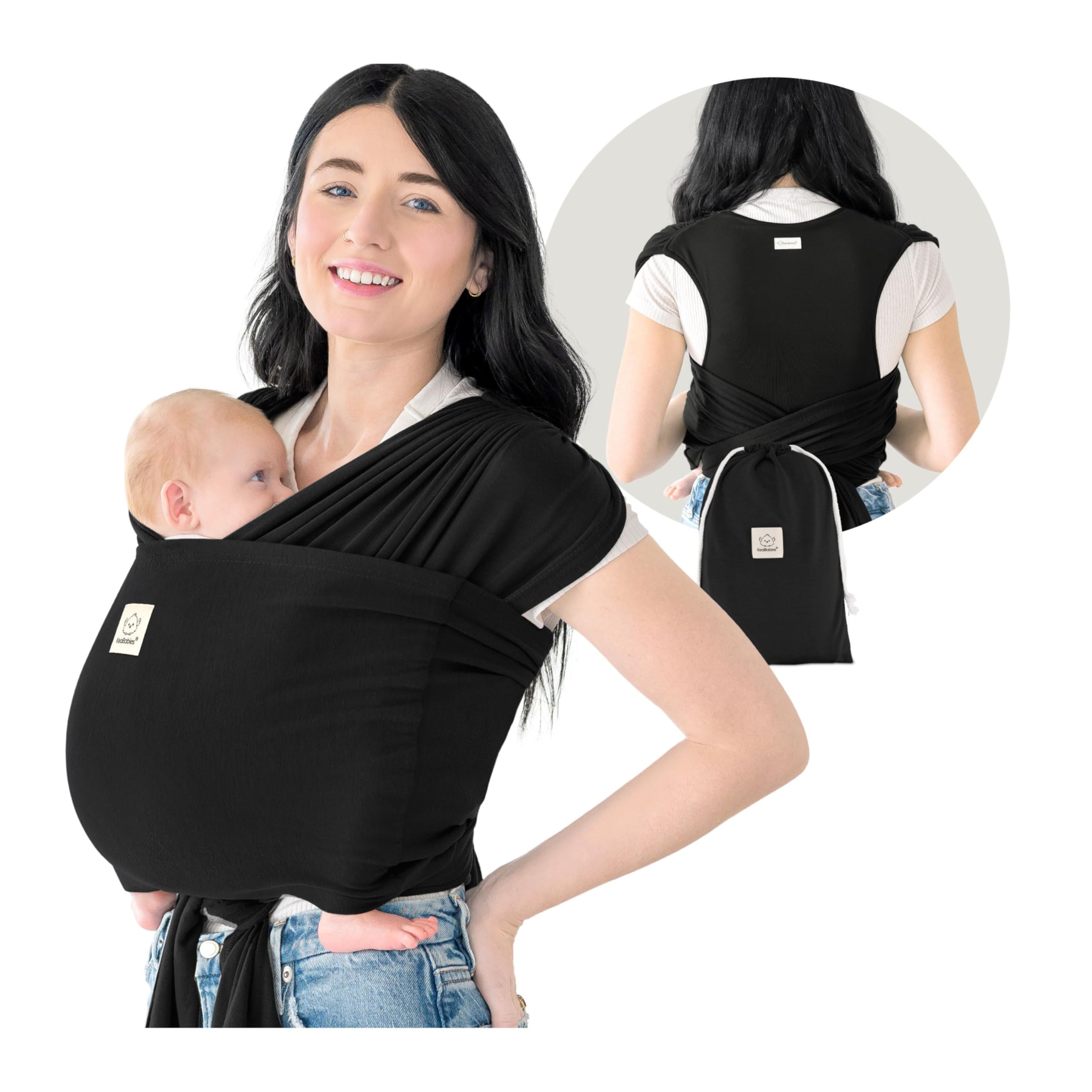
KeaBabies D-Lite Ring Sling
Key Features
- Weight Capacity: 7–44 lbs
- Carrier Style: Ring sling
- Solo On/Off: Easy
- Packed Size: 1.96 lbs, compact
- Back Support: Structured back panel
- Price: Budget
The D-Lite ring sling incorporates a structured back panel that distributes weight across the shoulders and back, a feature rare in ring carriers. The fabric is soft and packs flat for travel. It slips on and off quickly, adjusts to fit babies from 7 to 44 pounds, and accommodates a wide range of body types—useful when swapping between caregivers. However, the material can trap heat, so it’s less comfortable for beach holidays or steamy sightseeing days.
This carrier shines for parents who want a single, packable solution from newborn through toddler. The structured back panel keeps you comfortable during long sightseeing days, and the ring design means no dangling tails or complicated wrapping. The learning curve is minor—expect a few tries to get the tension even—but after that, on/off is quick. Families heading to hot, humid locations may want a more breathable mesh carrier; for temperate climates, the D-Lite offers premium comfort and longevity at a budget price.
Pros
- Quick on/off and simpler than traditional fabric wraps.
- Structured back panel distributes weight, reducing shoulder and back strain.
- Soft, premium fabric feels gentle against baby’s skin.
Cons
- Fabric can retain heat, making it less comfortable in hot or humid weather.
- Ring adjustments take a few tries to master — not as immediate as buckle carriers.
For parents who want a compact travel carrier that lasts from newborn to toddler with real back support, the D-Lite hits a sweet spot — just plan for cooler climates.
Best for Luxury Newborn
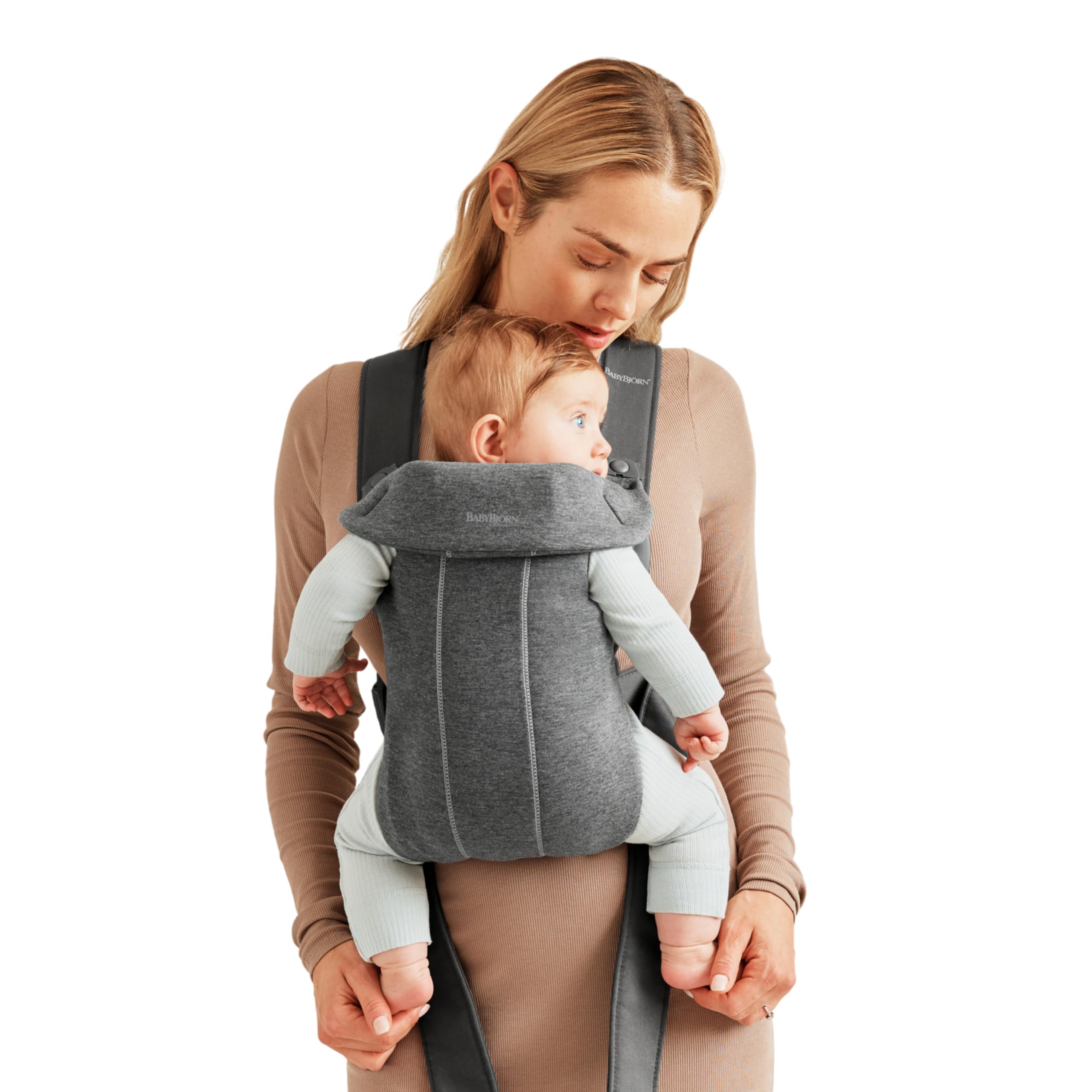
BabyBjörn Mini
Key Features
- Weight Capacity: 7–24 lbs
- Carrier Style: Soft-structured buckle
- Solo On/Off: Very easy
- Packed Size: 0.5 lbs, ultra-compact
- Back Support: No waist belt
- Price: Premium
The Mini stands apart from the top pick’s longer-lasting ring sling by stripping everything down to raw speed and softness. It goes on in a single buckle-click, weighs under a pound, and the 3D jersey cradles newborns without pressure on a healing c-section incision. This is a carrier for parents who need to get from car to gate in under ten seconds, not for marathon park walks. Back support holds up through the first few months, but once your baby crosses 15 lbs, the shoulder-only design starts reminding you there’s no waist belt.
Pros
- Incredibly easy to put on and take off — one buckle, no wrapping for quick trips.
- Superb softness from the 3D jersey material, keeping newborns cozy and secure.
- Designed without a waist belt, which keeps pressure off c-section incisions during recovery.
Cons
- Lacks a waist belt, so back support fades past 15 lbs — shoulders carry all the weight on longer walks.
A beautifully made newborn carrier that excels for first-year travel and c-section recovery, provided you accept the steep price and short usability window.
Best for Ultra-Compact Backup
Infantino Swift Classic
Key Features
- Weight Capacity: 8–25 lbs
- Carrier Style: Soft-structured buckle
- Solo On/Off: Easy
- Packed Size: Ultra-compact
- Back Support: Thin padding
- Price: Budget
Weighing just a few ounces and packing down to the size of a water bottle, the Swift Classic slips into a diaper bag with ease—ideal for travel days when you need a carrier but don’t want to lug around something bulky. The thin shoulder straps lack the padding found on more expensive travel carriers, so comfort fades after about 20 minutes, but this is a tradeoff for its vanishingly small footprint. It’s best suited as a backup for short airport walks or day trips with lightweight babies under 20 lbs, rather than all-day sightseeing with a heavy toddler.
Pros
- Costs less than most dedicated travel carriers, making it a low-risk backup option.
- Clips on and off in seconds, even in a cramped airplane aisle.
- Packs down to about the size of a water bottle, stashing easily in a carry-on or stroller basket.
Cons
- Adjusting straps for a snug, supportive fit can be fiddly with heavier babies, and the carrier may feel less stable.
- Shoulder straps can dig in after about 20 minutes of continuous wear, especially with a baby approaching the weight limit.
For parents who need a backup carrier that disappears into a day bag, the Swift Classic fills that role nicely—as long as you keep walks short and your baby light.
Best for Soft Newborn Comfort
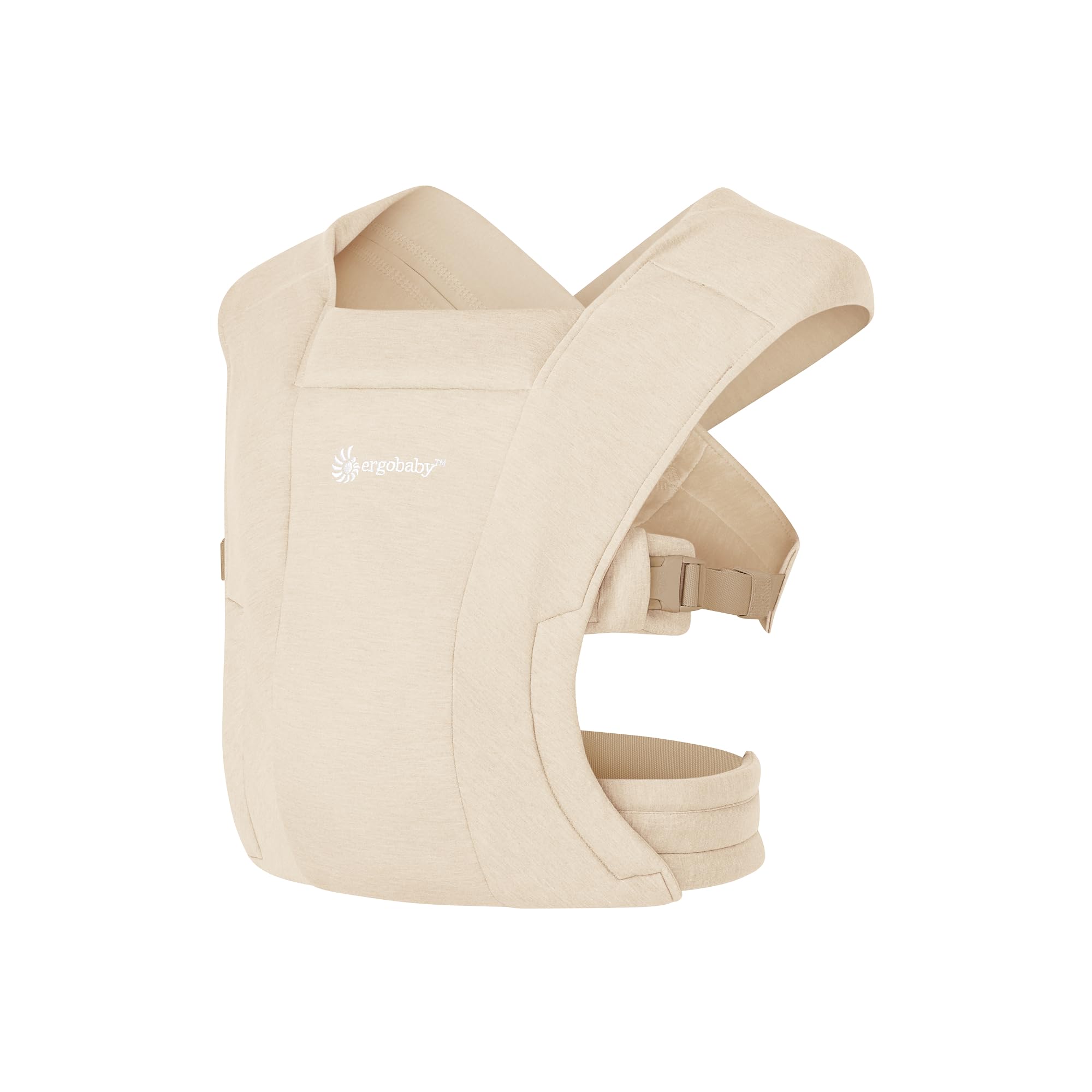
Ergobaby Embrace
Key Features
- Weight Capacity: 7–25 lbs
- Carrier Style: Soft-structured knit
- Solo On/Off: Easy
- Packed Size: 1 lb, compact
- Back Support: No waist belt
- Price: Mid-Range
Unlike the top pick’s ring sling with back panel, the Embrace prioritizes plush comfort for newborns with its knit-like fabric that molds to baby and wearer. It packs down smaller than a structured carrier like the Omni 360, though it shares the same hip-healthy bucket seat design. Easy on/off and lightweight at 1 lb make it ideal for airports and day trips. Suits parents of newborns up to 9 months who want a soft, packable carrier for travel. Head and neck support can be minimal for very small infants—you may need a hand to steady a floppy newborn.
Pros
- Soft, knit-like fabric molds to baby and wearer.
- Easy to put on and adjust solo, even when rushing through an airport.
- Folds compactly and weighs just 1 lb for diaper-bag portability.
Cons
- Head and neck support can be minimal for very small infants, requiring a hand to steady a floppy newborn.
The Embrace is a travel-focused newborn carrier that delivers soft comfort and easy packing, but its 25-lb ceiling means it won’t replace a toddler carrier. Plan to upgrade once your baby nears 20 lbs for back support.
Best for Toddler Quick Holds
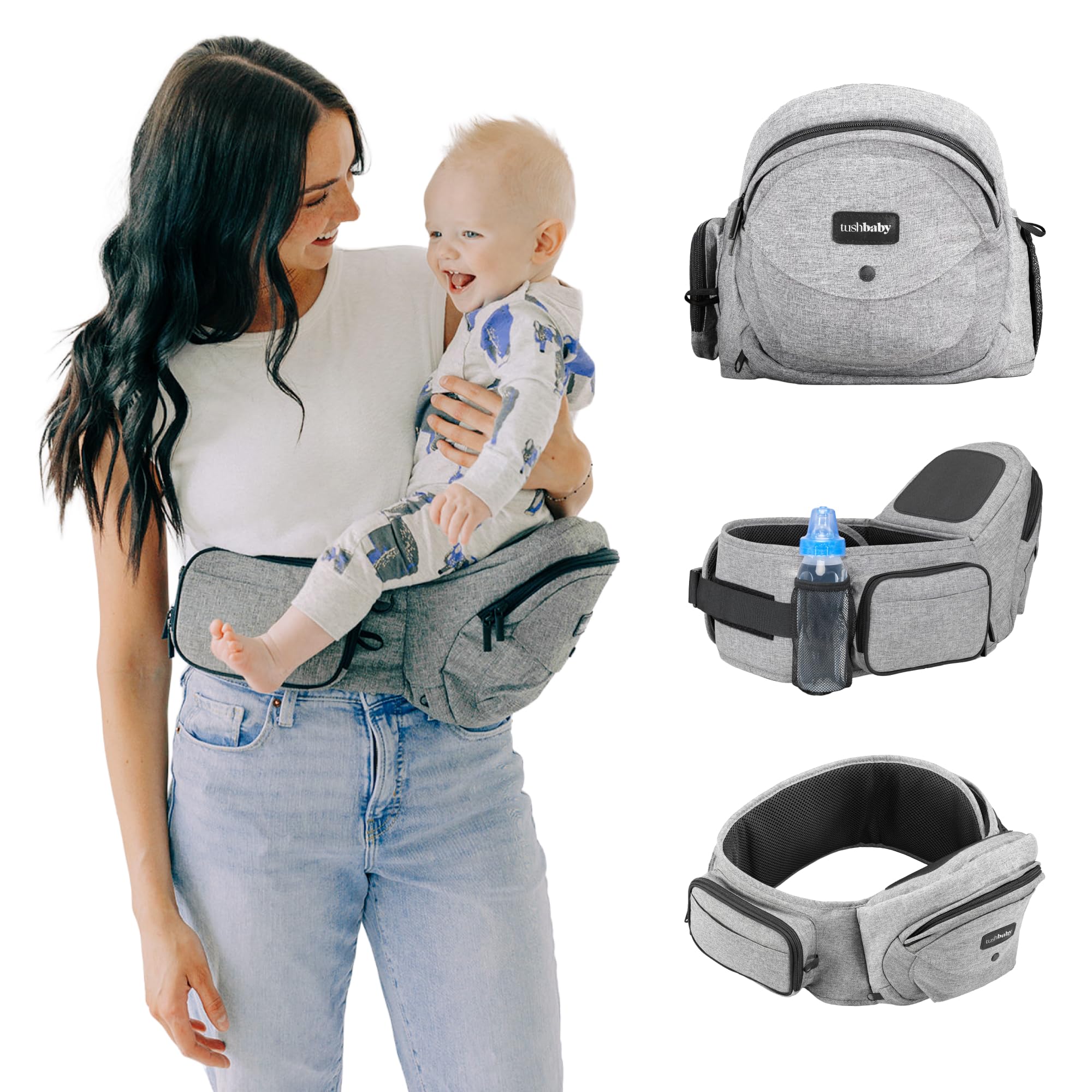
Tushbaby Hip Seat
Key Features
- Weight Capacity: 8–45 lbs
- Carrier Style: Hip seat
- Solo On/Off: Easy
- Packed Size: 1.98 lbs
- Back Support: Hip redistribution
- Price: Mid-Range
A traditional carrier can feel like overkill when a toddler demands to walk, then be held, then walk again. The Tushbaby clips around your waist in seconds, creating a firm seat that shifts the load from spine to hips. Five pockets plus a bottle holder keep essentials accessible, so you can breeze through security or a mall without rummaging through a diaper bag. The catch: it’s a hip seat, not a hands-free carrier. One arm stays on your child unless you add the Snug attachment. For the target user — a parent of a busy toddler who just needs a hip perch and quick access to wipes — that limitation rarely matters.
Pros
- Distributes weight across the hips, sparing your back during frequent pick-ups
- Put on and removed in seconds with a single buckle, ideal for on-the-go up-and-downs
- Built-in pockets hold a phone, keys, and wipes, reducing the need for a separate bag
Cons
- Without the Snug attachment, one hand must support the baby — it’s a hip seat, not a full carrier
- When worn snugly for an extended period, the waistband can dig into the hip bone
For parents of up-and-down toddlers, this hip seat packs travel-friendly storage and back relief into a quick-on design. Just budget for the Snug attachment if you need full hands-free carrying.
Best for Petite Budget Wrap
Momcozy Wrap Carrier
Key Features
- Weight Capacity: 8–50 lbs
- Carrier Style: Wrap
- Solo On/Off: Tie, needs practice
- Packed Size: Compact
- Back Support: No back panel
- Price: Budget
Soft, stretchy fabric with a built-in pocket and quick tie-on closure makes this wrap easy to pack and quick to deploy for short errands. A cinch knot secures without buckles, but achieving a safe, shift-free hold requires firm, even tightening — a step worth rehearsing before relying on it at the airport. The wrap’s stretch accommodates small-to-average frames well, but plus-size wearers may find the fabric pulls uncomfortably tight across the shoulders and torso. For petite parents seeking an affordable, on-the-fly carrier for quick trips, this is a practical pick, though it’s wise to bring a backup for longer travel days.
Pros
- Soft, comfortable fabric that feels natural
- Fairly easy to put on once familiar
- Good quality for the price
Cons
- Security depends on a firm tie; a loose wrap can allow shifting or slumping.
- Fit may be too tight for plus-size users, limiting comfort around the shoulders and torso.
If you’re a smaller-framed parent who wants a packable, soft wrap for quick errands and occasional travel, this works — just plan to carry a more secure backup for longer days out.
Best for Budget 4-In-1
Infantino Flip 4-in-1
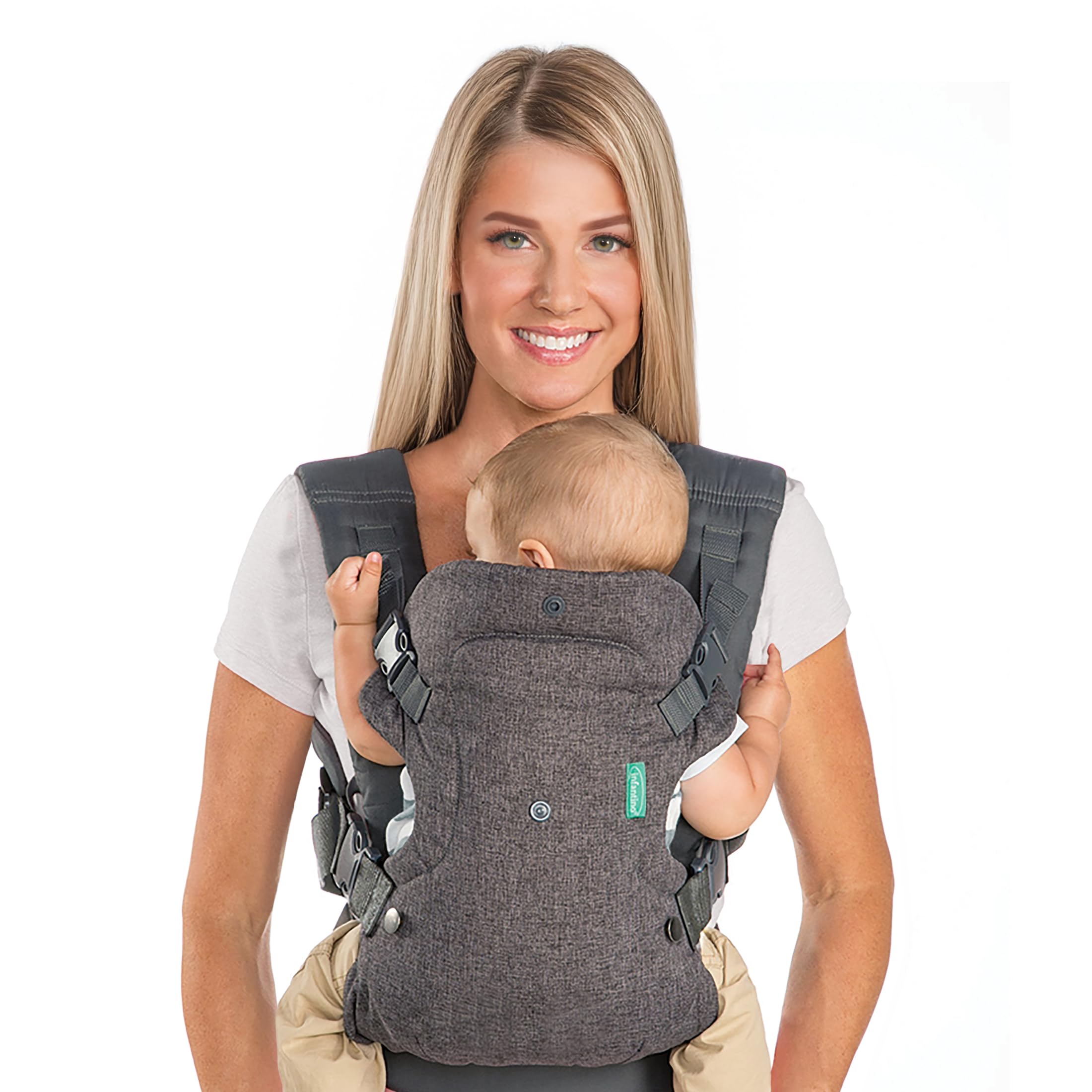
Key Features
- Weight Capacity: 8–32 lbs
- Carrier Style: Soft-structured buckle
- Solo On/Off: Easy
- Back Support: Limited lumbar
- Price: Budget
The Infantino Flip 4-in-1 packs four carry positions and solid construction into a budget-friendly package. Its bulkier build and lack of fold-away compactness make it less ideal for frequent flyers or pack-light travelers. Lower back support can feel insufficient as your baby nears the weight limit, which works for short errands but not all-day sightseeing.
Pros
- Four carry positions — facing in, out, hip, and back — in one affordable carrier.
- Buckles and straps adjust quickly for solo use.
Cons
- Lower back support diminishes as baby approaches the weight limit, which can make longer outings tiring.
For short errands where multi-position versatility matters more than packability, this carrier delivers solid value.
Best for Cozy Stretchy Wrap
KeaBabies Original Wrap

Key Features
- Weight Capacity: 7–35 lbs
- Carrier Style: Wrap
- Solo On/Off: Wrap, needs practice
- Packed Size: Compact
- Back Support: No back panel
- Price: Budget
The KeaBabies Original Wrap is a soft, stretchy carrier that hugs newborns closely, packs light, and costs little. It’s a cozy pick for short outings and at-home bonding, but the fabric can loosen during longer walks, which means stopping to retie — making it less suited to active, all-day travel.
Pros
- Soft, stretchy fabric cradles baby comfortably for cozy all-day wear.
- Excellent build quality at a budget-friendly price.
Cons
- If the wrap isn’t knotted very tightly, baby may slip downward over time.
If you need an affordable wrap for newborn snuggles and short errands, this one is a solid choice — just pack a structured carrier for days that demand longer carry sessions.
Best for Newborn Slip-On
Koala Babycare Wrap

Key Features
- Weight Capacity: 4.4–19.8 lbs
- Carrier Style: Ring wrap
- Solo On/Off: Easy
- Packed Size: 0.2 kg, tiny
- Back Support: Ring lumbar support
- Price: Mid-Range
The Koala Babycare Wrap slips on quickly and packs flat, making it one of the most packable carriers for a newborn. The ring system provides lower back support, and the fabric feels substantial. Its 20-lb weight cap limits use to the first few months, so it serves best as a compact travel solution for early infancy.
Pros
- Slips on like a t-shirt in seconds, no long wrapping tails to drag.
- Weighs only 0.2 kg and folds flat, taking negligible space in a carry-on.
Cons
- Baby may gradually slip down and requires periodic strap retightening.
A smart travel companion for parents of newborns who need a carrier that disappears into a diaper bag and goes on one-handed — as long as the baby hasn’t outgrown 20 lbs.
Best for Stretchy Classic
Sleepy Wrap

Key Features
- Weight Capacity: 7–35 lbs
- Carrier Style: Wrap
- Solo On/Off: Tie, long tails
- Packed Size: Compact, long tails
- Back Support: No back panel
- Price: Budget
The Sleepy Wrap’s French terry is exceptionally soft and stretchy—ideal for soothing newborns at home. However, the wrap’s long tails and stretchy fit become frustrating in travel scenarios, requiring frequent adjustments and clean floors. For indoor bonding, it’s a cosy budget pick; for travel, look elsewhere.
Pros
- Extremely soft French terry quickly calms fussy newborns.
- Stretchy fabric retains shape after many washes.
Cons
- Long tails drag on the ground when tying, making parking-lot use messy.
This wrap excels at calming a fussy newborn during quiet indoor moments, where softness matters more than tail length. Keep it out of airport and parking lot scenarios.
Best for 6-In-1 Budget
Bellababy 6-in-1 Hip Seat

Key Features
- Weight Capacity: 7–33 lbs
- Carrier Style: Hip seat & carrier
- Solo On/Off: Back clip, tricky
- Back Support: Excellent back support
- Price: Budget
The Bellababy pairs a hip seat with six carrying modes, redirecting weight off the shoulders for all-day airport wear. Back support is stronger than you’d expect at this price. The waist belt is not sized for anyone beyond size 16, and the back clip can be a solo stretch. For smaller-framed travelers who can manage that, it’s a budget pick that delivers real back relief.
Pros
- Excellent back support prevents shoulder and spine fatigue during long wear
- Six carry modes adapt from front-facing newborn to back-carry toddler
Cons
- Waist belt may not close on sizes 18 and up
For parents under size 16 who need a carrier that doubles as a hip seat and can handle a back clip, this is a capable travel companion at a budget-friendly cost.
Best for Storage Day Trip
Infantino Carry On Active

Key Features
- Weight Capacity: 8–40 lbs
- Carrier Style: Soft-structured buckle
- Solo On/Off: Easy
- Packed Size: 0.6 kg, compact
- Back Support: Lumbar belt
- Price: Mid-Range
The Carry On Active wraps a parent-friendly design around a traveler’s needs—multiple pockets hold phone, keys, and pacifier, while the lumbar belt keeps heavier toddlers manageable. The carrier is not intended for newborns under 8 lbs, and its mid-range price and weight sit just above the top pick’s simpler, lighter design. That tradeoff nudges it into also-consider territory.
Pros
- Multiple elastic and lumbar belt pockets keep essentials within reach without a diaper bag.
- The adjustable fit comfortably accommodates plus-size wearers and a wide range of body types.
Cons
- The carrier is heavier than the most compact travel options, which can be a drawback for those prioritizing ultralight packing.
If built-in storage and a plus-size-friendly fit matter more than shaving ounces, this carrier shines on day trips and sightseeing where pockets replace a separate bag.
Best for Big Kid Support
MOMTORY 6-in-1 Hip Seat

Key Features
- Weight Capacity: 7–50 lbs
- Carrier Style: Hip seat carrier
- Solo On/Off: Back clip, finicky
- Back Support: Outstanding back support
- Price: Mid-Range
This carrier supports heavier toddlers up to 50 lbs with solid back relief, a clear plus for larger frames. The waistband may not tighten enough for petite parents, and the Velcro back clip needs careful fastening. While not the most packable travel option, its weight distribution makes it suitable for day trips with a big toddler.
Pros
- Carries toddlers up to 50 lbs with effective lumbar relief
- Durable cotton-polyester construction withstands daily use
Cons
- Waistband may not tighten enough for petite wearers, limiting secure fit
Best for larger-framed parents who need sustained back support for a heavy toddler and can accept a less compact travel carrier.
Best for Heavy-Duty Home
Ergobaby Omni Classic
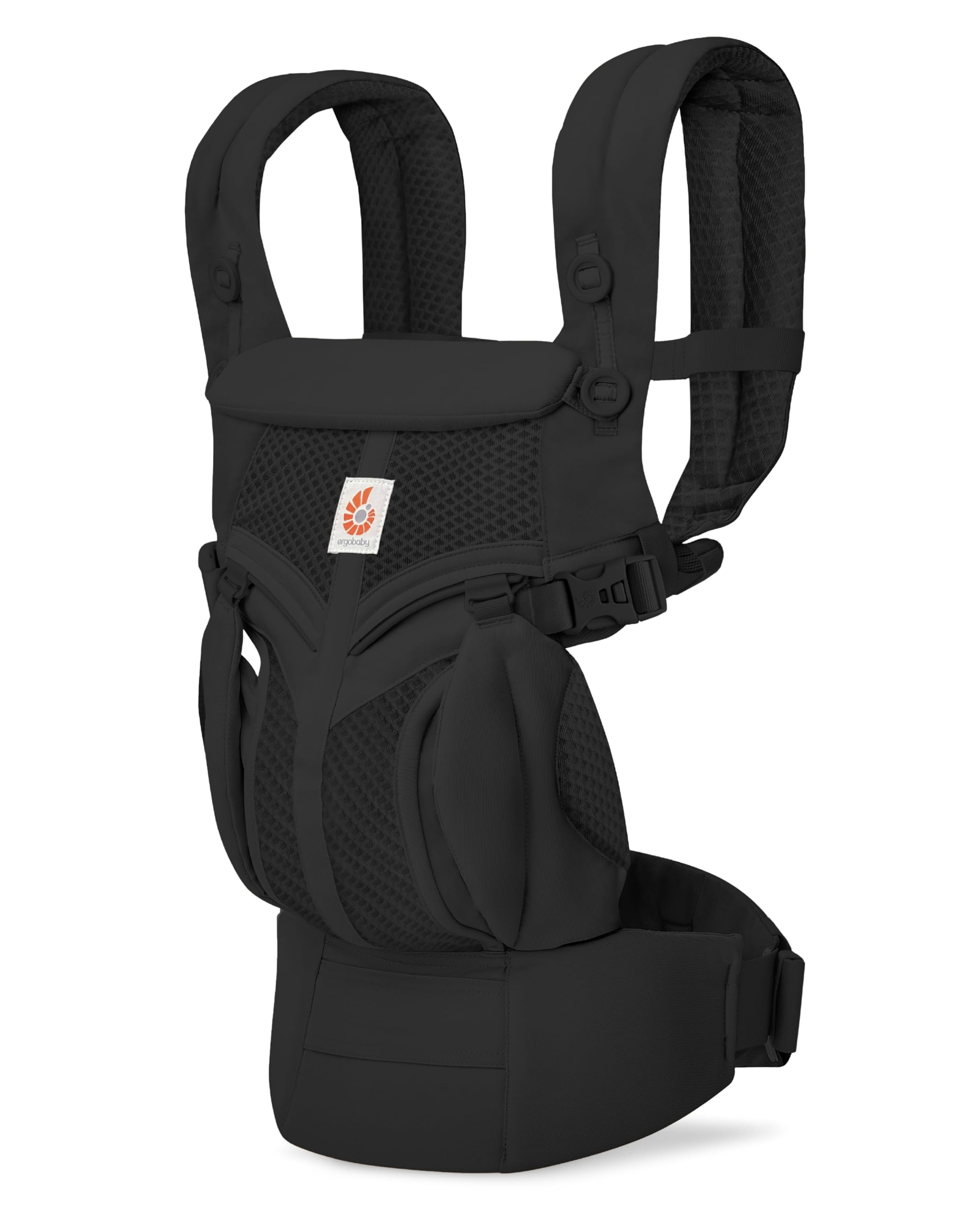
Key Features
- Weight Capacity: 7–45 lbs
- Carrier Style: Soft-structured mesh
- Solo On/Off: Complicated, back strap
- Packed Size: 1.7 lbs, bulky
- Back Support: Lumbar support
- Price: Premium
Exceptional lumbar support and a sturdy build make this carrier a workhorse for home and long walks, with adjustability that fits multiple caregivers. At 1.7 lbs and with a back strap that can be awkward to fasten alone, it’s too bulky for travel—quick gate-side donning becomes a chore.
Pros
- Durable construction withstands daily wear from heavy use.
- Adjustable design comfortably fits different wearers and growing babies.
Cons
A heavy-duty home carrier that excels during long walks and shared caregiver duties, but for airports and day trips, the lighter, more compact option in this set is the better travel partner.
Best for Fit-Dependent Style
Momcozy Structured Carrier

Key Features
- Weight Capacity: 7–45 lbs
- Carrier Style: Soft-structured buckle
- Solo On/Off: Easy, but fit issues
- Back Support: Lumbar support
- Price: Unknown
The Momcozy carrier’s padded straps and X-back design offer genuine shoulder comfort, and solo adjustments are straightforward. However, fit can be unreliable on smaller frames—straps may not tighten enough, and in some cases the baby can slip downward if not perfectly adjusted. For travel where confidence matters, this is a carrier to try on at home first.
Pros
- Padded shoulder straps reduce back and shoulder discomfort during wear.
- Effortless to put on and tighten alone, even in cramped airplane aisles.
Cons
- Fit may be inconsistent—straps can be too loose for petite wearers, requiring extra adjustments to feel secure.
This carrier makes sense if you can try it on before relying on it for a trip, but for on-the-go confidence, look to more consistently fitting options.
How to Choose
Not every ‘travel-friendly’ carrier actually performs in airports—the ones that do pack flat, let you put them on solo, and still support your back for hours of walking.
Weight Capacity & Age Range
A high weight limit (40+ lbs) looks future-proof, but the support structure often can’t handle a heavy toddler without digging into your shoulders. Testing at 20 lbs gives a truer picture of day-trip comfort than believing the spec.
If your child is under six months, a lighter carrier with a lower weight cap saves space and weight. For trips with a one-year-old, prioritize carriers with a waist belt and a back panel that truly support the max load.
Carrier Style
Wrap and ring sling carriers pack down to the size of a t-shirt—ideal for carry-ons—but they rely on fabric tension to hold baby. Over a 15-minute walk, the material relaxes, and if you don’t retighten, baby can shift lower. Soft-structured carriers lock in place with buckles, but they take up more bag space. For airport use where you strap on and off, a ring sling or a soft-structured carrier with easy-adjust buckles strikes the best balance.
Ease of Solo On/Off
Many carriers require you to hook a strap between your shoulder blades, impossible alone in an airplane lavatory. Cross-back designs that slide over your head, or ring slings that tighten with one pull, let you secure baby in under ten seconds. The difference is between smooth boarding and a frantic fumble.
Packability & Folded Weight
Weight, not folded dimensions, is the silent burden. A 2-lb carrier will feel twice as heavy in your bag after 20 minutes compared to a 0.5-lb wrap. Wraps and ring slings easily weigh under a pound, while hip seats and full-structured carriers hover around 1.5–2 lbs. If you plan to wear the carrier most of the time, the weight matters less; if it’ll live in your backpack, every ounce counts.
Back Support & Weight Distribution
The presence of a waist belt or lumbar pad redirects your baby’s weight from shoulders to hips, eliminating the burn you get after 40 minutes. Carriers without a waist belt rely entirely on shoulder straps, which can become pressure points once baby exceeds 15 lbs. For multi-hour sightseeing, a padded waist belt is non-negotiable.
Breathability & Temperature
Mesh panels reduce sweat pooling, but they often sacrifice the softness newborns prefer. In hot climates, a mesh-structured carrier keeps both of you cooler; in mild weather, a knit or woven wrap is cozier. Think about your destination’s temperature—not just your home climate—when choosing.
FAQ
Why does my baby wrap carrier sag after I’ve been walking for a while?
Stretchy wraps rely on tension, and over time gravity loosens the fabric, causing baby to shift lower. To minimize sagging, start with a tighter-than-comfortable wrap and adjust after a minute; you may need to re-tighten after 20 minutes of walking. Ring slings are quicker to tighten on the go.
Can I use a Tushbaby hip seat carrier as a hands-free carrier for the airport?
The Tushbaby hip seat alone is not a hands-free carrier—you need to keep one hand on your baby or purchase the Snug attachment to create a full carrier. For airport use, the Snug add-on can turn it into a front-facing carrier, but it still won’t offer the sleep support of a wrap. If you prioritize quick navigation with a wiggly toddler, the hip seat alone is useful, but plan to keep a hand free.
How do I keep the straps on my Infantino carrier from getting tangled when I put it on?
The long straps on the Infantino Flip can twist during storage; before putting it on, shake out the carrier and lay it flat so the straps hang straight. Once the waistband is secured, run your hands along each strap from buckle to shoulder to untwist before lifting baby. A few practice runs at home will make it a quick habit.
Is the Ergobaby Omni too bulky for airplane travel with a baby?
At 1.7 lbs with a structured lumbar pad, the Omni takes up the equivalent of a packed lunch bag in your carry-on. It’s manageable if you check luggage and only need it for walks at your destination, but it’s not a great choice for stuffing under an airline seat. For mixed travel, a lighter ring sling or soft-structured carrier like the Embrace will fit in a personal item more easily.