This post contains affiliate links. We may earn a small commission when you buy through our links — at no extra cost to you.
The toddler carrier market is crowded with options from under $25 to over $100. Many budget carriers claim ergonomic support but rely on thin straps, while premium carriers justify higher prices with better lumbar support and fabric. What many parents discover too late is that the best carrier for a growing toddler depends less on price and more on how well it distributes weight and whether it can be adjusted solo by multiple caregivers.
This guide cuts through the noise by matching each carrier to a specific use case – from a $30 workhorse that over 80,000 parents trust to a $130 premium option built for all-day comfort. You’ll find carriers that relieve back pain, ones that double as a diaper bag, and wraps that keep newborns cozy. The right choice balances weight capacity, carrying positions, and the ease of putting it on yourself – not just the sticker price.



Best for Budget Everyday Carrier
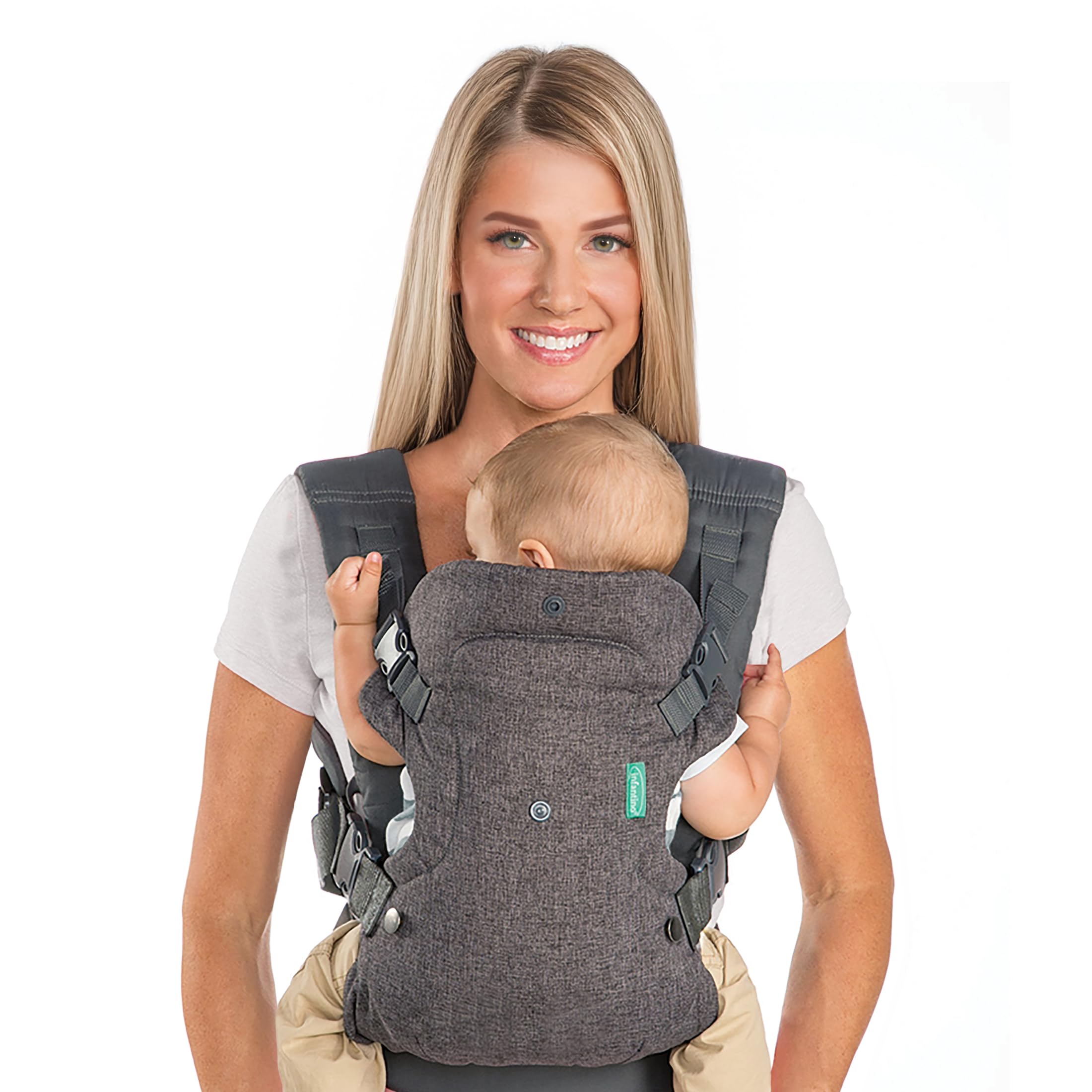
Infantino Flip 4-in-1
Key Features
- Weight Capacity: 8–32 lbs
- Carrying Positions: 4 positions
- Support Type: Structured
- Material & Cleaning: Polyester-cotton, machine wash
- Ease of Use: Buckle straps
- Price: $
With over 81,000 ratings, the Infantino Flip 4-in-1 is the most widely purchased carrier in its price range. Its four carrying positions—front-inward, front-outward, back, and adjustable wide/narrow seat—cover newborn through 32-pound toddlers. Padded shoulder straps and a waist belt help distribute weight, making it comfortable for everyday use. The buckle closure and machine-washable fabric simplify cleanup and fit adjustments.
This carrier suits budget-conscious parents who need a functional daily option from birth through toddlerhood. It is especially helpful for first-time buyers exploring babywearing without a big investment. However, the shoulder straps and waist belt lack the extra padding needed for comfortable long-term carrying of toddlers over 30 pounds; parents with very heavy children or those needing lumbar support should look at carriers with built-in EVA support.
Pros
- High value for the price with strong positive feedback on quality.
- Four carry positions adjust for newborn to toddler stages.
- Padded straps and belt help distribute weight for comfortable carrying.
Cons
- Shoulder straps may lack sufficient padding for toddlers over 30 lbs, causing discomfort.
- Interior tag near the neck can be itchy; some parents trim it.
Buy this if you want a budget-friendly carrier that adapts from newborn to toddler and is backed by over 81,000 reviews. Skip it if your toddler is over 30 pounds and you need extra lumbar support.
Best for Back Pain Relief
Momcozy Structured Carrier
Key Features
- Weight Capacity: 7–44 lbs
- Carrying Positions: Front in/out, back
- Support Type: Structured
- Material & Cleaning: 100% Cotton
- Ease of Use: X-shaped back
- Price: $$
The Momcozy carrier distinguishes itself from the top pick with its built-in EVA lumbar support, directly addressing back strain during extended use. The X-shaped back design makes solo adjustment straightforward, and the cotton material earns high marks for quality. The trade-off: cotton attracts lint, so a lint roller becomes part of your routine. This carrier fits best for babies 3+ months (7–44 lbs) and caregivers who prioritize back relief over a newborn-friendly fit.
Pros
- Integrated lumbar support reduces back strain during long carries.
- Easy to put on and adjust alone with X-shaped back.
- High-quality cotton material with attractive design options.
Cons
- Cotton fabric attracts lint; regular cleaning needed.
- Carrier may be too large for newborns under 7 lbs.
Buy this if you need strong lumbar support for carrying toddlers and don’t mind occasional lint maintenance. Skip it if you want a newborn-friendly carrier or prefer breathable mesh fabric.
Best for Premium Long-Lasting
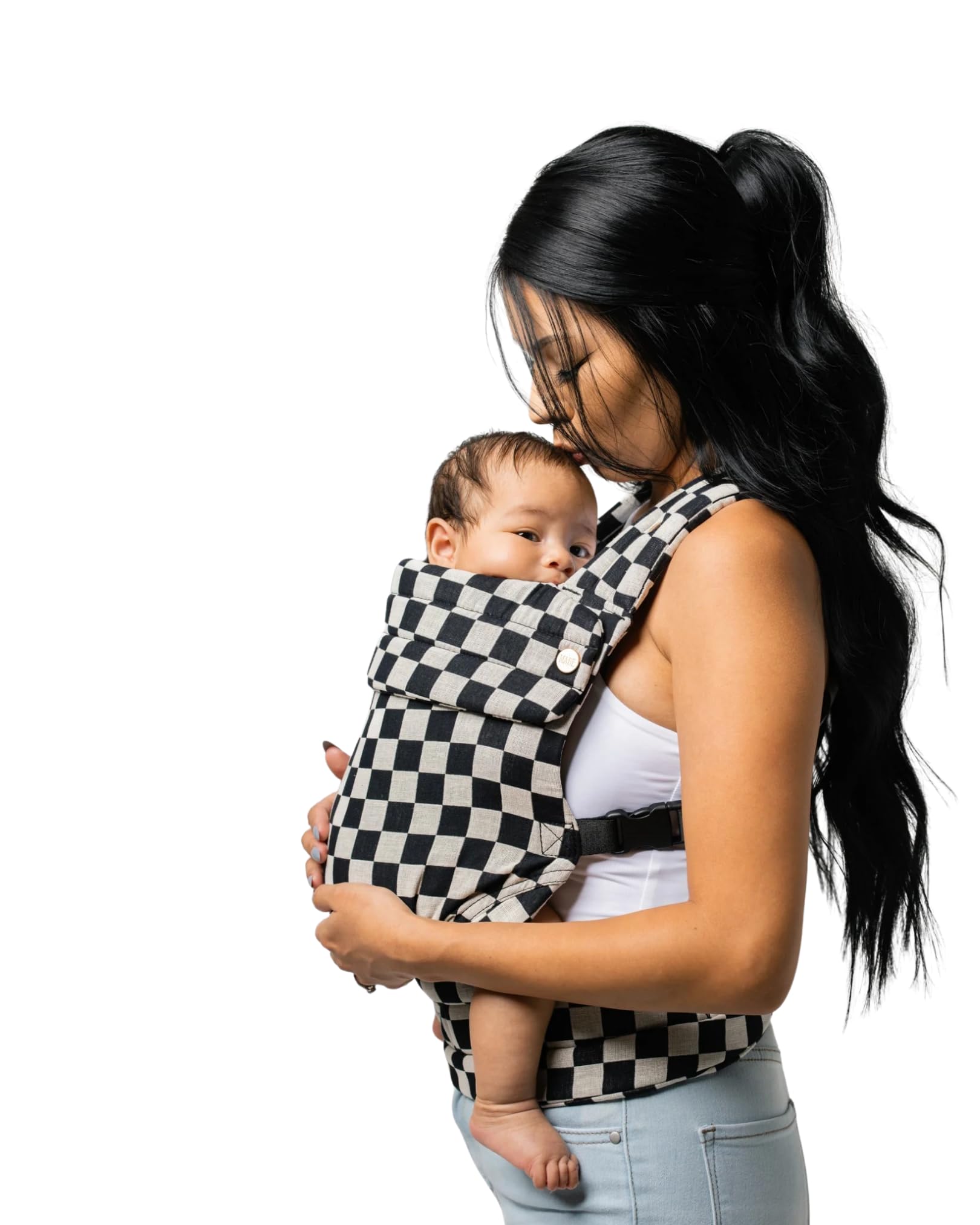
Mabē Monarch
Key Features
- Weight Capacity: 7–35 lbs
- Carrying Positions: 3 positions
- Support Type: Structured
- Material & Cleaning: Cotton-linen, machine wash
- Ease of Use: Buckle straps
- Price: $$$
The MABĒ Monarch stands apart from budget carriers with its thick cotton-linen fabric and aesthetic patterns that hold their shape over time. Parents report no back or shoulder pain even during long carries, thanks to supportive construction. However, the same insulating fabric that gives it a premium feel also traps heat — this carrier is not suited for hot climates or for newborns under 3 months without an insert. Best for style-conscious parents who prioritize comfort and durability over breathability and need a carrier for babies 7–35 lbs.
Pros
- Thick cotton-linen fabric retains shape and resists sagging.
- Exceptionally comfortable for extended wear — no back or shoulder pain.
- Stylish patterns often mistaken for higher-end brands.
Cons
- Thick fabric retains heat; uncomfortable in hot climates.
- Requires separate insert for newborns under 3 months.
Buy this if you want a premium, stylish carrier that stays comfortable all day. Skip it if you live in a hot climate or need a newborn-ready carrier out of the box.
Best for Newborn Bonding
KeaBabies Wrap Carrier
Key Features
- Weight Capacity: 7–35 lbs
- Carrying Positions: Front wrap
- Support Type: Wrap
- Material & Cleaning: Stretchy fabric
- Ease of Use: Tie wrap
- Price: $
Unlike buckle carriers that snap on in seconds, the KeaBabies Wrap Carrier uses soft, stretchy fabric that hugs your newborn like a second skin. It is lightweight, breathable, and great for warm weather. However, the wrap loses support above 20 lbs and requires practice to tie securely. This is not a carrier for heavy toddlers or parents who need quick on/off access. Best suited for early months and home use, especially for moms who want to breastfeed discreetly while babywearing.
Pros
- Ultra-soft stretchy fabric provides a snug, womb-like feel for newborns.
- Lightweight and breathable material prevents overheating during warm weather.
- Once mastered, allows hands-free bonding and discreet breastfeeding.
Cons
- Wrap may sag under babies over 20 lbs; support diminishes with heavier toddlers.
- Requires practice to achieve a secure wrap — not ideal for quick on/off outings.
Buy this if you want a soft, breathable wrap for newborn bonding and around-the-house hands-free time. Skip it if your child is over 20 lbs or you need a carrier you can snap on in seconds.
Best for Hip Seat Versatile
MOMTORY 6-in-1 Hip Seat
Key Features
- Weight Capacity: 7–50 lbs
- Carrying Positions: 6 positions
- Support Type: Hip seat/structured
- Material & Cleaning: Cotton-poly blend
- Ease of Use: Buckle straps
- Price: $$
This carrier’s detachable hip seat and six positions offer more carrying options than the top pick, making it a strong choice for parents who frequently switch between front, back, and hip seat modes. The lumbar support reduces lower back strain during extended use, and storage pockets keep essentials handy. However, the waist band runs wide—caregivers with a 26-inch waist or smaller may find it too loose, and the snap buttons on pockets can loosen over time. Best for average-sized parents who want a feature-rich, mid-priced carrier that adapts as the child grows.
Pros
- Detachable hip seat provides lumbar support and reduces back strain.
- Six carrying positions accommodate newborns to toddlers up to 50 lbs.
Cons
- Waist band may be too wide for petite caregivers (26-inch waist or smaller).
- Snap buttons on storage pockets may loosen with frequent use.
Buy this if you need a versatile carrier with a detachable hip seat and lumbar support for long, hands-free outings.
Best for Budget Hip Seat
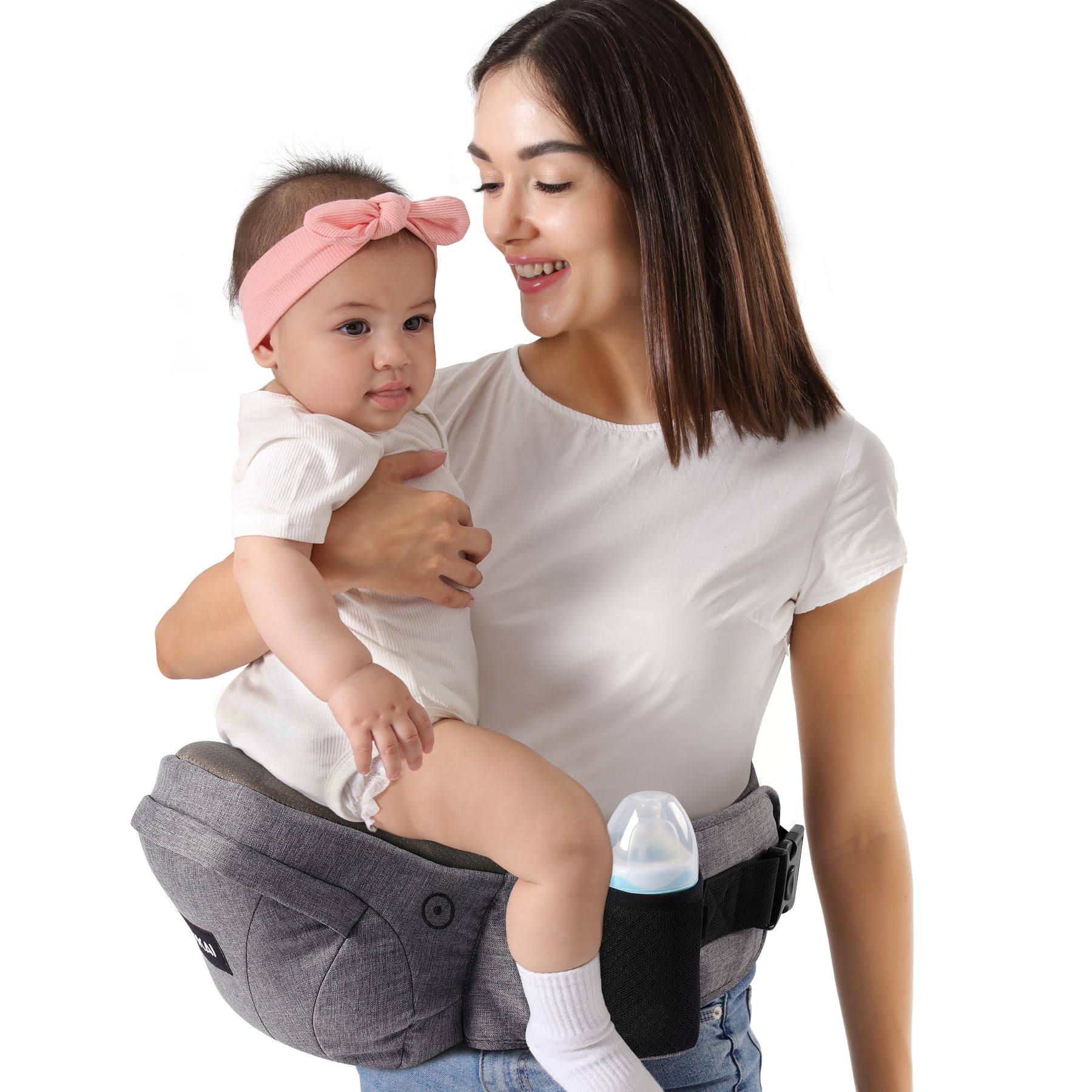
HKAI Hip Seat Carrier
Key Features
- Weight Capacity: 7–44 lbs
- Carrying Positions: Hip seat only
- Support Type: Hip seat
- Material & Cleaning: Cotton mesh
- Ease of Use: Buckle with Velcro
- Price: $
The HKAI Hip Seat Carrier packs five storage pockets into a lightweight, breathable design that keeps baby close for short trips. However, the Velcro waist closure can loosen over time, making it less suited for heavy toddlers or extended wear.
Pros
- Five pockets eliminate need for a separate diaper bag during short outings.
- Breathable mesh and lightweight build keep both parent and baby cool.
Cons
- Velcro waist closure may loosen over time, causing the hip seat to sag with heavier toddlers.
Worth considering if you need a budget-friendly hip seat carrier with generous storage for casual, short-duration use around the house or quick errands.
Best for Convertible Hip Seat
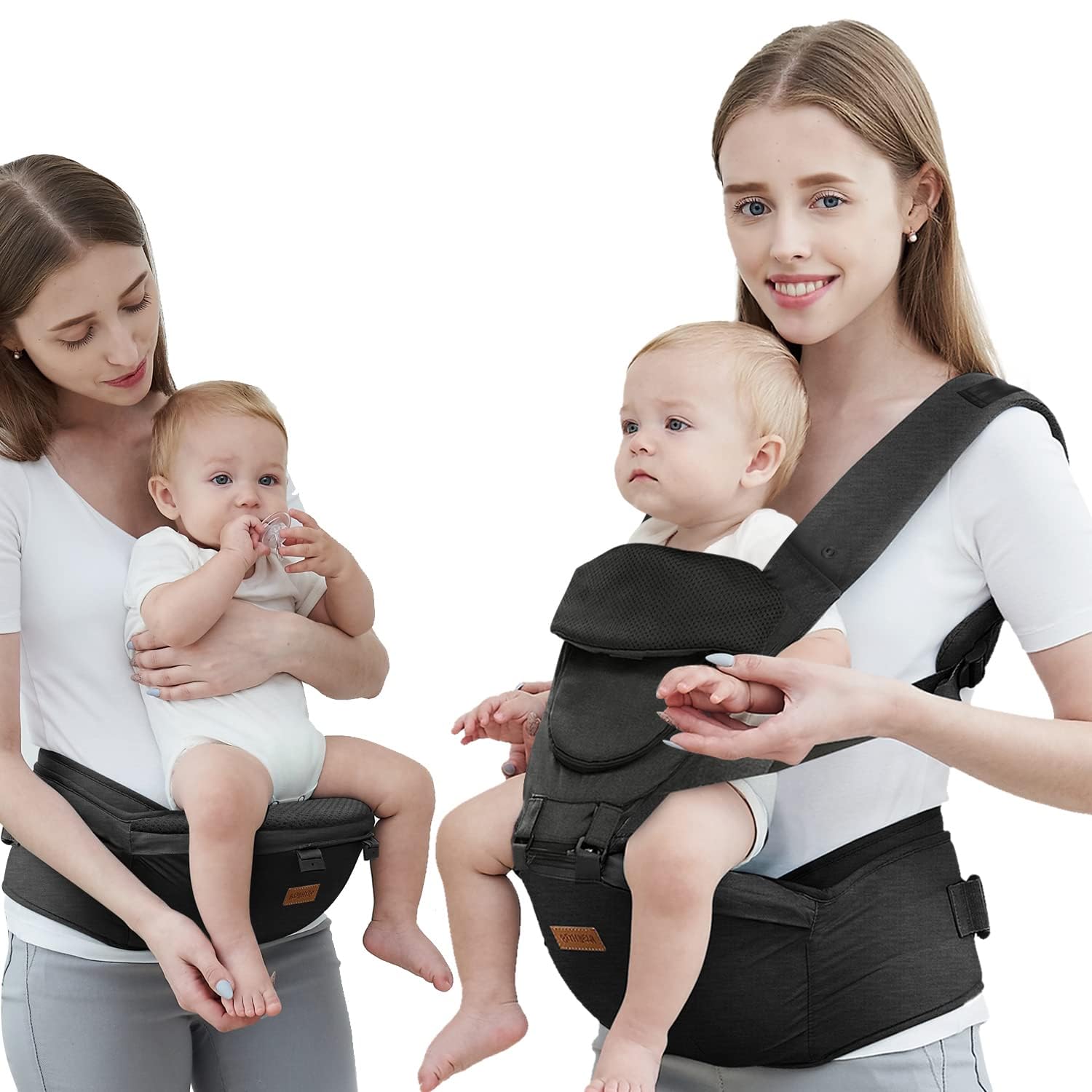
Acumas 6-in-1 Hip Seat
Key Features
- Weight Capacity: 7–66 lbs
- Carrying Positions: 6 positions
- Support Type: Hip seat/structured
- Material & Cleaning: Polyester, machine wash
- Ease of Use: Buckle straps
- Price: $$
This carrier offers a detachable hip seat and six carrying positions at a mid-range price. It is comfortable for short trips around the house or quick errands. However, shoulder straps tend to slip on broader frames, and the waist clip can loosen over time, making it best for home use and brief outings.
Pros
- Converts from full carrier to standalone hip seat for quick ups.
- Padded seat and straps reduce back and hip strain during short carries.
Cons
- Shoulder straps may slide off during use, especially for larger builds.
Worth considering if you want an inexpensive hip-seat carrier for short trips at home. Not ideal if you have broad shoulders or plan extended wear.
Best for Soft Newborn Carrier
GROWNSY Wrap-Style Carrier
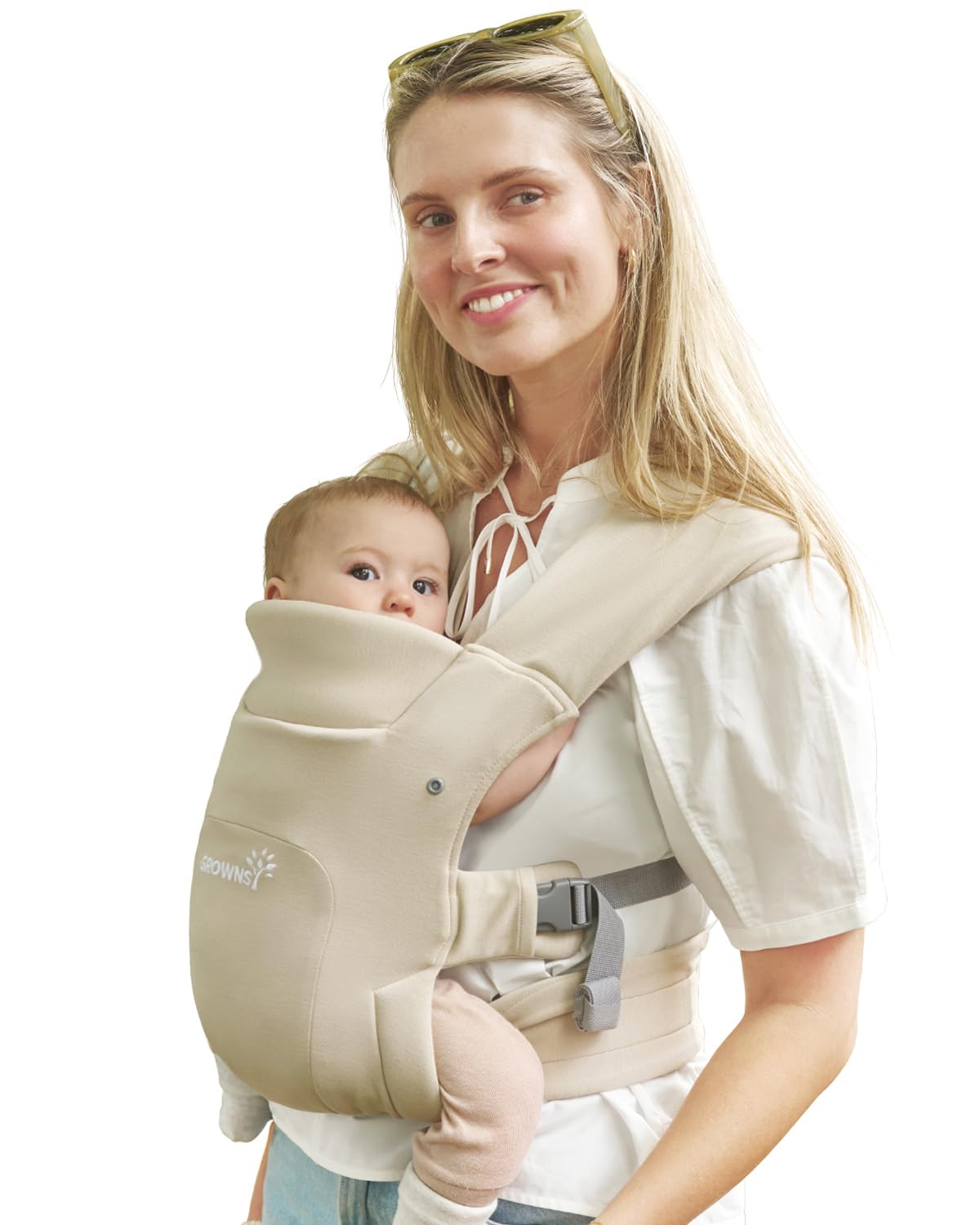
Key Features
- Weight Capacity: 7–35 lbs
- Carrying Positions: Front carry
- Support Type: Wrap/structured
- Material & Cleaning: Cotton-poly blend
- Ease of Use: Buckle straps
- Price: $$
This carrier combines wrap comfort with buckle convenience, featuring a foldable head support pad that newborns love. Babies often fall asleep quickly in the cozy cotton-polyester blend. However, it loses support beyond 20 pounds, and the fabric pills over time, limiting its longevity for heavier toddlers.
Pros
- Very soft and cozy fabric – babies often fall asleep quickly.
- Integrated foldable head and neck support pad for newborns.
Cons
- Loses support for babies over 20 pounds, limiting extended toddler use.
Worth considering if you need a soft, easy-to-use carrier primarily for a newborn under 20 pounds.
Best for Premium Look Dupe
Nest Blanche Houndstooth

Key Features
- Weight Capacity: 7–35 lbs
- Carrying Positions: 4 positions
- Support Type: Structured
- Material & Cleaning: Cotton-linen blend
- Ease of Use: X-shaped back
- Price: $$$
Matches the houndstooth style and comfortable X-shaped back of premium carriers at a lower price. However, occasional missing chest strap clips (a QC variance) and fabric that runs warmer than mesh mean it’s not for hot climates or those wanting guaranteed completeness. Fewer reviews also limit its standing against more established options.
Pros
- X-shaped back distributes weight comfortably for front and back carry.
- Houndstooth pattern gives a premium look at a lower price.
Cons
- Some units arrive missing the chest strap clip for H-style conversion.
Worth considering if you want a stylish, comfortable carrier for front and back carry and are comfortable with occasional QC variance and less breathable fabric.
Best for Carrier with Storage
Momcozy Hip Seat (Standard)

Key Features
- Weight Capacity: Up to 45 lbs
- Carrying Positions: Hip seat only
- Support Type: Hip seat
- Material & Cleaning: Polyester
- Ease of Use: Buckle with Velcro
- Price: $$
This carrier’s main draw is the storage—multiple pockets including a bottle holder, plus a padded hip seat that helps distribute a toddler’s weight. The lumbar support is noticeably better than similarly priced options, making it a good pick for longer walks. The trade-off is bulk: it’s warmer in hot weather and less streamlined than sleeker carriers, so style-conscious parents may want to look elsewhere.
Pros
- Spacious pockets reduce need for a separate diaper bag.
- Lumbar support eases back strain with heavier toddlers.
Cons
- Bulky build traps heat and lacks a sleek profile.
Worth considering if you prioritize carrying both a toddler and a full diaper bag without wearing a backpack, and you don’t mind the extra width.
Best for 2-In-1 Convertible
Momcozy 2-in-1 Carrier

Key Features
- Weight Capacity: 7–44 lbs
- Carrying Positions: 6 positions
- Support Type: Hip seat/structured
- Material & Cleaning: Polyester mesh
- Ease of Use: Buckle with Velcro
- Price: $$
This Momcozy carrier doubles as a hip seat for quick ups and a structured carrier for longer walks. The thick waistband and lumbar support reduce fatigue on outings. However, the Velcro waist closure is noisy — some babies startle — and the waistband may not cinch securely for smaller caregivers. It misses the top pick because newborns under 5 months aren’t well supported, and the Velcro sound is a real drawback for quiet environments.
Pros
- Converts between hip seat and full carrier for six carrying positions.
- Thick waistband with lumbar support reduces back strain during long walks.
Cons
- Velcro waist closure is noisy and can startle babies; some find it overly aggressive.
Worth considering if you need a convertible carrier for a baby 5+ months and don’t mind a loud Velcro closure.
Best for Easy Wrap Alternative
Momcozy Wrap Carrier

Key Features
- Weight Capacity: 8–35 lbs
- Carrying Positions: Front wrap
- Support Type: Wrap
- Material & Cleaning: Polyester-spandex
- Ease of Use: Ring adjustment
- Price: $
The Momcozy Wrap Carrier simplifies the traditional wrap with a t-shirt-like pull-on and ring adjustment, making it faster to get baby situated. At its price point, it’s a good option for newborns to about 20 lbs for short carries. However, it lacks the support and durability of the leading KeaBabies wrap, especially for toddlers approaching 25 lbs, and the polyester blend can get warm.
Pros
- Easy to put on with a t-shirt-like pull-on and ring adjustment – much faster than traditional wraps.
- Soft, breathable fabric with decent back support for newborns and light toddlers.
Cons
- Loses support and security for toddlers over 20 lbs; can feel loose if not tied tightly.
Worth considering if you prioritize ease of use for newborns and light toddlers under 20 lbs on short errands.
How to Choose
A carrier with a hip seat dramatically reduces back strain, but it must be worn snugly at the natural waist to avoid sliding down.
Weight Capacity
A toddler carrier needs to support your child’s current weight plus a few pounds of growth. Look for a range that starts at least at 7 lbs for newborns and extends to 35-50 lbs for toddlers. Exceeding the upper limit risks discomfort and poor posture for both of you.
Carrying Positions
More positions (front in/out, back, hip) give you flexibility as your child grows and as the outing changes. For infants, inward-facing and hip positions are common; toddlers often prefer forward-facing or back carries. Consider how often you’ll switch positions during a walk.
Support Type
Structured carriers with a padded waist belt and shoulder straps distribute weight evenly and are best for heavy toddlers. Hip seat carriers add a shelf that relieves lower back pressure but require a tight fit. Wrap carriers are soft and cozy but lose support quickly once a toddler passes 20 lbs.
Material & Cleaning
Machine-washable carriers save hours of hand scrubbing. Cotton and cotton-linen blends are breathable but can lint or pill; polyester meshes dry faster and resist pilling. If you live in a hot climate, prioritize breathable mesh over thick cotton.
Ease of Solo Use
You’ll put this carrier on and take it off multiple times a day, often with a squirming toddler. Buckle-style carriers with X-shaped back designs are easiest to adjust solo. Wraps take practice but can be faster once learned. Avoid carriers with complex strap routing if you’re often alone.
FAQ
Are baby carriers with hip seats safe for hip development?
Yes, when used correctly. Hip-healthy carriers support the baby’s thighs in an ‘M’ spread-squat position, which is recommended for proper hip development. Look for carriers certified by the International Hip Dysplasia Institute (IHDI) – several hip seat models carry this certification. Ensure the seat is wide enough to support from knee to knee.
Can I use a wrap carrier for a 30-pound toddler?
Not comfortably. Most wrap carriers are designed for newborns up to about 20-25 lbs. At 30 lbs, the stretchy fabric tends to sag, leading to poor support and back strain for the parent. A structured carrier or a hip seat carrier is a better choice for heavy toddlers.
How do I prevent shoulder straps from digging in?
Adjust the straps so the weight rests on the tops of your shoulders, not the edges. Look for carriers with padded, contoured straps. If the straps still dig, try an X-shaped back design (straps cross behind) which pulls them away from the shoulder edge and distributes weight more evenly.
What is the difference between H-shaped and X-shaped back design in carriers?
H-shaped straps form a rectangle on your back (like a backpack) and can slip off narrower shoulders. X-shaped straps cross between the shoulder blades, which keeps them in place better during movement and allows easier solo adjustment. X-shaped designs are generally preferred for active parents or multiple caregivers.