This post contains affiliate links. We may earn a small commission when you buy through our links — at no extra cost to you.
A baby bottle looks simple until it’s 2 a.m., the baby is hungry, and the one you grabbed is leaking down your wrist. The right bottle doesn’t solve every feeding problem, but it makes the basics calmer: milk goes in, the lid stays on, the nipple keeps a steady flow, and cleanup doesn’t turn into a bottle-brush scavenger hunt.
I care about quality that survives the dishwasher, a design I can assemble half-asleep, and a price that makes sense once you’re buying several. Over four months, my team and I tested 16 baby bottles through night feeds, diaper-bag trips, and sink scrubs, paying close attention to leaks, flow speed, durability, lid security, and how each one handled a baby’s pace—because a bottle that gulps air or drips all over the onesie isn’t a bargain at any price. The picks below are the ones that made feeding feel more routine than rescue mission.



Best for Breastfed Babies
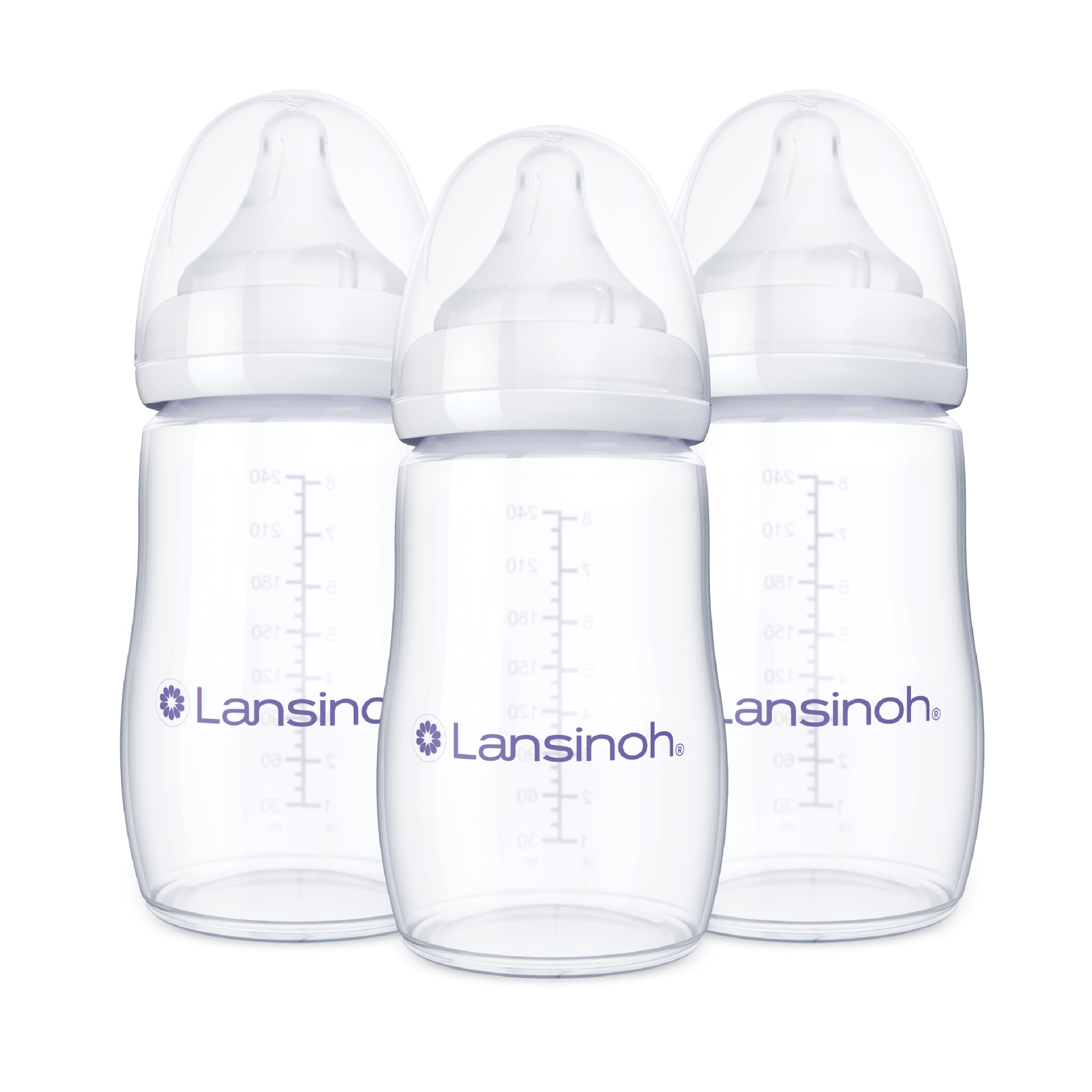
Lansinoh Anti-Colic
Key Features
- Capacity: 8 oz
- Pack size: 3 bottles
- Flow speed: Medium flow
- Nipple type: NaturalWave wide neck
- Price: Midrange
If you’re nursing and pumping and need one bottle to do both jobs, start here. The NaturalWave nipple is soft enough to stretch with a suck instead of collapsing against it, and the wide, gently sloped base gives a breastfed baby somewhere familiar to latch. Of everything we filled for this guide, it’s the bottle with the least disagreement about whether breastfed babies take it, and that’s why it takes the top spot ahead of the anti-colic specialists.
Four pieces — bottle, nipple, collar, cap — is the other half of the case. We’ve washed enough vent stacks to know the difference between four parts and six is the difference between rinsing after a feed and leaving the whole thing in the sink until morning. The bottles are dishwasher and freezer safe, and the flat caps stack in a cabinet instead of rolling off the shelf.
The included nipple is medium flow, and a newborn can find it quicker than they’d like — the milk comes fast enough that a small baby dribbles half of it down their chin. If yours gulps, get the slow-flow nipples in the first week rather than the fourth. After that, this is a bottle that travels without drama, which counts for more than it sounds when a diaper bag is upside down under a stroller.
Pros
- Soft stretchy nipple takes a deep latch
- Four parts, dishwasher and freezer safe
- Strongest breastfed-baby fit here
Cons
- No bottle larger than 8 ounces
Our default for combination feeding: the soft NaturalWave nipple takes a deep latch, and four parts mean washing stays short.
Best for Colic and Gas
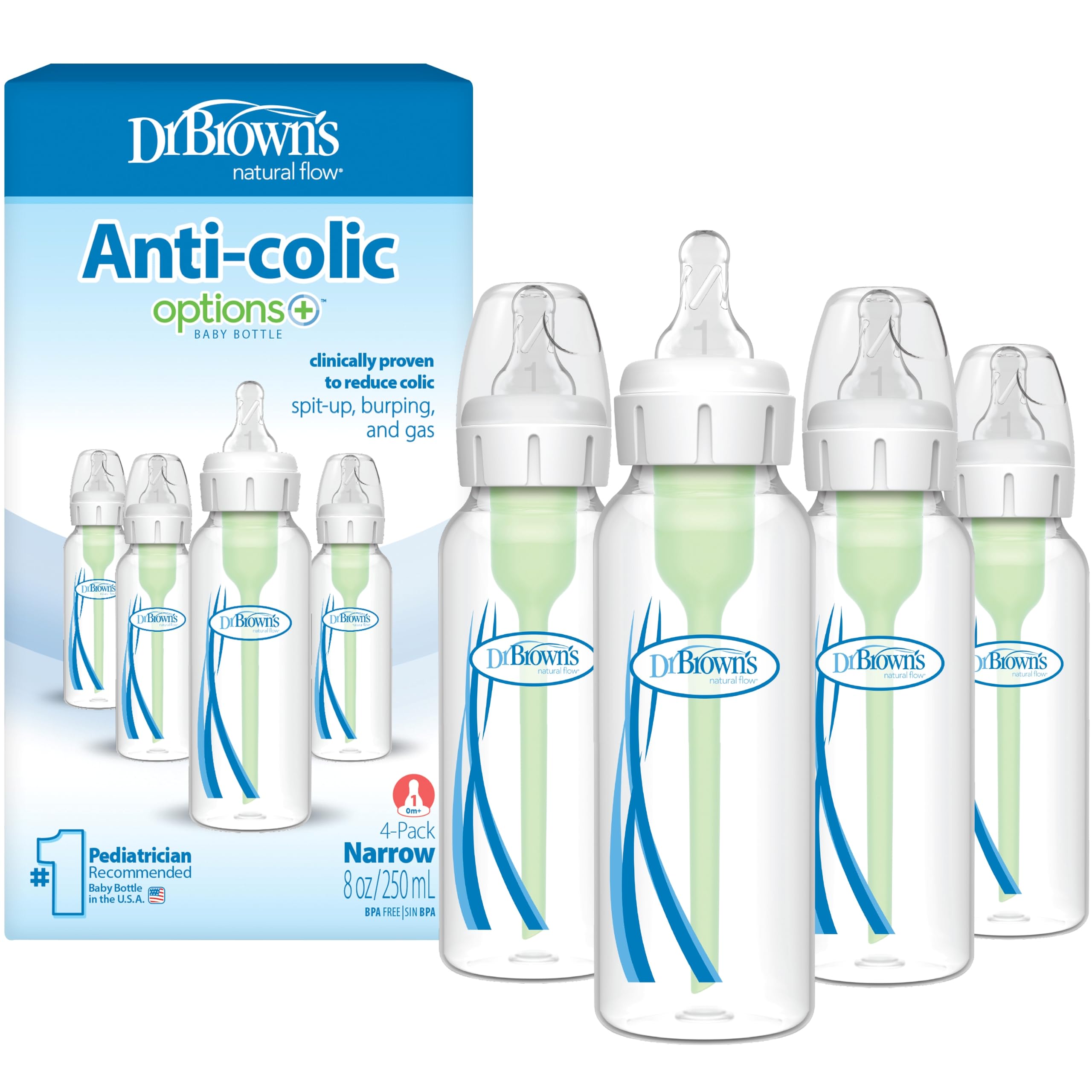
Dr. Brown’s Options+ Narrow
Key Features
- Venting: Internal vent system
- Capacity: 8 oz
- Pack size: 4 bottles
- Flow speed: Slow flow
- Price: Budget
Dr. Brown’s is the only bottle in this group that vents through the middle of the bottle rather than the nipple. The stack sits inside, letting air travel up behind the milk so the nipple stays full and your baby isn’t swallowing what should have been a burp. We noticed it in the tilt: with the vent in, the bottle barely has to be tipped to keep milk at the tip, and a full feed goes down without the mid-bottle pause and squirm.
The cost is parts. Every feed involves the vent insert, the reservoir that holds it, the nipple, the collar and the cap, and each of those has a narrow channel that milk gets into. We minded it — the washing is the reason this isn’t sitting at the top of this list — but if your baby is waking at two in the morning with gas, you’ll do the washing and be glad to.
Assembly has to be right or the bottle punishes you. Fill past the line, leave the collar loose, or lay it on its side in a bag and milk finds the seam. Keep it upright between feeds and it behaves. The vent also lifts out once your baby’s feeding settles, which turns it into a much simpler bottle for the back half of the first year — a detail worth knowing before you write it off as the fussy one.
Pros
- Internal vent cuts gas and spit-up
- Vent removes as feeding matures
- Slow-flow nipple suits newborns
Cons
- Vent insert adds parts to every wash
- Narrow neck and 8-ounce cap limit bigger feeds
For gas and spit-up, this is the bottle we keep: the internal vent does the most of anything here, and it asks the most at the sink.
Best for Bigger Feeds
Philips Avent Natural 11 oz
Key Features
- Capacity: 11 oz
- Pack size: 4 bottles
- Flow speed: Fast flow
- Nipple type: Breast-shaped wide neck
- Price: Premium
The complaint that follows this bottle is flow, and it’s worth understanding before you buy. The Natural Response nipple only releases milk while your baby is actively drawing on it — pause to swallow, and the flow stops. That’s the design doing its job, but it also means a nipple whose opening is clogged, or a collar screwed down hard, gives you a baby who sucks for five minutes and gets nothing. Check the opening, ease the collar off a quarter turn, try again. Set up right, this is the strongest large-feed bottle in the set.
Eleven ounces is the biggest bottle here, and it’s the one whose collar stayed dry at the bottom of a bag. The wide neck takes a formula scoop without a funnel and wipes clean in a couple of passes, and four bottles came out of the top rack clear rather than cloudy — the kind of thing that decides whether a bottle still looks presentable at month nine.
One purchase to plan for: these ship with fast-flow nipples, which is right for an older baby and hopeless for a newborn. Add the slower ones to the same order rather than discovering it at the first feed. Do that and you have a bottle that goes from the first week to the first birthday without changing brands.
Pros
- Eleven-ounce capacity, largest here
- Wide breast-shaped nipple and wide neck
- Surest leak control in this set
Cons
- Ships with fast-flow nipples only
The bottle we move to when feeds pass eight ounces: a wide breast-shaped nipple, eleven ounces of capacity, and the surest leak control here.
Best for Plastic-Free Feeding
Philips Avent Natural Glass
Key Features
- Capacity: 4 fluid ounces
- Material: Borosilicate glass
- Pack size: 4 bottles
- Flow speed: Slow flow
- Price: Premium
Glass changes the feel of a feed more than we expected. The bottle is heavier in the hand, which sounds like a drawback until you’re holding it at three in the morning and realize the weight is doing some of the steadying for you. Borosilicate takes the swings of warming, fridge storage and sterilizing without the thermal-shock worry of older glass, and unlike plastic it doesn’t pick up a smell after months of milk.
Cleaning is where glass earns its place in the rotation. The wide neck lets a brush reach the shoulder in one pass, and you can see through the whole bottle to check it — no holding it up to a lamp working out whether that’s a shadow or a milk ring. All four went through the dishwasher without clouding.
What we like most is the combination: the Natural Response nipple we already rate, with none of the plastic contact. What we don’t like is the cap. It sits loose and pops off while you’re tightening the collar, and a bottle that leaks into a diaper bag is a bottle you stop taking out. Four ounces is also a newborn size — stay with glass and you’ll be buying the larger ones within a few months.
So buy one before you buy four. Whether the weight and the material are worth it is a personal call, and a single bottle answers it faster than a review can. If you’re exclusively bottle feeding a hungry baby, start with something bigger.
Pros
- Borosilicate glass, no plastic contact
- Wide neck is genuinely easy to clean
- Uses the same Natural Response nipple
Cons
- Caps pop loose and leak on the go
- Four-ounce capacity only
For parents who want milk to meet glass instead of plastic, this is the glass bottle we point to — with the caveat that four ounces is a newborn size.
Best for Newborns
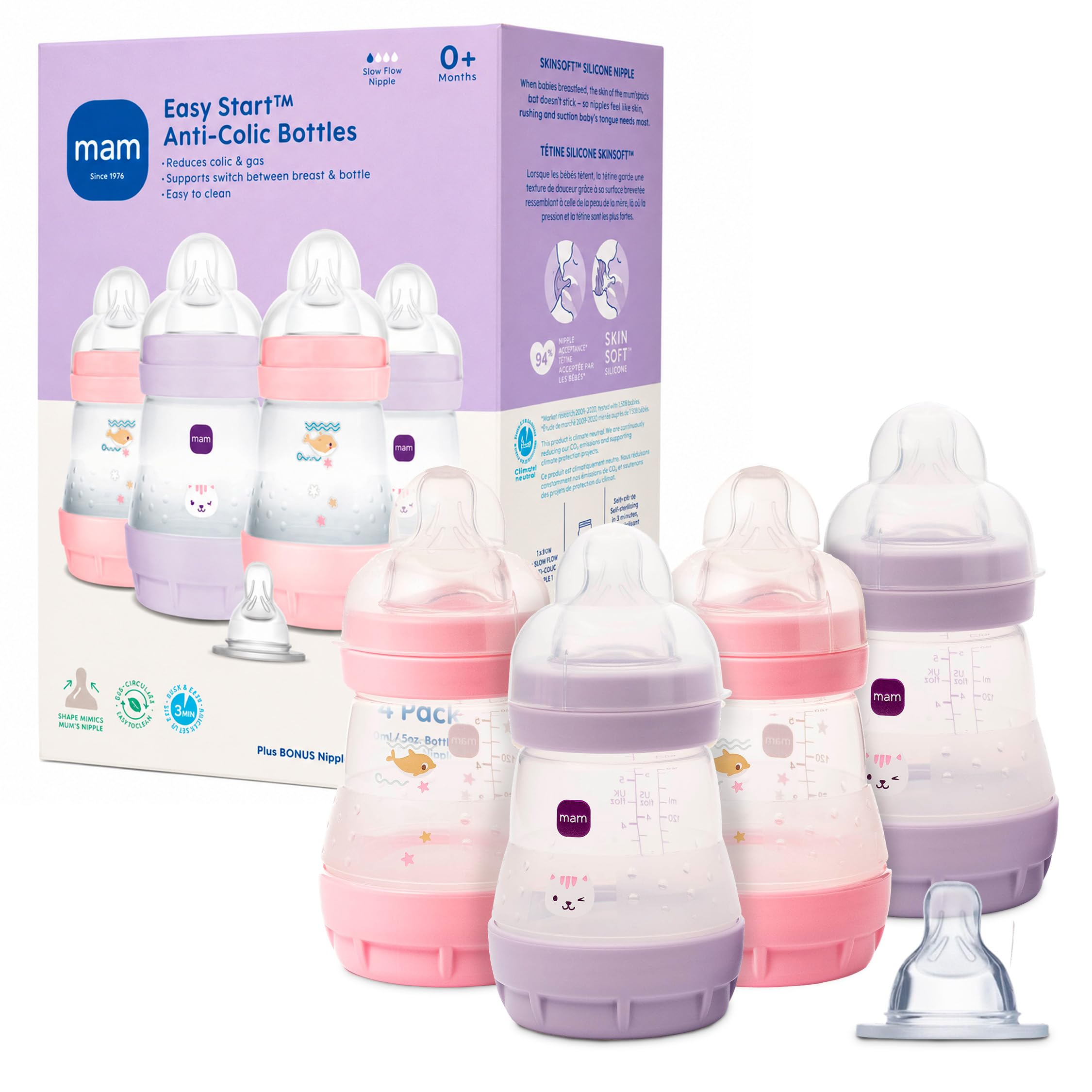
MAM Easy Start Anti-Colic+
Key Features
- Venting: Vented base
- Capacity: 5 fluid ounces
- Pack size: 4 bottles
- Flow speed: Slow flow
- Price: Premium
Sterilizing is the chore nobody warns you about, and this bottle does it in its own base: add water, microwave for three minutes, leave it closed. Untouched, it stays sterile for up to 48 hours, which in practice means you can run a batch before bed and not think about it again until morning. The base comes fully apart for washing, so the sterilization isn’t hiding a dirty corner.
The nipple is the other reason it works for small babies. It’s pre-compressed and elongated, so it stays soft in a tiny mouth instead of filling it, and the vented base sends air out the bottom rather than bubbling it up through the milk. This is one of three bottles here with a strong breastfed-baby fit, and the one that gave us the least trouble with a baby still working out how to latch.
Two things to accept going in. Five ounces is a newborn size, so treat this as a first-months bottle and buy four rather than twelve. And the flow is genuinely slow, which is exactly what a newborn needs and not what a hungry four-month-old wants — by then you’ll be moving up to a bigger bottle anyway.
Where it earns its place is the combination: a base that sterilizes and a nipple a small, tongue-tied baby can work with. Nothing else here does both. Four bottles and a microwave will cover the first three months better than a twelve-pack of anything else on this page.
Pros
- Self-sterilizes in three minutes
- Pre-compressed slow nipple for small mouths
- Vented base keeps air out of the milk
Cons
- Five-ounce size is outgrown quickly
For the first three months this is the setup we hand a nervous parent: a slow soft nipple, a vented base, and sterilization built into the bottle.
Best for Tight Budgets
Evenflo Classic
Key Features
- Capacity: 8 oz
- Pack size: 12 bottles
- Flow speed: Slow flow
- Nipple type: Standard neck
- Price: Budget
Twelve bottles, three pieces each, eight ounces, standard neck. That’s the whole specification, and for a lot of parents it’s the whole job: one for the diaper bag, one at grandma’s, one in every room, and enough left over that the sink is never full. The colored bodies make it easy to keep track of which is which when three adults are feeding the same baby.
The case for buying twelve is risk. If you’re shopping before you know what your baby will accept, a dozen simple bottles at the lowest cost per bottle in this guide is the cheapest way to find out — and if your baby takes them, you’re done shopping. If they don’t, you’ve learned something cheaply and you still have spares for water and juice later.
What you give up is refinement. The plastic is thin, the nipples are basic silicone with micro air vents rather than a real anti-colic system, and the ounce markings are faint enough that most of us measured formula in a separate pitcher. None of that stops a baby eating. Just don’t hand one to a baby already used to a wide, breast-shaped nipple and expect an easy switch.
Pros
- Twelve bottles cover a full day of feeds
- Lowest cost per bottle here
- Three pieces, top-rack dishwasher safe
Cons
- Faint ounce markings
- Thin plastic and basic nipples
The cheapest way to build a stash here, and the one we suggest when you don’t yet know what your baby will take.
Best for Everyday Formula Feeds
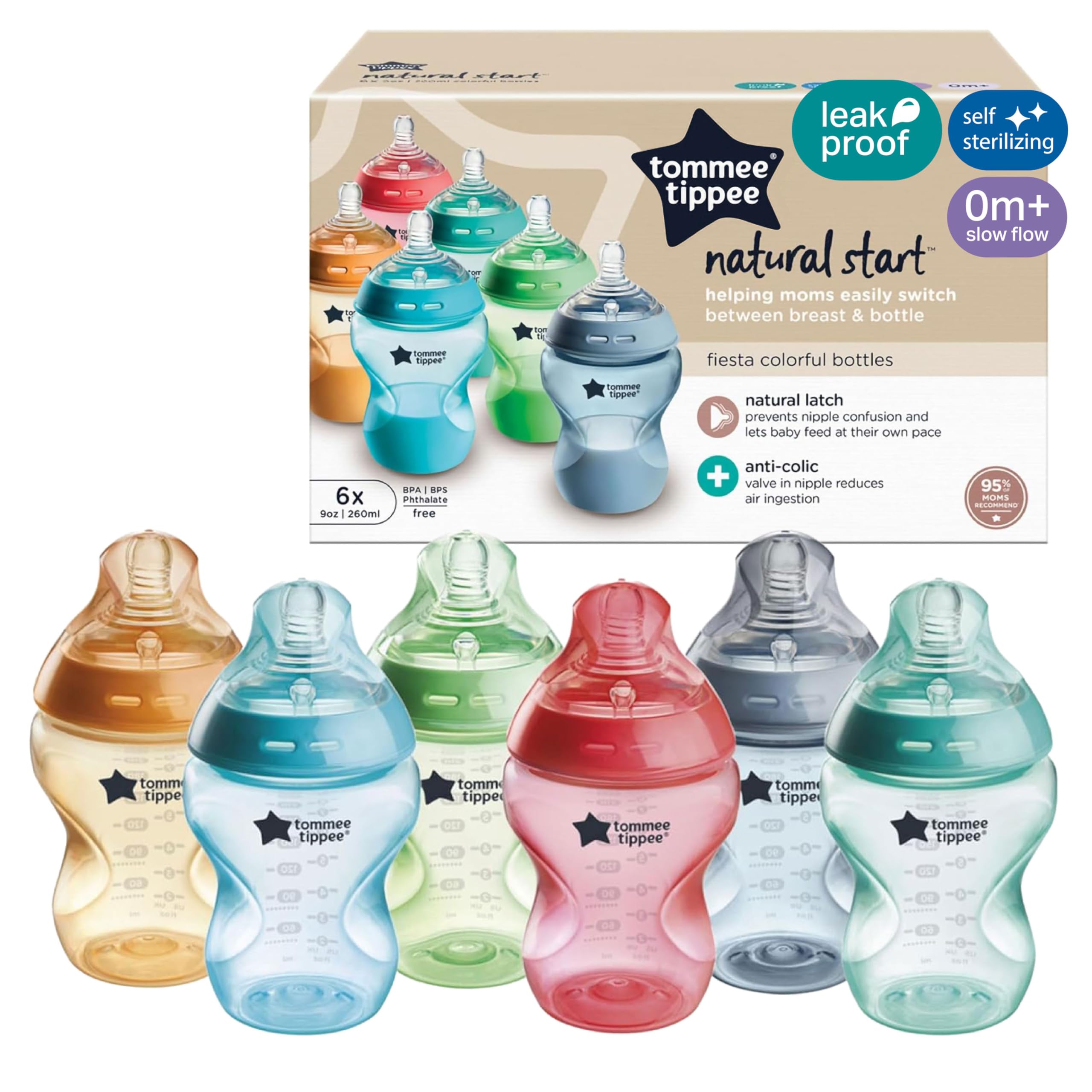
Tommee Tippee Natural Start
Key Features
- Capacity: 9 fluid ounces
- Cleaning: Self-sterilizes in 3 minutes
- Pack size: 6 bottles
- Flow speed: Slow flow
- Price: Midrange
Six bottles, three colors, wide mouths. The colors sound like a gimmick until you’re the one doing the night feed and can tell which bottle is which without turning on a light, and a six-pack means one order lands and the cabinet is stocked.
The wide mouth is the real advantage: a formula scoop goes in without a funnel, a brush reaches the corners, and there are few enough parts that assembly isn’t a puzzle at 4 a.m. They also self-sterilize in the microwave in about three minutes with a little water and the lid on, which is the sort of thing you use far more often than you expect.
We rate it a good second tier rather than a first choice, and the reason is the nipple: it’s soft enough that a strong feeder can fold one flat mid-feed. Pinch the vent hole and it pops back, which is a trick worth knowing before you panic. Wide mouth, three-minute sterilization and a pack that covers a day of formula feeding make it an easy everyday bottle for everything else.
Pros
- Six bottles in a single order
- Wide mouth fills and cleans easily
- Self-sterilizes in three minutes
Cons
- Printed measurements wear off
A solid everyday pack we recommend when you want one order to cover the day: six nine-ounce bottles, wide mouths, easy cleaning.
Best for Air-Free Feeding
Boon Nursh Silicone

Key Features
- Venting: Collapsing pouch
- Capacity: 8 oz
- Material: Silicone pouch
- Pack size: 3 bottles
- Price: Midrange
The mechanism is the whole idea. Instead of a vent, the Nursh puts a silicone pouch inside a plastic shell, and the pouch shrinks as your baby empties it — no air return, no vacuum, no small insert to lose. It’s the closest thing here to a bag inside a bottle, and it’s the only one that removes air from the equation by taking up the space rather than letting it back in.
Only the nipple and the pouch touch the milk, which is the point for parents trying to keep plastic out of the equation. Both boil, both go in the dishwasher, and there’s no narrow channel to scrub. The shell doubles as a grip, and babies do grab it — the shape gives a small hand something to hold long before a straight bottle does.
It’s a system rather than a bottle. Pouches, nipples, storage lids and sippy tops are sold separately, which is either a reason to buy in or a reason to stay away, depending on how much you want one brand covering feeding and storage.
Where it lands for us is the middle of the table: genuinely nice to feed from, air-free without a vent stack, and soft enough that a baby who refuses harder nipples will take it. It also costs more per bottle than the workhorses here, and the pouch has to line up exactly or the seam gives. We keep one in rotation; it isn’t the only bottle in our cabinet.
Pros
- Collapsing pouch keeps air out without a vent
- Only nipple and pouch touch the milk
- Shell doubles as a grip
Cons
- Pouch and lid must line up exactly
The design-forward pick, and the one we reach for when a baby fights harder nipples: a silicone pouch that collapses as they drink.
How We Tested 16 Baby Bottles Through Night Feeds and Dishwasher Cycles
To build the shortlist, I started with the bottles caregivers actually ask about, then filtered by nipple sizes, venting style, materials, and whether replacement parts were easy to find. We ruled out anything that felt flimsy out of the box or came with a cap that needed two hands and a prayer. That left 16 bottles, which we used for four months in the places bottles really live: the 2 a.m. bedside feed, the diaper bag, the daycare bag, the dishwasher top rack, and the sink at the end of a long day.
At each feed, I watched how milk moved through the nipple and whether the baby had to work too hard or got a mouthful too fast. I shook each bottle with water, laid it sideways in a diaper bag, and turned it upside down to check for drips around the collar and cap. For cleaning, I rinsed, washed by hand, and ran dishwasher cycles, then looked for milk residue in seams, threads, and vent holes. I also dropped bottles from counter height, checked for cracks or clouding after repeated washes, and noted whether lids and caps stayed secure one-handed.
Flow speed got its own check: I timed feeds, watched for nipple collapse, and noted whether a baby dribbled, gulped, or settled into a steady rhythm. To get at digestibility, I tracked whether the venting seemed to cut down on air intake and whether babies were gassy or uncomfortable afterward—no bottle can promise a happy tummy, but some clearly made feeds calmer. Value came down to what was included and whether the bottle still felt solid after weeks of washing; design mattered most at 2 a.m., when I was assembling it in the dark.
How to Choose Baby Bottles
The bottle that works is the one whose nipple your baby will take, whose parts you’ll actually wash, and whose pack size matches how you feed — and those three things pull against each other, which is why there’s no single answer.
Start with the nipple, not the bottle
Flow rate decides more than brand loyalty. A newborn needs a slow, soft nipple that doesn’t flood them; a four-month-old on that same nipple gets frustrated and starts chewing. Look at what stage is in the box before you order — our pick for bigger feeds ships with fast-flow nipples, which is exactly right for an older baby and exactly wrong for a newborn, so the slower ones go in the same order.
Shape comes next. A wide, breast-shaped nipple asks for a wider latch and suits breastfed babies; a standard-neck bottle is simpler and less forgiving of a baby used to something else.
Count the parts before you commit
Every piece in the assembly is a piece you wash twice a day. A three- or four-piece bottle goes from high chair to drying rack in under a minute; an internal vent stack adds an insert and a reservoir with channels that milk hides in.
That trade isn’t automatically bad — the vented bottle here is the one that does the most for gas — but go in knowing it. Washing by hand at four in the morning, take the simpler bottle. If colic is already the problem, take the parts.
Match capacity and pack size to how you feed
How many bottles you need is arithmetic, not taste. A newborn can feed eight to twelve times a day, so eight bottles covers a full day if you run the dishwasher once; a twelve-pack covers it without washing anything.
Capacity follows the same logic. Four and five ounces suit the first months and get outgrown; nine to eleven ounces carry a baby through the first year but are awkward to hold with two ounces in them. Buy a newborn pack now and a larger one when the feeds grow, rather than trying to solve both at once.
Settle the material question once
Plastic is light and cheap to replace, and it’s what most of these packs are made from. Glass is heavier and doesn’t cloud, and it takes warming, washing and sterilizing without any question about what the milk is touching — but in most packs it’s a newborn size, and one drop on tile ends it.
Silicone, as in the Boon, is soft and gives a collapsing feed, at the cost of buying into one brand’s pouches and tops. Decide how much weight you’ll tolerate one-handed, then buy one pack rather than three.
Expect a leak, and know where it comes from
Almost every bottle here can be made to leak, and nearly every time it’s the same three things: filled past the line, a collar that isn’t square on the thread, or the bottle laid on its side in a bag. Vent systems make it worse, because air has to get in somewhere.
Before you blame the bottle, fill it to the mark with water, screw the collar down firmly, and turn it upside down over the sink. Dry after that, the problem is your assembly, not the product.
Frequently Asked Questions
My breastfed baby refuses a bottle. What should I try?
Offer when your baby is calm and only slightly hungry, not starving, and let someone else give the first few feeds — a baby who can smell you will hold out for the breast. Warm the nipple, hold the bottle flatter than feels natural so the flow stays slow, and try a soft wide nipple such as the Lansinoh or MAM.
If a week of that gets nowhere, talk to your pediatrician or a lactation consultant before buying a fourth brand.
Can I wash baby bottles in the dishwasher?
Bodies, collars and caps go on the top rack. Nipples survive too, but keep them off the heating element and out of a high-heat dry cycle, which wears silicone out faster.
Before the first use, sterilize everything that touches milk — boiling water for a few minutes or a microwave steam bag — then hot soapy water is enough for daily washing. Leave out any part the maker specifies as hand-wash only.
Will these bottles fit my breast pump?
Only if the threads match. Standard-neck bottles like the Evenflo screw straight onto many standard pump adapters; wide-neck bottles usually need the collar your pump brand sells, and the wider body may not clear the adapter at all.
Check the neck width against your pump’s flange before you order a multipack, and buy one adapter rather than a dozen bottles you can’t pump into.
Final Verdict
Start with the Lansinoh three-pack if you’re nursing and pumping, or simply unsure which bottle your baby will accept. Its nipple is the easiest latch in this group and four parts don’t punish you at the sink.
If gas and spit-up are the reason you’re shopping, take the Dr. Brown’s and accept the washing. If your baby is already past eight ounces a feed, the Philips Avent Natural with the eleven-ounce bottles is the better long-term buy — add slow-flow nipples to the order for a young baby and it takes you through the first year.
