This post contains affiliate links. We may earn a small commission when you buy through our links — at no extra cost to you.
Every hybrid baby carrier promises ergonomic support, but the reality is that padding and weight distribution vary widely. Lumbar support becomes critical once your baby hits 15 pounds, yet many budget models skip it entirely. This guide cuts through the marketing claims to help you match a carrier to your actual daily use — whether that’s quick errands, long walks, or all-day wear. The trade-off often comes down to versatility versus dedicated back relief, and the right choice depends on how many pounds you’ll be carrying and for how long. Focus on the features that affect your body, not the ones that fill the ad copy.



Best for Budget Minded
Infantino Flip 4-in-1 Carrier
Key Features
- Weight Capacity: 8–32 lbs
- Carry Positions: 4 (in/out/back)
- Lumbar Support: Padded belt
- Ease of Use: Easy solo adjust
- Material & Care: Polyester/cotton, machine wash
- Price: Budget
Four carrying positions at this price point is unusual — the Infantino Flip delivers front-in (narrow/wide), front-out, and back carry options from 8 to 32 lbs. For short to medium wears, the padded shoulder straps and simple buckle adjustments keep the weight distributed well, and the machine-washable polyester/cotton blend holds up to regular use. The trade-off for the low cost shows: the back lacks dedicated lumbar padding, so parents of heavier toddlers may feel the strain after an hour. Minor annoyances like an itchy tag inside the arm straps and straps that need careful presetting (or they tangle) surface in user reports, but they don’t undermine the core function.
This carrier fits parents watching their budget, first-time users who want a straightforward four-position option, or households where multiple caregivers share one carrier. Skip it if you regularly wear a child over 25 pounds for long walks or need the kind of supportive waist belt found in premium carriers — those are better served by models with dedicated lumbar support and higher weight limits.
Pros
- Four carrying positions at a budget price
- Comfortable for short to medium wears
- Easy to adjust solo even for first-time users
Cons
- Lacks dedicated lumbar support; can be uncomfortable with heavier babies during extended wears
- Arm straps may tangle if not preset; tag inside can cause irritation
Buy this if you want a low-cost carrier with four positions for occasional to daily short-medium wears. Skip it if you need extra lumbar support for heavy toddlers or plan all-day outings.
Best for Back Pain Relief
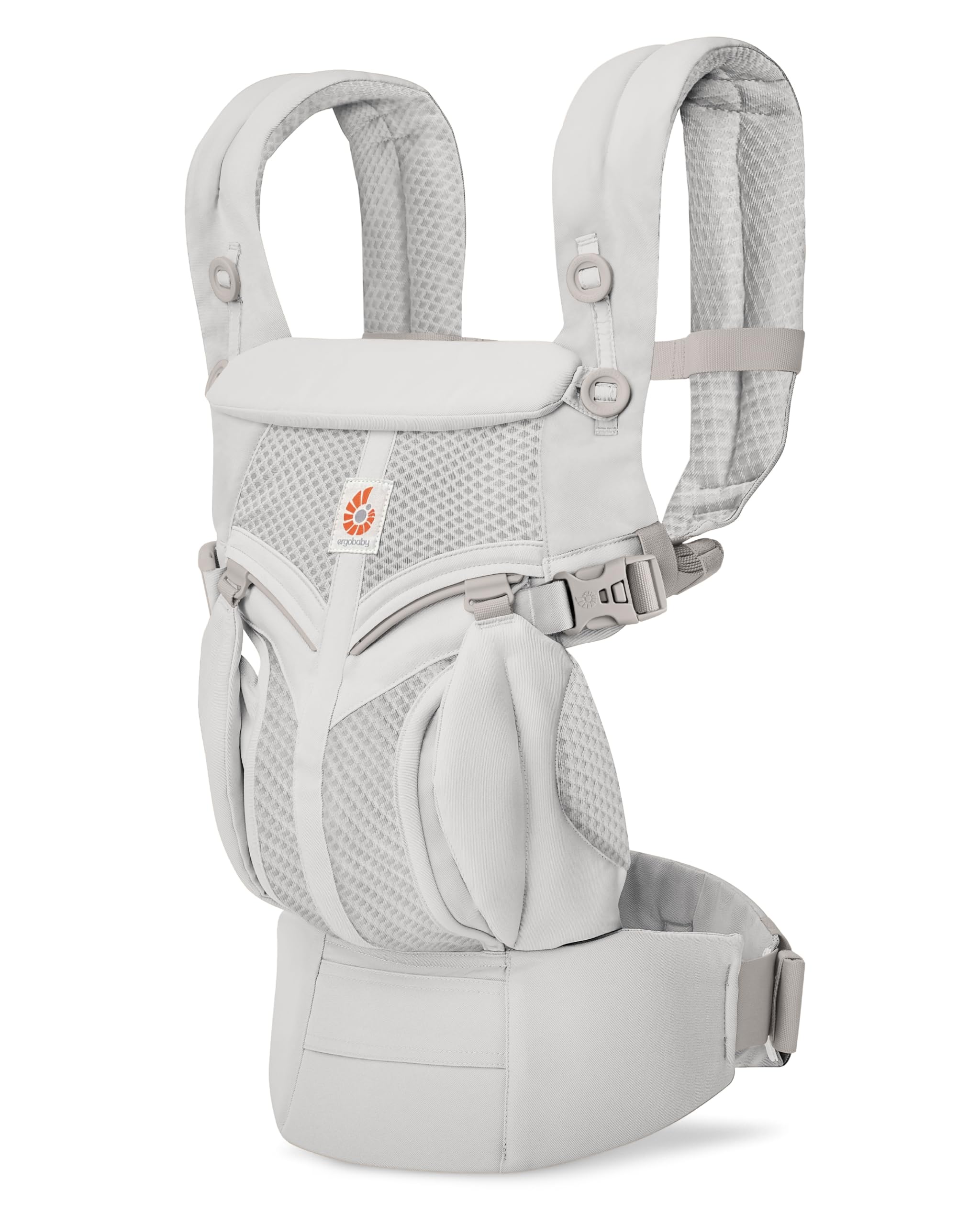
Ergobaby Omni Classic Carrier
Key Features
- Weight Capacity: 7–45 lbs
- Carry Positions: 4 (in/out/back/hip)
- Lumbar Support: Built-in lumbar pad
- Ease of Use: Adjustment learning curve
- Material & Care: Cotton, machine wash
- Price: Premium
The Ergobaby Omni Classic delivers built-in lumbar padding that distributes weight better than most carriers at this price. Unlike the budget-friendly top pick, this model supports heavier toddlers with less strain on your back. The trade-off is bulkier padded straps that won’t slide under a jacket and a multi-step adjustment process that takes practice. Ideal for parents with back concerns who plan long hikes or all-day use; less suited for quick errands or those wanting a minimalist carrier.
Pros
- Strong lumbar padding reduces back strain during extended wear.
- Adjustable fit accommodates multiple caregivers with different body types.
- Machine-washable cotton construction holds up to heavy daily use.
Cons
- Bulky padded straps feel stiff and may not fit under jackets.
- Learning curve for proper adjustment; some find the process complicated.
Buy this if you need strong lumbar support for heavy toddlers and plan long, daily wearing sessions. Skip it if you prefer a lightweight, quick-on carrier or need to layer under a coat.
Best for Front Carry
Momcozy Purehug Baby Carrier
Key Features
- Weight Capacity: 7–44 lbs
- Carry Positions: Front inward only
- Lumbar Support: EVA waist support
- Ease of Use: Extremely easy on/off
- Material & Care: 100% cotton, machine wash
- Price: Mid-Range
Unlike the Infantino Flip’s four positions, the Momcozy Purehug focuses on front inward carry only, making it simpler but less flexible. Its X-shaped back distributes weight well, and reviews highlight exceptional ease of use for solo parents. However, the carrier cannot be used for outward-facing or back carry, and the fit can be too large for petite parents or very small newborns. Best for quick errands and around-the-house use with newborns to toddlers up to 45 pounds.
Pros
- Easy solo on/off with X-shaped back and EVA waist support.
- Comfortable weight distribution for baby 7–45 lbs.
Cons
- No outward-facing or back carry – limited to front inward only.
- Fit can be too large for smaller parents and some newborns.
Buy this if you only need front inward carry for newborns to toddlers and value quick on/off ease. Skip it if you want outward-facing, back carry, or have a petite frame.
Best for Hip Seat
MOMTORY 6-in-1 Hip Seat Carrier
Key Features
- Weight Capacity: 7–26.4 lbs
- Carry Positions: 6 (includes hip seat)
- Lumbar Support: Padded hip seat
- Ease of Use: Simple but velcro finicky
- Material & Care: Cotton/polyester, hand wash
- Price: Mid-Range
Unlike the all‑seasons carriers that prioritize breathable mesh panels, the MOMTORY 6-in-1 carves its niche with a detachable hip seat designed for rapid pick‑ups around the house or during errands. The hip seat distributes weight reasonably well for both parent and child, and the integrated pockets and drool bib add everyday convenience. However, the product’s own specifications cap the weight at 26.4 lbs (not the 50 lbs claimed in the title), which means most toddlers outgrow it early. The hand‑wash-only care is less convenient than machine‑washable rivals, and the velcro straps can loosen over time. This carrier suits parents who prioritize hip‑seat quickness over long‑term toddler carrying and don’t mind a bit of extra maintenance.
Pros
- Detachable hip seat works well for quick carries and short chores
- Pockets and drool bib add practical storage and cleanup
- Good comfort and weight distribution for parent and baby
Cons
- Actual max weight is only 26.4 lbs, not the 50 lbs advertised
- Hand-wash only – less convenient than machine-washable alternatives
Buy this if you want a hip‑seat carrier for quick carries with a younger baby up to 26 lbs and don’t mind hand‑washing.
Best for All-Season
LILLEbaby Complete All Seasons
Key Features
- Weight Capacity: 7–45 lbs
- Carry Positions: 6 (360° incl. hip)
- Lumbar Support: Removable lumbar pad
- Ease of Use: Complex strap setup
- Material & Care: Cotton with mesh, machine wash
- Price: Mid-Range
The zip-down mesh panel sets this carrier apart from premium options focused solely on lumbar support – it breathes in warm weather while retaining heat when closed. Six positions (inward, outward, hip, back) cover most stages from newborn to toddler, though the many straps and adjustments mean a longer learning curve. This carrier works well for medium-to-large body types, but the waist belt may not fit larger waists, and the bulk makes it less ideal for parents seeking a minimalist solution.
Pros
- Built-in mesh panel opens for airflow in hot weather, closes for warmth.
- Effective lumbar support reduces back strain during long carries.
- Six carry positions accommodate growing babies and different wearing preferences.
Cons
- Many straps and adjustments require time to learn and adjust.
- Waist belt may not fit larger waists; check sizing before purchase.
Buy this if you need temperature regulation and multiple carry positions (including hip carry) from a structured carrier. Skip it if you prefer a simple, low-adjustment design or have a plus-size frame.
Best for Style Lovers
Mabē Monarch Premium Carrier
Key Features
- Weight Capacity: 7–35 lbs
- Carry Positions: 3 (in/out/back)
- Lumbar Support: Padded waistband
- Ease of Use: Very easy to adjust
- Material & Care: Cotton/linen, machine wash gentle
- Price: Premium
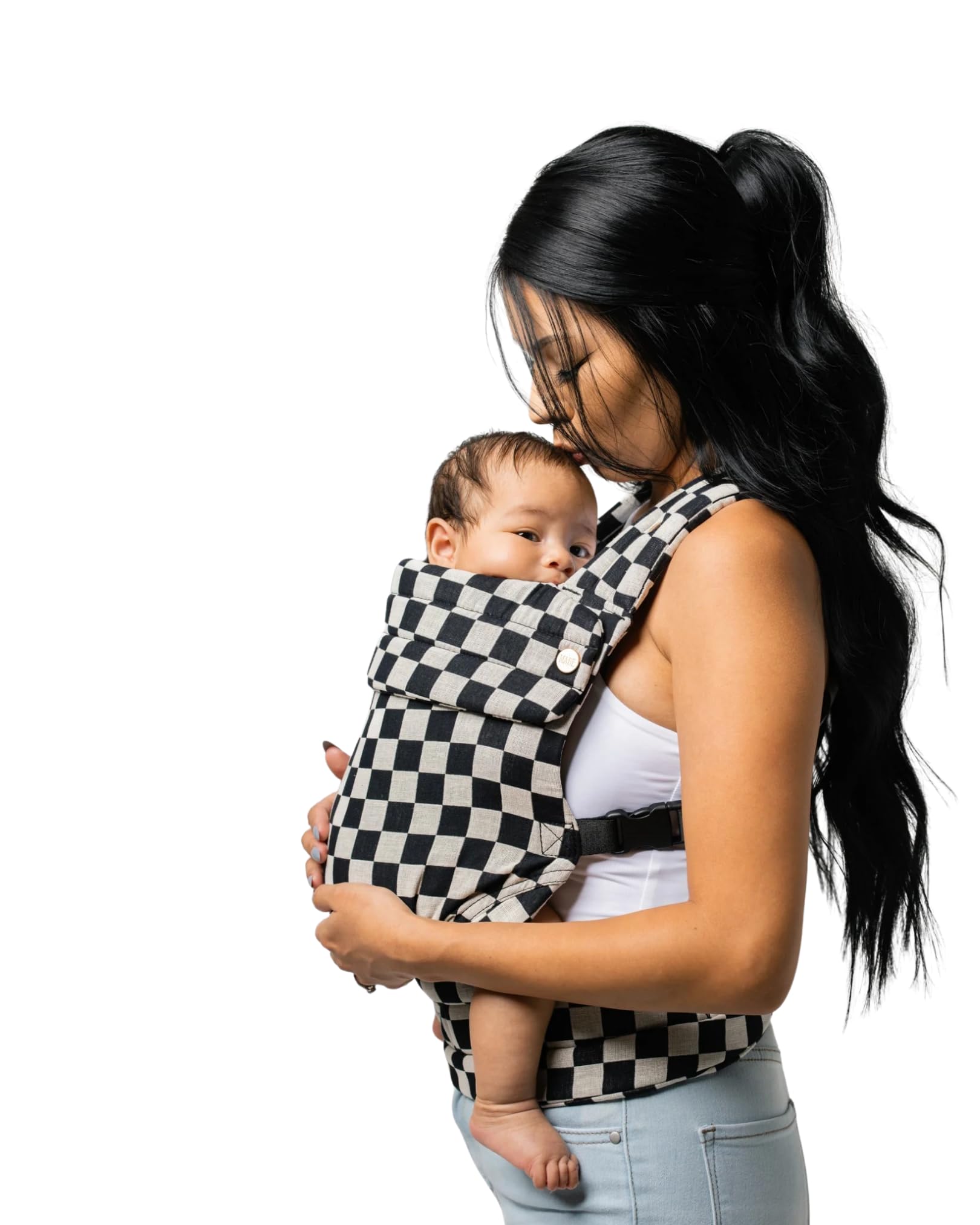
The Mabē Monarch swaps the bulky lumbar support of premium carriers for a softer, more stylish cotton-linen build. Unlike the top pick or the heavy-duty Ergobaby, this carrier prioritizes fabric feel and aesthetics over maximum weight capacity or ventilation. The thick weave helps maintain shape but runs warm, and the seat can swallow young newborns—better suited for babies around 2 months or 10 lbs and up. It excels at everyday short to medium wears where convenience and comfort outweigh raw support. Ideal for style-conscious parents who mostly wear baby for shorter outings and want a carrier that looks as good as it feels.
Pros
- Incredibly soft fabric keeps baby comfortable during short to medium wears
- Beautiful woven patterns and premium build that rivals high-end fabrics
- Tool-free adjustments make getting baby in and out effortless
Cons
- Thick cotton-linen blend traps heat; not ideal for warm climates
- Seat may feel too large for newborns under 2 months, leading to a loose fit
Buy this if you value soft, beautiful materials and simple adjustments for everyday carrying up to toddlerhood.
How to Choose
Lumbar support becomes critical once your baby exceeds 15 pounds — padded straps alone aren’t enough.
Weight Capacity
Check both the minimum and maximum weight. A carrier that starts at 7 lbs can be used from birth, but some budget models start at 8 lbs. The upper limit determines how long you can use it — 45 lbs covers most toddlers, while 32 or 35 lbs may be outgrown earlier.
Carry Positions
Inward, outward, back, and hip positions offer flexibility as your baby grows. Outward-facing is popular but not every baby enjoys it, and it shifts weight forward. Hip carry is useful for quick pick-ups but not available on all carriers.
Lumbar Support
Dedicated lumbar padding distributes weight to your hips instead of your lower back. Carriers without it may feel fine for light use but become uncomfortable during long walks. Look for a padded belt or removable lumbar pad if you plan extended wear.
Ease of Use
A carrier you can put on and adjust solo is essential when you’re holding a baby. Some designs require presetting straps or have a learning curve. Check for cross-back straps or buckle systems that simplify the process.
Material & Care
Machine washable carriers save time, but some require hand washing or gentle cycles. Breathable materials like mesh or cotton blends reduce heat buildup. Thicker fabrics offer more softness but can be warmer in hot weather.
FAQ
Can I use a hybrid baby carrier for a newborn without an infant insert?
Yes, if the carrier is rated from 7 lbs and has a narrow seat setting that creates a deep M-position. Most hybrid carriers with adjustable width and height can fit newborns without an extra insert. Always verify the minimum weight and check the fit around your baby’s head and neck.
What is the best baby carrier for back pain?
Look for a carrier with built-in lumbar support and a wide, padded waist belt. Premium models like the Ergobaby Omni Classic or the LILLEbaby Complete have dedicated lumbar padding that transfers weight to your hips. Avoid budget carriers that rely only on shoulder straps.
How do I clean a baby carrier that isn’t machine washable?
Hand wash in cold water with mild detergent, then air dry. Pay special attention to straps and buckles that can trap dirt. For carriers with removable hip seats or inserts, spot clean the padding. If hand washing feels like too much work, choose a machine-washable model.
Are baby carriers with a hip seat better for toddlers?
Hip seats can relieve pressure on your arms during quick pick-ups and are great for short carries with a heavier baby. However, they add bulk and may not distribute weight as evenly as a full structured carrier for long walks. They work best for toddlers under 26 lbs.