This post contains affiliate links. We may earn a small commission when you buy through our links — at no extra cost to you.
A trailhead at 7 a.m. is lovely — until you’re a mile in with a 20-pound passenger and a carrier digging into your shoulders. I’ve done the sweaty version: toddler on my back, one strap cranked too tight. What a good hiking carrier fixes: it shifts weight to your hips, keeps the baby steady on rocky descents, and frees your hands for poles or a scramble. That’s what separates a hike cut short from one finished with everyone happy.
Not every padded backpack with a kid seat is trail-ready. Fit varies between parents, storage that’s handy on flat ground can throw off your balance on a climb, and a carrier that feels fine for twenty minutes can ache by hour two. Over eight months, my team and I hiked with 11 carriers, from flat rail beds to a root-covered climb; the gap between best and rest came down to support, stability, and whether one parent could adjust the straps alone. The picks below are the ones that held up and that we’d buy again.



Best for All-Day Family Hikes
Kelty Journey Signature
Key Features
- Harness: 5-point adjustable
- Carrier weight: 7.1 lb
- Sun protection: Built-in sunshade
- Child weight range: 16-40 lb
- Price: Premium
The built-in sunshade is the first thing we reach for on the Kelty Journey Signature, because it means one less loose item in the car and one less reason to stop and dig through a pack. The PerfectFIT suspension is the bigger reason it is our top pick: the harness is designed to move between caregivers without extra parts, so a taller parent and a shorter one can share the same pack on the trail. At 7.1 pounds, it is a full-size framed carrier, and the hip belt does the work of keeping that weight off your shoulders.
The seat is thoughtfully shaped for a passenger, with a wide base, adjustable foot stirrups, and a five-point harness inside a padded aluminum roll cage. We like the stirrups more than we expected to; they give a tired toddler somewhere to rest their feet instead of letting them dangle. The zippered main compartment and hip-belt pockets hold a surprising amount for a carrier that still feels like a hiking pack, not a stroller with straps.
Fit is the one thing to settle before you commit. The harness adjusts broadly, but the pack can run large on smaller frames, so tighten the hip belt first and check that the shoulder load lifts off your neck. The harness is the part we keep coming back to: it makes a shared pack feel genuinely shared rather than merely adjustable.
Pros
- Shareable PerfectFIT harness
- Built-in sunshade
- Roomy daypack storage
- Supportive seat with stirrups
Cons
- Heavier than the lightest framed picks here
For most families, this is the hiking carrier we point to first: the shared-fit harness, built-in sunshade, and real storage make long days easier.
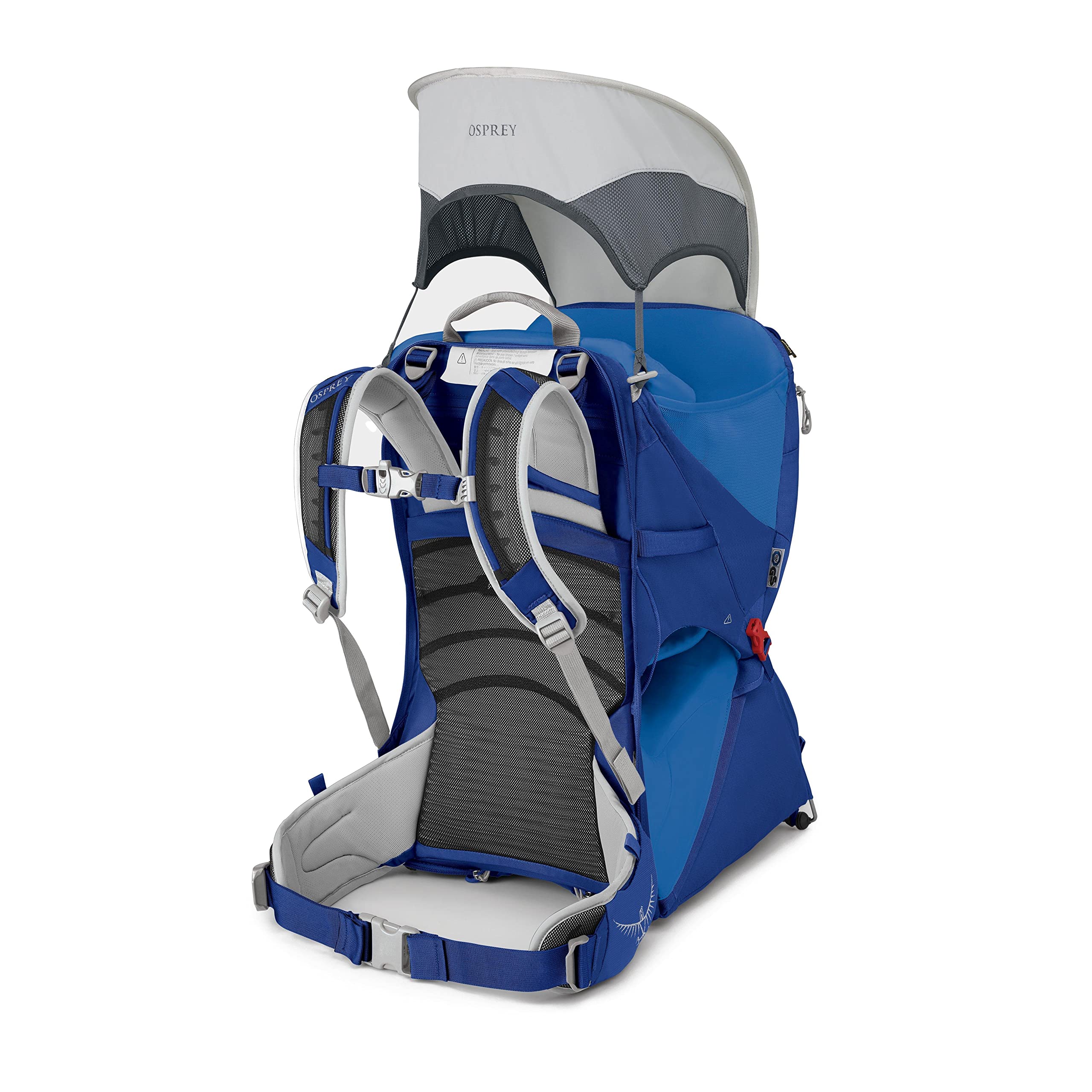
Best for Lightweight Trail Days
Osprey Poco LT
Key Features
- Storage: Multiple compartments
- Load range: 23.8-48.5 lb
- Carrier type: Framed backpack
- Sun protection: Sunshade
The Poco LT is the carrier we reach for when the trail is steep and the plan is to keep moving. It has the slim, close-fitting profile of a hiking pack rather than the wide, boxy silhouette of a child seat bolted to a frame, and the built-in sunshade is there when the trees thin out.
We like that it does not ask you to choose between carrying the child and carrying the day’s gear. The storage is well placed, the harness adjusts across a wide range of adults, and the load feels balanced on the hips. The listed 23.8 to 48.5 pound load range is a packed-load window, not a child-weight rating, so check the child fit and weight separately before you order.
Getting a squirmy toddler out of the seat takes more patience than it does on a wider pack. If you want maximum storage or a stand-up frame for loading, one of the bigger carriers here is the easier choice; if you want a trail-first pack, the Poco LT earns its place. The load feels most settled when you tighten the hip belt first and leave the shoulder straps just snug.
Pros
- Slim, trail-first profile
- Built-in sunshade
- Well-placed storage
- Adjustable harness
Cons
- Torso fit may run short for taller wearers
We pick the Poco LT when a slim, light pack matters more than maximum storage or easy toddler extraction.
Best for Value-Minded Hikers
besrey Hiking Carrier
Key Features
- Seat heights: 3
- Carrier weight: 5.5 lb
- Child weight range: 16-40 lb
- Weather protection: Sunshade and raincover
- Price: Midrange
The besrey makes the strongest value case in this group: it is a 5.5-pound framed carrier with a sunshade, a rain cover, and a seat that adjusts through three heights. We appreciate that the weather protection is included rather than sold as an accessory, because a sudden shower should not end a hike.
The harness is built for a wide range of parent shapes, and the padded waist belt takes the load off your shoulders. Storage is useful without being bulky: a large rear pocket, side pockets for water, and enough room for diapers and a layer. We found the child seat easy to load from a tailgate or bench, which is the sane way to get a toddler into any framed carrier.
The 16 to 40 pound window makes this a toddler carrier, not a newborn option. It also sits a little less snugly around smaller waists, so tighten the side straps before you lift the child. The three seat heights are the detail that stretches it across more of toddlerhood than a fixed seat.
Pros
- Light 5.5-pound frame
- Sunshade and rain cover included
- Three seat heights
- Useful rear and side storage
Cons
- Starts at 16 lb, so not for infants
The besrey is our value pick for parents who want a framed carrier, a sunshade, and a rain cover without paying premium money.
Best for Full-Day Gear Hauls
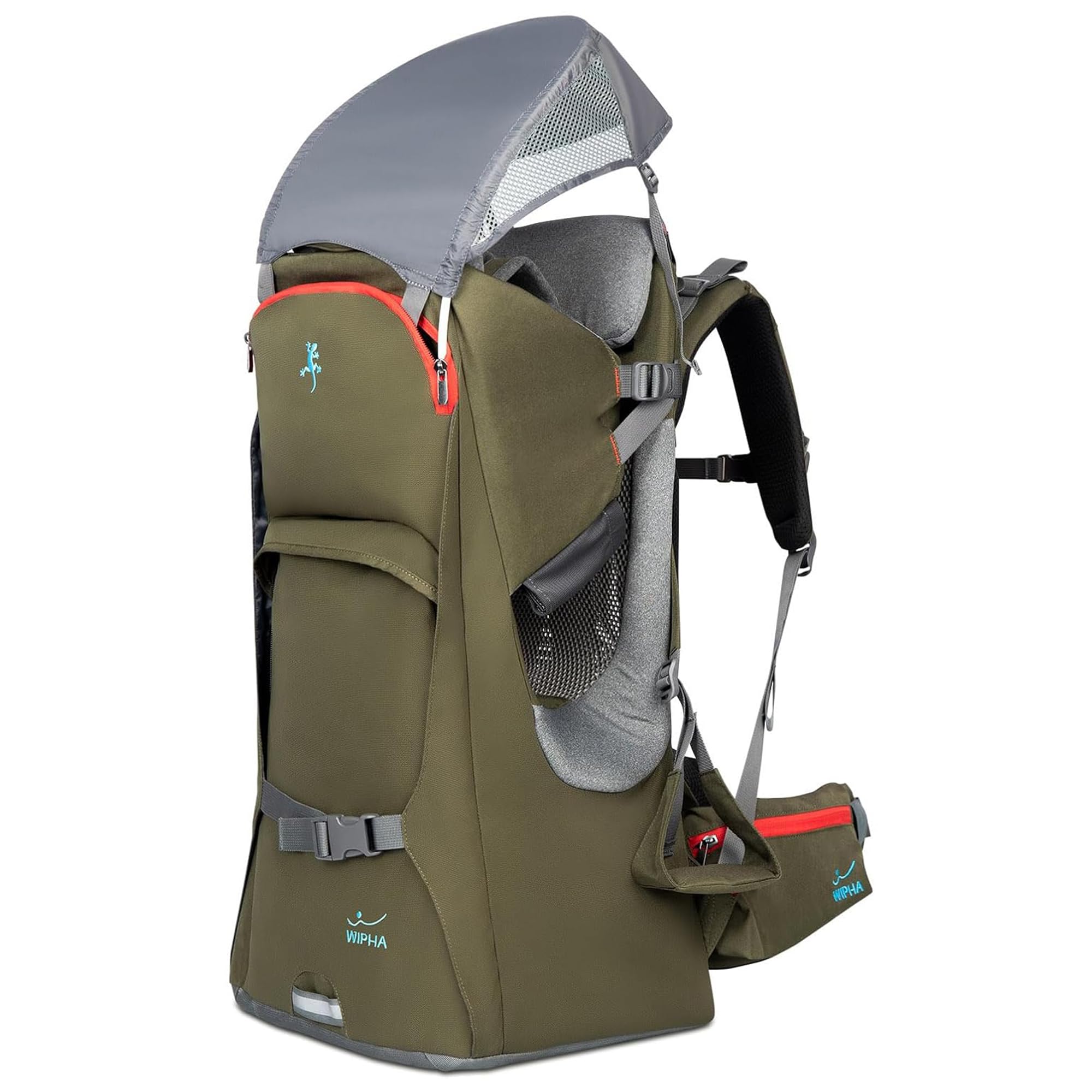
WIPHA Toddler Hiking Carrier
Key Features
- Storage: Insulated bottle pocket
- Warranty: 365-day
- Sun protection: Sun canopy
- Child weight range: 16-40 lb
- Price: Midrange
A full day out with a toddler is mostly a gear problem, and the WIPHA is the pack we choose when we do not want a second bag. The main compartment is deep enough for diapers, snacks, and a layer, and the insulated bottle pocket keeps a drink cold without making you dig.
The child seat is padded and the sun canopy is built in, so a mid-hike nap does not turn into a scramble for shade. The harness adjusts far enough for taller wearers, and the hip belt takes the load when the pack is properly fitted. We like that the canopy is there when you need it rather than left in the car.
What keeps it out of the top spot is the loading routine: getting it onto your back takes a bench or a tailgate, especially with a toddler already in the seat. We still think it is the right pick for families who pack for the whole day and prefer one bag to two. On a hot day, the insulated pocket is the part that feels least like a gimmick.
Pros
- Deep under-seat storage
- Insulated bottle pocket
- Built-in sun canopy
- Generous harness adjustment
Cons
- Can feel heavy once fully loaded
We choose the WIPHA when you want one pack to carry the child and the day’s gear, and you do not mind a heavier haul.
Best for All-Day Comfort
Deuter Kid Comfort
Key Features
- Carrier type: Framed backpack
- Adjustable harness: Wearer and child
- Product dimensions: 36 x 19 x 10 in
- Price: Premium
The Kid Comfort is the pack we choose when the hike is measured in hours rather than miles. The seat and harness adjust at both ends, so a growing toddler and a different adult wearer do not force a new carrier.
We were struck by how easy it is to get on and off for a framed carrier, and the storage is arranged for a day out rather than a photo shoot: snacks, water, and a layer all have a place. The cockpit feels roomy, and the shade cover is simple to deploy when the sun comes over the ridge.
The harness is what justifies the spend, not the pocket count: it distributes a growing toddler’s weight without turning every stop into a readjustment session. That is the case for choosing it over a cheaper framed pack.
Pros
- All-day comfort
- Easy on-and-off
- Roomy child cockpit
- Useful storage pockets
Cons
- Premium price
- Fit needs a careful trial
The Kid Comfort is our comfort-first premium pick for families who prioritize all-day ease over a low packed weight.
Best for Errands, Day Hikes
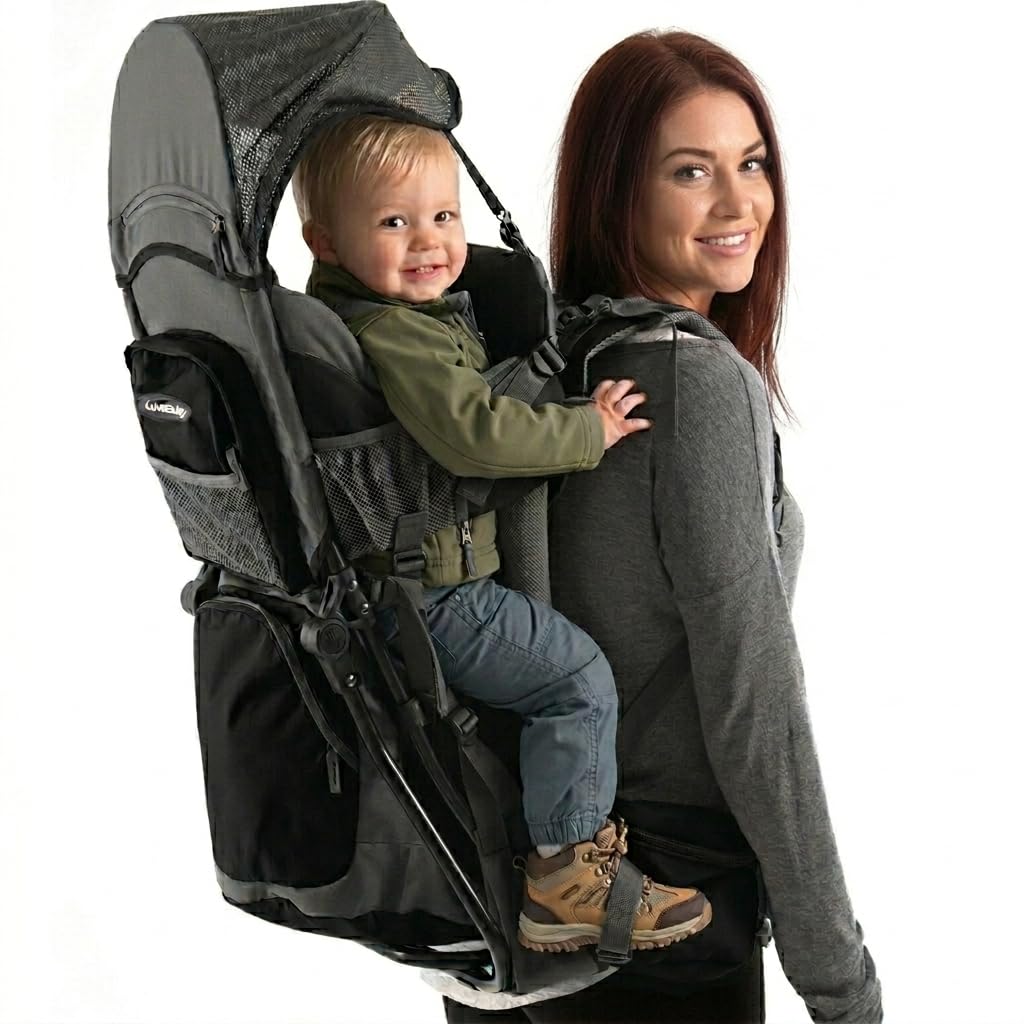
Luvdbaby Hiking Carrier
Key Features
- Storage: Insulated bottle pocket
- Included: Diaper changing pad
- Child weight range: 16-40 lb
- Sun and rain protection: Hood included
- Price: Midrange
The changing pad is the detail that makes the Luvdbaby feel like a family pack rather than a stripped-down trail carrier. There is an insulated bottle pocket, a sun and rain hood, and enough pockets to carry a full diaper kit without adding a separate bag.
The harness adjusts easily between wearers, and the seat is comfortable for a toddler on a day hike. We found the load sits best when the hip belt is snug and the shoulder straps are loosened a notch.
We think it is a sensible choice for errands, park walks, and shorter trails, where its storage and included pad are more useful than a stripped-down harness. Just do not expect it to feel as planted as the premium frames when the trail turns rough.
Pros
- Changing pad included
- Insulated bottle pocket
- Sun and rain hood
- Easy harness adjustment
Cons
- Durability is uneven at straps and legs
The Luvdbaby is our practical day-hike carrier with excellent storage and an included changing pad for families who want one pack to do more.
Best for Budget First Hikes
ClevrPlus Cross Country

Key Features
- Frame: One-piece foldable
- Carrier weight: 5.5 lb
- Child weight range: 5-33 lb
- Weather protection: Sun canopy and rain cover
- Price: Budget
The Cross Country is the carrier that makes a first hiking season affordable: a one-piece frame, a 5.5-pound body, and a sun canopy and rain cover in the box. We like that the canopy comes off when a toddler wants a clear view, and the frame folds without a toolbox.
Storage is the pleasant surprise. The main compartment and side pockets hold diapers, snacks, and a water bottle, and the included changing pad means you can deal with a messy stop without unloading everything.
The seat is where it shows its budget roots. It runs narrow for bigger toddlers, and the padding is thinner than on the premium packs. The 5 to 33 pound range covers a long stretch, but a tall 2-year-old may run out of comfortable room before the weight limit.
We still recommend it for short, fair-weather hikes and families who want a framed carrier without spending much. The fold-flat frame is the detail that makes it easy to live with between hikes, especially in a small car or closet.
Pros
- Light 5.5-pound frame
- Sun canopy and rain cover included
- Large main compartment
- Budget framed option
Cons
- Hip-belt buckle is the hardware to watch
The Cross Country is our budget framed pick for short, fair-weather hikes, with a caveat to check the hip-belt buckle before each use.
Best for Short Front-Carry Hikes
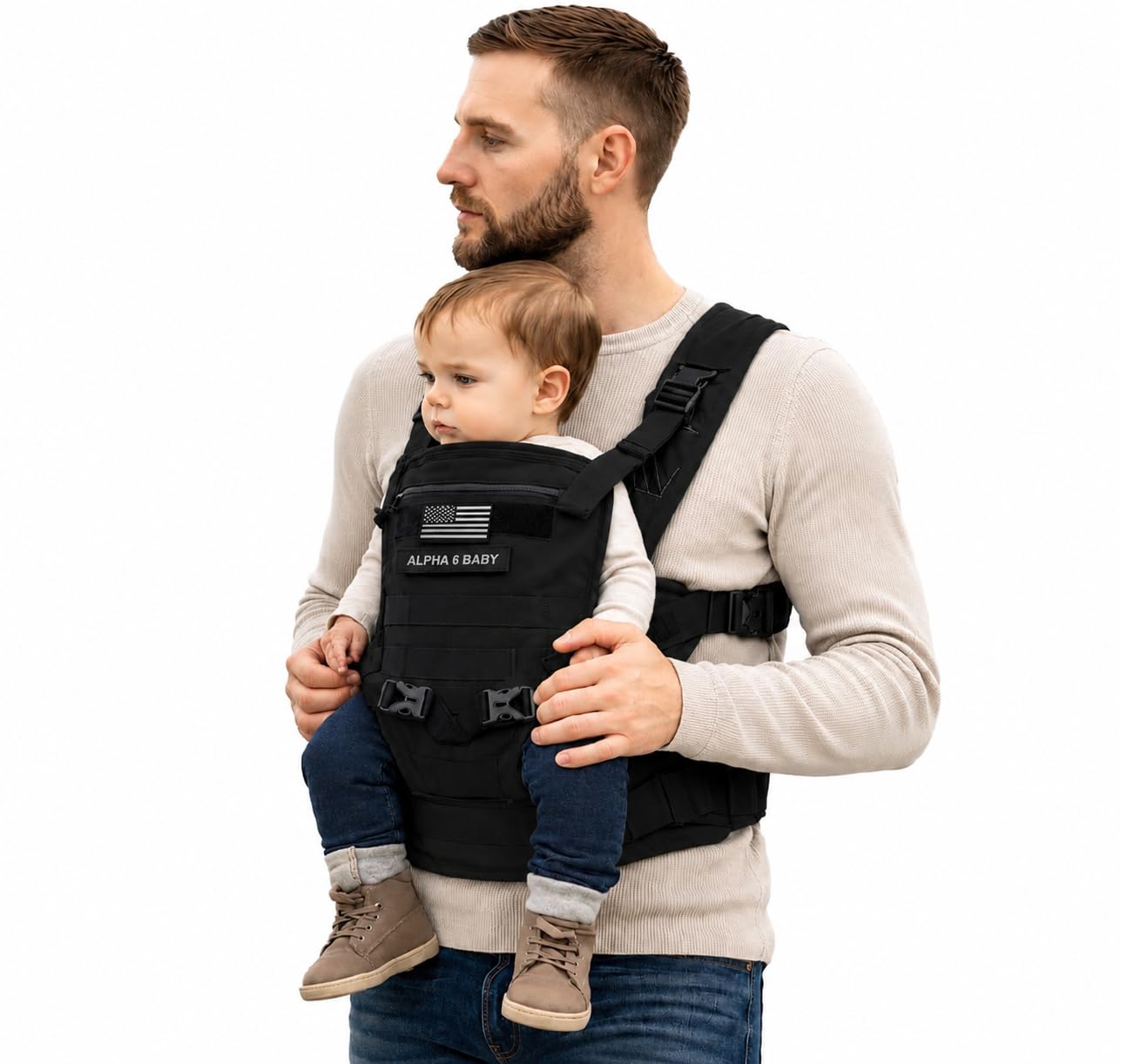
Alpha Six Baby Carrier
Key Features
- Carrier weight: 2.43 lb
- Attachment system: MOLLE compatible
- Carry orientation: Front
- Child weight range: 8-35 lb
- Price: Budget
The Alpha Six looks like a plate carrier, and that is the point: it is a soft front carrier for parents who want a compact, tough-feeling option for short walks and travel days. The 1000D nylon, heavy-duty shoulder straps, and MOLLE webbing give it a military-surplus look that stands apart from the pastel framed packs here.
We like the removable liner and the front carry for keeping a baby close and visible. The 8 to 35 pound range spans infancy to toddlerhood, and the MOLLE panel lets you add a small pouch for keys or a snack without buying a proprietary accessory.
It is not a framed trail pack. The load hangs from the shoulders and the added belt helps, but it does not transfer weight the way a hip-belted frame does. There is also no dedicated neck support, so a baby who cannot hold their head up is not the right passenger, whatever the weight range suggests.
For a quick hike, a farm walk, or a travel day with an older baby, the Alpha Six is handy and very hard-wearing. The broad shoulder straps are the part we noticed most; they make a front carry feel less like a sack of groceries.
Pros
- Tough 1000D nylon build
- MOLLE attachment panel
- Front carry keeps baby visible
- Removable washable liner
Cons
- Fit can run loose on smaller frames
We like the Alpha Six as a tough, compact front carrier for quick walks and travel, not a framed pack for long mountain days.
How We Tested Hiking Baby Carriers
We started with more than 30 carriers sold as trail-ready — structured frames, soft carriers with hip belts, and hybrids — and sorted by weight limit, harness type, storage, and price. Anything without a real waist belt, a 30-pound minimum weight limit, or room for a water bottle and a diaper change got cut. That left 11, and all of them went on the same local trails for eight months.
Testing looked like our actual weekends. Each carrier went on at least three hikes: a flat rail trail, a two-and-a-half-mile climb with about 700 feet of gain, and a rocky descent where footing makes you lean. We wore them with babies from six months to two and a half years, roughly 15 to 30 pounds, then swapped between a 5-foot-4 parent and a 6-foot-1 one to see how the same harness handled different torsos. We timed how long it took to adjust the back strap solo — no second person — and noted whether the waist belt stayed on the hip bones or rode up. After 60 and 90 minutes, we checked for red marks on shoulders and hips and watched whether the baby’s head bobbed on descents.
Storage got a real load: two diapers, wipes, a water bottle, snacks, and a light layer. Then we walked a mile and noted whether the pack pulled us backward or shortened our stride. Every few weeks we checked buckles, webbing, and the fabric under the seat for fraying, cleaned each carrier as directed, and looked for fading or stretched elastic. For value, we compared what each one included — sunshade, drool pad, frame, kickstand — against its price. Folded size counted too, since a carrier that won’t fit in the trunk tends to stay home.
How to Choose a Baby Carrier for Hiking
The right hiking carrier is the one that puts the child’s weight on your hips and leaves your hands free for balance, not the one with the longest feature list.
Framed or Soft: Match the Carrier to the Trail
A framed backpack carrier is the better default for real trails: the internal frame and hip belt carry the load, the child sits higher and gets a view, and the seat gives them a place to nap. A soft carrier packs smaller and costs less, but it transfers more weight to your shoulders. The Alpha Six is the soft option here because it is explicitly sold for hiking; it makes sense for an hour on a flat path, not a rocky climb. For half-day or uneven routes, choose a frame.
Fit the Wearer Before the Child
Torso length and hip shape decide whether a carrier feels like a pack or a punishment. Put it on empty, tighten the hip belt until it sits on your hip bones, then adjust the shoulder straps and load lifters. A shared harness is worth paying for if two adults carry; the Kelty PerfectFIT system is the clearest example here of a pack built to switch between wearers. Check the fit with the child and a full water bottle, not in the shop mirror. If the hip belt rides up or the shoulder straps pull you forward, the pack is wrong for your frame.
Read the Weight Limits and the Packed Weight Together
Child weight ranges here start at 16 pounds for most framed carriers and top out around 40 pounds; the Alpha Six starts at 8 pounds but is a front soft carrier. Do not confuse the child limit with the pack’s load rating. The Osprey Poco LT, for example, lists a 23.8 to 48.5 pound load range, so treat that as a packed-load figure and check the child-weight guidance separately. A 5.5-pound carrier can still feel heavy with a 30-pound toddler and two liters of water. Load it up before a long hike and walk a mile.
Weather Protection, Storage, and Getting It On
A sunshade is not a substitute for sunscreen on dangling legs, and a rain cover is only useful if you can deploy it without taking the pack off. Look for a canopy that pulls forward and a seat that stays ventilated. Storage should hold water, snacks, diapers, and a layer without turning the pack into a duffel; an insulated bottle pocket is a small thing that earns its place on a hot day. Practice loading the child from a bench or tailgate before the trailhead, because swinging a framed carrier up with a toddler already in it is the hardest part.
Frequently Asked Questions
Can I take a hiking baby carrier on a plane?
Plan to check it rather than carry it on. The framed carriers here measure roughly 26 to 36 inches in their listed dimensions, which is well beyond a standard carry-on. Ask the airline about special baggage or a stroller-style exemption before the airport, and use a travel bag to protect the harness.
Are used hiking carriers worth buying?
Only if you can inspect the harness, buckles, frame, and sunshade in person. Check that the five-point harness is complete, the hip-belt buckle latches firmly, and the frame has no cracks; a replacement harness is not always available. If the seller cannot show the manual or the model number, skip it and put the money toward a carrier with a known weight range.
How do I clean a hiking baby carrier?
Start with the maker’s care instructions: several here are hand wash only, and some have a removable liner or drool pad that can be washed separately. Wipe the frame and harness with a damp cloth, rinse the sunshade by hand, and let everything air-dry fully before storage. Avoid soaking the harness or putting a framed pack in a washing machine unless the label explicitly allows it.
Final Verdict
For most families, the Kelty Journey Signature is the hiking carrier we point to first: the shared-fit harness, built-in sunshade, and daypack storage solve the things that make a trail day harder. Its 7.1-pound weight is the trade-off, and it earns its keep on long, slow hikes.
If you want a slimmer pack for steep, fast days, the Osprey Poco LT is the better fit; you give up storage and easy loading in exchange.
