This post contains affiliate links. We may earn a small commission when you buy through our links — at no extra cost to you.
Many carriers advertise a ‘dad-friendly’ design, but the reality often falls short — too-small waist belts, awkward adjustment points, and styling that doesn’t match a dad’s everyday routine. The gap between marketing and actual use is wider than most parents expect. This guide focuses on carriers that deliver on fit, independent handling, and secure carry for a range of body types, from budget picks to premium gear.
The key trade-off comes down to support style: carriers without a waist belt free up your hips and look leaner but transfer all weight to your shoulders, while those with lumbar support reduce back strain but add bulk. Choosing the right one depends on whether you need a quick on-off for short errands or a full-support rig for long walks. Either way, the best carrier is the one you’ll actually reach for every day without hesitation.



Best for Dad-Specific Gear
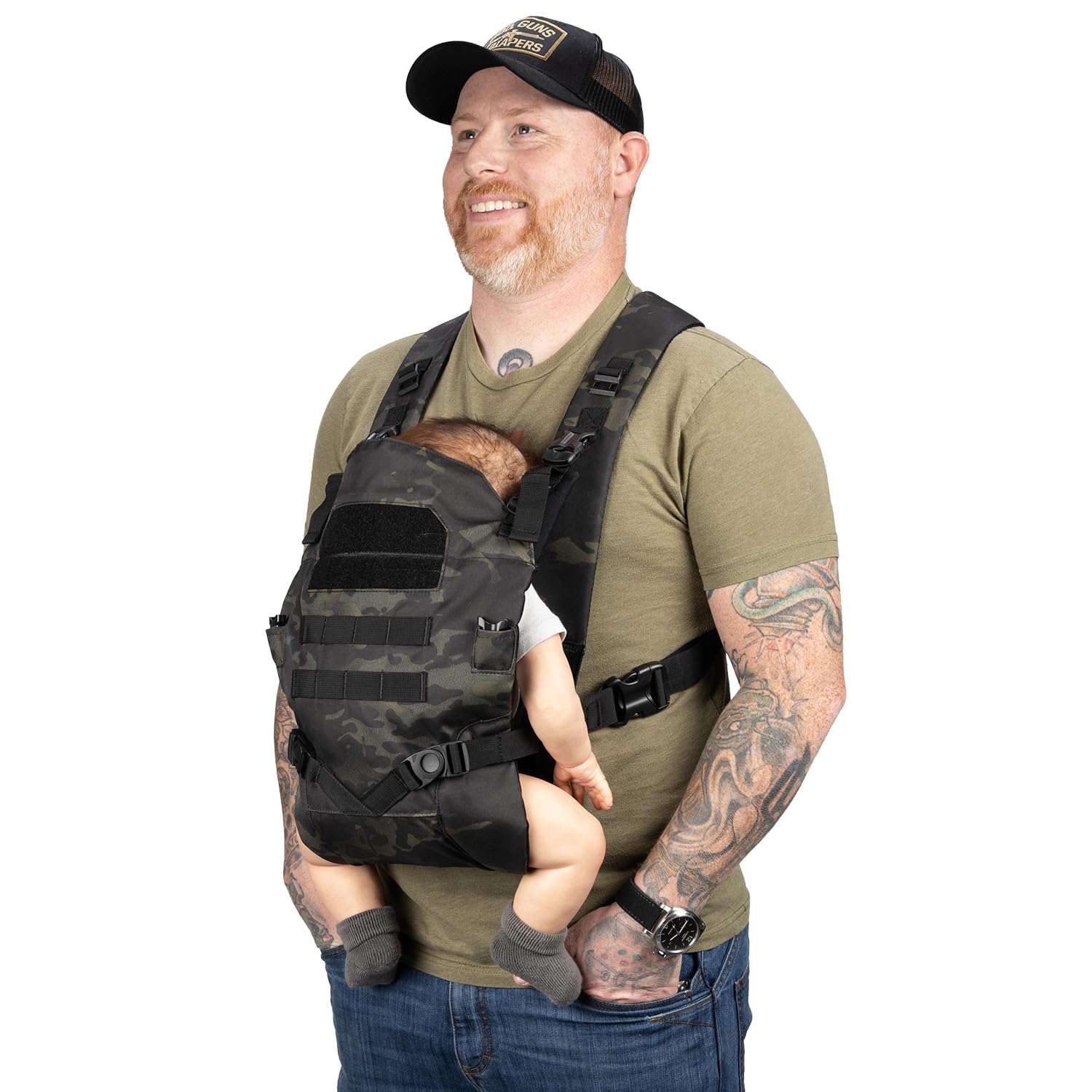
TBG Tactical Carrier
Key Features
- Weight Capacity: 8–33 lbs
- Carrying Positions: Inward, outward
- Waist Belt Fit: None (shoulder only)
- Ease of Use: Easy solo
- Price: Premium
This carrier skips the waist belt entirely, placing all your child’s weight on your shoulders. That’s a deliberate trade-off: it makes the harness easier to put on solo and keeps the silhouette lean for dads who climb, walk, or just prefer a minimalist setup. The MOLLE webbing lets you attach pouches for diapers or snacks, and the cotton fabric is tough enough for trail use. Most owners report that the shoulder straps distribute weight well, though comfort drops off on longer carries with toddlers near the upper weight limit.
This is for dads with larger torsos who want a carrier that looks and feels different from the typical pastel options. Tall and heavy men over 6’3” and 300 pounds consistently report a snug, pinch-free fit. But if you plan to wear your child for hours at a time or need lower-back relief, the shoulder-only design will be a limiting factor – especially as your baby grows past 25 pounds.
Pros
- Rugged cotton build with MOLLE attachment points for custom gear storage.
- Specifically cut for larger frames – fits tall and heavy dads without pinching.
- Easy to put on solo with durable hardware that holds up to daily use.
Cons
- No waist belt means all weight on shoulders; comfort varies for some with heavier toddlers.
Buy this if you’re a dad with a larger frame who wants a rugged, tactical-looking carrier with MOLLE attachments. Skip it if you need lumbar support for long carries with a heavy toddler.
Best for Budget Structured
Momcozy Purehug
Key Features
- Weight Capacity: 7–44 lbs
- Carrying Positions: Front inward, outward
- Waist Belt Fit: Adjustable waist
- Ease of Use: Easy solo
- Price: Budget
Unlike the top pick’s shoulder-only design, the Momcozy Purehug includes a cross-back frame and built-in lumbar support that distributes weight evenly, making it suitable for longer wear. Its easy solo-adjust buckles and lightweight build appeal to parents who want quick, hands-free carrying. However, the cotton fabric attracts lint and pills after several washes, and this carrier supports only front-facing positions — no back carry. Best for parents on a budget who value lumbar support over tactical aesthetics and don’t need a back carry option.
Pros
- Comfortable cross-back design with lumbar support for even weight distribution
- Easy to put on solo with secure buckles
- Value-packed structured carrier at a budget price
Cons
- Cotton fabric attracts lint and tends to pill after washing
Buy this if you want a comfortable, budget-friendly structured carrier with lumbar support for front-facing use. Skip it if you need a back carry option or prefer a fabric that resists lint.
Best for Hip Seat
Bellababy Hip Seat
Key Features
- Weight Capacity: 7–33 lbs
- Carrying Positions: Inward, outward, back, hip
- Waist Belt Fit: Up to 40 in
- Ease of Use: Easy solo
- Price: Budget
The Bellababy Hip Seat stands out among budget carriers for its detachable hip seat, which shifts baby’s weight off the lower back — a significant benefit for dads with back pain. Multiple carrying modes (front, back, hip, plus seat alone) and easy on/off make it practical for quick errands and travel. However, the waist belt maxes out around 40 inches, and the seat feels narrow for chunkier babies, so larger or taller dads should check fit carefully.
Pros
- Hip seat reduces back strain by supporting baby’s weight on the waist
- Six carrying modes including a standalone hip seat for quick support
Cons
- Waist belt maxes around 40 inches; narrow seat for chunkier babies
Buy this if you need back relief and want a quick, budget carrier that’s easy to take on and off. Skip it if you have a waist larger than 40 inches or a chunky baby.
Best for All-Day Comfort
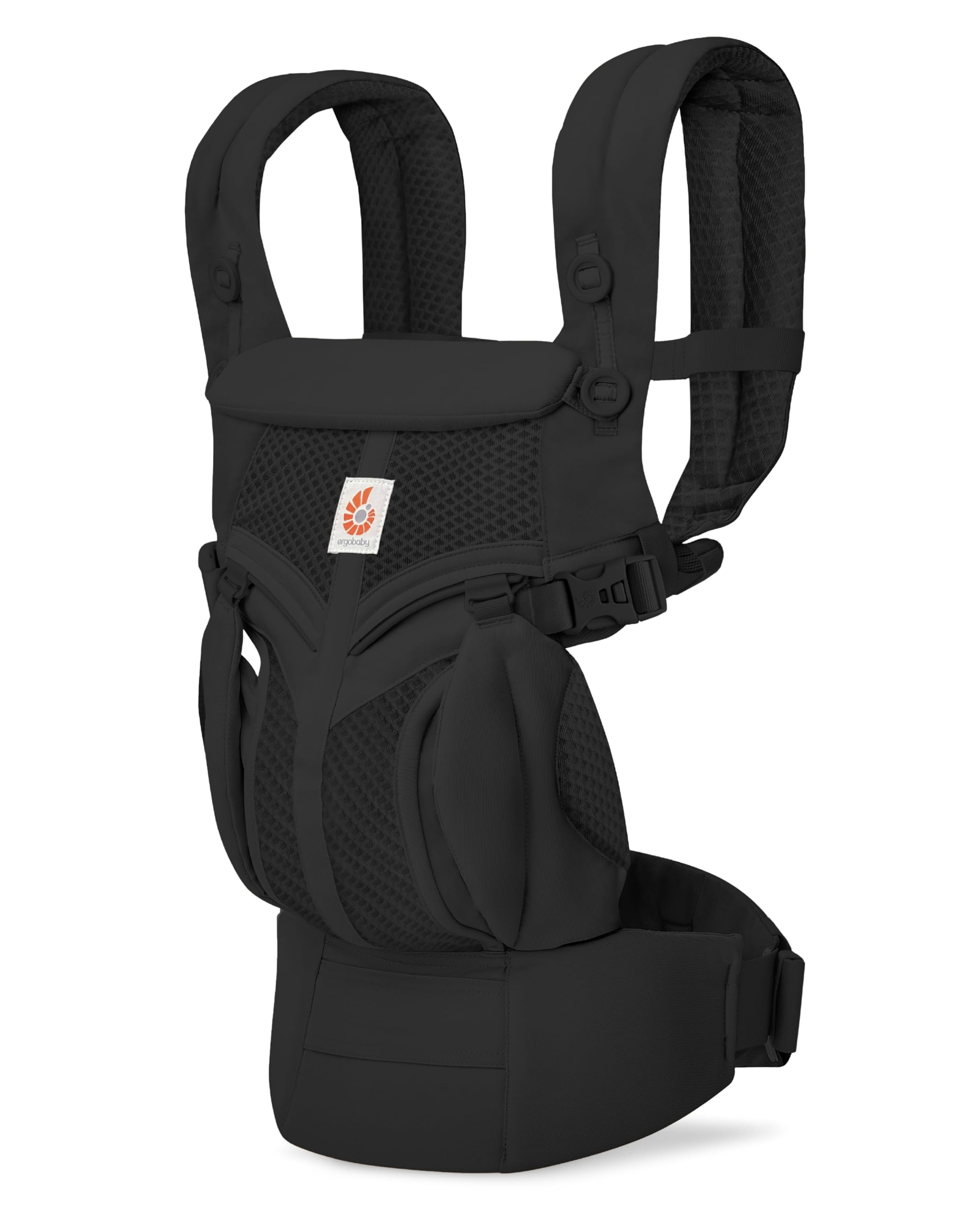
Ergobaby Omni Classic
Key Features
- Weight Capacity: 7–45 lbs
- Carrying Positions: Inward, outward, back, hip
- Waist Belt Fit: Adjustable waist
- Ease of Use: Easy solo
- Price: Premium
The Ergobaby Omni Classic differentiates with full lumbar support and four carrying positions — inward, outward, back, and hip — making it the better choice for all-day wear compared to shoulder-only carriers. Its breathable mesh and even weight distribution keep both parent and baby comfortable during long walks or hikes. However, it is heavier (1.7 lbs) and carries a premium price, which may not suit budget-conscious buyers or those seeking a minimalist setup. Best for dads who need back carry capability and extended comfort over a lighter, simpler design.
Pros
- Even weight distribution reduces strain during long walks or hikes.
- Four carrying positions grow with baby from newborn to toddler.
Cons
- Bulky and heavy (1.7 lbs) with strap padding that can dig into shoulders for some users.
Buy this if you need a comfortable all-day carrier with back carry support and don’t mind a heavier, premium-priced design.
Best for Versatile Budget
Infantino Flip 4-in-1
Key Features
- Weight Capacity: 8–32 lbs
- Carrying Positions: Inward, outward, back
- Waist Belt Fit: Adjustable waist
- Ease of Use: Easy solo
- Price: Budget
The Infantino Flip delivers four carrying modes (inward, outward, back) with a waist belt that distributes weight better than the shoulder-only top pick. Its padded straps and adjustable fit work well for caregivers of varying sizes, though after extended wear some users report shoulder digging. Best for budget-conscious parents who want a multi-position carrier without paying a premium, but those planning long hikes with heavy toddlers should consider a carrier with more lumbar support.
Pros
- Four carrying modes accommodate newborn to toddler without buying multiple carriers.
- Easy to put on and adjust solo — no partner needed.
- Reduces back strain for both parent and baby with good weight distribution.
Cons
- Shoulder straps can dig in during extended carries with heavier toddlers.
- Occasional quality control variances with stitching durability on straps.
Buy this if you need an affordable carrier with multiple positions and easy solo adjustment. Skip it if you require plush padding or lumbar support for all-day wear with a heavy toddler.
Best for Hip Seat Back
MOMTORY 6-in-1 Hip Seat

Key Features
- Weight Capacity: 7–50 lbs
- Carrying Positions: Inward, outward, back, hip
- Waist Belt Fit: Adjustable waist
- Ease of Use: Moderate solo
- Price: Mid-Range
This carrier’s hip seat provides good support for toddlers up to 50 lbs, with easy solo adjustment. However, hand-wash-only care is inconvenient, the back buckle can be tricky, and the waistband may not fit smaller parents.
Pros
- Comfortable hip seat with effective back support.
- Easy to put on and adjust solo.
Cons
- Hand-wash only; back buckle tricky to clip alone.
Worth considering if you need a hip seat for larger toddlers and don’t mind hand-washing.
Best for Budget Hip Seat
FRUITEAM Hip Seat

Key Features
- Weight Capacity: 22–40 lbs
- Carrying Positions: Inward, outward, back, hip
- Waist Belt Fit: Up to 40 in
- Ease of Use: Easy solo
- Price: Budget
The FRUITEAM hip seat distributes weight well and offers front, back, and hip positions at a low price. Its waist band maxes at 40 inches and the seat is narrow for chunkier babies, which prevented it from matching the comfort of Bellababy at a similar price.
Pros
- Hip seat distributes weight evenly, reducing back strain.
- Multiple carrying positions (front, back, hip) adapt as baby grows.
Cons
- Waist band maxes at 40 inches; narrow seat may not fit chunky babies.
Worth considering if you have a waist under 40 inches and want an affordable hip seat for a medium-sized baby.
Best for Short Errands
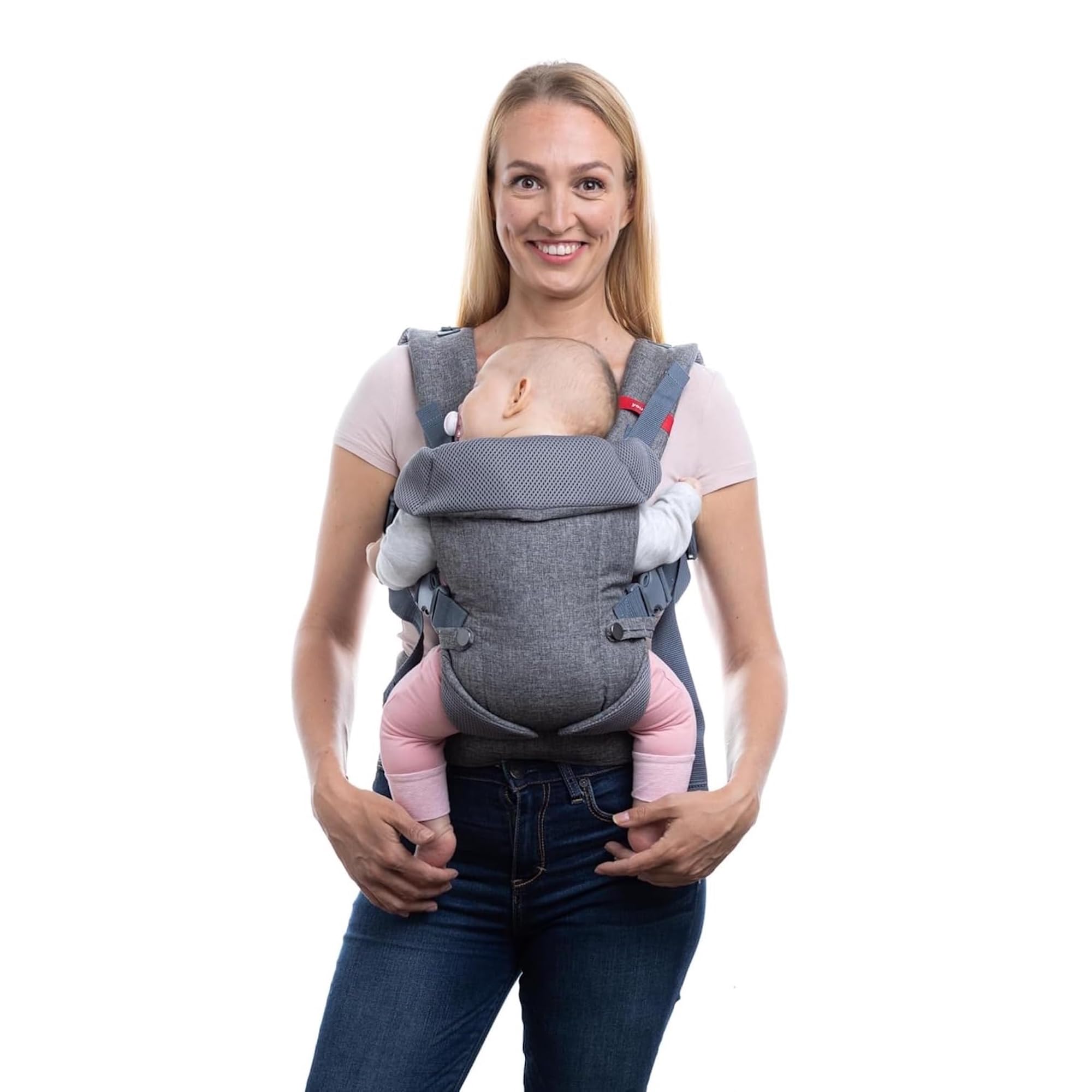
YOU+ME 4-in-1
Key Features
- Weight Capacity: 8–32 lbs
- Carrying Positions: Inward, outward, back
- Waist Belt Fit: Adjustable waist
- Ease of Use: Easy solo
- Price: Budget
This budget carrier uses 3D mesh panels for airflow and offers multiple carrying positions from newborn to toddler. However, many users report shoulder pain and backache after about 30 minutes of wear, making it best for short errands rather than extended outings.
Pros
- Breathable mesh panel keeps baby cool during short trips.
- Budget-friendly price for a structured carrier with multiple positions.
Cons
- Shoulder and back discomfort reported after 30 minutes of use.
Worth considering if you need an affordable carrier for quick errands and are comfortable with its limited comfort beyond short wears.
Best for Newborn Soft
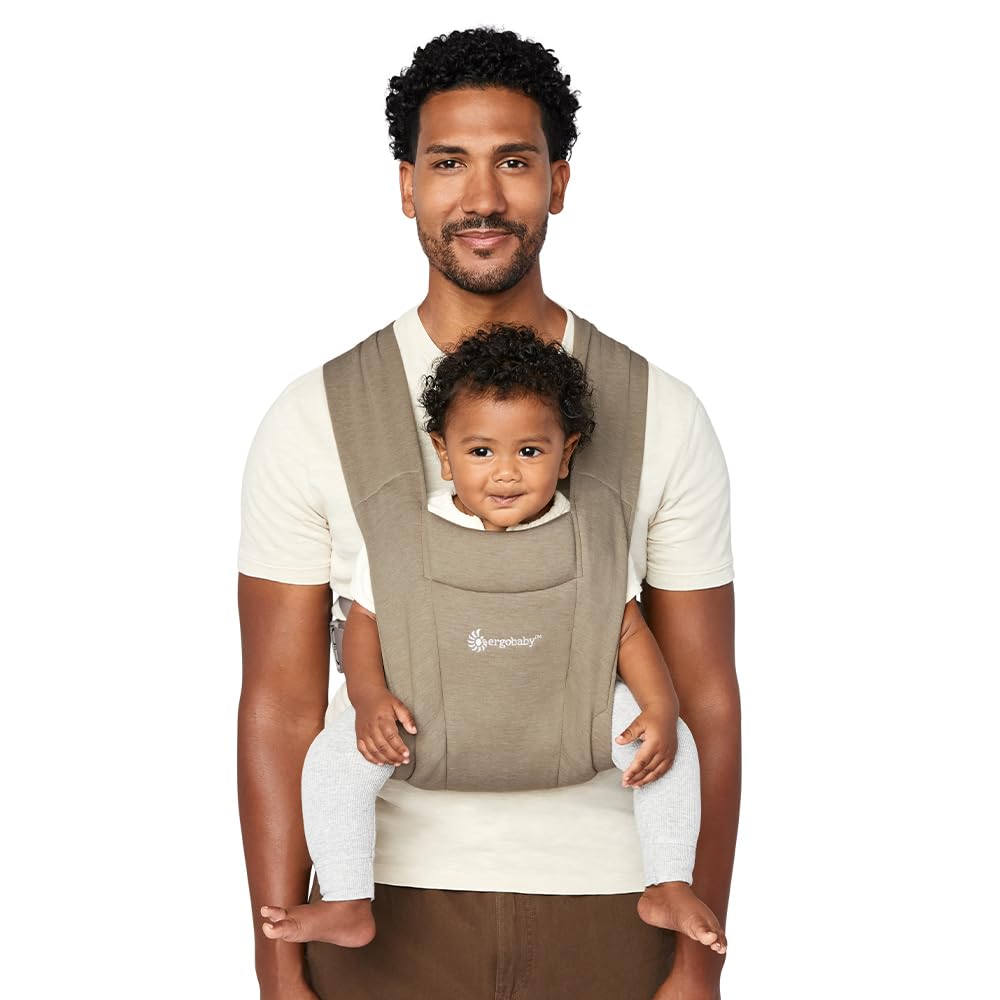
Ergobaby Embrace
Key Features
- Weight Capacity: 7–25 lbs
- Carrying Positions: Inward, outward
- Waist Belt Fit: Adjustable waist
- Ease of Use: Easy solo
- Price: Mid-Range
The Ergobaby Embrace wraps newborns in a soft, cozy knit that feels like a hug and goes on solo with minimal fuss. The trade-off for that newborn-specific comfort is a 25-lb weight limit, meaning most babies outgrow it around 12 months, and the lack of a back carry option further shortens its useful life. It excels as a dedicated early-stage carrier rather than a long-term investment.
Pros
- Soft knit fabric provides comforting, cozy feel ideal for newborns.
- Puts on and adjusts easily by yourself without help.
Cons
- Lower weight limit (25 lbs) means outgrown by 12 months typically.
Worth considering if you want a supremely soft, easy-to-use carrier for the early newborn stage and plan to switch to a larger carrier by the first birthday.
Best for Style Conscious
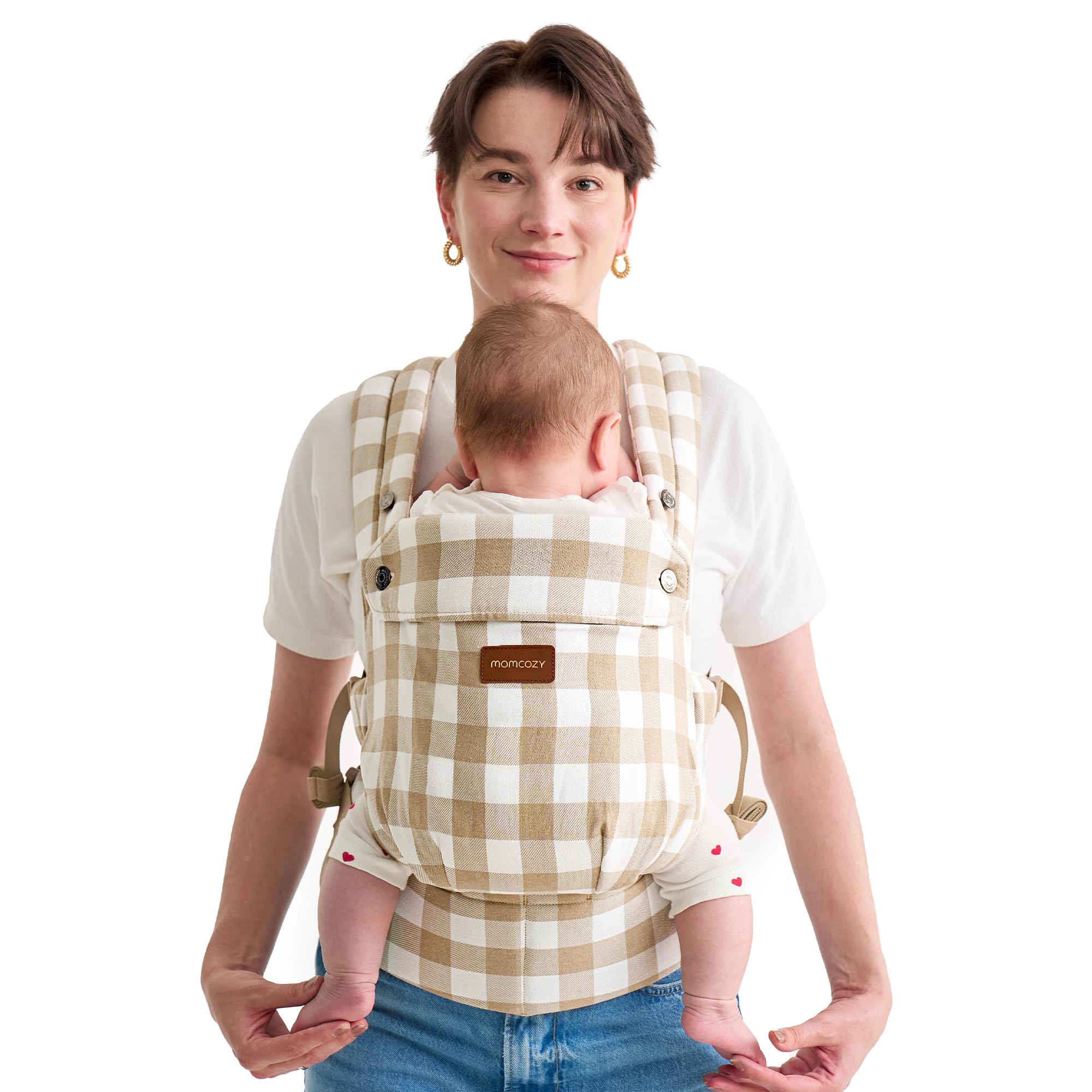
Momcozy Cotton Linen
Key Features
- Weight Capacity: 7.7–44 lbs
- Carrying Positions: Front inward, outward
- Waist Belt Fit: Adjustable waist
- Ease of Use: Easy solo
- Price: Mid-Range
This Momcozy variant swaps the standard fabric for natural cotton linen, giving it a stylish checkerboard look. It provides the same ergonomic support and lumbar comfort as the regular Momcozy. However, the linen finish attracts lint and dust, and the price is higher without any functional upgrade.
Pros
- Stylish natural cotton linen fabric with a unique checkerboard pattern.
- Comfortable lumbar support and ergonomic design for hands-free use.
Cons
- Costs more than the standard Momcozy despite identical core features; linen attracts lint.
Worth considering if natural aesthetics and linen texture are priorities, and you’re willing to pay extra for the look over the standard version.
Best for Newborn Home
KeaBabies Original Wrap

Key Features
- Weight Capacity: 7–35 lbs
- Carrying Positions: Front inward only
- Waist Belt Fit: None (wrap)
- Ease of Use: Moderate solo
- Price: Budget
The KeaBabies wrap delivers the softness and affordability expected from a budget newborn carrier, and many caregivers find it easy to learn after a few tries. However, the stretchy fabric tends to loosen over time, requiring periodic readjustment to prevent sagging. This tradeoff, plus the learning curve for tying, limits its appeal for dads needing a quick on/off solution or support for heavier toddlers.
Pros
- Very soft and comfortable for newborns
- Easy to learn after a few attempts, good for home use
Cons
- Fabric stretches over time, requiring retightening every 20-30 minutes to prevent sagging
Worth considering if you’re a petite caregiver seeking an affordable, soft wrap for newborn contact naps at home.
Best for Small Infants
Koala Babycare Wrap

Key Features
- Weight Capacity: Up to 22 lbs
- Carrying Positions: Front inward, cradle
- Waist Belt Fit: None (wrap)
- Ease of Use: Easy pull-on
- Price: Mid-Range
The Koala Babycare Wrap pulls on like a t-shirt, making it one of the simplest wraps for newborns. The soft cotton-blend material is comfortable and offers decent back support. However, the 22-lb weight limit and hand-wash-only care mean it’s outgrown quickly and requires extra upkeep.
Pros
- Easy pull-on like a t-shirt – no complicated tying.
- Soft, supportive fabric for small infants.
Cons
- Low 22-lb weight limit, outgrown quickly.
Worth considering if you want a simple, no-fuss wrap for a newborn up to 4-5 months and are okay with hand-washing.
How to Choose
The most overlooked detail when choosing a baby carrier as a dad is the waist belt adjustability – many max out at 40 inches, leaving larger frames unsupported.
Weight Capacity
Check the lower and upper weight limits to ensure the carrier covers from newborn through toddler. Most structured carriers handle 7–45 lbs, but some wraps top out at 22–25 lbs. If you plan to carry past 12 months, aim for at least 33 lbs.
Carrying Positions
Front inward is standard, but outward and back positions add versatility. Back carry becomes essential for toddlers, especially during hikes or longer outings. Hip seat carriers often include a hip-only mode for quick breaks.
Waist Belt Fit
Measure your waist before buying. Many carriers with waist belts max out at 40–45 inches. If you’re above that, look for carriers with extender options or no waist belt designs (shoulder-only) like the Tactical Baby Gear.
Ease of Use
A carrier you can put on and adjust by yourself is crucial for dads who are often juggling a baby alone. Buckle systems are faster than wraps. Cross-back straps and magnetic clips simplify the process further.
FAQ
Is the Tactical Baby Carrier actually comfortable for dads with broad shoulders?
Yes — it’s designed specifically for larger torsos, with wide padded straps that fit 6’3" 340 lbs comfortably. However, without a waist belt, all weight sits on your shoulders, so it’s best for medium-length carries, not all-day hiking.
What is the best baby carrier for a dad who wants to carry a toddler on his back?
A carrier with a back carry option and a supportive waist belt is key. The Ergobaby Omni Classic offers four positions, a 45 lb capacity, and excellent lumbar support, making it the top choice for back carrying a toddler.
Do I need a hip seat carrier for a 9-month-old?
If you experience lower back strain, a hip seat carrier like the Bellababy or MOMTORY redistributes weight and makes carrying a 9-month-old much more comfortable. It’s not essential, but highly recommended for parents who do a lot of holding.
Why do some structured carriers cause shoulder pain?
Shoulder pain typically results from poor weight distribution. Carriers without a waist belt transfer all load to the shoulders, while those with a padded waist belt and ergonomic straps reduce strain. Adjusting strap length to match your torso also prevents digging.