This post contains affiliate links. We may earn a small commission when you buy through our links — at no extra cost to you.
The standoff in my house happens at 7:15 a.m., when a sleepy kid stares into the fridge and rejects every single option in it. The thing that actually gets eaten is almost always yogurt — but only the right one. The wrong pick comes home warm and untouched at the bottom of a backpack, or gets three bites before the texture turns someone off. A good kids yogurt has to do two jobs at once: taste good enough to disappear, and be nutritious enough that packing it doesn’t feel like packing a pudding cup.
That tension runs through the whole aisle. Pouches advertise protein and live cultures on the front, then list sugar in grams on the back that add up faster than you’d expect, and the drinkable ones are often the sweetest of the bunch. We tasted 18 yogurts over three months — tubs, pouches, and tubes — with a rotating panel of kids and their adults, and noted which ones got finished and which ones came home sweaty and half-full. The picks below are the ones that survived a lunchbox, a car ride, and a picky eater.



Best for Lunchboxes and Travel
GoGo squeeZ YogurtZ
Key Features
- Base: Cultured reduced-fat milk
- Protein: 4 g per pouch
- Storage: Shelf-stable until opened
- Pack Size: 20 pouches, 3 oz each
- Price: Midrange
A yogurt that doesn’t need the fridge is the whole reason this one leads our list. GoGo squeeZ YogurtZ are shelf-stable until they’re opened, so a box can live in the pantry, the diaper bag, or the back of the car and still be a real cultured-milk snack when you need one. Each 3 oz pouch carries 4 g of protein, and the recipe uses cultured reduced-fat milk with no high-fructose corn syrup, added colors, or artificial flavors.
The pouches themselves do the rest of the work. A kid can hold and open one without help, there’s no bowl to chase, and the 20-count variety box covers lunchboxes, after-school stretches, and travel without a restock every few days. We kept coming back to them for the same reason: they’re the snack that survives being forgotten in a bag and is still fine a week later.
On taste, the texture is smooth and creamy rather than watery, and the flavors sit on the kid-friendly side without the artificial-sweet edge that makes some pouches taste like candy. The 3 oz size is well judged for a younger kid too — it’s a snack rather than a meal, so there’s less half-eaten yogurt going soft in a backpack.
Two things to know before you buy. These aren’t organic, so if that’s the priority, Stonyfield’s pouches are the better fit. And shelf-stable is a storage convenience, not a nutrition upgrade: 4 g of protein is solid for a pouch but trails the 6 g you get from a Go-GURT tube.
Pros
- Shelf-stable, so no cooler or fridge needed
- 4 g of protein in a 3 oz pouch
- Kids can open and hold them unaided
- 20-count box covers lunchboxes and travel
Cons
- Not organic
- Protein trails the 6 g tube options
We recommend it as the default kids’ yogurt for most families: real cultured milk, 4 g of protein, and a pouch that waits in the pantry instead of the fridge.
Best for Drinkable Portions
Danimals Smoothie Bottles
Key Features
- Milk Fat: Low fat
- Nutrients: Calcium and vitamin D
- Pack Size: 12 bottles, 3.1 oz each
- Certification: Non-GMO Project Verified
Some kids drink yogurt long before they’ll squeeze it, and that’s exactly who the Danimals bottles are for. You get twelve 3.1 oz bottles of low-fat strawberry-banana dairy drink, Non-GMO Project Verified, with calcium and vitamin D and no high-fructose corn syrup, artificial flavors, preservatives, or colors from artificial sources.
The format is the point. A capped bottle is a portion a kid can finish standing up, and the strawberry-banana flavor is mild enough that it doesn’t read as dessert. We found the bottles go fastest at breakfast and in lunchboxes, where a drink is simply easier to manage than a cup and a spoon.
What you’re buying is a thin dairy drink rather than a spoonable yogurt, and it does taste sweet — closer to flavored milk than to plain yogurt, which makes it a snack rather than the everyday yogurt. A 12-count box also empties fast with more than one kid drinking them. For a child who won’t touch a pouch, that’s still a trade worth making.
Pros
- Bottles kids finish without a spoon
- Calcium and vitamin D in every bottle
- Non-GMO with no artificial colors or flavors
Cons
- Bottles take up refrigerator space
Buy these if your kid drinks yogurt but won’t squeeze a pouch — a capped 3.1 oz bottle with calcium and vitamin D, best treated as a snack rather than the everyday yogurt.
Best for Freezer Lunchboxes
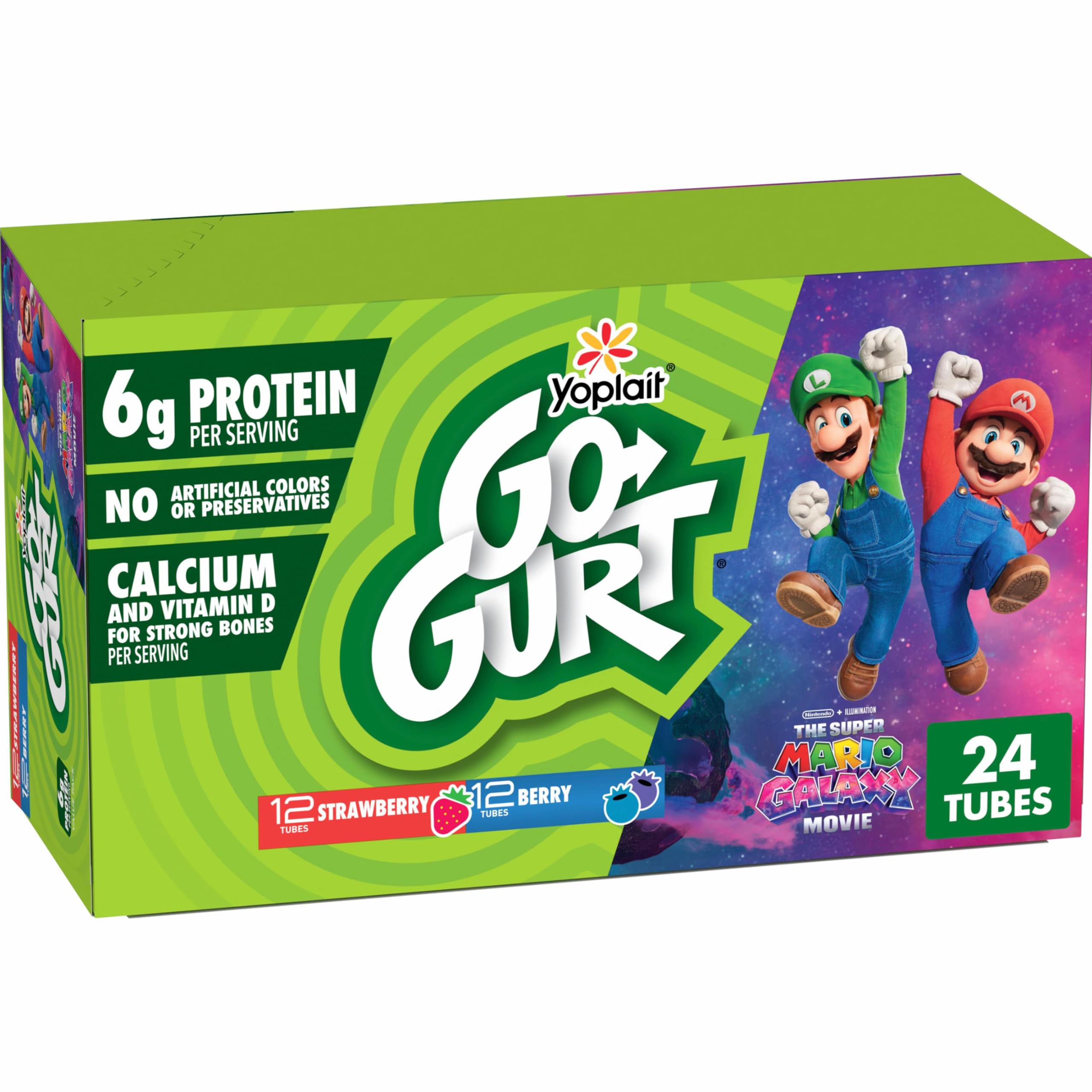
Go-GURT Super Mario Tubes
Key Features
- Protein: 6 g per serving
- Freezing: Freeze and thaw by lunch
- Nutrients: Vitamin A, calcium, vitamin D
- Pack Size: 24 tubes, 2 oz each
Pack a frozen tube where the ice pack would go and it’s slushy by lunch — that’s the trick that earns this 24-count box a permanent spot in our freezer. Each 2 oz tube carries 6 g of protein, vitamin A, calcium, and vitamin D, with live and active cultures, no artificial colors or flavors, and it’s gluten-free and fat-free. The pack’s own instruction is to let one thaw two to three minutes before eating.
Strawberry and berry is the uncomplicated flavor kids actually ask for, and we noticed the movie tie-in does more work than any packaging claim — a five-year-old finishes a Mario tube without negotiation. Tubes are also the most fun format here, which cuts both ways: they don’t reseal, and a determined squeeze puts yogurt on the couch.
The packaging carries a note about children under five, so read it before handing one to a toddler. Otherwise, treat these as a lunchbox and freezer snack rather than the everyday cup — they’re built for portability, not for sitting down with a spoon.
Pros
- 6 g of protein in a 2 oz tube
- Freezes and thaws by lunchtime
- 24-count box keeps lunchboxes stocked
- No artificial colors or flavors
Cons
- Tubes don’t reseal once opened
The best tube for lunchboxes: 6 g of protein, a flavor kids finish, and a frozen tube that doubles as the ice pack.
Best for Organic Pouches
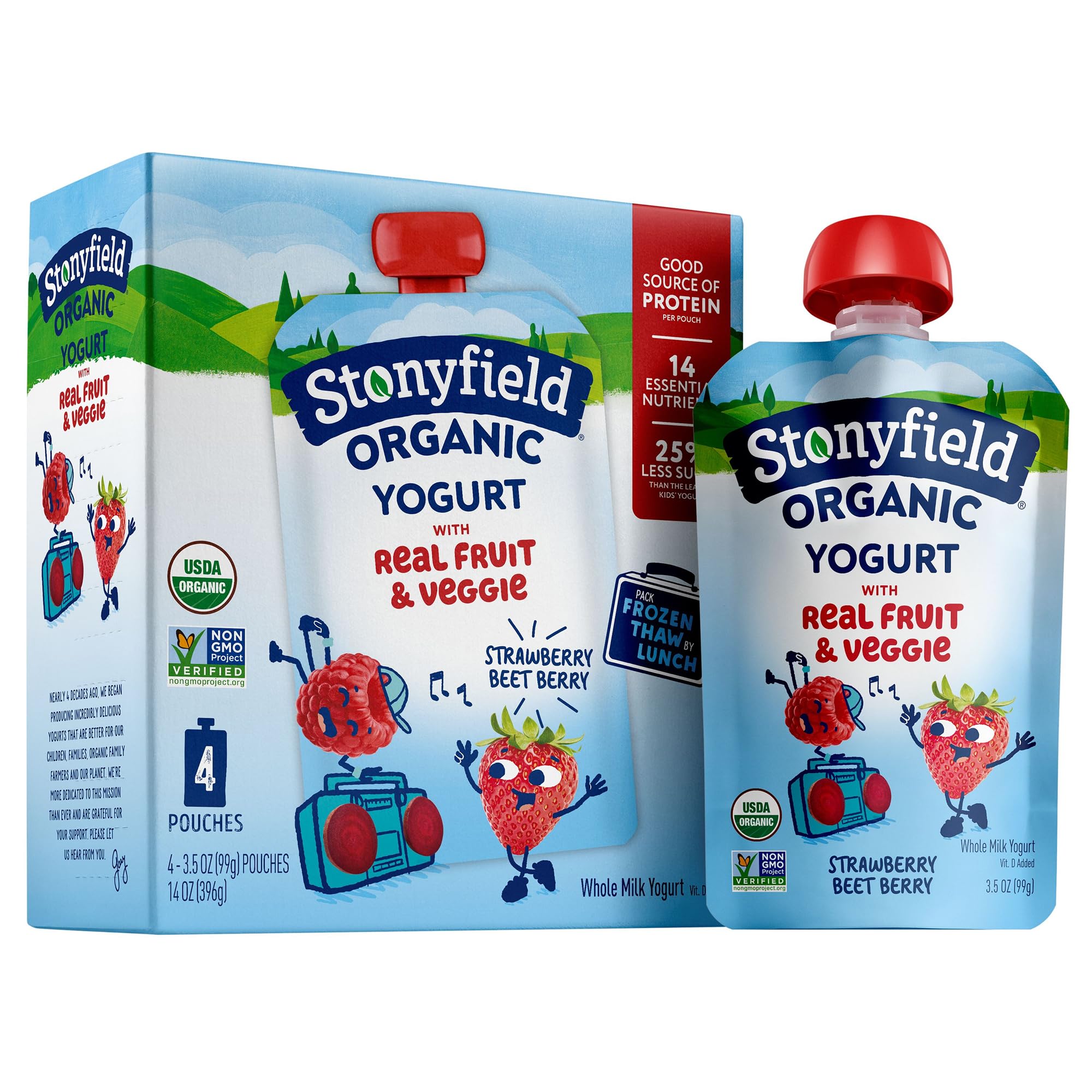
Stonyfield Organic Kids Pouches
Key Features
- Milk: Organic whole milk
- Nutrients: 14 essential nutrients
- Pack Size: 4 pouches, 3.5 oz each
- Ingredients: Strawberry, raspberry, beet puree
- Price: Premium
Strawberry, raspberry, and beet is an odd trio to put on a kids’ pouch, and it’s the first thing we noticed on the box. Behind it is organic whole-milk yogurt from pasture-raised cows, 14 essential nutrients, and none of the artificial flavors, sweeteners, or high-fructose corn syrup. The pouches are 3.5 oz each, and a box holds four.
We expected the beet to be detectable. It isn’t — the berry comes through first, the texture is thick and smooth, and kids treat it like any other pouch. That matters, because the whole-milk base makes this a more substantial snack than the low-fat drinks here, and the pouch means no bowl, no spoon, and nothing to wipe off the table.
The catch is cost: ounce for ounce, these are the priciest pick in this group, which is what organic whole-milk yogurt in a pouch costs. Buy them for the younger kid who needs the calories and the convenience, and move to a bigger format once they’re eating more at a sitting.
Pros
- Organic whole milk with 14 nutrients
- Beet blends in; kids taste berry
- Almost no mess at the table
Cons
- Highest cost per ounce in this group
- Only four pouches per box
Worth the premium when organic whole-milk yogurt matters and your kid is still small enough for a 3.5 oz pouch — it’s the least messy way to serve it.
Best for Older Toddlers
Earth’s Best Toddler Pouches
Key Features
- Pouch: Resealable, BPA-free
- Age Grade: 24 months and up
- Pack Size: 12 pouches, 4.2 oz each
- Ingredients: Organic fruit and yogurt
- Price: Midrange
Half-eaten pouches are the usual tax on feeding a toddler, and the resealable lid on these Earth’s Best pouches is the detail we appreciate most. Each one holds 4.2 oz — more than any other pouch here — and the pack of twelve is graded for children 24 months and older who are eating table and finger foods.
The ingredient list is deliberately short: organic strawberries and bananas, yogurt, calcium, and vitamins C and D. The pouch is BPA-free and squeezable, and the cap goes back on, so a snack can be finished later instead of thrown out. For travel and for a bag that sits in the car, that’s a real advantage.
The texture is smooth enough to squeeze and the strawberry-banana flavor is a safe bet for a skeptical kid. The 4.2 oz portion also suits a three-year-old — enough to count as a snack, not so much that it spoils dinner.
Where it lands is the toddler stage rather than the baby stage, and the 24-month grade is honest about that. If you’re starting younger, YoBaby’s cups or Stonyfield’s smaller pouches make more sense, and this is the one to graduate to when portions grow.
Pros
- Bigger 4.2 oz pouch than the others here
- Resealable lid saves half-finished snacks
- Short list of organic ingredients
- Graded for 24 months and up
Cons
- Pricier per ounce than the tube formats
Our pick for toddlers two and up: a bigger 4.2 oz organic pouch with a lid that goes back on, so a half-finished snack isn’t wasted.
Best for First Yogurt
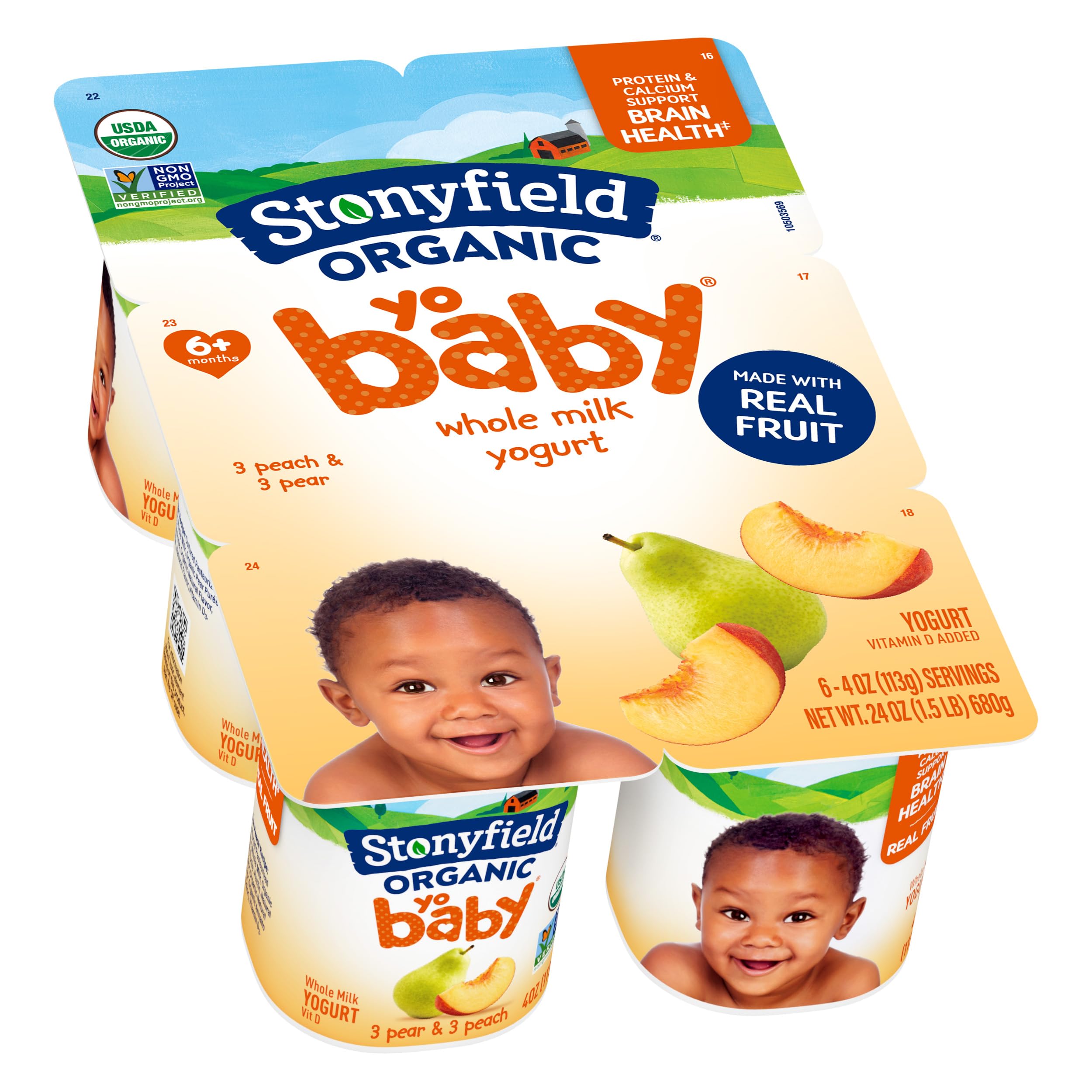
Stonyfield YoBaby Cups
Key Features
- Milk: Organic whole milk
- Age Grade: 6 months and up
- Pack Size: 6 cups, 4 oz each
- Sweeteners: No added sweeteners
- Price: Budget
Yogurt for a six-month-old isn’t the same purchase as yogurt for a four-year-old, and YoBaby is the one here built for that first stage. The pear and peach cups are 4 oz each, made with organic whole milk and real fruit puree, with vitamin D, no added sweeteners on the label, and made without toxic persistent pesticides.
Whole milk is the right call at that age, when fat is doing real work, and the texture is creamy rather than set, which makes it easy to load a spoon. Pear and peach are mild, so a baby’s first mouthful tastes of fruit rather than sugar.
Our advice is to read the sugar line before committing to a six-pack. Fruit varieties read sweeter than plain whole-milk yogurt, and how much of that is lactose from the milk and how much is added is exactly the thing to check on the cup. What we’re confident about is the role: this is the mildest, creamiest first yogurt in the group, and 4 oz is a sensible size once a baby is eating more than a taste.
Pros
- Organic whole milk suited to babies
- Mild pear and peach with creamy texture
- Labeled for 6 months and up
Cons
- Cups need a spoon and fridge space
The right first yogurt for a baby starting solids: organic whole milk, mild pear and peach, and a 4 oz cup that spoons easily.
Best for Trial Size
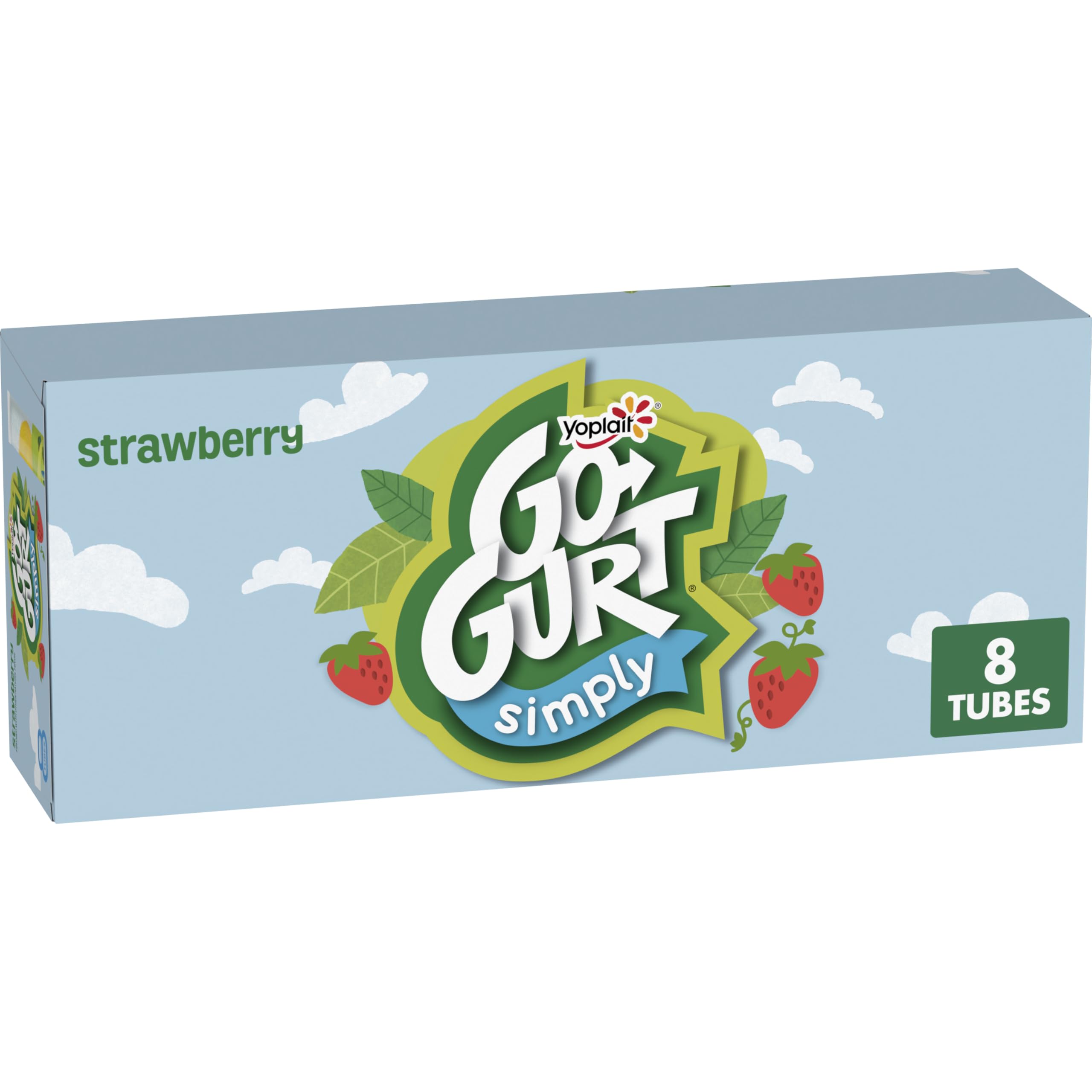
Simply Go-GURT Tubes
Key Features
- Fat: Low fat, gluten free
- Nutrients: Vitamins A and D, calcium
- Pack Size: 8 tubes, 2 oz each
- Sweeteners: No high-fructose corn syrup
- Price: Budget
Eight tubes is the smallest commitment in this guide, and that’s the whole reason the box exists: it lets you find out whether your kid will eat a yogurt tube before you buy twenty-four of them. The tubes are 2 oz, strawberry, low fat, gluten-free, with vitamins A and D, calcium, and no high-fructose corn syrup or colors from artificial sources.
They behave like every Go-GURT: easy to open, no spoon, and freezable — pack one frozen and it thaws by lunch. The strawberry is the plainest flavor in this group, which is useful for a kid who rejects anything that looks like a berry.
What you give up is variety: one flavor, eight tubes, and a box that’s gone in a week if your kid takes to them. We treat it as a cheap audition for the format, and a reason to move to the bigger box once you know the answer.
Pros
- Smallest box for trying the format
- Freezable, with no spoon required
- Gluten free with vitamins A and D
Cons
- Only one flavor in the box
A low-risk way to find out whether your kid likes yogurt tubes: one flavor, eight tubes, and the same freeze-and-go convenience as the big box.
What We Looked For — and What Came Home in the Lunchbox
We started by reading labels on every kids yogurt we could find in the dairy case and on the shelf-stable shelves, then narrowed the field by sugar per serving, protein, live cultures, and whether the format made sense for a lunchbox. That left us with 18 products. We bought them all ourselves and spent three months rotating them through real mornings and real snack times rather than a tasting table.
Every yogurt went into a packed lunch at least twice, riding beside an ice pack from 8 a.m. to noon, so we could check the seal, the nozzle, and whether the contents were still cold and still holding together when the box was opened. Tubs, pouches, and tubes got separate handling: we watched how easily a 4-year-old could open and eat one without help, whether a pouch could be squeezed without launching yogurt across the kitchen, and whether a tube could be closed back up and saved for later in a gym bag or a backseat.
The tasting panel was blunt. Kids told us whether they’d ask for it again; the adults noted sourness, sweetness, chalkiness, any artificial aftertaste, and whether the texture was smooth, watery, or gluey. We also logged grams of sugar per serving against cost per ounce, which made it obvious which products were genuinely worth the money and which were expensive sugar. Anything nobody finished got cut, no matter what the front of the package promised.
How to Choose Yogurt for Kids
Buying yogurt for a kid comes down to four things you can check in the aisle: how much sugar is added, whether the format lets your child eat it alone, what age the pack is graded for, and whether it needs a fridge.
Read the added-sugar line, not the front of the pack
Total sugar on a kids’ yogurt includes lactose from the milk, so the number that matters is added sugar — and the only fair way to compare is per ounce, because a 2 oz tube and a 4.2 oz pouch are not the same serving. A fruit yogurt with 12 g of sugar and 4 g of it added is a very different buy from one where the sweetness comes from milk and fruit alone.
Turn the cup or pouch over before you commit to a multipack. Flavored varieties drift sweeter than plain ones, and the difference between two products in the same brand family can be wider than the difference between brands.
Match the format to how your child eats
Pouches go to toddlers who want to feed themselves and to parents who don’t want a bowl to wash. Tubes are the most fun and the least resealable. Bottles suit a kid who drinks rather than spoons, and cups are the cheapest way to buy yogurt but need a spoon and a table.
The trap is assuming a pouch is automatically low-mess. It is, until a kid squeezes it mid-sneeze. A resealable lid, as on the Earth’s Best pouch, is the detail that separates a half-eaten snack from something you throw away.
Check the age grade, not the cartoon
Pouches and cups look interchangeable but are graded differently: the YoBaby cups are labeled for 6 months and up, while the Earth’s Best pouches are for 24 months and older, when a child is eating table and finger foods. A pouch with a character on it is not automatically baby food.
If your child is under two, buy the pack labeled for their stage. If they’re older, one bigger pouch is better value than three small ones.
Decide whether it lives in the pantry or the fridge
Shelf-stable pouches, like the GoGo squeeZ box, can sit in a diaper bag or a car for weeks and still be a yogurt snack. Chilled cups and bottles need a cold chain from store to lunchbox, which limits where they can go.
That convenience stops at the seal. Once a pouch is opened it becomes a refrigerated item, so don’t count on finishing it on a park bench two hours later. If most of your yogurt gets eaten at home, this distinction costs you nothing.
Compare cost by the ounce, not the box
Bigger boxes usually win on cost per ounce, and the spread here is wide: the organic cup multipack works out considerably cheaper per ounce than the organic pouches, because you’re paying for packaging and portioning as much as for yogurt.
Our advice is to buy one large box of the format your kid actually finishes rather than three small boxes of the format you wish they’d eat. Portion sizes are what make the per-ounce math worth doing.
Frequently Asked Questions
Can you freeze yogurt tubes?
Yes — tubes are the one format built for it. Freeze them overnight and pack one in place of an ice pack; the tubes are meant to thaw by lunchtime, and Go-GURT suggests letting one sit two to three minutes out of the freezer before eating.
Treat a frozen tube as a lunchbox snack rather than an everyday serving, and don’t refreeze one that has already thawed.
Is drinkable yogurt as good as yogurt from a cup?
Compare the protein line, because concentration varies more than the format suggests. The Go-GURT tubes pack 6 g into 2 oz, while the GoGo squeeZ pouches carry 4 g across 3 oz — so per ounce, the tube is doing more of the work.
A drinkable yogurt is still cultured dairy. If you’re using it as a protein source rather than a snack, buy the one with more protein per ounce and check the added sugar on the same panel.
Are any of these yogurts dairy-free?
No. Every pick here is made with cultured cow’s milk, so none of them works for a milk allergy or a dairy-free diet.
If you need a plant-based option, look for coconut or oat yogurt and compare the protein and calcium lines, which usually run lower unless the brand fortifies. Read the allergen line on any pouch before it goes into a lunchbox.
Final Verdict
The GoGo squeeZ YogurtZ box is the one we recommend to most families: real cultured milk, 4 g of protein, and a pouch that lives in the pantry until a lunchbox needs it. Choose Danimals if your kid drinks yogurt rather than squeezing it, Stonyfield’s organic pouches when whole milk and organic dairy matter more than cost per ounce, and YoBaby for a baby’s first spoonful.
Those four cover the decisions that actually come up. Everything else on this list is a variation on format, age, or budget.
