This post contains affiliate links. We may earn a small commission when you buy through our links — at no extra cost to you.
Nothing on a hospital-bag checklist prepares you for the first week home, when the mesh underwear and the giant pad from the maternity ward run out and you’re standing in the pharmacy aisle trying not to cry. What you need is oddly hard to find: something long enough to cover the whole seam, absorbent enough to hold a heavy flow through a night, and gentle enough that you don’t dread the next change. A good postpartum pad isn’t glamorous — it buys you a few hours of not thinking about any of it.
Our testing panel of parents tried 14 options over four months, and the differences showed up fast: thickness tells you almost nothing about absorbency, and a pad that shifts when you stand up is worse than useless at 3 a.m. The witch-hazel-soaked kind that feels like a miracle on day two is often not what you want by week three. Below are the ones we’d hand to a friend, whether she needs overnight coverage, soothing relief, or something discreet enough to wear to work.


Best for Heavy Early Flow
Lil-Lets Extra Long Postpartum Pads
Key Features
- Count: 30 pads (3 packs of 10)
- Wings: Yes
- Length: 36.5cm/14.4 inches
- Sensitive skin: Fragrance-free, dye-free
- Price: Premium
The 36.5cm/14.4-inch length is the first thing that matters here. That extra reach covers more of the front-to-back area than a standard overnight pad, so you are not constantly checking whether the pad has shifted when you stand up or sit down. The wings help anchor it, and the maxi shape is thick enough to feel substantial without turning into a mattress. We noticed the length most at night, when lying down changes where flow lands.
We recommend these as the default for heavy early postpartum flow because they do the basic job without asking you to baby them. The surface is soft rather than papery, and the fragrance-free, dye-free design is one less thing to worry about on tender skin. Each pad is individually folded and wrapped, which makes a difference when you are packing a hospital bag or digging one out one-handed. The 30-pad count is enough for the heaviest stretch without becoming a lifetime supply.
The trade-off is bulk: this is a full maxi pad, and it can show under close clothing. We accept that because the coverage is the point, especially overnight. If your flow drops quickly, you will have pads left over; they still work for heavy periods and long nights later. What we keep coming back to is the length and the wings together—the combination that makes the pad feel secure when you are moving slowly and sitting carefully.
Pros
- Extra-long coverage for heavy flow
- Wings anchor a long maxi pad
- Soft, fragrance-free surface
- Individually wrapped for hospital bag
Cons
- Premium price for a 30-pack
We recommend the Lil-Lets Extra Long pads as the default for heavy postpartum flow: the 14.4-inch length and wings give overnight-level coverage, and the soft, fragrance-free surface suits tender skin.
Best for Ice Relief
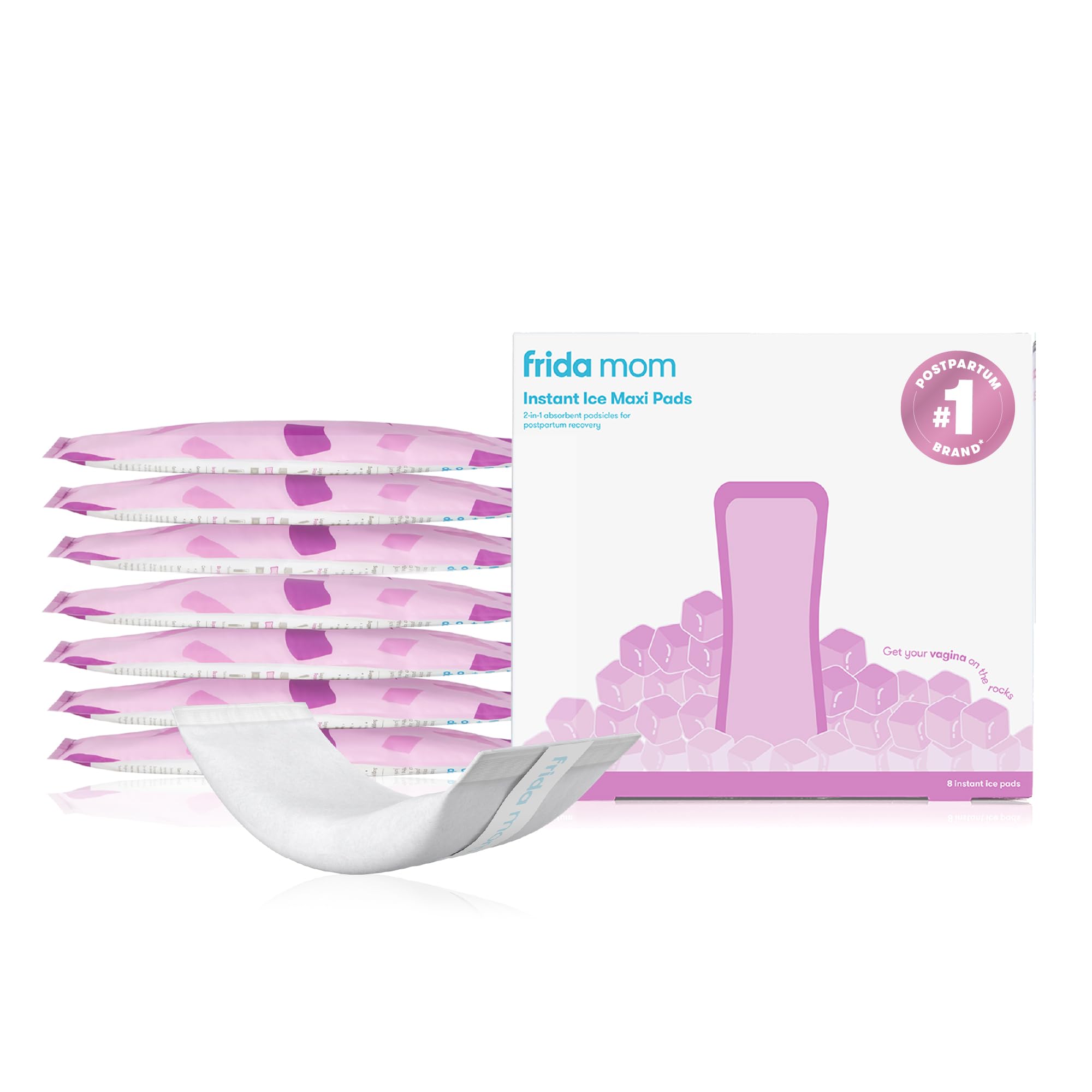
Frida Mom 2-in-1 Ice Pads
Key Features
- Type: 2-in-1 ice maxi pad
- Cooling: Soothing cool
- Absorbency: 9.17 oz
- Attachment: Adhesive back
- Price: Premium
The first days after birth are their own category: sore, heavy, and hard to get comfortable. The Frida Mom 2-in-1 pad is the one we reach for when holding a separate ice pack in place sounds unreasonable. It puts a cooling layer and a maternity pad in one piece, and the absorbent core is built for the heaviest early flow. The cool is a soothing cool rather than freezer cold, which is easier to wear.
The 260 grams of absorbency is serious protection, and the adhesive back keeps it from sliding around when you are not moving much. We also appreciated the 2-in-1 design for middle-of-the-night changes, when you want relief without assembling a kit. It is a first-days tool in our minds: the cooling is the reason to choose it, and the pad gives you real coverage while you need both.
Use these for the first day or two and then move to a longer maxi pad once the soreness eases; that is the role they earn. If you are packing a hospital bag, they are the item that feels most like a small mercy. They are not the pad we choose for the entire recovery, but they are the one we are glad to have at the start.
Pros
- Cooling plus absorbency in one pad
- 260 grams of absorbency
- Soothing for sore first days
Cons
- Cooling fades quickly
- Bulky under close clothing
We reach for the Frida Mom ice pads in the sore first days, when a cooling layer and a heavy-flow pad in one piece feels like real relief.
Best for Weeks 2-3
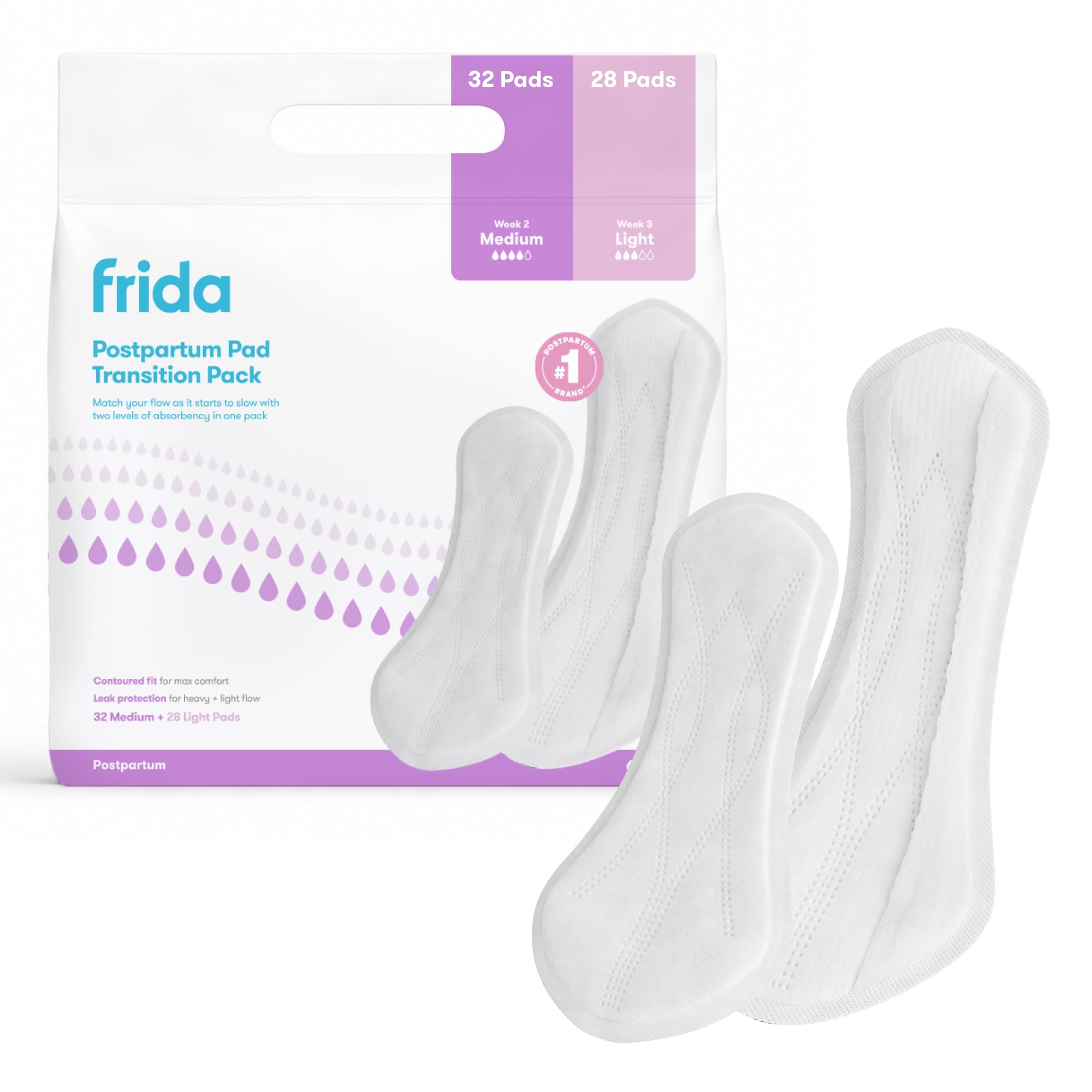
Frida Postpartum Pad MultiPack
Key Features
- Skin: Dermatologist tested
- Count: 60 pads (32 medium, 28 light)
- Profile: Ultra-thin
- Free from: Dyes, chlorine, fragrance
- Price: Midrange
By the second week, the heavy pad that saved you in the hospital can start to feel like overkill. The Frida Postpartum Pad MultiPack is built for that shift: 60 pads split into 32 medium and 28 light, so you can match the pad to the flow instead of wearing a maxi pad until the box runs out. The medium pads are for the steady stretch, and the light pads handle spotting and the tapering days.
We like this pack for weeks two and three because it solves a real mismatch in a lot of postpartum stashes. The pads are ultra-thin and contoured, which makes them easier to wear under normal clothes than a full maxi, and the perforated topsheet helps them feel drier. The dermatologist-tested, dye-free, chlorine-free, fragrance-free design is a sensible choice for sensitive skin. The light pads are especially useful for the tapering days when a full pad feels like too much.
The fixed split is the thing to think about. It assumes you will spend more days in medium than light, which will not match everyone; if your flow drops quickly, you may have light pads left over. The thin profile is a genuine relief after the bulk of early pads, and the 60-count means fewer reorders. It is the pack we reach for once the worst is over, and the light pads earn their place for the last lingering days.
Pros
- Two absorbencies for changing flow
- Ultra-thin under clothes
- Sensitive-skin friendly
Cons
- Not for the heaviest first days
We like the Frida MultiPack for the in-between weeks, when heavy pads feel like overkill and a medium or light pad is enough.
Best for Sensitive Skin
Abena Premium Maternity Pads
Key Features
- Count: 15 pads
- Backsheet: Breathable waterproof textile
- Top sheet: Super soft
- Certification: Nordic Eco label
- Price: Midrange
The breathable waterproof backsheet is the reason we reach for the Abena pad when tender skin is the deciding factor. It feels softer and less plasticky than a lot of maxi pads, and the super-soft topsheet is gentle on sore tissue. The pad is wide enough to feel covered without being absurdly long, and the dermatologically tested design is made for sensitive skin. It secures with an adhesive strip in your own underwear.
Absorbency is the other strength. The fluff core and absorbent polymers handle a heavy flow, and the waterproof backsheet gives you a real second line of defense. The Nordic Eco label and FSC-certified fluff are a nice bonus if environmental credentials matter to you. It is a pad that feels considered rather than thrown together, which is not always true in this category.
What we keep coming back to is the skin-friendly construction: breathable, soft, and leak-proof in the ways that matter when you are sitting for long stretches. It is a strong choice for sensitive skin and heavy flow. The broad shape is a point in its favor if you are plus-size or want coverage that does not depend on length alone.
Pros
- Breathable waterproof backsheet
- Soft topsheet for sensitive skin
- Strong absorbency for heavy flow
- Nordic Eco and FSC-certified materials
Cons
- Only 15 pads per pack
We choose the Abena maternity pads when sensitive skin is the priority, thanks to the breathable backsheet and soft, absorbent surface.
Best for Budget Daytime
PurComfy Postpartum Pads

Key Features
- Skin: Hypoallergenic, fragrance-free
- Count: 24 pads
- Shape: Anatomical with wings
- Leak guard: Yes
- Price: Budget
The PurComfy pads are the budget option in this group, and the basics are here: 24 long, winged pads that cover front to back, an anatomical shape, and a leak guard. The hypoallergenic, fragrance-free design is aimed at sensitive skin. The pad is thin enough to disappear under clothes, which is a real advantage for daytime wear.
The thinness is the thing to weigh: it disappears under clothes, which is a real advantage for daytime wear. The adhesive is the bigger variable: the wings hold well on cotton underwear, but on smooth synthetic fabric they can shift, so match the pad to what you actually wear. The long length is generous, and for some people it will be more coverage than they need.
We keep these as the budget daytime pick. The price is the lowest here, and the 24-count is a useful size for a work bag or a downstairs bathroom. If you want a pad that disappears under clothes and you are mostly sitting or moving gently, it earns its place. The long length is the detail that makes them feel more protective than their thin profile suggests.
Pros
- Lowest price in this group
- Long, winged coverage
- Thin under clothes
Cons
- Thin build feels less cushioned
- Not the most secure for heavy overnight flow
We keep the PurComfy pads as the budget daytime option: long, absorbent, and easy to wear under clothes.
How We Tested (and Lived In) Postpartum Pads
We started by asking midwives, postpartum nurses, and a very opinionated group of new parents what they actually reached for, then built a shortlist of 14 options spanning the range: overnight-length pads, thin everyday ones, cooling witch-hazel styles, and reusable cloth. We ruled out anything that came in only one length or cost more per pad than a coffee, and we measured every contender with a tape measure before anyone wore one.
The panel wore them through the real thing: the first week home, the drive back from the hospital, overnight stretches, toddler pickup, and eventually a return to the office. Each tester logged adhesion, noting whether the wings stayed put after a dozen bathroom trips and whether the pad bunched when she stood up or sat down. We measured thickness with calipers, then compared that number to how the pad performed during a heavy flow, because the two rarely lined up.
We tracked temperature, too — whether a cooling pad felt genuinely soothing or shockingly cold, and whether any turned warm and clammy after an hour under blankets. Testers checked length against their own underwear to see if the pad reached the back seam, and noted whether it rustled or showed under leggings. Value came down to cost per day rather than cost per pack: a cheap pad that needs changing every hour is the expensive one.
How to Choose Postpartum Pads
The right postpartum pad changes with your flow, so build a small recovery kit rather than betting everything on one pack.
Match the Pad to the Recovery Stage
The heaviest bleeding comes first, and that is when length and absorbency matter most. A maxi pad built for heavy flow earns its keep in the first days; by the second or third week, many people want a thinner medium or light pad instead. Buying one giant pack of the heaviest pads can leave you with a drawer full of overkill. We like a two-stage approach: a heavy-flow pack for the beginning and a medium/light multipack for the taper. Keep the heavy pack accessible for the first days and put the lighter pads where you will find them later.
Length, Wings, and Fit
Length is the quiet spec that decides whether a pad feels secure. A 14-inch pad covers more of the front-to-back area than a standard overnight pad, which matters when you are lying down or sitting for long stretches. Wings help anchor that length, especially in the first days when you are changing position often. A wingless maternity pad can still work if it is wide and you wear snug underwear, but it is less forgiving. Check the pad against the underwear you actually plan to wear; a long pad on slippery synthetic fabric can shift no matter how good the adhesive is.
Absorbency Versus Bulk
More absorbency usually means more bulk. That is not a flaw; it is the trade you make for overnight confidence. A thick maxi pad can show under close clothing, so many people keep a heavier pad for bed and a thinner one for daytime. Do not assume thinner is automatically better: a very thin pad can feel less secure when flow is heavy, and it may need changing more often. We look for a pad that stays put and feels dry, then decide whether the bulk is acceptable for the setting. If you are mostly at home in loose clothes, the thicker pad is the easier choice.
Sensitive Skin and Cooling Relief
Tender skin is part of the purchase, not an afterthought. Fragrance-free, dye-free pads and breathable backsheets are worth prioritizing if you are sore or prone to irritation. Cooling pads can take the edge off perineal soreness in the first days, but treat the cooling as a bonus rather than the main job: the pad still has to absorb. The chill often fades before the pad is done, and cooling pads tend to be bulky. Use them when you want relief, not as your only pad for the whole recovery.
Count, Wrapping, and Reordering
Postpartum pads disappear fast in the first week. A 30-pack gives you a buffer for the heaviest stretch, while a 60-count multipack can carry you into the lighter weeks. Individually wrapped pads are easier to stash in a hospital bag or diaper bag, and they are more hygienic when you are changing away from home. Check the per-pad value rather than the sticker price, and keep one smaller pack unopened so you are not caught short. If you are between sizes, buy the longer pad for overnight and the thinner one for daytime.
Frequently Asked Questions
What is the difference between postpartum pads and adult incontinence pads?
Postpartum pads are shaped for post-birth bleeding and tender perineal skin, usually with extra length and a softer topsheet. Adult incontinence pads are designed for urine and may be narrower or have a different absorbent core. Some maternity pads are also sold for after-delivery leakage, so read the length, shape, and whether it has wings rather than relying on the shelf label. Pick the pad that covers the area you need and fits your underwear.
Can I use postpartum pads for a heavy period?
Yes. Postpartum pads are essentially extra-long, high-absorbency maxi pads, and they work well for heavy periods or overnight flow. They usually cost more per pad than regular maxis, so use them when length and coverage matter, and keep a cheaper overnight pad for lighter days. If you have sensitive skin, choose a fragrance-free option. The main difference is shape and price, not a special ingredient.
How often should I change a postpartum pad?
Change it as soon as it feels damp or uncomfortable, and follow the pack’s directions for any cooling pad. In the first days, that can mean changing every time you use the bathroom; later, a medium or light pad may last longer. Do not try to stretch a heavy pad through a full night if it feels soaked, because a fresh pad is more comfortable and more secure.
Final Verdict
For most people, the Lil-Lets Extra Long pads are the ones we put at the top of the hospital bag. The 14.4-inch length and wings give you coverage where heavy flow actually lands, and the soft, fragrance-free surface is easy to live with during a tender recovery. If the first days leave you sore, add the Frida Mom ice pads for cooling relief; if your flow is already tapering, choose the Frida MultiPack instead of another case of maxi pads. Start with the heavy pad, then size down as your flow changes.
