This post contains affiliate links. We may earn a small commission when you buy through our links — at no extra cost to you.
The first week home after giving birth is no time to discover your padsicle is a brick. Ice is one of the few things that reliably takes the sting out of stitches and swelling, but the wrong shape, the wrong chill, or a pad that leaks the moment it thaws turns relief into one more thing to manage. A good one is cold enough to numb, thin enough to wear through dinner, and quiet enough that nobody in the next room hears it.
I’ve watched friends improvise with a newborn diaper and a bag of frozen peas, which is fair, but we wanted to know what actually holds up. My team and I spent three months with 14 padsicles — ready-made, reusable, and assemble-yourself — and the differences aren’t subtle. The mistake first-timers make is freezer math: a 20-pack eats half a shelf and still isn’t solid six hours later, and scent matters more than you’d expect in a room that already smells like a pharmacy. The ones below earned their freezer space.



Best for First Days Postpartum
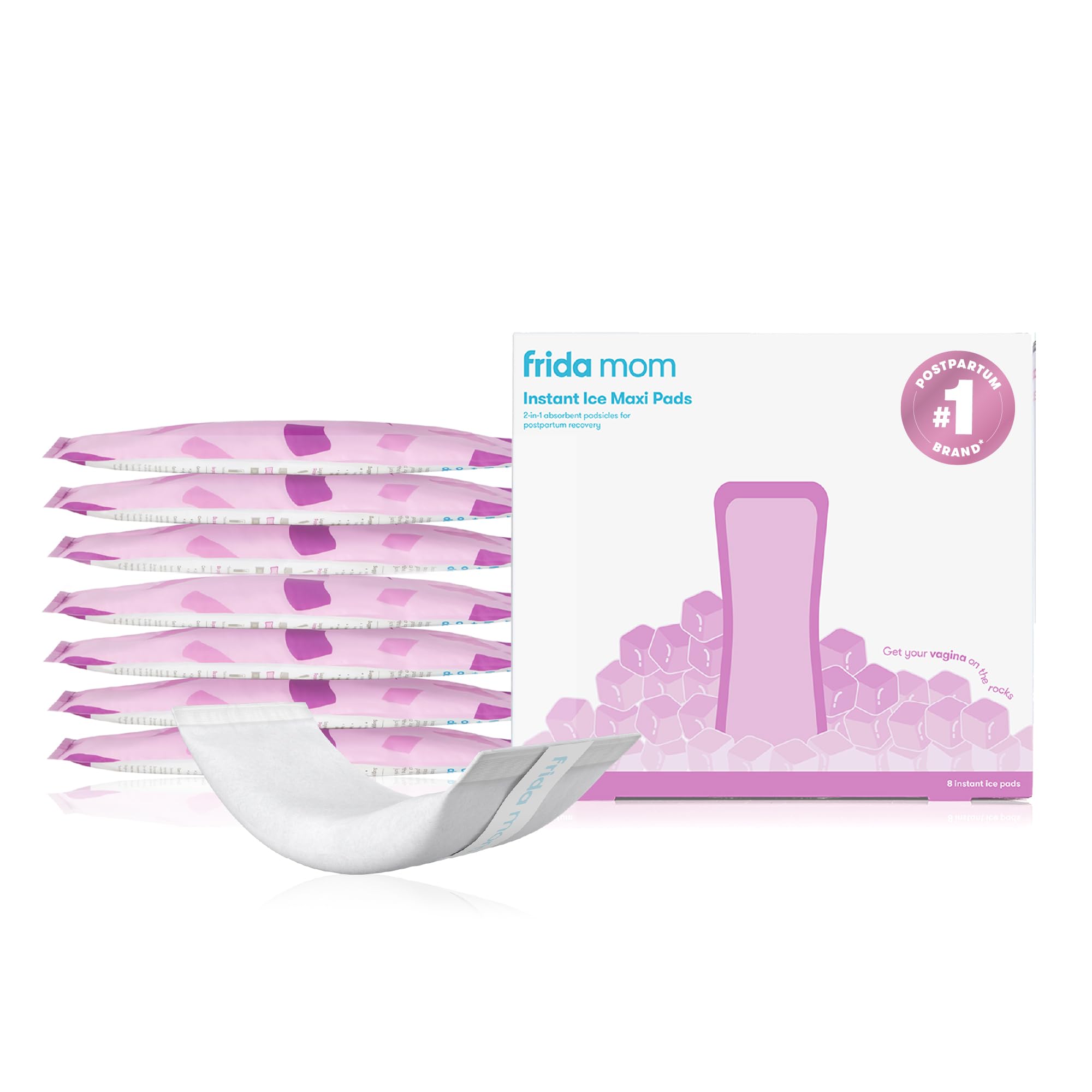
Frida Mom 2-in-1 Postpartum Pads
Key Features
- Format: Ice pack and maxi pad in one piece
- Cooling: Soothing cool, not freezer cold
- Absorbency: 9.17 oz
- Price: Midrange
What makes these worth buying is not the cold — it is that you do not have to hold anything in place. The cold pack and the maxi pad are one piece, so there is no gripping a bag of frozen peas with one hand while a pad slides sideways with the other. In the first week home, when a trip to the bathroom is an expedition, that single design decision is the whole purchase.
The absorbency is the part that impressed us most. It is rated at 260 grams, which is maternity-pad territory rather than liner territory, so you are not layering a second pad underneath and undoing the point of the design. The cold itself is a soothing coolness rather than freezer cold, closer to a cool cloth than an ice pack, and we think that is the right call against tissue that is already raw and swollen.
What it does not do is last. The chill fades well before you are ready to get up, and the pad is thick enough to announce itself under leggings. We accept both as the price of one-piece convenience for the first few days, because this is a product for the acute phase rather than two weeks of cold therapy. When you want sustained cold and something thinner, a reusable gel pack in a cover does that job better.
Pros
- No juggling a separate pad and ice pack
- 260 grams of absorbency for the heaviest days
- Gentle cool rather than freezer cold
Cons
- Bulky under close-fitting clothes
- Single use, with no refreezing
The one we hand to anyone packing a hospital bag: cold and heavy-duty absorbency in a single piece, with nothing to hold in place at three in the morning.
Best for Reusable Daily Relief
Gentlepak Reusable Perineal Paks
Key Features
- Color: Black
- Therapy: Hot or cold
- Pack contents: 2 gel paks and 2 covers
- Cover material: Washable terry cloth
- Price: Midrange
Terry cloth rather than a plastic sleeve is the detail that decides whether a gel pack gets worn or tolerated. The covers here sit between the frozen pak and your skin, so you get cold without the shock of bare plastic against stitches, and they are soft enough that you stop noticing them after a minute or two.
The paks stay bendable straight out of the freezer, which matters more than it sounds. A stiff pack rocks against a perineal tear when you sit; these follow the shape instead. They work hot as well, for the cramping that arrives with feeds, and the black covers do not look like medical equipment if they are sitting out next to the changing table.
As the reusable set we recommend first, this is the pair we point people toward when they want to stop buying disposables. Our one reservation is the seams — a gel pack that splits is a mess nobody needs near a stitch line, so squeeze each one after it comes out of the freezer and follow the microwave directions exactly when you heat them. The two-pack math is the other argument: one is always cold while the other is in use, which is the real reason to own a set rather than a single pack.
Pros
- Soft terry covers buffer the cold
- Bendable even straight from the freezer
- Hot and cold therapy in one set
- Reusable, so no repeat buying
Cons
- Covers need laundering between uses
Our pick for anyone who wants cold therapy without a bin full of disposables — the soft terry covers are what make these wearable against stitches.
Best for Discreet under Clothes
Lansinoh Hot & Cold Postpartum Pads
Key Features
- Profile: Slim and flexible
- Therapy: Hot or cold
- Pack contents: 2 reusable gel pads
- Session length: 20 minutes
- Price: Midrange
Thin is the entire pitch here. Where the all-in-one ice pads are thick enough to change how you sit, these are slim gel pads that lie flat inside underwear and stay put — under leggings, under a dress, under whatever you are wearing to the first pediatric appointment. The gel beads shift a little as you move, which gives a gentle pressure over a sore spot instead of a hard lump.
For anyone who wants reusable cold without the bulk, this is the pair that makes the most sense, and the hot setting earns its place when the afterpains hit during a feed. Sessions are short by design — 20 minutes, or as your physician directs — and with only two pads in the pack, one is always in the freezer while the other is on. That rotation works; it just leaves no room for a spare.
One caveat worth flagging is the seam. Gel packs live hard lives in a freezer, and these can split along an edge after repeated freezing, so give each one a squeeze before use and retire anything that is weeping. Check them and they will carry you well past the first month, into the period cramps that follow.
Pros
- Slim enough to disappear under clothes
- Gel beads give gentle pressure when sitting
- Works hot for afterpains
Cons
- Only two pads per pack
- Cold fades before the session ends
Buy these when bulk is what bothers you: they sit flat under leggings, and the gel beads add gentle pressure where it helps.
Best for Hygiene Between Uses
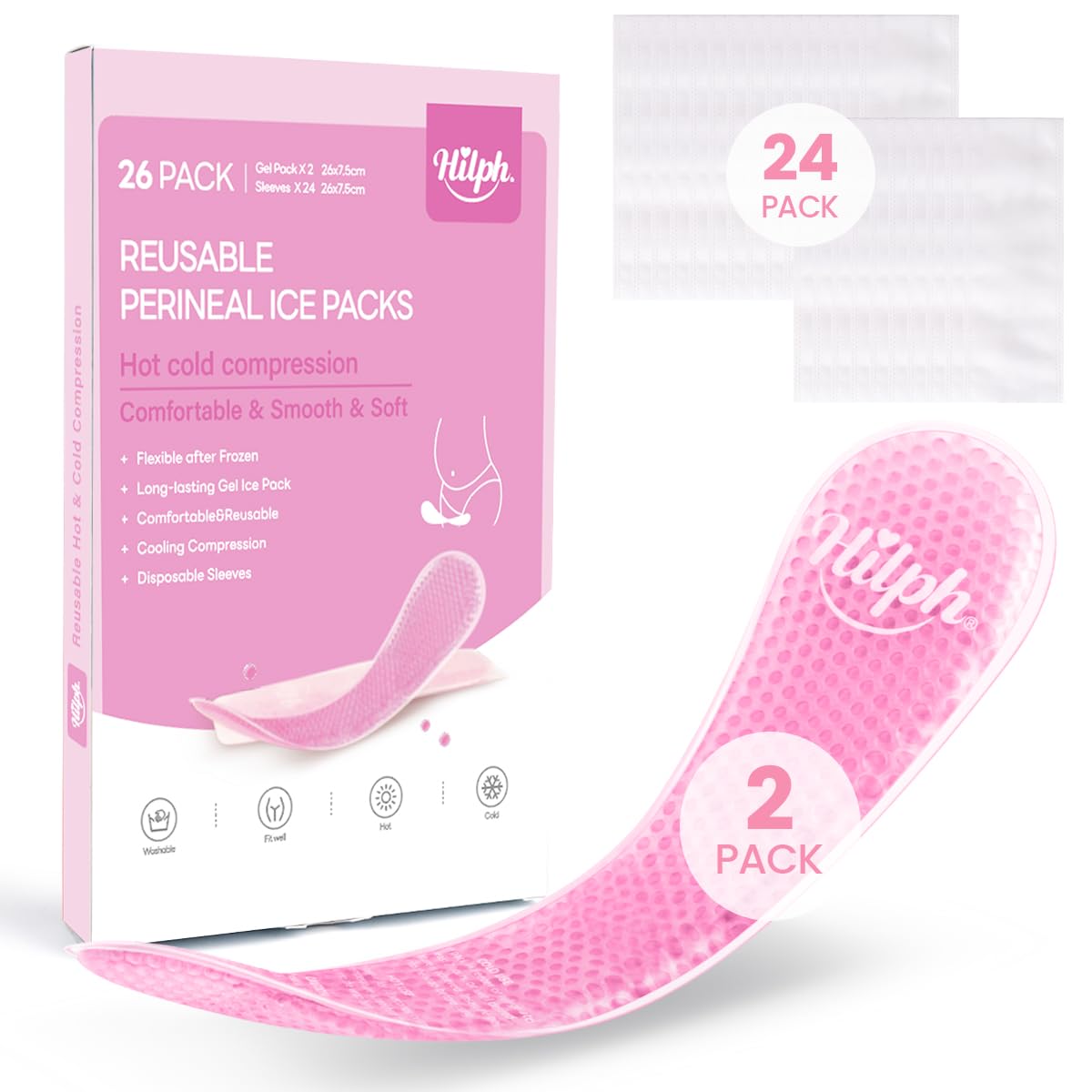
Hilph Perineal Ice Packs
Key Features
- Therapy: Hot or cold
- Freeze time: At least 2 hours
- Pack contents: 2 pads and 24 sleeves
- Price: Budget
Twenty-four disposable sleeves is the detail that makes this set worth owning. Slide the frozen pack into a fresh non-woven sleeve and you have a clean barrier against skin every time, with no wash in between — which, in a week when the laundry pile has already won, is worth more than it sounds. If hygiene is the priority rather than thinness, this is the set to start with.
The shape is the second good thing about it: slim, contoured, and long enough to sit where it needs to without wandering when you stand. The sleeves are soft, closer to cloth than the papery covers on some packs, and the whole assembly stays put when you tuck it into underwear, which is more than we can say for a bare gel pack.
Cold fades within a session, as it does with most packs this size, and a seam can give way after repeated freezing, so squeeze the pack each time it comes out. Two hours in the freezer is also the minimum before the first use, so this is not something to order on the way home from the hospital — get it frozen before your due date and it will be ready when you are.
Pros
- Twenty-four sleeves keep every use clean
- Soft sleeves, not papery covers
- Slim contoured shape stays in place
Cons
- Needs two hours in the freezer
- Sleeves are disposable and run out
The sleeves sell it — twenty-four of them mean no daily laundry, and the pack itself is soft enough to sit against a tear.
Best for Budget First Weeks
Dr. Talbot’s Postpartum Ice Pads
Key Features
- Coverage: Full-coverage design
- Activation: Fold, pop, shake
- Pack contents: 8 individually wrapped pads
- Price: Budget
Same fold, pop, and stick routine as the Frida pads, sold for less. That is the honest one-line case, and it is a good one if you are stocking up rather than buying a single pack: you fold until you hear the pop, shake, and press it into your underwear, and the cold arrives before you have made it back to the sofa.
The full-coverage shape is the part we appreciate most. It runs long enough to cover a stitch line without wedging itself into a lump, and each pad is individually wrapped, which makes them easy to drop into a bag for the first outing. They are absorbent enough behind the cold for the heavy days, and the adhesive holds when you are up and moving.
Think of these as the value route into instant pads, with one expectation to set. The cooling is mild and brief, as it is with most disposables of this type, so keep the next one within reach rather than waiting for the current one to make a comeback. An eight-pack goes quickly in the first week. Less money up front and a box in reserve — that is the trade, and it is a fair one.
Pros
- Individually wrapped for a hospital bag
- Full-coverage shape past the stitch line
- Costs less than the top pick
Cons
- Only eight pads in a box
A sensible way to keep instant ice pads in the house for less than the top pick, with the same fold, pop, and stick routine.
Best for Cheapest Reusable Set
HI FINE CARE Perineal Cooling Pad

Key Features
- Therapy: Freezer or microwave
- Pad size: 7.87 x 5.91 x 0.39 inches
- Pack contents: 2 gel packs and 2 covers
- Price: Budget
The least expensive of the reusable pairs here, and the smallest. Two packs, two washable covers, and a gel that works from the freezer or the microwave, with a contoured shape built for the perineal area rather than a rectangle you fold to fit.
We think these earn their place as the second pair in the rotation — the ones that live in the freezer for backup, or the set to buy when money is tight and you still want reusable cold. The contoured shape sits where it should, the covers take the bite off a fresh freeze, and the slim profile means you are not rearranging yourself every time you stand up.
Two things worth knowing before you buy. The gel freezes solid, so give it a minute on the counter — or let the cover do the work — before it goes anywhere near stitches. And the coverage is on the narrow side: it sits over the perineal area rather than running front to back, which is fine for a backup pair and thin for an only set.
Pros
- Least expensive reusable pair here
- Washable covers included
- Contoured to stay put
Cons
- Seams can fail after repeated freezing
A cheap second pair for the freezer — best treated as a backup rather than the set you rely on for two weeks.
Best for No-Ice Cooling
The Honey Pot Cooling Herbal Pads

Key Features
- Count: 48 pads
- Cooling: Herbal, menthol-tinged
- Testing: Gynecologist and dermatologist tested
- Price: Premium
There is no cold pack in this one, and that is the first thing to be clear about. The Honey Pot pads cool with herbs rather than temperature — botanical and menthol-tinged, icy for a few minutes and then settled — so they help with the feeling of rawness without doing what ice does for swelling. On day three with a tear, that is not the same job.
What they are is a very good pad. Forty-eight of them, absorbent enough for a heavy flow, gynecologist and dermatologist tested, and formulated without fragrance, pesticides, or chlorine. The surface is soft, the fit is slim, and the cooling is pleasant in a way that is hard to describe without sounding strange — a minty freshness rather than a medical chill.
The sting is the catch, almost literally. Menthol on freshly stitched tissue can burn before it soothes, and the sensation is strong at the start, closer to a menthol rub than a floral pad. If your skin runs sensitive or you are still in the first days of healing, try one pad before committing to a whole day of them.
Where these earn their place is the second week, when the acute swelling has passed and you want to feel fresh rather than frozen. Forty-eight pads will outlast a recovery and roll straight into your next period, which is more than most things in a postpartum kit can say.
Pros
- Cooling without a cold pack
- Forty-eight pads per pack
- Tested for sensitive skin
Cons
- Menthol can sting tender or stitched skin
- No real cold therapy for swelling
A genuinely pleasant pad with herbal cooling; buy it for the second week, when freshness matters more than ice.
How We Tested the Best Postpartum Padsicles
We started by reading hospital discharge guides and registry lists, then sifting the reviews on the options that kept coming up, narrowing by material, whether a pad arrived ready to freeze or had to be built, cost per use, and how easy it was to reorder. Anything with vague ingredients or a pattern of leak complaints got cut. That left 14 options across three formats — reusable gel packs, pre-frozen disposable pads, and kits you assemble yourself — which a panel of testers used over three months, most of them through their first eight weeks postpartum.
Every option went into the same freezer, and we timed how long it took to go from room temperature to fully frozen, plus how much shelf space a full box ate up. Once frozen, testers wore each one and set a timer to see how long the cold actually lasted, noting when it stopped being soothing and started feeling like cold and damp against stitches.
We also tracked the things you notice at 3 a.m.: whether the pad stayed put when you sat down, stood up, walked the hallway, or slept on your side; whether it bunched, crinkled, or showed a ridge under leggings; and whether the seams held. Reusable versions went through five wash cycles so we could watch for splitting or gel seeping out. We smelled each one out of the wrapper and again after freezing, noting whether the scent faded, lingered, or turned sharp. Last, we worked out cost per use — a cheap box that leaks is expensive, and a pricier pad you’d happily wear all day usually isn’t.
How to Choose Padsicles and Perineal Cold Packs
The real decision is simpler than the shelf suggests: an all-in-one disposable pad, or a reusable gel pack you keep in the freezer and pair with a pad of your own.
All-in-one disposables versus reusable gel packs
Only one type does both jobs in a single piece. The instant ice pads here, from Frida and Dr. Talbot’s, have the absorbent core built in, so you activate one and put it on. Gel packs — Lansinoh, Gentlepak, Hilph, HI FINE CARE — do cold better and thinner, but they absorb nothing: you wear one with a maternity pad, which is a second purchase and a second thing to position.
That is the trap to avoid. A gel pack is a cold pack, not a sanitary pad, so buy a bag of heavy pads alongside it and expect to use both. If you want one object to deal with at three in the morning, pay for the all-in-one.
How long the cold lasts, and how many packs you need
Every product here fades. Instant pads give a burst of cool that eases off within a session; gel packs come out properly cold and warm up over a similar stretch. That is normal, and it is the argument for two packs rather than one: while you wear one, the other refreezes.
Check the refreeze time before you rely on it — Hilph asks for at least two hours in the freezer, so a single pack means waiting. Sessions stay short, around 20 minutes as the packs direct, with a break before the next one.
Thickness, length, and what you wear over it
Ice pads are bulky, and that is physics rather than a flaw: a cold pack plus an absorbent core is a thick object, and under leggings it reads as one. Gel packs are slim enough to disappear, which is why the Lansinoh pair suits an actual outfit rather than a dressing gown.
Length matters as much as thickness. You want coverage that runs past the stitch line, and a small pack sits exactly where you put it and nowhere else. For the first outing with a newborn, thin and long beats thick and cold.
Covers, sleeves, and cleaning
A layer between frozen gel and skin is not optional. Direct cold on numb, swollen tissue is unpleasant at best, so look for terry covers or disposable sleeves; the reusable sets here all include one or the other. Covers go in the wash, sleeves go in the bin.
Check the seams every time. A split pack leaks beads or gel, and that is not something you want near stitches. Never cut, tear, or crush an instant cold pack either — if the contents reach skin, flush with water and call your physician.
Herbal cooling pads are a different product
The Honey Pot pads cool with menthol-tinged botanicals rather than temperature. That is a real and pleasant sensation when you want to feel fresh, and no help at all with swelling — it is a pad with a cooling effect, not cold therapy. On stitched or angry tissue, menthol can sting before it soothes.
Our advice is to treat them as the second-week option, or as the pad you would buy anyway with a bonus, rather than a replacement for ice in the first days.
Frequently Asked Questions
Can I make padsicles at home instead of buying them?
Yes, and it is cheap. Take a heavy overnight pad, add a tablespoon or two of witch hazel and a little aloe gel, fold it, and freeze it flat in a zip bag.
Two things matter: do not saturate the pad, because a soggy pad absorbs nothing, and freeze it flat so it keeps its shape instead of becoming a lump. Make them in batches and store them flat.
Can I use these for hemorrhoids or after a C-section?
Yes. The reusable gel packs here are sold for hemorrhoids as much as for birth recovery, and their flat shape suits a C-section better than anything you tuck into underwear — lay one across the incision area instead.
Keep cold for a fresh incision, and save heat for cramping and afterpains.
Cold or hot — which setting do I use?
Cold goes on the perineum: swelling, tears, stitches, hemorrhoids. Heat is for afterpains and uterine cramping, which tend to arrive during feeds.
Every reusable pack here does both — freezer for cold, microwave for heat, following the maker’s timing exactly. Overheat a gel pack and it can burst, so set a timer rather than guessing.
Final Verdict
Buy the Frida Mom 2-in-1 pads for the first days. Nothing else here solves the whole problem at once: cold and heavy-duty absorbency in a single piece, with no pad to layer and nothing to hold in place while you shuffle down the hall.
Once the acute phase passes, the Gentlepak set is our pick for reusable cold, with covers that feel gentle on stitches and two paks so one is always ready. If cost decides it, Dr. Talbot’s runs the same fold-and-pop routine for less.
