This post contains affiliate links. We may earn a small commission when you buy through our links — at no extra cost to you.
Nobody warns you that the first pad you’re handed after delivery is roughly the size of a paperback. It’s also, somehow, never the one you want to be wearing a week later. Postpartum bleeding doesn’t keep a tidy schedule — heavy and clotty for a few days, then closer to a long period — and the pad that felt fine on day two can feel like a diaper by day ten. What you want is something that absorbs fast, stays where you put it, and doesn’t leave tender, stitched skin hot and damp by afternoon.
I went through 16 options over four months — the tail end of pregnancy, the first weeks after delivery, and the periods that followed — with a few other new parents testing alongside me. Two things surprised me: thickness has almost nothing to do with absorbency, and the backing matters as much as the core. A wide adhesive patch holds firm in loose mesh underwear; a narrow one bunches the moment you sit. Here’s what earned a spot in the bathroom basket.


Best for First Two Weeks
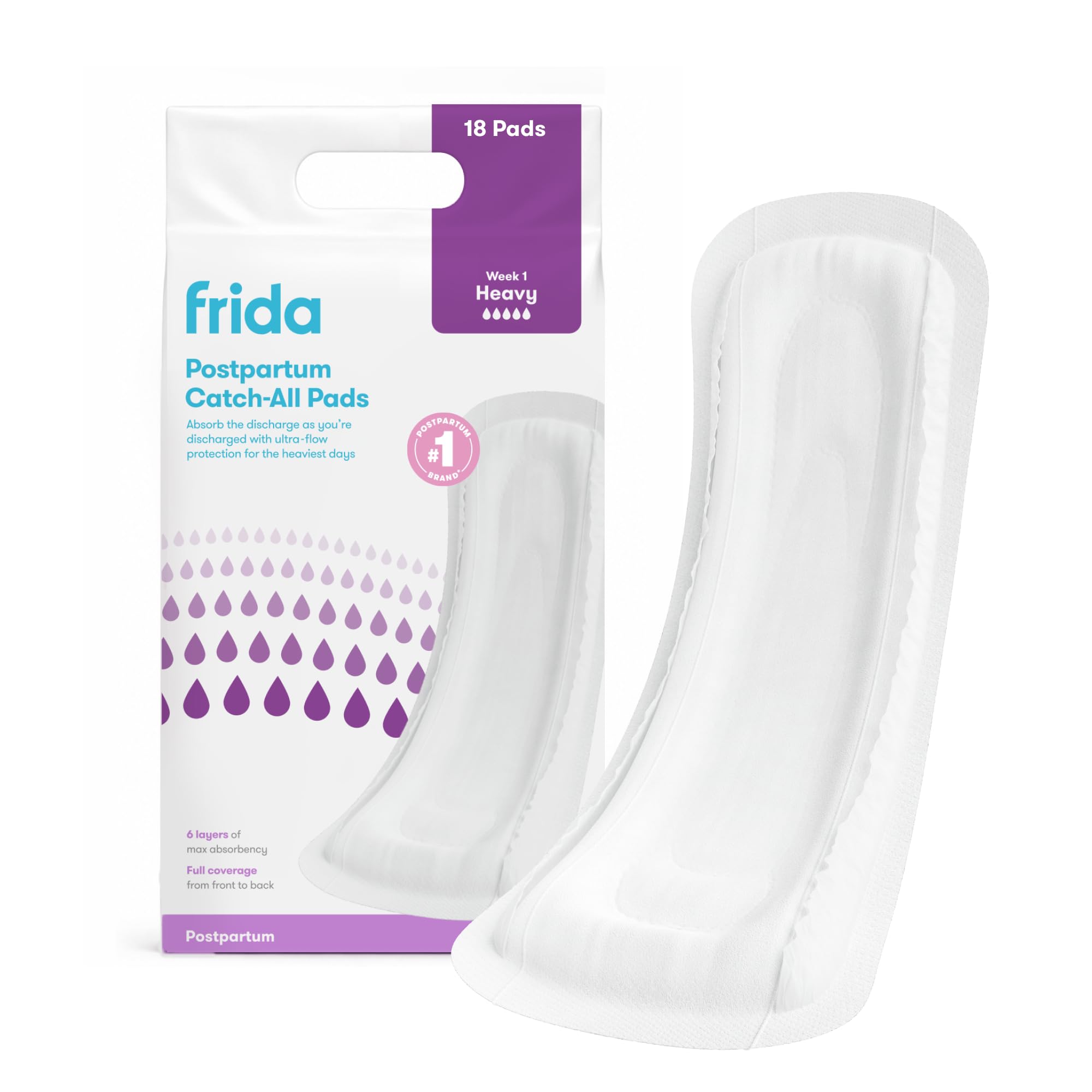
Frida Postpartum Pads
Key Features
- Layers: 6
- Backing: Waterproof
- Side walls: Raised
- Designed for: First 1–2 weeks after birth
- Price: Budget
The first two weeks after birth are their own kind of bleeding: heavier than most periods, less predictable, and often still going when you’re far too tired to be strategic about it. Frida built this pad for exactly that window, and it shows in the parts that matter — a body longer than a standard maxi, raised side walls that channel fluid inward toward the core instead of letting it run for the edges, and a waterproof backing between you and the sheets.
That combination is why it’s our top pick here. Front-to-back coverage and side walls do more for a heavy, unpredictable flow at three in the morning than a bigger absorbency number on the front of the pack, and the six-layer build holds a good deal before the surface feels wet. It’s a maternity pad first and a period pad second, and that ordering shows in the shape.
We didn’t find it discreet, and nothing built like this is. It’s thick, it shows under fitted clothes, and you’ll be aware of it when you sit down. What you get in exchange is the confidence to sleep on your back without putting a towel down first. The adhesive strip grips mesh disposable underwear and ordinary cotton briefs equally well, which is not true of every pad here.
The one real complaint is how quickly a pack goes. At the change rate of the first week you’ll be through it in days, which makes it a poor thing to buy one pack of. Take it to the hospital and through the first stretch, then pair it with a bigger, cheaper box for the fortnight after that.
Pros
- Front-to-back coverage with raised side walls
- Waterproof backing protects sheets and underwear
- Built for the first one to two weeks after birth
Cons
- A pack is gone within days
Our pick for the first two weeks after birth: raised side walls, front-to-back coverage, and a waterproof backing that hold up to heavy, unpredictable postpartum flow.
Best for Heaviest Early Days
Lil-Lets Postpartum Maxi Pads
Key Features
- Scent: Fragrance-free
- Wings: Yes
- Length: 36.5cm/14.4 inches
- Pack count: 30 (3 packs of 10)
- Price: Midrange
At 36.5cm, or 14.4 inches, the Lil-Lets maternity pad is the only one in this group that states how far it actually reaches — and it reaches a long way, front to back with room past the rear seam. That length is why it’s our pick for the heaviest early days, when the flow is at its least predictable and coverage counts for more than a number on the box.
The rest of the design holds up. The core is deep and cushioned rather than papery, the pad is contoured so it sits close instead of creasing, and there’s no perfume or dye anywhere in it — worth having when you’re sore and changing every couple of hours. Thirty pads arrive as three packs of ten, each one folded and individually wrapped. That sounds like a small thing; it isn’t when you’re reaching one-handed for a pad in a hospital bathroom at four in the morning.
Bulk is the trade. Fourteen inches of absorbent core does not disappear under leggings, and the cushioning that makes it comfortable makes it visible, so if you’re back in normal clothes early this is a pad you dress around. It’s also genuinely heavy-duty, which means that by the second week it will feel like more than you need. Leave the last pack sealed for a future heavy period rather than forcing your way through it.
Pros
- Stated 36.5cm length covers front to back
- Fragrance-free and dye-free for sore skin
- Individually wrapped for hospital bags
Cons
- Bulky under close-fitting clothes
Buy this one if you want the longest pad here and a bundle that reaches the back seam — our pick for the heaviest, least predictable early days.
Best for Overnight Backup
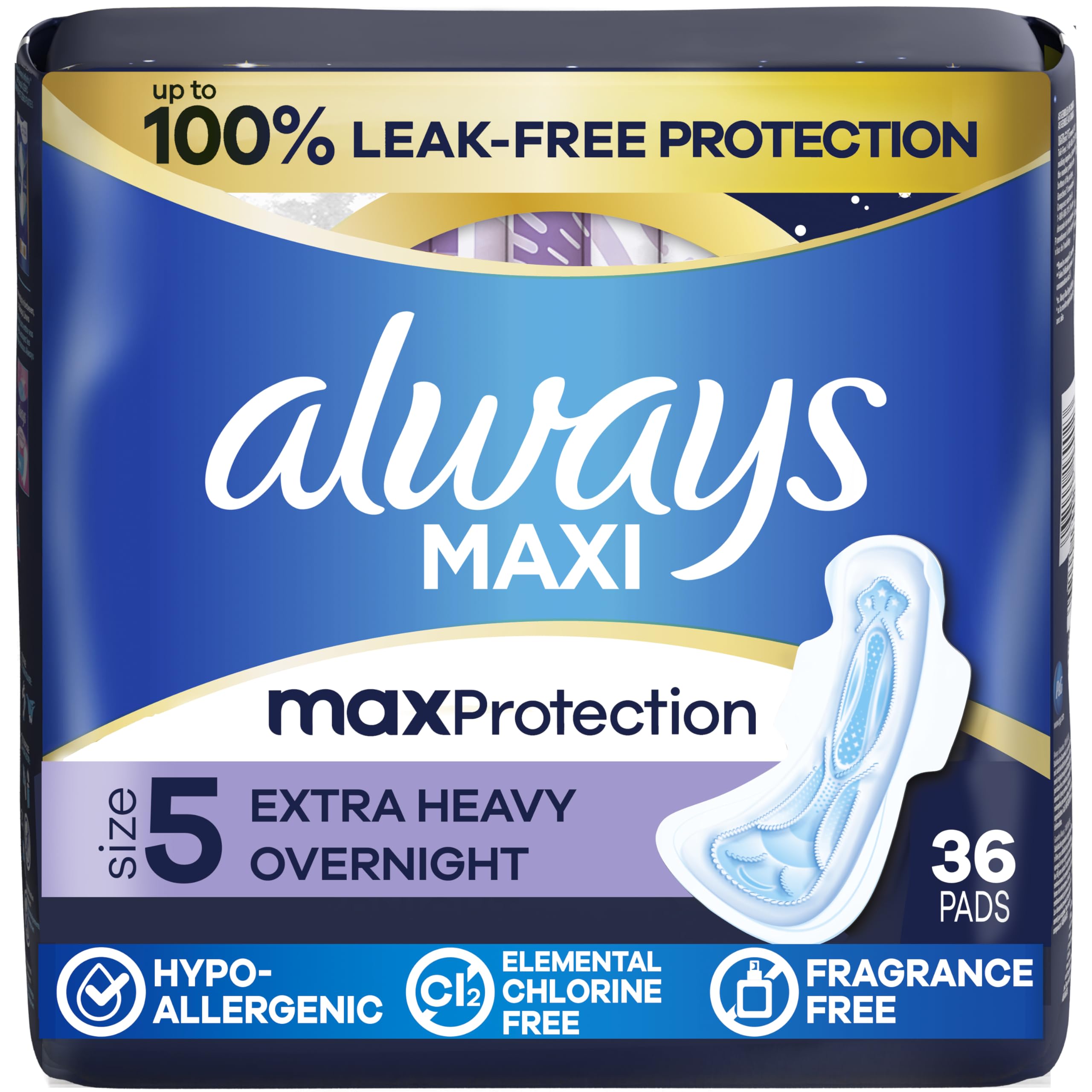
Always Maxi Overnight Size 5
Key Features
- Size: 5
- Count: 36
- Scent: Unscented
- Absorbency: Extra heavy overnight
- Price: Budget
Most pads in this guide were designed for birth and priced accordingly. Always’s Size 5 overnight maxi is the one you can send someone out for at ten at night: a heavy-duty period pad, on the shelf at supermarkets and corner shops, that handles postpartum flow at period-pad prices.
Absorbency is the strong part. The RapidDRY layer takes a gush quickly instead of letting it pool on the surface, and the LeakGUARD core holds it — which is what you want in the first week, when standing up after an hour of sitting is its own event. The pad is long and wide enough to feel like coverage rather than a compromise, and the wings keep it anchored through a night of turning over.
The wings are also the fussy bit. They run large, and on narrow underwear they crease and lift at the edge, so the pad shifts when you move. Snug, high-waisted cotton briefs hold them far better than loose ones or mesh, and if you’re living in disposable underwear for the first days, expect to re-seat the pad each time you stand up.
That’s why it works as backup rather than as the pad you plan a recovery around. Buy a box for the bathroom and one for the car, use it between the purpose-built maternity pads and the lighter pads of week three, and you’ll never be caught short. Few pads here are easier to restock in a hurry.
Pros
- RapidDRY handles a sudden heavy gush
- LeakGUARD core for overnight flow
- Familiar winged maxi that stays anchored overnight
Cons
- Not shaped specifically for postpartum recovery
The box to keep in the bathroom and the car: heavy overnight absorbency, easy to restock anywhere, and a sensible second layer of supply rather than your main pad.
Best for Very Heavy Flow
Abena Premium Maternity Pads
Key Features
- Count: 15
- Backing: Breathable waterproof textile
- Top sheet: Soft, dermatologically tested
- Absorbency: Super
- Price: Midrange
Abena’s maternity pads look like hospital issue, and that’s the recommendation. They’re wide, thick, and flat rather than sculpted, with a soft topsheet, a breathable waterproof textile backing, and an adhesive strip that holds them in your own underwear. The fluff core carries absorbent polymers, so it takes a lot of fluid before the surface feels wet, and the whole thing is dermatologically tested with a Nordic Eco label and FSC-certified fluff behind it.
For the first few days, that bulk is exactly what we want. When you’re lying down most of the day and the flow is at its heaviest, a wide flat pad with a real backing beats a slimmer contoured one, and this is the shape that feels closest to what the hospital hands you. The catch is the box: fifteen pads, which at early change rates is a few days’ supply. Buy two packs for the worst of it, then move down to something lighter.
Pros
- Wide, thick core for very heavy flow
- Breathable waterproof textile backing
- Nordic Eco label and FSC-certified fluff
Cons
- Only 15 pads per pack
- Thick enough to show under clothes
Wide, flat, hospital-style maternity pads that keep up when the flow is at its worst — buy two packs for the first few days and nothing else.
Best for Bulk Stock-Up
Amazon Basics Thick Maxi Pads
Key Features
- Count: 192 (4 packs of 48)
- Thickness: Thick
- Absorbency: Super
- Protection: Up to 8 hours
- Price: Midrange
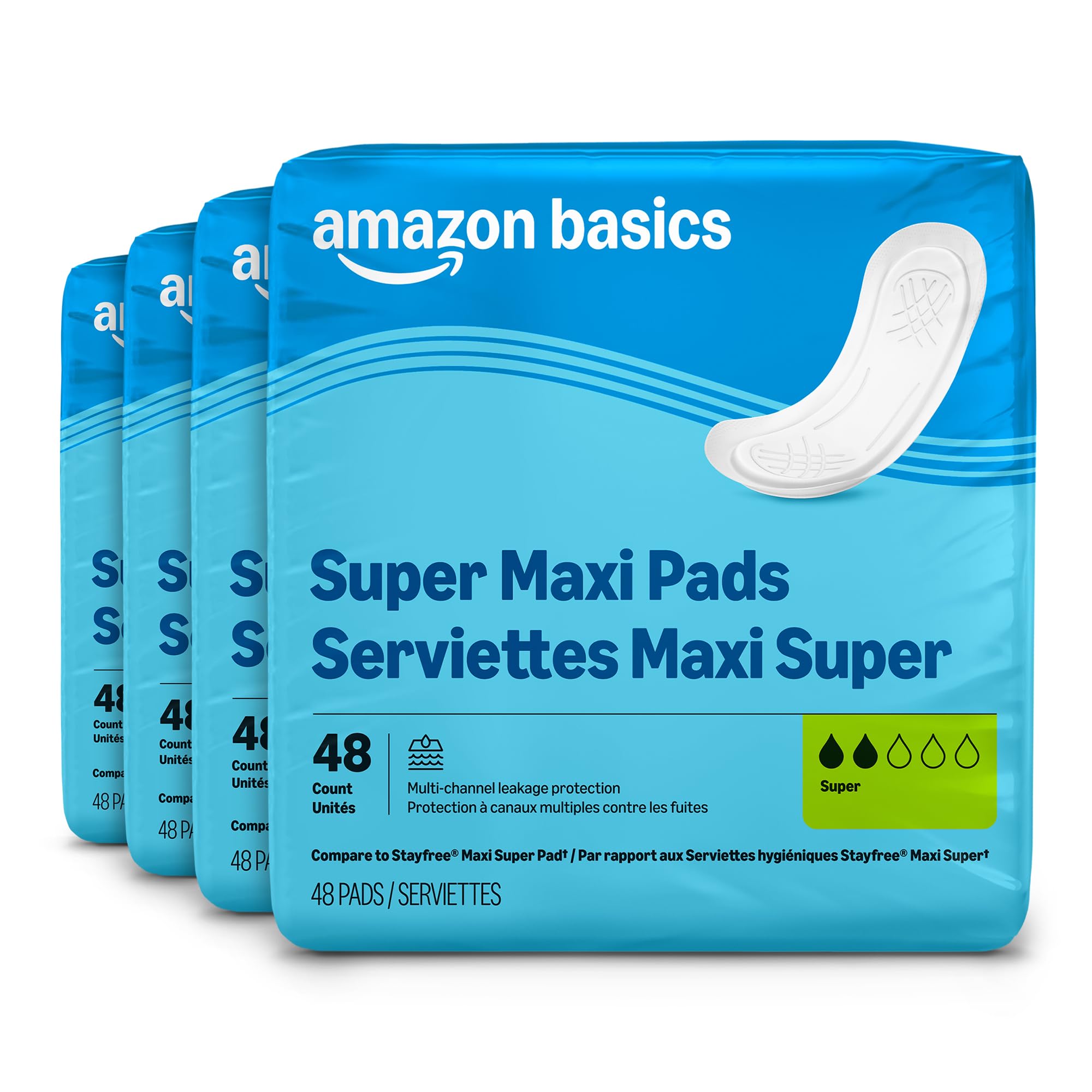
One hundred and ninety-two pads sounds absurd until you price out the first fortnight. Four packs of 48 thick, super-absorbency maxis, unscented, at a per-pad cost nothing else here gets close to — that arithmetic is why this is our bulk pick, and why it’s the wrong buy if you want to try one pad before committing to a cupboard full.
What arrives is a plain, old-fashioned maxi. The core is thick and takes a lot, the outer layers are breathable, there’s an odor guard, and the stated protection runs to eight hours — optimistic, but not fantasy on a lighter day. It’s not a postpartum-shaped pad, so it does its best work once the heaviest days are behind you, and as spare supply in every room you might need one.
Buy it as infrastructure rather than as your best pad. Two of the four packs live in the bathroom, one in the bedroom, one in the car, and you stop thinking about whether you have enough — which in the first month is worth more than the difference between a good pad and a great one. Keep the purpose-built maternity pads for the first week, when coverage actually matters, and let these carry the rest.
Pros
- 192 pads in a single order
- Thick, super-absorbent core with odor guard
- Up to 8 hours of stated protection
Cons
- Adhesive can tear thin underwear
- Thickness varies between pads
Our bulk pick: 192 thick, absorbent pads at a per-pad cost nothing else here approaches, best used from week two onward and stashed everywhere.
Best for Sensitive Skin
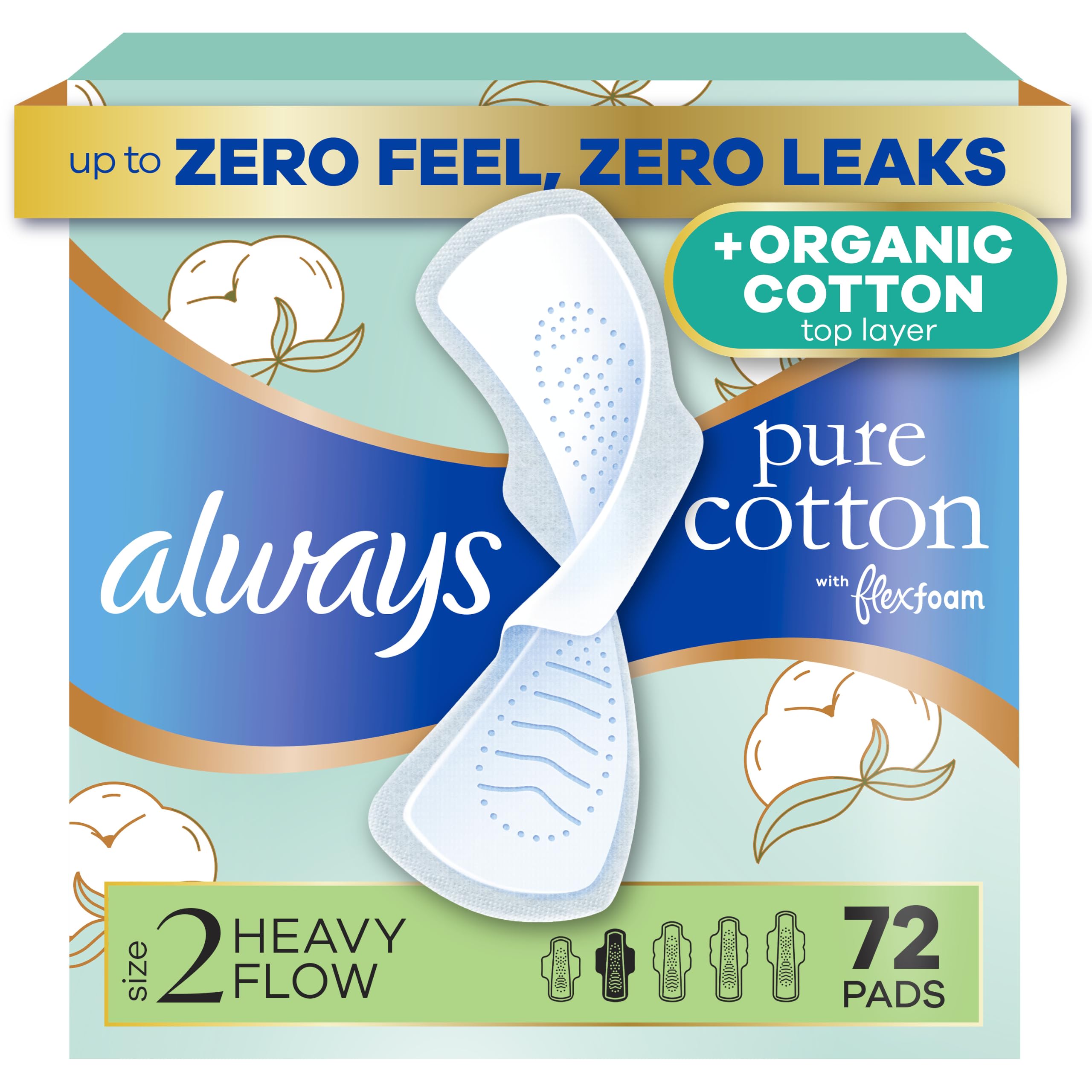
Always Pure Cotton Size 2
Key Features
- Size: 2
- Count: 72
- Top layer: Organic cotton
- Absorbency: Heavy
- Price: Premium
Size 2 heavy is the wrong pad for the first three days after birth. It’s the right one for the week after that, when the flow eases but a liner still feels like a gamble — and it’s the one to reach for if the standard maxi topsheet left you itchy, sore, or both.
The organic cotton top layer is the whole point. It feels soft rather than plasticky, and the flexfoam core keeps the pad thin enough to wear under jeans without the pillow silhouette. Between the cotton and the unscented build, it’s the one we hand to anyone whose skin has objected to everything else — no chafing, no rash, no awareness of it by mid-afternoon.
What it isn’t is a bargain. Seventy-two pads at a premium price is a real outlay, and you’re paying for the cotton rather than for capacity: a Size 2 heavy simply doesn’t hold what a maternity pad holds. If your skin is fine with ordinary pads, the Always overnight box or the Amazon Basics bulk pack does more for less. If it isn’t, this is the pad we point you to.
Pros
- Organic cotton top layer, gentle on sensitive skin
- Thin flexfoam core stays discreet
- 72 pads per box
Cons
- Size 2 heavy is too light for the first days
The cotton pad we point people to when standard topsheets leave skin itchy — just not until the heaviest days are behind you.
Best for Organic, Lighter Flow
Cora Organic Cotton Overnight Pads

Key Features
- Count: 48
- Top sheet: 100% organic cotton
- Protection: Up to 10 hours
- Back coverage: Extra
- Price: Premium
Cora asks a lot for a pad, and what it gives back is a 100 percent organic cotton topsheet, a hypoallergenic build, and a cushiony, almost cloth-like feel that never reads as plastic against the skin. If your skin is the limiting factor after birth — stitches, general soreness, a reaction to a standard topsheet — that’s not a small thing to be able to buy.
As a first-week pad, though, it sits in the middle of this group. The stated ten hours of protection and the extra coverage at the back are real, and the side channels contain leaks better than the flat design suggests, but it’s a period-shaped overnight pad rather than a maternity one, and on the heaviest nights it isn’t the one we reach for.
Where it earns its place is the taper and everything after. From about the second week, softness matters more than another inch of coverage, and this is the pad that makes getting back into normal clothes feel normal. We also like that the cotton is genuinely the point rather than a marketing line — you can feel the difference on the first wear. Buy a box for the weeks after, not for the days immediately after.
Pros
- 100% organic cotton topsheet
- Soft, cushiony feel without a plastic layer
- Side channels help contain leaks
Cons
- Shorter than a maternity pad for heavy nights
- Costs more than the drugstore maxis
Worth the premium if organic cotton against your skin is the priority — buy it for the taper and afterwards, not the first heavy nights.
How We Tested Postpartum Maxi Pads
We started with the pads that show up over and over on hospital-bag lists, registry checklists, and new-parent forums, then filtered by what’s actually printed on the box: length, absorbency rating, whether the top layer is cotton or a synthetic blend, whether there are wings, and cost per pad rather than cost per box. That left 16 options, ranging from drugstore multi-packs to boxes you have to order online.
Testing ran four months, beginning in the last weeks of pregnancy and continuing through the first six weeks postpartum and the periods that followed. Every pad was worn through at least one overnight, a long stretch on the couch, a walk around the block, and an outing where changing wasn’t convenient. We wore each for a minimum of four hours, then sat, stood, laughed, and lay down to see whether it moved.
Absorbency we checked two ways: wearing each pad, and pouring a measured amount of water onto a fresh one to see how long the surface stayed wet before a pressed tissue came away dry. We noted whether the top layer felt scratchy against stitches, whether the pad turned warm and clammy after an hour under a blanket, and whether cooling or witch hazel versions soothed sore tissue or just tingled. Adhesive got tested in both loose mesh underwear and regular briefs, with notes on bunching and torn wings. We measured length and thickness ourselves, since listed sizes vary, worked out cost per pad and how far one box realistically gets you, and noted which ones came individually wrapped for the hospital bag.
How to Choose Postpartum Maxi Pads
The pad that works in the first three days is not the pad that works in the third week, so the useful question isn’t which one is best — it’s which ones to have in the house at each stage.
Buy for the stage, not the whole recovery
Postpartum bleeding changes shape fast. The first few days are heavy, clotted, and unpredictable and usually want a purpose-built maternity pad: long, wide, with a waterproof backing. By the end of the first week most people are down to an extra-heavy overnight maxi, and by the third a heavy-flow period pad is plenty.
Buying one product in bulk to cover all three stages is the mistake we see most. Two packs of maternity pads, a box of overnight maxis, and a box of thinner pads will carry you through without leaving you with forty pads you can’t stand wearing.
Length and back coverage beat absorbency labels
At night the flow runs backward rather than down, so how far the pad reaches matters more than how much it holds. A pad that states its length is easier to buy blind; the Lil-Lets maternity pad tells you it’s 36.5cm, long enough to sit past the back seam. Raised side walls do the same job sideways, steering fluid toward the core instead of the edge.
Look for a waterproof backing too. It’s the difference between changing a pad at 3 a.m. and changing the sheets at 3 a.m., and none of the thin period pads here have one.
Wings, adhesive, and what you’re sticking them to
A pad’s grip depends as much on the underwear as on the glue. Mesh disposable briefs give the adhesive a lot of surface but stretch as you move; snug cotton holds firm but can bunch a long pad at the front. Wings help with both, though wide wings crease on a narrow gusset.
If you plan to live in disposable underwear for the first days, pair a long pad with a full-length adhesive strip. If you’re staying in your own briefs, check the wing width before committing to a box.
Thickness, breathability, and sore skin
Thick pads do two jobs at once: they hold more and they cushion. They also trap heat and show under anything fitted. If you had stitches or your skin reacts easily, start with a cotton or fragrance-free topsheet rather than the thickest pad on the shelf, and save the heavy shapes for when absorbency outranks everything else.
One trap: size numbers and the word maxi aren’t standardized. A Size 5 in one line is not a Size 5 in another, so compare stated lengths and pack counts instead of trusting the number on the box.
Frequently Asked Questions
How many postpartum pads should I have ready before the baby arrives?
Changes come every few hours at first, so a 30- to 36-count pack of long maternity pads lasts roughly four or five days. Most people do well with two packs of the heavy maternity pads, a box of extra-heavy overnight maxis for week two, and something thinner for the taper.
If you’d rather not think about it again, a bulk box of 192 covers the whole recovery and then some, but buy one small pack of the heavy pads first so you know you like the shape.
How often should I change a pad after giving birth?
Every time you go to the bathroom in the first few days, and immediately after any soak-through even if the pad still has room in it. Frequent changing is as much about keeping the area clean around stitches as it is about absorbency.
If you’re soaking a pad within an hour, that’s a call to your midwife or doctor rather than a reason to buy a thicker pad.
Can I keep using maternity pads for heavy periods later?
Yes, and the leftovers are worth keeping. The long maternity pads and extra-heavy overnight maxis do the same job as a heavy-flow period pad, and plenty of people find their first few periods after birth are heavier than they used to be.
Store them somewhere dry. Individually wrapped pads keep for a long time; loose ones pick up lint and lose their adhesive.
Final Verdict
Frida Mom’s postpartum pads are our default for the first stretch after birth: long, side-walled, waterproof-backed, and shaped for the flow you actually have in those two weeks. The Lil-Lets bundle is the pick if you want a longer stated pad with more in the box, and the Amazon Basics 192-count is the one to buy if you’d rather not think about reordering.
Whichever you choose, keep a thin cotton pad for the taper. By week three you won’t want the bulk, and that’s the point at which most people stop shopping and start improvising.
