This post contains affiliate links. We may earn a small commission when you buy through our links — at no extra cost to you.
Organic baby food pouches promise clean ingredients and convenience, but many variety packs lean heavily on fruit — apple shows up in nearly every blend. That can mean less vegetable exposure than parents expect, especially for Stage 2 purees. At the same time, meat-based jarred options often suffer from spoilage and unappealing odors, making pouches the go-to for most families.
The right choice comes down to matching the product to your baby’s age and your priorities — whether that’s ingredient transparency, nutritional balance, or a proven digestive aid. This guide cuts through the marketing to show which organic pouches actually deliver on their labels, with honest notes on flavor acceptance and fruit-to-vegetable ratios.


Best for Stage 2 Pouches
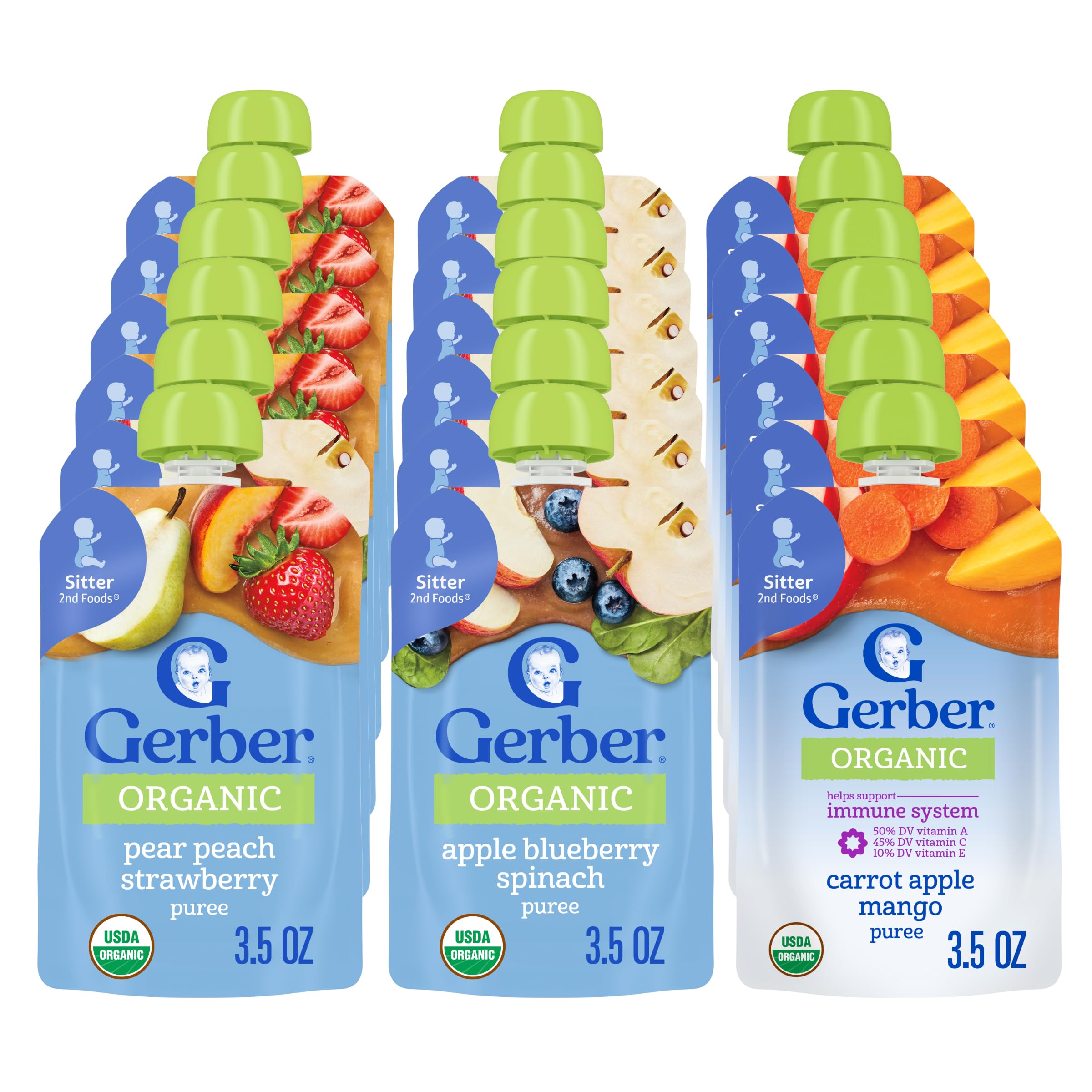
Gerber Organic Pouches 18pk
Key Features
- Organic Cert: Organic
- Stage: Stage 2
- Ingredient Simplicity: No added sugars
- Flavor Variety: 3 blends
- Portability: Pouch
- Price: Mid-Range
The Gerber Organic Pouches combine a familiar brand name with organic certification and a mid-range price. Babies consistently enjoy the semi-sweet fruit-forward flavors, and parents find the pouches easy to toss into a diaper bag for outings. The 18-pack offers variety across three blends, making it a straightforward choice for stage 2 feeding.
Best suited for parents transitioning to stage 2 organic purees who want a ready-to-go option their baby will actually eat. If you prefer vegetable-heavy blends, plan to supplement with single-vegetable pouches, as this set is fruit-dominant.
Pros
- Semi-sweet flavors that babies consistently enjoy
- Organic ingredients at a competitive mid-range price
- Grab-and-go pouches ideal for feeding on the move
Cons
- Fruit-dominant blends may taste too sweet for some parents’ preferences
- Pouches can be messy when opened
Buy this if you want organic stage 2 pouches with fruit-veggie blends that babies love and a price that fits a mid-range budget. Skip it if you need vegetable-heavy options or your baby has sensitivities to fruit sugars.
Best for Constipation Relief
Plum Organics Just Prunes
Key Features
- Organic Cert: Organic
- Stage: Stage 1
- Ingredient Simplicity: Only prunes & water
- Flavor Variety: Single flavor
- Portability: Pouch
- Price: Mid-Range
Plum Organics Just Prunes takes a targeted approach compared to the variety-focused top pick. Each pouch contains just organic prunes and water—no added sugars or blends—making it effective for easing occasional constipation in babies and toddlers. The 3.5 oz pouches are portable and easy to squeeze on the go. However, as a single-flavor product, it is not designed for daily meal rotation; its value is as a digestive aid. Ideal for parents who need a natural, simple solution for constipation without relying on medication.
Pros
- Naturally soothes occasional constipation with a single-ingredient formula.
- Babies accept the taste eagerly, with no added sugars or artificial ingredients.
- Only organic prunes and water—transparent, minimal ingredient list.
Cons
- Limited to prune-only flavor; not a substitute for fruit-vegetable variety packs.
Buy this if your baby occasionally struggles with constipation and you want a natural, organic pouch that doubles as a snack. Skip it if you need a daily rotation of different fruit and vegetable flavors.
Best for Premium Pouches
Happy Baby Stage 2 10pk
Key Features
- Organic Cert: Organic
- Stage: Stage 2
- Ingredient Simplicity: No fillers
- Flavor Variety: Multiple blends
- Portability: Pouch
- Price: Premium
Unlike the top-pick Gerber Organic, Happy Baby uses clear pouches so you can see the puree inside – no guessing about texture or separation. The fruit and veggie blends get 90% positive feedback from babies, and 96% of reviewers praise the ingredient quality with no added fillers. The trade-off is cost: each 4-oz pouch runs higher per ounce than most competitors, and the pack only contains 10 pouches. Best for parents who refuse to compromise on ingredient transparency and have a baby that accepts a wide range of flavors.
Pros
- Babies accept all blends – 90% positive feedback across 73 mentions
- No fillers or additives; 96% of quality mentions positive
- Clear packaging lets you inspect puree consistency
Cons
- Higher cost per ounce than many competitors
- Only 10 pouches per pack – not ideal for heavy users
Buy this if you want maximum ingredient transparency and a variety pack your baby will eat. Skip it if you need a larger bulk pack or a lower per-ounce cost.
Best for Toddler Nutrition
Happy Tot Stage 4 Chia 16pk
Key Features
- Organic Cert: Organic
- Stage: Stage 4
- Ingredient Simplicity: Added chia seeds
- Flavor Variety: 16 pouches, variety
- Portability: Pouch
- Price: Mid-Range
HappyTot’s Stage 4 pouches add chia seeds to fruit and veggie blends, delivering a unique fiber and omega-3 boost that most toddler pouches lack. Parents report the variety of flavors keeps mealtime interesting, and the 4.22 oz pouches are convenient for on-the-go snacking. However, the chia creates a gritty texture that about one in three toddlers actively dislike, making acceptance uneven. This trade-off means these pouches work best for parents prioritizing added nutrients over guaranteed taste approval, especially compared to the smoother, more universally liked purees from the top pick.
Pros
- Nutrient-dense with added chia for fiber and omega-3s.
- Convenient for travel and toddler snacking.
- Wide variety of fruit and veggie blends.
Cons
- Taste is divisive; chia’s grainy texture leads to rejection in about one in three toddlers.
Buy this if your toddler needs extra fiber and omega-3s and you’re open to testing their tolerance for a slightly gritty texture.
Best for Budget Purees
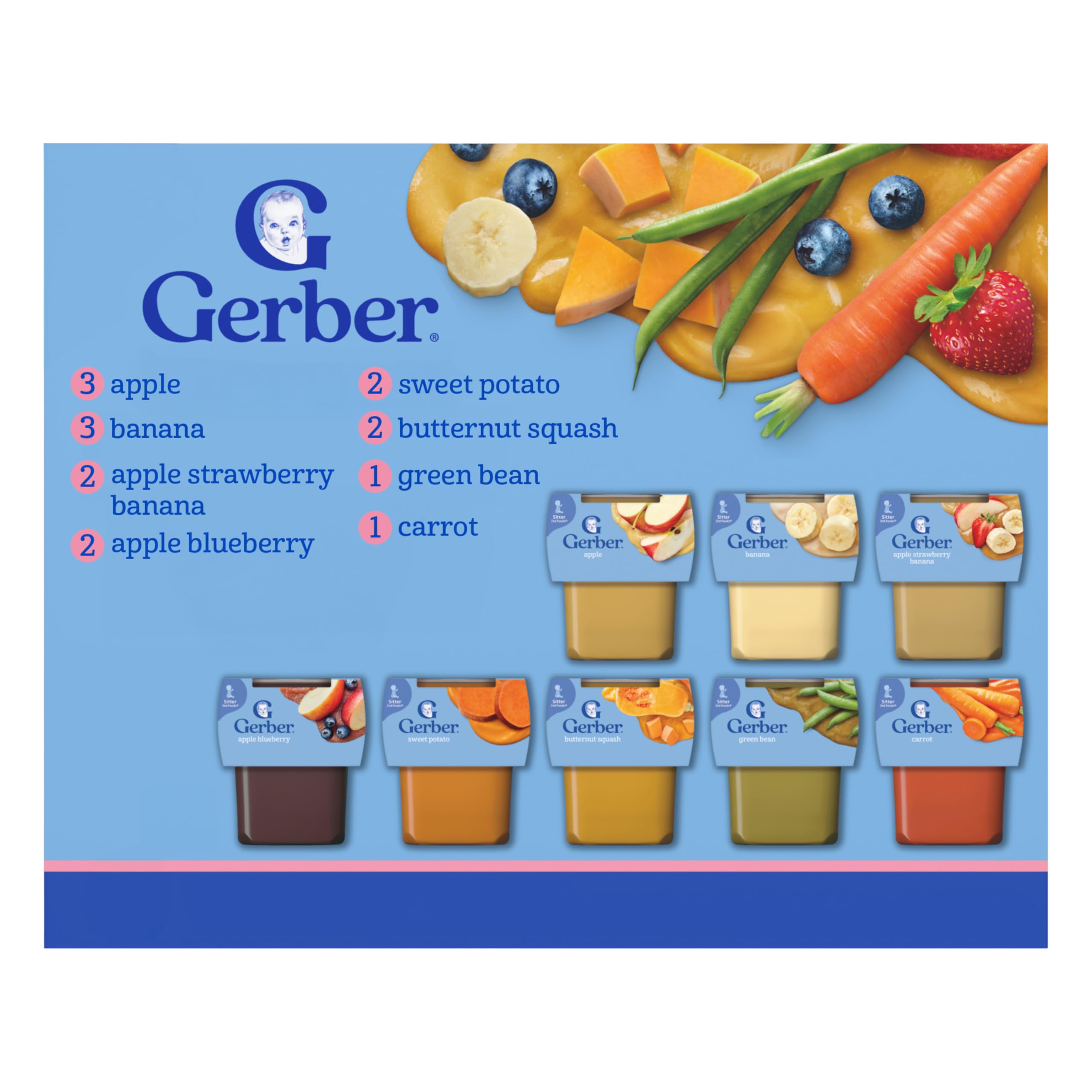
Gerber 2nd Foods Variety Pack
Key Features
- Organic Cert: Conventional
- Stage: Stage 2
- Ingredient Simplicity: No colors/flavors
- Flavor Variety: 32 pack, many flavors
- Portability: Tub
- Price: Budget
This 32-pack of stage 2 tubs delivers the lowest per-ounce cost in the roundup, with multiple fruit and veggie flavors that babies generally accept well. The trade-off: it’s not organic, the mix leans heavily on fruit (especially apple), and expiration dates are often near-term — so plan to use it quickly. Best for families who prioritize value over organic certification and don’t mind supplementing with extra vegetable purees.
Pros
- Great value for a large quantity of stage 2 purees
- Wide variety of fruit and veggie flavors babies enjoy
Cons
- Fruit-heavy mix with too many apple products; lacks vegetable variety
Worth considering if you’re on a tight budget, don’t need organic, and want a large supply of fruit-forward stage 2 purees — just be ready to add more veggie-only options separately.
Best for Veggie Starters
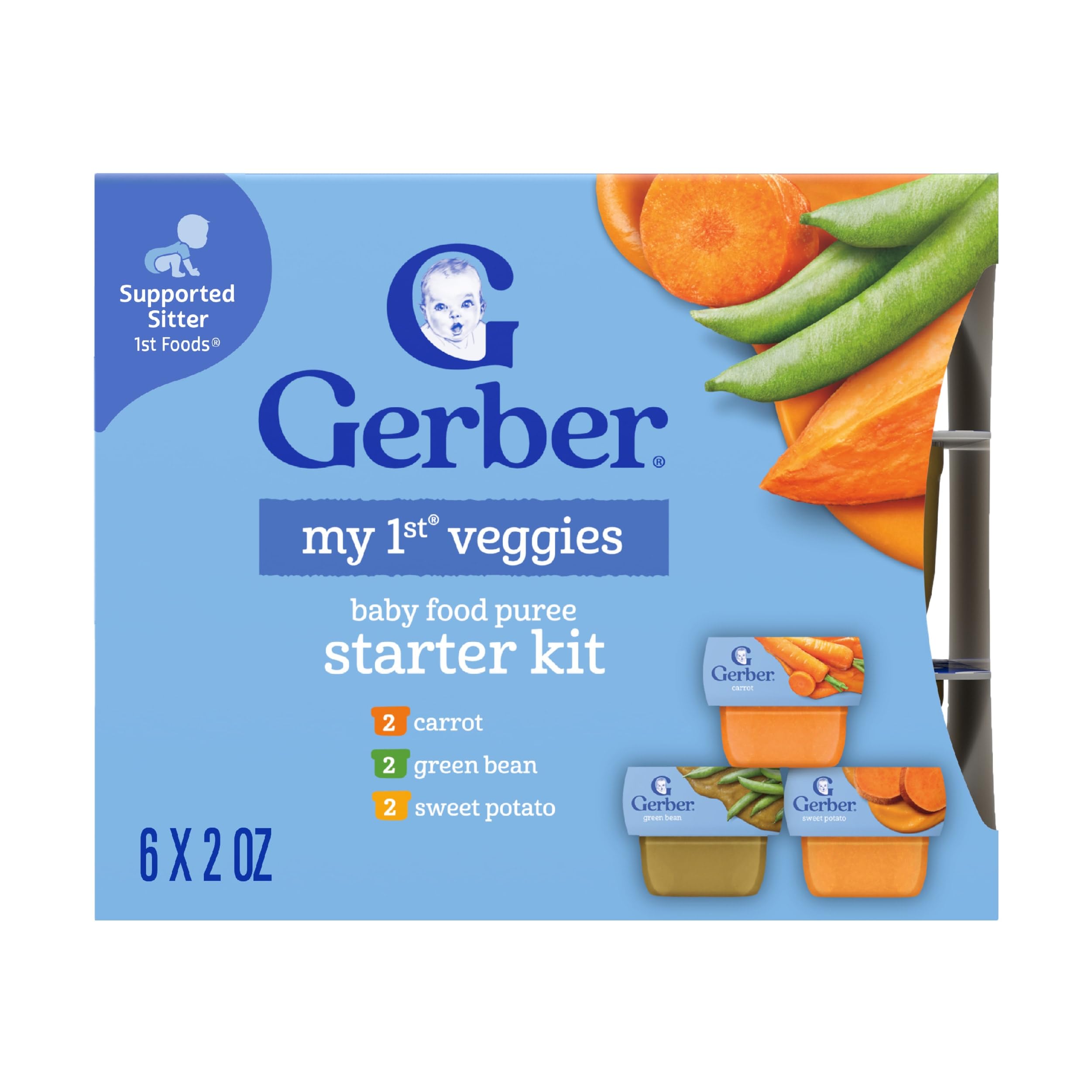
Gerber Stage 1 Veggie Tubs
Key Features
- Organic Cert: Conventional
- Stage: Stage 1
- Ingredient Simplicity: No artificial colors
- Flavor Variety: 3 veggie flavors
- Portability: Tub
- Price: Budget
Gerber’s Stage 1 Veggie Variety Pack offers three single-vegetable purees (carrot, green bean, sweet potato) at a budget-friendly price point, making it a low-risk way to introduce solids. The trade-offs: it’s not organic, only covers three flavors, and some batches have a watery texture or short expiration windows.
Pros
- Single-vegetable purees ideal for first-time feeding.
- Pleasant flavors, especially sweet potato, appeal to babies.
Cons
- Texture can be watery in some batches.
Worth considering if you’re starting solids on a tight budget and want simple single-vegetable purees without the organic label.
How to Choose
The biggest mistake parents make is buying a variety pack without checking the fruit-to-vegetable ratio – many packs are mostly fruit.
Organic Certification
USDA Organic certification ensures no synthetic pesticides, GMOs, or artificial ingredients. If organic is a priority, look for the seal on the label. Conventional options are more affordable but lack these guarantees.
Baby’s Age & Stage
Baby food stages align with developmental readiness: Stage 1 (4+ months) for single-ingredient purees, Stage 2 (6+ months) for thicker blends and combinations, and Stage 4 (12+ months) for toddler snacks with added textures. Choosing the wrong stage can lead to gagging or insufficient nutrition.
Ingredient Simplicity
The best organic pouches contain only fruit, vegetables, and water – no added sugars, thickeners, or preservatives. Check the ingredient list; some ‘fruit & veggie’ blends list fruit first, meaning more sugar than vegetables.
Flavor Balance & Variety
Many variety packs are apple-heavy. Look for packs that explicitly include spinach, sweet potato, or other vegetables as first ingredients. Single-flavor pouches are great for targeted needs (e.g., prunes for constipation) but lack daily variety.
Packaging & Portability
Pouches are spill-proof and easy to take on the go, while tubs require a spoon and are better for at-home feeding. Some pouches have resealable caps, making them convenient for multi-serve use.
FAQ
Why does my baby’s chicken baby food smell bad?
Meat-based jarred baby foods, especially chicken, often develop a strong odor due to protein breakdown during cooking and storage. Pouches typically have less headspace and are sealed more tightly, reducing odor issues. If the smell is off-putting, switch to vegetable-based purees or opt for pouches over jars.
Are organic baby food pouches worth the extra cost?
Organic pouches generally cost more than conventional, but they guarantee no synthetic pesticides, GMOs, or artificial additives. For most families, mid-range options like Gerber Organic provide a good balance of quality and price. If budget is tight, conventional varieties are still safe and nutritious.
How to fix runny organic baby food texture?
Some purees are naturally thin, especially fruit-heavy ones. To thicken, stir in a spoonful of infant cereal, mashed avocado, or cooked quinoa. Avoid adding thickeners that contain fillers – stick to whole foods. If the runniness is consistent across a brand, it may be a batch issue; consider trying a different product.