This post contains affiliate links. We may earn a small commission when you buy through our links — at no extra cost to you.
Toddler snacks are one of those purchases that look simple until you’re standing in the aisle reading a label while a small person pulls at your sleeve. I want something my kid will actually eat, something I can toss in the diaper bag without it turning into crumbs, and something that won’t make me nervous about choking when we’re rushing through the park. The best options solve all three: they’re easy to hand over, easy to carry, and built for the way toddlers eat—in handfuls, on the move, and often while refusing whatever sounded good five minutes ago.
Over the past 10 weeks, I tested 14 toddler snack options with my own two-year-old and a few very opinionated toddler taste-testers, while our team checked labels, piece sizes, and value. The pattern was clear: the ones that disappeared fastest tasted good to kids and adults, held up in a snack cup, and were easy to open one-handed. Cuteness helped at first, but it didn’t save a bland cracker. The picks below are the ones we reached for again—and the ones I’d hand to another parent without a caveat.


Best for Everyday Toddler Snacking
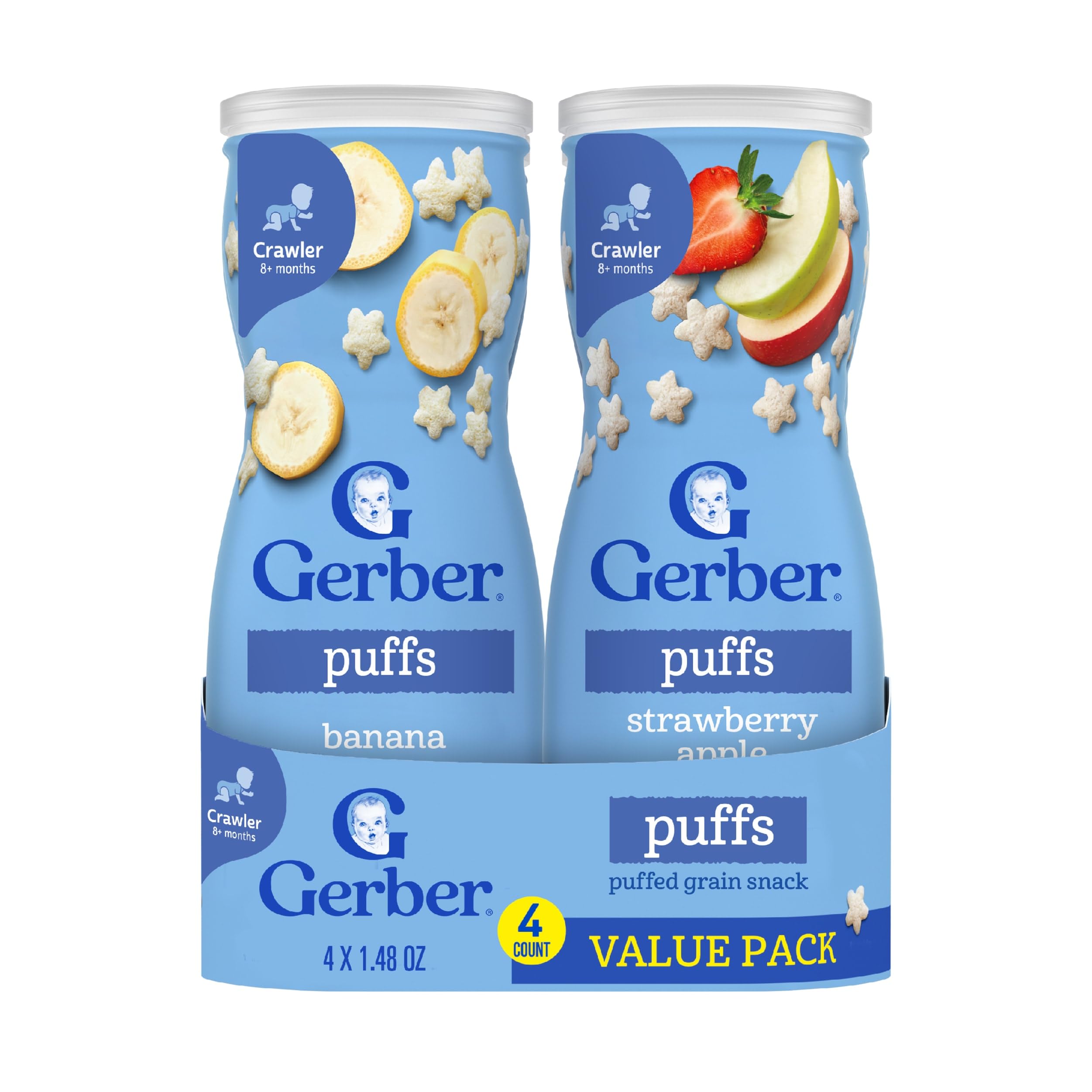
Gerber Puffs Variety Pack
Key Features
- Stage: Stage 3, 8 months+
- Texture: Easy-to-grab puffs
- Pack size: 8 packs
- Key nutrients: 6 vitamins and minerals
- Price: Midrange
Gerber Puffs are the snack we reach for when a toddler needs something to do with their hands and their new teeth. The puffs are stage 3 for 8 months and older, and they dissolve quickly enough that a new self-feeder can manage them. Each serving brings 6 vitamins and minerals, including iron and choline, which makes them more useful than a plain crunch. That combination is why they’re our top pick.
The variety pack is the practical part. You get eight packs across banana and strawberry apple, so there’s a flavor change without a new shopping decision. We tucked a pack in the diaper bag and kept another in the pantry, and the puffs held up without turning into dust. They’re also easy for small hands to pick up, which matters when your toddler wants to do it themselves.
The trade-off is that puffs are a light snack, not a meal. A very hungry toddler may need a pouch or yogurt alongside them, and they cost more per pack than the pouch multipacks here. But for the in-between moments—the wait before dinner, the snack cup on the coffee table, the bottom of the diaper bag—they’re the low-drama choice. One small plus: they leave less mess than crumbly wafers, which is its own kind of win.
Pros
- Dissolve quickly for early chewers
- Easy for small hands to pick up
- Iron and choline in every serving
- Eight-pack variety simplifies restocking
Cons
- Costs more per pack than pouch picks
We recommend Gerber Puffs as the everyday toddler snack because they dissolve quickly, are easy for small hands to grab, and add iron and choline.
Best for Produce-Forward Pouches
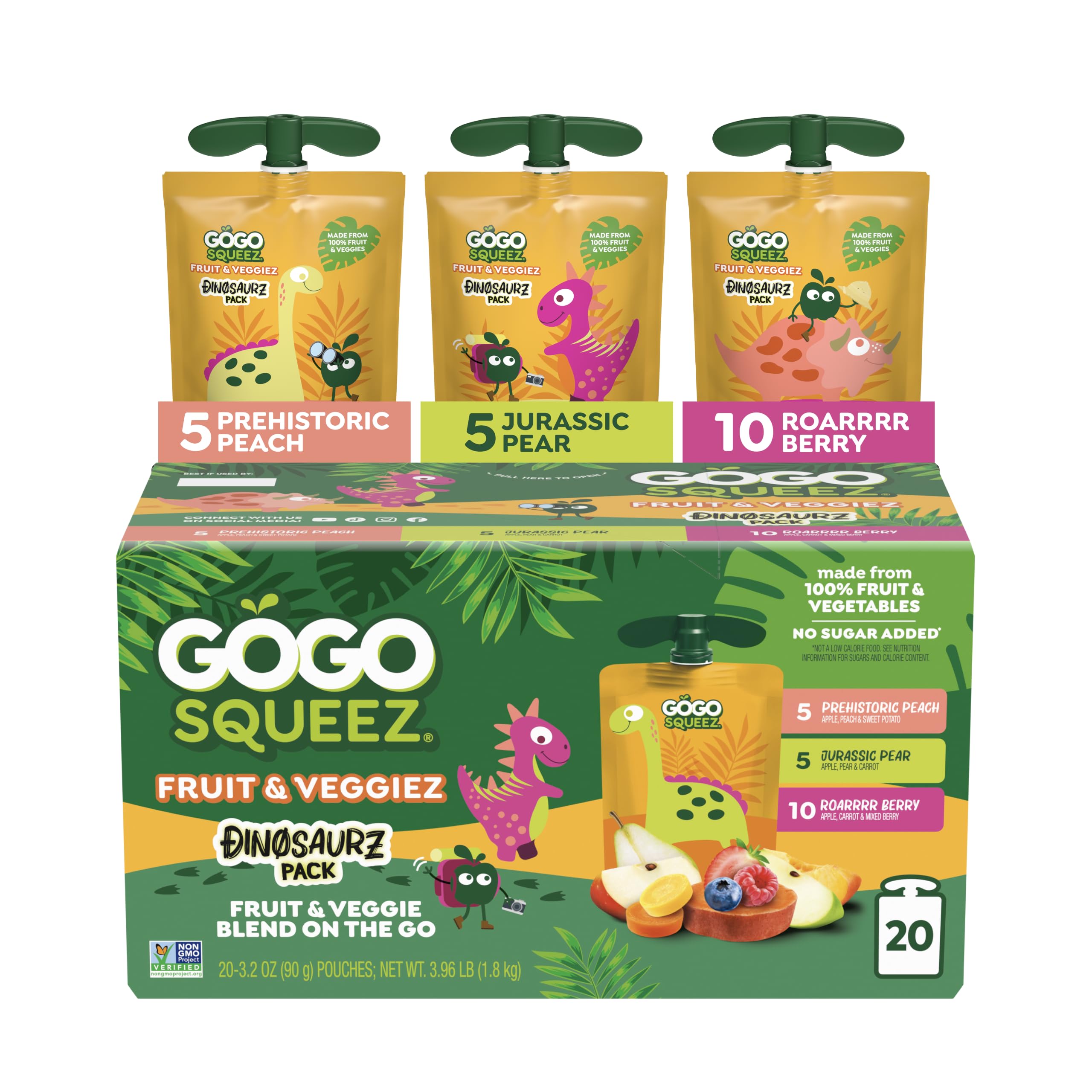
GoGo squeeZ Fruit & VeggieZ
Key Features
- Storage: Shelf-stable until opened
- Pack size: 20 pouches
- Added sugar: No added sugar
- Produce blend: Apples, pears, peaches, carrots, berries
- Price: Budget
GoGo squeeZ’s Jurassic fruit and veggie pouches are built for the lunchbox: a shelf-stable pouch, a no-sugar-added blend, and a dinosaur on the front. The apples, pears, peaches, carrots, and berries are blended smooth, with no high-fructose corn syrup or artificial ingredients. That makes them a practical way to get a little produce into a toddler who is more interested in the package than the food.
What sold us is how little effort they take. There’s no refrigeration until the pouch is opened, so we kept a few in the pantry and a few in the car without thinking about a cooler. The 20-count box is enough to cover lunchboxes for a while, and the no-added-sugar formula means they taste like fruit rather than dessert. We also appreciate that they’re gluten-free, dairy-free, and nut-free, which simplifies packing for daycare or a playdate.
The pouches are easy to toss in a bag without a spoon or bowl, and the dinosaur packaging is a small thing that makes them feel like a treat rather than a chore. For lunchboxes and diaper bags, that’s exactly the kind of snack we want on hand.
Pros
- No added sugar or high-fructose corn syrup
- Shelf-stable and lunchbox-ready
- Fruit-and-veggie blend for picky eaters
- 20-pouch pack simplifies restocking
Cons
- Smooth pouch offers no chewing practice
GoGo squeeZ’s fruit and veggie pouches are our pick when you need shelf-stable produce for lunchboxes without added sugar.
Best for Protein-Rich Yogurt Pouches
GoGo squeeZ YogurtZ
Key Features
- Base: Cultured reduced-fat milk
- Protein: 4 g per pouch
- Storage: Shelf-stable until opened
- Pack size: 20 pouches, 3 oz each
- Price: Midrange
GoGo squeeZ YogurtZ are the rare yogurt snack that can live in the pantry until you need it. That shelf-stable convenience is why they’ve earned a spot in our snack rotation. Each 3-ounce pouch has 4 grams of protein, and the base is cultured reduced-fat milk, so it’s a more substantial bite than a fruit pouch without turning snack time into a meal.
We liked the texture: smooth and creamy, with no lumps, and the flavors are kid-friendly without tasting artificial. The pouches are also easy for older toddlers to open on their own, which is a small independence win. They’re the kind of thing we can hand over at the table without a spoon.
The 20-count box is the practical part: it’s enough to get through a few weeks of lunchboxes without a last-minute grocery run. The pouches are also a good way to add a little protein to a snack that is otherwise all carbs. They’re not the most exciting snack in the drawer, but they’re the one we trust to be there when we need it.
Pros
- 4 g protein per pouch
- Shelf-stable until opened
- Smooth, creamy texture kids accept
- 20-pouch pack is easy to restock
Cons
- Only 4 g protein; not a meal replacement
GoGo squeeZ YogurtZ are the yogurt pouch we reach for when you want shelf-stable protein without a cooler.
Best for Freeze-Dried Yogurt Snacking
Happy Baby Yogis
Key Features
- Format: Freeze-dried yogurt drops
- Texture: Melt-in-the-mouth
- Pack size: 3 packs, 1 oz each
- Certification: USDA organic
- Price: Premium
Happy Baby Yogis are tiny freeze-dried yogurt drops, the kind of snack that looks more like a treat than a pantry staple. They’re made with real organic yogurt and fruit, and the texture is designed to melt in the mouth rather than require a lot of chewing. The 3-pack comes with banana mango, mixed berry, and strawberry, so there’s a flavor change without buying three separate bags.
We found the drops light and quick to break down, which makes them a good fit for a toddler who is practicing self-feeding but still wary of crunch. The organic label and short ingredient list are reassuring, and the fruit flavors are bright without being candy-sweet. The pouches are small enough to toss in a diaper bag and come in handy when you need a treat that isn’t a cookie.
This is the pick for the toddler who wants a treat-like snack that still melts. The drops are small, and they can clump if a handful goes in at once, so we keep them for seated snacking and watch the pace. If you want a little variety in the snack drawer without opening a full pouch, they’re worth it.
Pros
- Melts quickly for self-feeders
- USDA organic with real yogurt and fruit
- Three flavors in one pack
Cons
- Small 3-pack runs out quickly
Happy Baby Yogis are the treat-like meltable snack we choose when a toddler wants something that disappears quickly.
Best for Teething Chew Practice
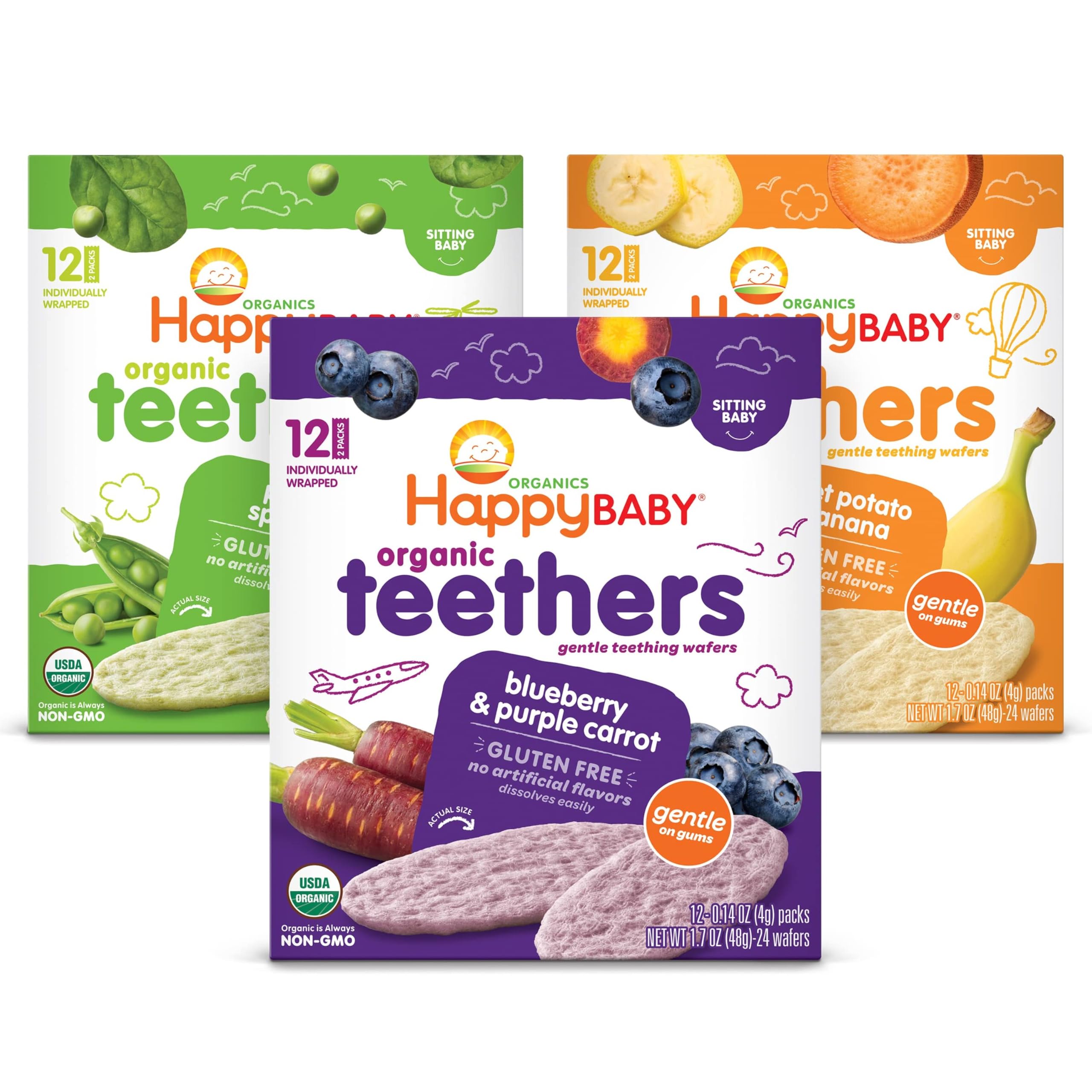
Happy Baby Teething Wafers
Key Features
- Base: Jasmine rice flour
- Texture: Easily dissolving wafer
- Pack size: 12 ct, 3 pack
- Age guidance: 18 months to 3 years
- Price: Premium
Happy Baby Gentle Teething Wafers are built for the stage when a toddler wants to bite and practice chewing, not just swallow. They’re made with jasmine rice flour and organic fruit and veggies, and they dissolve easily in the mouth. The package guidance lists 18 months to 3 years, which is narrower than the marketing’s first-snack language, so check your child’s chewing comfort before handing one over.
We think these are best as a seated teething snack, not an all-purpose toddler snack. The wafer gives a child something to hold and bite, and the three-flavor variety keeps it interesting. The organic ingredients and quick dissolve make them a gentler change from puffs for a toddler who wants more bite.
The texture is the catch: the wafers can crumble and break into small pieces, so they’re not the snack we hand over in the car or during active play. For a toddler who is already comfortable chewing and will sit at the table, they’re a nice change of pace. They’re also more of a niche pick than a pantry staple, which is fine if you want a teething tool rather than a daily snack.
Pros
- Easily dissolving rice wafer
- USDA organic ingredients
- Three-flavor variety pack
Cons
We keep Happy Baby Teething Wafers for seated teething practice, where the quick-dissolving rice wafer gives a toddler something to bite.
How We Tested Toddler Snacks
We started by scanning ingredient panels, age recommendations, package sizes, and common choking-risk notes, then narrowed the field to 14 options that ranged from puffs and melts to bars and pouches. Every snack had to be something a toddler could self-feed, and we skipped anything with a piece size or texture that made us pause. Over 10 weeks, we kept the options in regular rotation: morning snack after breakfast, the diaper-bag stash on park afternoons, the car-seat cup on errands, and the before-dinner hungry window when nothing else works.
Taste was the first filter. I watched whether my toddler reached for a second piece, spat it out, or lost interest after two bites, and I tasted each one myself so I could tell whether kid-friendly meant mild and pleasant or just sweet. Value came down to cost per serving versus how much actually got eaten—not how much came in the bag—and whether the package resealed well enough to survive a week in the diaper bag. For portability and ease of use, we packed each snack in a stroller pouch, a hard snack cup, and a zip-top bag, then checked for crushed corners, oily residue, and whether I could open it with one hand while holding a toddler.
Safety and choking resistance got a separate pass: we checked piece size against the age label, looked at whether pieces dissolved or softened with saliva, and noted any hard edges or sticky clumps that could be trouble for a still-learning chewer. Durability meant the snack itself, too—whether crackers shattered into dust, bars crumbled, or pouches held up after being squeezed into the bottom of the bag. Cuteness earned a point only when it got a toddler to try something new; it never outweighed a snack that tasted like cardboard or fell apart in transit.
How to Choose Toddler Snacks
The right toddler snack is less about the label and more about whether your child can eat it safely, comfortably, and without a fight.
Start With Texture, Not Flavor
A toddler’s chewing skills change fast, and the same snack can be perfect one month and frustrating the next. Meltable puffs and freeze-dried yogurt drops are the gentlest place to start because they break down quickly; pouches skip chewing altogether, which is convenient but not practice. Wafers sit at the other end, giving a child something to bite and work on. We look for a snack that matches the child in front of us rather than the age on the box, and we keep a backup texture in the diaper bag for the days when a new food gets refused.
Read the Nutrition Panel for What It Adds
Toddler snacks are not all the same kind of fuel. A puff can be fortified with iron and choline, a yogurt pouch can bring a few grams of protein, and a fruit pouch can add produce without added sugar. We prioritize the gap we’re trying to fill: if meals are light on protein, the GoGo squeeZ YogurtZ pouches make more sense than another fruit pouch; if the goal is a shelf-stable produce side for lunch, the fruit and veggie pouches are the better fit. Check added sugar and the actual serving size, because a snack that looks virtuous can still be mostly fruit juice and air.
Choose a Format That Fits Your Routine
The package shape decides where a snack can go. Pouches are the easiest thing to throw in a lunchbox or diaper bag, and shelf-stable yogurt pouches don’t need a cooler until they’re opened. Puffs are better for a snack cup and a toddler who wants to feed themselves, while freeze-dried drops and wafers are more of a sit-down snack. We keep a pouch in the bag for backup and a puff or wafer at home for practice. If you’re buying for daycare, check whether the room allows pouches or requires a spoonable container before you stock up.
Check Age Guidance and Supervise Every Time
Age labels on toddler snacks are not interchangeable. Gerber Puffs are stage 3 for 8 months and older, while Happy Baby’s teething wafers are labeled for 18 months to 3 years. That doesn’t mean one is better; it means you should match the snack to your child’s chewing and sitting skills. Always seat a toddler for snacks, keep the portion small, and watch for stuffing or clumping. A snack that dissolves in the mouth can still be a choking risk if a child takes too much at once.
Frequently Asked Questions
Are fruit pouches bad for a toddler’s teeth?
Pouches aren’t inherently bad, but they’re concentrated fruit sugar and easy to sip slowly. Offer one at snack time rather than letting your toddler carry it around, and follow with water. The no-added-sugar fruit and veggie pouches are a better default than a dessert pouch, but they’re still a snack, not a drink.
Do toddler snacks need to be organic?
No. Organic is a farming label, not a guarantee your child will like it or tolerate it. Texture, age guidance, added sugar, and supervision matter more. If organic is a priority for you, the Happy Baby picks here are USDA organic; if it isn’t, the conventional picks still earn their place.
How do I stop a pouch from becoming a meal replacement?
Serve pouches at a snack sitting, not as a hand-held drink all day. If your toddler is filling up on them, offer water first and keep the pouch to one snack alongside something chewable. The no-added-sugar fruit pouches are a better choice than dessert pouches, but they still shouldn’t crowd out meals.
Final Verdict
Gerber Puffs are the best default for most toddler snack drawers: they’re easy to grab, dissolve quickly, and add iron and choline, so they do more than keep a child busy.
If your priority is produce, choose the GoGo squeeZ fruit and veggie pouches; if you want shelf-stable protein, choose the YogurtZ pouches. Keep the Happy Baby picks for texture variety—Yogis for a meltable treat, wafers for a seated teething chew.
