This post contains affiliate links. We may earn a small commission when you buy through our links — at no extra cost to you.
A kid in a wetsuit that gaps at the neck or bunches at the knees is a kid who’s cold in ten minutes — and asking to go home before you’ve unpacked the cooler. I’ve watched my own kids shiver in hand-me-down suits that were a size too big, and I’ve learned that fit matters more than the thickness printed on the label. The right kids wetsuit does two things: keeps them warm enough to stay in the water, and lets them move enough to actually enjoy it. Everything else — zipper, seams, color — is secondary.
Over the past eight months, my team and I put 12 kids wetsuits through pool sessions, beach mornings, and a few lake weekends with kids ages 4 to 10. We looked at how each one held up to chlorine and sand, whether the zipper snagged, and how the sizing charts compared to what actually arrived. The pattern was clear: the best suits weren’t the thickest or the priciest — they were the ones that fit snug without restricting movement. Below are the ones that earned a spot in our beach bag.



Best for Cold Ocean Swimming
Hevto Kids 3/2mm Full Wetsuit
Key Features
- Form: Full body, long sleeve
- Closure: Back zip
- Thickness: 3/2mm
- Temperature rating: 67 °F
- Price: Midrange
A 67 °F rating and 3/2mm neoprene are the two numbers that explain this suit. Three millimeters across the chest, back and thighs is the part that holds a child’s core warm; the thinner 2mm panels in the arms and legs are what let them actually swim rather than bob. Long sleeves, full-length legs and a high collar cover the skin a shorty leaves out, which is the difference between fifteen minutes on a cold beach and an afternoon.
What settles it for us is how little the suit gets in the way once it is on. The shoulders are cut with a wing-shaped panel that runs into blue stripes from the armpit down to the thigh — a piece of design doing two jobs, because it is also how you pick your own kid out of a cluster of black wetsuits at the far end of the beach. The collar sits flat instead of standing away from the throat, and that is the difference between a suit a child forgets about and one they are peeling at within ten minutes.
Getting in and out is a back-zip job. The zip opens wide and the neoprene has enough stretch that a wet seven-year-old comes out without a fight, though someone still has to close it at the back. It is 90% neoprene over a nylon lining, the standard build at this level, and nothing about it feels like a compromise. Each size is paired with a chest measurement on the chart, so use that rather than the age band on the label.
One boundary worth naming: this is more rubber than a heated indoor pool needs. At 3mm in warm water a child will be desperate to get it off, and a 2mm shorty is the right call for lessons. Save this one for the sea, the lake and the unheated pool that has everyone else shivering on the side.
Pros
- 3/2mm neoprene rated to 67 °F
- Full coverage for sun, wind and scrapes
- Back zip opens wide for quick changes
- Bright shoulder panels make kids easy to spot
Cons
- Runs small against standard clothing sizes
This is the cold-water suit we recommend first: 3/2mm coverage, a collar that stays flat and a rating that suits the ocean rather than a heated pool.
Best for Swim Lessons
GoldFin Kids Shorty Wetsuit
Key Features
- Form: Shorty, short sleeve
- Thickness: 3mm
- Chest (size 4): 22 in
- Price: Midrange
The first chilly morning of fall swim lessons is where a shorty proves itself, and this is the one we point parents to: 3mm of neoprene over the core keeps a kid warm in an unheated pool, while bare forearms and calves mean they can still swim properly rather than float around like a parcel. It is the compromise that makes sense for lessons, hotel pools and a September lake.
Two details we like. The size range starts at toddler sizes and runs up through early grade school, and the cut leaves a little room to grow, which is what you want in a garment a child wears for one season. And the print is doing real work: sea creatures on the red and blue versions, flowers on the pink. A kid who picked their own suit is a kid who puts it on without a debate. Like every neoprene suit, it smells of rubber out of the bag; a day on the line clears most of that.
Where it stops is cold open water. Short sleeves leave the arms exposed, and in a genuinely cold sea the uncovered limbs are where a child feels it first — that is the day to reach for the Hevto full suit instead. Getting a wet shorty off a tired kid is also a two-person job at first, because the neck opening is snug; peel it off inside out and it comes away much more easily.
Pros
- 3mm core warmth for unheated pools
- Short legs and sleeves free up movement
- Prints that get kids into the suit
Cons
- Arms and lower legs stay exposed in cold water
For fall swim lessons in an unheated pool, this shorty is the easy call — a warm core with arms and legs still free to swim.
Best for Budget Cold Water
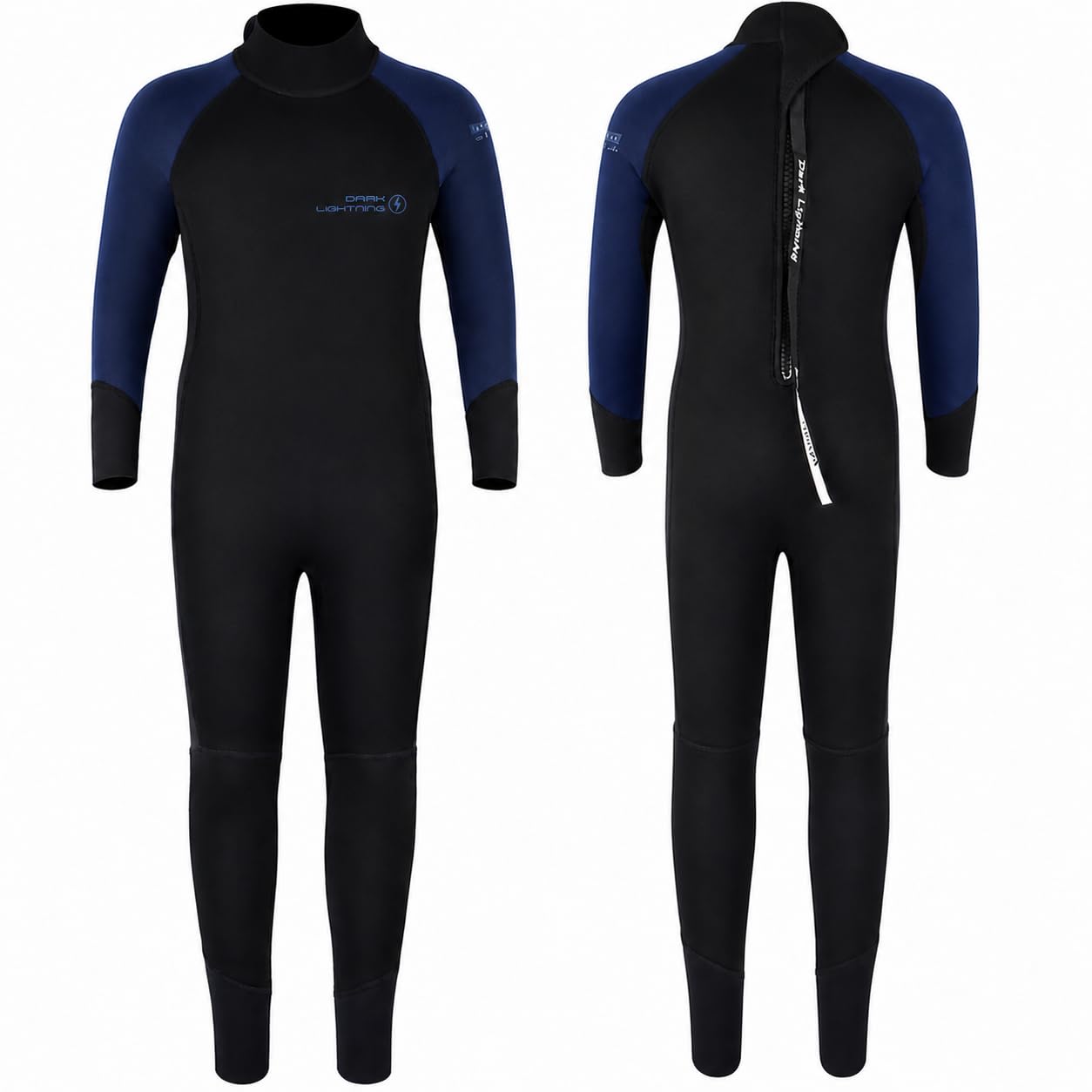
Dark Lightning 3/2mm Full Suit
Key Features
- Form: Full body, long sleeve
- Closure: Back zip
- Thickness: 3/2mm
- Temperature rating: 59 °F
- Price: Budget
Full-length neoprene is where swim budgets usually stretch, and this is the suit that refuses to make a thing of it. It is a proper 3/2mm full suit — 3mm through the chest, back and thighs, 2mm in the arms and lower legs — with long sleeves, full legs and a back zip, and it is the least expensive way into that construction here.
What we like most is the rating. The maker suggests it for water above 59 °F, the coolest figure on any suit on this page, which is the honest way of saying a 3/2mm suit is for more than high summer. Flatlock seams sit flat against the skin instead of ridging up, and the back zip opens wide enough that a parent can get a squirming kid in without a fight. For a cold pool, a winter swell in Florida or a lake in June, it covers the same ground as the pricier full suits here.
It is not the suit for a heated indoor pool: 3mm of neoprene in warm water is misery, and a 2mm shorty is the right call there. For everything colder, this is the full suit that does the job without stretching the budget — and the bright two-tone panels mean you can find your kid in a crowded pool.
Pros
- 3/2mm full coverage at the lowest price here
- Rated for water above 59 °F
- Back zip makes dressing quick
Cons
- Runs small against standard clothing sizes
If you want full-length coverage and the budget is the deciding factor, this is the suit to get; just order by chest measurement.
Best for Independent Dressing
Hevto Kids 2mm Shorty
Key Features
- Form: Shorty, short sleeve
- Closure: Front zip
- Thickness: 2mm
- Price: Midrange
A front zip changes the morning. Where a back-zip suit turns a five-year-old into a passive bundle of limbs on the poolside, this one lets them pull the suit on, press the zip and get to the water — which is why it is our pick for kids who want to do it all themselves. The zip is metal, with a velcro tab that folds across the top, and that tab is the bit that stops it creeping down mid-swim.
At 2mm it is a warm-water and indoor-pool suit: enough neoprene to take the sting out of a chilly lesson pool or a mild sea, not enough for a cold ocean in spring. The cut is short-sleeved and short-legged, so arms and legs stay free, and the whole thing weighs little enough that a kid forgets it is on between swims.
One small thing we noticed: the zip sits exactly where a bored child’s hands can reach it in the shallow end, and it will get fiddled with. Press the velcro tab flat before they get in and it stays put. Sizing divides sharply by age band, so measure the chest and ignore the number on the label — the sleeves and legs run generous on a slim child.
Pros
- Front zip kids can manage alone
- 2mm neoprene for chilly pools
- Velcro tab secures the zip
Cons
- Too thin for cold ocean water
Give a child this front-zip shorty and they can dress themselves, which is worth more on a cold morning than a slightly warmer back zip.
Best for Regular Surfing
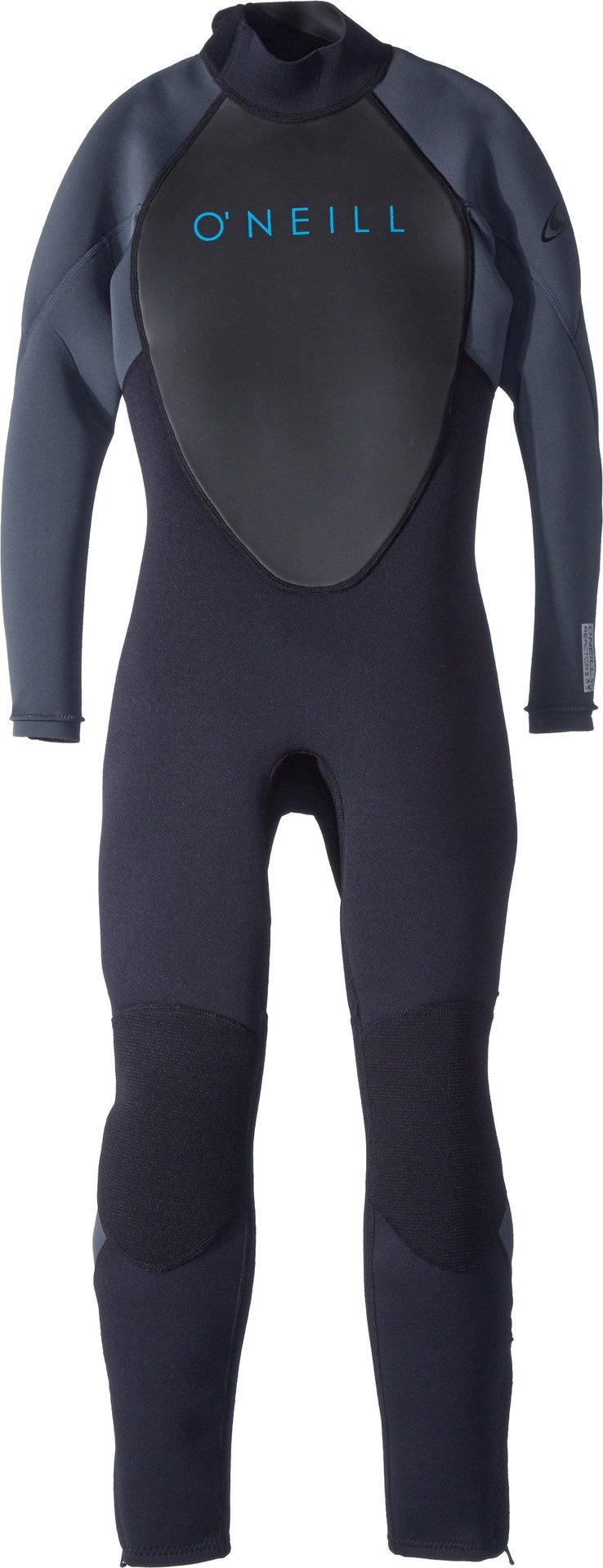
O’Neill Youth Reactor-2
Key Features
- Form: Full body, long sleeve
- Closure: Back zip
- Thickness: 3/2mm
- Price: Premium
The obvious question with the O’Neill is whether a surf brand earns its premium on a suit a nine-year-old will outgrow in a year. Our answer is narrower than the price suggests: yes, if your kid is actually in waves.
It is a 3/2mm back-zip full suit — 3mm through the torso, 2mm in the arms and lower legs — with long sleeves and full legs. The cut is the part that matters. The arms and legs run true to length, which is exactly what goes wrong when you size up to leave growing room, and a suit that is an inch long in the forearm drags water on every paddle out.
In the water it behaves like a surf suit: the back zip sits high and out of the way, and the panels move with a kid paddling rather than against them, so it does not balloon and fill. It covers arms and legs against sun and wind on a long session, which matters more on the water than in a pool.
Our reservation is simple. For pool lessons and a fortnight at the beach, the cheaper full suits here do the same work, and the premium buys a surf cut and a brand that has been making wetsuits a long time. If your family is out most weekends — surfing, bodyboarding, kayaking — this is the one we pick, because it is shaped for movement in waves rather than bobbing in a lane.
Pros
- 3/2mm full suit cut for surfing
- Arm and leg lengths run true
- Back zip sits high and stays clear
Cons
- Premium price for a suit kids outgrow
Only worth the premium if your kid is genuinely in the surf most weeks; for pool lessons and holidays, our cheaper full suits do the same job.
Best for Toddlers, Pool Days
NATYFLY Kids Full Wetsuit

Key Features
- Form: Full body, long sleeve
- Sizing: Height 42–47 in (L)
- Closure: Back zip with long pull
- Chest (size L): 25 in
- Price: Midrange
Buying a wetsuit for a two- or three-year-old is mostly a sizing problem, and NATYFLY solves it in the name of the product: the sizes are given as height ranges rather than ages, so the large is for a child between 42 and 47 inches tall. That single decision removes most of the guesswork from an order you cannot try on first.
We also like the zip. It is a YKK back zip with an extra-long pull leash, long enough that a small hand can reach over a shoulder and start it — the difference between a suit a child can begin to manage and one that needs an adult every single time. Full sleeves and full legs in a soft neoprene, and it keeps a toddler warm in a pool that is colder than the air above it.
Where it lands: full coverage for pool swimming and mild open water rather than a cold-ocean suit, and the cut is generous enough to layer a swim nappy under. If your child sits at the top of a height band, take the next one up — the bands are narrow enough that a fast-growing toddler can cross one inside a season.
Pros
- Sizes given as height ranges
- Long zip leash small hands can reach
- Full sleeves and legs for coverage
Cons
Height-based sizing and a zip leash a toddler can reach make this the easiest full suit to buy blind for a two- or three-year-old.
Best for Indoor Pools
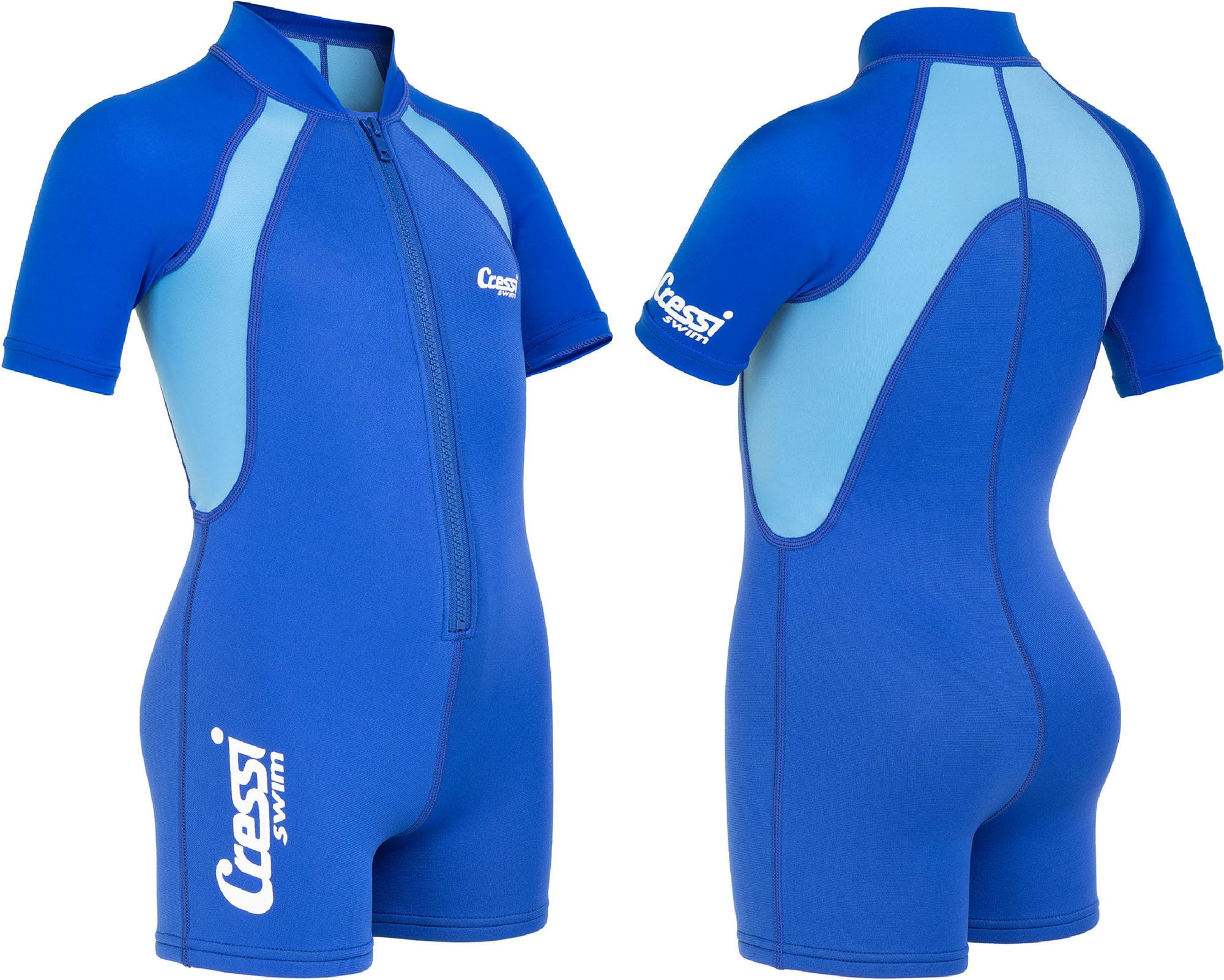
Cressi Kids 1.5mm Shorty
Key Features
- Form: Shorty, short sleeve
- Sleeves: Lycra (elastane)
- Thickness: 1.5mm neoprene panels
- Price: Midrange
The Cressi is the odd one here, and the Lycra tells you why: the front and back panels are 1.5mm neoprene, but the sides, collar and sleeves are elastane. That is a deliberate design — the arms stay completely free — and it also means this is a warm layer for a heated pool rather than a cold-water wetsuit.
In the right setting it is neat. It pulls on like a swimsuit, the semi-fitted shape does not balloon, it dries fast and packs flat, and it looks like a swimsuit rather than a piece of gear, which is easier to sell to a child who does not want to look different at lessons. The two-year limited warranty is the longest on this page.
The 1.5mm panels are the limit. In a chilly indoor pool or a warm sea it takes the edge off; in cold ocean water it will not do what a 3mm suit does, and the uncovered shoulders will not help. If your lessons run through winter in an unheated pool, this is not the suit.
So this is the one we suggest for a family whose swimming happens indoors, in a warm sea on holiday, or in a sun-soaked pool where the aim is sun and scrape protection with a little warmth rather than thermal performance. It is worth saying plainly: the Cressi is the lightest layer here by design, and that is the reason to choose it as much as the reason to skip it.
Pros
- Lycra shoulders and sleeves keep arms free
- Pulls on like a swimsuit
- Two-year limited warranty
Cons
- 1.5mm panels and Lycra sleeves give little warmth
A good warm-water layer for indoor pools and sunny seas, and not the suit for cold ocean water.
Best for First Full Suit
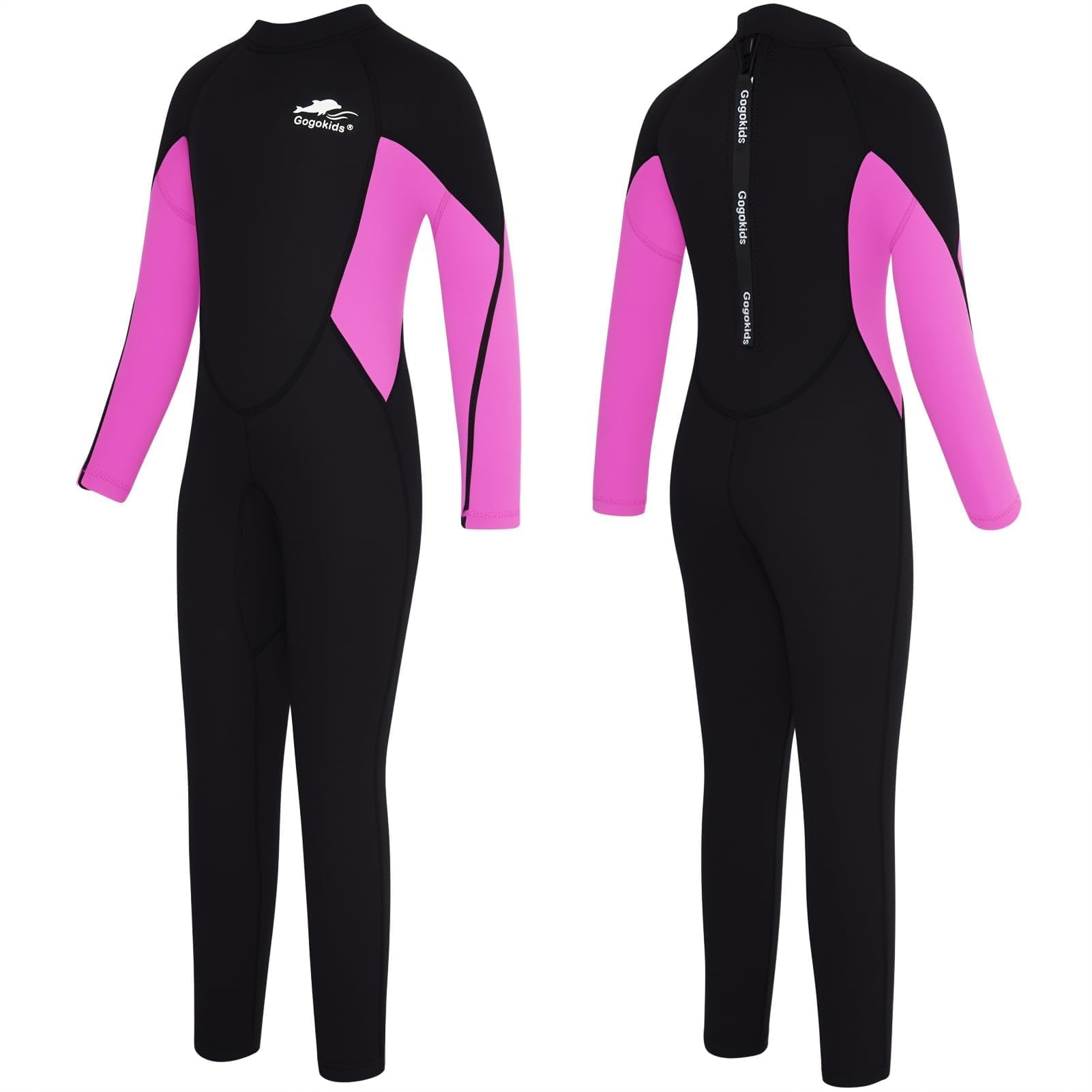
Gogokids Kids 2.5mm Wetsuit
Key Features
- Form: Full body, long sleeve
- Sizing: 7 (48–50 in, 51–55 lb)
- Closure: Back zip with long pull
- Thickness: 2.5mm
- Price: Midrange
The size name on this one is a small piece of good design: it prints the height and weight range right next to the number, so a 7 means 48 to 50 inches and 51 to 55 pounds. No chart to squint at, no converting from an age band that means nothing anyway.
The rest is a straightforward 2.5mm full suit with long sleeves, full legs and a back zip with an extra-long pull cord. It is meant to feel snug when dry and give a little in the water, which is how neoprene works — worth explaining to a child before the first try-on, because the first try-on will produce a complaint.
The one clear mark against it is the 90-day warranty, the shortest here, which is thin cover for a garment that takes chlorine, salt and sand. Otherwise it is a sensible first full suit: 2.5mm is a useful middle weight for cool pools and mild open water, the pull cord means a kid can start the zip themselves, and the sizing is the least ambiguous on this page. If you are buying before you know how often you will get to the water, this is the low-risk version.
Pros
- Height and weight printed beside each size
- 2.5mm for cool pools and mild water
- Back zip with a long pull cord
Cons
- 90-day warranty is the shortest here
A low-risk first full suit: the height-and-weight size chart removes the guessing, and the short warranty is the one thing to weigh.
How We Tested 12 Kids Wetsuits Over Eight Months
We started by pulling every kids wetsuit we could find that came in actual kid sizes — not just S/M/L — and had a published size chart with height and weight ranges. We ruled out suits with no flatlock stitching, flimsy zippers, or a thickness that didn’t match the water temperature they were designed for. That left us with 12 suits to test.
Those 12 suits went into a real rotation with testers ages 4 to 10: swim lessons at an indoor pool, after-school splash time, three beach weekends, and two lake trips where the water hovered around 68 degrees. Before each session, kids raised their arms, squatted, and paddled in the suit; we checked for gaps at the neck, wrists, and ankles and noted whether the shoulders pulled or the knees bunched. We kept a log of who wore what and how long they stayed in before asking to get out.
Warmth was easy to judge because kids are honest: we timed how long each child stayed comfortable before shivering, and checked whether the suit stayed flush at the lower back during kicks. Ease of use came down to the zipper — we timed how long a 6-year-old took to zip up alone, whether the pull was reachable, and whether the zipper snagged on the suit’s own fabric. After each session we rinsed every suit, dried it in the shade, and inspected seams, knees, and zipper teeth for fraying, sand, or sunscreen stains. We also asked kids if they liked how the suit looked, and compared what each one offered against its price.
Sizing was its own test: we matched each kid to the maker’s chart, then noted whether the suit ran small, true, or large, and how much room was left for growth. We also looked at neoprene thickness and seam construction — a 2mm suit for summer pool play versus a 3mm suit for colder lake water — and whether the material felt stiff or flexible when kids moved.
How to Choose a Kids Wetsuit
Thickness, not price, decides which water a suit is good for — get that match right and the rest is detail.
Match Thickness to the Water
Think in two families. A 1.5mm to 2mm shorty is a warm-layer suit: heated pools, a mild sea in summer, a September lake at a push. A 2.5mm to 3/2mm full suit is the cold-water option, and the maker’s own temperature rating is the quickest guide — the Hevto full suit is rated to 67 °F, the Dark Lightning to 59 °F. Treat those figures as the maker’s guidance and add a layer on a windy day.
The trap is a suit that looks like a wetsuit and isn’t one. If the arms and shoulders are Lycra rather than neoprene, as on the Cressi shorty, it protects against sun, wind and scrapes and does very little about cold. That is a fine thing to own for a warm pool and the wrong thing for an October beach.
Full Suit or Shorty
Full suits win on cold water, sun, wind and scrapes; shorties win on freedom and speed. If your child’s swimming is lessons and holiday pools, a shorty is easier on everyone — fewer inches of neoprene to peel off at the bathroom, and arms that can move through a stroke. A full suit earns its place the moment the water is genuinely cold or the session runs long.
Our rule of thumb: if a child starts complaining about the cold within fifteen minutes in swim trunks, buy full length. If they are happy in the water and only shiver on the walk back to the car, a shorty is enough.
Sizing Is Where This Goes Wrong
The age on the label means very little. Buy by height and weight, then check the chest measurement against that specific suit’s chart — a toddler’s 2T and another maker’s 2T are not the same garment. NATYFLY prints height ranges, Gogokids prints height and pounds beside the size; both are easier to use than an age band.
Neoprene should feel snug when dry, especially across the torso. A suit that hangs loose at the small of the back just fills with water, and a collar that gapes lets cold water in on every dive. Between two sizes, go up: a slightly long leg is a nuisance, a suit that will not go over the shoulders stays in the bag.
Zips, Necks and the Morning Argument
A back zip needs an adult for the last two inches. A front zip, like the one on the Hevto shorty, lets a child finish the job and get to the water without waiting. Either way, look for a long pull cord or a velcro tab — those two details do more for independence than anything else on the suit, and NATYFLY’s long leash is the clearest example here.
Then check the neck. A collar that stands away from the throat lets water in and turns into a scoop on every duck dive; one that presses hard gets fiddled with all session and can chafe. It should sit flat and close without leaving a mark.
What the Extra Money Buys
Nearly every suit here is the same basic construction: neoprene panels, flatlock or overlocked seams, a zip. More money buys a specific cut and a brand’s pattern-making — the O’Neill is shaped for paddling rather than pool play — and sometimes a longer warranty, as with the Cressi’s two years. Less money buys a plain suit that keeps a child warm for the one or two seasons they will fit it.
Given how fast children grow, we put the money into fit and thickness first and treat brand and colour as the last decisions. A well-fitting budget suit beats a premium one that is a size out.
Frequently Asked Questions
Will a kids wetsuit keep my child afloat?
A little, not enough to count on. Neoprene traps a thin layer of water against the skin and adds some buoyancy, which is why a suited child floats a bit higher, but none of these suits is a flotation device. Keep the flotation aid on, and re-check that it still fits snugly over the extra bulk before you get in.
How do you get a wetsuit on a squirmy toddler?
Sit down, work from the ankles up, and roll the neoprene rather than pulling it. A plastic bag over the foot or hand slides through the opening and pulls away once the limb is through. Do the zip last, press the collar flat, and take the suit off inside out — it comes away far more easily that way.
Can my child wear a wetsuit for indoor swim lessons?
Ask the swim school first, since some pool operators have their own rules about neoprene. Where it is allowed, a 2mm shorty is plenty for a heated pool, and rinse the suit in fresh water after every lesson — chlorine is harder on neoprene and seams than salt water is.
Final Verdict
The Hevto 3/2mm full suit is the one we pack for the beach. Cold-water thickness, full coverage and a collar that stays flat are the reasons it earns the default spot, and it is the suit that keeps a child in the water when the sea is doing its best to end the session.
Change the requirement and the answer changes. For lessons and unheated pools, buy the GoldFin shorty — a 3mm core with free arms is the better tool, and it is the one that gets used every week. If your kid surfs most weekends, the O’Neill’s cut is worth the step up.
