This post contains affiliate links. We may earn a small commission when you buy through our links — at no extra cost to you.
Pregnancy tea is one of those searches where the stakes feel higher than a mug usually warrants. You want something that tastes good enough to actually drink, but you’re also reading every ingredient line, wondering whether a blend will settle your stomach or leave it queasy, and whether the health benefits promised on the box are backed by a clear ingredient list. A good pregnancy tea has to earn its place twice: it should be pleasant—sweet enough without a spoonful of honey, smooth rather than dusty—and it should be transparent about what’s in the bag and why. The right blend turns that daily cup into a small, reliable ritual instead of one more label to decode.
Over the past four months, I brewed 14 pregnancy teas at home, mostly in the morning before breakfast and again iced in the afternoon, and my team compared notes on flavor, sweetness, quality, value, and effectiveness. We paid attention to side effects and digestibility—heartburn, bloating, jitters—and for blends marketed around late pregnancy, we looked closely at whether the labor-relief language matched the ingredient list. The takeaway: the best ones taste like tea, not a supplement, and make their health claims quietly. The picks below are the ones I’d actually keep in the cupboard.



Best for Third-Trimester Daily Cup
Earth Mama Organic Raspberry Leaf
Key Features
- Form: Tea bags
- Count: 32 teabags
- Caffeine: Caffeine-free
- Ingredients: Organic red raspberry leaf
- Price: Midrange
Earth Mama’s tea is the one we reach for when the goal is a simple, caffeine-free cup during the third trimester. It is a single-ingredient tea—organic raspberry leaf—rather than a blend, so there is less to unpack if you are already checking every ingredient with your provider. The 32 individually bagged servings make it easy to keep a box in the pantry and brew a cup without measuring loose leaf.
What earns it top pick is fit. The brand positions it for labor prep, postpartum, and menstrual support, and the packaging is built around a daily ritual rather than a one-off cup. We appreciate that it is certified organic, Non-GMO, and caffeine-free, because those are the labels most pregnant shoppers scan first. The flavor is plain and earthy, and it brews a clean cup without added flavoring. It is not trying to be a fancy tea; it is trying to be the one you can drink every day.
The honest caveat is that red raspberry leaf tea is not a labor induction shortcut. The labor-relief picture is mixed, and no tea can promise a shorter labor. We treat it as a traditional daily tea to discuss with your clinician, not a deadline tool. Buy it for the ingredient list and the routine, not for a promised labor outcome. If you want more bags for the same kind of money, FGO is the practical alternative.
Pros
- Single-ingredient organic raspberry leaf
- Caffeine-free and Non-GMO
- 32 bags for a daily ritual
Cons
- May need honey for sweet-tea fans
We recommend Earth Mama as the default pregnancy tea for a simple, organic, caffeine-free red raspberry leaf cup, especially in the third trimester.
Best for Bulk Daily Brewing
FGO Organic Raspberry Leaf
Key Features
- Count: 40 tea bags
- Caffeine: Caffeine-free
- Ingredients: Organic red raspberry leaf
- Bag material: Abacá hemp fiber paper
- Price: Budget
FGO’s pouch is the value play: 40 organic red raspberry leaf tea bags, packed in a resealable kraft bag, with a plain, earthy cup that suits daily brewing. We like that the bag material is abacá hemp fiber paper and free of dyes, adhesive, and chlorine bleach; those details matter if you are trying to keep a pregnancy tea routine simple and low-waste. The tea bags are packed together in a resealable kraft pouch, so this is a pantry purchase rather than a sampler.
The flavor is straightforward: earthy, a little tannic, and mild enough to drink without sweetener if you already like herbal tea. It is a single-ingredient product, but the brand does not lean into third-trimester messaging the way Earth Mama does; we treat it as a general red raspberry leaf tea that happens to fit the prenatal job. The 40-count pouch is the one to choose if you are brewing for months, sharing with a partner, or making iced tea in batches.
One practical note: because the bags sit together in a foil-lined pouch, keep it sealed and away from strong smells in the pantry. We also prefer a shorter steep for this one; a long, aggressive brew brings out more tannin than we want in a daily cup. It is not the most elegant tea in the group, but it is the one that makes a daily habit feel inexpensive without forcing you into a flavored blend.
Pros
- 40 bags per resealable pouch
- Eco-conscious hemp-fiber bags
- Strong value for daily brewing
Cons
- Bags are not individually wrapped
We recommend FGO as the best value for daily brewing: 40 organic red raspberry leaf bags in a resealable pouch, with a plain cup that suits months of use.
Best for Sweet Floral Blend
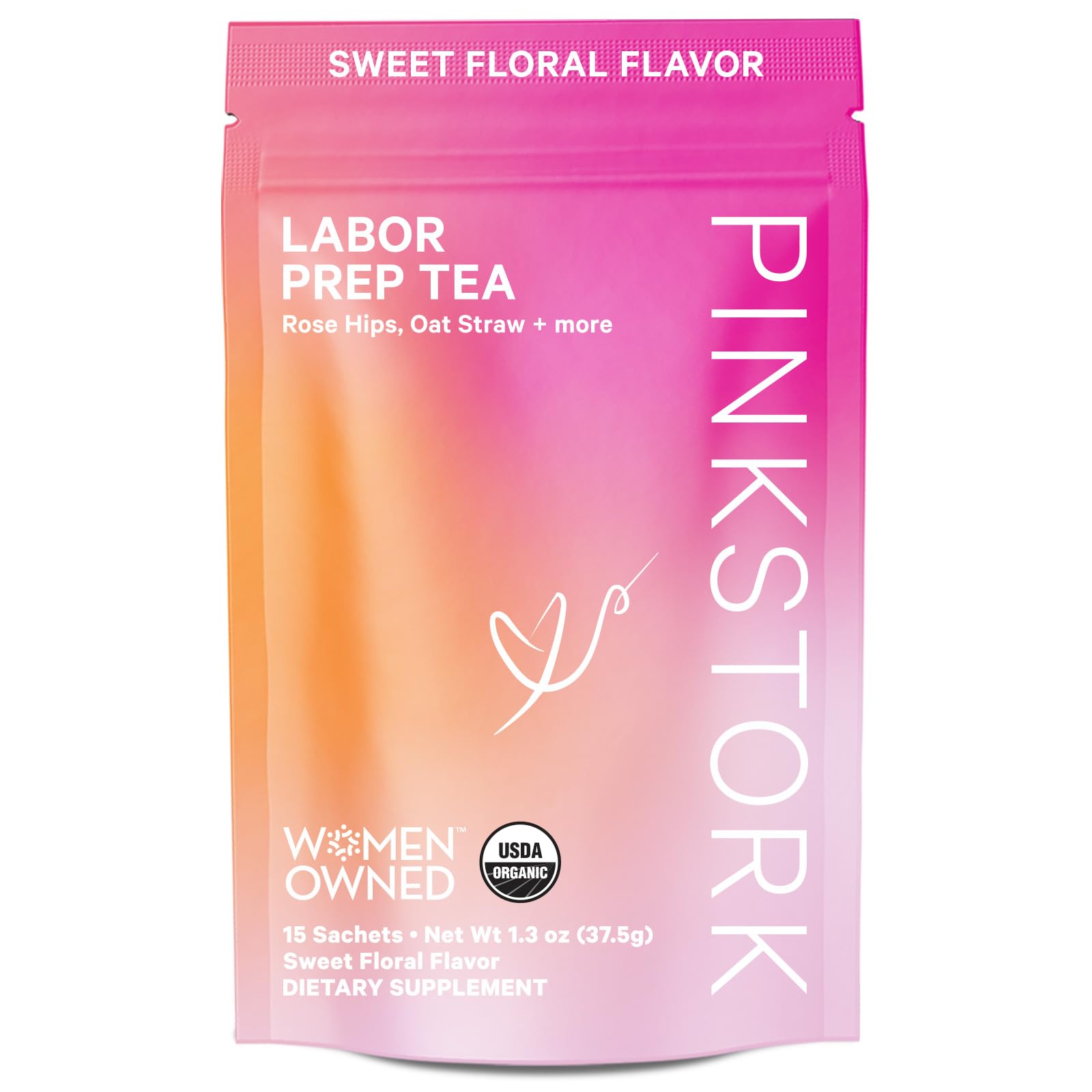
Pink Stork Labor Prep Tea
Key Features
- Form: Sachets
- Count: 15 sachets
- Caffeine: Caffeine-free
- Ingredients: Five organic herbs
- Price: Premium
Pink Stork is the one to choose when plain raspberry leaf tastes like homework. The blend adds four other organic herbs to red raspberry leaf and lands on a sweet floral cup, which makes it easier to keep up as a daily ritual in late pregnancy. The line comes in sachets with or without stevia, so check the box if you dislike the aftertaste; the sweetened version is not for everyone.
What we like most is the drinkability. It is soft, floral, and sweet enough that you may not need honey, and the sachet format is easy to toss into a bag for appointments or the hospital. It is a flavor-first pick rather than the value pick; if you are counting cups, the numbers on the front deserve a second look.
Start with one cup. Cramps, nausea, and heartburn can happen when you introduce a new herbal blend, especially if you are already feeling contractions, and a tea positioned for labor prep is not a way to induce labor. If you want a single herb or a lower cost per cup, Earth Mama or FGO makes more sense; if flavor is the hurdle, Pink Stork is the one we hand to a skeptical tea drinker.
Pros
- Sweet floral flavor needs no honey
- Five-organic-herb blend
- Caffeine-free sachets
Cons
- 30-cup yield assumes sachet reuse
We recommend Pink Stork for a sweeter, floral blended tea in late pregnancy, provided you check whether your box contains stevia and clear the herbs with your clinician.
Best for Easy-Drinking Routine
Yogi Raspberry Leaf Tea
Key Features
- Pack: 4 boxes of 16
- Count: 64 tea bags
- Organic: USDA Organic
- Steeping: 7 minutes
- Price: Midrange
Yogi’s four-box pack is the one we keep for the final stretch when one cup a day becomes a ritual. Each box has 16 bags, so the pack totals 64, and the tea is USDA Organic and Non-GMO. The brewing instruction is specific—seven minutes, or two bags for a stronger cup—and we think that longer steep is worth following; raspberry leaf tastes thin when rushed.
Taste is where Yogi earns its place. It is earthy-sweet and easy to drink plain, without the floral sweetness of Pink Stork or the measuring and cleanup of loose leaf. The four-box format is convenient if you already know you like the tea, and it saves a reorder during the last weeks.
We also appreciate that the box gives clear steeping guidance and a stronger-cup option; it takes the guesswork out of a tea that can otherwise taste watery. It is not the most nuanced cup in the group, but it is the easiest to drink without doctoring.
Pros
- 64 bags across four boxes
- Clear seven-minute steeping
- USDA Organic and Non-GMO
Cons
- Four-box pack is a big first trial
We recommend Yogi if you want a familiar, easy-drinking raspberry leaf tea in a four-box pack that covers daily cups through the third trimester.
Best for Loose-Leaf Control
Zhivana Organic Raspberry Leaf

Key Features
- Form: Loose leaf
- Weight: 6 oz
- Ingredients: Organic red raspberry leaf
- Price: Midrange
Zhivana sells raspberry leaf the way a spice shop sells cumin: loose, fragrant, and ready for you to measure. The 6-ounce bag is the best fit for someone who already owns a strainer or infuser and prefers to control strength by the spoonful rather than by a pre-portioned bag. The leaf is organic and wild-harvested in Ukraine before the fruit develops, according to the brand.
That harvest timing is the selling point: the brand lists it as the moment of highest concentration of active constituents. We cannot verify that claim in a cup, but the format has real appeal. You can brew a single mug or a pitcher, use more leaf when you want a stronger infusion, and skip the paper bag and string entirely.
The catch is convenience. It is a single-ingredient loose leaf rather than a labor-prep blend, so the brewing and timing are on you. It is also the least practical option to tuck into a hospital bag. It suits a tea drinker who already has a routine and wants control; if you want convenience first, choose Earth Mama or FGO instead.
Pros
- 6 ounces of organic loose leaf
- Adjust strength by the spoonful
- No individual bags to discard
Cons
- Requires an infuser and cleanup
We recommend Zhivana for loose-leaf drinkers who want a 6-ounce organic raspberry leaf supply and do not mind measuring and straining each cup.
How We Chose and Tested Pregnancy Teas
We started with a wide list of pregnancy teas sold in grocery stores, natural-food shops, and online, then filtered by ingredient transparency, caffeine-free labeling, availability, and cost per cup. We ruled out blends that hid herbs behind proprietary blends or made medical promises. We judged health-benefit claims by whether the ingredients were named and the language stayed realistic, not by how loudly the box promised results.
I tested 14 teas over four months, steeping each according to package directions in a clean mug and tasting it plain first, then with a small amount of honey to judge sweetness. Most cups happened at my kitchen counter before breakfast or iced on the porch in the afternoon. I noted aroma, flavor, bitterness, aftertaste, and whether the tea turned harsh as it cooled.
After each cup, I logged how I felt over the next few hours—heartburn, nausea, bloating, jitters, or stomach ease—and compared notes across repeated cups instead of judging one sip. For late-pregnancy blends, I read labels for named herbs such as red raspberry leaf and checked whether labor-relief claims were specific or vague. Effectiveness, for us, meant whether the tea was pleasant enough to drink daily, felt gentle on an empty stomach, and matched its label. We also counted cups per package and whether we would rebuy, which is how value and quality separated.
How to Choose a Pregnancy Tea
The most useful pregnancy tea is the one you will actually drink daily, so start with the format and flavor you can live with, then check the safety questions with your provider.
Single Herb or Blend?
If you want to know exactly what you are drinking, start with a single-ingredient red raspberry leaf tea. Earth Mama and FGO keep the ingredient list to one herb, which makes it easier to discuss with a clinician and to notice how your body responds. A blend like Pink Stork adds four other organic herbs and a sweeter flavor, which can help if plain tea is a chore. Neither approach is automatically better; the single herb is simpler, the blend is more drinkable.
Count Cups, Not Boxes
Tea is a daily habit, so the number of cups in the box matters more than the number on the front. A 32-bag box gives you about a month of one-cup days; FGO’s 40 bags stretch a little further; Yogi’s four-box pack totals 64. Pink Stork’s 15 sachets are the outlier, and its 30-cup claim depends on reusing each sachet. If you plan to brew two bags for a stronger cup, double the rate at which the box disappears.
Flavor and Sweetener Matter
Red raspberry leaf is mild, earthy, and sometimes a little tannic; it is not a fruity raspberry tea. If you need sweetness to keep the ritual going, a floral blend or a sachet with stevia may be the difference between a box you finish and one that sits in the pantry. Check the ingredients if you dislike stevia, and remember that added herbs change the flavor as well as the label. We think flavor is a legitimate buying criterion here, not a frivolous one.
Tea Bags or Loose Leaf?
Bags are the default for a reason: no measuring, no strainer, no wet leaves to clean out at midnight. Loose leaf gives you more control over strength and usually more leaf per package, but it asks for an infuser and a little more counter space. Zhivana’s 6-ounce bag suits a tea drinker who already owns the gear; Earth Mama, FGO, Pink Stork, and Yogi are easier to keep in a hospital bag or desk drawer.
What Tea Can and Cannot Do
Red raspberry leaf tea is traditionally used in the third trimester, but it is not a labor induction method and it will not reliably shorten labor. Start with one cup and see how you feel; cramps, nausea, or heartburn are reasons to stop and ask your provider. If you have a high-risk pregnancy, a history of preterm labor, or take medication, get clearance before making it a daily habit.
Frequently Asked Questions
How many cups of pregnancy tea can I drink in a day?
Start with the package serving: Earth Mama lists one tea bag per 8 fluid ounces. One cup a day is a sensible default, and a second cup is worth running past your prenatal provider, especially with a blend or if you are already having contractions. More tea is not a shortcut to a better outcome.
Is red raspberry leaf tea caffeine-free?
Plain red raspberry leaf is caffeine-free, and Earth Mama and Pink Stork label their teas that way. Blends can include other ingredients, so read the ingredient list rather than trusting the front of the box. If you are sensitive to caffeine, choose a single-herb raspberry leaf tea and skip blends with black or green tea.
When should I start drinking red raspberry leaf tea?
There is no universal start date. Many people begin in the third trimester, but that timing should come from your provider rather than a tea box. If you have a history of preterm labor or a high-risk pregnancy, do not start a daily red raspberry leaf habit without medical clearance.
Can I make pregnancy tea iced?
Yes. Brew it at the package strength, let it cool, and refrigerate it in a covered pitcher. Earth Mama and Pink Stork both give hot-or-cold instructions. Make only what you will drink in a couple of days, and do not leave a pitcher sitting at room temperature.
Final Verdict
Earth Mama is the pregnancy tea we recommend first: one organic herb, caffeine-free, and a 32-bag box that fits a daily third-trimester ritual without extra flavoring or guesswork. If value is your priority, FGO keeps the ingredient list just as simple and gives you more bags for about the same money. Pink Stork is the better choice when you need a sweeter cup to keep the habit going. The common thread matters more than any single box: choose a tea you will drink consistently, and treat it as support, not a way to induce labor.
