This post contains affiliate links. We may earn a small commission when you buy through our links — at no extra cost to you.
‘Non‑toxic’, ‘clean’, ‘non‑GMO’ — these labels appear on nearly every formula carton, but the ingredients behind them can be worlds apart. One brand skips corn syrup while another sneaks it in. For a tired parent scanning shelves, that inconsistent definition of ‘non‑toxic’ turns shopping into a guessing game.
The formulas that truly commit to purity — USDA Organic or Clean Label Project verified — often use whole-milk protein profiles. That earnest clean sourcing means constipation is a frequent companion for a meaningful share of babies. This guide weighs ingredient purity against the digestive reality that parents likely face at the changing table.
A formula can pass every toxin screen and still cause daily tummy trouble. Instead of chasing labels, the smart move is finding the clean option that your baby tolerates day after day.


Best for Organic Purists
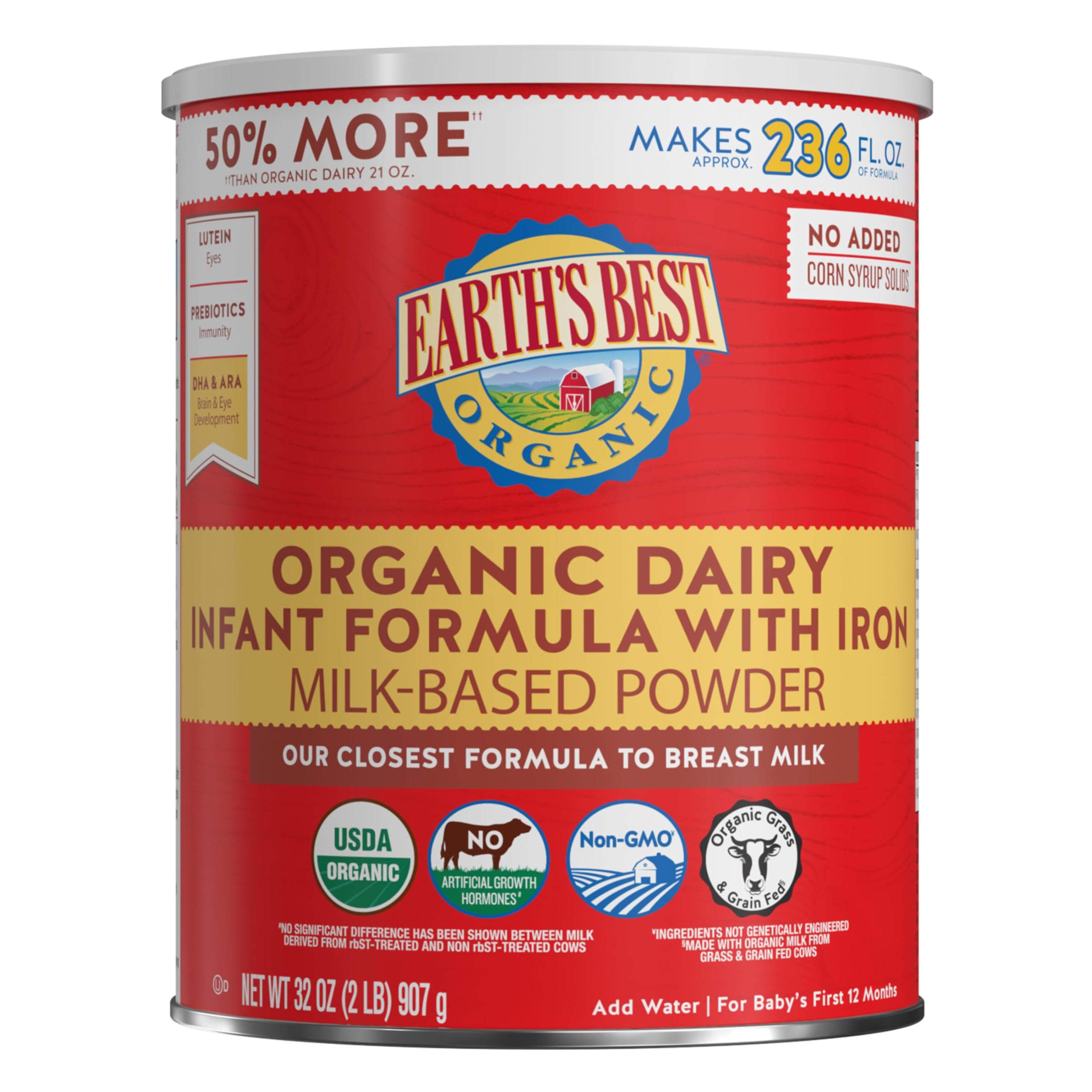
Earth’s Best Organic
Key Features
- Organic / Non‑GMO: USDA Organic, Clean Label Award
- DHA/ARA & Prebiotics: DHA, ARA, prebiotics
- Carbohydrate: Lactose, no corn syrup
- Protein Type: Intact cow milk
- Format: Powder
- Price: Mid-Range
Earth’s Best combines USDA organic certification with the Clean Label Project Purity Award, offering one of the few infant formulas with third-party verification of freedom from contaminants like heavy metals and pesticide residues. Lactose is the primary carbohydrate, with no added corn syrup, and the formula includes lutein, prebiotics, DHA, and ARA for complete nutrition. It’s also one of the most affordable organic options, especially with subscribe-and-save pricing.
The powder carries a distinctive fishy smell and metallic taste that can lead some babies to refuse it. For infants with slower digestion, the high casein-to-whey ratio may contribute to hard stools and constipation. Families who prioritize ingredient purity often accept these trade-offs, especially given the formula’s effective nutrition and value.
Earth’s Best suits parents who want verified non-toxic ingredients and are willing to test their baby’s digestive response. Constipation is a known risk, particularly for infants sensitive to cow’s milk proteins. Skip it if your baby is already prone to hard stools, or if strong odors are a dealbreaker. Wait to commit to a full-size tub until you’ve confirmed tolerance. For the right household, it’s the most cost-effective path to organic feeding.
Pros
- Certified organic purity with third-party verification of clean ingredients.
- Well-tolerated by most babies, with good overall digestibility.
- Affordable for a certified organic formula, especially with subscribe and save.
Cons
- Fishy odor and metallic taste may cause rejection by some babies and caregivers.
- Can cause hard stools and constipation, particularly for babies with sensitive digestion.
For organic purity verification at a value price, Earth’s Best stands alone — if your baby’s digestion cooperates and you can tolerate the scent.
Best for Cow-Milk Sensitive
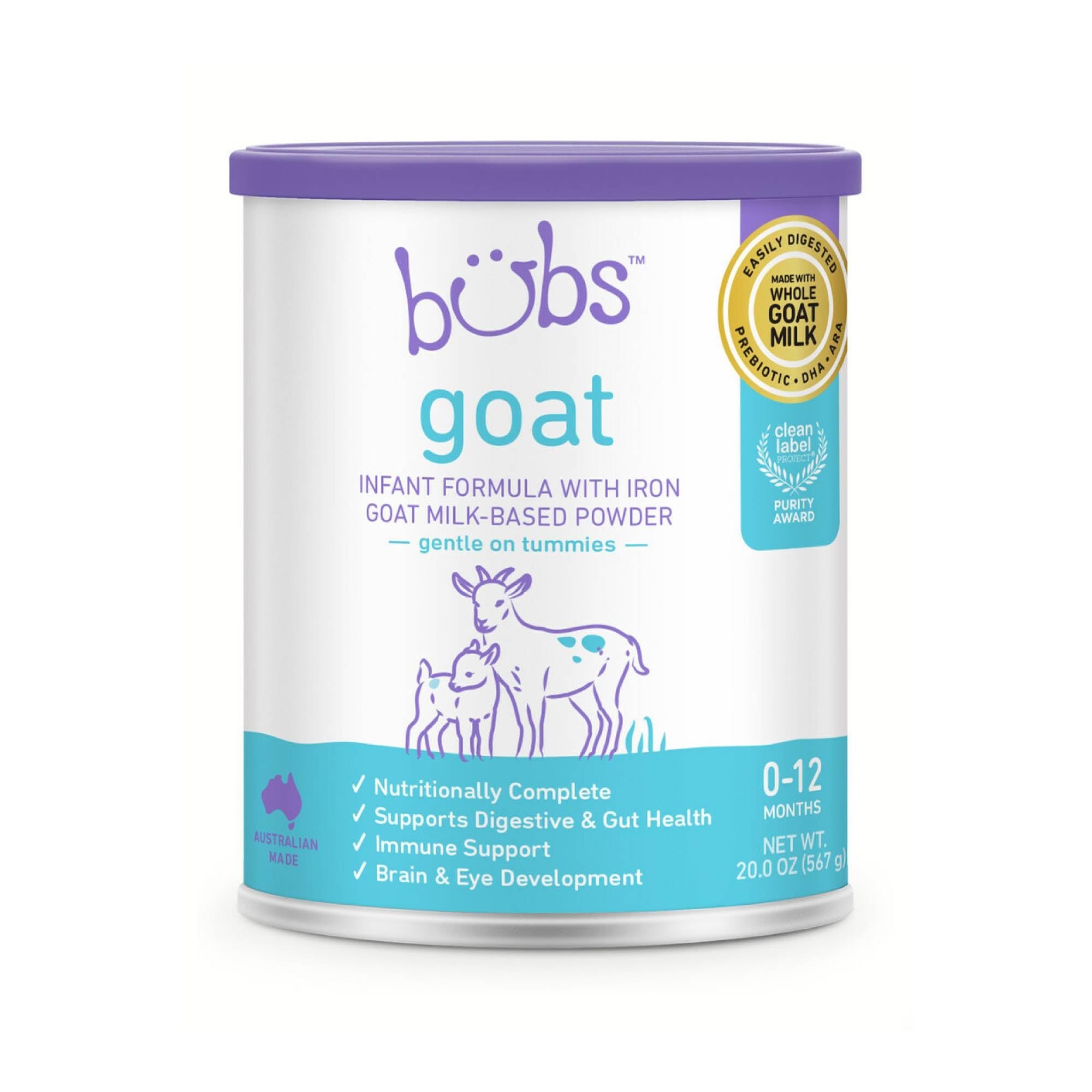
Bubs Goat Milk
Key Features
- Organic / Non‑GMO: Non‑GMO, Clean Label Award
- DHA/ARA & Prebiotics: DHA/ARA, prebiotics
- Carbohydrate: Lactose
- Protein Type: Goat milk
- Format: Powder
- Price: Mid-Range
Bubs Goat Milk uses non-GMO whole goat milk, a protein structure that’s easier on sensitive stomachs than standard cow’s milk formulas. It skips corn syrup solids in favor of lactose from goat milk, and carries the Clean Label Project Award—a meaningful nod to its ingredient purity without organic certification. For parents choosing between organic purity and digestive ease, Bubs fills the gap left by the top pick’s occasional constipation risk. Mixing can take more effort; a few extra moments of shaking or stirring may be needed. Spit-up still occurs in some sensitive infants, though less so than with many alternatives. It’s the right choice when a clean, non-organic goat milk formula that babies accept is the priority.
Pros
- Gentle digestion that reduces gas and tummy discomfort in many cow-milk-sensitive babies.
- No corn syrup, artificial colors, flavors, or GMOs—just whole goat milk with DHA and prebiotics.
- Taste that breastfed and formula-fed babies accept without fuss.
Cons
- Powder can require extra shaking or stirring to fully dissolve.
- Spit-up may still occur in sensitive infants, even with the gentler protein.
For families who value a clean ingredient list and digestive calm over organic certification, Bubs Goat Milk delivers a well-tolerated alternative without corn syrup solids.
Best for Brain Development
Enfamil NeuroPro
Key Features
- Organic / Non‑GMO: Non‑GMO
- DHA/ARA & Prebiotics: MFGM, DHA, prebiotics
- Carbohydrate: Lactose
- Protein Type: Intact cow milk
- Format: Powder
- Price: Premium
For families that value brain-building ingredients over full organic certification, Enfamil NeuroPro delivers MFGM and expert‑recommended DHA in a non‑GMO formula. It’s a premium‑priced powder that prioritizes cognitive development, but a notable minority of babies experience gas and digestive discomfort — so it works best for infants without sensitive tummies. The non‑GMO ingredients and absence of high‑fructose corn syrup align with clean‑label goals, though it stops short of organic.
Pros
- High parent satisfaction for overall quality and effectiveness.
- Includes MFGM and DHA to support brain development.
- Non‑GMO ingredients and no high‑fructose corn syrup meet clean‑label preferences.
Cons
- Occasional digestive discomfort (gas, tummy pain) can arise for some infants after switching.
For parents who want DHA and MFGM in a non‑GMO formula without requiring USDA organic, NeuroPro is a logical step up from basic Enfamil — provided their baby’s stomach cooperates.
Best for Sensitive Digestion
Dr. Brown’s Gentle Pro
Key Features
- Organic / Non‑GMO: Non‑GMO
- DHA/ARA & Prebiotics: DHA, HMOs, probiotic
- Carbohydrate: Lactose
- Protein Type: Hydrolyzed whey
- Format: Powder
- Price: Mid-Range
Hydrolyzed whey proteins, broken into pieces 10 times smaller than standard casein, make this formula far easier for sensitive tummies to handle. It cuts gas and colic significantly, without corn syrup solids or GMO ingredients. A probiotic strain (B. lactis) further supports gut comfort, a feature that sets it apart from many organic options which can be harder to digest.
It’s intended for parents who value digestive ease and a clean non-GMO label over full organic certification. A faint chemical-like odor, noticeable during prep, means this isn’t for households extremely sensitive to smells; it’s a minor trade-off for a cost-effective, gentle formula that avoids the constipation risk some organic powders present.
Pros
- Hydrolyzed whey noticeably reduces gas and colic in babies who struggled with intact-protein formulas.
- Non-GMO and free from corn syrup solids, avoiding many synthetic additives common in mainstream brands.
- Mid-range price for a hydrolyzed, probiotic-enhanced formula makes gentle nutrition more accessible.
Cons
- A faint processing odor can be off-putting to smell-sensitive households; taste may not suit every baby.
For parents who prioritize a non-GMO, gentle formula over organic certification and can live with a mild odor, Gentle Pro delivers digestive relief at a fair price.
Best for Breast Milk Mimic
Similac 360 Total Care
Key Features
- Organic / Non‑GMO: Non‑GMO
- DHA/ARA & Prebiotics: DHA, lutein, 5 HMOs
- Carbohydrate: Lactose
- Protein Type: Intact cow milk
- Format: Powder
- Price: Mid-Range
Similac 360 Total Care uses a blend of five HMO prebiotics designed to mirror the immune-nourishing oligosaccharides in breast milk, and it omits palm olein oil to support calcium absorption. Lactose-based and non-GMO with no artificial growth hormones, it offers a clean nutritional base without corn syrup solids.
This formula suits parents who want the closest nutritional match to breast milk without organic certification, particularly combo feeders transitioning from nursing. The seal on the container can arrive broken during shipping — always inspect the inner foil before use to avoid contamination. For babies with lactose sensitivity, the Sensitive variant in this set is the better fit.
Pros
- Mimics the 5 HMO prebiotics found in breast milk for immune support.
- Lactose-based with DHA and no palm olein oil, supporting calcium absorption and brain development.
- Non‑GMO and free of artificial growth hormones for a cleaner ingredient profile.
Cons
- Occasional gas or reflux can occur even with the 5 HMO prebiotic blend.
When your priority is the closest possible nutritional match to breast milk without organic certification, Similac 360 Total Care delivers the 5 HMO advantage and bone-friendly formulation. Inspect the seal on arrival to sidestep the one recurring headache.
Best for Immune Support
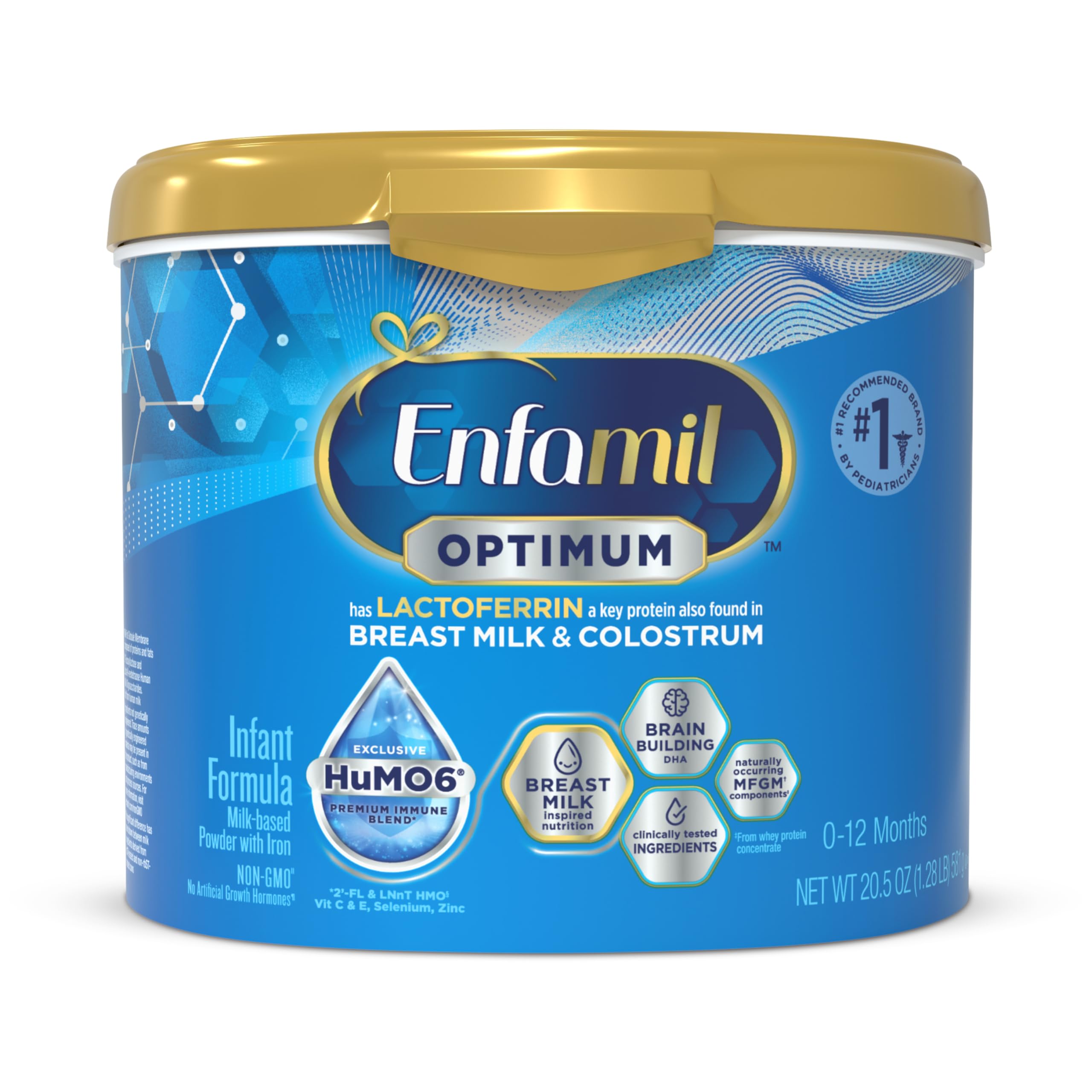
Enfamil Optimum
Key Features
- Organic / Non‑GMO: Non‑GMO
- DHA/ARA & Prebiotics: Lactoferrin, DHA, prebiotics
- Carbohydrate: Lactose
- Protein Type: Intact cow milk
- Format: Powder
- Price: Premium
Enfamil Optimum stands apart with lactoferrin, the immune protein found in colostrum, bringing it closer to breast milk than any other Enfamil. Its clean recipe — non-GMO, no high-fructose corn syrup, and no artificial additives — will resonate with non-toxic-conscious families, even if it skips USDA organic certification. The caveat: detailed consumer feedback on digestive tolerance is sparse. This makes it a best fit for babies without known tummy troubles. If your child has a sensitive stomach, the top-pick organic formula offers more purity transparency, while Optimum trades that for exclusive immune support.
Pros
- Contains lactoferrin, the immune protein from colostrum, for newborn defense.
- Non-GMO recipe with no high-fructose corn syrup, artificial growth hormones, or artificial colors.
- Dual prebiotic blend (2′-FL and LnNT) supports developing gut health.
Cons
- Digestive tolerance feedback is sparse, making the premium price harder to justify for families uncertain about their baby’s reaction.
For families who want Enfamil’s closest-to-breast-milk immune benefits and a clean ingredient list, this premium formula is the right fit — so long as baby doesn’t have a sensitive stomach.
Best for Lactose Sensitivity
Similac 360 Sensitive

Key Features
- Organic / Non‑GMO: Non‑GMO
- DHA/ARA & Prebiotics: 5 HMOs, DHA
- Carbohydrate: Maltodextrin
- Protein Type: Intact cow milk
- Format: Powder
- Price: Mid-Range
This Non-GMO sensitive formula cuts lactose-related gas and fussiness, retaining five HMO prebiotics often lost in sensitive blends. The 20.1 oz tub runs small for the price, so per-ounce cost lands higher than it looks. It also skips organic certification, keeping it a step away from the fully clean-label standard.
Pros
- Cuts gas and fussiness in babies with lactose sensitivity.
- Mild taste eases the transition from breast milk, with high acceptance.
Cons
- Can size is deceptively small for a mid-range formula, making per-ounce cost higher than it first appears.
If your baby’s gas stems from lactose sensitivity and you value non-GMO HMO prebiotics over organic certification, this compact formula delivers relief — just accept the higher per-ounce cost.
Best for Colic Relief
Dr. Brown’s Soothe Pro

Key Features
- Organic / Non‑GMO: Non‑GMO
- DHA/ARA & Prebiotics: L. reuteri probiotic
- Protein Type: Hydrolyzed whey
- Format: Powder
- Price: Budget
Hydrolyzed whey protein and L. reuteri probiotic target gas and colic quickly, and the non‑GMO certification aligns with clean-label priorities. However, a 12 oz can limits long‑term value, and the probiotic can sometimes cause constipation — something to watch if your baby already struggles with bowel regularity. This makes it more of a short‑term stopgap than a daily clean feeding solution.
Pros
- Clinically studied L. reuteri probiotic calms colic and extreme fussiness within days.
- Non‑GMO formula in a trial‑friendly size that won’t break the bank.
Cons
- Can cause constipation or GI upset, particularly during the first days as the baby adjusts.
For parents needing a fast, non‑GMO colic fix to test tolerance before committing to a full-sized organic formula, this trial can is a sensible first step.
Best for Travel Convenience
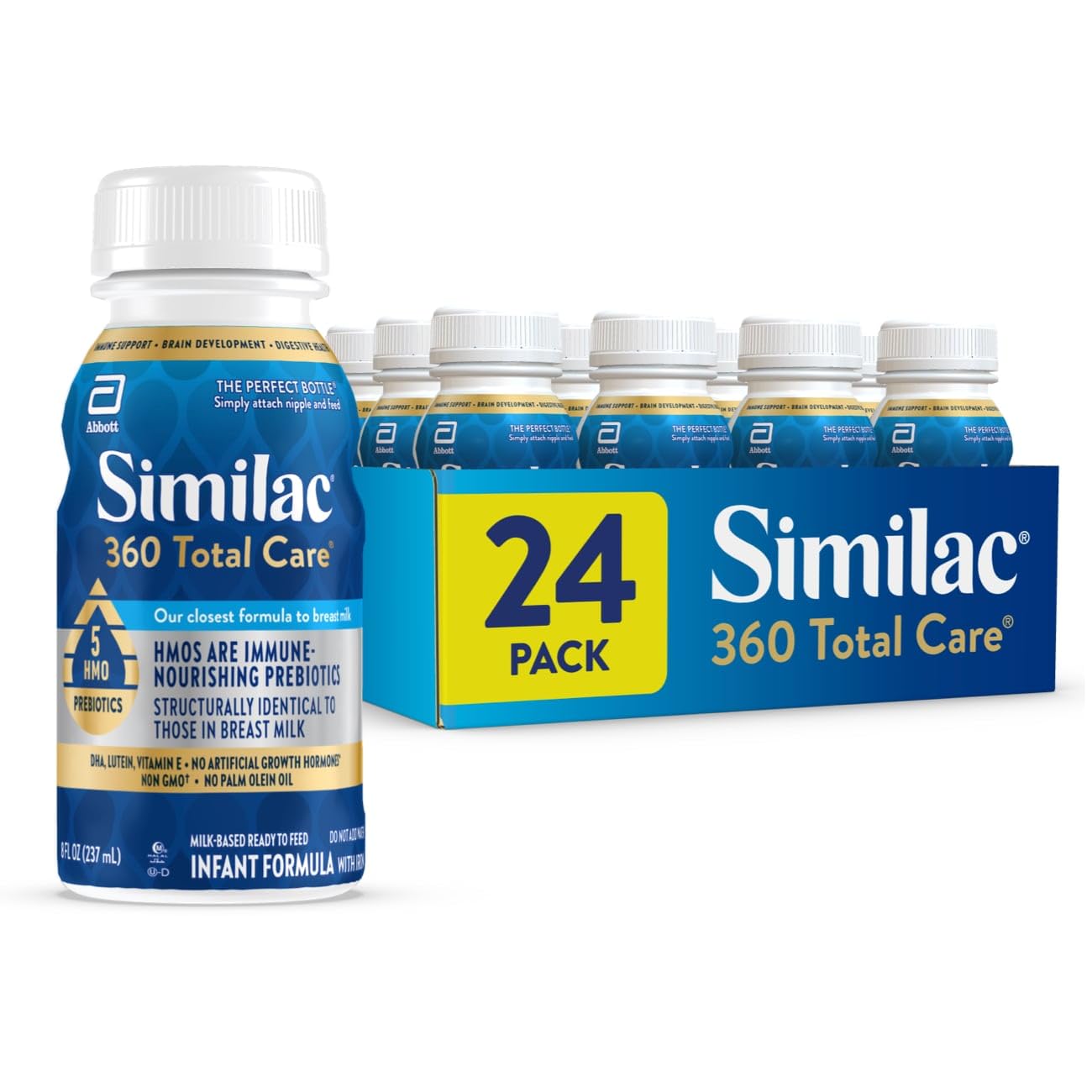
Similac 360 RTF
Key Features
- Organic / Non‑GMO: Non‑GMO
- DHA/ARA & Prebiotics: 5 HMOs, DHA
- Carbohydrate: Lactose
- Protein Type: Intact cow milk
- Format: Ready‑to‑feed
- Price: Premium
The Similac 360 RTF bottles are built for pure convenience — no mixing, no measuring, just twist and feed. The non‑GMO formula with 5 HMO prebiotics skips artificial growth hormones, but it doesn’t meet organic or clean‑label standards. The price per ounce is steep, making this a short‑term solution rather than a daily staple.
Pros
- Unbeatable convenience for late‑night feeds, travel, and diaper bag use
- Gentle on tummies and well‑tolerated by most newborns
Cons
- Some babies may experience vomiting or severe gas
For parents who need a no‑prep, on‑the‑go formula during the newborn phase and can accept the premium price, these bottles deliver short‑term convenience — but they don’t offer the organic purity that some shoppers require.
Best for Bulk Savings
Enfamil Gentlease 4‑Pack
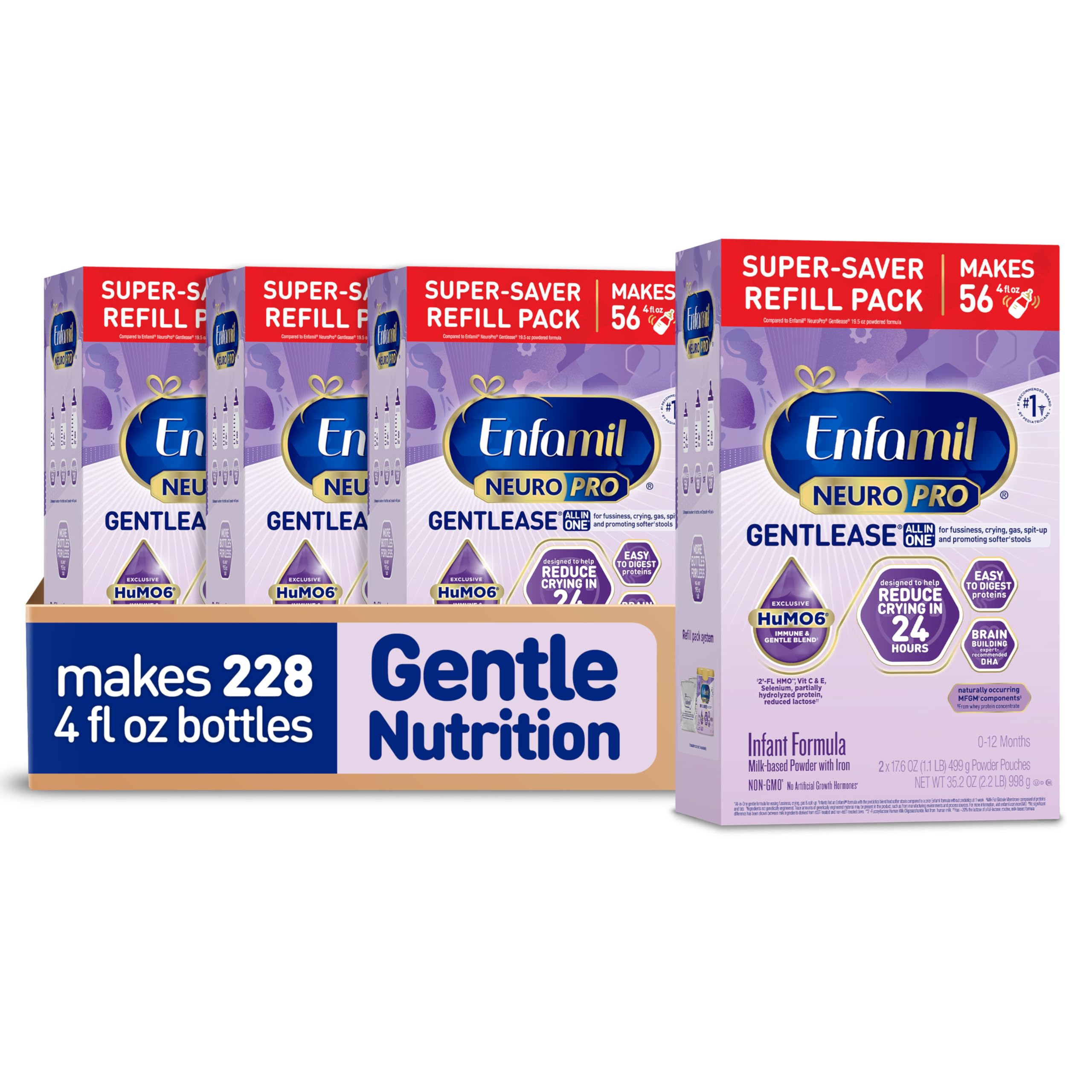
Key Features
- DHA/ARA & Prebiotics: DHA, PDX/GOS prebiotics
- Protein Type: Partially hydrolyzed
- Format: Powder
- Price: Luxury
The four-pack lowers per‑ounce cost for formula‑fed infants, provided your baby already tolerates its taste and digestive effect. It delivers quick relief from colic‑like symptoms, but lacks non‑GMO certification — making it a poor fit for clean‑label purity seekers.
Pros
- Partially hydrolyzed protein and prebiotic blend can calm colic‑like fussiness and gas within a day.
- The four‑pack size significantly reduces per‑ounce expense for families who feed formula daily.
Cons
- Taste and smell can be polarizing; some babies reject the formula outright.
A cost‑effective bulk option for families whose baby has already tolerated Gentlease and who prioritize digestive comfort over organic certification.
Best for Budget Basic
Similac Advance

Key Features
- DHA/ARA & Prebiotics: DHA, lutein
- Carbohydrate: Lactose
- Protein Type: Intact cow milk
- Format: Powder
- Price: Mid-Range
Similac Advance is a basic, budget-friendly formula from a familiar brand, free of artificial growth hormones and palm olein oil for calcium absorption. It omits non-GMO certification and modern prebiotics, so clean-label shoppers trade organic purity for cost savings. Cans occasionally arrive dented, a packaging concern.
Pros
- Well-tolerated standard formula at a competitive price
- No artificial growth hormones and no palm olein oil to support calcium absorption
Cons
- Cans may arrive dented, raising concerns about interior seal integrity
If your primary need is an affordable, conventional formula from a major brand and you can accept the lack of non-GMO verification, Similac Advance covers the nutritional basics. For verified organic purity, the top pick is a more direct fit.
Best for Budget Enfamil
Enfamil Infant
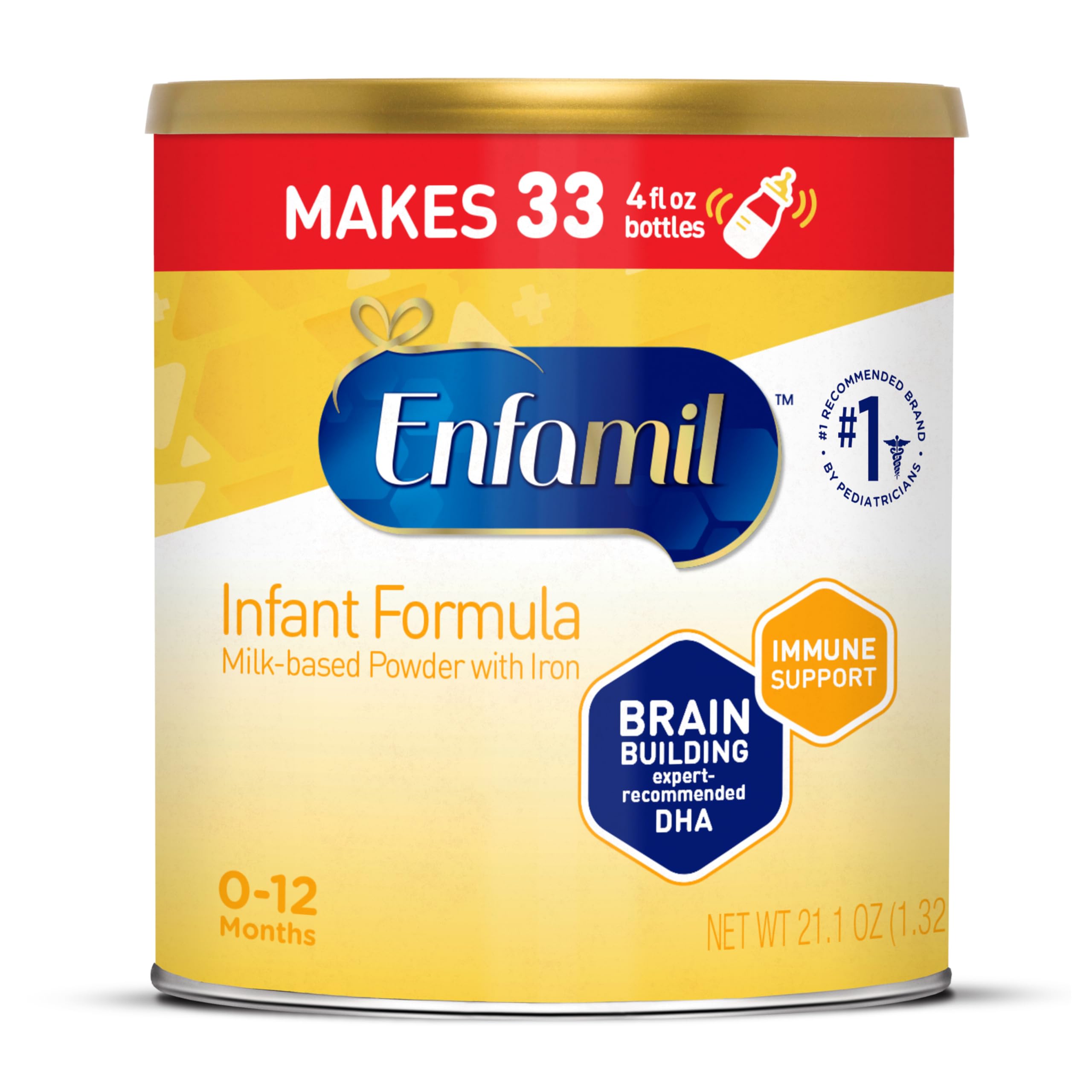
Key Features
- DHA/ARA & Prebiotics: DHA, choline, prebiotics
- Carbohydrate: Lactose
- Protein Type: Intact cow milk
- Format: Powder
- Price: Budget
Enfamil Infant provides the brand’s core DHA and choline in a dependable, budget-friendly powder. For parents looking to avoid pesticides and synthetic additives, it lacks non‑GMO certification and skips the MFGM and HMO prebiotics found in NeuroPro, putting it behind cleaner options that satisfy organic or clean‑label standards.
Pros
- Dependable consistency and baby acceptance.
- Budget-friendly Enfamil entry with core DHA and choline for everyday feeding.
Cons
- Lacks non‑GMO certification, MFGM, and HMO prebiotics — standard nutrition without clean‑label features.
A safe, budget-conscious choice for supplementing breast milk if non‑GMO and organic certification aren’t priorities.
Best for Newborn Outings
Enfamil Gentlease RTF
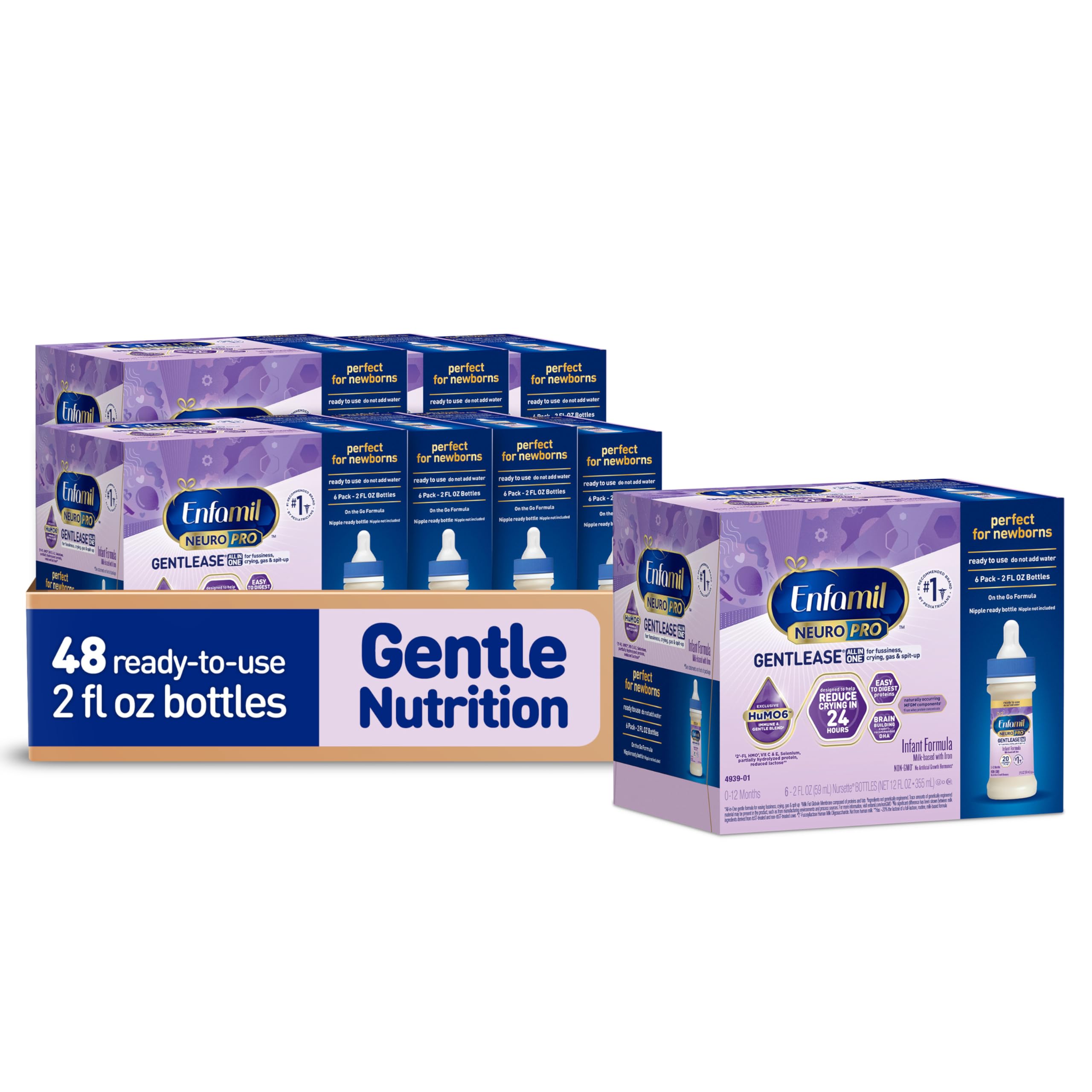
Key Features
- Carbohydrate: Corn syrup solids
- Protein Type: Partially hydrolyzed
- Format: Ready‑to‑feed
- Price: Luxury
These single-serve bottles skip mixing, making newborn feeds on the go simple. Some units arrive curdled or with sediment, though, and the first ingredient is corn syrup solids — not for clean-label purists. They serve best as occasional diaper bag backups, not daily non-toxic nutrition.
Pros
- No-mix ready-to-feed design saves time during overnight feeds.
- Compact single-serve bottles slip into any bag for travel convenience.
Cons
- Some bottles may have curdled or chunky formula, occasionally causing vomiting or constipation.
Inspect each bottle before use, and these are handy diaper bag backups; for parents prioritizing non-toxic daily nutrition, the organic top pick delivers without the ingredient concerns.
How to Choose
The most important spec for a non‑toxic formula is not the front‑label claim but the certification behind it — look for USDA organic or Clean Label Project verification to guarantee ingredient purity.
Organic vs. Non‑GMO Certifications
USDA organic certification ensures the milk comes from cows fed organic feed without synthetic pesticides, antibiotics, or growth hormones. Non‑GMO verification is a step down, covering only genetic modification, but still avoids many additives. The hidden trade‑off: organic formulas tend to use protein ratios that are gentler to the planet but harder for some babies to digest, leading to constipation.
If your baby has a history of hard stools, a certified non‑GMO goat milk or hydrolyzed formula may be the better fit despite not carrying the organic stamp.
Brain & Gut Nutrients: DHA, Prebiotics, Probiotics
DHA and ARA are omega‑3 and omega‑6 fatty acids that support brain and eye development; most formulas now include them. Prebiotics like HMOs and GOS feed good gut bacteria, while probiotics like B. lactis and L. reuteri add live cultures directly.
A formula rich in HMOs mimics breast milk’s immune protection, but watch for probiotic strains that can constipate sensitive babies. Prioritize DHA levels and select probiotic‑backed options only if your pediatrician recommends them.
Carbohydrate: Lactose vs. Corn Syrup Solids
Lactose is the natural sugar in breast milk and the preferred carb for healthy infants, free of the glycemic spike that corn syrup solids can cause. ‘Sensitive’ formulas often swap lactose for maltodextrin or corn syrup to relieve gas, but that convenience comes at a cost: those alternatives are processed sweeteners that some families want to avoid entirely.
If you are feeding a non‑sensitive baby, insist on a lactose‑only carbohydrate. Reserve maltodextrin formulas for true lactose intolerance diagnosed by a doctor.
Protein Type: Intact, Hydrolyzed, or Goat
Intact cow milk protein is standard and works for most, but about 10% of infants show some sensitivity. Hydrolyzed proteins are broken into smaller pieces that are easier to digest, making them a frontline fix for gas and colic. Goat milk protein forms a softer curd than cow milk, naturally reducing spit‑up and constipation.
The trade‑off: hydrolyzed formulas can taste more bitter, and goat milk formulas are pricier. Match protein type to your baby’s comfort, not to a brand loyalty.
Powder vs. Ready‑to‑Feed
Powder is the most economical and allows precise mixing, but it requires clean water and a scoop. Ready‑to‑feed bottles eliminate prep time and contamination risk, but they are 30–50% more expensive per ounce and often use corn syrup solids as a stabilizer.
For daily home use, powder wins; RTF is a smart supplement for travel, daycare, or the first hazy weeks of newborn life. Always inspect RTF seals before use.
FAQ
Why do organic baby formulas sometimes cause constipation?
Organic formulas often use a whey-to-casein ratio closer to whole cow’s milk (20:80) than breast milk, which means a tougher, slower-digesting curd. That high casein load can harden stools, especially in newborns whose digestive enzymes are still maturing. If your baby struggles, consider an organic goat milk formula or a hydrolyzed non‑organic protein that still meets clean-label standards.
Is goat milk formula safer or less toxic than cow milk formula?
Neither is inherently ‘safer’; both can be non‑GMO and clean-label verified. Goat milk protein forms a softer, smaller curd in the stomach, which often reduces spit‑up and constipation. For babies with cow milk sensitivity but no true allergy, goat milk offers a gentler digestion profile with the same high‑quality ingredient standards.
Do non‑GMO infant formulas still contain pesticide residues?
Yes — non‑GMO certification only confirms genetic modification hasn’t occurred; it doesn’t test for chemical residues. Only USDA organic certification and independent projects like the Clean Label Project screen for pesticides, heavy metals, and other contaminants. If residue‑free purity is your goal, look for those specific seals, not just a non‑GMO sticker.
What does the Clean Label Project Purity Award actually mean for baby formula?
The Clean Label Project tests formulas for over 130 environmental and industrial contaminants, including heavy metals, pesticides, and plasticizers. An award means the product fell below established safety thresholds in blind testing and is manufactured with high transparency. It’s a rigorous supplement to organic certification that reassures you about real‑world purity beyond the farm.