This post contains affiliate links. We may earn a small commission when you buy through our links — at no extra cost to you.
Nothing ends a kid’s first season faster than a glove they can’t close. The ball thuds off the heel, they start flinching at the throw, and the glove ends up face-down in the grass. Most youth gloves are stiff leather bricks built like scaled-down adult models, and the sizing labels (T-ball, youth, junior) don’t help much when your 7-year-old sits squarely between two of them.
What actually works is a glove light enough to squeeze shut one-handed and roomy enough to survive a growth spurt. I spent this spring rotating 16 gloves through backyard catch, T-ball practice, and driveway games with kids from 4 to 9, and the ones that got picked up again were always the ones a kid could close on their own. A set that comes with a ball helps a first-timer, too.
We weighed fit, comfort, durability, ease of use, and what you actually get for the money, because one glove that lasts two seasons beats two that don’t. The picks below cover first-timers through second-year players.
Our Top Picks

The Best Kids Baseball Gloves, Reviewed
Rawlings Remix Youth Glove – Best Overall
Key Features
- Web: Basket
- Break-In: Soft
- Material: Faux leather
- Glove Size: 10.5 inches
- Price: Budget
A 10.5-inch basket web and a soft shell are the two details that make the Remix work for a first-time player. The basket web gives a young fielder a big, forgiving pocket for grounders and fly balls, and the soft faux-leather shell is built to close without a long break-in. That matters more than a pro-style stamp when a child is still learning to squeeze the glove at the right moment.
That combination is why we make it our default pick for young rec and T-ball players. The glove is light enough for small hands, the leather lining gives it a little structure, and the utility shape works at any position instead of locking a beginner into one spot. We also like that it does not ask a parent to spend a week working the pocket before the first practice. It is a first glove, not a travel-ball leather mitt, and that is exactly the role it fills well.
The Remix will not feel as substantial as an all-leather glove, and a child playing a heavy schedule will eventually want the upgrade. For the first season or two, though, the easy close and broad pocket do more for confidence than extra stiffness. The 10.5-inch size is the one we reach for when a child has outgrown a toddler set but is not ready for an 11.5-inch leather glove.
Pros
- Closes easily for small hands
- Basket web works across positions
- Game-ready soft feel
- Good value for a first season
Cons
- Sizing can run small for some kids
We recommend the Remix as the default first glove for young rec and T-ball players because its soft shell closes easily and its basket web handles every position.
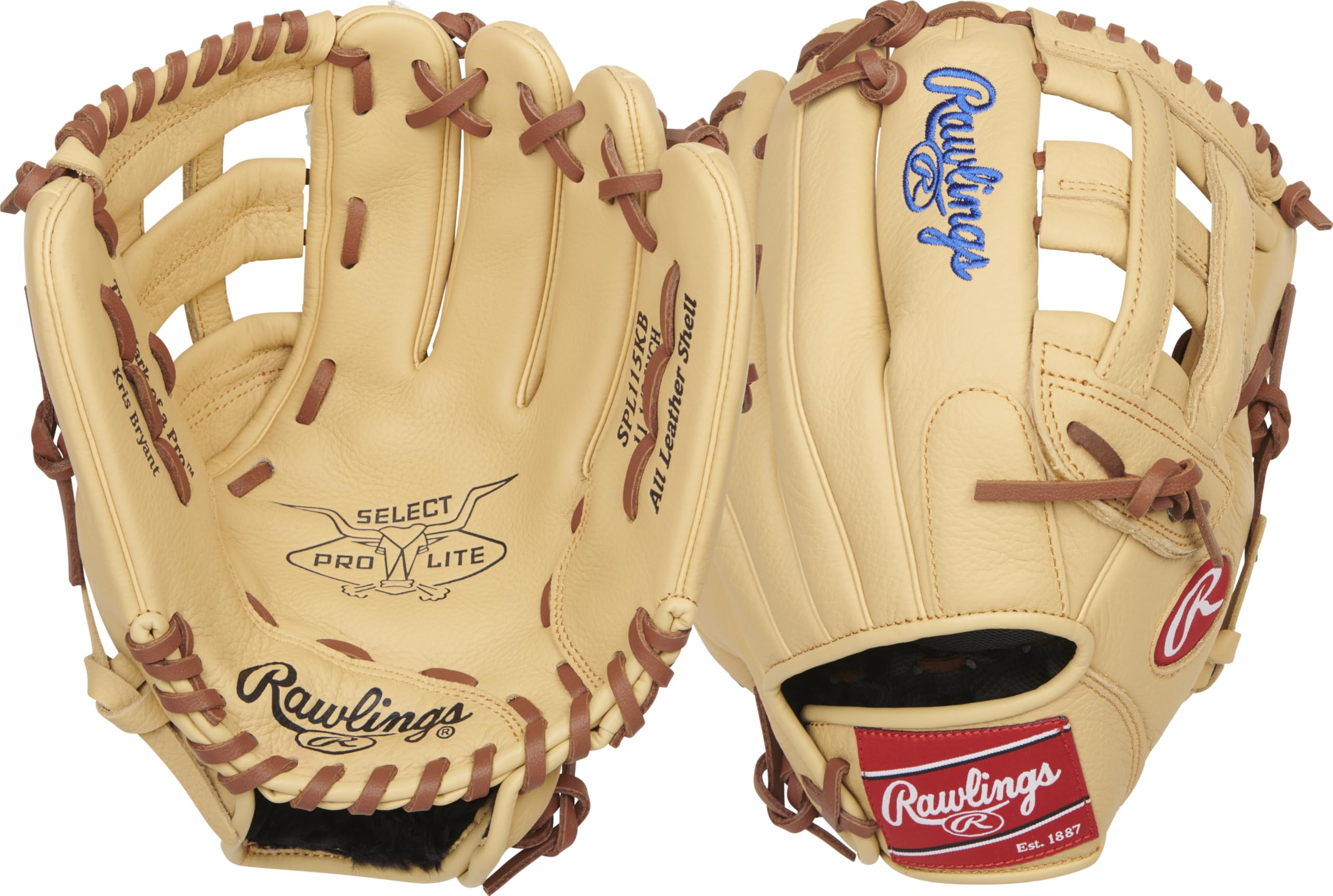
Rawlings Select Pro Lite – Best Leather Upgrade
Key Features
- Fit: Youth pro taper
- Break-In: 90% factory
- Material: Leather
- Glove Size: 11.5 inches
- Price: Premium
The Select Pro Lite is for the kid who has outgrown a starter glove and is ready for real leather. In the 11.5-inch Kris Bryant pattern, the shell is all leather, the hand opening is cut to a youth taper, and Rawlings ships it about 90 percent broken in. That is the combination we look for in an older youth player: enough glove to handle a harder throw, but not a brick that takes a month to close.
We like the pro-inspired patterns more than we expected to. The glove looks like a serious piece of equipment, and the cushioned fingerback lining and palm padding make it comfortable through a long practice. The 11.5-inch size can move between infield and outfield, though it is not a catcher’s glove or a first-base glove. For an older youth player in rec or travel ball, that versatility is worth the step up.
The price is the real hurdle. This is the most expensive glove in our group, and a growing child may need a new size before the leather is worn out. We still think it earns the money for a player who is past the beginner stage; just do not buy it as a first glove for a 5-year-old. If a child still needs help closing a glove, this is not the one yet; if they can squeeze it on their own, the leather is ready to reward the jump.
Pros
- All-leather shell and pro patterns
- Youth taper fits smaller hands
- Minimal break-in
- Versatile 11.5-inch size
Cons
- Laces can wear under hard use
Choose the Select Pro Lite when a young player has outgrown a starter and needs an all-leather glove that still closes without a long break-in.
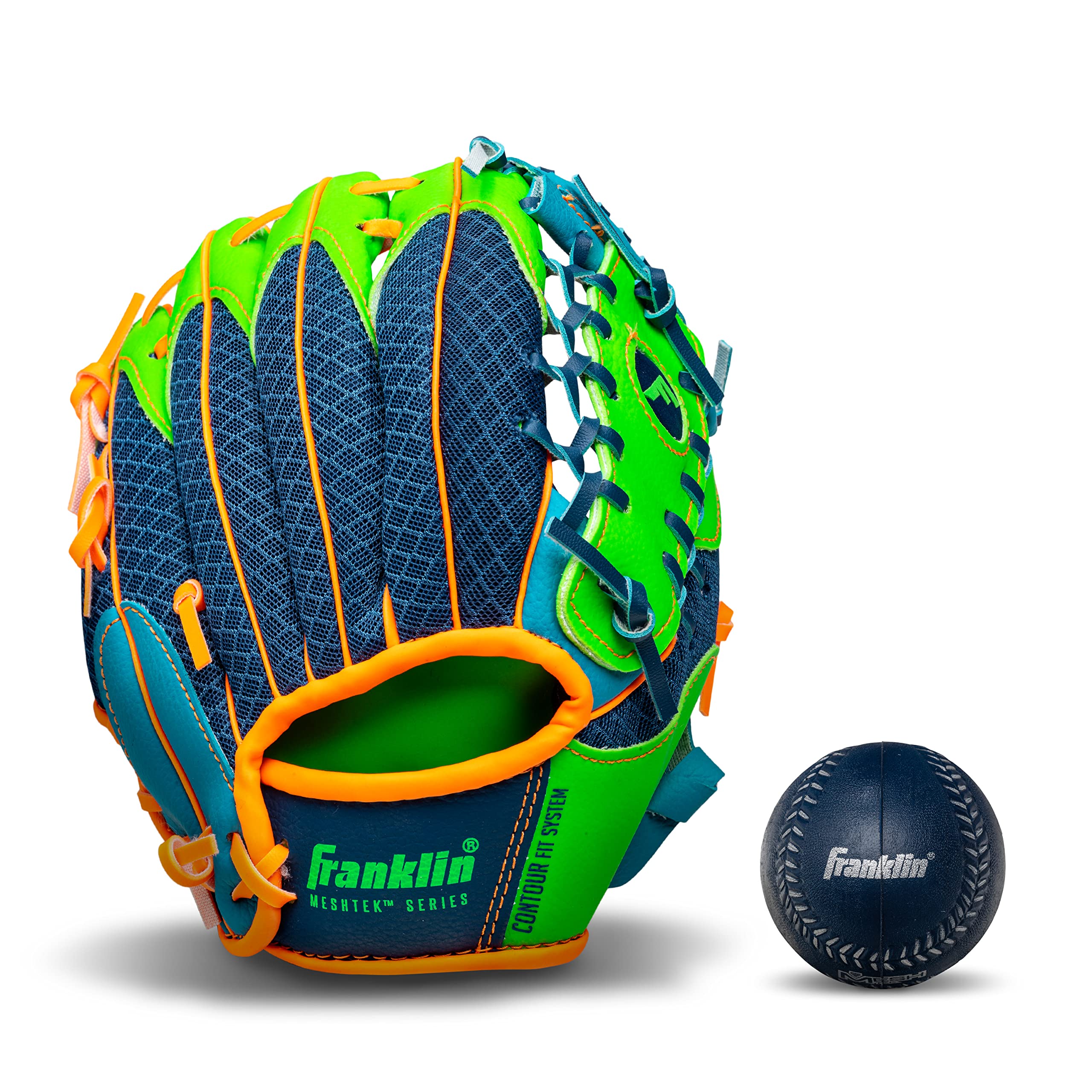
Franklin Meshtek Glove + Ball – Best for Toddlers
Key Features
- Break-In: Ready-to-play
- Includes: Glove and foam ball
- Material: Mesh and faux leather
- Glove Size: 9.5 inches
- Price: Budget
The Meshtek is not the glove we hand to a 10-year-old with travel-ball plans. It is the glove we hand to a preschooler who is still learning to open their hand at the right time. The 9.5-inch soft mesh shell is light, the palm is ready to play, and the package includes a foam ball, so a family can start a game of catch without buying anything else.
For that job, we like it a lot. The mesh back gives little hands some flex, the hand-formed pocket sits close to the palm, and the foam ball is soft enough for indoor catch. It is also one of the budget picks here, which matters when a child may lose interest by June. The size is small enough for a 3- or 4-year-old, but there is enough pocket for a 5- or 6-year-old to keep using it for backyard play.
The trade-off is that this is a first mitt, not a rec-season workhorse. The soft shell and mesh construction favor easy closure over the structure of leather, and older kids will want more glove once the throws get harder. If the choice comes down to this and a team-logo glove, the Meshtek is the better neutral first glove; pick the logo only when the logo is what gets a kid excited.
Pros
- No break-in needed
- Soft mesh easy for little hands
- Foam ball included
- Budget-friendly first set
Cons
- Wrist ties can come undone
For a preschooler learning catch at home, the Meshtek is our pick: soft mesh, no break-in, and a foam ball in the box.
Franklin MLB Yankees Glove Set – Best for Young Team Fans

Key Features
- Team: New York Yankees
- Includes: Glove and foam ball
- Material: PVC
- Glove Size: 9.5 inches
- Price: Budget
The New York Yankees logos are the reason to pick this set over a plain youth glove. The 9.5-inch PVC mitt comes in official team colors with a foam ball, which makes it an easy gift for a young fan who wants to match a favorite player. That is a real purchase reason; a kid who is excited to put the glove on will practice more.
The glove itself is ready to play, with a soft shell and a basket web that suit a first catch game in the yard. We like the size for a young fan, and the foam ball keeps indoor practice from turning into a broken lamp. It is not a leather glove, though, and the synthetic shell is unlikely to develop the same pocket or feel over time.
So we treat the Yankees set as a fan-first first glove, not the one we choose for a heavy rec schedule. If the child is already playing twice a week, the Remix is the better all-around buy; if the team logo is what gets them out the door with a glove, this one does that job. The foam ball is what makes the set usable the day it arrives; the glove is the part that makes a kid want to put it on.
Pros
- Official team colors and logos
- Ready-to-play PVC shell
- Foam ball included
- Fits young fans at 9.5 inches
Cons
This is a fun first glove for a young fan, not the one we choose for a heavy rec schedule; buy it for team pride and backyard catch.
How We Tested Kids Baseball Gloves
We started with youth sizing charts, then narrowed to gloves offered in more than one size, since a model that only comes in 10 inches fits a small slice of kids. From there we filtered by price, shell material, and whether a ball came in the box, and landed on 16 gloves tested over four months, from the first week of spring practices into early summer.
Testing happened where gloves actually live: backyard catch after school, T-ball and coach-pitch practices, the park, the driveway, and one long stretch of wall-ball a 9-year-old insisted on. The kids ranged from 4 to 9, including a left-hander and a 6-year-old who had never worn a glove. On day one we handed each glove to a kid and watched whether they could squeeze it closed one-handed with no help, and that single test predicted which gloves came back out of the bag the following week.
Every couple of weeks we checked where the leather was creasing, whether laces and stitching were holding, and whether a glove had broken in or gone floppy. We weighed each one, measured the wrist opening, and left a ball rubber-banded in the pocket overnight to see if it helped. At the end of each session we asked kids whether they wanted to wear it again and looked for red marks on the heel of the hand, the comfort complaint we ran into most.
Fit got its own pass: we checked the two-finger rule at the wrist before the season and again midseason to see how much room was left to grow into. Value came down to whether a glove still had its shape, stitching, and snap after four months of steady use, and whether a beginner could walk out and play with what came in the box.
How to Choose a Kids Baseball Glove
The right kids’ baseball glove is the one your child can close without help, not the one sized by age alone.
Fit the hand before the birthday
Glove length is only half the fit story. A youth glove should sit snugly on the hand, with the wrist strap tight enough that the glove does not twist when the child squeezes it. As a starting point, toddler and preschool sets tend to run around 8.5 to 9.5 inches, early T-ball and rec gloves around 10 to 10.5 inches, and older youth gloves around 11 to 11.5 inches. Age labels are a guide, not a rule; hand size and strength matter more. Do not buy a glove to grow into. An oversized hand opening makes every catch harder.
Make easy closure nonnegotiable
A young player needs to close the glove with one hand. If a child needs two hands or a parent’s help to squeeze the pocket, the glove is fighting them. Check the heel and the web: they should give enough to fold the glove around a ball without a long break-in. A soft synthetic or mesh shell is the easiest place to start. A leather glove can work for an older player if it has a youth taper and arrives mostly broken in, as the Select Pro Lite does. Stiff leather is a poor match for a first season.
Match the shell and web to the stage
Mesh, PVC, and soft faux leather are light and ready to play, which makes them useful for beginners. They give up some structure and long-term shape to leather, so they suit a child who is still learning the game. Leather costs more but holds its pocket and handles harder throws better. The web matters too: a basket web is a forgiving utility choice for young players, while an H-web or closed web is more position-specific. Most kids should start with a utility glove; save a catcher’s glove or first-base glove for a child who has settled into the position.
Check the throwing hand and the extras
The most common ordering mistake is the wrong throw-hand orientation. A right-hand-throw glove is worn on the left hand; a left-hand-throw glove is worn on the right hand. Have the child throw a ball before you order, then match the glove to the throwing hand. Also check what comes in the box. A foam ball makes a set usable indoors and in the backyard right away, while a team-logo glove can add excitement for a young fan. Neither extra replaces a good fit, but both can get a kid playing sooner.
Frequently Asked Questions
Can my child use an adult baseball glove?
An adult glove usually has a wider hand opening and a heavier, stiffer shell, so a child ends up fighting it instead of closing it. For a young beginner, stay with a youth glove around 9 to 10.5 inches. Move up only when the hand fits snugly and the child can squeeze the pocket closed without help.
Does a kids’ baseball glove need oil?
Most mesh, PVC, and ready-to-play synthetic gloves need none; oil can make an already-soft shell floppy. If you have an all-leather youth glove, a light coat of glove oil worked into the pocket can ease break-in, but use it sparingly and wipe off the excess. Never soak the glove or put it in water.
How should we clean a kids’ baseball glove?
Wipe off dirt with a barely damp cloth, then let the glove air-dry away from a heater or direct sun. Check the laces and wrist ties while it dries, and re-tie any loose knot before it pulls through. For leather, a small amount of conditioner once or twice a season is enough; skip soap and soaking.
Final Verdict
The Rawlings Remix is the glove we recommend first for most families: it closes easily, handles any position, and costs little enough that a growing kid can use it for a season or two without worry. If your player is already older and ready for real leather, the Select Pro Lite is the better long-term buy. For a preschooler, start with the Meshtek and its foam ball; the goal at that age is confidence, not a travel-ball glove.