This post contains affiliate links. We may earn a small commission when you buy through our links — at no extra cost to you.
Every summer, parents search for a baby float that won’t tip. Yet many inflatable models that promise ‘no flip’ in their marketing actually wobble or capsize when a baby leans. The disconnect between claim and reality leaves families frustrated — and concerned. This guide cuts through the hype by focusing on design features that matter: the type of construction, harness quality, and canopy stability. You’ll find options that range from ultra-portable inflatables to foam-filled non-inflatables. The choice often comes down to how you’ll use it: a leak-proof foam float offers peace of mind for home pools but takes up space, while a pump-up model travels easily but demands careful setup. Either way, knowing which features actually prevent tipping saves you from buying a float that looks good online but fails in the water.



Best for Maximum Stability
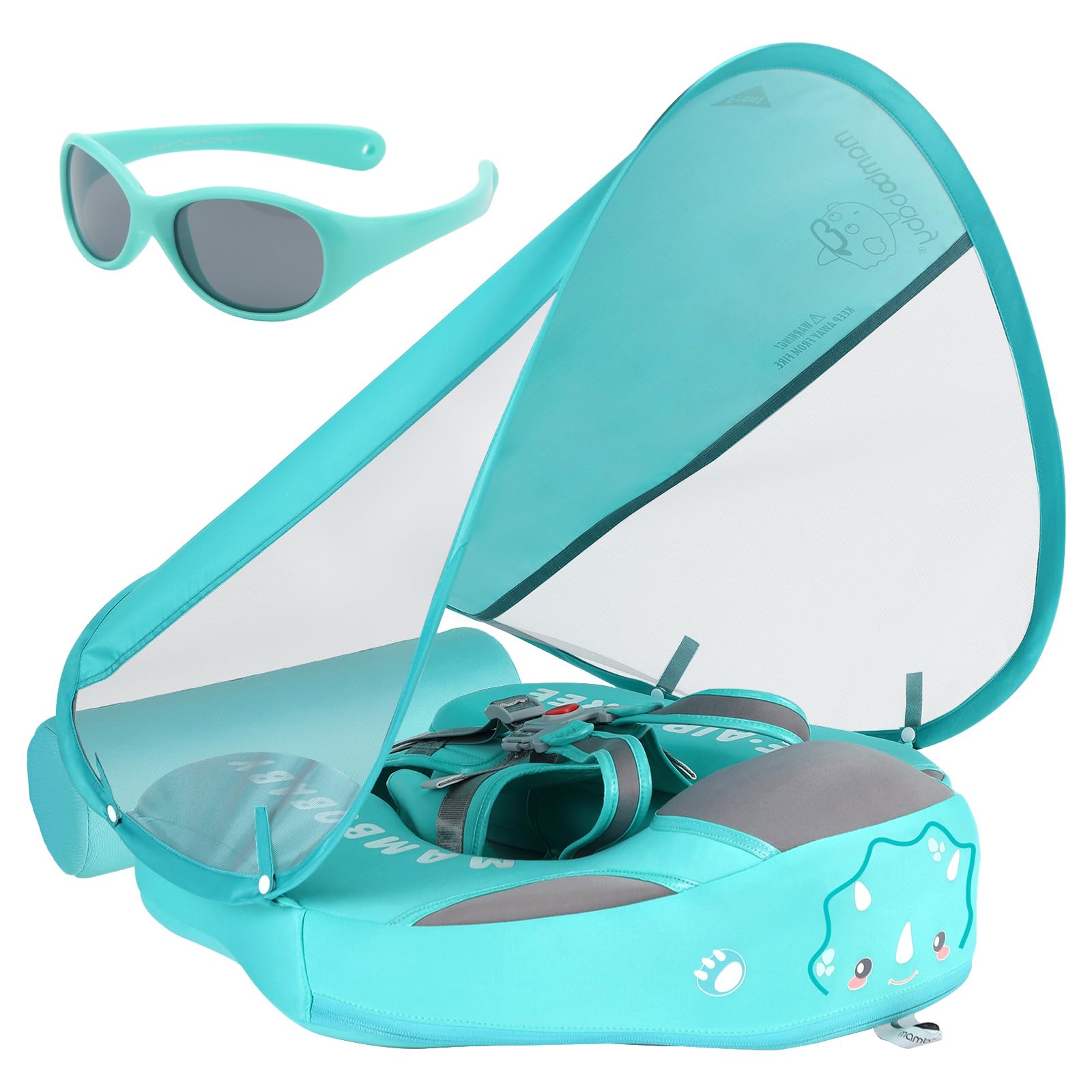
Mambobaby Non-Inflatable Float
Key Features
- Type: Non-inflatable foam
- Sun Canopy: UPF 50+ detachable
- Stability: Anti-flip tail, 5-point harness
- Age/Weight: 3–24 months, 13–40 lbs
- Portability: Bulky, not packable
- Price: Premium
The Mambobaby’s foam core and removable tail eliminate any chance of tipping, even with an active baby shifting weight. Babies stay calm (many fall asleep) because the harness and buoyancy feel secure—no inflation to worry about, no sudden deflation risks. This stability means parents can relax in the water without constantly adjusting or spot-checking. The UPF 50+ canopy adds sun protection without sacrificing visibility.
This float is best suited for families who have a dedicated pool or enough storage space at home. Its non-inflatable design makes it bulkier than any inflatable alternative—you cannot deflate it for travel, and it takes up significant trunk or closet space. The trade-off is worthwhile for parents who prioritize leak-proof, no-fuss safety over portability. Buy this if you want a float that stays upright through active splashing and lets your baby relax in the water. Skip it if you need a packable option for beach trips or limited storage.
Pros
- Stays upright even when baby moves suddenly or leans to one side
- Secure five-point harness and multiple buckle points keep baby from slipping
- Foam construction soothes babies—many drift off to sleep while floating
Cons
- Occasional quality variances with buckle and canopy button durability
- Large footprint and non-deflatable design limit portability and storage
Buy this if you want a float that won’t tip or leak, even with an active baby. Skip it if you need a compact, travel-friendly option.
Best for Proven Inflatable
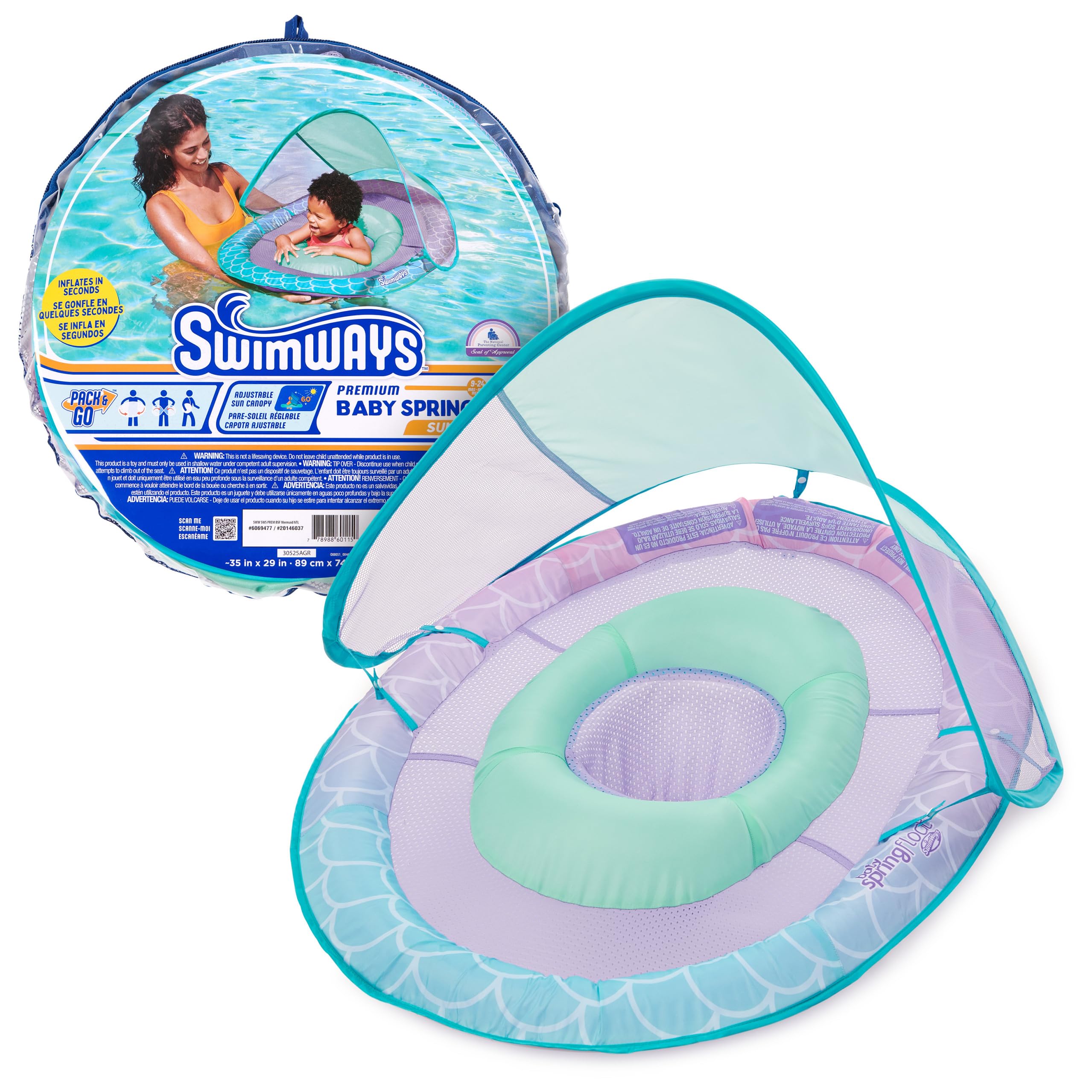
SwimWays Baby Spring Float
Key Features
- Type: Inflatable
- Sun Canopy: UPF 50+ adjustable
- Stability: Inner spring stability
- Age/Weight: 9–24 months, ~30 lbs
- Portability: Deflatable, packable
- Price: Mid-Range
With over 16,000 reviews backing it, the SwimWays Baby Spring Float is the inflatable choice that most families turn to for reliable sun protection and baby comfort. Its UPF 50+ canopy blocks UV effectively, and the inner spring design keeps babies 9–24 months afloat without fuss. The trade-off: inflating the float is a workout without a pump (most buyers recommend one), and the canopy’s upright posture can be inconsistent—some users report it sagging forward or back. Compared to the top non-inflatable pick (Mambobaby), this is more portable and affordable, but you accept the minor hassle of inflation and occasional canopy adjustment. Best for parents who want proven sun coverage and are okay with a small setup routine.
Pros
- UPF 50+ canopy effectively blocks UV rays during pool sessions
- Comfortable seat keeps babies 9–24 months afloat and happy
- Massive review count signals consistent real-world performance
Cons
- Inflation requires a pump; manual effort often leaves it under-inflated
- Canopy may not stay upright—some units sag forward or back
Buy this if you want a widely tested inflatable float with solid sun protection and don’t mind using a pump. Skip it if you need a leak-proof, no-setup option or a canopy that stays perfectly upright every time.
Best for Toy Fun & Canopy
EZIGO Baby Float with Toys
Key Features
- Type: Inflatable
- Sun Canopy: UPF 50+ adjustable 0–120°
- Stability: Dual air chambers, mesh seat
- Age/Weight: 6–36 months, up to 33 lbs
- Portability: Deflatable, packable
- Price: Budget
Toy console and adjustable canopy set this inflatable apart at a budget price. Unlike the top pick’s anti-tip foam stability, this float uses dual air chambers for buoyancy and includes a squeaky octopus and dolphins that keep babies engaged. The UPF 50+ canopy adjusts 0–120° to block sun effectively. However, the canopy hooks can detach under rough use, and the toy console is easy to misplace. This float suits parents who want a fun, sun-protected option for playful babies 6–24 months — those prioritizing non-inflatable stability should look elsewhere.
Pros
- Engaging toy console with squeaky octopus and dolphins captivates babies during pool time.
- Adjustable UPF 50+ canopy provides reliable sun protection and shades baby effectively.
- Durable PVC construction and dual air chambers hold up well across repeated use.
Cons
- Canopy hooks can detach during rough play; handle gently to keep them attached.
- Removable toy console is easy to misplace; store securely to avoid loss.
Buy this if you want a budget-friendly inflatable with toys and sun protection for a playful baby. Skip it if you prefer non-inflatable stability or need compact storage.
Best for Shared Parent-Baby
Poolmaster Mommy & Me
Key Features
- Type: Inflatable
- Sun Canopy: Detachable UPF shade
- Stability: Drop seat design
- Age/Weight: 8–24 months
- Portability: Deflatable, packable
- Price: Budget
The Poolmaster Mommy & Me stands out as the only float designed for a parent to float alongside their baby – a hands-free setup that twin parents especially love. The drop seat keeps infants secure, and the dual ring design offers a shared experience. That said, the canopy is a letdown: it nearly always droops or falls, failing to provide usable shade. Inflation issues are also common, with several reports of units losing air after minimal use. This float works well for parents of twins or those who want to interact with their baby in the pool, but expect to manage canopy and durability tradeoffs. At a budget-friendly price, it’s worth trying for the unique feature if you accept the shortcomings.
Pros
- Shared ring design lets parent float hands-free alongside baby.
- Drop seat holds babies securely and comfortably.
- Great value for twins or siblings close in age.
Cons
- Canopy often droops and fails to provide consistent shade.
- Some units lose air or pop on first use – quality control varies.
Buy this if you want to float alongside your baby or have twins and value shared pool time over a reliable canopy. Skip it if you need durable sun protection or a leak-free inflatable.
Best for Ultra-Budget Basic
Intex My Baby Float
Key Features
- Type: Inflatable
- Stability: Inner ring for stability
- Age/Weight: Baby up to 33 lbs
- Portability: Deflatable, packable
- Price: Budget
Compared to non-inflatable options like the Mambobaby, this Intex float trades stability and sun protection for an unbeatable price and easy portability. It inflates quickly and keeps its shape through multiple sessions, making it a practical pick for splashing around in shaded pools. The seat works well for babies over 6 months who can sit securely, but younger infants may slip, and there’s no canopy — you’ll need a hat, umbrella, or sunscreen to protect delicate skin.
Pros
- Costs far less than any competitor with no frills attached
- Inflates easily and holds air consistently across uses
- With basic care, it lasts multiple seasons of light use
Cons
- No canopy or shade – sun protection must come separately
- Seat can be too roomy for babies under 6 months, increasing slip risk
Buy this if you need a functional inflatable for babies 6+ months and don’t mind supplying your own sun protection. Skip it if you want a canopy or a secure fit for younger infants.
Best for Budget with Canopy
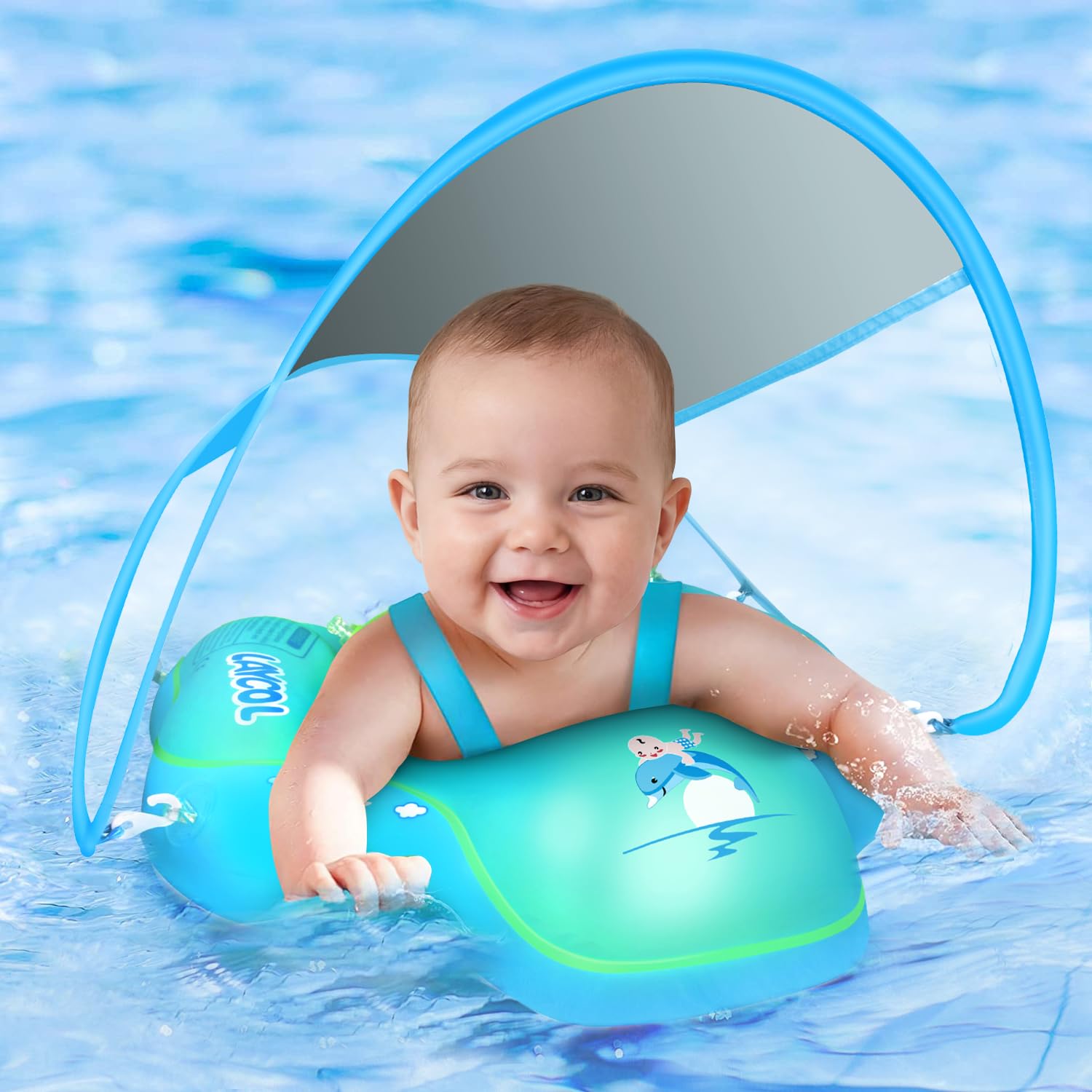
LAYCOL Large Float
Key Features
- Type: Inflatable
- Sun Canopy: UPF 50+ removable
- Stability: Dual air chambers, shoulder straps
- Age/Weight: 3–36 months, up to 26 lbs
- Portability: Deflatable, packable
- Price: Budget
The LAYCOL Large Float gives you a generous seat and a UPF 50+ canopy at a budget price, making it one of the few affordable options for bigger babies still learning to swim. The materials hold up well for the cost, and most families find the sun protection effective. However, the canopy hooks can pop loose during use, and a small number of units have inflation valves that don’t seal properly. It works best for calm infants in shallow, supervised water — active babies may knock the canopy off or stress the build. If you’re comparing it to the top pick’s non-inflatable stability, this float trades that steady feel for easier storage and a lower price, but you’ll want to check the canopy attachment before each session.
Pros
- Good material quality for the price; holds up well over multiple sessions.
- Removable canopy blocks UV effectively; keeps babies shaded.
- Suitable for babies and toddlers learning to swim; seat accommodates larger infants.
Cons
- Canopy hooks may detach in active use; not a secure fit for wiggly babies.
- Occasional inflation valve issues can cause slow deflation over time.
Buy this if you need a budget float with canopy for a calm baby up to 26 lbs. Skip it if you want reliable canopy attachment or worry about valve defects.
Best for Simple & Buoyant
SwimSchool Infant Float
Key Features
- Type: Inflatable
- Sun Canopy: UPF 50+ multi-position
- Stability: Dual air chambers, 5-point harness
- Age/Weight: 6–24 months, up to 30 lbs
- Portability: Deflatable, packable
- Price: Budget
This SwimSchool float keeps things simple: dual air chambers and a wide base provide stable floatation for babies 6–24 months, while the 5-point harness and mesh seat secure the child. It’s easy to inflate and pack for travel. However, the plastic canopy hinge is fragile and may break after limited use, and some units have seam leaks. This float suits parents who want a budget-friendly inflatable with basic sun protection and are comfortable with occasional quality control variances.
Pros
- Dual air chambers provide buoyancy and stability for active babies
- Easy to inflate and deflate, making it travel-friendly
- Adjustable harness and mesh seat grow with the baby
Cons
- Canopy hinge is delicate and may break after limited use
- Some units have air leaks or seam failures
Buy this if you want a simple, portable inflatable float with a harness and are okay with minor quality control variances.
Best for Non-Inflatable Alt
Mambobaby Lurui Float

Key Features
- Type: Non-inflatable foam
- Sun Canopy: UPF 50+ detachable
- Stability: Anti-flip tail, 5-point harness
- Age/Weight: 3–24 months, 13–40 lbs
- Portability: Foldable but bulky
- Price: Premium
Shares the same non-inflatable foam stability and anti-flip tail as the Mambobaby, with a 5-point harness for security. The UPF 50+ canopy offers sun protection but may need repositioning. At a lower price, it’s a decent value for parents who can manage the bulk and canopy quirks, though review volume is smaller.
Pros
- Multiple harness points keep baby securely in place
- Foam core and TPU cover hold up well over time
Cons
- Canopy front flap tends to pull back, requiring adjustment
Worth considering if you want non-inflatable stability at a lower price than the Mambobaby and can tolerate occasional canopy adjustments and bulk.
Best for Cute with Toys
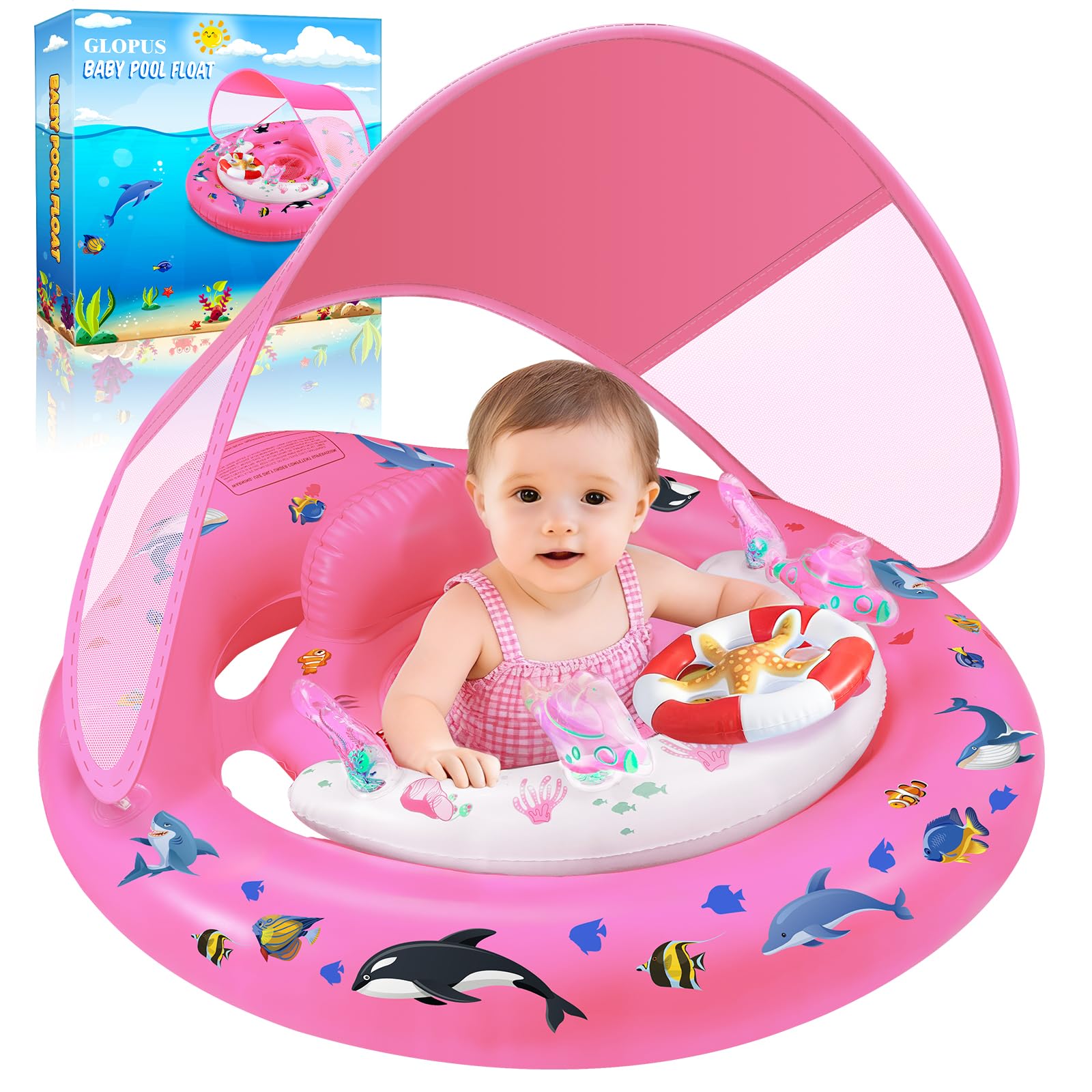
GLOPUS Baby Float
Key Features
- Type: Inflatable
- Sun Canopy: UPF 50+ detachable
- Stability: Dual air chambers, mesh seat
- Age/Weight: 6–36 months, up to 32 lbs
- Portability: Deflatable, packable
- Price: Budget
The GLOPUS baby float wins on looks and play value – the built-in toy console keeps babies engaged and the UPF 50+ canopy adds sun protection. However, with only 571 reviews and occasional reports of canopy hooks detaching or seams giving way, it’s best suited for occasional pool fun rather than heavy rotation.
Pros
- Appealing design with high parent satisfaction
- Built-in toys keep babies entertained in the water
Cons
- Some units experience canopy hook detachment or seam separation
Worth considering if you prioritize visual appeal and built-in toys over long-term durability, and plan for occasional pool sessions.
Best for Larger Non-Inflatable
Mambobaby Size Improved Float
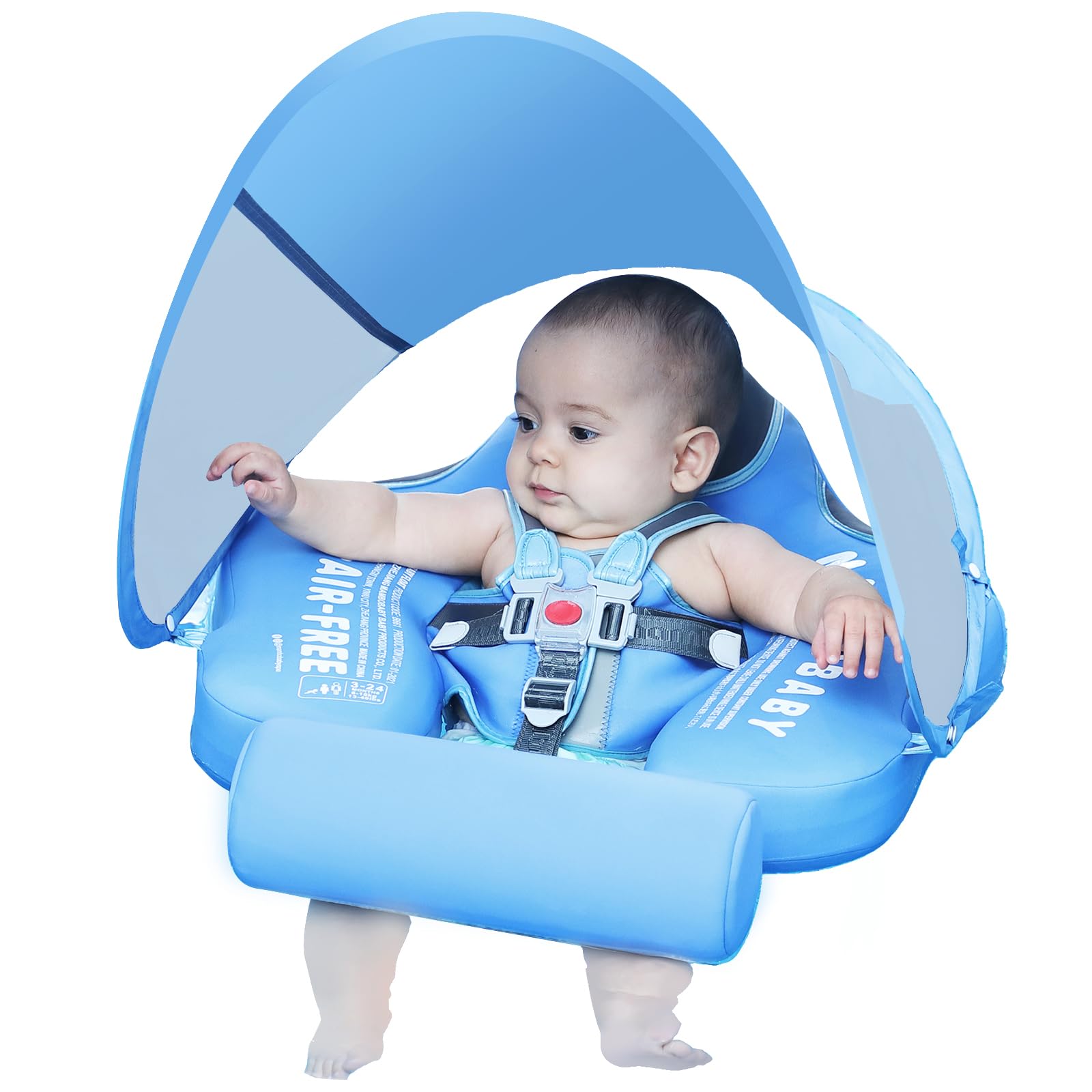
Key Features
- Type: Non-inflatable foam
- Sun Canopy: UPF 50+ detachable
- Stability: Anti-flip tail, 5-point harness
- Age/Weight: 3–24 months, up to 40 lbs
- Portability: Bulky, not packable
- Price: Premium
This float inherits the spill-proof foam design of the top-ranked Mambobaby, sized for babies up to 40 lbs with the same anti-tip tail. The larger fit justifies the upgrade only for those who need it, as the premium price and bulky portability make the standard version the better value for most.
Pros
- Non-inflatable pearl foam construction supports up to 40 lbs without deflation risk.
- 5-point harness and tail design keep baby secure and upright.
Cons
- Setup is awkward solo – most parents need a second person to fasten the harness.
Worth considering if your baby needs the larger size and you value stability over price and portability.
How to Choose
The biggest buying mistake is trusting ‘no flip’ labels – actual stability varies drastically, so focus on design rather than claims.
Inflatable vs. Non-Inflatable
Inflatable floats are portable and affordable but risk leaks and deflation. Non-inflatable foam floats offer zero leak risk and superior stability, though they are bulky and cannot be packed flat. Choose inflatable if you travel often; choose non-inflatable for home pools where safety is the top priority.
Sun Protection
A UPF 50+ canopy is essential for long pool sessions. Look for adjustable or detachable canopies with sturdy hinges — flimsy wire frames or plastic hooks often break or fail to stay upright. A canopy that flops down defeats its purpose.
Stability and Safety
The most critical factor is how well the float resists tipping. A wide base, low center of gravity, and a multi-point harness (5-point is best) prevent accidental capsizing. Non-inflatable floats with a stabilizing tail or inner foam core are the most stable. Always check user reports of flipping — marketing claims are not reliable.
Age and Weight Limits
Most floats cover 6–24 months, but some start as early as 3 months. Weight limits typically range from 26 to 40 lbs. Overloading a float reduces buoyancy and increases tipping risk. Matching the float to your baby’s actual weight — not just age — is essential.
Portability and Storage
Inflatable floats deflate to a small package, making them ideal for vacations or pool bags. Non-inflatable floats are rigid and take up significant trunk or closet space. If you plan to take the float to a community pool or beach, inflatable is more practical.
FAQ
Do baby pool floats flip over easily?
Some do. Inexpensive inflatable floats with narrow bases or poor harnesses can tip when a baby leans to one side. Non-inflatable foam floats with a tail or wide body are far more stable. Always read recent reviews for real-world flipping reports — marketing often exaggerates stability.
Are non-inflatable baby floats safer than inflatable ones?
Generally yes, because they cannot puncture or leak, and their foam core provides a low center of gravity that resists tipping. However, they are bulky and cannot be deflated. For peace of mind in a home pool, non-inflatable is the safer choice, but for travel, a quality inflatable is still fine if used correctly.
How to keep the canopy on a baby float from falling down?
Canopies that attach with thin plastic hooks or wire frames are prone to flopping. Look for models with a rigid plastic hinge or adjustable metal arm that locks into position. If the canopy falls despite proper setup, you may need to zip-tie or tape the frame — but that’s a workaround, not a fix.
What age is best for an infant swim seat with canopy?
Most models are designed for babies who can hold their head up, typically 6 months and older. Some non-inflatable floats start at 3 months if they offer full torso support. A canopy becomes more important after 6 months when babies are in the sun longer. Check the weight limit as well — age alone is not sufficient.