This post contains affiliate links. We may earn a small commission when you buy through our links — at no extra cost to you.
Every parent knows the drill: a congested baby, a sleepless night, and a humidifier that’s either too loud, too small, or grows pink slime within days. The challenge isn’t just adding moisture—it’s finding a unit that stays quiet enough for the nursery, runs long enough through the night, and doesn’t become a cleaning chore that gets skipped. Most ultrasonic cool mist models in the $30–$80 range share the same failure patterns: mineral buildup, motor burnout, and mold in hard-to-reach crevices. That’s why this guide cuts through the noise to focus on what actually matters: tank size that matches your room, noise levels below 30 dB, and designs that make cleaning less of a hassle. Whether you prioritize top-fill convenience, a built-in nightlight, or smart app control, you’ll find picks that balance performance with the realities of daily baby care.


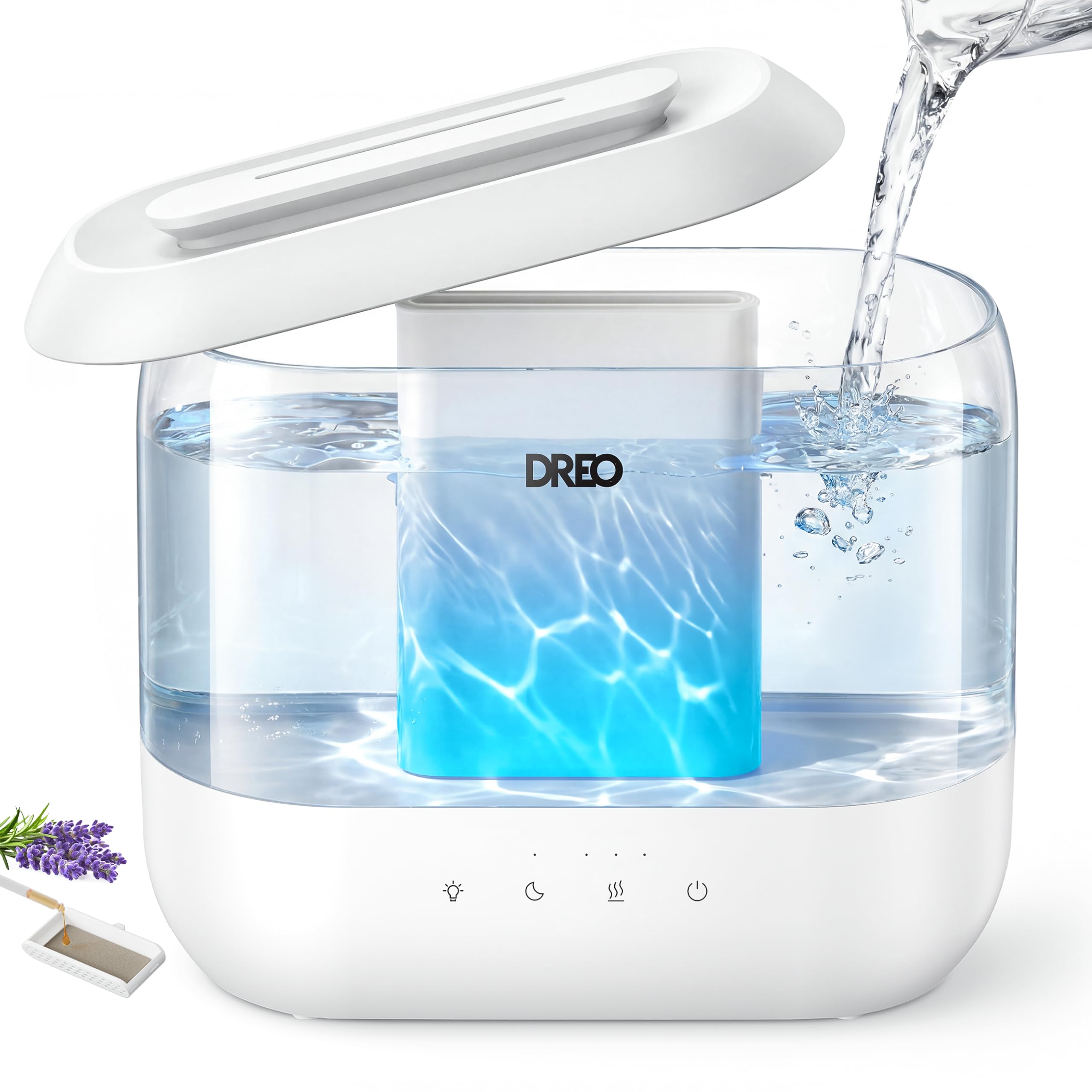
Best for Small Nurseries
LEVOIT Classic 160
Key Features
- Tank / Runtime: 2.5 L, 25 hrs
- Noise Level: 26–28 dB
- Ease of Cleaning: Easy top-fill
- Reliability: Reliable
- Price: Budget
The Classic 160 operates at 26–28 dB — quiet enough to go unnoticed in a baby’s room — and its 2.5L tank runs for 25 hours on low. The top-fill design makes refilling mess-free, and the cool mist delivers consistent humidity across 219 sq ft without condensation on nearby surfaces. Customer feedback over more than 25,000 reviews consistently highlights its quiet operation and ease of use, with minimal complaints about leaks or motor failure common among cheaper ultrasonic models.
Best suited for parents who need a simple, low-maintenance humidifier for a nursery or small bedroom, and who are willing to clean the tank weekly with vinegar or bleach to prevent mold. Some crevices are hard to reach, so staying on a cleaning schedule is non-negotiable. Skip this if you want a large tank for the whole house or prefer warm mist — this unit is cool mist only and best kept to rooms around 200 sq ft.
Pros
- Quiet enough for sleep without distracting white noise.
- Top-fill design with minimal spills during refills.
- Good value for the price — consistent humidity output for small rooms.
Cons
- Requires weekly cleaning with vinegar or bleach to avoid mold buildup.
- Some internal crevices are difficult to reach during cleaning.
Buy this if you need an affordable, whisper-quiet cool mist humidifier for a small bedroom or nursery. Skip it if you want to avoid regular cleaning or need whole-house coverage.
Best for Small Bedrooms
AquaOasis Cool Mist
Key Features
- Tank / Runtime: 2.2 L, 26 hrs
- Noise Level: Ultra-quiet
- Ease of Cleaning: Easy bottom-fill
- Reliability: Reliable
- Price: Budget
The AquaOasis has earned its massive following by being quiet, effective, and easy on the wallet. Unlike the top-fill LEVOIT Classic 160, this model uses a bottom-fill 2.2L tank that requires more frequent refills on higher settings and can be messy to fill. The payoff is a lower price and the peace of mind that comes with a product thousands of buyers have vetted. Best suited for a small bedroom or nursery where you don’t mind refilling once or twice a day.
Pros
- Quiet operation that won’t disturb sleep, ideal for bedrooms.
- Simple to fill, clean, and operate right out of the box.
- Great value for the money with consistent performance.
Cons
- Needs more frequent refills on higher output settings due to small tank.
- Bottom-fill design can be messy; spills are common when refilling.
Buy this if you want a proven, quiet humidifier for a small bedroom at a lower cost than the top pick. Skip it if you prefer a top-fill design or need longer runtime between refills.
Best for Large Rooms
Everlasting Comfort 6L Top Fill
Key Features
- Tank / Runtime: 6 L, 60 hrs
- Noise Level: Quiet
- Ease of Cleaning: Easy top-fill
- Reliability: Mixed
- Price: Mid-Range
The Everlasting Comfort 6L delivers high mist output and 60-hour runtime from a top-fill tank that simplifies refilling and cleaning – a clear advantage for big rooms or whole-house use. However, customer reports show a split experience: while many units stay quiet and effective, a notable minority develop noise or stop working within months. This humidifier suits anyone who prioritizes capacity and easy maintenance over guaranteed long-term durability. If you need a large-room workhorse and accept some QC variance, it’s a sensible pick.
Pros
- Quiet operation with strong output for large rooms
- Top-fill design makes refilling and cleaning easy
Cons
- Some units develop noise or stop working after a few months – a QC variance to expect
Buy this if you need a high-capacity humidifier for a large space and value top-fill convenience over guaranteed long-term reliability. Skip it if you cannot tolerate any chance of early failure.
Best for Large Bedrooms
Dreo Smart
Key Features
- Tank / Runtime: 4 L, 36 hrs
- Noise Level: 28 dB
- Reliability: Unreliable
- Price: Mid-Range
The Dreo distinguishes itself with app and voice control, plus a built-in hygrometer that automates humidity levels — a clear step beyond the LEVOIT top pick. That convenience, however, is undermined by sporadic reliability: some units stop working within months. This makes it a fit for tech-savvy buyers who value remote control and are comfortable with a potential early replacement. If ease of cleaning is a priority, the HM311 offers a simpler design with fewer smart features.
Pros
- Intuitive app and voice control for adjusting humidity from anywhere.
- Quiet operation at 28 dB, suitable for bedrooms and nurseries.
Cons
- Occasional quality control variances causing units to stop working within months.
Buy this if you want smart home integration and automatic humidity control. Skip it if long-term dependability is your top concern.
Best for Cold Relief
Vicks Warm Mist V745
Key Features
- Tank / Runtime: 1 gal, 24 hrs
- Noise Level: Noisy
- Ease of Cleaning: Filter-free, easy
- Reliability: Unreliable
- Price: Mid-Range
Unlike the top pick’s cool mist, the Vicks V745 delivers warm vapor that many find more soothing for cold symptoms. Its filter-free design and VapoPad compatibility make setup simple, and it carries a pediatrician recommendation. However, this model is noticeably louder than ultrasonic alternatives—a drawback for nurseries—and customer reports frequently mention leakage and units failing within months. The 1-gallon tank runs up to 24 hours, but treat this as a short-term helper rather than a permanent fixture.
Pros
- Warm mist provides effective relief for congestion and coughs
- Filter-free design simplifies maintenance
- Good value for a warm mist humidifier
Cons
- Noise level is high; not suited for light sleepers or nurseries
- Frequent leakage and poor durability – many units stop working within months
Buy this if you need short-term warm mist for cold relief and are not sensitive to noise. Skip it if you want a quiet, long-lasting humidifier for a nursery.
Best for Small Bedrooms
Homvana H101
Key Features
- Tank / Runtime: 3.6 L, 34 hrs
- Noise Level: 23 dB
- Ease of Cleaning: Easy top-fill
- Reliability: Reliable
- Price: Budget
The Homvana H101 stands apart from the top pick by adding a color-changing nightlight and built-in essential oil diffuser to an already quiet (23 dB) cool mist humidifier. The top-fill design and wide opening make daily refilling easy, but some users report the tank’s narrow crevices require extra attention during deep cleaning. Best suited for small to medium bedrooms or nurseries, it isn’t intended for large rooms or whole-house use. For parents wanting a single unit that provides quiet humidity, a soft nightlight, and gentle aromatherapy within a budget-friendly price, this is a practical option.
Pros
- Near-silent 23dB operation that won’t disturb sleep.
- Top-fill design with wide opening simplifies refilling and cleaning.
- Color-changing nightlight and essential oil diffuser for nursery ambiance.
Cons
- Cleaning narrow crevices around the water tank requires extra care.
- Limited to small to medium bedrooms; won’t handle large spaces.
Buy this if you want a quiet humidifier with nightlight and aromatherapy for a small nursery or bedroom. Skip it if you need to humidify a large room or prefer simpler cleaning.
Best for Small Bedrooms
Dreo HM311
Key Features
- Tank / Runtime: 4 L, 36 hrs
- Noise Level: 28 dB
- Ease of Cleaning: Modular, easy
- Reliability: Unreliable
- Price: Budget
The HM311’s modular design opens up every interior surface for scrubbing, reducing the mold buildup that plagues many ultrasonic units—a clear advantage over the smart Dreo model that prioritizes app control over cleanability. Mist output is quiet at 28 dB, suitable for a baby’s room, and the 4L tank runs 36 hours on low. The trade-off: reliability is inconsistent; some units stop working within months, so longevity isn’t guaranteed. Best for parents who value easy maintenance and quiet operation in a small to medium nursery, but not for anyone needing long-term durability.
Pros
- Extremely quiet operation – 28 dB is barely audible, safe for sleeping baby.
- Easy to clean with modular design that allows full access to all interior parts.
- Good value for the 4L tank capacity and runtime.
Cons
- Reliability is inconsistent; some units fail within months of use.
- Mist output can be too tall, occasionally wetting ceiling or nearby surfaces.
Buy this if you want the easiest-to-clean basic humidifier for a nursery and don’t need smart features. Skip it if long-term reliability is a priority or you cover a very large room.
Best for Budget Aromatherapy
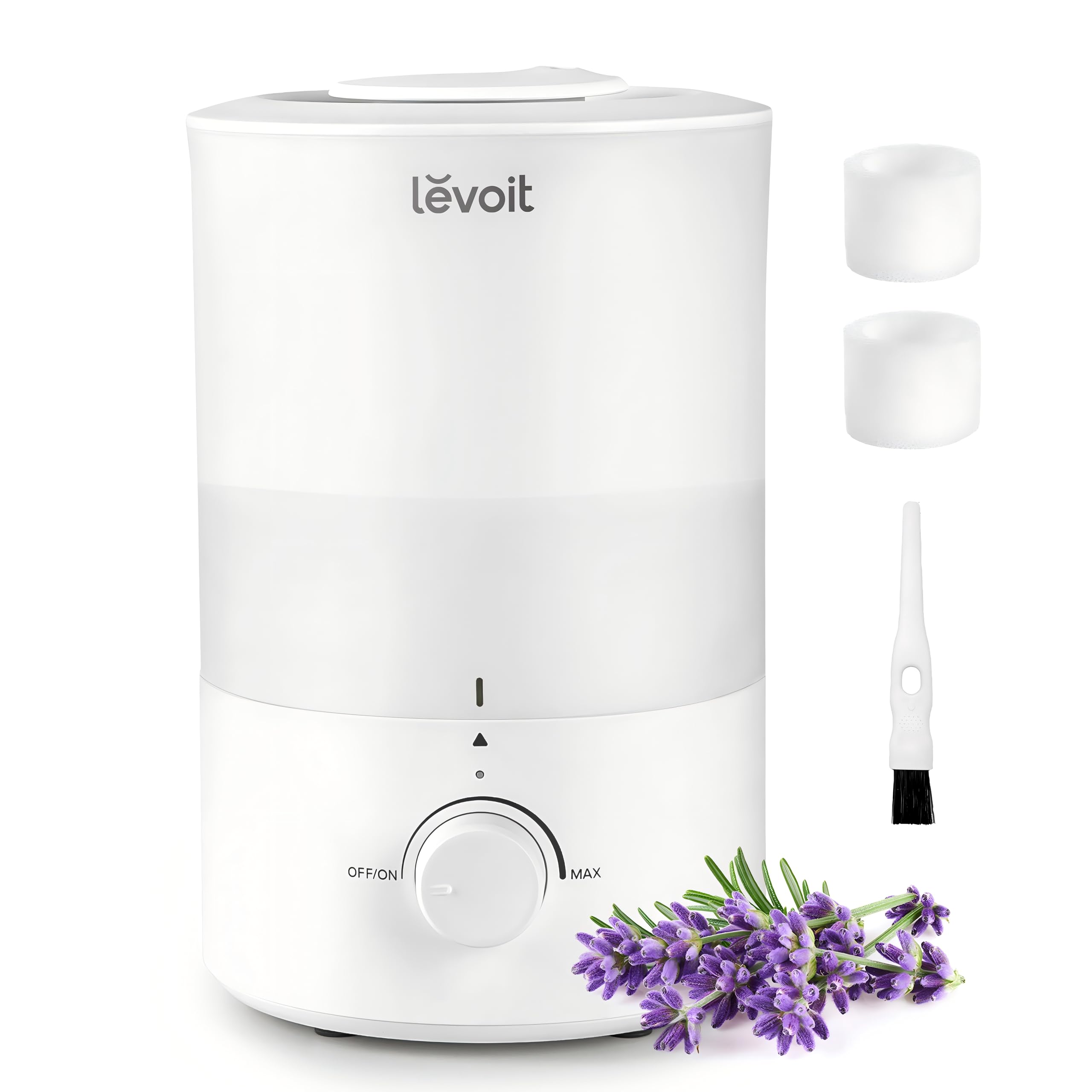
LEVOIT Dual 150
Key Features
- Tank / Runtime: 3 L, 25 hrs
- Noise Level: Quiet
- Ease of Cleaning: Easy top-fill
- Reliability: Unreliable
- Price: Budget
This top-fill humidifier pairs a 3L tank and essential oil diffuser with quiet operation at a budget-friendly price. But durability problems – many units stop working within a year – and a lower review count than similarly-priced options make it better suited as a short-term solution.
Pros
- Effective and quiet – relieves congestion and dry air.
- Easy top-fill design simplifies filling and cleaning.
Cons
- Durability concerns – many units stop working within a year.
Worth considering if top-fill convenience and essential oil use are priorities over long-term reliability.
Best for Small Bedrooms
Dreo DR-HHM006

Key Features
- Tank / Runtime: 3 L, 30 hrs
- Noise Level: 26 dB
- Ease of Cleaning: Easy top-fill
- Reliability: Reliable
- Price: Budget
This Dreo model delivers quiet, effective humidity control for small to medium bedrooms, with easy top-fill access and a handy humidity display plus nightlight. The 3L tank runs about 30 hours on low, but on the high setting it lasts roughly 8 hours—shorter than the marketing suggests, so plan refills accordingly. It’s a newer budget option with fewer reviews than established competition, making it a solid value if the runtime trade-off fits your routine.
Pros
- Quiet and effective for bedrooms
- Built-in humidity display and nightlight add value
Cons
- High setting only lasts about 8 hours, less than advertised
Worth considering if you want a budget-friendly nightstand humidifier with useful features and don’t need all-night runtime on the high setting.
Best for Smart Features
LEVOIT Classic 300S

Key Features
- Tank / Runtime: 6 L, 60 hrs
- Noise Level: Very quiet
- Ease of Cleaning: Difficult cleaning
- Reliability: Unreliable
- Price: Mid-Range
This 6L model offers app and voice control, auto humidity regulation, and quiet operation suitable for large rooms up to 505 sq ft. However, a notable share of owners report units leaking or failing within months, and the design creates hard-to-reach crevices that encourage mold growth. These reliability concerns overshadow the otherwise convenient smart features, making it a better fit for tech enthusiasts willing to accept higher maintenance and potential early replacement.
Pros
- App and voice control for effortless humidity adjustments.
- Very quiet operation, ideal for bedrooms or nurseries.
Cons
- Durability concerns with some units developing leaks within months.
Worth considering if you prioritize smart home integration and app control over long-term reliability and easier cleaning.
Best for Nursery Decor
Crane Drop Shape

Key Features
- Tank / Runtime: 1 gal, 24 hrs
- Noise Level: Very quiet
- Ease of Cleaning: Difficult cleaning
- Reliability: Unreliable
- Price: Mid-Range
Crane’s drop-shaped humidifier is very quiet and adds moisture effectively, making it a charming nursery accent. However, many units develop issues – mist output can stop, and tight crevices make thorough cleaning difficult, often leading to mold. Choose this only if design matters more than hassle-free long-term use.
Pros
- Very quiet – ideal for nurseries or bedrooms.
- Adds moisture effectively in small to medium rooms.
Cons
- Frequent reliability issues – some units stop working within weeks.
- Difficult to clean thoroughly, which can lead to mold.
Worth considering if you want a quiet, attractive nursery humidifier and are comfortable with frequent replacement.
Best for Large Rooms
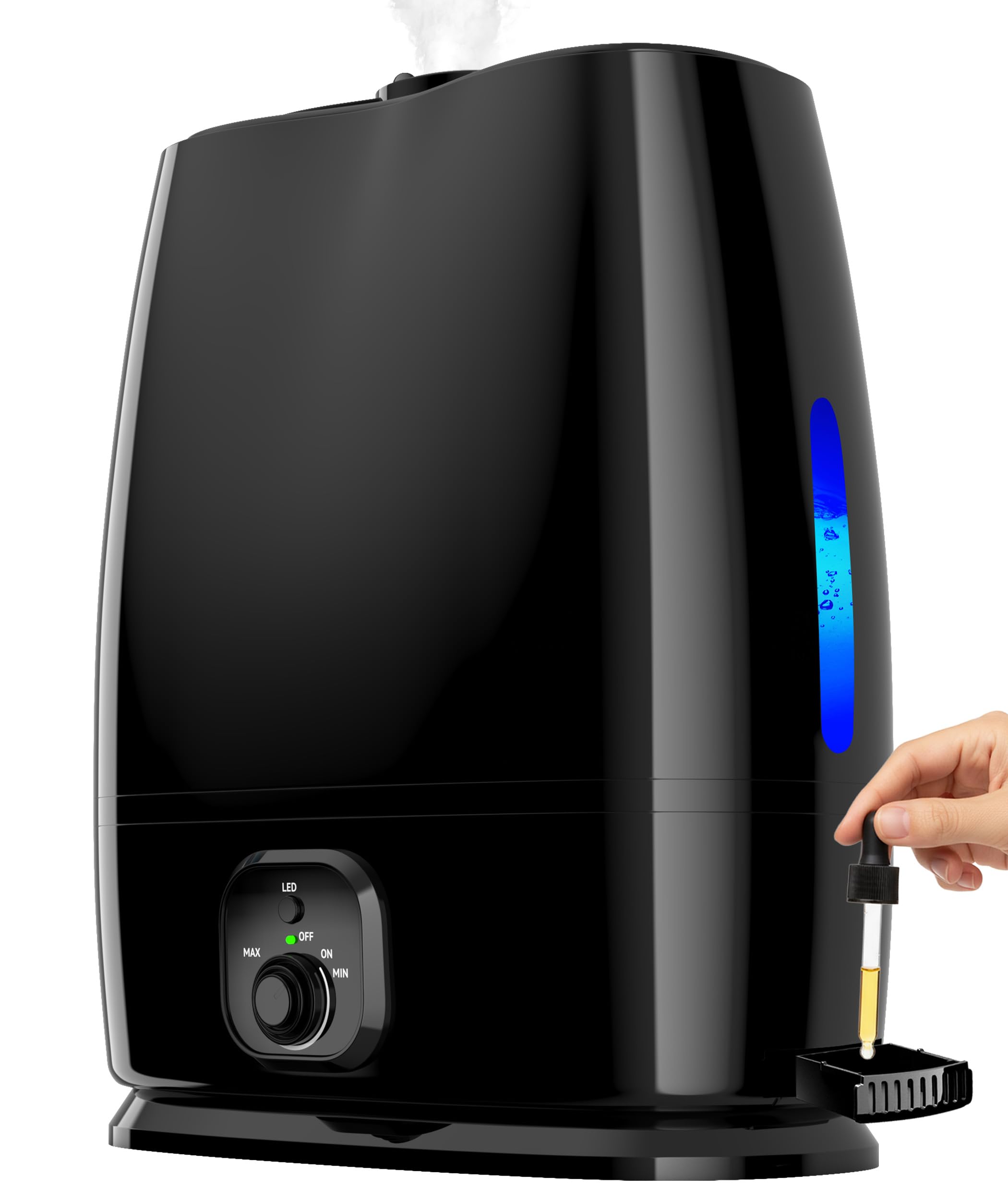
Everlasting Comfort 6L Original
Key Features
- Tank / Runtime: 6 L, 50 hrs
- Noise Level: Quiet
- Ease of Cleaning: Bottom-fill, moderate
- Reliability: Unreliable
- Price: Mid-Range
This 6L humidifier runs quietly for 50 hours and covers large spaces effectively. However, the bottom-fill tank is awkward to carry, and many units develop problems within months. For easier maintenance and better durability, the upgraded top-fill version is a more practical choice.
Pros
- Quiet operation with a large 6L tank for extended runtime.
- Covers large rooms up to 500 sq ft effectively.
Cons
- Bottom-fill design is inconvenient and many units stop working within months.
Worth considering if you prioritize large capacity and quiet operation over filling convenience and long-term reliability.
How to Choose
Use distilled or filtered water to prevent white dust and extend the lifespan of your ultrasonic humidifier.
Tank Capacity and Runtime
For a nursery, a 2.5L to 4L tank usually lasts through the night on low. Larger rooms or whole-house use call for 6L or more. Balance capacity with portability—a full 6L tank weighs over 13 pounds and can be awkward to carry.
Noise Level
Babies are light sleepers, so look for a unit rated at 30 dB or lower. Ultrasonic models are inherently quiet, but some have louder fans on higher settings. The quietest units hover around 23 dB—barely audible.
Ease of Cleaning
Top-fill designs with wide openings let you reach every corner with a bottle brush. Avoid models with narrow tank necks or hidden crevices—they trap moisture and grow mold fast. Plan to clean every 2–3 days using a vinegar or bleach solution.
Reliability and Durability
Ultrasonic humidifiers share common failure points: mineral-clogged transducers, leaky water chambers, and sensor errors. Units that cost under $50 often have shorter lifespans. Check user reviews for complaints about early failure—this is the best reliability indicator.
FAQ
How often should I clean a baby humidifier to prevent mold?
Clean the tank and base every 2–3 days with a 50/50 white vinegar and water solution. Rinse thoroughly. For stubborn pink slime, use a diluted bleach soak once a week. Regular cleaning is non-negotiable—skipping it turns the humidifier into a mold sprayer.
Does ultrasonic humidifier cause white dust and is it harmful for babies?
White dust comes from minerals in tap water. It’s not toxic, but inhaling fine mineral particles can irritate a baby’s lungs. Use distilled or demineralized water to eliminate the dust entirely. Alternatively, choose a filter-free model and clean the transducer regularly.
What is the quietest humidifier for a baby nursery?
Models rated at 23–26 dB are virtually silent—barely louder than a whisper. The Homvana H101 (23 dB) and LEVOIT Classic 160 (26 dB) are excellent options. Avoid warm mist humidifiers, which often buzz or gurgle above 35 dB.
Why does my humidifier stop working after a few months?
Most failures are caused by mineral buildup on the transducer, a clogged fan, or a faulty water-level sensor. Using distilled water and cleaning the unit every 2–3 days dramatically reduces the risk. If a unit stops working within a year, it’s usually a design defect rather than user error.