This post contains affiliate links. We may earn a small commission when you buy through our links — at no extra cost to you.
Parents often discover too late that many baby walkers struggle on actual home floors—push walkers skid dangerously on hardwood, while seated models wedge themselves into doorways. The category is full of designs that promise mobility but deliver frustration. The difference comes down to wheel configuration, weight distribution, and thoughtful speed management, not flashy features.
This guide cuts through packaging claims to find the walkers that perform where your baby will actually use them. We highlight models with resistance clickers that prevent runaway push walkers, swivel wheels that navigate tight corners, and bases designed for both carpet and hard surfaces. The result is a short list of walkers that genuinely help your child build walking confidence, without the constant rescuing.
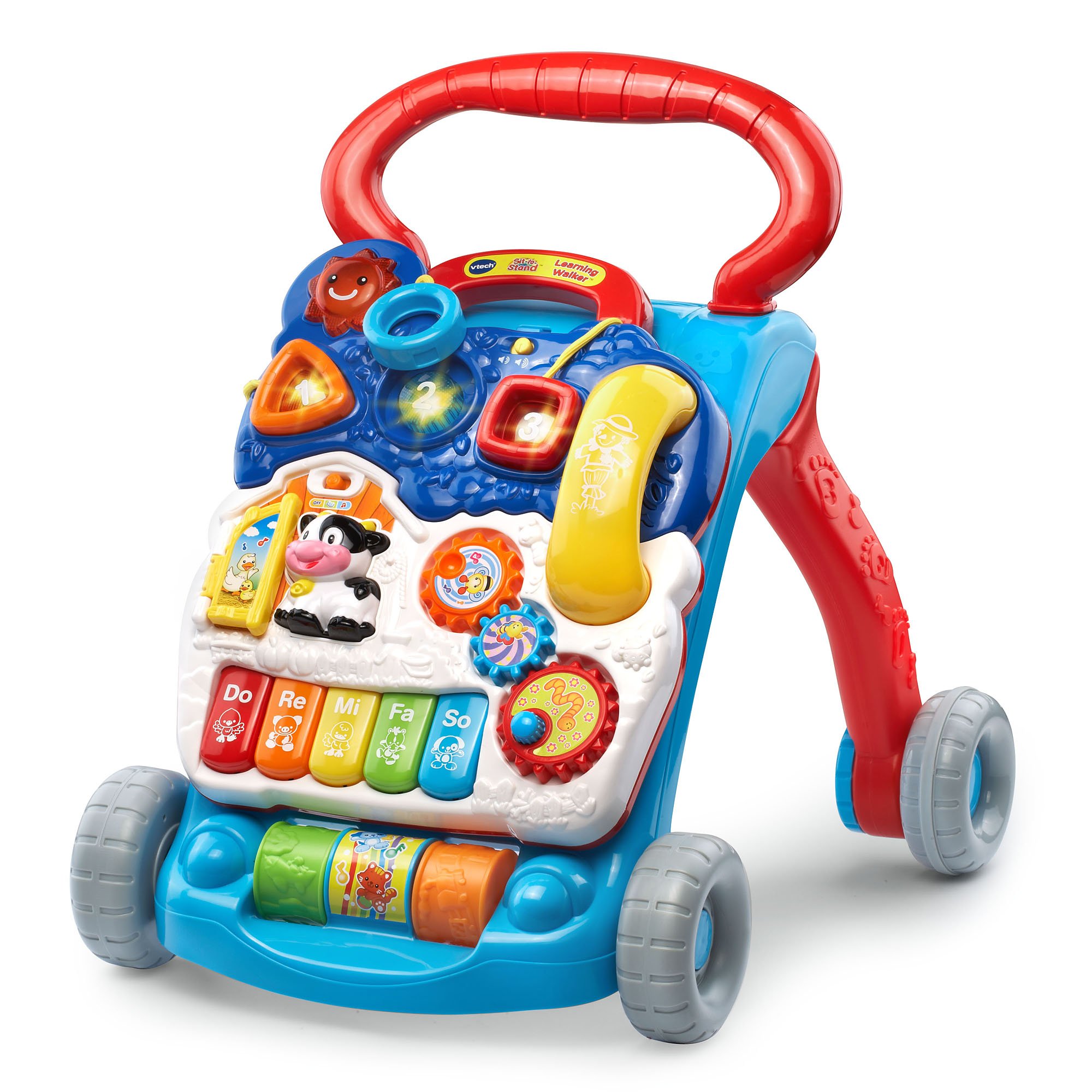



Best for Snack & Play
Joovy Spoon Walker
Key Features
- Walker Type: Seated walker
- Max Weight / Height: 30 lbs
- Wheel Design: Fixed rear wheels
- Assembly & Cleaning: Machine-washable seat, pop-out tray
- Floor Suitability: Hard floors, open spaces
- Price: Premium
Unlike push-behind designs focused on walking milestones, the Joovy Spoon walker doubles as a mobile high chair with an extra-large tray that corrals snacks and toys while keeping curious hands from grabbing household objects. The machine-washable seat pad and pop-out tray insert make cleanup after messy meals exceptionally simple. This design comes with a trade-off: fixed rear wheels don’t swivel, and the wide tray makes it bulky, so it struggles to turn in tight corners and can get wedged in doorways. It’s best suited for open floor plans where a baby can cruise freely without navigating narrow spaces. Families who prioritize snack-time containment and easy cleaning over tight-space maneuverability will appreciate this walker’s strengths.
Pros
- Durable frame and materials stand up to daily use through multiple children
- Extra-large removable tray keeps snacks and toys contained and prevents baby from grabbing off-limits objects
- Machine-washable seat and wipeable tray insert make post-meal cleanup quick and thorough
Cons
- Fixed rear wheels don’t swivel, limiting the walker to straight-line movement and awkward turns
- The wide tray adds bulk, making the walker prone to getting stuck in doorways and narrow passages
Buy this if you have an open floor plan and want a seated walker that serves as a mess-containment snack station. Skip it if your home has tight hallways, many corners, or you need a walker that turns easily.
Best for Heirloom Wagon
Radio Flyer Walker Wagon
Key Features
- Walker Type: Wooden push walker
- Wheel Design: Fixed wheels, resistance clickers
- Floor Suitability: Hard floors; straight-line movement
- Price: Premium
Resistance clickers let you adjust how fast the wagon rolls, preventing a new walker from taking off on hardwood floors. The solid wood build and classic red finish look good enough to leave out, and the wagon body becomes a favorite spot for hauling toys once walking is mastered. Unlike activity-packed plastic walkers, this one keeps things simple and slows the pace naturally. The trade-off is mobility: fixed wheels mean it rolls only straight ahead, so you lift it to change direction. Side panels, while clever for storage, can detach if pushed hard. Parents who value aesthetics and growth potential over maneuverability will find it a worthy companion for the first steps year and beyond.
Pros
- Heirloom-quality wood construction with a classic red finish that fits in any room.
- Resistance clickers help hesitant toddlers take confident steps without sliding.
- Wagon body doubles as toy storage and a prop for imaginative play long after walking.
Cons
- Fixed wheels don’t swivel; the wagon must be picked up to turn.
- Removable side panels can pop out if leaned on heavily; paint may show minor imperfections.
Buy this if you want a beautiful wooden push walker that controls speed and doubles as storage, and you have open space for straight-line walking. Skip it if you need a walker that can easily turn corners in tight rooms.
Best for Budget Seated
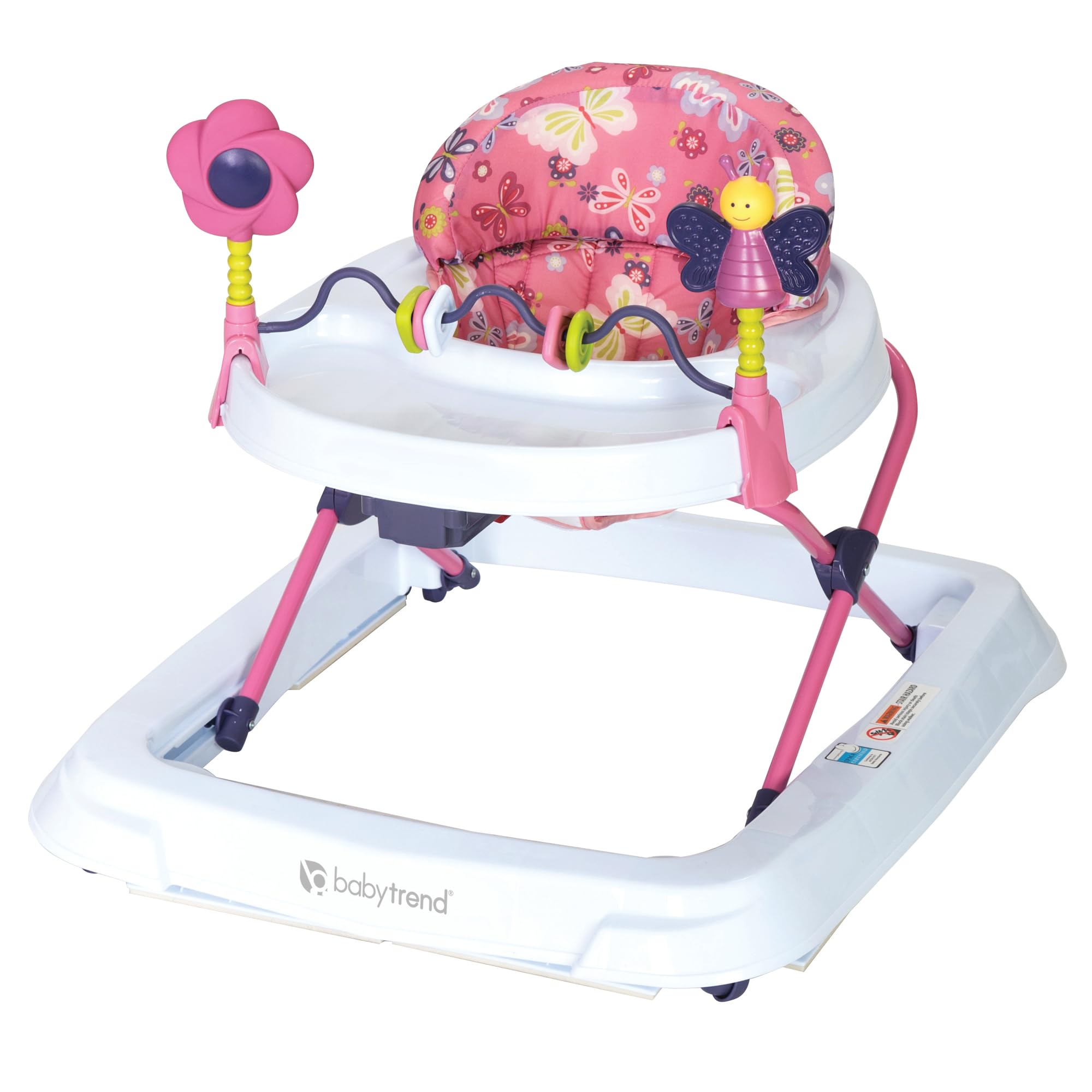
Smart Steps Trend Walker
Key Features
- Walker Type: Seated walker
- Max Weight / Height: 30 lbs
- Wheel Design: Multi-directional front, fixed rear
- Assembly & Cleaning: Snap-together assembly, removable toy bar
- Floor Suitability: Hard floors; may stick on carpet
- Price: Budget
The Smart Steps walker trades the massive tray and machine-washable seat of pricier alternatives for a more compact, flat-folding design and a lower cost. Its fixed rear wheels force babies to go straight or be fetched from corners, so it works best in open areas with constant adult spotting. The seat front and wheels can loosen over time, so occasional tightening keeps it safe for light-duty use. For grandparents’ visits or short bursts of floor play, it delivers solid value without overengineering.
Pros
- Good value with a large tray and three height adjustments
- Snaps together quickly with minimal tools
- Cute Emily Pink styling appeals to babies and parents
Cons
- Fixed rear wheels make tight turns difficult; baby may get stuck in corners
- Seat front and wheels can loosen with frequent use, requiring occasional checks
Buy this if you need a budget-friendly seated walker for occasional use in an open floor plan and you’re okay with manually helping baby turn. Skip it if daily maneuverability and rock-solid durability are priorities.
Best for 2-In-1 Versatile
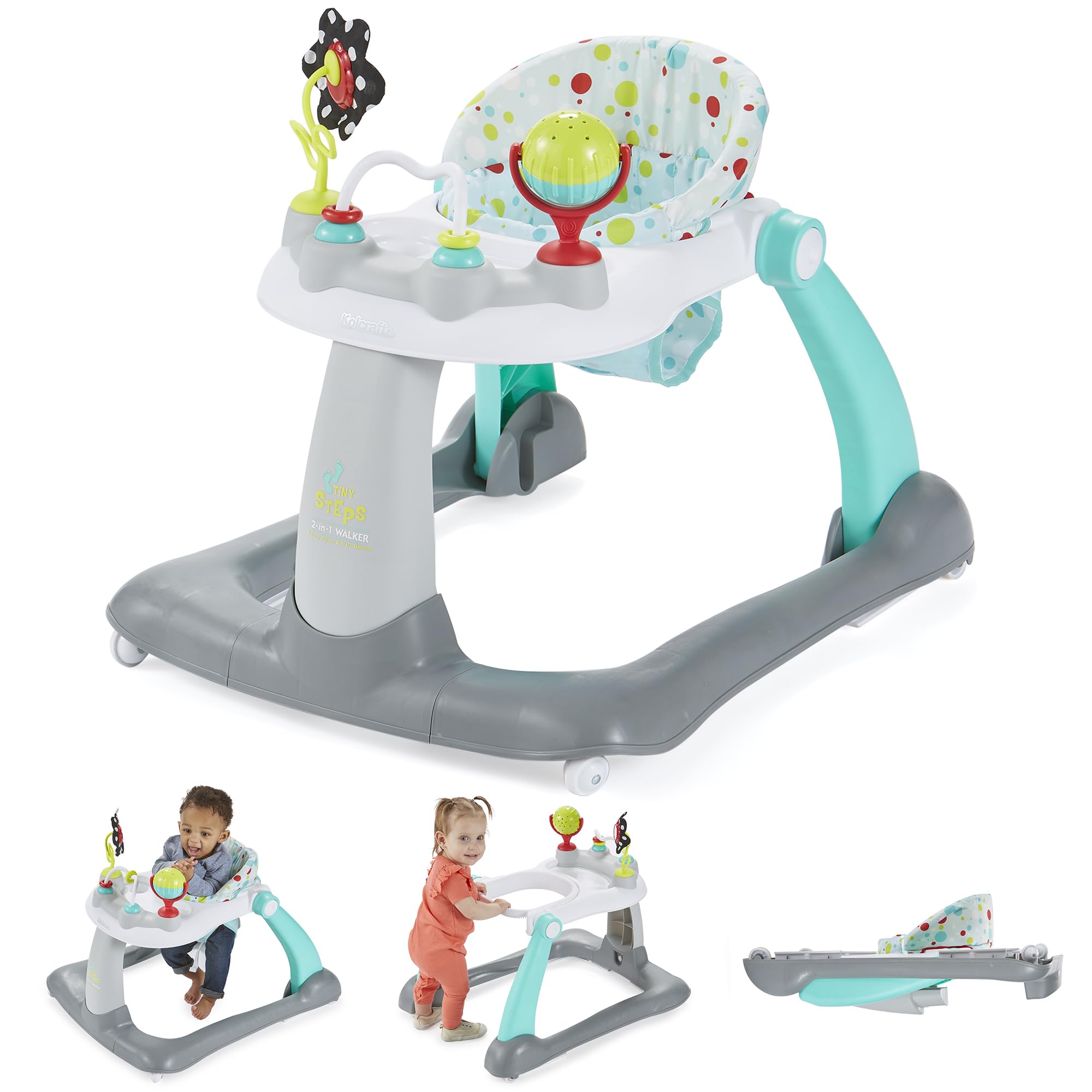
Kolcraft Tiny Steps Walker
Key Features
- Walker Type: 2-in-1 seated/push walker
- Max Weight / Height: 26 lbs
- Assembly & Cleaning: Tool-free assembly; wipes clean
- Floor Suitability: Hard floors only; jams on carpet
- Price: Mid-Range
The Kolcraft Tiny Steps Walker stands apart with a 2-in-1 convertible design that shifts from a seated activity center to a push-behind walker, then folds flat for storage—a trick the top-pick push walker can’t match. Tool-free assembly and the compact fold suit small spaces. The catch: fixed front wheels bind on carpet, so the walker needs wood, tile, or linoleum. A few play attachments, like the flower and ball, occasionally detach during rougher play but snap back on easily. For parents wanting one walker that supports leg strengthening from sitting to stepping on hard floors, this mid-range option makes sense, as long as carpeted rooms are off-limits.
Pros
- Tools-free assembly in minutes from box to ready walker.
- Converts from seated activity center to push-behind walker, extending usable life.
- Supports leg strengthening for infants learning to pull up and walk.
Cons
- Front wheels jam on carpet, limiting movement to hard floors.
- Play attachments like flowers and balls may detach during use.
Buy this if you want a foldable 2-in-1 walker for leg strengthening on hard floors at a mid-range price. Skip it if your home is mostly carpeted or you need walker attachments that stay put no matter what.
Best for Interactive Play
Radio Flyer Busy Buggy
Key Features
- Walker Type: 3-in-1 push walker/ride-on
- Max Weight / Height: 42 lbs
- Wheel Design: Fixed straight wheels, no steering
- Assembly & Cleaning: Snap-together, no tools
- Floor Suitability: Best on hard floors; no steering
- Price: Mid-Range
The Busy Buggy prioritizes sensory play over mobility: 17 built-in activities—gears, horn, spinner—keep a seated toddler occupied, while the steering wheel doesn’t actually turn and front wheels don’t swivel, so movement is straight-line only. Unlike a dedicated push walker, this ride-on won’t help early walkers build steps; it’s an activity center that rolls. Under-seat storage tucks away small toys, and the anti-tip base adds stability on hard floors. Sturdy construction and tool-free snap assembly make setup quick. For families seeking a compact sit-and-play toy with storage, not a walking trainer, it’s a practical pick.
Pros
- Sturdy frame and quality materials withstand toddler play.
- 17 hands-on activities (gears, horn, beads) entertain for long stretches.
- Snaps together without tools in minutes.
Cons
- Steering wheel doesn’t turn; vehicle moves only in straight lines.
Buy this if you want a sturdy, activity-packed sit-and-play ride-on with storage, and steering maneuvers aren’t a priority. Skip it if you need a push walker for learning to walk or a ride-on that turns.
Best for Foldable Fun
Bright Starts JuneBerry Walker

Key Features
- Walker Type: Seated walker
- Max Weight / Height: 26 lbs
- Wheel Design: Fixed rear wheels
- Assembly & Cleaning: Folds flat, removable toy
- Floor Suitability: Hard floors only; poor carpet mobility
- Price: Mid-Range
Assembling it takes minutes, and the frame collapses flat for closet storage. The electronic toy tray with lights and melodies captures a baby’s attention. The catch: fixed rear wheels struggle on carpet, and the seat material can show wear over time. Best suited to homes with smooth floors.
Pros
- Assembles quickly and folds flat for tidy storage.
- Foldable design with electronic toy at a budget-friendly price.
Cons
- Back wheels don’t swivel, so movement drags on carpet.
Worth considering if your home has smooth floors and storage space is tight; skip it if carpet dominates or you need multi-child seat durability.
Best for Jeep-Themed
Delta Jeep Wrangler Walker

Key Features
- Walker Type: 3-in-1 seated/push walker
- Max Weight / Height: 25 lbs
- Assembly & Cleaning: Easy assembly
- Floor Suitability: Hard floors; occasional carpet issues
- Price: Mid-Range
The realistic Jeep design and cheerful dashboard lights captivate vehicle-obsessed babies, and assembly is simple. Fixed rear wheels make tight turns on carpet a hassle, and some parents report the electronic buttons stop working after a few months, leaving the activity tray less engaging.
Pros
- Adorable Jeep styling that charms both kids and parents
- Interactive music and lights keep babies entertained
Cons
- Fixed rear wheels make turning on carpet difficult
- Electronic buttons and lights may stop working over time
Worth considering if you want a Jeep-themed walker for a car-loving family and can overlook occasional electronic quirks or use it on hard floors.
Best for Disney Magic
Disney Princess Walker

Key Features
- Walker Type: Seated walker
- Max Weight / Height: 30 lbs
- Assembly & Cleaning: Difficult assembly
- Price: Premium
The Disney Princess themed walker delights little fans with lights and music, earning high marks for its engaging design. Assembly is a struggle, with the activity trays causing particular frustration. The pink theme may not suit all households. Its entertainment value is strong for families that can handle the setup.
Pros
- Beautiful Disney Princess design delights babies and parents alike
- Good overall quality and entertaining features
Cons
- Assembly is notably difficult, especially attaching the activity trays
Worth considering if you want a Disney Princess-themed walker that entertains with music and lights, and are willing to invest extra time in assembly.
How to Choose
Most walker frustration comes down to wheel design and floor compatibility, not flashy features.
Walker Type: Push, Seated, or Convertible
Push walkers encourage walking by letting babies stand and push, but they can slide away on slick floors. Seated walkers surround babies in a rolling seat and are often used as mobile activity centers, though pediatricians caution against prolonged use. Convertible models transition from a seated entertainer to a push-behind walker, offering both functions in one product.
Maximum Weight / Height
Exceeding a walker’s weight limit can make it unstable or hard to maneuver. Check both the maximum weight and the seat height adjustment range to ensure your baby fits now and has room to grow. Most seated walkers cap at 25–35 pounds; push walkers often support heavier toddlers up to 42 pounds.
Wheel Design
Fixed rear wheels limit turning to straight lines and cause frustration in tight spaces. Swivel or multi-directional front wheels improve cornering, while resistance clickers or friction control prevent push walkers from slipping too fast on hardwood. Look for wheels described as ‘carpet-friendly’ if most of your home has rugs.
Assembly & Cleaning
Many walkers promise tool-free snap-together assembly, but some activity consoles or trays are notoriously tricky to attach. For seated walkers, a machine-washable seat and removable, dishwasher-safe tray make daily cleanup far easier. Push walkers with wipeable panels and washable fabric parts save time on maintenance.
Floor Suitability
Hardwood and tile floors can cause push walkers to slide, while thick carpet may jam seated walker wheels or make them nearly immobile. Before buying, consider which surfaces your baby will use most: look for speed regulation on hardwood, and swivel or large-diameter wheels for carpet.
FAQ
Why does my baby’s walker not turn easily?
Many walkers have fixed rear wheels that only roll forward and backward, forcing the whole unit to move in straight lines. To improve turning, look for walkers with swivel or multi-directional front wheels. Even with swivel fronts, tight corners may require you to lift the walker slightly to reposition.
Is a seated walker safe for my baby’s development?
Pediatricians often caution that extended time in seated walkers can delay independent walking and encourage toe-walking. When used for short, supervised play sessions on a flat floor, they are generally safe. Limit use to 15–20 minutes at a time and pair with plenty of unrestricted floor play.
How do I keep a push walker from sliding away on hardwood floors?
Choose a push walker with built-in resistance such as adjustable tension wheels or resistance clickers. If your current walker lacks these, try placing a non-slip mat under the walker’s path or using the walker only on carpeted areas. Models with two-speed control let you set a slower pace that prevents sudden slides.
Are ride-on walkers good for learning to walk?
Some ride-on walkers convert to push walkers, but many have non-steering wheels that only move straight, making them impractical for early walking practice. Ride-ons that do not offer a stable handle at the right height can discourage beginners. For learning to walk, a dedicated push walker with a wide base and good handle height works better.