This post contains affiliate links. We may earn a small commission when you buy through our links — at no extra cost to you.
Parents often pick a baseball glove by the age range on the tag, only to find it’s stiff to squeeze or too small for their child’s actual hand. For kids under 8, a glove they can close easily matters more than leather that could last five seasons. This guide severs that frustration by breaking down what actually determines fit and playability.
From ultra-soft mesh mitts for tee-ball toddlers to all-leather models for competitive preteens, we’ve identified the gloves that let kids focus on catching, not wrestling with stiff leather. Every pick here prioritizes the child’s experience over marketing claims — so you can choose based on your player’s hand size, coordination, and how often they’ll use it.



Best for First Tee-Ball
Franklin Meshtek Teeball Glove Set
Key Features
- Size / Age: 9.5"
- Material & Break-in: Faux leather, mesh, no break-in
- Hand Orientation: Right Hand Throw
- Price: Budget
The Franklin Meshtek glove uses a soft mesh construction that’s ready to play immediately — no break-in routine needed. It holds up through a season of tee-ball, and the included foam ball lets kids practice safely indoors or out. Bright colors make it easy to spot on the field.
This set is built for first-time tee-ball players ages 3-5. Sizing can vary: some parents find the 9.5-inch glove feels larger than expected for a 3-year-old, but it still works well for most small hands. It’s a practical choice for parents who want a glove that works out of the box without spending much.
Pros
- Ready to use right out of the box with no break-in required.
- Soft mesh construction holds up through a season of tee-ball play.
- Comes with a soft foam ball for safe practice at home or on the field.
Cons
- Sizing can be inconsistent; the 9.5-inch glove may feel larger than expected for very small 3-year-olds.
For a toddler taking their first swings in tee-ball, this glove removes every barrier to catching — no break-in, safe foam ball, and bright colors they’ll love.
Best for Preschool Leather
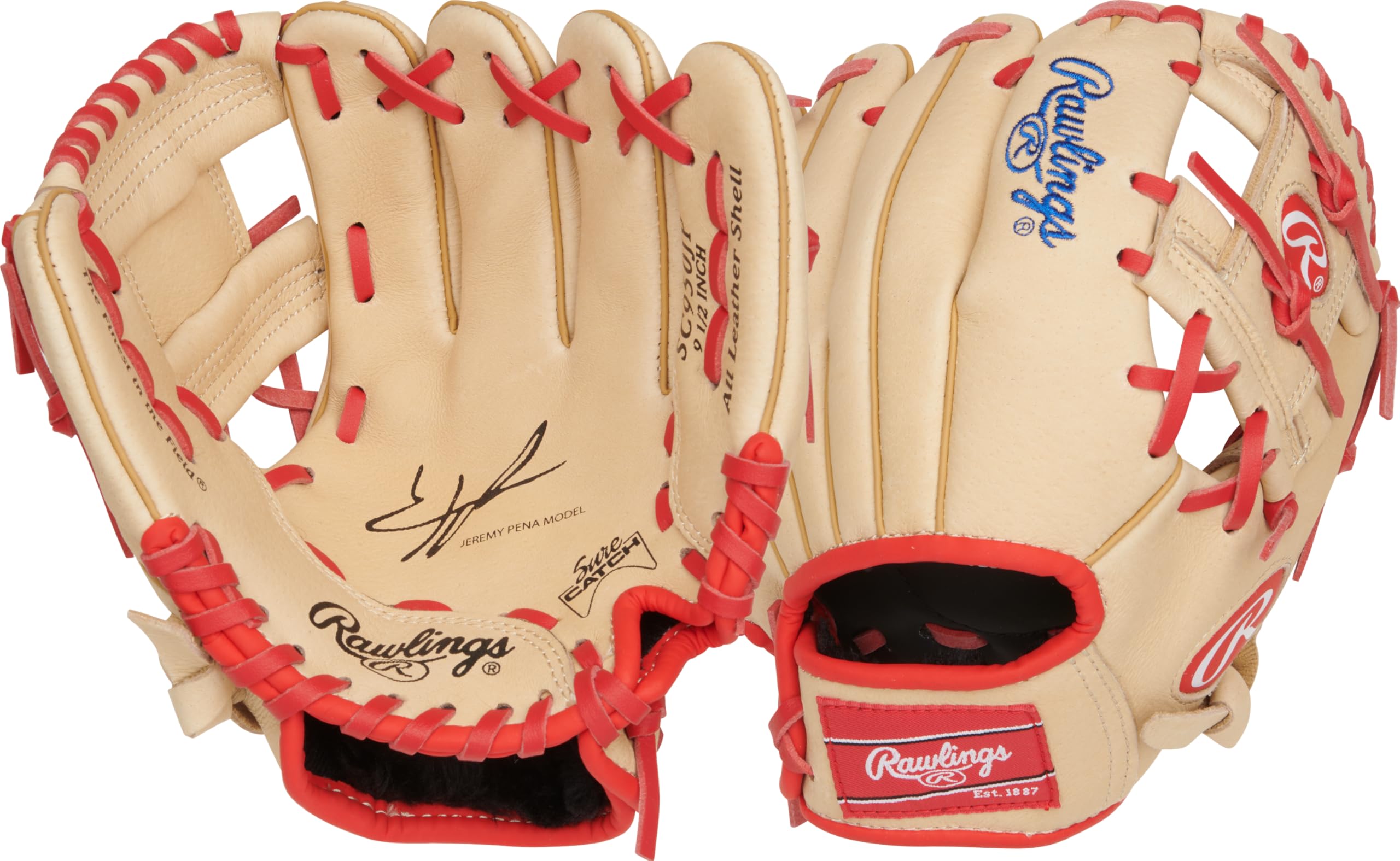
Rawlings Sure Catch Youth Glove
Key Features
- Size / Age: 9.5" (Ages 4-5)
- Material & Break-in: Leather, minimal break-in
- Hand Orientation: Right Hand Throw
- Price: Mid-Range
The Sure Catch brings genuine leather to the youngest players, and the Sure Catch heel cutout is a practical feature that lets small hands flex the glove closed without frustration. Where the top pick’s mesh is instantly playable, this glove may need a few conditioning sessions out of the box — some units arrive stiffer than advertised. For parents who want leather durability for a 4-5 year old and don’t mind a brief break-in to get the glove game-ready, this is the natural step up from synthetic options.
Pros
- Real leather construction with a heel cutout that helps 4-5 year olds close the glove on day one
- Properly sized for preschool hands with comfortable padding that doesn’t overwhelm
- Great value — genuine leather at a mid-range price, built to last a few seasons of youth play
Cons
- Some units arrive stiffer than advertised; may need extra conditioning to become fully playable
The Sure Catch is the go-to leather glove for 4-5 year olds who have outgrown synthetic options, as long as you’re prepared for a brief break-in period.
Best for Ages 8-12 Competitive
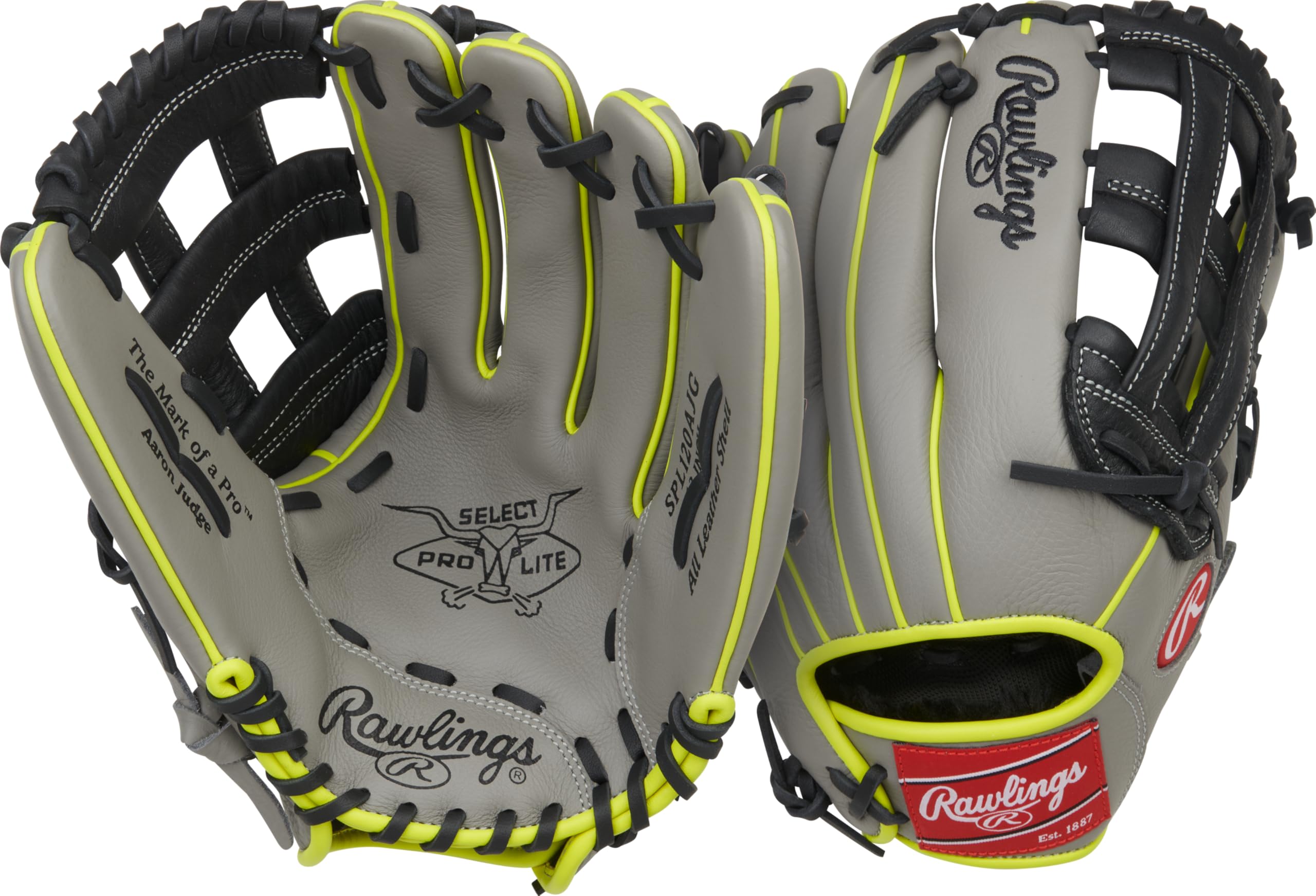
Rawlings Select Pro Lite Glove
Key Features
- Size / Age: 12" (Ages 6-12)
- Material & Break-in: Leather, quick break-in
- Hand Orientation: Right Hand Throw
- Price: Mid-Range
Where lower-priced leather youth gloves rely on heel cutouts to help small hands close, the Select Pro Lite’s Youth Pro Taper fit and full leather construction create a more grown-up feel that scales with the player’s skill. It breaks in faster than many all-leather models, often game-ready within a week.
It’s built for 8-12 year olds transitioning into competitive ball and for parents who want a glove that will last a few seasons. Laces may need occasional tightening or replacement with heavy use — a maintenance task that keeps the glove performing without overshadowing its value as a step up from beginner gear.
Pros
- Full leather construction delivers pro-level feel and durability at a mid-range price.
- Soft leather breaks in quickly — often game-ready within a week.
- A workhorse for 8-12 year olds moving from tee-ball to travel ball.
Cons
- Lace durability can be a weak point; they may loosen or require replacement after a season of heavy use.
A step-up glove with pro-level feel and quick break-in that bridges the gap for 8-12 year olds serious about baseball; just plan on checking the laces as part of routine upkeep.
Best for Budget Tee-Ball
Franklin RTP Teeball Glove Set
Key Features
- Size / Age: 9.5"
- Material & Break-in: PVC faux leather, minimal break-in
- Hand Orientation: Right Hand Throw
- Price: Budget
Franklin’s RTP Tee Ball Glove Set delivers a full-season glove and a foam ball at a budget-friendly price, making it the simplest way to start a child in tee-ball. Unlike the mesh-focused top pick, this PVC faux leather mitt needs a few sessions of catch to relax the hinge, but once broken in, it holds its shape well enough for weekly practices and backyard catch.
It’s the glove for parents testing the waters — the included ball gets you playing immediately, and the adjustable wrist strap keeps it on small hands. The 9.5-inch size fits most 4- and 5-year-olds snugly; three-year-olds with especially small hands may find it too stiff to close at first and will have an easier time with the softer top pick.
Pros
- Holds up for a full tee-ball season with typical backyard use.
- The bundled foam ball makes it a complete starter set.
- Snug, easy-to-put-on fit for preschoolers and kindergartners.
Cons
If you’re not ready to invest in a premium glove, this set handles a season of tee-ball without fuss — and the foam ball means you can start catch right out of the box.
Best for Grade-School Baseball
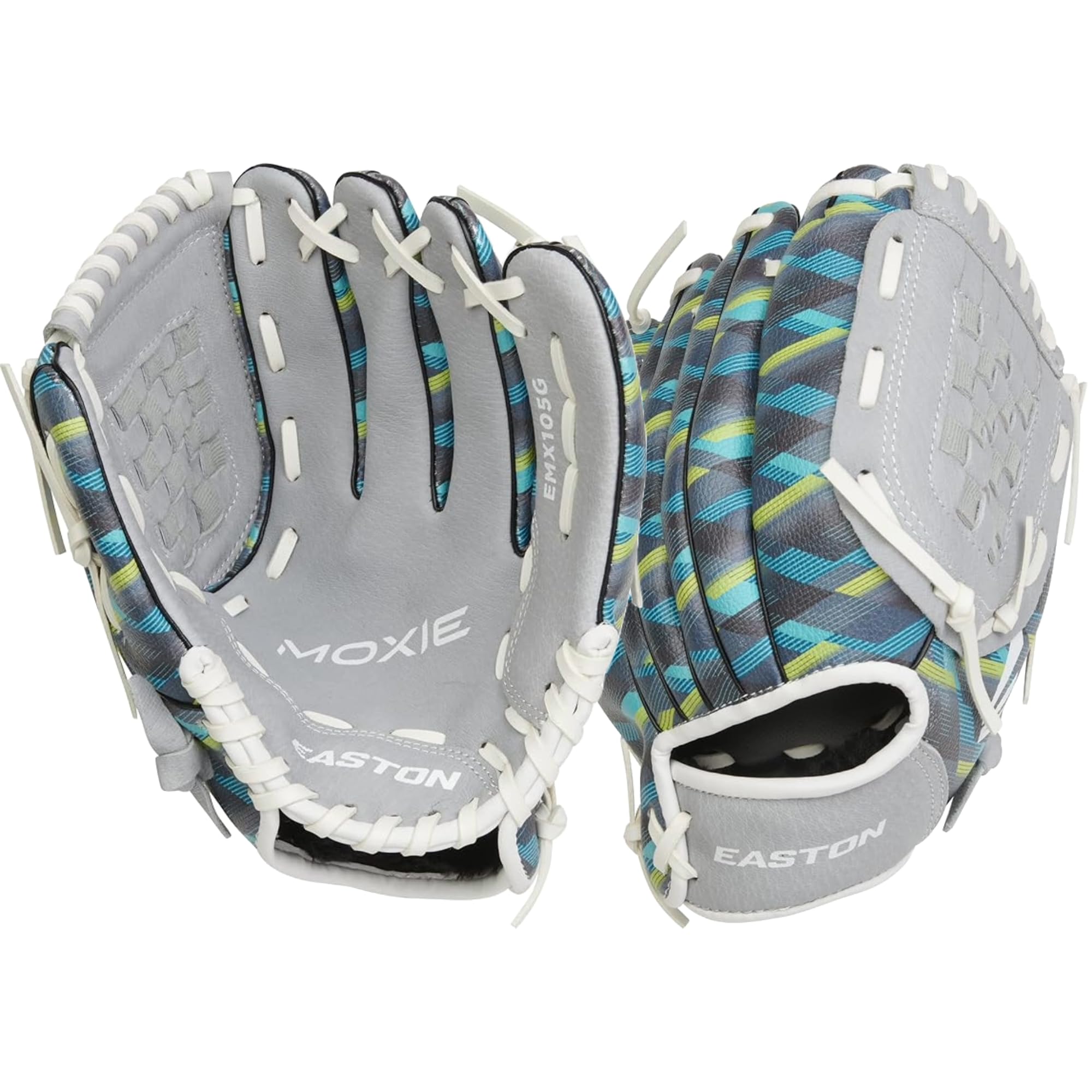
Easton Moxie Youth Glove
Key Features
- Size / Age: 10.5" (Ages 6-9)
- Material & Break-in: Leather, minimal break-in
- Hand Orientation: Right Hand Throw
- Price: Budget
Where the ultra-soft mesh first glove prioritizes instant playability for preschoolers, the Easton Moxie is a leather glove for kids ready to handle a bit of break-in. The 10.5-inch basket-web design fits 6-to-9-year-olds moving from tee-ball to coach pitch. It may feel stiff to the youngest 6-year-olds, but a few games of catch get it closing smoothly. This is the glove to buy when your child has outgrown the foam-and-mesh stage and wants the feel of real leather.
Pros
- Quality leather construction at an entry-level price
- Perfect size and fit for 6-to-9-year-olds stepping up from tee-ball
- Fun, bright color options that kids love
Cons
- Out-of-box stiffness can be a hurdle for the smallest 6-year-olds; a few catch sessions quickly break it in
A well-priced leather glove that bridges the gap between first mesh mitts and larger youth gloves — best for kids who can handle a short break-in.
Best for Girls Fastpitch Softball
Easton Ghost Flex Softball Glove
Key Features
- Size / Age: 12" (Ages 10-12)
- Material & Break-in: Pigskin/synthetic, flex notch
- Hand Orientation: Right Hand Throw
- Price: Mid-Range
The Easton Ghost Flex is built specifically for fastpitch softball, with a deeper pocket and a female-specific hand pattern that sets it apart from youth baseball gloves. For shoppers searching for a baseball or tee-ball glove, this isn’t the pick — the softball pocket won’t hold a baseball securely. It’s a great fit for girls ages 10-12 starting fastpitch softball, where the 12-inch size and flex notch help manage the larger 12-inch ball. Parents should measure hand size if buying for a player under 10, as the glove can run large for smaller hands.
Pros
- Fits 10-12 year old fastpitch players comfortably and closes with minimal break-in, making it usable out of the box.
- Premium pigskin leather and a Flex Notch closure deliver Easton’s quality at a mid-range price.
- Vibrant colors and stylish design build excitement for young players new to the sport.
Cons
- The 12-inch size can be too large for girls under 10 — hand measurement is essential before buying.
For girls ages 10-12 starting fastpitch softball, this Easton glove offers a near-instant break-in and a female-specific fit. Parents of younger players should verify hand size to avoid an oversized glove.
Best for Tiny Leather Starter
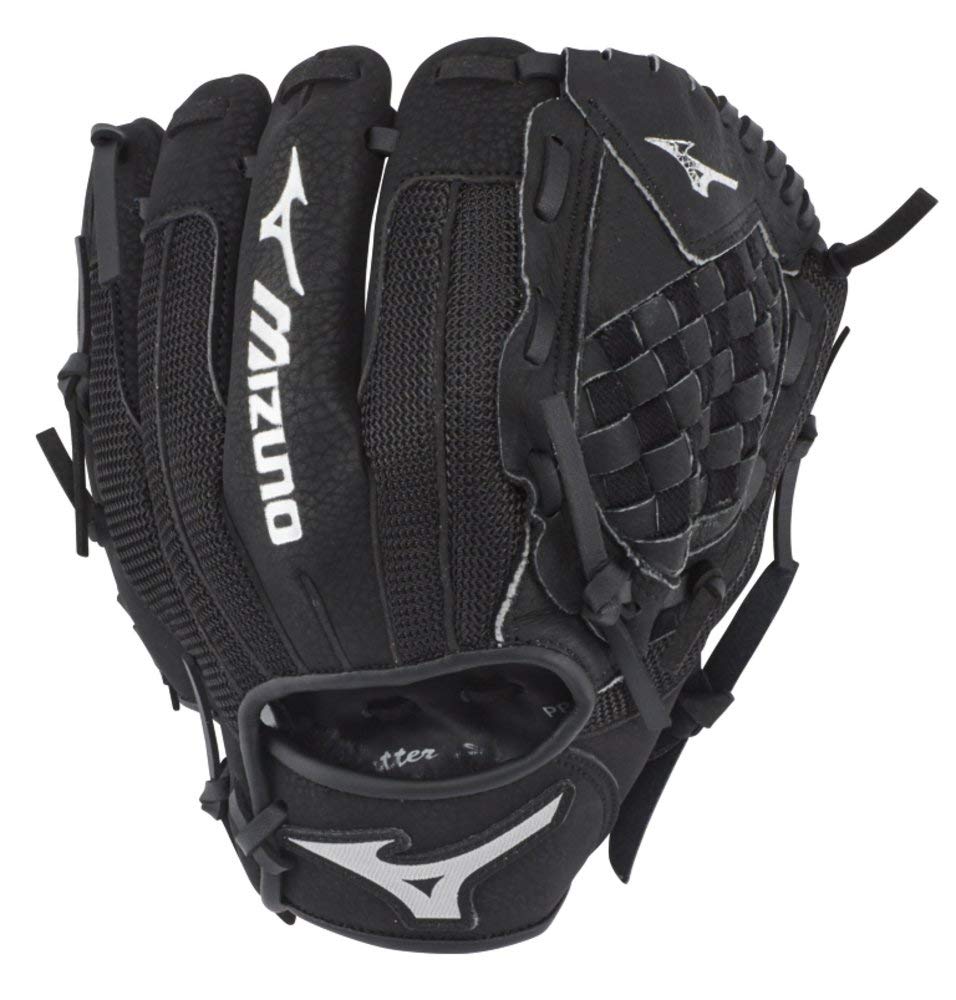
Mizuno PowerClose Youth Glove
Key Features
- Size / Age: 10" (Ages 3-6)
- Material & Break-in: Pigskin leather, quick close
- Hand Orientation: Right Hand Throw
- Price: Mid-Range
Real full-grain pigskin leather sets this glove apart from synthetic mesh options. The V-Flex notch and buttersoft palm liner let 3-6 year olds squeeze it shut with less effort, reducing early frustration. The 10-inch basket-web pattern fits the age range and holds a baseball securely. Some gloves arrive stiffer than the ready-to-play label suggests, requiring extra conditioning or a few days of catch to soften — adult help may be needed initially. This suits parents who want a durable leather first glove and are prepared to invest a little more than an entry-level synthetic.
Pros
- Full-grain pigskin leather palm liner feels buttery-soft right away, reducing break-in for young hands.
- V-Flex notch and PowerClose design let kids close the glove with less grip strength, building confidence.
- 10-inch basket-web fits tee-ballers well and helps secure catches early.
Cons
- Out-of-box stiffness may require extra break-in beyond the ‘ready-to-play’ claim, frustrating the smallest kids.
A real-leather option that’s easier to close than typical youth gloves, provided you’re willing to spend a short break-in period if the glove arrives stiff.
How to Choose
Ignore the age label on the box; always measure your child’s hand and prioritize fit and ease of closing over brand name.
Size: Ignore the Age Labels
Age ranges on youth gloves are guides, not guarantees. A glove that’s too large lets balls pop out; one that’s too small can pinch or limit range. Measure from the tip of the index finger to the wrist and match it to the glove’s listed hand opening, not the age tag.
For tee-ball, gloves between 9 and 9.5 inches typically fit 3–5 year olds, but a child with smaller hands may need a glove with a narrower heel and softer shell, even if the length seems okay. The hand opening circumference matters more than the glove length at this stage.
Material & Break-in: Synthetic vs. Leather
Synthetic mesh or vinyl gloves have zero break-in and are instantly closeable, making them the best choice for the youngest beginners. They wear out faster, but for a season or two of tee-ball, that trade-off is worth it.
Leather gloves last longer and shape to the hand over time, but they require deliberate softening — conditioner, mallet work, and repeated use. If a 4-year-old can’t squeeze the glove on day one, it doesn’t matter how durable the leather is; they’ll be frustrated and may quit playing catch entirely.
Hand Orientation: A Critical First Step
A glove is always labeled for the throwing hand, not the catching hand. Right-handed throwers wear the glove on the left hand (right hand throw glove). Left-handed throwers need a left hand throw glove, which is worn on the right hand.
Most youth gloves are made for right-handed throwers; lefty-specific options are fewer, so double-check the label before you buy. Grabbing the wrong orientation is the single most common ordering error for first-time glove shoppers.
Lace and Webbing Durability: What to Expect
Laces and webbing are the most fragile points on any youth glove, especially in synthetic and budget leather models. Stress from ground balls and repetitive squeezing can cause laces to snap within weeks if the leather is stiff or the glove is used beyond its intended level.
For recreational play, inspect laces monthly and tighten any that loosen. If you notice fraying, replace the lace before it breaks completely. Competitive players should expect to replace laces at least once per season, even on higher-priced gloves.
The Foam Ball: Practice Safety
Some starter sets include a soft foam ball, which is safer for indoor practice and reduces the sting for a first-time catcher. It helps kids learn the mechanics without fear of getting hurt.
A foam ball won’t help transition to real baseballs, but for ages 3–5 it’s a valuable tool. For older kids or outdoor practices, switch to a standard tee-ball or baseball once they’re comfortable catching.
FAQ
Why is my kid’s baseball glove too stiff to close?
Stiffness is common in leather gloves despite ‘ready-to-play’ labels. To soften it, apply glove oil lightly, then repeatedly bend the glove or use a mallet on the hinge. A soft mesh or vinyl glove will be playable instantly for very young kids.
Do I need to buy a left-hand throw glove for a left-handed child?
A left-handed thrower wears the glove on the right hand, so yes — you need a left hand throw glove. Most gloves are made for right-handed throwers; lefty models are less common but available from a few brands. Always check the hand orientation tag before purchasing.
How do I break in a youth baseball glove quickly?
To break in a youth leather glove fast, apply conditioner, place a ball in the pocket, wrap with a belt or rubber bands overnight, and use a mallet to work the hinges during the day. Most synthetic gloves don’t need this. For a child under 6, skip the break-in hassle and choose a mesh glove.
What size baseball glove should a 4-year-old use?
A 4-year-old typically needs a 9 to 9.5-inch glove, but measure their hand from index fingertip to wrist. Gloves labeled for ages 3-6 often run small; a wider hand opening and softer closure matter more than the exact inch measurement.