This post contains affiliate links. We may earn a small commission when you buy through our links — at no extra cost to you.
Many parents discover after purchase that a tricycle labeled for ages 2+ has a seat too high or pedals too far for their toddler, while plastic wheels spin uselessly on smooth floors. The result is frustration for both parent and child. This guide focuses on tricycles that balance proper fit, wheel traction, and long-term durability — whether you prefer a classic steel trike that lasts through multiple kids or a multi-mode design that grows with your child. The choice often comes down to budget-friendly plastic with proven reliability versus traditional steel construction, each with its own sizing quirks that matter most for smaller toddlers. Understanding your child’s inseam and typical riding surface is the first step toward a trike that actually gets used.



Best for Ages 2-5
Fisher-Price Harley-Davidson Tough Trike
Key Features
- Adjustable Seat/Handlebars: Fixed
- Parent Push Handle: No
- Wheel Traction: Spins on smooth
- Build Material: Plastic
- Weight & Size: 55 lbs
- Price: $
This trike boasts the highest review count in its category while landing at the lowest price point — a rare combination that signals broad trust. The plastic frame holds up well to daily riding and curb bumps, and assembly takes under 20 minutes with a single screwdriver. The Harley styling with decals and a low rumble sound adds appeal for toddlers who love motorcycles. On smooth indoor floors, the rear wheels can spin without much traction, which limits turning precision; outdoors on pavement or grass the grip is fine.
Best for toddlers aged 2–3 who are average to tall in height — smaller 2-year-olds may not reach the pedals due to the fixed seat depth. Budget-conscious parents get a durable first trike that survives multiple seasons without cracking or fading. Skip it if you want an adjustable seat or a parent push handle; neither is available here.
Pros
- Sturdy plastic frame withstands years of outdoor use and rough handling.
- Quick assembly with basic tools, ready in under 20 minutes.
- Fun Harley-Davidson styling with sound effects appeals to motorcycle-loving toddlers.
Cons
- Wheels lose traction on smooth floors, reducing steering precision indoors.
- Fixed seat depth may prevent small 2-year-olds from reaching pedals.
Buy this if you want an affordable, durable first trike with strong customer satisfaction and easy assembly. Skip it if your child is a small 2-year-old or you need a parent push handle.
Best for Classic Steel
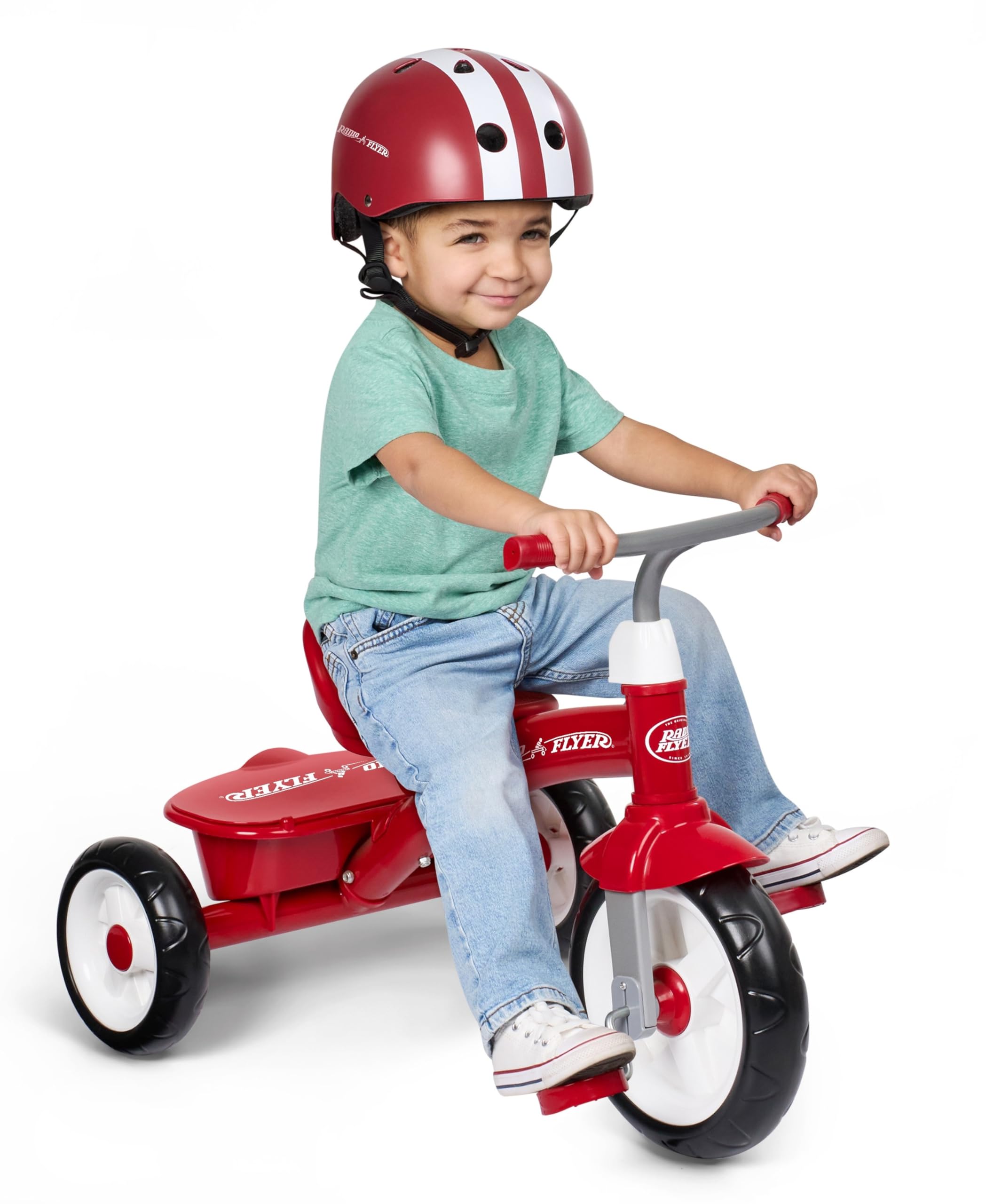
Radio Flyer Red Rider Trike
Key Features
- Adjustable Seat/Handlebars: Adjustable seat
- Parent Push Handle: No
- Wheel Traction: Quiet, moderate
- Build Material: Alloy Steel
- Weight & Size: 49 lbs
- Price: $$
Unlike budget-friendly plastic trikes, the Red Rider uses an alloy steel frame that feels substantial and holds up to years of use. It includes an adjustable seat to accommodate growing kids and quiet-ride wheels that won’t disturb the neighbors. However, the seat height may still be too tall for some 2-year-olds to reach the pedals comfortably, and assembly requires about 35–60 minutes — longer than most plastic alternatives. This trike is best for parents who prioritize metal construction and plan to pass it down through multiple children.
Pros
- Sturdy steel frame withstands years of active use.
- Assembly is straightforward with clear instructions; most complete in under an hour.
- Long-lasting build holds up through multiple children.
Cons
- Seat height may be too tall for smaller toddlers to pedal comfortably.
- Assembly takes 35–60 minutes, longer than simpler plastic models.
Buy this if you want a metal trike that will last through multiple kids. Skip it if your child is under 2.5 years old or you need faster assembly.
Best for Ages 1.5-5
JMMD 6-in-1 Toddler Bike
Key Features
- Adjustable Seat/Handlebars: Adjustable seat
- Parent Push Handle: Yes
- Wheel Traction: Good traction
- Build Material: Aluminum alloy
- Weight & Size: 50 lbs
- Price: $$$
The JMMD 6-in-1 stands apart with its aluminum frame and 12” puncture-proof tires, converting from push trike to balance bike to pedal bike across six stages. The 135° rotating push handle gives parents precise steering control, and the entire bike folds for transport. However, the hand brake is not intuitive for toddlers — pedals rotate backward without a coaster brake — and the seat may not raise high enough for taller children past age 4. This bike suits families who value long-term adaptability and easy travel over the simplicity and lower cost of a traditional trike.
Pros
- Nearly complete assembly straight out of the box
- Responsive parent steering handle with 135° rotation
- Six modes from push trike to pedal bike, plus foldable for storage
Cons
- Hand brake requires adult coaching; pedals rotate backward (no coaster brake)
- Seat height max may be too low for tall 4-5 year olds
Buy this if you want a multi-mode bike that grows with your child and folds for travel, and you’re willing to teach hand-brake use. Skip it if you prefer a simple coaster-brake trike or your child is already tall for their age.
Best for Ages 1-3
newyoo 5-in-1 Toddler Trike
Key Features
- Adjustable Seat/Handlebars: Adjustable
- Parent Push Handle: Yes
- Wheel Traction: Solid, moderate
- Build Material: Carbon Steel
- Weight & Size: 35 lbs
- Price: $$
The newyoo 5-in-1 trike adds multi-mode flexibility with button-based conversion and a parent push handle, offering more ways to adapt as your child grows compared to the top pick’s fixed tricycle design. Assembly is straightforward, and the adjustable seat and handlebars help the bike grow with your child. However, parents report that the push handle can become wobbly over time, and some components feel less durable under heavy use. Best for families who value easy mode switching and guided riding from ages 1 to 3, but those expecting long-term heavy-duty use may find the durability limiting.
Pros
- Multi-mode design adapts from push trike to balance bike with easy button switches.
- Tool-free assembly gets your child riding quickly.
- Adjustable seat and handlebars accommodate growing toddlers.
Cons
- Push handle stability can degrade, requiring periodic tightening.
- Occasional durability concerns with certain parts under heavy use.
Buy this if you want a multi-mode trike with easy conversion and parent steering for a child aged 1-3. Skip it if you need long-term durability for years of heavy use.
Best for Ages 1-4
LOL-FUN 4-in-1 Balance Bike
Key Features
- Adjustable Seat/Handlebars: Adjustable seat
- Parent Push Handle: No
- Wheel Traction: Indoor/outdoor
- Build Material: Carbon Steel
- Weight & Size: 66 lbs
- Price: $
The LOL-FUN 4-in-1 stands apart from budget plastic trikes with its tool-free snap assembly – no screws, no fuss – and a carbon steel frame rated for 66 lbs. It’s best for young toddlers (10–24 months) who are starting balance work, as the removable pedals allow progression from balance bike to trike. However, some users report the bike feels tippy in balance mode, and the pedals can cause heels to hit the rear wheels during pedaling. If you prioritize easy assembly and high weight capacity over rock-solid trike stability, this is a strong value.
Pros
- Snaps together in minutes with no tools required
- Durable carbon steel frame holds up to 66 lbs
- Adjustable seat and handlebars grow with the child
Cons
- Some instability as a balance bike – feels tippy for some riders
- Pedal position may cause child’s heels to hit back wheels
Buy this if you want an easy-assembly, budget-friendly balance bike that converts to a trike and supports tall toddlers; skip it if your child needs a stable trike with parent steering or if heel clearance is a concern.
Best for Paw Patrol Fans
Fisher-Price PAW Patrol Trike
Key Features
- Adjustable Seat/Handlebars: 3-position seat
- Parent Push Handle: No
- Wheel Traction: Slippery on smooth
- Build Material: Plastic
- Weight & Size: 60 lbs
- Price: $$
This trike hooks toddlers with blinking lights, sound effects, and a PAW Patrol walkie-talkie, turning rides into imaginative play. The adjustable seat grows with the child, and the character design earns high marks from fans. However, the wheels lack tread and slide on tile or hardwood, so indoor use is best limited to carpeted areas. Some plastic parts and stickers show wear over time, meaning this is more of a themed playroom toy than an all-weather outdoor trike. It’s a win for young fans who ride mostly on carpet, but families needing a robust, surface-agnostic trike should look at the Tough Trike instead.
Pros
- Interactive lights and sounds that engage toddlers during rides
- Cute PAW Patrol design with high character recognition
- Easy assembly out of the box
Cons
- Wheels slip on smooth floors, limiting indoor use to carpet
- Stickers may peel; some plastic parts feel less durable
Buy this if your toddler loves PAW Patrol and will ride mainly on carpeted floors; skip it if you need a durable trike for outdoor pavement or smooth tile surfaces.
Best for Classic Design
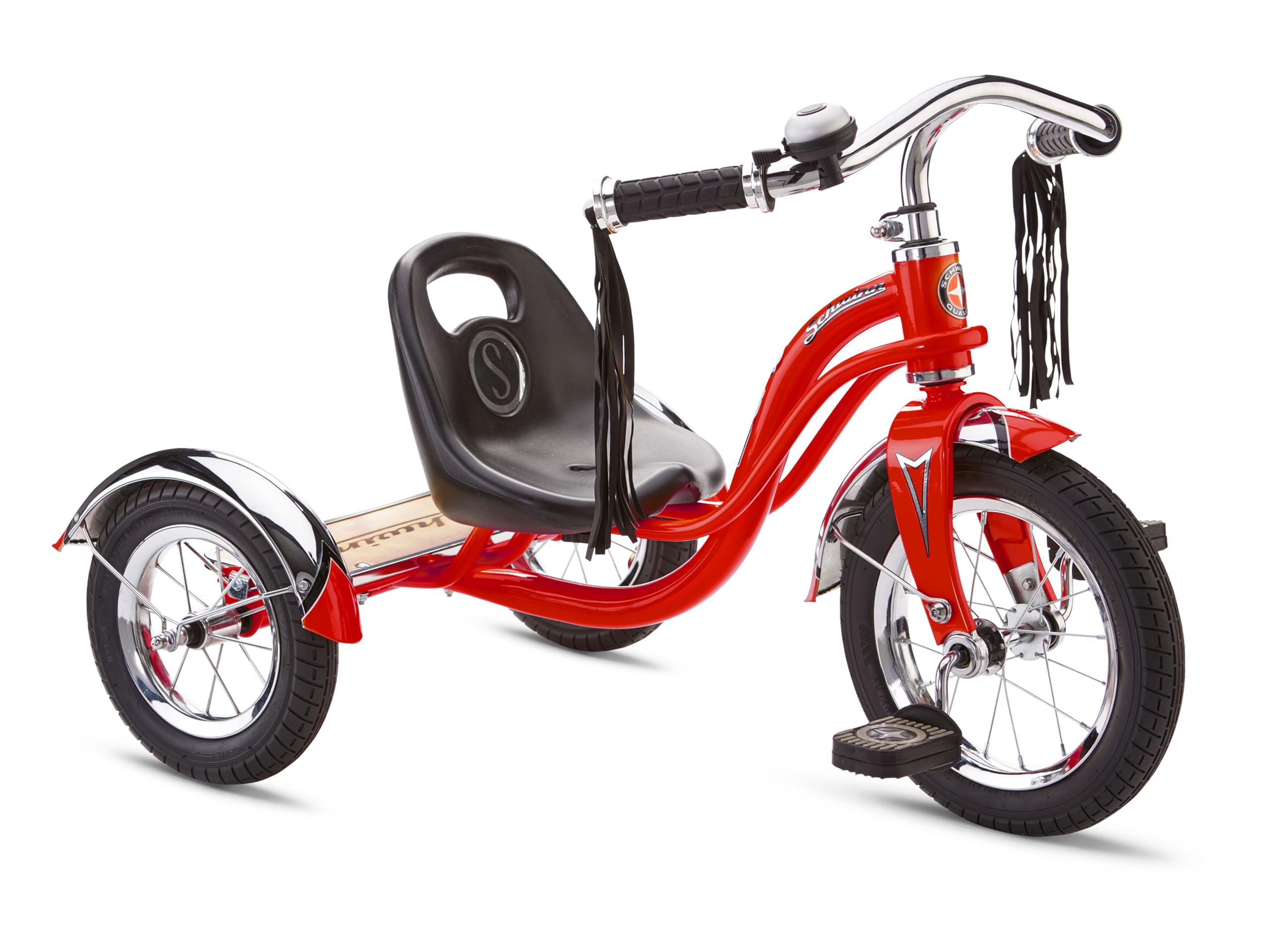
Schwinn Roadster Trike
Key Features
- Adjustable Seat/Handlebars: 5-position seat
- Parent Push Handle: No
- Wheel Traction: Pneumatic tires
- Build Material: Alloy Steel
- Price: $$$
This Schwinn trike offers premium vintage looks with a 5-position adjustable seat and real wood deck, appealing to style-conscious parents. Assembly is straightforward, but quality control variances on pedals and handlebars reduce long-term durability.
Pros
- Premium build with alloy steel frame and real wood deck.
- Classic vintage design with chrome fenders, bell, and streamers.
Cons
- Occasional quality variance where pedals may loosen over time.
Worth considering if you value classic aesthetics and adjustable fit over occasional pedal maintenance.
Best for Ages 2-3
KRIDDO Toddler Trike

Key Features
- Adjustable Seat/Handlebars: Fixed
- Parent Push Handle: No
- Wheel Traction: Silent wheels
- Build Material: Carbon Steel
- Price: $
This trike snaps together in minutes with no tools, and its anti-rollover design gives new riders stable balance. However, the small frame may feel cramped by age 3, and some wheels or pedals have loosened after a few months of use.
Pros
- Tool-free assembly from box to ride in under 10 minutes
- Sturdy and well-balanced frame helps beginners ride without tipping
Cons
- Seat and frame run small, leaving limited legroom for a growing 3-year-old
Worth considering if you have a young toddler (2–2.5 years) and prioritize quick, tool-free setup over multiple-season use across siblings.
Best for Ages 2-3
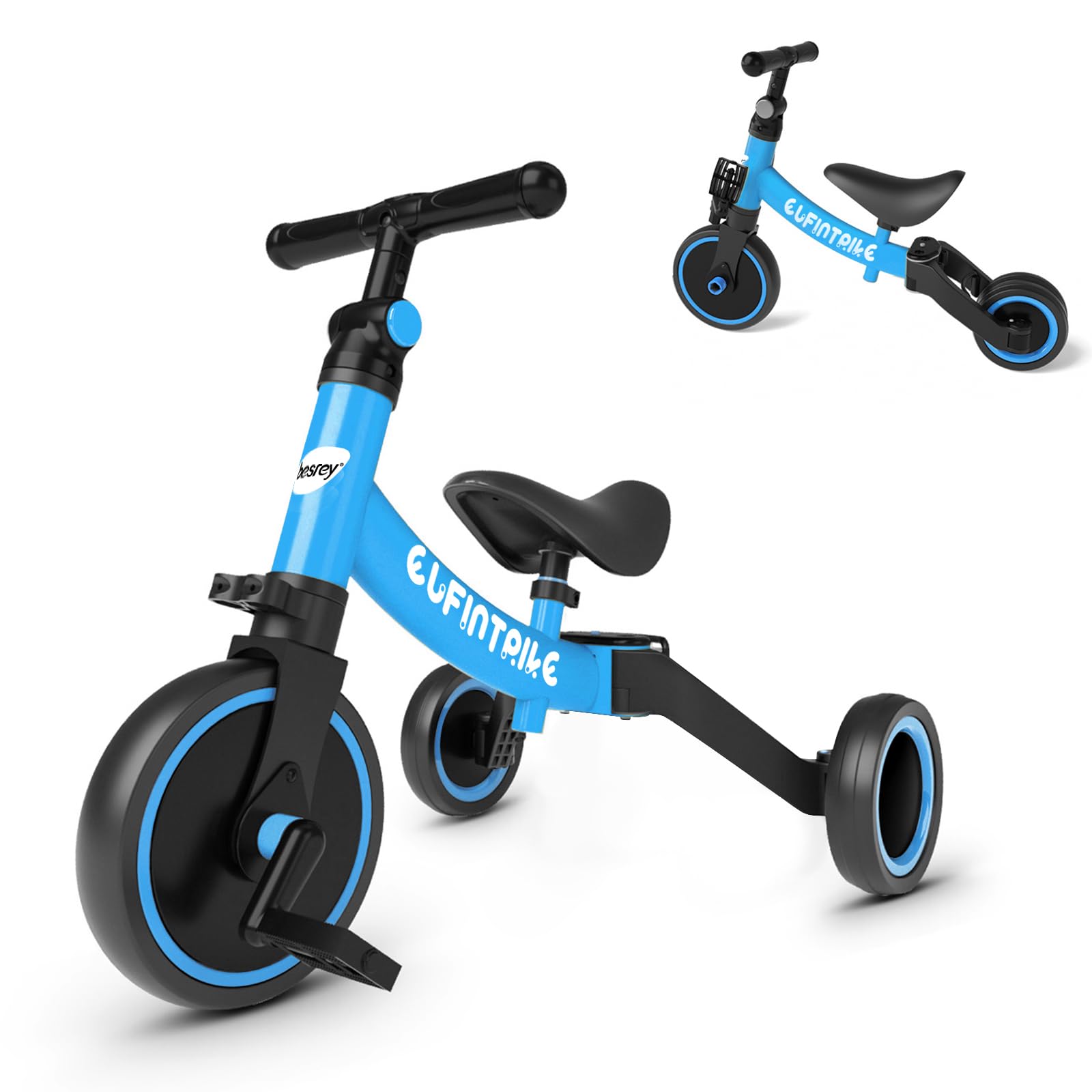
besrey 5-in-1 Toddler Bike
Key Features
- Adjustable Seat/Handlebars: Adjustable
- Parent Push Handle: Yes
- Wheel Traction: Non-slip wide
- Build Material: Carbon Steel
- Weight & Size: 55 lbs
- Price: $
With five riding modes, a curved carbon steel frame, and adjustable seat/handlebars, this budget bike adapts as toddlers grow. However, the pedal positioning causes many children’s heels to hit the rear wheels, and the frame runs small — making it better suited for younger or smaller 2-year-olds.
Pros
- Sturdy construction withstands regular use
- Adjustable seat and handlebars accommodate growing toddlers
Cons
- Pedal position can cause children’s heels to hit rear wheels
Worth considering if you have a small 2-year-old who can reach the pedals comfortably, and you value multiple riding modes at a low price.
How to Choose
The most important factor when choosing a toddler tricycle is the seat-to-pedal distance: many tricycles claim to fit 2-year-olds, but actual inseam length varies widely.
Adjustable Seat and Handlebars
A tricycle that grows with your child saves money and frustration. Look for a seat that adjusts forward and up, ideally with multiple positions. Handlebars that also adjust help maintain proper posture as your toddler gains height.
Parent Push Handle
A parent steering handle is convenient for walks and teaching, but it can make the trike top-heavy. Test stability before committing to long outings. Some handles allow steering control, which is helpful on uneven paths.
Wheel Traction
Plastic wheels on smooth floors often spin without moving forward. Rubber or textured treads provide better grip on pavement and carpet. If your child will ride indoors, look for wheels with some tread to avoid frustration.
Build Material
Steel frames (alloy or carbon) offer durability and a classic feel but are heavier. Plastic frames are lighter and easier for toddlers to maneuver, but they may not survive as many children. Choose based on expected usage.
Weight Capacity and Size
Weight capacity indicates overall build strength, but age ranges are less reliable. Measure your child’s inseam and compare to the seat height range. A trike that is too small will be outgrown quickly; one too large will be unrideable.
FAQ
Why does my toddler’s tricycle wheel spin but not move forward?
This usually happens on smooth floors because plastic wheels lack traction. Rubber tires or textured treads prevent spinning. If your trike has smooth wheels, use it on carpet or grass. For hard floors, consider a tricycle with rubber wheels or add grip tape.
What age should a toddler start using a tricycle with pedals?
Most tricycles are designed for 2–3 year olds, but reach is key. Measure your child’s inseam against the seat-to-pedal distance. If their feet can’t fully reach the pedals, they’ll struggle. Starting with a balance bike or parent-steer mode first builds confidence.
Are multi-mode tricycles as safe and durable as standard tricycles?
Multi-mode tricycles often have more moving parts and can be less stable, especially on turns. A dedicated steel tricycle from an established brand typically outlasts a multi-mode unit. If you choose multi-mode, check for tipping reports and test stability before regular use.
How do I fix a squeaky tricycle wheel?
Squeaks usually come from dry axles or loose fittings. Apply a drop of silicone lubricant to the wheel axle and tighten any loose screws. If the noise persists, the wheel bearing may be worn – replacement wheels are often available from the manufacturer.