This post contains affiliate links. We may earn a small commission when you buy through our links — at no extra cost to you.
Many kids electric bikes advertise age ranges that are two to three years too optimistic. A bike labeled ‘ages 8+’ often fits a 5-year-old, and a ’12V starter’ may be too slow for any child who has outgrown a tricycle. The disconnect between marketing and real-world fit means parents end up with a bike that’s either undersized, underpowered, or both.
The right bike matches your child’s inseam, weight, and riding confidence, not just the number on the box. This guide focuses on five key specs—speed adjustability, battery longevity, actual size, weight capacity, and safety features—to help you pick a model that your child can actually use and enjoy. Whether you need a slow learner for a 3-year-old or a high-speed trail bike for a 10-year-old, the trade-off is usually between proven brand support and modern battery tech like lithium over lead-acid.



Best for Ages 4-10
Hiboy DK1 Electric Dirt Bike
Key Features
- Speed & Modes: 15.5 mph, 3 modes
- Battery & Runtime: Lithium, 90 min
- Age & Height Fit: Ages 4-10
- Weight Capacity: 140 lbs
- Safety Features: Suspension
- Price: Mid-Range
The 36V lithium battery sets the Hiboy DK1 apart from lead-acid competitors, delivering a consistent 90-minute ride that parents don’t have to recharge after every short session. Three speed modes let beginners start at 5 mph and advance to 15.5 mph without buying a new bike — the same frame handles the full range. Build quality holds up well on grass, gravel, and packed dirt, with pneumatic tires and suspension absorbing moderate bumps. Most owners report the battery maintaining its range over months of use, though a minority note rear fender or chain guard breakage after hard impacts.
This bike suits kids aged 4–10 who are ready for a step up from push toys but not yet prepared for faster gas-powered models. The adjustable speeds make it usable for siblings with different skill levels, and the 140 lb capacity gives room to grow. However, a small number of units arrive with charging or motor defects, and customer service responsiveness for replacement parts is inconsistent — buying from a retailer with a solid return policy is advisable.
Pros
- Lithium battery provides long runtime and holds charge well over time
- Three speed modes suit beginners through more experienced riders
- Sturdy frame and suspension handle off-road conditions
Cons
- Rear fender and chain guard can break under rough use
- Occasional functional defects (won’t charge, motor issues) in some units
Buy this if you want a single electric bike that grows with your child from 5 mph training to 15.5 mph riding, with a battery that lasts the whole afternoon. Skip it if your kid exclusively tackles rocky trails at full speed, or if you prefer a brand with more consistent post-purchase support.
Best for Young Beginners
Razor MX400 Dirt Rocket
Key Features
- Speed & Modes: 14 mph, single
- Battery & Runtime: Lead-acid, 30-45 min
- Age & Height Fit: Ages 4-6 (small)
- Weight Capacity: 140 lbs
- Price: Mid-Range
Backed by over 1,600 reviews, the Razor MX400 provides a safe 14 mph top speed that works well for very young riders ages 4 to 6 learning to control an electric bike. The bike runs small despite an 8+ recommendation — it’s best for children under 55 inches tall. Battery life from the lead-acid pack runs 30-45 minutes and some units degrade early; the chain-driven motor may require occasional adjustments. For a first dirt bike experience with an established brand, the MX400 remains a practical choice if you adjust expectations on size and runtime.
Pros
- Introductory bike designed for small, young riders
- Quick assembly and simple operation get kids riding fast
- 14 mph top speed is manageable for learning control
Cons
- Fits younger children than the 8+ label suggests; best for ages 4-6 under 55 inches tall
- Battery life from lead-acid pack varies; some units lose capacity within months
Buy this if you have a small child (4-6 years, under 55 inches) looking for a safe, slow introduction to electric dirt bikes. Skip it if your child is close to the 8+ recommendation or needs longer ride times.
Best for Ages 5-10
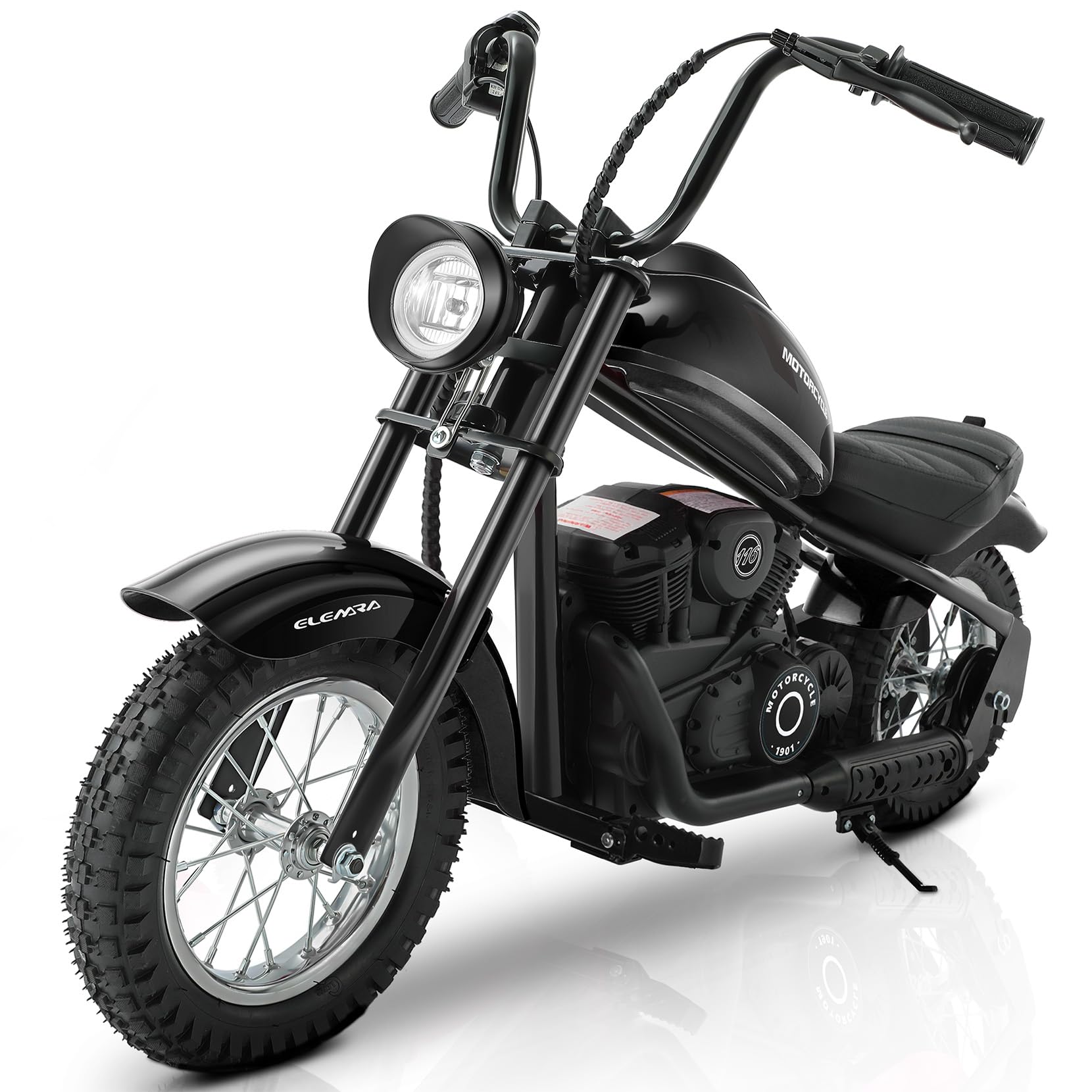
ELEMARA Electric Dirt Bike
Key Features
- Speed & Modes: 15 mph, single
- Battery & Runtime: Lead-acid, 10 mi
- Age & Height Fit: Ages 5-10
- Weight Capacity: 150 lbs
- Safety Features: Handbrake, shocks
- Price: Mid-Range
The ELEMARA stands out for its solid construction — every review praises the frame and materials, with nothing feeling cheap. Compared to the top pick, you trade adjustable speed modes and a lithium battery for a premium motocross look with LED lights, chain drive, and air-filled tires. That makes it ideal for kids 5–10 who want a realistic ride, but be aware the modest uphill performance can’t match Razor models, and a small number of units arrive with charging defects or a torn seat. Best for families willing to accept occasional QC variances for the high build quality.
Pros
- Build quality feels premium; frame and components earn consistent praise.
- Fun 15 mph top speed suits kids 5–10 well.
- Clear instructions make assembly quick for most buyers.
Cons
- Occasional charging issues prevent some units from powering on.
- Modest uphill performance compared to Razor alternatives.
Buy this if you want the most realistic-looking dirt bike for your child and value construction over battery tech. Skip it if you rely on steep hills or need adjustable speed settings for growing riders.
Best for Ages 8-12
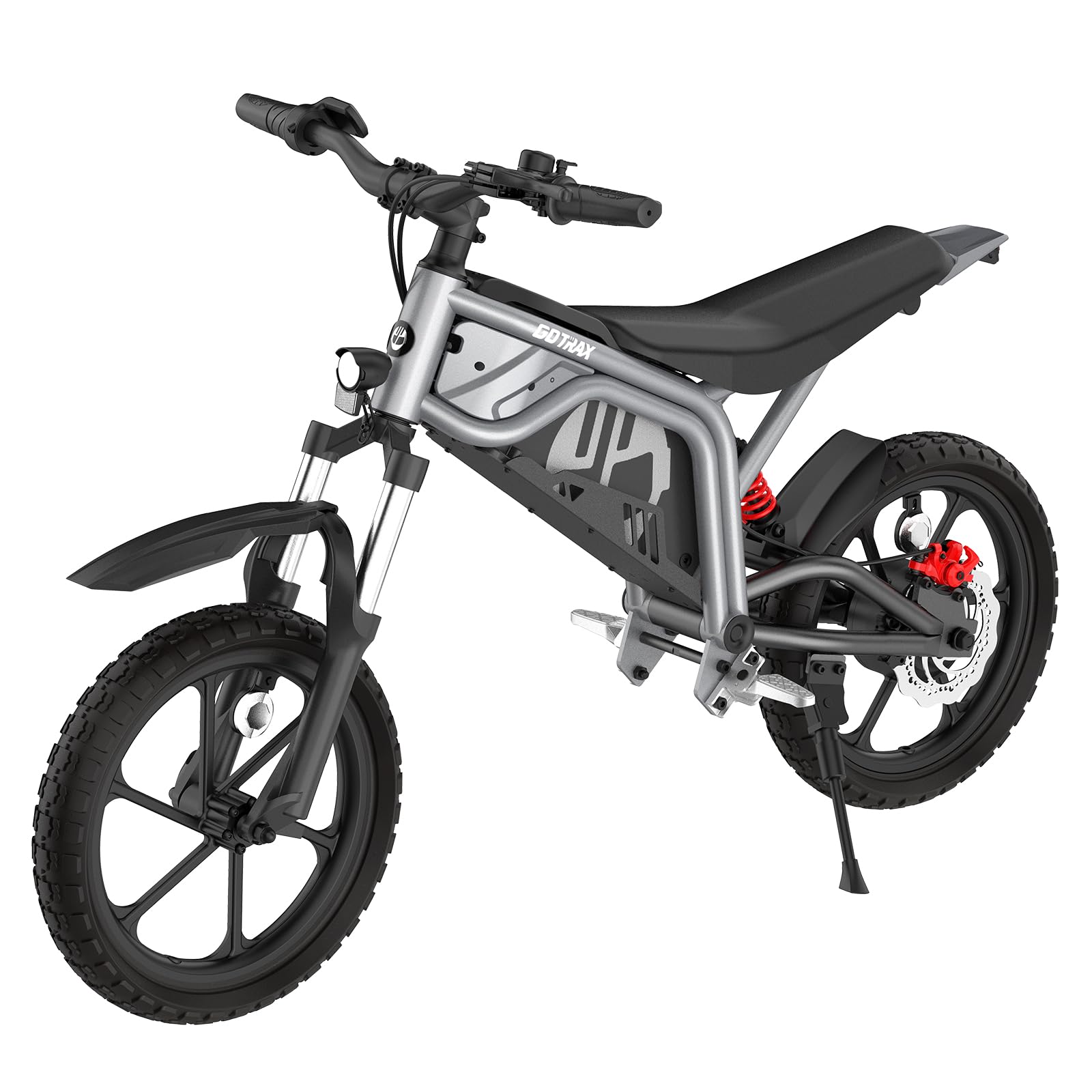
Gotrax ASTRA Dirt Bike
Key Features
- Speed & Modes: 15.5 mph, 2 modes
- Battery & Runtime: Lithium, 16 mi
- Age & Height Fit: Ages 8-12
- Weight Capacity: 220 lbs
- Safety Features: Dual susp, disc
- Price: Premium
The Gotrax ASTRA stands out with its 16-mile range and 220 lb weight capacity, easily outlasting and out-carrying most kids’ electric dirt bikes. Compared to the Razor MX650, it offers modern lithium battery range and room to accommodate older kids or even a lighter adult rider. The trade-off comes in two forms: the bike ships with only a rear disc brake despite advertising dual brakes, which noticeably reduces stopping confidence on downhill trails, and a minority of units have displayed error codes or random shutdowns. This bike fits best if range and capacity are your top priorities and you’re comfortable with a less established brand’s support track record.
Pros
- Battery range covers up to 16 miles for extended trail rides.
- Build quality feels solid and ride is comfortable on rough terrain.
- Top speed of 15.5 mph satisfies older kids and teens wanting real speed.
Cons
- Only rear disc brake; front brake missing despite advertised dual brakes.
- Occasional error codes and random shut-offs reported by some owners.
Buy this if long range and 220 lb capacity are your top needs for an older child or teen. Skip it if you expect a reliable dual-brake system or prefer a brand with a longer review history.
Best for Ages 3-8
Hyper GoGo Retro Bike
Key Features
- Speed & Modes: 10 mph, 3 modes
- Battery & Runtime: Lithium, 60 min
- Age & Height Fit: Ages 3-8
- Weight Capacity: 143 lbs
- Price: Mid-Range
The Hyper GoGo’s 4.7-star rating and 100% positive feedback on fun factor reflect what it does best: turning heads with colorful lights and engine sounds. That retro design isn’t just for show—the frame holds up through crashes, and assembly takes minutes. But the solid tires lose traction on wet pavement, and with only 101 reviews, long-term durability is an open question. This bike is for dry pavement and short loops, not off-road adventures or all-weather commuting.
Pros
- Retro design with vibrant lights and Bluetooth exhaust sounds captivate kids.
- Durable metal frame withstands bumps and crashes.
- Simple assembly out of the box, ready to ride in minutes.
Cons
- Solid tires are slippery on wet surfaces, limiting use to dry conditions.
- With only 101 reviews, long-term durability is not yet confirmed.
Buy this if your kid wants a flashy retro bike for short, dry neighborhood rides. Skip it if you need an all-weather option or prefer a model with a longer track record.
Best for Ages 8-12
Razor MX650 Dirt Rocket

Key Features
- Speed & Modes: 17 mph, single
- Battery & Runtime: Lead-acid, 40 min
- Age & Height Fit: Ages 8-12
- Weight Capacity: 200 lbs
- Price: Premium
Delivers genuine off-road thrills with 17 mph speed and rugged build for older kids, but the premium-priced, 98-lb design, limited battery life, and occasional chain/wheel issues make it less practical than the top pick for most families.
Pros
- Powerful motor and high speed for older kids seeking real dirt bike feel.
- Solid build quality holds up to off-road abuse and rough terrain.
Cons
- Battery life limited and some units degrade quickly; expect short run times.
Worth considering if your older child has off-road experience and you prioritize speed over runtime and portability.
Best for Ages 2-4
Aosom 12V Motorcycle

Key Features
- Speed & Modes: 5 mph, single
- Battery & Runtime: Lead-acid, 45 min
- Age & Height Fit: Ages 2-4
- Weight Capacity: 66 lbs
- Safety Features: Training wheels
- Price: Budget
This bike gets toddlers rolling quickly with simple assembly and training wheels that build confidence. But at 5 mph, older kids quickly outgrow it. The training wheels can loosen with use, and the bike only fits children under 60 lbs, limiting its long-term appeal.
Pros
- Quick assembly with solid build for the price
- Training wheels assist balance for first-time riders
Cons
- Training wheels may loosen with extended use
Worth considering for budget-conscious families seeking a stable first ride for toddlers aged 2-4, provided you accept its slow pace and potential need for wheel adjustments.
Best for Ages 2-5
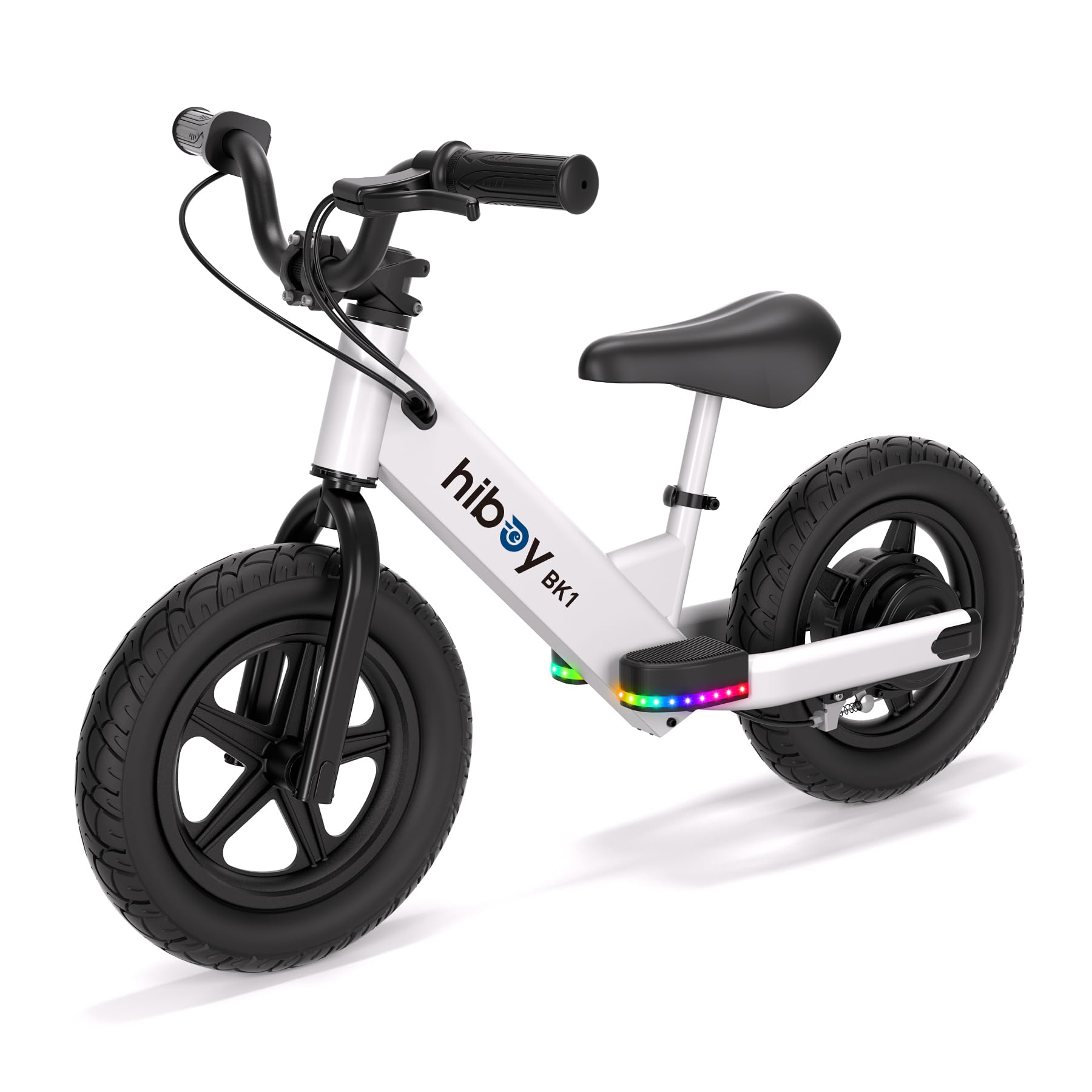
Hiboy Electric Balance Bike
Key Features
- Speed & Modes: 9 mph, 2 modes
- Battery & Runtime: Lithium, —
- Age & Height Fit: Ages 2-5
- Weight Capacity: 77 lbs
- Price: Mid-Range
The 20-pound frame makes this a natural first electric bike for toddlers learning balance. Speed (up to 9 mph) is appropriate for short neighborhood rides. However, battery life is inconsistent across units, and the kick-start requirement may frustrate very young riders who can’t pedal independently.
Pros
- Lightweight 20-lb frame that toddlers can handle easily.
- Speed range (5.6–9 mph) suitable for balance learning.
Cons
- Battery life varies widely; some units fail to hold a charge over time.
Worth considering if you need an ultra-light balance bike for a toddler to practice two-wheel coordination on flat, short paths.
Best for Ages 3-5
AIII Lightweight Motorcycle

Key Features
- Speed & Modes: 10 mph, 2 modes
- Battery & Runtime: Lithium, 40-60 min
- Age & Height Fit: Ages 3-5
- Weight Capacity: 76 lbs
- Safety Features: Dual brakes
- Price: Mid-Range
At under 25 lbs with two speed settings and an adjustable seat, this is a lightweight budget option for kids 3–5 who ride gently. However, battery and throttle reliability is inconsistent, and customer support is slow for replacements.
Pros
- Good value for a lightweight starter bike with quality feel
- Two speed modes and adjustable seat grow with the child
Cons
- Battery and throttle reliability varies; some units have issues out of box
Worth considering if budget is tight and your child is a gentle rider under 5, but expect possible battery or throttle issues.
Best for Ages 3-5
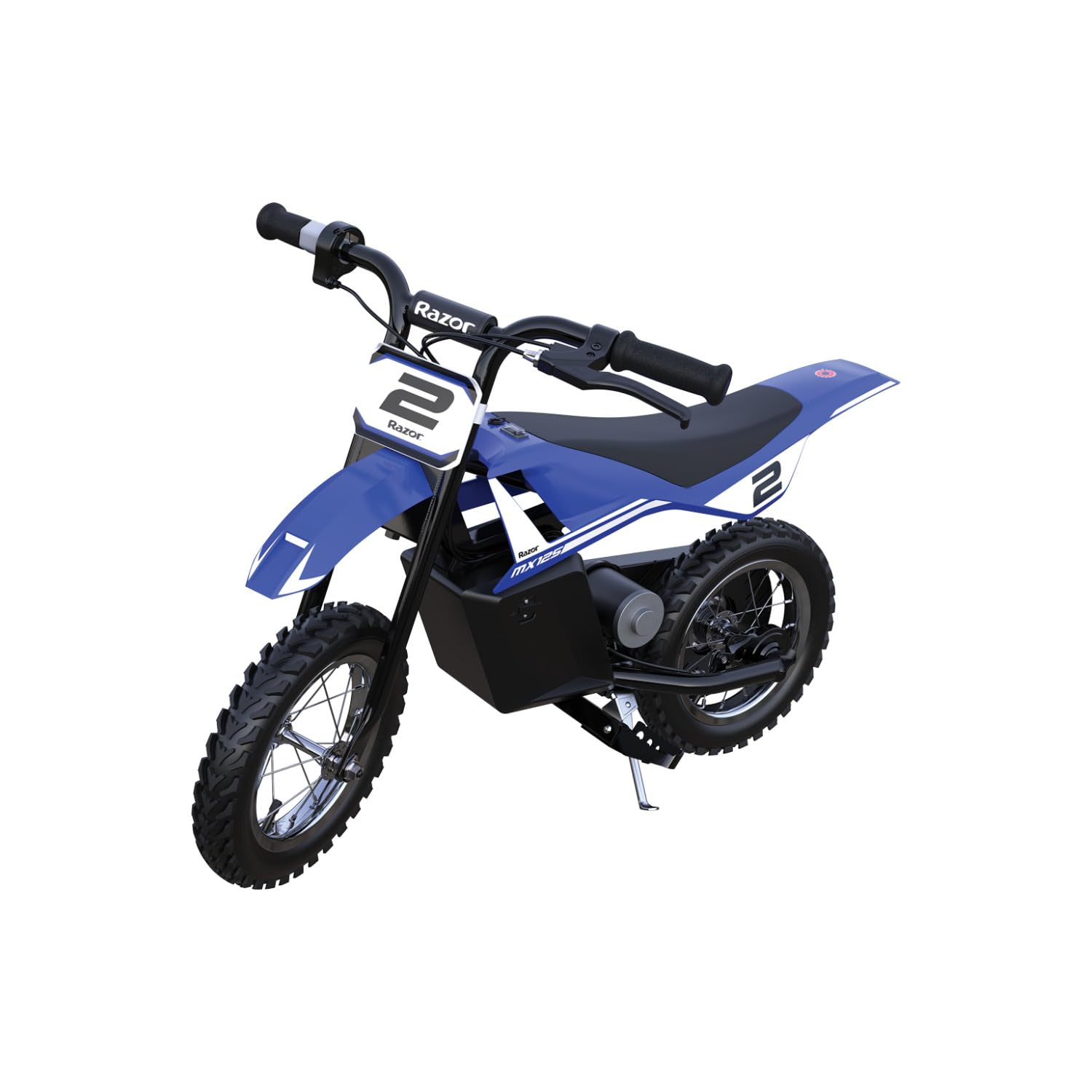
Razor MX125 Dirt Rocket
Key Features
- Speed & Modes: 8 mph, single
- Battery & Runtime: Lead-acid, 80 min
- Age & Height Fit: Ages 3-5
- Weight Capacity: 110 lbs
- Price: Budget
For toddlers under 5 and under 50 lbs, this is a safe first electric bike with a realistic dirt bike look. The 8 mph speed and 80-minute runtime are appropriate for beginners. However, it’s quickly outgrown as kids get older, and some units suffer from early motor or battery failures.
Pros
- Authentic motocross styling that young children love.
- Controlled 8 mph top speed and low power build confidence safely.
Cons
- Best for kids under 5 and under 50 lbs; outgrown quickly and some units fail early.
Worth considering if your child is under 5 and under 50 lbs and you want an affordable, low-speed starter bike.
Best for Ages 2-4
JOYSTROLL S6 Motorcycle
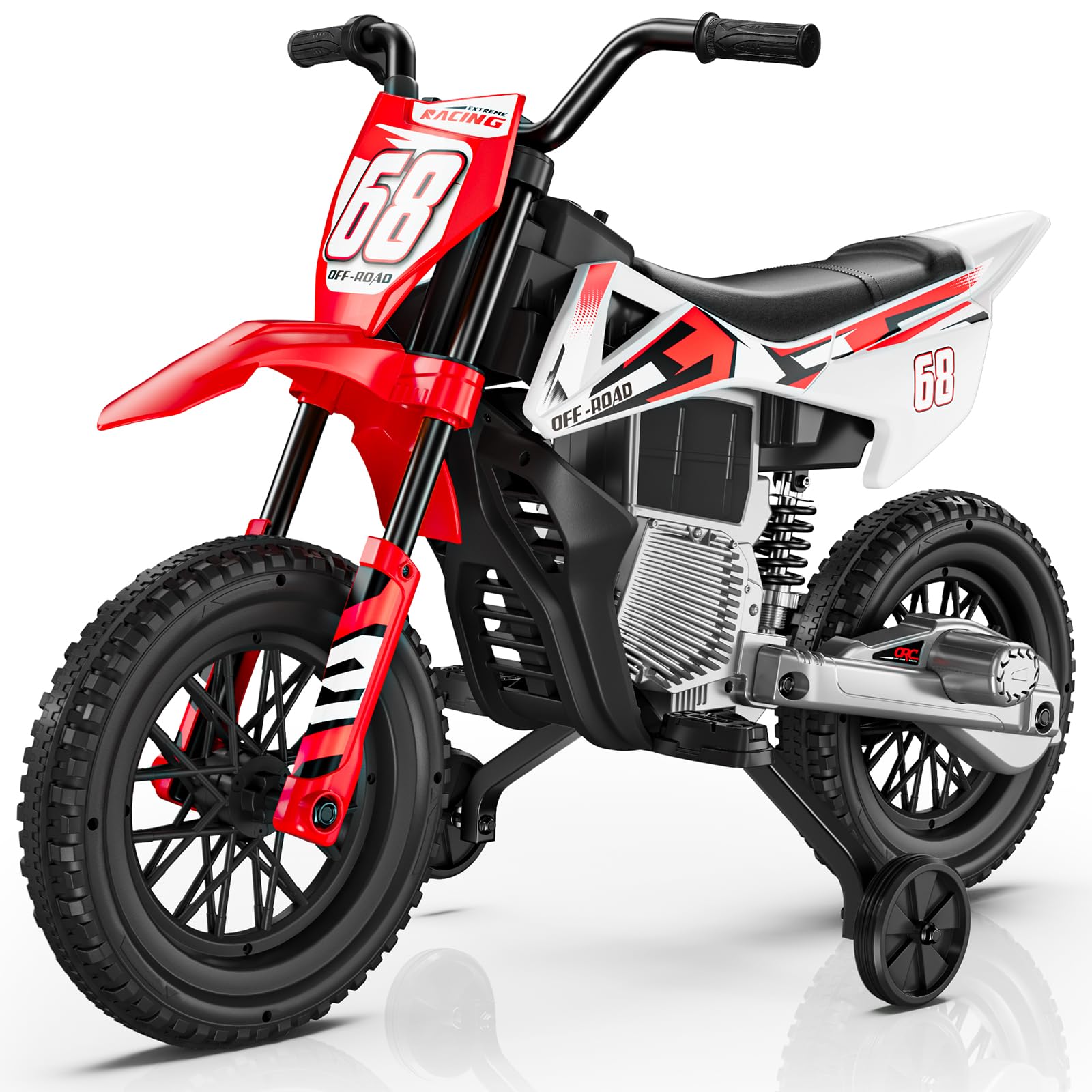
Key Features
- Speed & Modes: 3 mph, single
- Battery & Runtime: Lead-acid, —
- Age & Height Fit: Ages 2-4
- Safety Features: Training wheels
- Price: Budget
The JOYSTROLL S6 entertains toddlers with Bluetooth music, flashing lights, and a realistic motorcycle look, all at an entry-level price. Training wheels aid balance on smooth floors. However, the 1-3 mph pace and plastic construction limit this toy to indoor use only; it lacks the durability and speed for outdoor riding or older children.
Pros
- Bluetooth speaker and LED lights captivate toddlers during indoor play.
- Training wheels help toddlers learn balance on smooth surfaces.
Cons
- Top speed of 3 mph feels too slow for toddlers beyond age 2.
Worth considering if you need a cheap, indoor-only novelty toy to mesmerize a 2–3 year old with sounds and lights.
Best for Ages 3-5
AIII Racing Bike (3-7)

Key Features
- Speed & Modes: 8 mph, 2 modes
- Battery & Runtime: Lithium, 35 min
- Age & Height Fit: Ages 3-5
- Safety Features: Disc, shocks
- Price: Mid-Range
This mini dirt bike offers a stable ride with its rear disc brake and advanced suspension, ideal for young beginners wanting a realistic look. The battery lasts only 35 minutes, and some owners report charging issues – combined with just 102 reviews, long-term reliability is uncertain. It’s best for short play sessions close to home.
Pros
- Rear disc brake and shock absorption give stable control for young beginners.
- Realistic dirt bike styling appeals to kids ages 3-5.
Cons
- Battery runtime is only 35 minutes – some units also have charging failures.
Worth considering if your child wants a realistic-looking electric dirt bike for short rides close to home, and you’re okay with a smaller battery.
Best for Ages 3-6
Blissskip Mini Dirt Bike
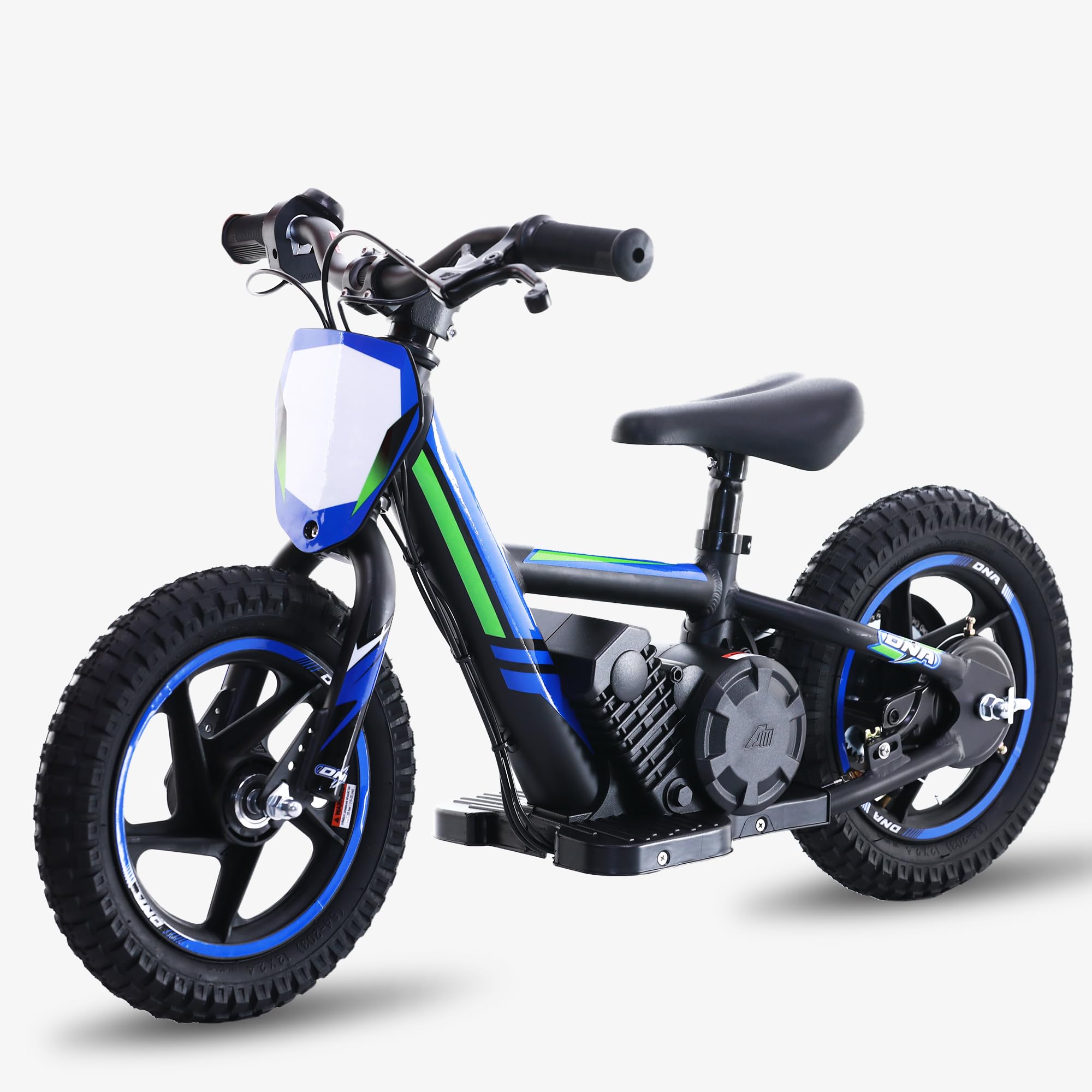
Key Features
- Speed & Modes: 10 mph, 2 modes
- Battery & Runtime: Lithium, 60 min
- Age & Height Fit: Ages 3-6
- Price: Mid-Range
Blissskip’s mini bike offers a 170W brushless motor and 10 mph speed in a lightweight frame with detachable battery. It’s a solid step up from Power Wheels for light off-road use. But a minority of units have charging failures, and customer service response is slow, making it a slightly risky choice.
Pros
- 170W brushless motor provides enough torque for light off-road trails.
- 10 mph top speed offers a realistic thrill for young riders without overwhelming.
Cons
- Some units experience battery charging failures; warranty support can be slow.
Worth considering if you want a lightweight, lithium-powered mini bike for a child 3-6 ready for a step up, but accept the possibility of charging issues and slower warranty service.
How to Choose
Ignore the age on the box and measure your child’s inseam — most bikes advertised for ages 8+ actually fit a 5-year-old.
Speed and Adjustable Modes
Speed determines both fun and safety. Beginners under 6 should stay under 10 mph, while older kids can handle 15+ mph. Look for bikes with 2–3 speed modes so your child can progress without buying a new bike. A single-speed bike with a throttle is fine for very young riders but limits growth.
Battery and Runtime
Lead-acid batteries are cheaper but lose capacity after 50–100 cycles, often dying within a year. Lithium batteries cost more upfront but last longer and provide consistent runtime. If your child will ride daily, prioritize lithium for fewer battery replacements and longer play sessions.
Age and Height Fit
Manufacturer age labels are unreliable. Measure the seat height at its lowest setting and compare it to your child’s inseam. A bike that’s too tall can be intimidating; one that’s too small will be outgrown in months. Aim for at least 2–3 inches of inseam clearance when seated.
Weight Capacity and Frame
Weight capacity is a hard limit — exceeding it stresses the motor and brakes. Most bikes cap at 140–150 lbs; premium models go to 220 lbs. Heavier frames (steel) are more durable but harder for a child to lift. Lighter bikes (aluminum or plastic) work for small toddlers but may not survive rough use.
Safety Features
Training wheels help toddlers learn balance but break easily on rough ground. Pneumatic tires and front/rear suspension improve stability on uneven terrain. Hand brakes are safer than foot brakes for older kids because they stop faster. Disc brakes are preferred over drum brakes for reliability in wet conditions.
FAQ
How fast should a kids electric bike be?
For kids under 6, stick to 8-10 mph max. Ages 7-10 can handle 12-15 mph with parental supervision. Bikes with adjustable speed modes let you start slow and increase as your child gains confidence. Anything above 15 mph is best reserved for older kids and open off-road areas.
What is the best electric dirt bike for a 5 year old?
The Razor MX400 is a popular choice for 5-year-olds, but note it actually fits children closer to 4-6 years old due to its small seat height. The Hiboy DK1 also works well with its lowest speed mode at 5 mph, and its lithium battery lasts longer per charge than the MX400’s lead-acid pack.
Do kids electric bikes come with training wheels?
Some budget models like the Aosom 12V and JOYSTROLL S6 include training wheels, but they tend to break quickly on rough surfaces. Most mid-range and premium bikes (Razor, Hiboy) omit training wheels and rely on pneumatic tires and suspension for stability. If your child needs balance help, consider a separate balance bike first.
Why does my kids electric bike battery die so fast?
Lead-acid batteries degrade after 50-100 charge cycles, and a battery that dies within months is a common complaint. Prevent this by fully charging before first use, avoiding full discharges, and storing the bike indoors during winter. For daily riders, a lithium battery model will hold its capacity much longer.