This post contains affiliate links. We may earn a small commission when you buy through our links — at no extra cost to you.
Most parents discover the hard way that the advertised battery life on kids’ electric cars is optimistic. A 12V ride-on might claim two hours of runtime, but real-world use often delivers 30-60 minutes before the battery needs a recharge. And it’s not just the battery—many models develop cracked plastic, broken axles, or stop working entirely after a few months. This guide helps you find the models that actually stand up to regular use, with realistic expectations for battery life and durability.
The best options for your child depend on age, weight, and how you plan to use the car. A lightweight 12V car works well for a toddler cruising the driveway, while a heavier 24V two-seater can handle siblings and bigger kids. Parental remote controls are essential for young drivers, but their reliability varies widely. We’ve separated the models that deliver a fun, safe experience from the ones that are more likely to disappoint—so you can buy with confidence.


Best for Young Children (3-5)
ANPABO Mercedes G63
Key Features
- Battery: 12V 7Ah
- Weight & Seats: 66 lbs, 1 seat
- Max Speed: 3 mph
- Price: Mid-Range
The licensed Mercedes design and upgraded 12V 7Ah battery set this ride-on apart from typical plastic cars. The parent remote control works smoothly for steering and speed adjustments, while the soft start prevents jerky acceleration. Assembly takes roughly 30 minutes, and the vehicle runs about an hour per charge on flat pavement, matching most kids’ attention spans.
This car is best for toddlers aged 3 to 5 who want a realistic driving experience and for parents who value remote supervision. The 66 lb weight limit and 3 mph top speed suit that age group well. However, some units encounter motor or wiring issues within months – consider an extended warranty to cover potential early failures.
Pros
- Realistic Mercedes design that kids love
- Quick and straightforward assembly out of the box
- Upgraded battery provides decent runtime for typical play sessions
Cons
- Some units stop working within months due to electrical or motor issues
- Plastic bumpers and panels can crack under rough or frequent use
- Battery runtime varies; some users report shorter sessions than expected
Buy this if you want a realistic-looking ride-on with parent remote control for a preschooler. Skip it if you need a long-lasting car for heavy daily use or for older kids over 66 lbs.
Best for Older Kids (6+)
Razor Crazy Cart Shift
Key Features
- Battery: 12V lead-acid
- Weight & Seats: 120 lbs, 1 seat
- Max Speed: High/Low
- Price: Premium
The Crazy Cart Shift’s rear-wheel drift system and high/low speed switch deliver genuine sliding action that smaller ride-ons can’t match—ideal for older kids who want to spin and skid on smooth pavement. Compared to the top pick’s more rounded toddler appeal, this one focuses purely on excitement. The trade-off: roughly a third of owners report the kart stopping working within months, and the lead-acid battery typically runs 20–30 minutes per charge. Best treated as an occasional-use toy on flat, open surfaces, not a daily driver.
Pros
- Exceptional drifting capability with simplified rear-wheel slide
- High/low speed settings let kids grow into the thrills
- Maintenance-free hub motor and sturdy frame hold up to regular drifting
Cons
- Battery life shorter than advertised; expect 20–30 minute sessions
- Reliability concerns: some units stop working after a few months of use
Buy this if your kid is 6+ and obsessed with drifting on smooth pavement for occasional weekend fun. Skip it if you need a dependable daily driver or have younger children.
Best for Families with Two Kids
First Ride On Bronco
Key Features
- Battery: 24V
- Weight & Seats: 132 lbs, 2 seats
- Max Speed: 4.3 mph, 3 speeds
- Price: Luxury
This 24V two-seater delivers a spacious cabin, realistic Bronco detailing, and a well-reviewed parental remote – a step up in power and capacity from the top pick’s 12V offerings for toddlers. It handles two kids up to 132 lbs and reaches 4.3 mph with spring suspension for smoother rides on paved surfaces. The trade-off appears in occasional reports of cracked parts and motor gearbox failures, particularly if used on uneven terrain. Best suited for families with older children who will stick to driveways and sidewalks.
Pros
- Solid build quality and realistic Bronco design
- Parental remote control responds well
- Good battery runtime for longer play sessions
Cons
- Occasional cracked parts or motor gearbox failure in some units
- Wiring or pedal issues reported in a minority of cases
Buy this if you need a roomy 24V two-seater with realistic styling and a responsive remote for older kids on paved surfaces. Skip it if you plan to use it on rough terrain or want near-zero quality control variances.
Best for Budget-Conscious Parents
Miniature Motors Truck
Key Features
- Battery: 12V
- Weight & Seats: 66 lbs, 1 seat
- Max Speed: 3.5 mph, 3 speeds
- Price: Budget
Dual 35W motors and a 3-speed remote give this truck a lively feel for the price, making it a strong contender for toddlers’ first electric car. The Bluetooth music player adds fun, and assembly is quick. However, battery life is inconsistent – some owners get 40 minutes, others report dead batteries after a handful of charges. A portion of units also stop working within a few months, so this is best for light, occasional use on smooth pavement. Ideal for budget-conscious parents who prioritize features over long-term durability.
Pros
- Good build quality for the price point
- Quick and easy assembly out of the box
- Responsive remote control with 3-speed settings
Cons
- Battery longevity varies; some owners see quick degradation after a few charges
- Occasional early failures reported after a few months of use
Buy this if you want a feature-packed budget ride-on for occasional toddler use. Skip it if you need consistent battery life and long-term reliability.
Best for Toddlers (1-3)
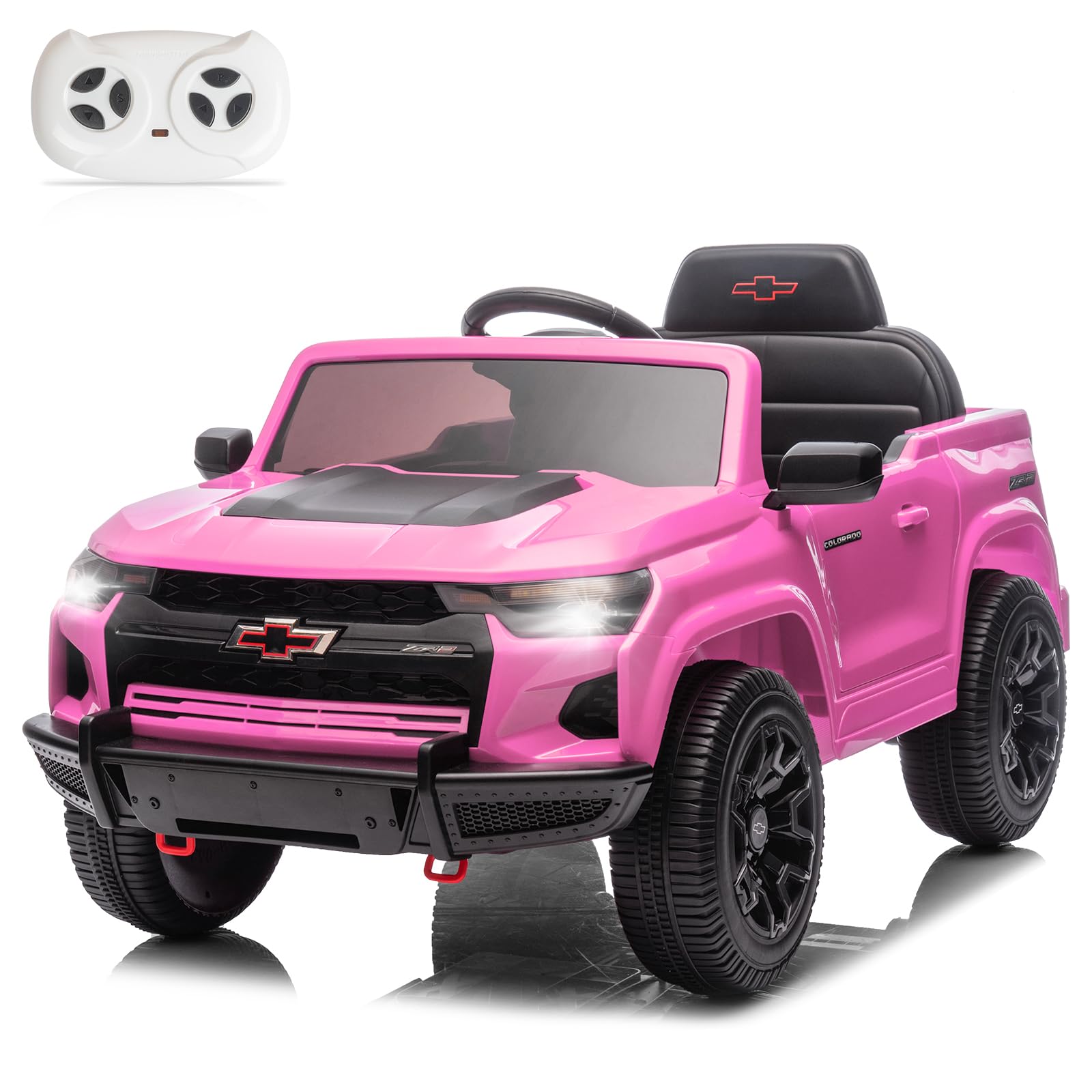
Winado Chevy Colorado
Key Features
- Battery: 12V
- Weight & Seats: 66 lbs, 1 seat
- Max Speed: 2.5 mph
- Price: Budget
The Winado Chevy Colorado gives toddlers a realistic truck experience at a budget price, but with only 184 reviews, long-term durability is unproven. Ideal for parents of 1-3 year-olds seeking a starter car with remote control and Bluetooth audio, though the 66-lb weight limit means kids outgrow it quickly.
Pros
- Perfect size for toddlers aged 1-3.
- Easy assembly with clear instructions.
- Battery lasts multiple play sessions.
Cons
- Limited review count leaves durability unproven.
- Size may be snug for older toddlers or taller kids.
Buy this if you want a budget-friendly, licensed Chevy truck for a toddler under 3. Skip it if your child is already large for their age or you prefer a model with a longer customer history.
Best for Licensed Vehicle Fans
BCP Chevy Silverado
Key Features
- Battery: 12V
- Weight & Seats: 66 lbs, 1 seat
- Max Speed: 2.5 mph
- Price: Mid-Range
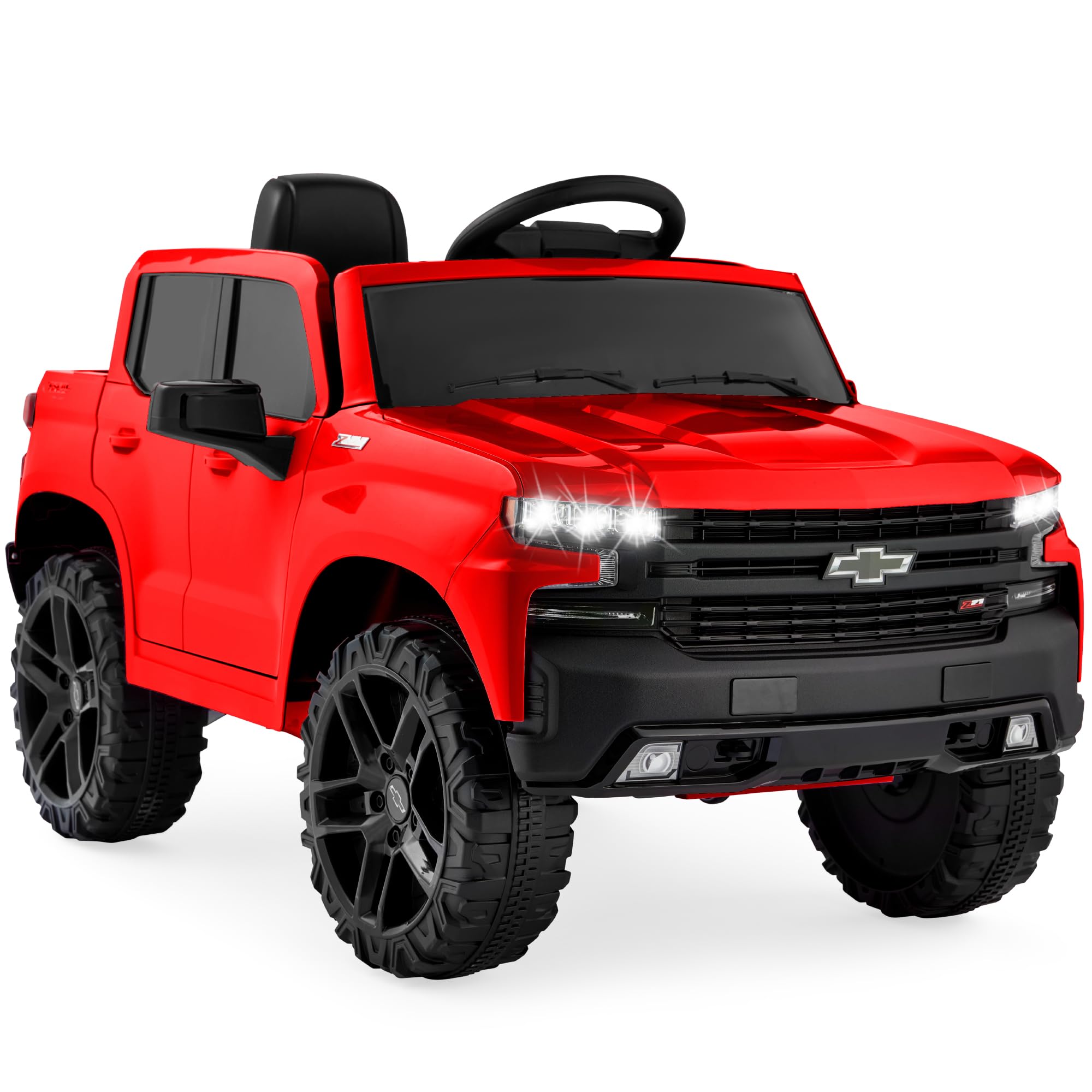
Unlike the top pick’s Mercedes styling, this Chevy Silverado leans into a rugged truck aesthetic with a functional truck bed for hauling toys. The licensed design is a hit with toddlers who love big trucks. Assembly is quick and the parent remote responds well. However, the 2.5 mph top speed is noticeably slow, and battery life runs shorter than many expect – around 45 minutes. A small number of units also develop radio issues after a year. Best suited for light driveway use and Chevy enthusiasts willing to accept the trade-offs.
Pros
- Licensed Chevy design with authentic Silverado details
- Easy assembly out of the box – most parents get it ready in under 30 minutes
- Parent remote control responds well for steering and braking
Cons
- Battery life is shorter than advertised; expect about 45 minutes of play
- Some units experience radio failure after a year – a minority issue
Buy this if your toddler is a Chevy truck fan and you want a realistic-looking ride-on for gentle use on flat surfaces.
Best for Two Kids
BCP 24V 2-Seater
Key Features
- Battery: 24V
- Weight & Seats: 132 lbs, 2 seats
- Max Speed: 4 mph
- Price: Luxury
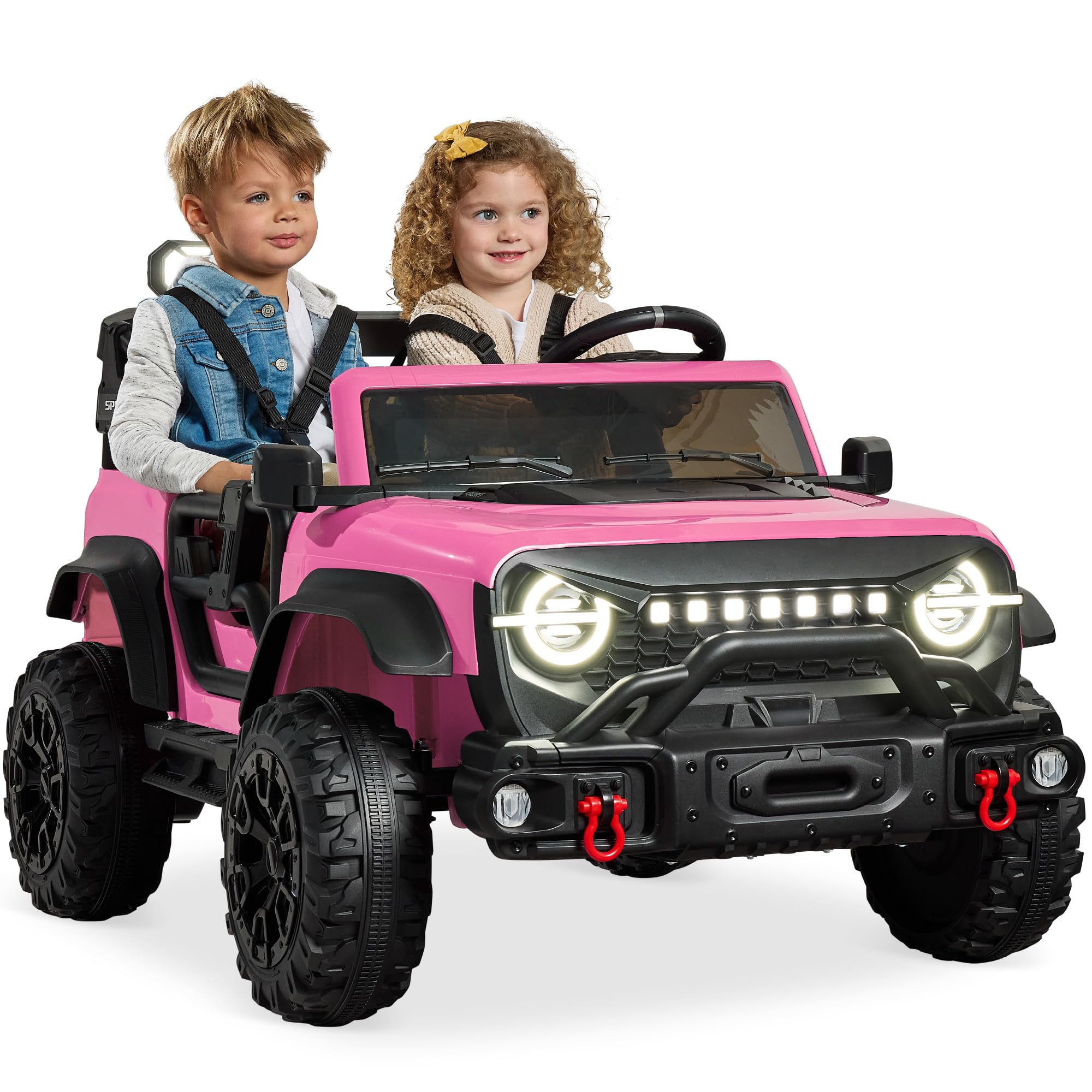
This 24V two-seater offers generous room and speed for siblings, but buyer reports highlight frequent issues with battery life, remote control, and wheel durability, making longevity uncertain. Best for families who prioritize space and power over long-term dependability.
Pros
- Build quality earns positive feedback for sturdiness.
- Easy assembly process appreciated by parents.
Cons
- Battery runtime often falls short of advertised 90 minutes.
Worth considering if you have two kids who want to ride together and you’re willing to accept potential early repairs.
Best for Very Young Toddlers
Winado Mercedes AMG

Key Features
- Battery: 12V
- Weight & Seats: 55 lbs, 1 seat
- Max Speed: 3 mph, 3 speeds
- Price: Budget
This licensed Mercedes AMG GTR offers an eye-catching design and easy assembly at a budget price. However, its small size limits use to toddlers under 3, and some owners report short battery life or unreliable remote control — making it best as a starter car for very young children.
Pros
- Realistic Mercedes styling that kids love.
- Sturdy build for a budget-priced ride-on.
Cons
- Small seat and cabin — many 3-year-olds outgrow it quickly.
Worth considering if you want a low-cost, visually exciting ride-on for a 1- to 2-year-old who will outgrow it within a season.
Best for Two Kids
ENYOPRO Bronco
Key Features
- Battery: 24V
- Weight & Seats: 132 lbs, 2 seats
- Max Speed: 4.4 mph
- Price: Luxury
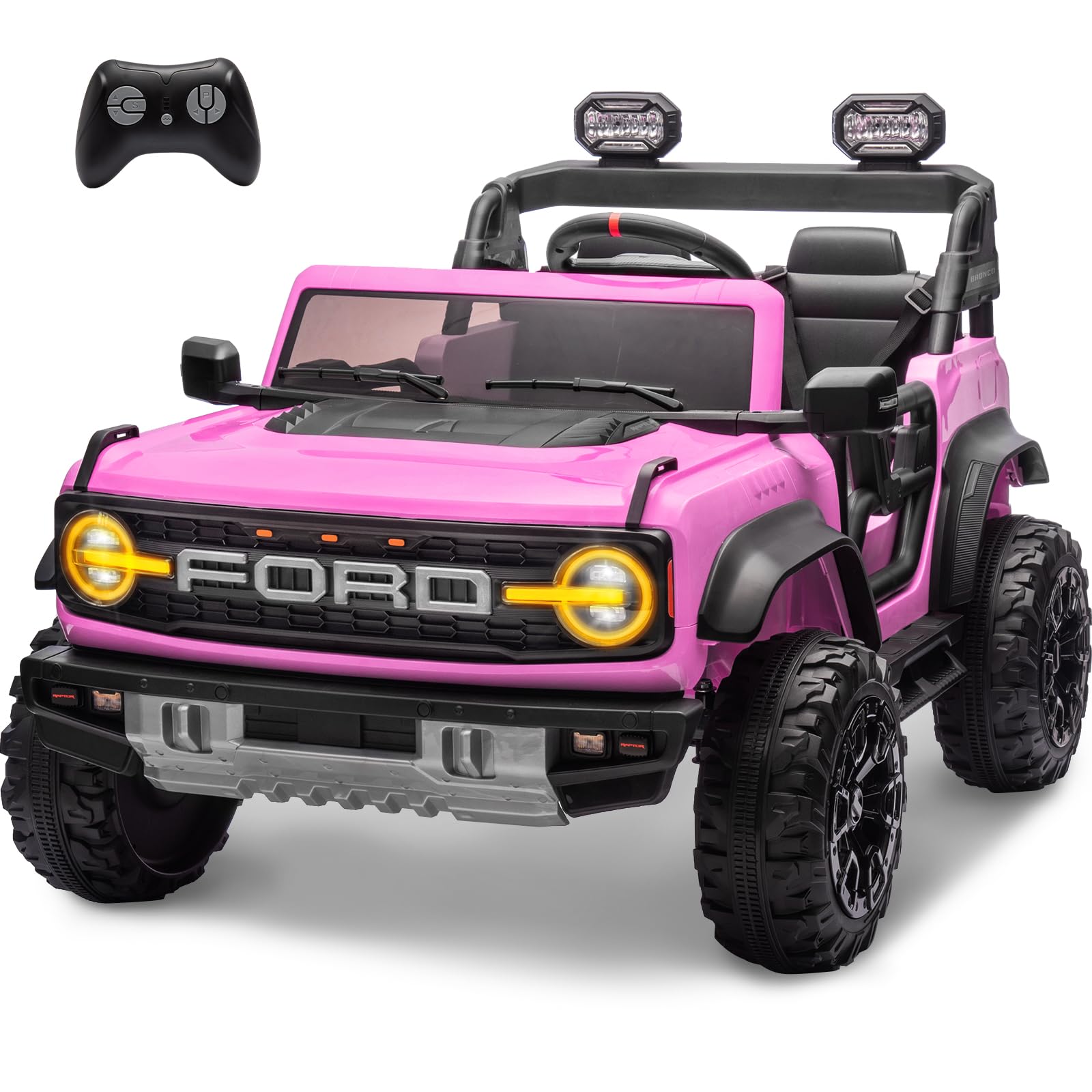
The ENYOPRO Bronco offers a licensed Ford Raptor design in a 24V 2-seater with solid build quality and a responsive remote control. However, it trails the top pick due to more frequent reports of cracked undercarriages and short battery life, plus fewer reviews overall.
Pros
- Build quality feels solid for the price point
- Remote control offers reliable range and response
Cons
- Cracked undercarriage reported in some units
- Battery life shorter than expected
Worth considering if you want a licensed Bronco look at a lower price and can accept potential durability and battery issues.
Best for Budget Toddlers
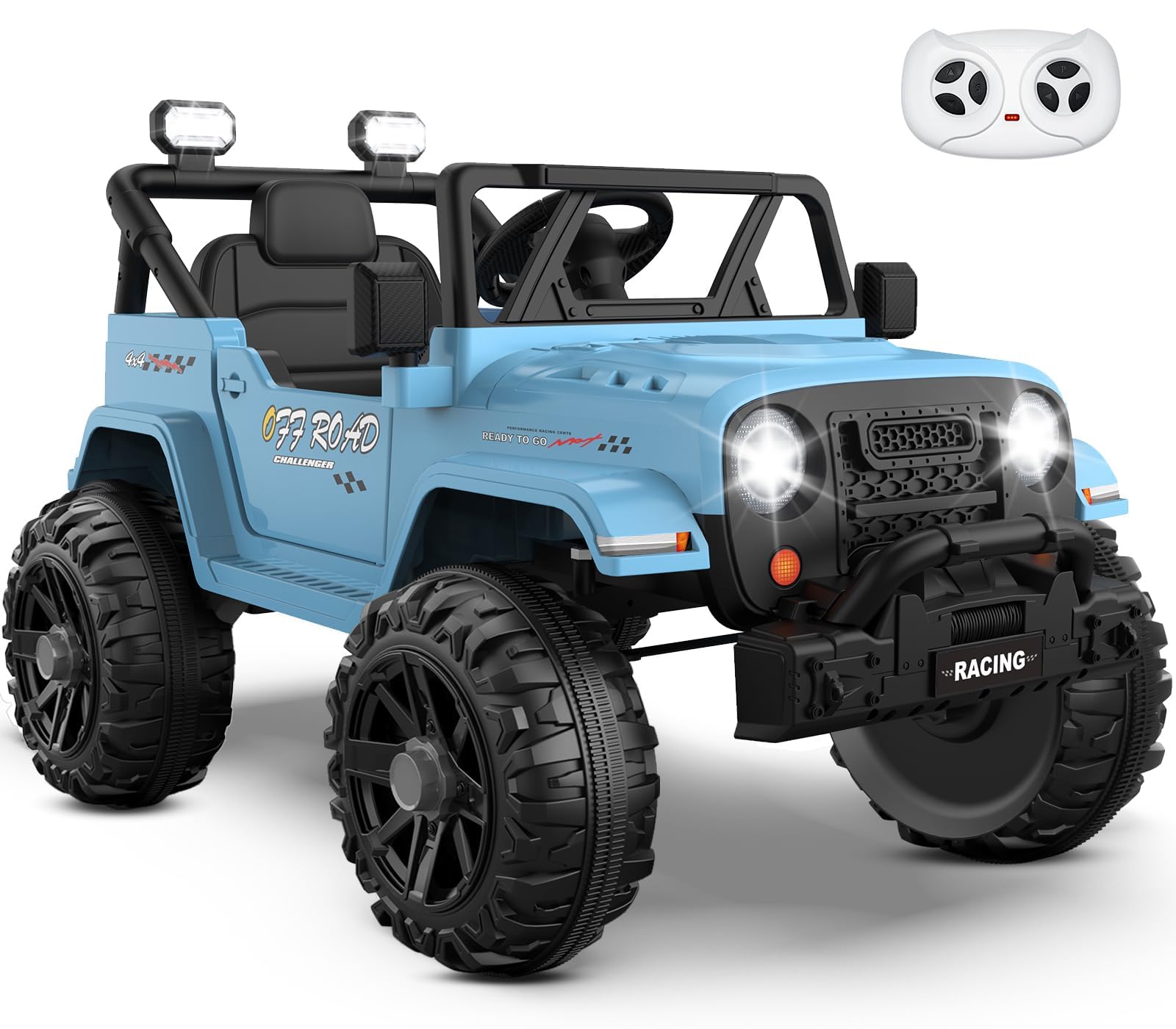
ARBELI 12V Truck
Key Features
- Battery: 12V
- Weight & Seats: 50 lbs, 1 seat
- Max Speed: 3.1 mph, 3 speeds
- Price: Budget
It offers great value with dual motors, Bluetooth, and remote at a budget price, and is easy to assemble. However, its 50 lb weight limit means kids outgrow it quickly, and occasional quality control issues lead to early failures in some units.
Pros
- Proper size for toddlers under 50 lbs – not too cramped.
- Packed features for the price: dual motors, Bluetooth, remote control.
Cons
- Occasional early failures – some units stop working after limited use.
Worth considering if you want a feature-packed budget ride-on for a toddler under 50 lbs and are okay with occasional quality variances.
How to Choose
Don’t trust the advertised battery life – real-world runtime is typically 30-60 minutes, so plan your child’s driving sessions accordingly.
Battery Voltage and Runtime
Battery voltage (12V vs 24V) affects speed and power. 12V cars are suitable for flat driveways and younger kids, while 24V models offer more torque for hills and heavier riders. Runtime is always shorter than claimed – factor in a recharge after 30-45 minutes of active driving. A spare battery can double the fun if your child plays for longer.
Weight Capacity and Seats
Most 12V cars support 55-66 lbs, and 24V two-seaters up to 132 lbs. Check your child’s weight against the limit before buying – exceeding it strains the motor and battery. Single-seat cars are best for solo play; two-seaters work well for siblings but add significant weight that can reduce run time.
Parental Remote Control Reliability
A remote control is essential for toddlers who can’t steer or brake reliably. Not all remotes are equal – some lose signal after 20-30 feet or stop working entirely. Look for models with positive feedback on remote range and responsiveness. Test the remote immediately after assembly; miswired units can cause the car to ignore the remote.
Max Speed and Speed Settings
Speed ranges from 2.5 mph (slow walk) to 4.4 mph (brisk jog). Multi-speed settings let you start slow and increase as your child gains confidence. For young toddlers, a top speed under 3 mph is safer. Older kids often want at least 4 mph – but check that the car has a soft start to prevent sudden jerks.
Build Quality and Long-Term Durability
Plastic bodies, axles, and gearboxes are the first to fail. Models with spring suspension and rubber wheels tend to last longer. Reviews commonly mention cracked bumpers, broken rear axles, and stripped gears after a few months. The most durable cars use reinforced plastic and metal drive components – but even then, expect occasional repairs if used daily.
FAQ
How long does the battery really last on a 12V kids car?
Real-world runtime is typically 30-60 minutes of continuous driving, not the 1-2 hours advertised. Heavy kids, hills, and rough terrain drain the battery faster. Plan for a recharge after each session; some parents buy a second battery to swap out for longer playtime.
Why does my kids’ electric car stop working after a few months?
The most common cause is a failed battery that won’t hold a charge. Other frequent issues are broken wiring connections at the pedal or motor, stripped gears, and cracked axles. Many of these cars use cheap plastic components that wear out quickly. If the car stops completely, check the battery voltage and fuse first; if those are fine, the motor or gearbox likely needs replacement.
Is a 24V ride-on car necessary for two kids?
Not strictly necessary, but highly recommended. 12V cars typically have 66 lb weight limits, which two kids will exceed quickly. A 24V two-seater can handle up to 132 lbs and provides enough torque to move both children on gentle slopes. For flat driveways, a 12V car might suffice for very light toddlers, but the ride will be slow and the battery will drain faster.
Can you replace the battery in a 12V ride-on car?
Yes, most 12V ride-on cars use standard sealed lead-acid batteries (typically 12V 7Ah or 12V 10Ah). Replacement batteries cost around $20-30 and are easy to swap with basic tools. Upgrading to a higher Ah battery can extend runtime, but make sure the car’s charging port and wiring can handle the extra capacity.