This post contains affiliate links. We may earn a small commission when you buy through our links — at no extra cost to you.
A kids BMX bike with a missing brake cable, a bent fork, or a chain that drops on the first ride isn’t an isolated defect – it’s a recurring theme in the under-$200 category. Manufacturers prioritize low prices over assembly-line checks, leaving parents to discover problems after the box is open.
The real decision isn’t which paint job looks better. It’s whether the bike weighs under 20 pounds so a 4-year-old can pedal it, and whether the training wheels stay tight after a week of riding. A heavy frame and loose hardware turn a gift into a frustration. This guide focuses on models that minimize those hidden costs.


Best for Toddlers first bike
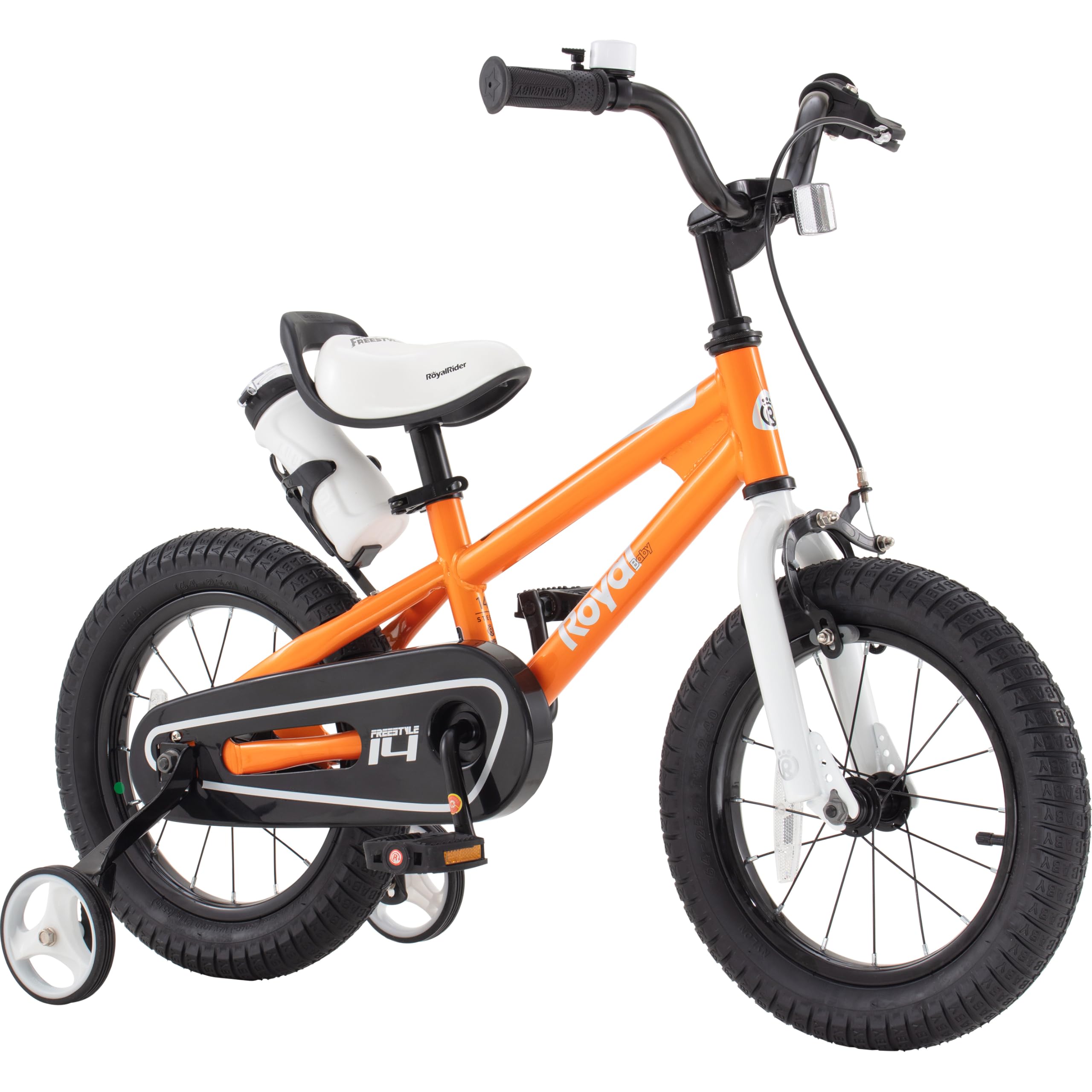
RoyalBaby Freestyle Classic
Rating: 4.5 ★ | Price: $116.35 | Wheel Size: 12–18 inches | Brake System: Coaster + caliper | Weight: 19 lbs | Training Wheels: Yes | Frame Material: Carbon steel
Over 17,000 reviews and a lifetime warranty make this the most vetted first bike for toddlers learning to ride.
The RoyalBaby Freestyle Classic comes together in under 30 minutes with clear instructions, and the carbon steel frame feels solid for the price. But the same heft that gives it a sturdy ride (19 pounds) makes it hard for small kids to pedal and steer. Real-world reports consistently flag the chain and pedals falling off during normal use, so plan on inspecting and tightening those parts regularly.
This bike is best for budget-conscious families who want an easy-to-assemble, adjustable first bike for paved sidewalks and gentle hills. The lifetime warranty offers peace of mind, but the recurring chain and pedal failures mean you should be comfortable with basic wrench work or ready to contact support. Avoid if you need a lightweight bike or plan aggressive trail riding.
Pros
- Easy assembly with illustrated instructions saves time and frustration.
- Adjustable seat and handlebars accommodate growing children without tools.
- Solid carbon steel frame feels durable and stable on pavement.
Cons
- Chain and pedals frequently detach within weeks, creating safety risks and requiring frequent maintenance.
- Heavy 19-pound frame makes pedaling difficult and tiring for children under 3 or those just learning.
Buy this if you want an affordable, adjustable first bike with strong user consensus and a lifetime warranty. Skip it if you need a lightweight bike or cannot accept frequent chain/pedal repairs.
Best for Budget toddlers
JOYSTAR 12-Inch BMX
Rating: 4.4 ★ | Price: $119.99 | Wheel Size: 12 inches | Brake System: Coaster only | Weight: 18-20 lbs | Training Wheels: Yes | Frame Material: Carbon steel
The cheapest option for toddlers learning to pedal, but expect to tighten the training wheels and seat post after every ride.
At the lowest price in this set, the JOYSTAR 12-inch BMX offers easy assembly and a fun decal kit. But the training wheels and seat post loosen after a few rides, requiring regular tightening. The heavy carbon-steel frame also makes pedaling tougher for very young children. Best for budget-conscious parents of toddlers learning to pedal who don’t mind maintenance; not for those wanting a hands-off bike.
Pros
- Lowest price in this set for a 12-inch toddler bike with training wheels.
- Assembly requires only basic tools and takes about 20 minutes.
- Fun decal kit lets children personalize their bike’s appearance.
Cons
- Training wheels and seat post loosen after a few rides, requiring frequent tightening.
- Heavy carbon-steel frame makes pedaling difficult for very young toddlers.
Buy this if you want the lowest-priced 12-inch bike for your toddler and are willing to tighten the hardware frequently.
Best for Transition to brakes
Mongoose Switch 18-Inch
Rating: 4.3 ★ | Price: $219.99 | Wheel Size: 18 inches | Brake System: Coaster, front caliper | Weight: 27 lbs | Training Wheels: Yes | Frame Material: Alloy steel
Best Mongoose for beginners – 18-inch frame with training wheels plus hand brakes for progressive learning.
The Mongoose Switch 18-Inch combines coaster and hand brakes, making it a focused transition bike for kids moving past training wheels. Compared to larger Mongoose BMX models, this one prioritizes learning over tricks, and its 18-inch wheels fit children roughly 4–7 years old. The value is decent at this price, but assembly is a common frustration—multiple buyers report difficult brake adjustments and missing parts like seat posts. Families comfortable with tools will get a functional bike; those wanting a perfect out-of-box experience should look elsewhere.
Pros
- Good combo of training wheels and hand brakes for progressive learning
- Solid value for a versatile 18-inch bike
- 18-inch wheel size fits kids 4–7 years old, bridging the gap between 16 and 20-inch bikes
Cons
- Assembly can be challenging, especially for brakes
- Inconsistent quality control – some units arrive with stripped parts or missing components
Buy this if your child is ready to learn hand brakes and you’re comfortable with bike assembly. Skip it if you want a perfect out-of-box experience.
Best for Hot Wheels fans
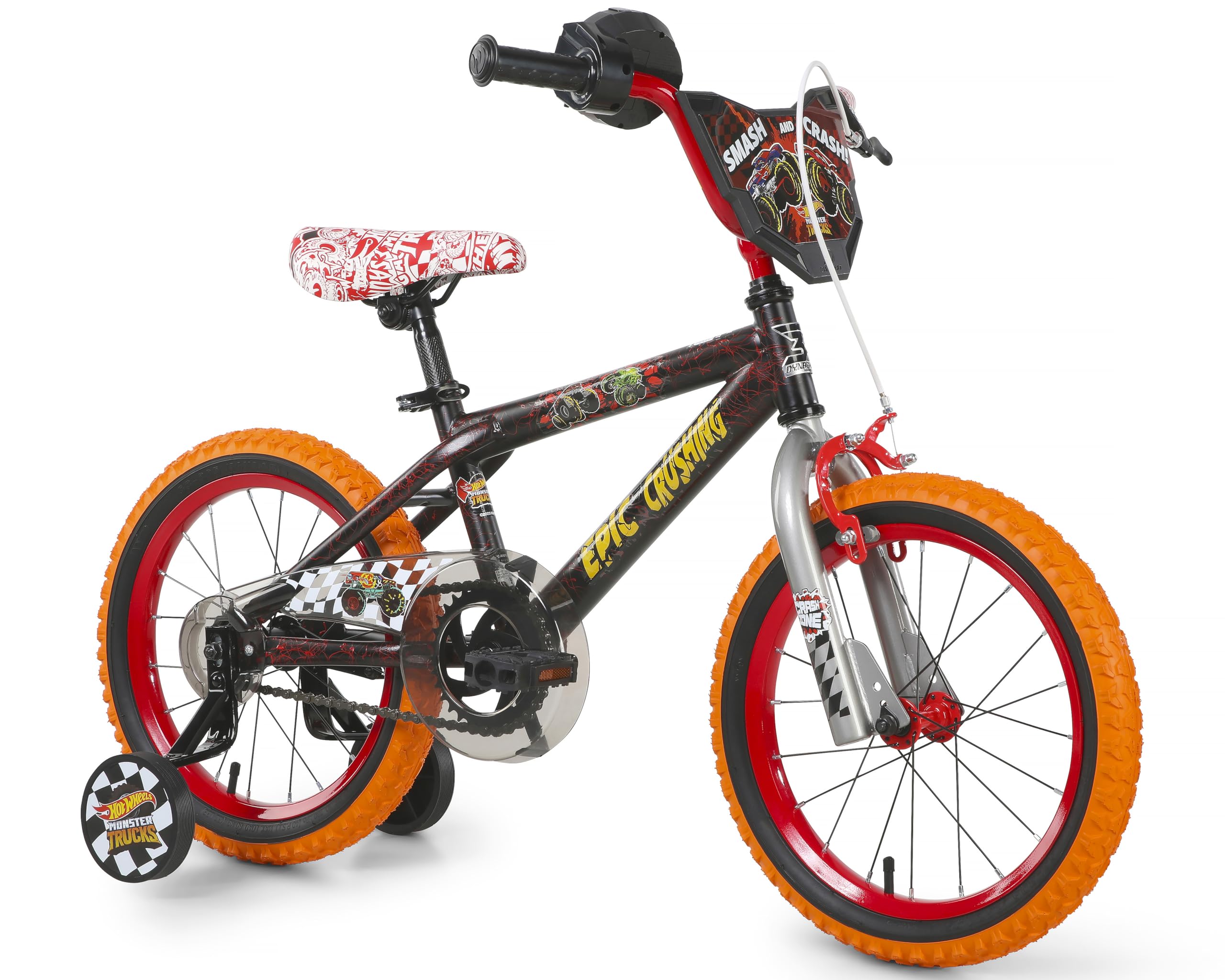
Dynacraft Hot Wheels BMX
Rating: 4.5 ★ | Price: $169.99 | Wheel Size: 16 inches | Brake System: Coaster + caliper | Weight: ~20 lbs | Training Wheels: Yes | Frame Material: Alloy steel
The Dynacraft Hot Wheels BMX bike’s handlebar rev grip and flashy styling make it a hit with kids who love the brand, but expect to check wheel alignment immediately.
Kids love the rev grip that mimics an engine sound and the bright Hot Wheels graphics, making this bike a clear attention-grabber. However, it’s a novelty ride, not a daily driver or serious BMX bike. Out-of-the-box wheel alignment issues are common — bent rims and wobbling forks appear in many units — and the plastic components (throttle, rev grip) don’t survive hard crashes. For families who accept the trade-off, the bike offers easy assembly and decent value for a themed product. Best suited for young children who want the Hot Wheels experience in supervised, low-impact riding.
Pros
- Eye-catching Hot Wheels design and engine-revving sound kids adore
- Good value for a themed bike at this price point
- Simple assembly process for most buyers
Cons
- Wheel and fork alignment defects are common out of the box
- Plastic throttle and rev grip break easily after minor crashes
Buy this if your child is obsessed with Hot Wheels and will ride under light supervision.
Schwinn Koen 14-Inch
Schwinn Koen 14-Inch

Schwinn’s smallest toddler bike rides on brand recognition and a 14-inch frame, but brake and durability defects keep it behind the top pick.
At 14 inches, the Schwinn Koen fits kids 3–4 who need a first bike, and the brand name carries weight with parents. The frame feels sturdy and the design appeals to young riders. But unlike the more dependable option in this set, the rear brake often arrives missing cables or with faulty calipers—non-functional out of the box. Pedals and chain separation are common within months, based on hundreds of owner reports. This bike works best on smooth, flat pavement, and only for parents comfortable adjusting brakes immediately after purchase.
Pros
- 14-inch wheel size fits toddlers ages 3–4 who are ready for pedaling.
- Sturdy alloy steel frame and build quality that feels solid.
- Attractive design that appeals to young children.
Cons
- Rear brake is often non-functional out of the box due to missing cables or faulty calipers.
- Pedals fall off and chain separates within weeks, with many units breaking within 6 months.
Buy this if your child will ride only on smooth, flat surfaces and you’re comfortable adjusting a non-functional rear brake and watching for pedal/chain failures.
Best for Light pavement only
Schwinn Koen & Elm 20

Rating: 4.5 ★ | Price: $199.99 | Wheel Size: 20 inches | Brake System: Coaster + caliper | Weight: 27.5 lbs | Training Wheels: No | Frame Material: Alloy steel
Schwinn’s 20-inch bike for kids 6-9, but systemic brake and durability failures make it risky for daily pavement use.
The Schwinn Koen & Elm offers a sturdy frame and attractive styling in a 20-inch size for kids 6-9, with relatively easy assembly. However, systemic brake failures and durability problems (chain snaps, cracked frames) make it unsuitable for regular or rough pavement riding. These safety risks prevent it from competing with more reliable options.
Pros
- Sturdy frame provides a stable ride for kids learning on pavement.
- Attractive design and color options appeal to older kids.
Cons
- Frequent brake failure and durability issues (chain snaps, frame cracks) – systemic safety concern.
Worth considering if you need a Schwinn-branded 20-inch bike for occasional pavement rides and are willing to inspect and potentially repair brakes and drivetrain.
Best for Occasional park use
Mongoose Legion BMX 20

Rating: 4.4 ★ | Price: $284.99 | Wheel Size: 20 inches | Brake System: Rear U-brake only | Weight: 32 lbs | Training Wheels: No | Frame Material: Alloy steel
True BMX geometry with mag wheels for tricks, but arrives with defects that require professional inspection.
Proper 20-inch BMX frame with alloy steel tubing and aluminum mag wheels looks the part for park riding, but a third of units ship with missing brake parts, pegs, or bent forks that make the bike unrideable. The rear U-brake is nearly impossible to adjust to a safe stopping point. Only buy if you can inspect every component and replace defective parts yourself.
Pros
- Solid BMX construction with alloy steel frame and mag wheels that match freestyle aesthetics
- Decent value for a dedicated 20-inch BMX compared to budget alternatives
Cons
- Significant quality control issues – missing parts, bent forks
Worth considering if you have mechanical expertise to inspect and fix assembly defects before use.
How to Choose
The single most important factor in a kids BMX bike is weight: anything over 20 pounds will be a struggle for a 3- to 5-year-old to pedal, no matter how sturdy it looks.
Wheel Size
Wheel size determines fit: 12-inch for ages 2-4, 14-inch for 3-5, 16-inch for 4-6, 18-inch for 5-7, and 20-inch for 6-9. A child should be able to stand over the top tube with both feet flat. Sizing up for growth makes the bike hard to control.
Brake Type
Coaster brakes (pedal backward to stop) are easiest for beginners but less effective at speed. Hand brakes offer better control but often arrive unadjusted on budget bikes. Many parents need to take the bike to a shop for proper brake setup.
Weight
A bike over 20 pounds is heavy for a preschooler. Lighter frames (carbon steel or aluminum) cost more but make pedaling and balance much easier. Check the listed weight before buying – a 27-pound bike is a workout, not a toy.
Training Wheels
Training wheels loosen after a few rides due to vibration. Tighten the bolts before each use, or apply thread-locking compound. Bent brackets are common on cheap bikes and need replacement.
Frame Material
Carbon steel is heavier and cheaper; alloy steel is lighter but not always more durable. For kids under 5, a lighter frame helps more than a stronger one. Avoid bikes that list no frame material – they are likely heavy steel.
FAQ
Why does my child’s bike chain keep falling off?
Chain drop on single-speed kids BMX bikes is usually caused by a loose chain or misaligned rear wheel. Tighten the rear axle bolts and adjust the chain to have about half an inch of play. If it continues, the frame’s dropouts may be bent, which is a defect that warrants a return.
Are Mongoose BMX bikes safe for kids?
Mongoose BMX bikes frequently arrive with missing brake parts, bent forks, or poor brake adjustment. While the frame construction is solid, the out-of-box condition often requires professional setup. Without inspection and repair, they are not a safe choice for a child.
How do I fix training wheels that keep coming loose?
Apply a drop of thread-locking compound (Loctite) to the bolts before tightening. Ensure the bracket sits flush against the frame. If they still loosen, the bracket is likely bent and needs replacement.
What is the best wheel size for a 5-year-old BMX bike?
For a typical 5-year-old, a 16-inch wheel size fits best. Check the child’s inseam: they should be able to place both feet flat on the ground when seated. A 14-inch may fit a smaller 5-year-old, while an 18-inch suits a taller one. Do not size up for growth – a bike too large is hard to control.