This post contains affiliate links. We may earn a small commission when you buy through our links — at no extra cost to you.
Many parents discover that the ‘kids tennis racket’ they bought is either too heavy, too long, or made of plastic that breaks after a few hits. The real challenge isn’t finding a racket—it’s finding the right length and weight for your child’s age so they can actually learn to swing without frustration. A racket that’s even an inch off can turn a fun game into a struggle.
The best junior rackets use lightweight aluminum frames, not flimsy plastic, and come in sizes matched to a child’s height. This guide focuses on those real rackets—the ones that give beginners a fair chance to connect with the ball. Choosing the correct size is the single most important decision; brand hype and ‘pro’ claims matter far less than a grip that fits and a head that doesn’t drag.


Best for Ages 8-10
HEAD Speed Junior 25
Key Features
- Length: 25 in
- Weight: 8.5 oz
- Frame Material: Aluminum
- Price: Mid-Range
The HEAD Speed Junior 25 combines an aluminum frame with a 100 sq in head, giving young players a generous sweet spot for consistent contact. Its 8.5 oz weight keeps swings manageable for children ages 8-10, and the overall construction holds up to regular practice. Over time, the grip material may darken from dirt, but this does not affect play.
This racket is best for children ages 8-10 who are learning proper technique and need a forgiving, durable tool. Skip it for advanced juniors or kids under 6 – the 25-inch length and head size suit the 50-55 inch height range. Note that the grip will show wear from dirt, a cosmetic rather than functional issue.
Pros
- Aluminum frame provides a stable, forgiving feel for beginners learning strokes.
- At 8.5 oz, the racket is light enough for kids to swing without strain.
- Mid-range price with long-lasting performance that offsets the cost.
Cons
- Grip material darkens from dirt after a few uses; cosmetic issue only.
Buy this if your child is 8-10 and needs a forgiving racket for learning. Skip it if your child is a competitive junior or under 6.
Best for Ages 6-8
HEAD Instinct 23
Key Features
- Length: 23 in
- Weight: 7.6 oz
- Frame Material: Aluminum
- Price: Mid-Range
The HEAD Instinct 23 targets younger beginners ages 6-8 with its head-light balance, making it easier to swing than the even-balanced top pick. The 23-inch length and 7.6-ounce weight suit children 45 to 49 inches tall. However, the grip shows dirt with normal use — a common cosmetic trade-off in junior rackets.
Pros
- Lightweight frame (7.6 oz) helps young players swing smoothly.
- Solid build quality from a familiar brand for parents.
- Attractive color options that kids enjoy.
Cons
- Grip discoloration with normal use; cosmetic only.
Buy this if you need a balanced, lightweight junior racket for a 6-8 year old beginner. Skip it if your child is older than 8 or needs a heavier frame for aggressive play.
Best for Ages 2-12
AMA SPORT Junior Racket
Key Features
- Length: 17-25 in
- Weight: 7-9 oz
- Frame Material: Aluminum
- Price: Budget
The AMA SPORT set covers a wider size range (17-25 inches) than most budget options, letting parents match a racket to a child’s exact age and height. The aluminum frame keeps weight low for toddlers, and the included shoulder bag adds convenience. However, quality control varies — some buyers report early string breakage or the frame separating after light use, so this is best suited for casual backyard play rather than regular practice. It’s the right pick for parents who need a specific size on a tight budget and don’t mind occasional imperfections.
Pros
- Five size options fit children from ages 2 to 12
- Lightweight aluminum frame easy for small hands
- Budget price for a complete set with bag
Cons
- Occasional quality control issues; some frames or strings fail early
- Carrying case may arrive dirty or feel flimsy
Buy this if you need an affordable racket in a specific size for light recreational play with multiple children. Skip it if you require long-term durability for frequent use or prefer premium build quality.
Best for Toddlers 2-4
PIKASEN 17" Racket
Key Features
- Length: 17 in
- Weight: 5.3 oz
- Frame Material: Aluminum
- Price: Budget
Lightweight aluminum construction designed for the smallest hands — the PIKASEN 17" racket is purpose-built for toddlers ages 2-4. At 5.3 ounces, it’s easy for little ones to swing indoors or outdoors, offering a genuine racket feel rather than a plastic toy. String durability is the trade-off: some sets report string breakage after a few play sessions, so plan for occasional replacement. This racket fits best as a first tennis experience for young children who are still developing coordination, not for older kids or consistent practice.
Pros
- 17-inch length fits toddlers ages 2-4 naturally.
- Lightweight at 5.3 oz, easy for small hands to control.
- Sturdy aluminum frame resists bending during casual play.
Cons
- Occasional string breakage after a few uses due to quality variance.
Buy this if you have a toddler age 2-4 who needs a lightweight real racket for first play. Skip it if you need a racket for older children or for regular practice.
Best for Ages 5-12
Street Tennis Club Jr
Key Features
- Length: 19 in
- Weight: 4.8 oz
- Frame Material: Aluminum
- Price: Mid-Range
Street Tennis Club Jr stands apart from premium junior rackets by bundling access to coaching videos — a practical resource for parents unsure how to teach proper technique. The aluminum frame is lightweight (4.8 oz) and sized for ages 5-12, making it easy for small hands to swing. The neoprene grip offers a comfortable hold, but some buyers report paint chipping and string breakage after light play. This racket is best for casual backyard sessions rather than daily practice.
Pros
- Access to instructional videos helps parents teach proper technique.
- Lightweight aluminum frame (4.8 oz) is easy for small children to control.
- Sized specifically for ages 5-12, reducing the learning curve.
Cons
- Some reports of paint chipping and string breakage after light play.
Buy this if you want guided instruction for a beginner child and plan to use it for casual backyard play. Skip it if you need a racket for regular practice or competitive training.
Best for Ages 9-10
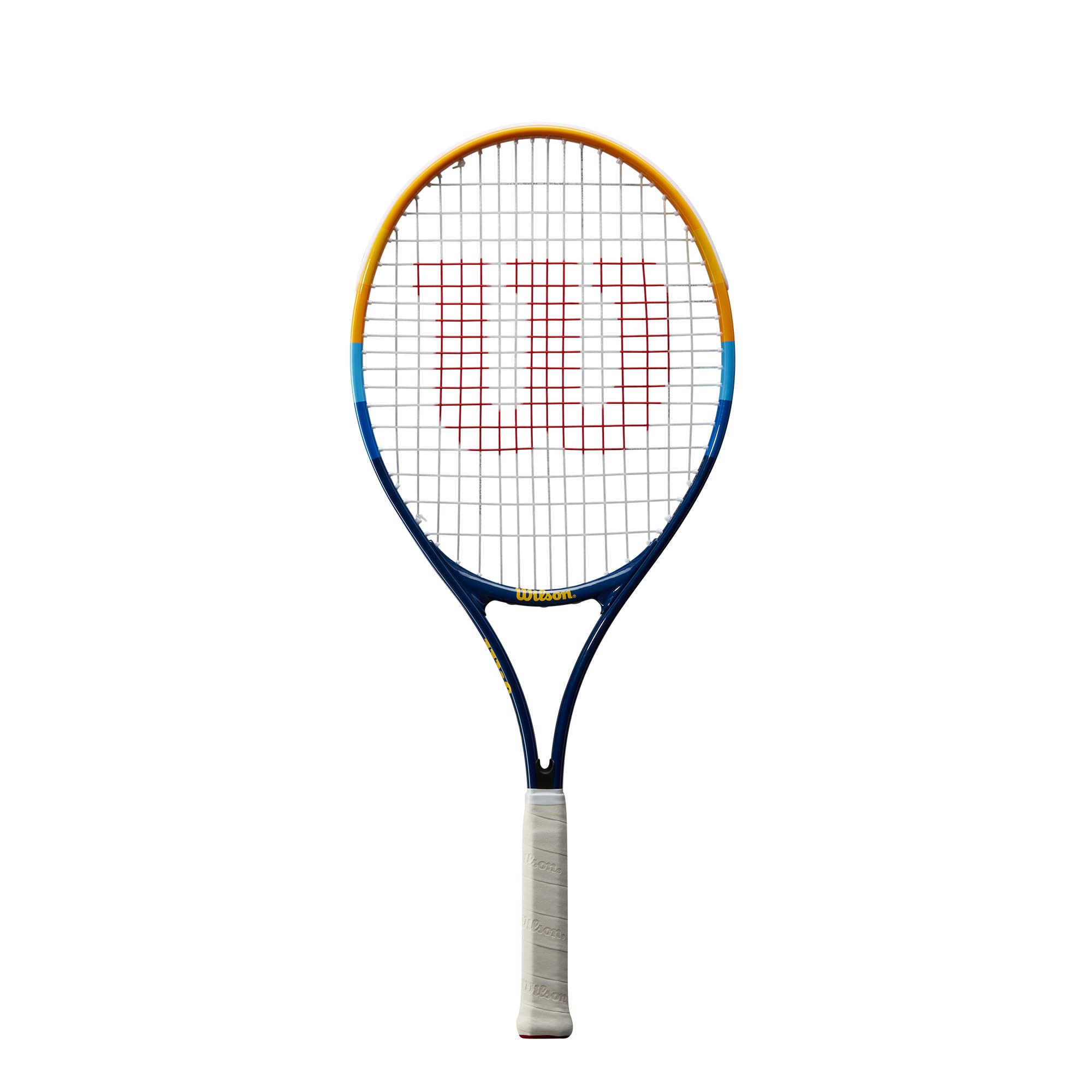
Wilson Profile 25
The Wilson Profile 25 stands apart from the top pick with its sturdy alloy construction and integrated bumper guard – features that extend the racket’s lifespan through aggressive groundstrokes and court scrapes. The 25-inch length and QuadriForm frame deliver a consistent, controlled response suitable for 9- to 10-year-old intermediate beginners who have outgrown lighter models. However, the premium price and fewer reviews compared to the leading junior racket mean it’s a purposeful investment for families willing to pay for extra durability rather than a budget-friendly entry point.
Pros
- Sturdy alloy frame with bumper guard protects against court wear.
- 25-inch length fits ages 9-10 moving up from smaller rackets.
- Pre-strung and ready to play out of the box.
Cons
- Premium pricing for a junior racket with limited review volume.
Buy this if your 9- to 10-year-old intermediate beginner needs a durable racket that can handle frequent practice and court contact. Skip it if you’re on a tight budget or your child is still developing basic coordination.
Best for Light Play
INSUM Junior Racket

Offers a wide size range (17–25 inches) at a low price, making it a practical choice for families with children of different ages. However, some units show early string breakage, and overall ratings lag slightly behind the AMA SPORT alternative. Best suited for occasional use rather than frequent practice.
Pros
- Five size options fit children from toddler to pre-teen.
- Lightweight aluminum frame is easy for small hands to swing.
Cons
- Strings can snap after a few sessions, especially with harder hits.
Worth considering if you need an inexpensive racket for light, occasional play across multiple age groups.
Best for Recreational Play
Wilson US Open Jr

Key Features
- Length: 19 in
- Weight: 7-8 oz
- Frame Material: Alloy
- Price: Mid-Range
The Wilson US Open Jr is a lightweight, pre-strung alloy racket that matches well with casual backyard or summer-camp play for kids ages 5–9. Its fun pro-inspired look and easy swing appeal to beginners, but durability feedback is mixed — a minority of users report handles breaking or strings snapping after limited use, making it less suited for frequent practice.
Pros
- Easy-to-swing lightweight frame (approx. 7–8 oz).
- Popular beginner choice with strong overall satisfaction.
Cons
- Occasional quality variance: handles or strings fail after short use.
Worth considering if your child needs a recognizable-brand racket for light recreational play and you’re okay with a small chance of early wear.
How to Choose
The most important factor in a kids tennis racket is the length, which should match your child’s height rather than their age.
Length
Racket length should match the child’s height, not just age. A 19-inch racket works for toddlers up to 39 inches tall, while a 25-inch racket fits kids 50–55 inches. A racket that’s too long forces an awkward swing and prevents proper technique.
Weight
Lighter rackets (under 8 oz) are easier for young beginners to control. Heavier rackets can cause fatigue and bad form. Look for an aluminum frame that balances weight and durability.
Head Size
A larger head size (90–100 sq in) offers a bigger sweet spot, making it easier to hit the ball. Smaller heads require more precise contact, which is challenging for beginners. For ages 8 and up, a 100 sq in head is forgiving.
Frame Material
Aluminum is the standard for junior rackets – it’s lightweight and durable. Plastic frames break quickly and don’t provide consistent bounce. Avoid any racket labeled ‘toy’ or made of plastic if you want to teach real tennis.
Included Accessories
A carrying bag is convenient but not essential. Some budget rackets include a low-quality bag that may tear. Focus on the racket itself; the bag is a bonus.
FAQ
What size tennis racket should I buy for my 5 year old?
A 5-year-old typically needs a 19-inch or 21-inch racket, depending on height. Check the child’s height against the size chart: 19 inches for 35–39 inches tall, 21 inches for 40–44 inches. The right length ensures they can swing naturally.
Are plastic tennis rackets good for kids?
Plastic rackets are toys, not learning tools. They break quickly, have no meaningful string tension, and teach poor technique. Stick to aluminum rackets from reputable brands for any real practice.
Why does my child’s tennis racket grip get dirty so fast?
Junior racket grips are often made of synthetic materials that absorb dirt and sweat quickly. This is cosmetic and doesn’t affect performance. A simple wipe with a damp cloth or replacing the overgrip can keep it clean.