This post contains affiliate links. We may earn a small commission when you buy through our links — at no extra cost to you.
Marketing materials for kids smartwatches often highlight long battery life and precise GPS, but real-world use tells a different story. Many parents find that the watch needs charging before the school day ends, and location updates can lag or show the wrong street. This guide cuts through the exaggerated claims to focus on watches where GPS accuracy and battery stamina hold up under daily use.
The genuine trade-off in this category isn’t between price and quality – it’s between feature breadth and execution. Watches packed with games, cameras, and video calls often compromise on battery and GPS reliability. Conversely, watches that prioritize durability and basic communication tend to deliver on their core promises. Understanding this balance helps you pick a watch that matches your child’s actual routine, not just the spec sheet.


Best for Ages 6-12
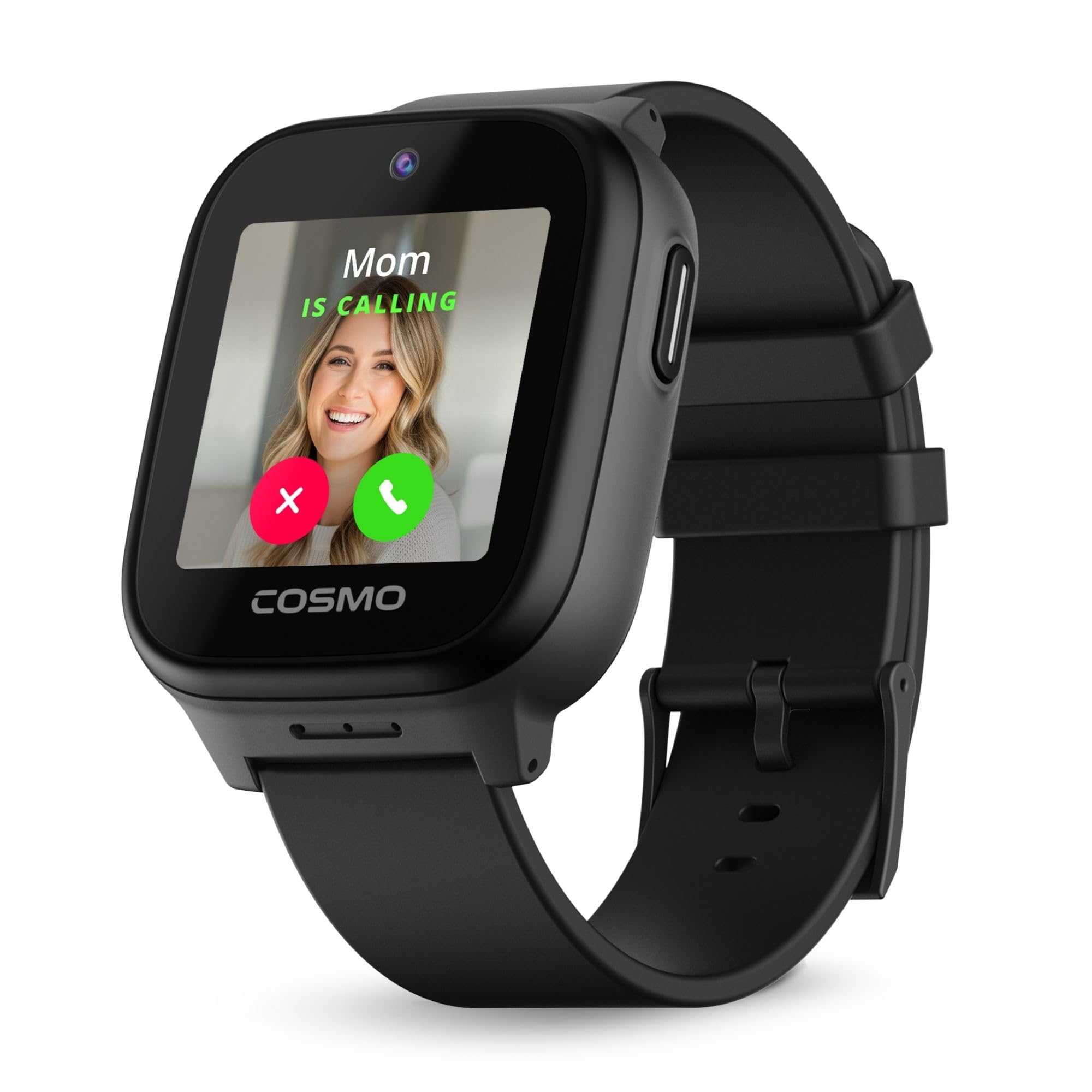
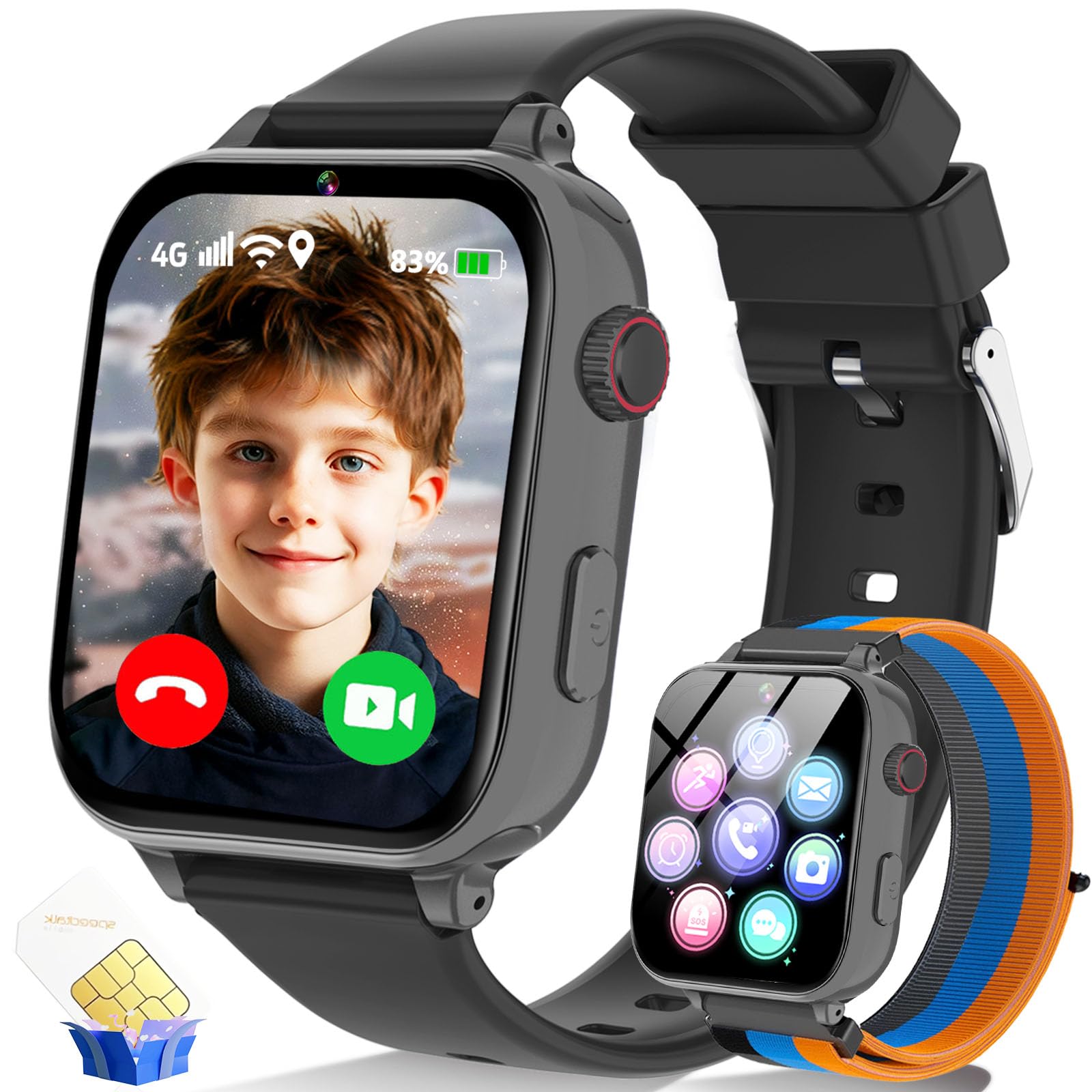
JrTrack 5 Cosmo
Key Features
- GPS Tracking: HaloGPS real-time, GLONASS
- Battery Life: 24h claimed
- Calling & Messaging: Call, text, parent controls
- Parental Controls: Parent app, approved contacts
- Water Resistance: IP68 1m
- Price: Mid-Range
Real-time GPS accuracy is the standout feature of the JrTrack 5. The HaloGPS system provides consistent location updates that parents count on, supported by GLONASS and Galileo for improved precision. Pairing the watch with the Cosmo app takes minutes, and the interface for managing approved contacts and setting safe zones is straightforward enough to use without frequent support calls.
In daily use, the 4G LTE eSIM handles calling and texting with parent-approved contacts without fuss. Kids pick up the watch’s operation quickly, and parents report the watch holds up to typical playground activity. The battery, however, often demands a nightly charge—even on moderate use—falling short of the claimed 24 hours. A minority of units have shown durability concerns after several months, meaning experiences vary across the board.
This watch is suited for families who want a controlled communication device without opening the door to internet browsing or social media. It fits best for children ages 6–12 who need a way to check in after school or during activities. Plan for nightly charging, and be aware that occasional quality control variances mean some units may not deliver long-term reliability.
Pros
- Kid-friendly design and easy setup appeal to both parents and children.
- Simple operation for kids and parents through the Cosmo app.
- Accurate GPS tracking gives peace of mind with real-time updates.
- Secure calling and texting limited to parent-approved contacts.
- Affordable alternative to a smartphone with core communication features.
Cons
- Battery life requires nightly charging; may not last a full school day with heavy use.
- Occasional quality control issues; some units stop working after a few months.
Buy this if you want a dependable GPS watch for your child to call and text without the complexities of a smartphone. Skip it if you need all-day battery life on heavy use or a device that consistently lasts a full school day without charging.
Best for Ages 3-12
TickTalk5
Key Features
- GPS Tracking: GPS + SmartPin AI
- Battery Life: 48h standby
- Calling & Messaging: Video call, text, music
- Parental Controls: No internet, safe design
- Water Resistance: IP67
- Price: Premium
Beyond basic calling and GPS, the TickTalk5 adds video calling and a free music streaming feature that other watches in this class lack. Parents gain a more engaging device for their child, with a premium feel and an app that’s simple to navigate. The trade-off: GPS shows a general area rather than a precise spot, and the battery needs daily charging—falling short of the claimed two-day standby.
This watch suits families who prioritize communication richness over battery endurance and exact location tracking. If your child is active on video calls and you’re willing to charge nightly, TickTalk5 delivers comprehensive parental controls and a kid-friendly environment free of internet browsers or social media. Skip it if GPS accuracy is critical for your peace of mind or you need more than a day between charges.
Pros
- High build quality with a premium feel in hand.
- Easy setup and intuitive parent app.
- Kid-friendly design with no internet or social media access.
- Excellent calling capabilities including video calls.
Cons
- GPS shows general area rather than exact location, not pinpoint.
- Battery requires daily charging; falls short of claimed 48 hours.
Buy this if you want the most feature-packed kids watch with video calling and free music, and you’re fine with daily charging and approximate GPS. Skip it if pinpoint location tracking or multi-day battery life are must-haves.
Best for Ages 7-12
Fitbit Ace LTE
Key Features
- GPS Tracking: Built-in GPS
- Battery Life: 16h fast charge
- Calling & Messaging: Calls, messages, games
- Parental Controls: Google Family Link
- Water Resistance: 50m IP67
- Price: Mid-Range
The Fitbit Ace LTE stands out with Google ecosystem features like seamless account setup and parental controls, plus a vivid AMOLED display and fast charging that adds 11 hours in 30 minutes. Activity-based games turn steps into play, keeping kids engaged. Compared to the top pick, you lose battery endurance—real-world use often falls short of the stated 16 hours—and some units have reported reliability issues within months.
This watch fits families already using Google services who want a supervised first connected device for kids 7–12. The combination of calls, messages, and gamified movement works well for active children, but you must accept nightly charging and the possibility of early unit failure. If consistent battery life and long-term dependability matter more, the top pick is a safer bet.
Pros
- Kids stay connected with approved contacts through calls and messages.
- GPS tracking and step monitoring give parents peace of mind.
- Activity-based games encourage movement and engagement.
- Designed as a starter device for ages 7–12 without a smartphone.
Cons
- Battery drains quickly, often requiring nightly charging.
- Some units stop working after a few months; quality control varies.
Buy this if your family uses Google services and your child enjoys activity-based games. Skip it if battery life and long-term reliability are top priorities.
Best for Youth 6-14
Garmin Bounce
Key Features
- GPS Tracking: Built-in GPS + Galileo
- Battery Life: 2 days claimed
- Calling & Messaging: Preset text, voice clips
- Parental Controls: Geo-fence, chore rewards
- Water Resistance: 50m
- Price: Premium
While the top pick offers real-time calling, the Garmin Bounce is built to endure — 50m water resistance and a rugged case that survives pools, sprinklers, and tumbles. Built-in GPS and Galileo provide accurate location tracking across outdoor environments, and activity tracking encourages daily movement through step goals and challenges. Communication stays controlled: only preset text replies and voice clips, no free typing or phone calls. The watch syncs with the Garmin Jr. app for chore management and activity reviews, but requires a $99/year LTE subscription for cellular features.
Best for active children ages 6-14 whose parents want location monitoring and fitness motivation without full smartphone independence. Families already using Garmin products benefit from a familiar ecosystem. Note that LTE connectivity can be inconsistent, leading to occasional disconnections, and battery life typically runs one to two days — less than the advertised two-day charge. The lack of games and unrestricted messaging makes it suitable for parents seeking a focused device rather than a mini smartphone. Its swim-friendly design means no need to remove before water play, and the simple interface helps young children navigate independently.
Pros
- Accurate GPS tracking with consistent location updates.
- Durable, swim-friendly design rated to 50 meters.
- Encourages daily activity with step challenges and fitness tracking.
- Simple communication via preset messages and voice clips.
Cons
- Preset messages only; no phone calling or free text typing.
- LTE connectivity can be unreliable, causing frequent app disconnections.
- Battery life often lasts 1-2 days, less than the claimed 2 days.
Buy this if you want a rugged kids smartwatch with accurate GPS and activity tracking for an active child. Skip it if your child needs real-time calling or free messaging.
Best for Ages 4-12
Berilona A22
Key Features
- GPS Tracking: GPS + LBS
- Battery Life: 700mAh
- Calling & Messaging: Video call, games, camera
- Parental Controls: Parental app
- Price: Budget
The Berilona A22 stands out among budget kids smartwatches with its 1.7-inch screen, 15 built-in games, and audiobooks. Compared to the top pick, this watch prioritizes entertainment over everyday consistency—the battery often drains before a full day ends, and some units stop working within weeks.
This watch is best for families seeking an inexpensive first smartwatch for young children, where the watch is used under supervision and not relied on for daily communication. However, buyers should expect that some units malfunction within weeks and the battery requires nightly charging, making it unsuitable as a primary device.
Pros
- Easy navigation that suits children as young as four.
- Fifteen games and audiobooks keep kids entertained for hours.
- Affordable price with a look that feels more premium than it costs.
- Good value considering the feature set.
Cons
- Some units stop functioning within weeks of use.
- Battery lasts less than a day under typical use.
- Band and screen are susceptible to damage with regular wear.
Buy this if you want an entertainment-packed watch for occasional supervised use and are okay with a short lifespan. Skip it if you need a dependable daily communication device for your child.
Best for Ages 4-12
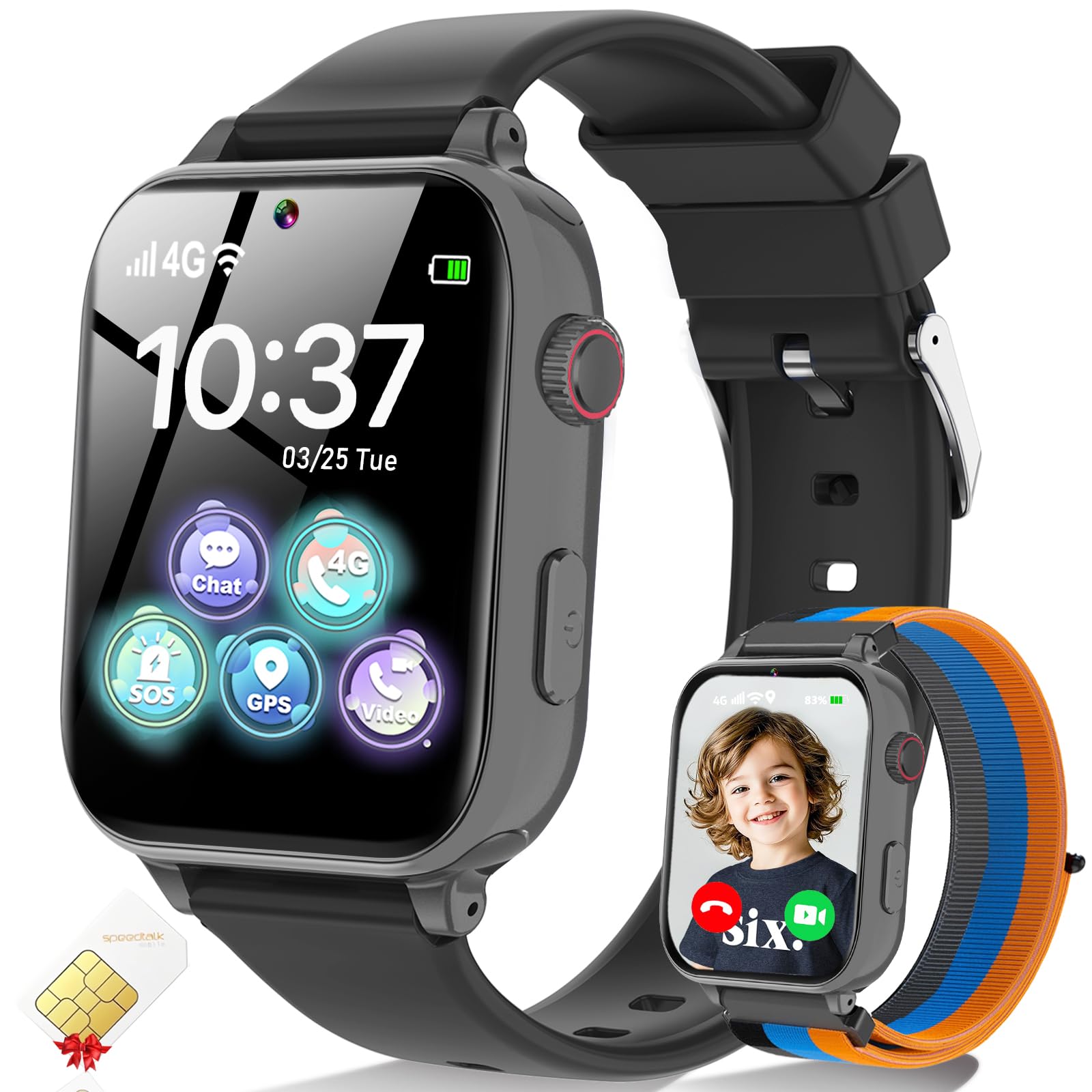
MOKAST X38
Key Features
- GPS Tracking: GPS + LBS
- Battery Life: 260mAh
- Calling & Messaging: Video call, games, camera
- Parental Controls: Parental app
- Price: Budget
The MOKAST X38 delivers the lowest price for a 4G kids smartwatch with GPS and video calling, making it an accessible entry point for parents wanting basic safety features. Setup is quick and the interface is straightforward for young children. However, its sparse specifications — no water resistance rating and unknown battery runtime — and occasional quality control issues reported by some owners mean this watch is best suited as a first device for very young kids (ages 4-6) or for occasional, supervised use. Low review volume and limited product details reduce confidence compared to more established options.
Pros
- Affordable price point with a wide feature set including GPS and video calling.
- Easy to set up and child-friendly interface.
Cons
- Some units experience charging or functionality issues within months.
- Water resistance not specified; unsuitable for wet or active play.
Worth considering if you need a low-cost first smartwatch for a young child (ages 4-6) and are comfortable with potential reliability trade-offs.
Best for Ages 5-12
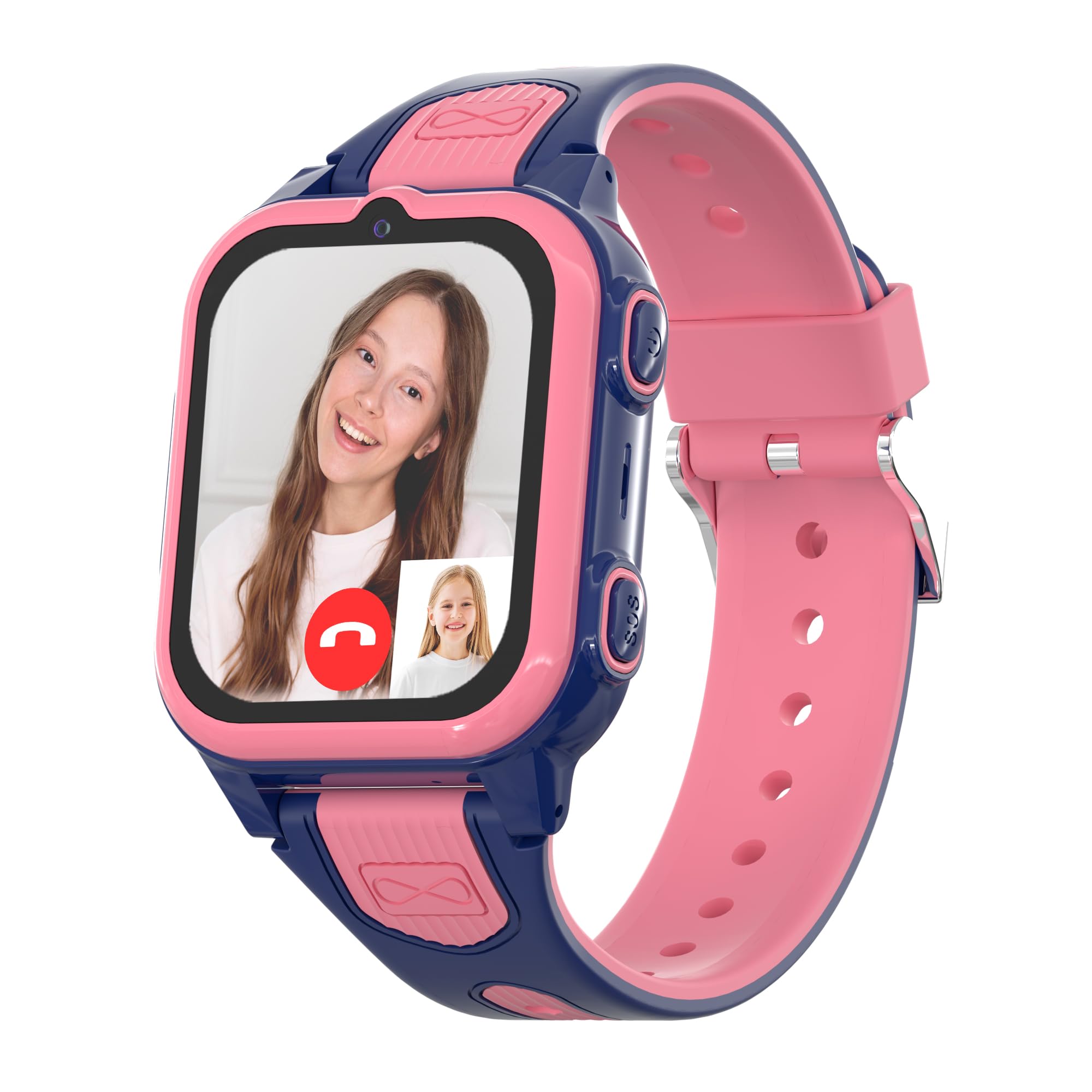
Citfis C6
Key Features
- GPS Tracking: GPS + LBS
- Battery Life: 750mAh
- Calling & Messaging: Video call, games, camera
- Parental Controls: Parental app
- Price: Budget
The Citfis C6 stands out for its pink color and budget price, making it an affordable option for a very young child’s first smartwatch. It includes basic GPS, video calling, and games. However, multiple reports of the watch failing to turn on or charge after a short time, along with an easily scratched screen and a stiff power button, mean it’s a gamble for consistent daily use. Compared to alternatives with more reviews and better track records, the C6 is best suited as a temporary or backup watch when color preference outweighs performance.
Pros
- Very affordable with games, camera, and GPS.
- Attractive pink design popular with girls.
Cons
- Some units stop turning on or fail to charge after short use.
- Screen scratches easily and power button is difficult to press.
Worth considering if pink color is a must and the watch will be used only occasionally or as a budget backup for a very young child.
How to Choose
Most kids smartwatches with GPS require daily charging, even when marketed as having multi-day battery life.
GPS Accuracy
Real-time tracking depends on the watch’s GPS chipset and the carrier network it uses. Watches with multiple satellite support (GPS + GLONASS or Galileo) tend to perform better outdoors. In urban areas with tall buildings, accuracy can drop to a general area rather than the exact spot.
Battery Life
Expect to charge any LTE kids watch every night if used for GPS tracking and calls during the day. Claims of 48-hour battery life are based on standby time with minimal activity. For heavy GPS use, a battery under 700mAh may not last a full school day.
Calling and Messaging
Some watches offer full phone calling with a keypad, while others limit communication to preset texts and voice clips. Video calling is available on premium models but drains battery faster. Check whether the watch supports real SMS or only app-based messaging.
Parental Controls
Look for the ability to manage approved contacts, set geo-fences, and restrict internet access. The best systems let you monitor location history and receive alerts when the child leaves a safe zone. Avoid watches that require separate monthly subscriptions for basic controls.
Durability and Water Resistance
Kids watches take abuse. An IP67 rating protects against splashes and rain, but only watches with 50m water resistance are safe for swimming. Scratch-resistant screens and reinforced bands add longevity, especially for active children.
FAQ
Do kids smartwatches need a monthly plan for GPS tracking?
Yes, most LTE smartwatches require a cellular data plan to transmit GPS locations and enable calling. Some brands include a free trial, but after that you’ll pay $5–$15 per month. Always factor in the plan cost when comparing total ownership over a year.
Why does my kid’s smartwatch GPS show the wrong location?
GPS accuracy depends on the environment. Indoors or in dense urban areas, the watch may rely on Wi-Fi or cell tower triangulation, which is less precise. For the best accuracy, use a watch with multi-satellite support (GPS + GLONASS) and ensure the child is outdoors.
How long does the battery last on a kids GPS smartwatch?
Under typical use with GPS tracking and occasional calls, most watches need a daily charge. Claimed battery life often assumes standby mode. A 700mAh battery or larger can get through a school day, but heavy video calling or game use drains it much faster.
Can kids smartwatches make real phone calls without a phone?
Yes, if the watch has its own LTE connectivity and an active SIM plan. Many models allow calling only to parent-approved contacts and do not support dialing unknown numbers. Video calls require a front-facing camera and sufficient bandwidth.