This post contains affiliate links. We may earn a small commission when you buy through our links — at no extra cost to you.
Most play kitchen listings promise ‘easy assembly’ – then you open the box to find a hundred screws and a purely pictorial manual. The disconnect between marketing and reality is the single biggest frustration for parents, and it often overshadows the fun of the kitchen itself. This guide cuts through that gap, focusing on kitchens that balance realistic play features with a build process you can finish in an afternoon. Whether you choose plastic for speed or wood for looks, each pick here is matched to a specific use case so you know exactly what you’re signing up for – no surprises, just the right kitchen for your toddler and your schedule.

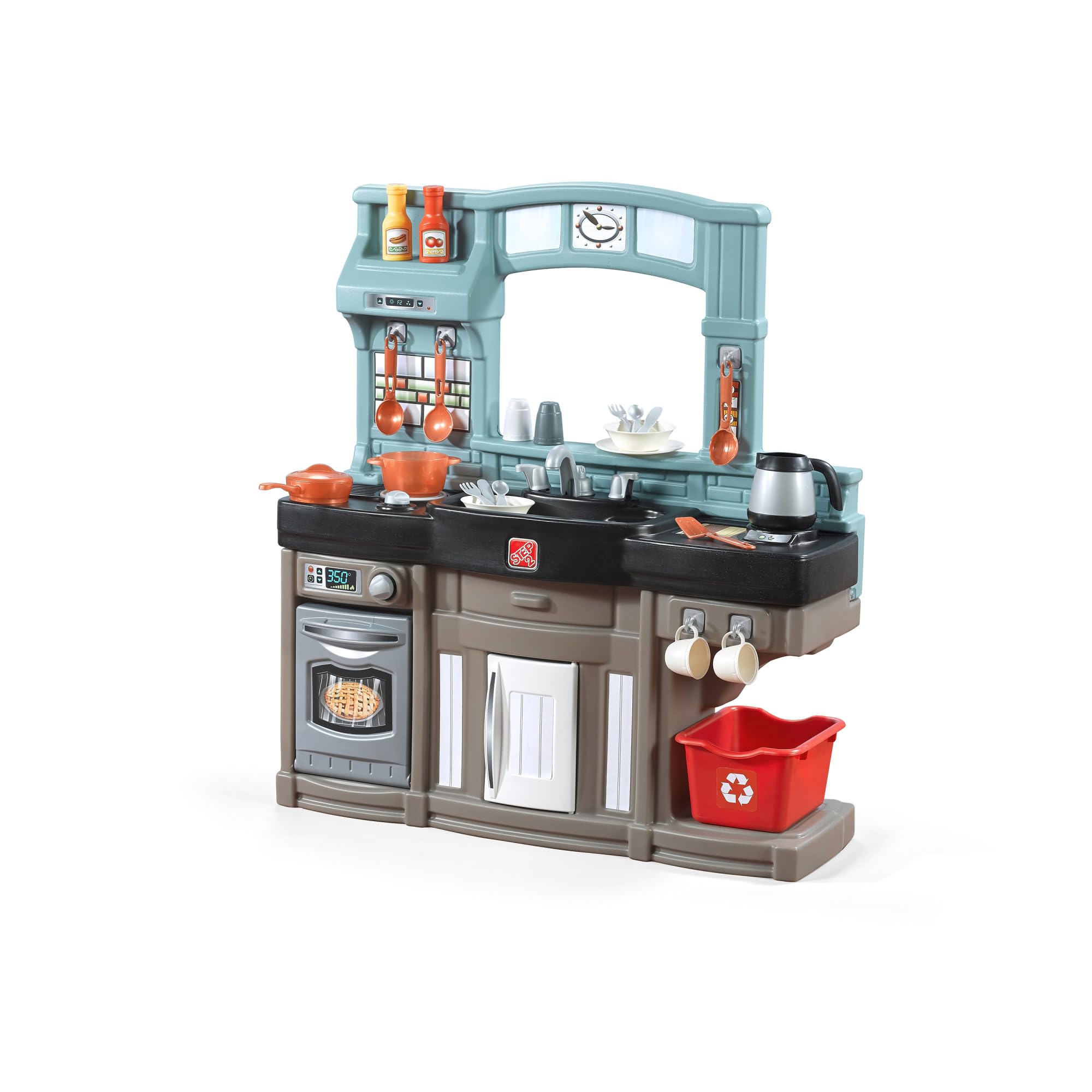


Step2 Fun with Friends Kids Kitchen Playset
Step2 Fun with Friends
Key Features
- Material: Plastic
- Size / Footprint: Compact (35.75"W)
- Interactive Features: Lights & sounds
- Accessories: 25 pieces
- Assembly Difficulty: Moderate
- Price: $$
With 25 accessories, lights and sounds, and a design that holds up to years of active play, this plastic kitchen delivers more features per dollar than any wood alternative in this roundup. Assembly moves faster than similar wooden sets – especially if you have a power drill – and kids consistently play for hours. The generous storage and easy-clean surfaces make it a practical choice for households with multiple children.
This playset suits toddlers 2–4 who love imitation play and families who need a durable, high-use toy. Two compromises: the plastic requires a power drill to assemble (hand screws are tough), and the refrigerator door only opens partway and snaps shut. Neither issue stops play, but they’re worth knowing before purchase.
Pros
- Fast assembly relative to wooden kitchens, especially with a power drill
- Durable build that survives years of active play
- Children stay engaged for hours with lights, sounds, and 25 accessories
Cons
- Assembly much easier with a power drill; hand screwing is slow
- Refrigerator door opens only partially and snaps closed repeatedly
Buy this if you want a feature-packed, durable plastic kitchen that assembles quickly and keeps toddlers engaged. Skip it if you prefer real-wood aesthetics or need a very compact corner design.
Step2 Best Chefs Kitchen
Step2 Best Chefs Kitchen
Key Features
- Material: Plastic
- Size / Footprint: Compact (34.4"W)
- Interactive Features: Lights & sounds
- Accessories: 25 pieces
- Assembly Difficulty: Moderate
- Price: $
This plastic kitchen delivers everything toddlers need for pretend cooking at a price well below the top pick, but with a smaller footprint and fewer storage extras. The compact dimensions (35.8" tall, 34.4" wide) tuck neatly into apartment corners, and the interactive lights and sounds keep 2–3 year olds engaged. Assembly requires a power drill because the screw holes aren’t pre-drilled, and a small number of buyers report missing parts – worth checking the box promptly. Ideal for budget-focused families who don’t need the extra accessories of the Step2 Fun with Friends model.
Pros
- Sturdy plastic construction for the price
- Small footprint fits tight spaces
- Engaging for toddlers, especially 2-year-olds
Cons
- Assembly needs a power drill; hand-screwing is tough
- Occasional missing or damaged parts in box
Buy this if you want a functional, affordable play kitchen for a small space and a toddler just starting pretend play. Skip it if you need a larger kitchen with more storage or prefer a wood aesthetic.
Kidkraft Ultimate Corner Kitchen
KidKraft Corner Kitchen
Key Features
- Material: Engineered wood
- Size / Footprint: Corner (42.5"D)
- Interactive Features: Lights, sounds, washer
- Accessories: Built-in features
- Assembly Difficulty: Hard
- Price: $$
This KidKraft kitchen trades the quicker assembly of plastic alternatives for a solid wood build that fits neatly into a corner. The included washer, phone, and sound effects keep children aged 3–8 engaged for long stretches. The trade-off is the build: expect a 2+ hour, two-person project with occasionally unclear pictorial instructions. It’s the right choice for families who prioritize furniture-grade appearance and a corner layout over quick setup.
Pros
- Real wood construction that blends with home decor like real furniture.
- Holds up well across multiple children with minimal wear.
- High play value – kids engage for hours with realistic lights, sounds, and accessories.
Cons
- Assembly is a significant time commitment (2+ hours with two people) and screw labeling can be confusing.
- Instructions are purely pictorial, requiring frequent backtracking and patience.
Buy this if you want a durable wooden corner kitchen with interactive features and are prepared for a lengthy assembly session with a helper.
Kidkraft Vintage Kitchen
KidKraft Vintage Kitchen
Key Features
- Material: Engineered wood
- Size / Footprint: Compact (33"W)
- Interactive Features: Ice maker, phone, oven
- Accessories: Built-in features
- Assembly Difficulty: Hard
- Price: $
The KidKraft Vintage Kitchen delivers retro charm and a compact footprint that fits smaller playrooms, but it comes with trade-offs vs. the top pick. The all-wood build and nostalgic details (ice maker, rotary phone) are a hit with parents and kids alike. However, assembly runs 2–3 hours with sparse pictorial instructions, and the petite size suits children under four better than older kids. It’s a solid value for those who prioritize aesthetics and budget, not quick setup or long-term growth.
Pros
- Charming retro look with wood construction at a budget-friendly price.
- Compact size fits small spaces — 33 inches wide and under 36 inches tall.
- Includes pretend ice maker and play phone for engaging roleplay.
Cons
- Assembly is time-consuming (2–3 hours) with confusing picture-only instructions.
- Smaller than expected — best for children under 4, not older kids.
Buy this if you love retro style, have a toddler under 4, and don’t mind a weekend assembly project. Skip it if you need a larger kitchen that grows with your child or want a quick setup.
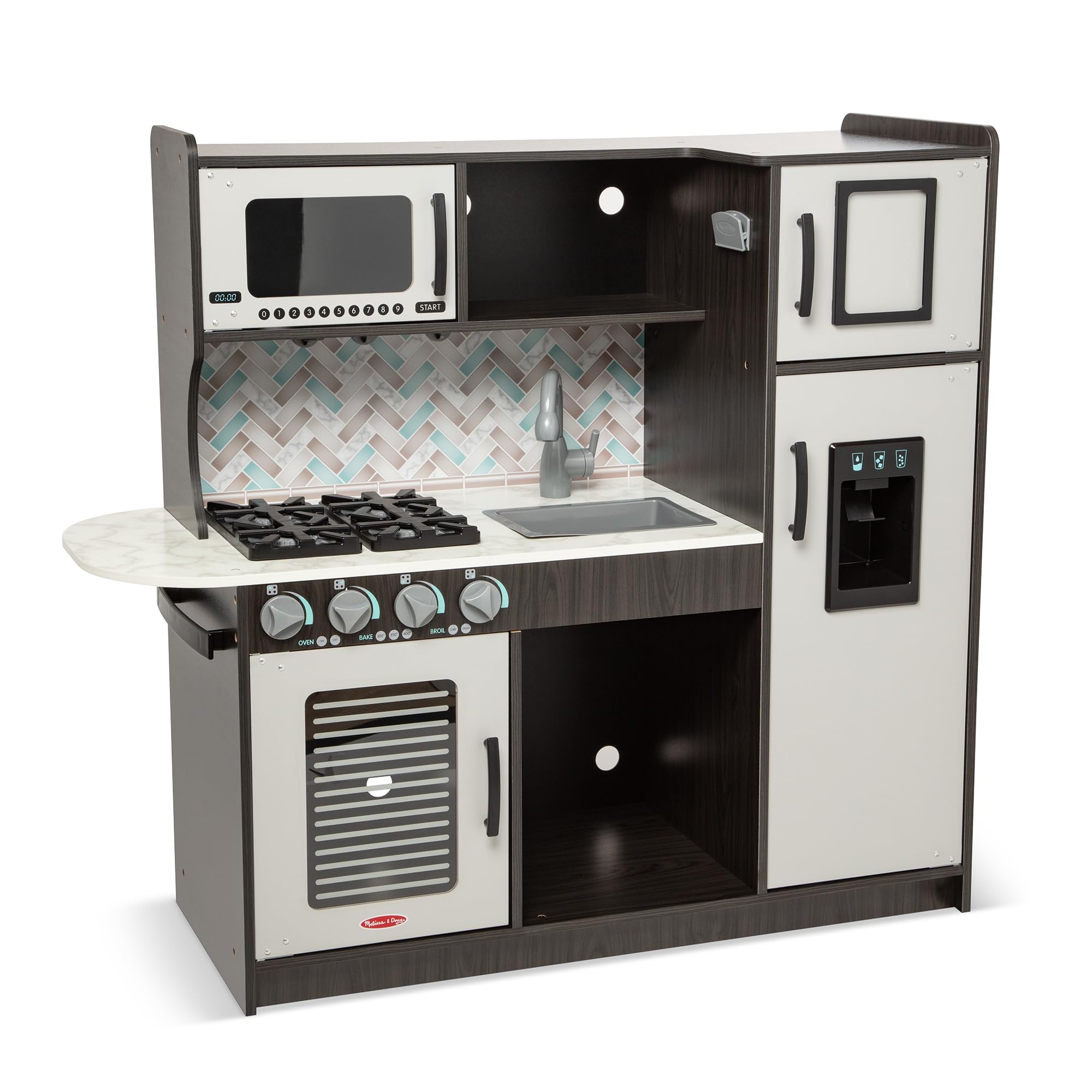
Melissa & Doug Chef Kitchen
Melissa & Doug Chef Kitchen
Key Features
- Material: Wood (FSC-certified)
- Size / Footprint: Full-width (37"D)
- Interactive Features: Ice dispenser, microwave spin
- Accessories: Built-in features
- Assembly Difficulty: Moderate
- Price: $$
This wooden kitchen stands out with its charcoal finish and a working ice dispenser that kids actually enjoy. The materials feel solid, and the design fits well in modern homes. Assembly, while time-consuming (1.5–3 hours), has clearer instructions than many competitors. However, the oven door and sink have shown cracking under normal play, and shipping damage is common — the wood can arrive dented or cracked. This makes it a better fit for families with gentle 3–5-year-olds who can handle lighter play, and for buyers who can inspect the box at delivery and easily return damaged units.
Pros
- High-quality wood construction with a sturdy feel
- Attractive charcoal finish that blends into most rooms
- Clearer assembly instructions than other wood kitchens
Cons
- Oven door and sink may crack under regular use; shipping damage frequent
- Assembly takes 1.5–3 hours despite clear instructions
Buy this if you value modern looks and the ice dispenser feature and are willing to inspect the package upon delivery. Skip it if you want a hassle-free unboxing or worry about long-term durability.
How to Choose
The most overlooked factor in a play kitchen purchase is the actual time and tools needed for assembly—match your patience level to the material.
Material: Plastic vs. Wood
Plastic kitchens assemble faster, weigh less, and clean up with a damp cloth. Wood kitchens look more like furniture but require significantly more build time (often 2+ hours) and are heavier. If you plan to move the kitchen between rooms, plastic is far more manageable.
Size and Footprint
Measure your intended space before buying. Corner kitchens save floor room but are larger along the walls. Compact widths (under 35 inches) fit standard play corners, while full-width models (around 37 inches) need more dedicated space. Always account for the depth of sinks and stove overhangs.
Interactive Features
Lights and sounds add realism that keeps kids engaged longer. Ice makers, phone receivers, and microwave spin plates are common extras. Prioritize features your child will actually use — a working ice dispenser is a hit, but a washer may be ignored if the child prefers cooking.
Accessories and Storage
The number of included pieces varies widely. Plastic kitchens often ship with 25+ accessories (pots, pans, utensils). Wood kitchens typically rely on built-in features rather than loose accessories. Check if the kitchen has storage compartments for play food, or you’ll need a separate bin.
Assembly Difficulty and Time
This is the universal pain point. Plastic kitchens average 1–2 hours and require a power drill for some screws. Wood kitchens take 2–3 hours, often need two people, and come with purely pictorial instructions. If you dread build-it-yourself projects, plastic is the clear choice.
FAQ
How long does it take to assemble a KidKraft play kitchen?
Most KidKraft wood kitchens take 2 to 3 hours with two people. The instructions are purely pictorial, so set aside a weekend morning. Using a power drill for the small screws saves significant time, but be prepared for some trial-and-error with part alignment.
Are Step2 kitchens easy to put together without a power drill?
It is possible but frustrating. The plastic has no pre-drilled holes, so screws are very hard to insert by hand. A power drill with a Phillips bit makes the job manageable in 60–90 minutes. Avoid using a drill on high torque – just enough to drive the screw flush.
Which play kitchen is best for a 2-year-old toddler?
Plastic kitchens are ideal for 2-year-olds because they are lightweight, have no sharp edges, and feature simple knobs and doors. The Step2 Best Chefs Kitchen has a compact height that toddlers can reach easily, and its lights and sounds hold attention without being overwhelming.
Do wooden play kitchens require extra assembly tools?
Yes. Wooden kitchen kits typically include only a hex key for bolts. You will need a Phillips-head screwdriver for small screws and often a rubber mallet for dowels. A power drill with a clutch setting is strongly recommended to avoid stripping the wood. Plan your tool kit before opening the box.