This post contains affiliate links. We may earn a small commission when you buy through our links — at no extra cost to you.
Organic cotton baby clothes are supposed to be the soft, safe choice, but the label doesn’t guarantee much: some pieces feel stiff after one wash, zippers catch at the worst moment, and sizing can run small enough to wonder who did the measuring. The best baby clothes are the ones you can get on a wriggly baby at 2 a.m. without a fight—and that still fit after the next morning’s blowout. The right set removes that friction: soft against skin, easy through the neck and legs, comfortable enough for naps, and sturdy enough to survive the wash.
Over six months, we tested 14 organic pieces—bodysuits, sleepers, and two-piece sets—and the differences showed up in the hand and in the laundry pile. We assessed softness, quality, appearance, color, material, and comfort, plus the practical stuff: fit, sizing, durability, zipper quality, and whether the snappers lined up. Organic cotton isn’t automatically softer or better made; fabric weight and seam finishes matter more than the label. The picks below are the ones that made dressing easier, not just more virtuous.
Our Top Picks


The Best Organic Baby Clothes, Reviewed
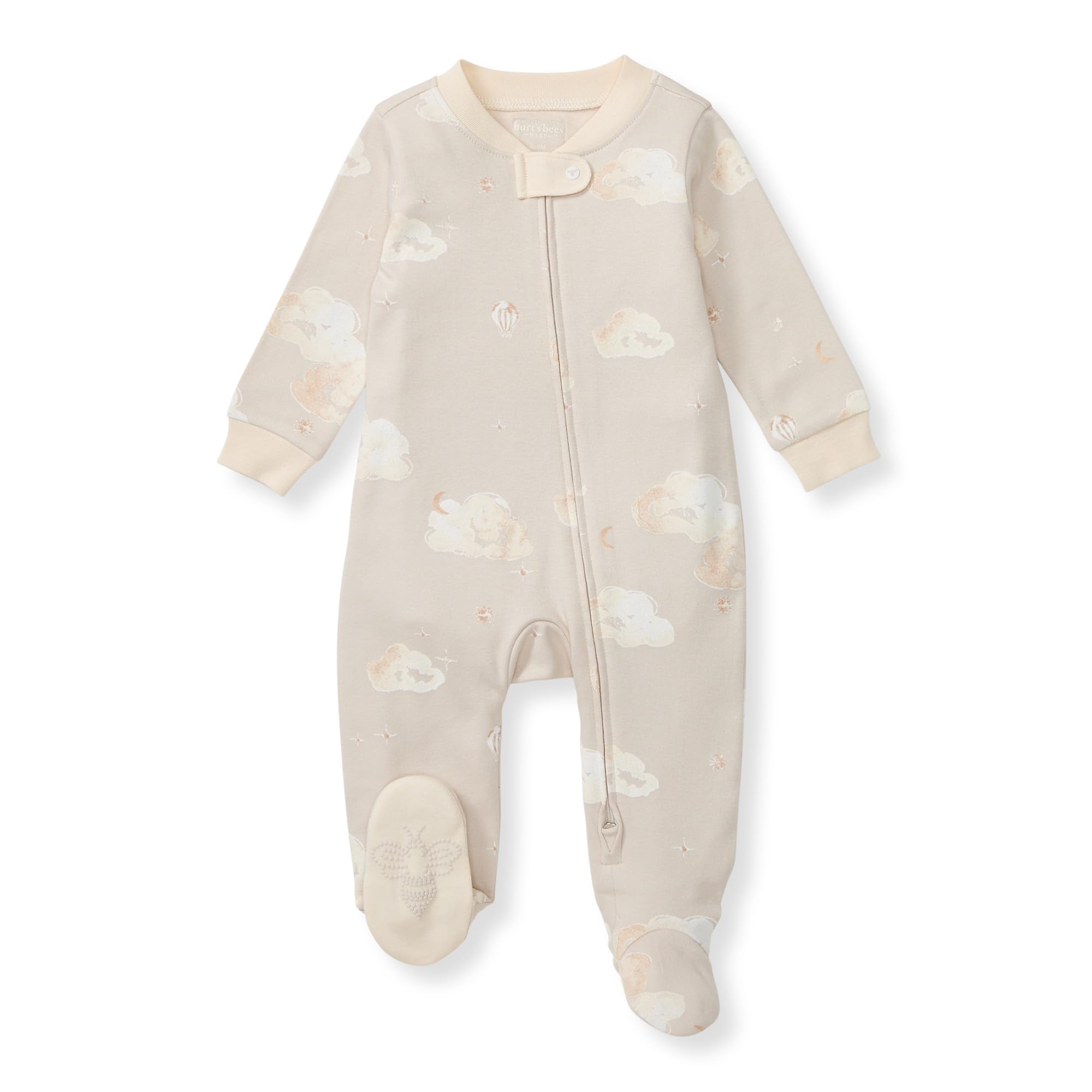
Burt’s Bees Sleep & Play – Best Overall
Key Features
- Fit: Runs big
- Style: One-piece zip-front romper
- Fabric: 100% organic cotton
- Price: Midrange
A zip-front cotton sleeper is the piece a newborn lives in, and this Burt’s Bees one-piece is the one we reach for first. It is 100% organic cotton, and the fabric is what earns the spot: soft straight out of the package, softer again after a wash, and substantial enough to feel like a garment rather than tissue paper. The full-length front zip means no wrestling a wriggling baby through a neck hole at three in the morning, which is a small design decision that decides how much you like a sleeper.
Sizing is the part to get right. These run big: the 0 to 3 month has the room of a 3 to 6, which is a gift on a small baby and baggy on a long, lean one. If your baby is already measuring ahead, take the newborn and enjoy the extra weeks; if you are buying ahead for winter, the generosity means the next size up will not be outgrown by February.
It is also the sleeper that goes in the hospital bag — neutral enough for the first photos, plain enough to layer under the hooded jacket below, and priced so four of them do not feel extravagant. One thing we do before committing: work the zip slider back and forth a few times. A slider that catches turns a two-minute change into a five-minute one, and the fix is easier to find before the first overnight than during it.
Pros
- Soft 100% organic cotton that improves with washing
- Full front zip skips the neck hole
- Generous sizing lasts through a growth spurt
Cons
- Foot seams and hand covers wear through first
The organic sleeper we hand to new parents first: 100% cotton that softens with washing, a full front zip, and room to grow.
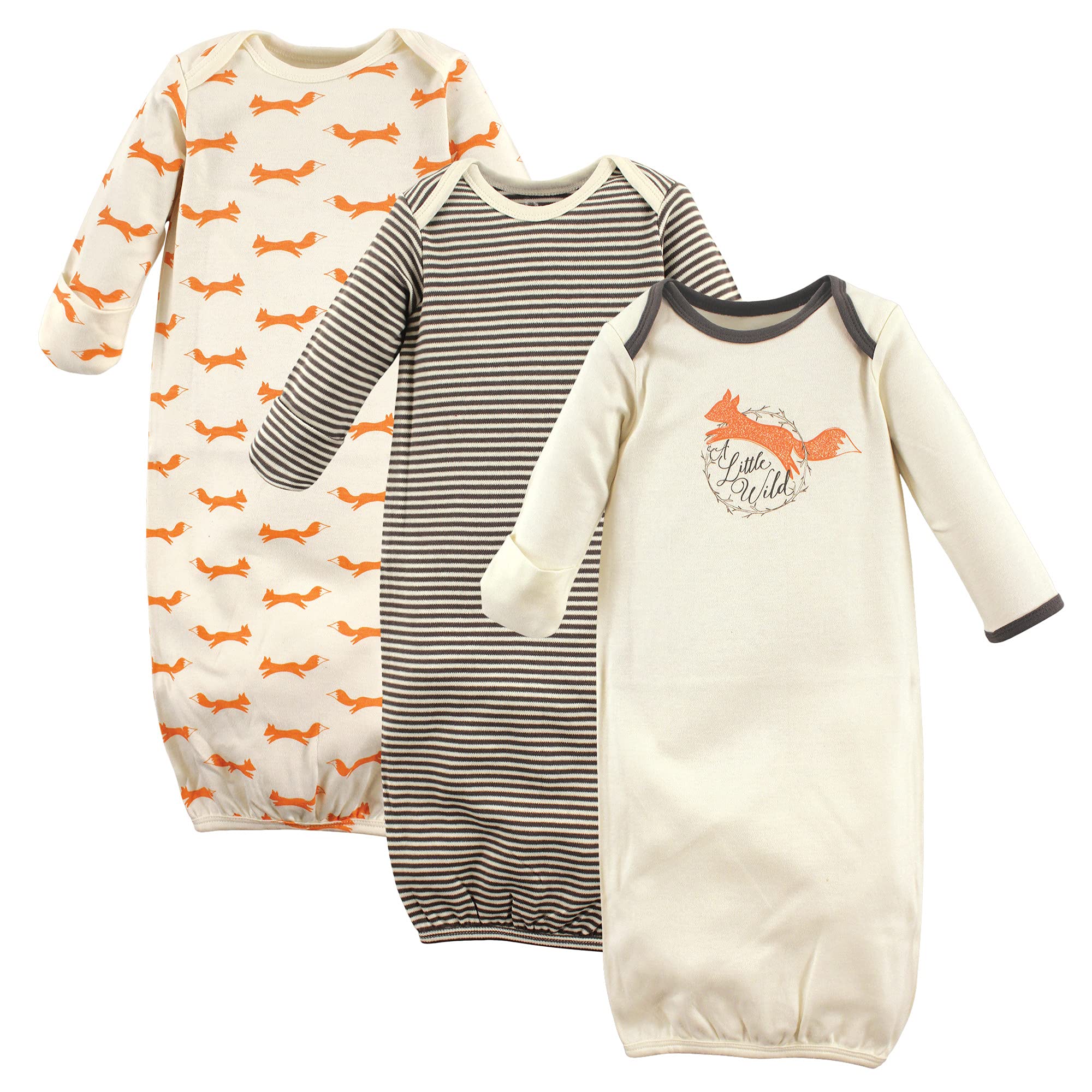
Touched by Nature Organic Gowns – Best for Newborn Nights
Key Features
- Fit: Runs large
- Style: Pull-on gown, open bottom
- Fabric: Organic cotton
- Price: Midrange
A gown looks like a novelty next to a drawer of zips and snaps until your third night home, when you are changing a diaper every two hours and the last thing you want is to unzip a leg, rethread a foot, and redo a dozen fasteners on a baby who has just settled. The open bottom turns that into a lift, a swap, and a pull back down — no snaps, no legs, nobody fully awake.
That is why this is our newborn-night pick. The organic cotton has real weight to it, not the flimsy jersey you brace for at this price, and it gets softer with washing rather than thinning out. The prints are the other pleasant surprise: small and sweet, and quiet enough that seeing them at four in the morning does not annoy you.
The fit needs planning. The 0 to 6 month size is genuinely big: it hangs on a seven-pound newborn and starts fitting properly around six to eight weeks, which is exactly the stretch when night feeds are still relentless. Buy it before the baby arrives and treat it as the second-month wardrobe. For the going-home outfit, take the side-snap kimono instead.
Pros
- Open bottom makes night changes fast
- Substantial organic cotton that softens in the wash
- Roomy enough to fit from about six weeks
Cons
- Only useful for the first couple of months
- Open bottom leaves feet bare
Our newborn-night pick: an open-bottom gown that turns a 3 a.m. diaper change into a thirty-second job, in organic cotton with real weight.
little planet Sleep & Play – Best for Diaper Changes
Key Features
- Fit: Runs small
- Fabric: Organic cotton waffle knit
- Closure: Two-way zip to ankle
- Price: Budget
The two-way zip is why this one is here. It runs from the neck all the way to the ankle and opens from either end, so a night change means unzipping from the bottom while the top half — and a sleeping baby’s chest — stays covered. That is the most useful piece of hardware on any sleeper in this guide, and the light waffle knit makes this the one for a warm nursery.
The cotton is thin and stretchy, closer to a T-shirt than the brushed sleepers we reach for in January, and it follows a kicking baby rather than fighting one. In a heated house or with a summer due date, that is the difference between a sleeper the baby sleeps in and one they wake up hot in.
Sizing runs small, and the feet are the pinch point: a 12-month can look right through the body while the toes are already tight. Size up if your baby is anywhere near the top of a size range, and wash it cold the first time, because the cotton shrinks a little and the feet are where you notice it.
Pros
- Two-way zip opens from either end
- Light waffle knit suits warm rooms
- Budget price among the sleepers here
Cons
- Colors arrive more muted than the photos
The sleeper we reach for in a warm room: a two-way zip to the ankle, light waffle cotton, and a budget price that makes a second one easy.
Yoofoss 3-Pack Sleepers – Best Multipack Sleepers
Key Features
- Fit: Runs a full size large
- Pack: 3 sleepers
- Fabric: 100% organic cotton
- Closure: Two-way zip, fold-over mittens
- Price: Midrange
Three sleepers arrive in one pack, and the details you normally pay extra for are already there: a two-way zip, fold-over mittens on the sleeves so a newborn cannot scratch their face, and a care tag sewn on the outside rather than against the skin. That last one sounds trivial until you have spent a night with a scratchy label under a baby’s back.
The cotton is substantial — closer to a T-shirt than to the tissue-thin sleepers that show every diaper line — and it comes out of the wash still opaque and still soft, without the pilling cheap cotton picks up after a month.
This is the pack we hand to anyone building a first drawer, because three sleepers means one on the baby, one in the wash, and one clean, with no emergency laundry at eleven at night. The built-in mittens also save you buying separate scratch mitts that never stay on, and the wide body leaves room for a cloth diaper without a fight.
Pros
- Three sleepers per pack
- Two-way zip with fold-over mittens
- Care tag sewn on the outside
Cons
- Runs a full size large; size down
The pack we hand to anyone stocking a first drawer: three organic sleepers with two-way zips, fold-over mittens, and room for a cloth diaper.
HonestBaby Kimono Bodysuits – Best for Dressing a Newborn
Key Features
- Pack: 3 long-sleeve bodysuits
- Fabric: 100% organic cotton
- Closure: Side snaps, no over-head
- Price: Midrange
Getting a bodysuit over a newborn’s head is the part nobody warns you about: the neck looks too small, the baby disagrees loudly, and you are doing it four times a day. The side-snap kimono layout skips the maneuver entirely — lay the baby on the open front, snap up the sides, done.
That is why this is our pick for a newborn who hates being dressed, and for a baby coming home with a monitor lead or a healing cord stump to work around. The 100% organic cotton is on the thicker side for a bodysuit, so it works as a layer rather than underwear, and the long sleeves cover a scratchy phase without mittens.
We kept reaching for these through the first month, when a baby is mostly lying down and a flat-lay change is genuinely easier than a zip. Somewhere around two months, when changes got faster and the baby got wigglier, the zip sleepers won out — which is the honest limit of a snap-front bodysuit.
Pros
- Side snaps avoid over-the-head dressing
- Thick organic cotton works as a layer
- Suits NICU stays and medical needs
Cons
- Runs small; size up
For a newborn who hates being dressed, side snaps on a flat-lay bodysuit do what no zip can, and the organic cotton is thick enough to count as a layer.
Burt’s Bees Hooded Jacket – Best Light Layer
Key Features
- Fit: Runs large
- Style: Zip-up hooded jacket
- Fabric: Organic cotton
- Weight: Lightweight knit
- Price: Midrange
The word jacket oversells this, and that is exactly why it works. It is a hoodie-weight organic cotton knit with a full zip and a hood — light enough to go over a bodysuit on a cool morning without turning a baby into a sweaty bundle, warm enough to be the difference between a walk and no walk.
Organic wardrobes fill up with sleepers and stop there, and this is the piece that makes the rest wearable outdoors. The cotton has the same softness as the brand’s sleepers, the knit is substantial enough to block a breeze, and it goes over a bodysuit without bulk. It is the layer we tuck into the diaper bag from September onward.
It is a layer, not a coat. On a genuinely cold day you need something heavier, and that is the honest limit of what it does — but for a spring baby, a cool morning, or the walk between the car and the door, it is the right amount of jacket.
Pros
- Lightweight organic cotton layer
- Real hood and full zip
- Warm without bulk over a bodysuit
Cons
- Runs large with long sleeves
The light layer an organic baby wardrobe usually lacks: soft cotton, a real hood, and a zip that goes over a bodysuit on a cool morning.
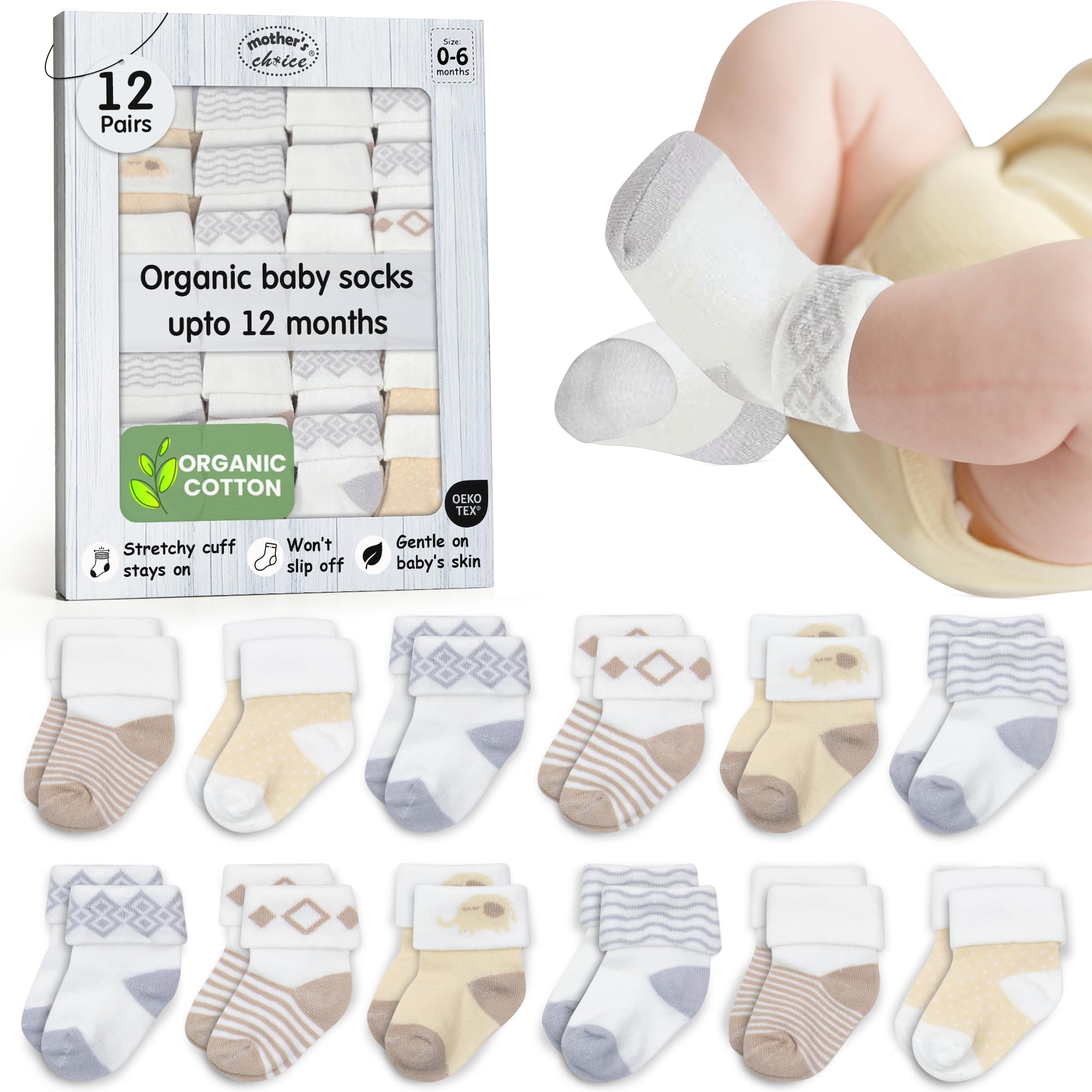
Mother’s Choice 12-Pack Socks – Newborn Stock-Up
Key Features
- Pack: 12 pairs
- Cuffs: Elasticated, stay-on
- Fabric: 75% organic cotton blend
- Price: Budget
Twelve pairs of newborn socks arrive threaded onto a remarkable number of small plastic ties. Budget a few minutes and a pair of scissors before the first wash, or you will be cutting one pair loose at a time, one-handed, with a baby on your shoulder.
Twelve is not as excessive as it sounds. Newborn socks vanish into car seats, washing machines, and the bottom of a diaper bag, and the pair you cannot find is always the one that matches the outfit. The neutral browns and greys here go with everything and hide what newborns do to fabric.
The fabric is a 75% organic cotton blend with polyester and spandex — honest about not being 100% cotton, and the spandex is what keeps a cuff on a kicking foot without leaving a red ring. They are cut to fit snugly from newborn to about three months, then more loosely up to six.
As a registry add-on, this is the pack we recommend: enough pairs that losing three does not matter, cuffs that hold without marks, and a palette that works with everything else in the drawer. The blend is the one compromise, and it is the reason they stay on.
Pros
- Twelve pairs in one pack
- Elasticated cuffs stay on without marks
- Neutral colors match everything
Cons
- Blend, not 100% organic cotton
- Too big for small newborns
The registry add-on we recommend: a dozen soft blend socks with cuffs that stay on, in colors that match whatever the baby is wearing.
HonestBaby 10-Pack Tees – Best for Daycare and Backups

Key Features
- Pack: 10 short-sleeve tees
- Sizes: Baby through kids
- Fabric: 100% organic cotton
- Price: Premium
Ten short-sleeve tees in one order is a daycare strategy as much as a purchase: you send one, it comes home with lunch on it, and you do not mourn it.
The cotton is 100% organic and genuinely soft, in the way that shows up after the third wash rather than the first. The colors are solid rather than watery pastels, and they hold through repeated washing without bleeding into each other.
Fit is where they get difficult. The neck opening is wide, so on a smaller baby the shirt slides and sits crooked, and the body is cut short and wide — the opposite of the long, lean shape most babies are. They shrink on the first wash too. Size up if you want a season out of them, and expect the collar to sit loose on a thin baby.
We keep these in the rotation for messy days, backup clothes, and the bottom of the diaper bag, not for anything you would photograph. Bought as a pack they come out cheap enough per shirt that a ruined one is an annoyance rather than a loss, which is exactly the job description for a toddler tee.
Pros
- Ten organic cotton tees per pack
- Colors hold through repeated washing
- Soft cotton that improves with washing
Cons
- Seams can split after a few washes
A bulk box for daycare and backups: ten soft organic cotton tees in solid colors, cut wide and short, and best bought a size up.
How We Tested the Best Organic Baby Clothes
We started by pulling together a shortlist of organic cotton bodysuits, sleepers, and sets from brands with clear fiber content, a broad size range, and a price that made sense for something washed constantly. We eliminated anything with vague material claims, scratchy-looking tags, or closures that seemed flimsy in photos, then ordered 14 pieces to use at home over six months.
Each piece went into the same rotation: overnight changes, naps, stroller walks, tummy time, and the diaper bag. We dressed the same baby in every item, noted how easily each one went over the head and legs, and checked whether the fit left room for a diaper without sagging at the crotch. After every few washes, we felt the fabric against the inside of a wrist and a baby’s cheek, looked for pilling, shrinkage, faded color, and twisted seams, and tested zippers and snappers during real changes—not just on the hanger.
We also tracked sizing over time: whether a 3–6 month piece still fit at the top of that range, whether cuffs stayed put, and whether the neckline stretched out or snapped back. Comfort showed up in small ways—red marks behind the knees, a baby who fussed when a tag grazed the back of the neck, or a sleeper that stayed smooth through a nap. The pieces that held their shape, color, and softness after repeated washing are the ones that made the list.
How to Choose Organic Baby Clothes
Organic cotton is the easy claim to print on a label; what decides whether a garment earns its place is how it fastens, how it fits, and how it looks after its tenth wash.
Start with the fastening
A baby is dressed and undressed a dozen times a day, and the fastening decides whether that is a chore. A full front zip is fastest once they are mobile. A two-way zip that opens from the ankle is the one that matters at 3 a.m., because you can change a diaper without uncovering a sleeping baby’s chest. Side snaps skip the over-the-head maneuver entirely, which is why they suit newborns and babies coming home with monitor leads.
The trap is falling for a print and ignoring the closure. A sleeper with one zip to the neck is still a fight at night, however soft the cotton.
Read the percentage, not the word
Organic on the front of a label can sit on a 100% cotton sleeper or on a blend that is three-quarters cotton and a quarter polyester. Flip to the fiber panel. Anything worn against a newborn’s skin for twelve hours a night is worth buying at 100% organic cotton; socks and light jerseys are where a blend earns its keep, because spandex is what keeps a cuff on and a neckline from gaping.
A GOTS claim covers the fiber and the processing chain. Made with organic cotton can appear on a much lower percentage, so the number is the honest part.
Fit varies more than size
Size labels barely travel between brands. Among the sleepers here, one runs a full size large, another runs so small in the foot that you will want to size up well before the body is outgrown. Buy by the measurements on the size chart rather than the age on the tag, and assume cotton will shrink a little on the first wash — fine on a generous cut, a problem on a snug one.
When you are between sizes, size up on anything with feet and down on anything with a loose neckline.
How many pieces you actually need
Newborns go through six to eight changes a day, so the useful question is not how many outfits you own but how many are clean. Three sleepers is the minimum that keeps laundry from becoming an emergency: one on, one in the wash, one ready. Six to eight bodysuits or sleepers plus two or three layers covers the first three months.
Put most of the money into 0 to 3 months and buy only a couple of newborn pieces, because a big baby may never wear newborn at all.
What wears out first
Look at the seams before you look at the print. On sleepers, the foot seam and the fold-over hand covers go first. On bodysuits, it is the underarm and the neck binding. Wash inside out, close the zip before it goes in the drum, and skip the dryer for anything you want to hand down, because heat is what turns soft cotton stiff.
A garment that survives ten washes is worth two that pill after three.
Frequently Asked Questions
Do baby socks actually stay on?
The cuff does the work, not the thickness. A snug elasticated cuff in the right size stays put through kicks and car rides; a thick sock that is a size too big slides off within minutes.
If you see red rings on the ankles, size up. If the socks vanish into the crib, the cuff is what to change, not the brand.
Can my baby wear a jacket in a car seat?
Not a bulky one. Thick outerwear stops the harness sitting against the body, and the straps end up looser than they should be. Dress the baby in a thin layer for the seat and put the jacket on when you arrive, or tuck a blanket over the buckles.
The quick test: if you can pinch fabric under the chest clip, there is too much between strap and baby.
What should a newborn wear home from the hospital?
A one-piece zip sleeper, socks, and a hat, with a blanket over the lap for the ride. Skip the gown for the trip home, since it rides up in a car seat and leaves the legs bare, and skip anything stiff for the first photos.
If the weather is warm, a short-sleeve bodysuit and a light layer is plenty. Hospital rooms run cool, so pack one warmer option.
Final Verdict
Start with the Burt’s Bees Sleep & Play. It is the one we recommend first, and not because it is the most interesting garment here — because it is 100% organic cotton that softens instead of thinning, it has a full front zip for the changes you do half-asleep, and the sizing is generous enough to carry a baby through a growth spurt.
If you are still inside the first six weeks, add the Touched by Nature gowns: the open bottom makes night changes faster than any zip. And if a two-way zip matters more to you than fabric weight, the little planet sleeper is the one to add — size up, especially in the feet.