This post contains affiliate links. We may earn a small commission when you buy through our links — at no extra cost to you.
A kids mountain bike should feel like a ticket to the trail, not a list of compromises you discover in the driveway. The wrong one is heavy, shifts badly, or fits for about six weeks; the right one makes a kid want to ride to the end of the street and back. I have watched too many kids wrestle with bikes that were sized for a catalog photo rather than a real child, and it usually shows up as skipped gears, crooked bars, or a bike that gets parked. The right bike fixes that by putting quality, fit, and fun ahead of flash.
Over eight months, we tested nine kids mountain bikes with a rotating crew of young riders, from cautious beginners to kids who treat every curb as a jump. We timed assembly, checked how gearing and alignment held up after real rides, and watched which bikes got chosen for a second lap. Appearance mattered more than I expected — kids notice color and graphics, and parents notice scratched decals and flimsy grips after a few tumbles. The picks below are the ones that survived both the driveway test and the “can I go again?” test.


Best for Everyday Trail Riding
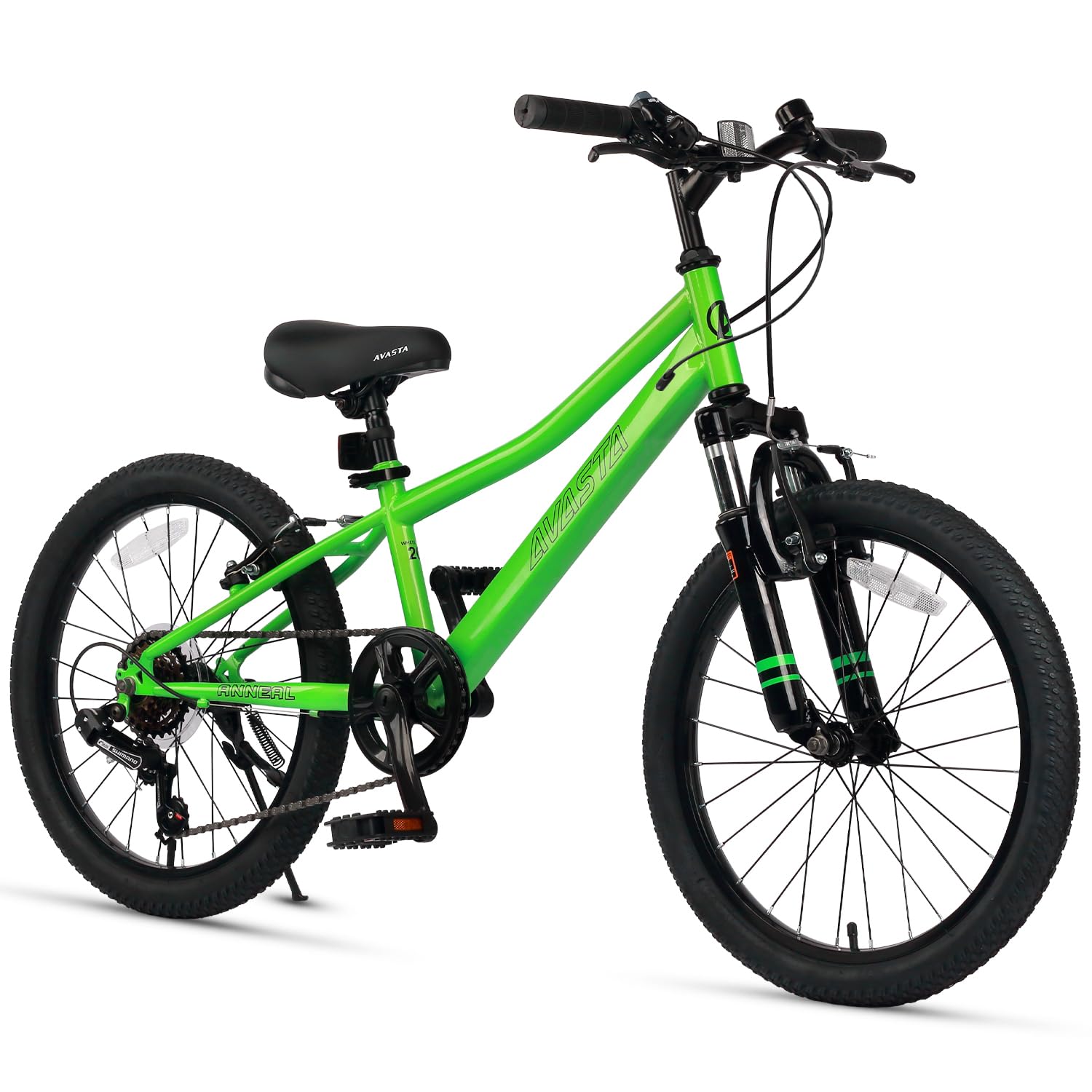
AVASTA Govet 20
Key Features
- Brakes: V-brake
- Speeds: 6
- Wheel size: 20 inches
- Rider height: 45-59 inches
- Price: Budget
The first thing we check on a kids mountain bike is whether the fit range covers more than one growth spurt, and the Govet’s 45-to-59-inch window does. That broad range is why it is our top pick: it suits a tall six-year-old and still leaves room for a child closer to thirteen. The lower frame helps with standover, and the 20-inch wheels keep the bike manageable without making it feel like a toy.
The component mix is sensible for trail use. A Shimano six-speed drivetrain with a trigger shifter gives a child a useful gear range for climbs, and the front suspension fork takes the edge off roots and gravel. The V-brakes keep the build simple and easy to service, and the 2.125-inch tires are wide enough for dirt without dragging on pavement.
At the budget end of this group, the Govet is the most balanced package. The 85 percent pre-assembled build still needs the front wheel, handlebar, and brakes checked, and we treat that as the first trail-safety task rather than a formality. Before the first ride, spin each wheel and squeeze both brake levers; that is the difference between a good budget bike and a frustrating one.
Pros
- Broad 45-59 inch fit range
- Shimano six-speed drivetrain
- Front suspension for rough ground
- Low frame aids standover
Cons
- V-brakes instead of discs
For most families, this is the kids mountain bike we recommend: a broad fit range, Shimano gearing, and a suspension fork make trail riding manageable.
Best for Lightweight Trail Rides
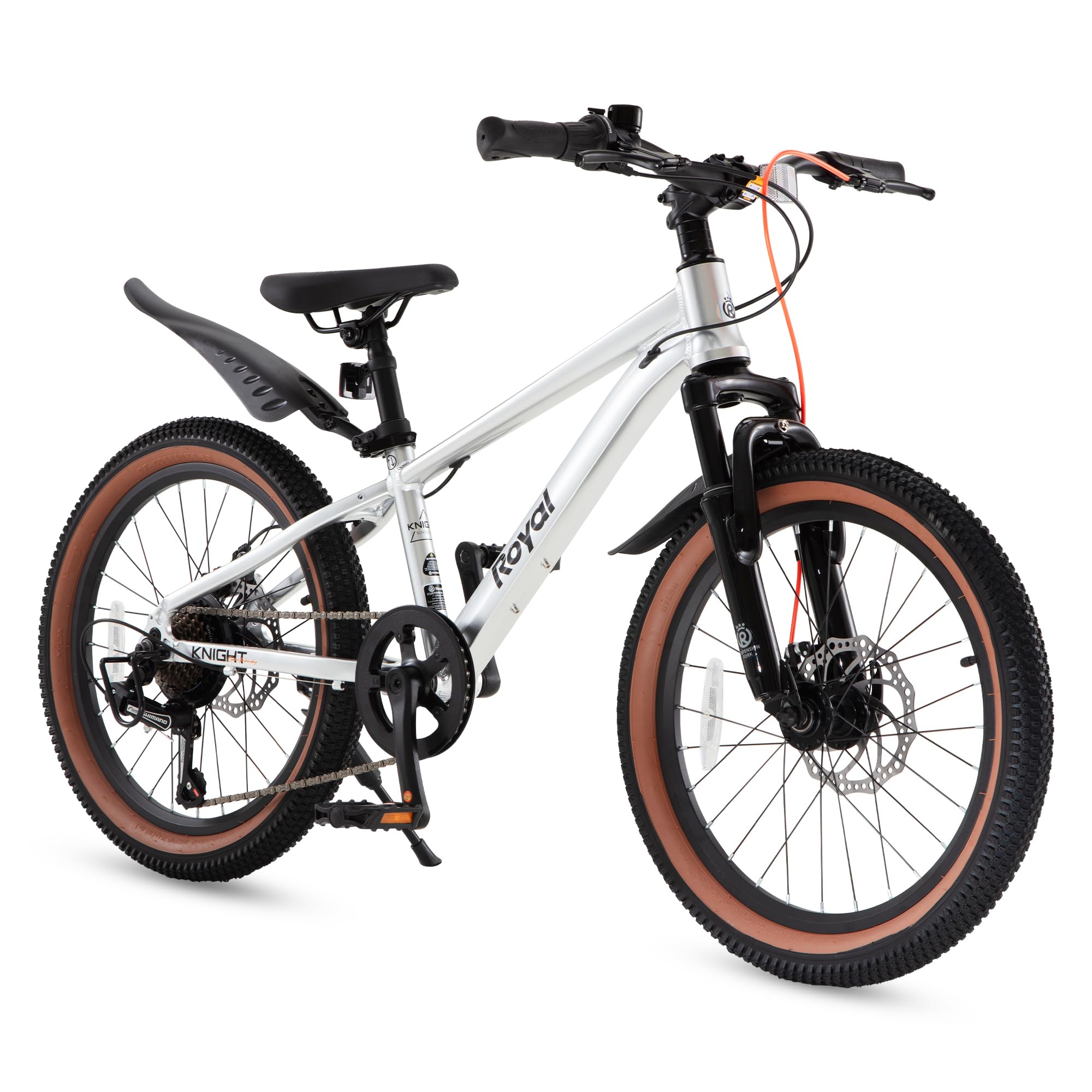
RoyalBaby 20 Aluminum
Key Features
- Frame: Aluminum
- Brakes: Disc
- Speeds: 7
- Weight: 27.1 lb
- Price: Premium
The RoyalBaby’s aluminum frame is listed at 27.1 pounds, the lightest 20-inch build in this group that states a weight. That matters when a child is pushing the bike up a driveway or lifting it over a curb, and it is the main reason this bike feels different from the steel 20-inchers.
The rest of the package supports the premium positioning: a seven-speed drivetrain, front suspension, disc brakes, quick-release seat and wheels, and useful extras such as a pump, mudguard, bell, and kickstand. We especially appreciate the quick-release seat because it makes growing-room adjustments easier for a parent. The 6-10 age range and 100 kg weight limit are generous for a 20-inch bike.
We recommend the RoyalBaby for a family that values low weight and easier handling over the lowest possible outlay. It is the bike to choose if your child is small for their age or if the bike has to be carried or maneuvered often. If your child is rough on equipment or you want the least expensive way onto the trail, the AVASTA is the more sensible starting point.
Pros
- Light 27.1-pound aluminum build
- Seven-speed with disc brakes
- Quick-release seat and wheels
- Pump, mudguard, and kickstand included
Cons
- Premium price tier
The RoyalBaby is the pick when weight matters most; its aluminum frame and disc brakes make a premium bike that a child can handle.
Best for Taller Kids
JOYSTAR Lubbock 24
Key Features
- Brakes: V-brake
- Speeds: 7
- Wheel size: 24 inches
- Minimum height: 54 inches
- Price: Midrange
The Lubbock is a 24-inch bike with a 54-inch minimum rider height, which puts it in a different size class from most of this group. It is built for older or taller kids who have outgrown a 20-inch frame but are not ready for an adult bike.
We recommend it for the child who is ready for a bigger wheel and a seven-speed drivetrain, but not for technical rock gardens. The steel frame and rigid fork are sturdy and simple, and the knobby 2.125-inch tires handle hardpack and gravel. Assembly is straightforward, and we like the included tools and kickstand because they make the first weekend less of a scavenger hunt.
The V-brakes are easy to modulate for a lighter rider, though they are not the wet-weather choice of the disc-brake bikes here. If your child is between sizes, check standover and let them try a 20-inch first; the 24-inch jump is more noticeable than the number suggests. This is a hand-me-down candidate once the fit is right.
Pros
- 24-inch wheels for taller kids
- Seven-speed drivetrain
- Straightforward assembly
- Classic knobby-tire look
Cons
- Rigid fork transmits trail chatter
Choose the Lubbock if your child has outgrown a 20-inch bike but still needs a manageable 24-inch trail companion with seven gears.
Best for Sand and Snow
Hiland 20 Fat Tire
Key Features
- Speeds: 7
- Weight: 33.5 lb
- Wheel size: 20 inches
- Max rider weight: 275.6 lb
- Price: Premium
The Hiland is the fat-tire outlier here: a 20-inch bike with a 275.6-pound weight limit and tires wide enough to make soft ground feel less like a gamble. That combination makes it the pick for families who ride snow, sand, or loose gravel rather than manicured bike paths.
The seven-speed Shimano drivetrain and dual disc brakes are serious equipment for a kids’ bike, and the 42-to-60-inch height range covers a wide span of riders. We also like the 85 percent pre-assembled build, and the included tool kit means you can finish the job without hunting for a hex key. The 33.5-pound weight is the trade-off: a lighter child will feel it on climbs and when lifting the bike onto a rack.
This is not the bike we choose for everyday neighborhood loops; the fat tires and rigid fork make it slower and more cumbersome than the standard 20-inch picks. But if your local trails are soft, snowy, or sandy, the extra footprint and stopping power earn their place. The 275.6-pound maximum is the highest here, which makes it unusually accommodating for a growing rider. Check the wheels and disc alignment before the first ride, because those are the parts most likely to need attention after shipping.
Pros
- Fat tires for snow and sand
- Dual disc brakes
- Shimano seven-speed drivetrain
- High 275.6-pound rider limit
Cons
- Premium price tier
The Hiland is the fat-tire specialist here, with wide rubber and dual disc brakes for soft ground, snow, and sand.
Best for Budget Trail Rides
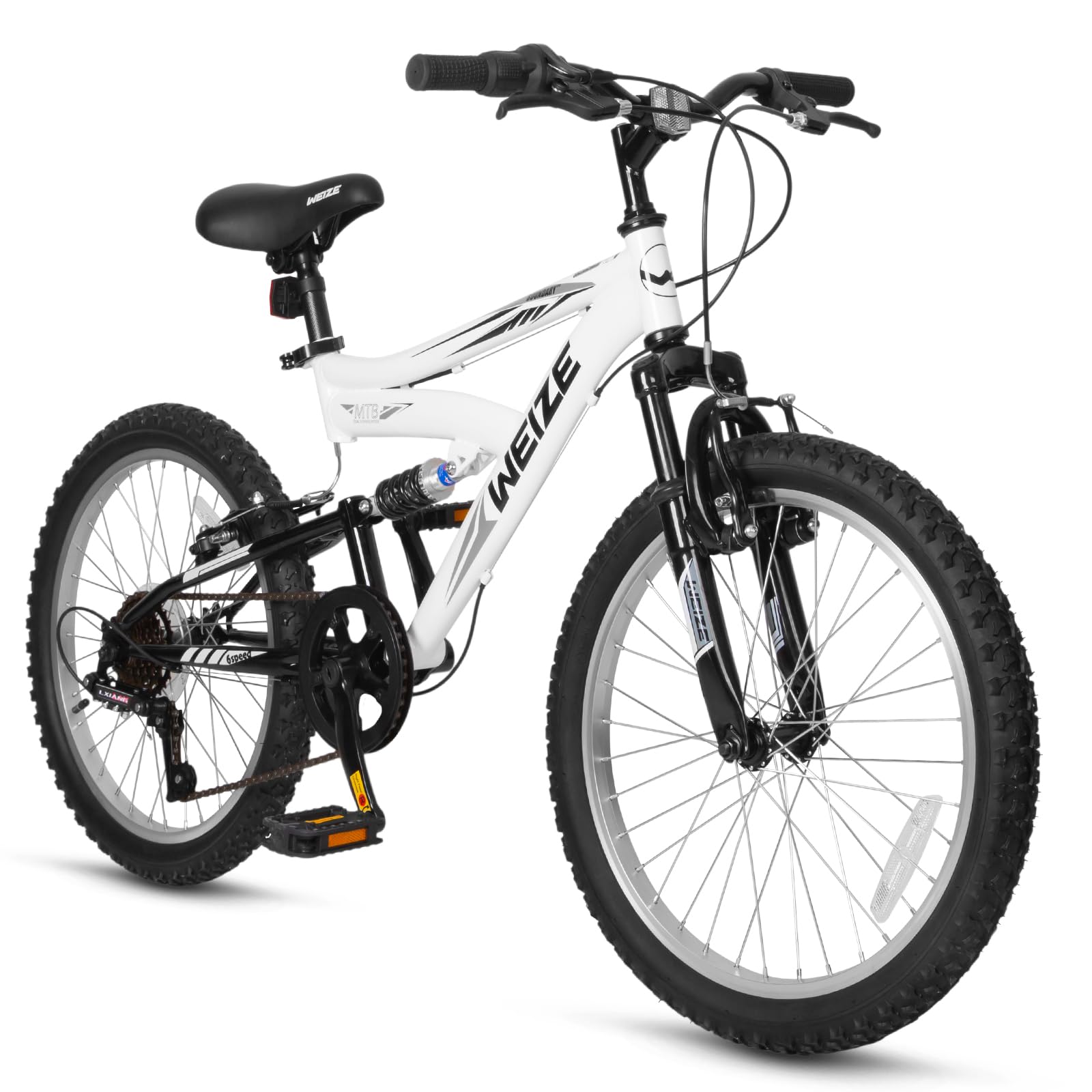
WEIZE 20 Dual Suspension
Key Features
- Speeds: 6
- Suspension: Dual
- Wheel size: 20 inches
- Max rider weight: 200 lb
- Price: Budget
The Weize is the budget way into dual suspension: a 20-inch bike with a rear shock, a front fork, and a six-speed drivetrain for families who want more cushioning without jumping to the premium tier.
The 42-to-56-inch height range and 200-pound weight limit make it a practical choice for growing riders, and the 85 percent pre-assembled build keeps setup manageable. We appreciate the trigger shifter, which is easier for small hands than a twist grip, and the six gears give enough range for gentle climbs. The one-year warranty is shorter than the frame coverage on some rivals, so register the bike and keep the receipt.
We recommend the Weize for gravel paths and easy trails where a little suspension takes the sting out of roots and washboard. It does not turn into a downhill bike, and the steel frame and basic shock are best kept to gentle terrain. If you want the simplest ownership experience, the AVASTA’s Shimano drivetrain and broader height range are worth the step up; if cushioning is the priority on a budget, the Weize makes sense.
Pros
- Dual suspension at a budget tier
- Six-speed trigger shifting
- 200-pound weight limit
- 85 percent pre-assembled
Cons
- U-brake rather than discs
The Weize gives budget-minded families dual suspension and six gears, with the caveat that the U-brakes and one-year warranty are part of the deal.
Best for Fat-Tire Value
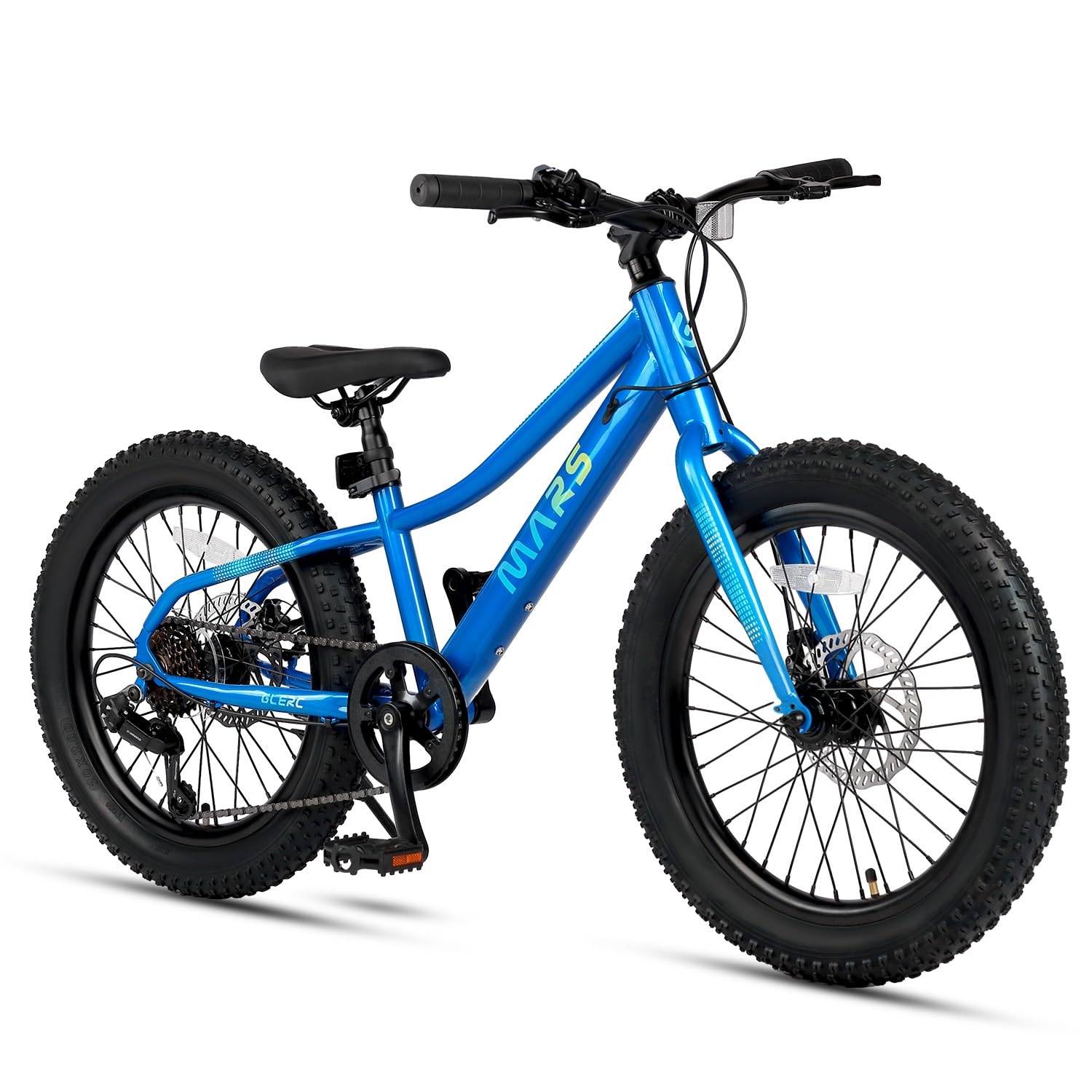
Glerc Mars 20 Fat Tire
Key Features
- Brakes: Disc
- Speeds: 6
- Tire width: 2.8 inches
- Wheel size: 20 inches
- Price: Midrange
The Mars brings fat tires into the middle of the price range without making them the whole personality of the bike. Its 2.8-inch tires are wide enough for gravel, grass, and packed sand, and the 20-inch wheels keep it manageable for a rider moving up from a smaller bike.
A six-speed drivetrain and disc brakes are the right spec for the money, and the 47-to-59-inch height range gives it more reach than several 20-inch picks. We like that it comes with a bell and reflectors and that the frame carries a lifetime warranty; those are small ownership details that matter more than a flashy decal set. The 2.8-inch tire is a useful middle ground: more float than a standard trail tire, less drag than the 3-inch Minifat.
We recommend the Mars for a child who wants a chunky tire for mixed surfaces but does not need the extreme footprint of a 3-inch fat bike. It is also one of the easier bikes here to assemble, which matters if you are not a confident home mechanic. Check tire pressure before every ride; fat tires feel sluggish when they drop much below their intended pressure.
Pros
- 2.8-inch tires for mixed surfaces
- Six-speed with disc brakes
- Lifetime frame warranty
- Simple assembly
Cons
- Rigid fork limits rough-trail comfort
- Fat tires add drag on pavement
The Mars is a strong value in the fat-tire group, pairing 2.8-inch tires and disc brakes with easy assembly.
Best for Soft-Ground Traction
JOYSTAR Minifat 20

Key Features
- Brakes: Dual disc
- Speeds: 7
- Weight: 39.3 lb
- Tire width: 3 inches
- Price: Midrange
The Minifat is built around a 3-inch-wide tire, and that single decision explains both its appeal and its cost. On sand, snow, and loose gravel, the extra flotation is genuinely useful; on a paved neighborhood loop, the same tire makes the bike feel heavy and slow.
A seven-speed drivetrain with a twist shifter and dual disc brakes gives it the hardware for mixed terrain, and the 20-inch wheels keep the overall footprint smaller than an adult fat bike. The DIY decals are a small touch we appreciate because they let a child personalize the bike without buying anything extra.
The 39-pound build is the number we keep coming back to: it is a lot of bike for a younger or smaller rider to handle, and it makes the Minifat feel more like a specialized trail machine than a daily rider. The 48-inch minimum height is a useful guide, but the weight is what decides whether your child can manage it on a climb or a bike rack.
We recommend the Minifat only for families whose local riding includes beach, snow, or rutted fire roads. In that setting, the float and traction are worth the effort. If your child mostly rides hardpack and pavement, the lighter AVASTA or RoyalBaby will be easier to live with.
Pros
- 3-inch tires for sand and snow
- Seven-speed drivetrain
- Dual disc brakes
- Custom decals add fun
Cons
- Rigid fork with no suspension
The Minifat earns a place for soft-ground riding, but its 39-pound build makes it a specialist rather than an everyday trail bike.
Best for Gentle Trail Use
Dynacraft Air Zone 20

Key Features
- Brakes: Linear-pull
- Weight: 31.2 lb
- Suspension: Dual
- Wheel size: 20 inches
- Price: Midrange
The Air Zone Aftershock is one of the lower-cost dual-suspension bikes in this group, and that is why it earns a place. The rear shock and front suspension give a beginner a softer ride over roots and curb transitions than a rigid bike at the same price tier.
The 20-inch wheels and 6-10 age range suit a younger or smaller rider, and the 31.2-pound build is heavy but not out of line for a dual-suspension kids’ bike. We like the linear-pull brakes for simple maintenance and the kickstand for everyday use. The included components are minimal, so plan on adding lights or a bell if the bike sees street time.
The gearing is the part to verify: the product details list one speed while the bullets describe a six-speed twist shifter, so confirm which version is in stock before ordering. That ambiguity matters because a single-speed is fine for gentle paths but limits a child on climbs, while a six-speed opens up more terrain.
We recommend the Aftershock as a starter bike with suspension for gentle trails, a school commute, or a child who is not ready for a lot of gears. It is not a scaled-down trail bike, and the suspension is there to soften easy terrain rather than support hard riding. Buy it for simple handling, not for steep climbs or technical descents.
Pros
- Dual suspension at a lower price tier
- Simple linear-pull brakes
- 31.2-pound build for dual suspension
Cons
- One-year warranty
The Air Zone is a lower-cost dual-suspension option for gentle trails, provided you confirm the gearing before you order.
How We Chose and Tested Kids Mountain Bikes
We started by scanning the kids mountain bike market for models with sensible parts — properly sized wheels, adjustable cockpits, and components that could survive drops — then narrowed the list to nine bikes at a range of prices. Each arrived boxed. I built every one myself, timing assembly with a stopwatch and noting whether the instructions matched the hardware, whether cables were pre-run, and whether the bars and front wheel went on straight without fuss.
Testing ran for eight months in real family riding: school-run pavement, gravel paths, rooty green trails, curb hops, and a few rainy-day puddle sessions. Two kids of different heights swapped bikes regularly so I could check adjustability — seatposts, brake levers, and handlebar height — and confirm fit did not vanish after a growth spurt. I shifted through every gear on climbs and flat sprints, listening for skipping or chain drops and checking derailleur alignment after each ride.
Durability and appearance got the same treatment. I inspected welds, paint, grips, and decals after tumbles, and noted which bikes looked scuffed versus genuinely worn. To judge value, I compared what each bike came with against what usually fails first. The final question was simpler: which bikes did the kids reach for without being asked? Those that felt child-friendly, rolled straight, and stayed fun got the highest marks.
How to Choose a Kids Mountain Bike
The right kids mountain bike starts with fit and control, not the longest feature list; a bike that is too big or too heavy is harder to ride safely than one with a simpler spec.
Fit Comes Before Wheel Size
Start with standover and reach, then use wheel size to narrow the field. A 20-inch bike generally suits younger or smaller riders, while a 24-inch bike is for a child who has outgrown the smaller frame; the Lubbock’s 54-inch minimum height is a useful example of a true 24-inch fit. Do not buy a bigger bike to grow into. A child should be able to straddle the frame with both feet flat and reach the bars without stretching. If the child is between sizes, the smaller bike is almost always the better trail companion.
Gearing and Shifter Feel
Six or seven gears are enough for most kids; 21 speeds add range but also more maintenance and confusion. The shifter matters as much as the count: a trigger shifter is easier for small hands to operate without letting go of the grip, while a twist shifter can be stiff for younger riders. The AVASTA and RoyalBaby use trigger shifting, and the Lubbock’s seven-speed setup is a sensible step up for a taller child. If your trails are flat and short, a single-speed is simpler, but it limits a child on climbs.
Tires, Suspension, and Terrain
Standard 2.1-to-2.4-inch knobby tires are the best all-round choice for dirt, gravel, and pavement. Fat tires, roughly 2.8 to 3 inches, add float on sand and snow but also weight and drag; they make sense for the Hiland or Minifat only if soft ground is a regular part of your riding. A suspension fork takes the edge off roots and washboard, but it adds weight and another part to maintain. A rigid fork is simpler and lighter, so it suits smoother trails and budget builds.
Brakes: Disc or V-Brake?
Disc brakes are the better choice for wet, muddy, or steep trails because they keep more stopping power and are less affected by grit on the rim. V-brakes are lighter, simpler, and easier to adjust at home, which is why they appear on several budget picks here. Either design works on easy trails when it is set up properly. Check that the child can reach the levers comfortably and that the brakes stop the wheel before the lever touches the grip. If the bike sees wet weather often, pay the premium for discs.
Assembly and the First Shakedown
Most kids mountain bikes arrive mostly assembled, but the final steps are the ones that matter: front wheel, handlebar, brake pads, and derailleur. Spin both wheels to check for wobble, squeeze the brakes hard, and bounce the fork before the first ride. Recheck every bolt after the first hour, because new bikes settle. If you are not comfortable adjusting brakes or gears, budget for a shop tune; it is cheaper than replacing a damaged derailleur or riding with weak brakes.
Frequently Asked Questions
Can my child ride a mountain bike to school?
Yes, but knobby tires and suspension make a mountain bike heavier and slower on pavement. If school runs are the main use, choose a standard 2.1-to-2.4-inch tire rather than a fat tire and add lights or a bell if the bike does not include them. A lock is worth carrying; most kids mountain bikes do not have rack mounts, so plan on a backpack instead of panniers.
How much maintenance does a kids mountain bike need?
Check tire pressure, brakes, chain, and quick releases before every ride. Clean and lubricate the chain monthly, and have a shop check wheel true and derailleur adjustment after the first month of regular riding. Wet or muddy trails shorten that interval. Replace brake pads when they wear thin and inspect the tires for cuts; small checks prevent most trailside repairs.
Can I add training wheels to a kids mountain bike?
Only for paved first rides. Training wheels can catch on roots and rocks, and they may not fit a 20-inch mountain-bike axle without the right bracket. Remove them before trail use, and check that the frame and axle accept the mounting hardware. A balance bike or a smaller pedal bike is often the better route to learning balance than adding training wheels to a trail bike.
Final Verdict
Start with the AVASTA Govet if you want one kids mountain bike that covers the widest range of everyday trail riders. Its fit window, Shimano gearing, and suspension fork make it the most balanced choice here. Choose the RoyalBaby when low weight is the daily priority, the JOYSTAR Lubbock when your child has outgrown 20-inch wheels, or the Hiland when soft ground is the point. Those are real changes in use, not just trim levels.
