This post contains affiliate links. We may earn a small commission when you buy through our links — at no extra cost to you.
The hardest part of winter with little kids isn’t the cold—it’s the mitten that comes off halfway down the sledding hill. A good pair stays on, keeps snow out, and slides over a squirming hand before the school bus rounds the corner. Fit, warmth, water resistance, thickness, and durability all matter. We spent three months putting 16 pairs through slush, recess, and backyard snow.
Ease of use turned out to matter as much as insulation: a wide opening and an adjustable cuff can mean the difference between a calm exit and a meltdown on the front step. Quality shows up in stitching, lining, and whether the cuff still grips after a few washes. Value is tricky, since multi-packs look like a bargain until one pair soaks through by lunch. I also checked size ranges, room for growth, and whether the lining stayed put when a wet hand pulled out. The pairs that earned a spot by the door are below.


Best for Snow Play
Wildbreakers Waterproof Kids Mittens
Key Features
- Shell: Waterproof
- Wrist: Adjustable strap
- Lining: Fleece
- Insulation: 100G 3M Thinsulate
- Price: Premium
A hundred grams is the number that matters here. That is the weight of the 3M Thinsulate packed into each mitten, and it puts this pair in a different class from the fleece-lined and knit options below: you can send a kid out for an hour of wet snow and expect warm hands underneath. The shell is waterproof, the lining is fleece, and the cuff runs long enough to overlap a jacket sleeve.
We keep coming back to them because the shell does what the label promises. Hands come out dry after a long stretch in slush, which is not true of every pair here that calls itself waterproof, and the fleece lining means there is no cold shock getting them on. Between the strap on the back of the wrist and the length of the cuff, there is no gap left for snow to find.
Sizing is the thing to sort out before you order. These come up big for the age on the label, so a 2-year-old in the 2-3 size can swim in them; take the smaller size when a child is between two, and let the adjustable strap take up the rest. The thumb opening is snug and takes a second to find, so we seat the thumb first and then pull the mitten up over the fingers.
If your kid insists on doing it themselves, the wide-flap N’Ice Caps pair below goes on with one pull and is the easier sell on a school morning. If you are the one kneeling in the snow doing up the strap, this is the pair that earns its place in the bag.
Pros
- Waterproof shell holds up to real snow play
- 100-gram 3M Thinsulate for long cold stretches
- Long cuff keeps snow off the wrist
- Fleece lining and strap keep them in place
Cons
- Priciest pair in this group
- Thumb slot is snug on small hands
This is the pair we hand a kid headed into snow: a genuinely waterproof shell, real 100-gram insulation, and a long cuff that keeps the white stuff out.
Best for Skiing and Sledding
N’Ice Caps Waterproof Snow Mittens
Key Features
- Palm: Grippers
- Shell: Waterproof
- Closure: Extra-wide hook-and-loop flap
- Insulation: Thinsulate
- Price: Premium
These do the same job as our top pick, with one structural difference that decides who they are for. The opening runs down the back of the hand under an extra-wide hook-and-loop flap, so the whole mitten lies open like a sock instead of holding the shape of a narrow cuff.
That flap is what makes them the pair for a kid who dresses themselves: a 3-year-old can get a hand in on the first try, close the strap, and be out the door. The grippy palm is a small thing that matters on a sled handle or a ski pole, the flap closes with a wide strap that is easy to find with cold fingers, and warmth is not in question, with hands coming back warm from a long cold session.
A wet pair is slow to dry. That is the trade for a shell this thick, and it is easy to live with as long as a second pair exists, one hanging by the door while the other is on the sled. Two pairs also covers the morning after a soaking, which is exactly when a single pair turns into a problem.
Two things decide between these and our top pick. The Wildbreakers pair is the one for a long, wet afternoon where an adult does the dressing; these are the ones for a kid who wants to get out the door alone, and the wide flap is the reason. What you accept in return is drying time, because a soaked shell like this needs a night to come back.
Pros
- Extra-wide flap lets kids dress themselves
- Waterproof Thinsulate shell for wet snow
- Palm grippers help with sleds and poles
Cons
- Sizes run large; order down
- Seams can open with hard daily use
The extra-wide flap makes these our pick for kids who dress themselves: one pull and a small hand is in, with a waterproof Thinsulate shell behind it.
Best for Babies and Toddlers
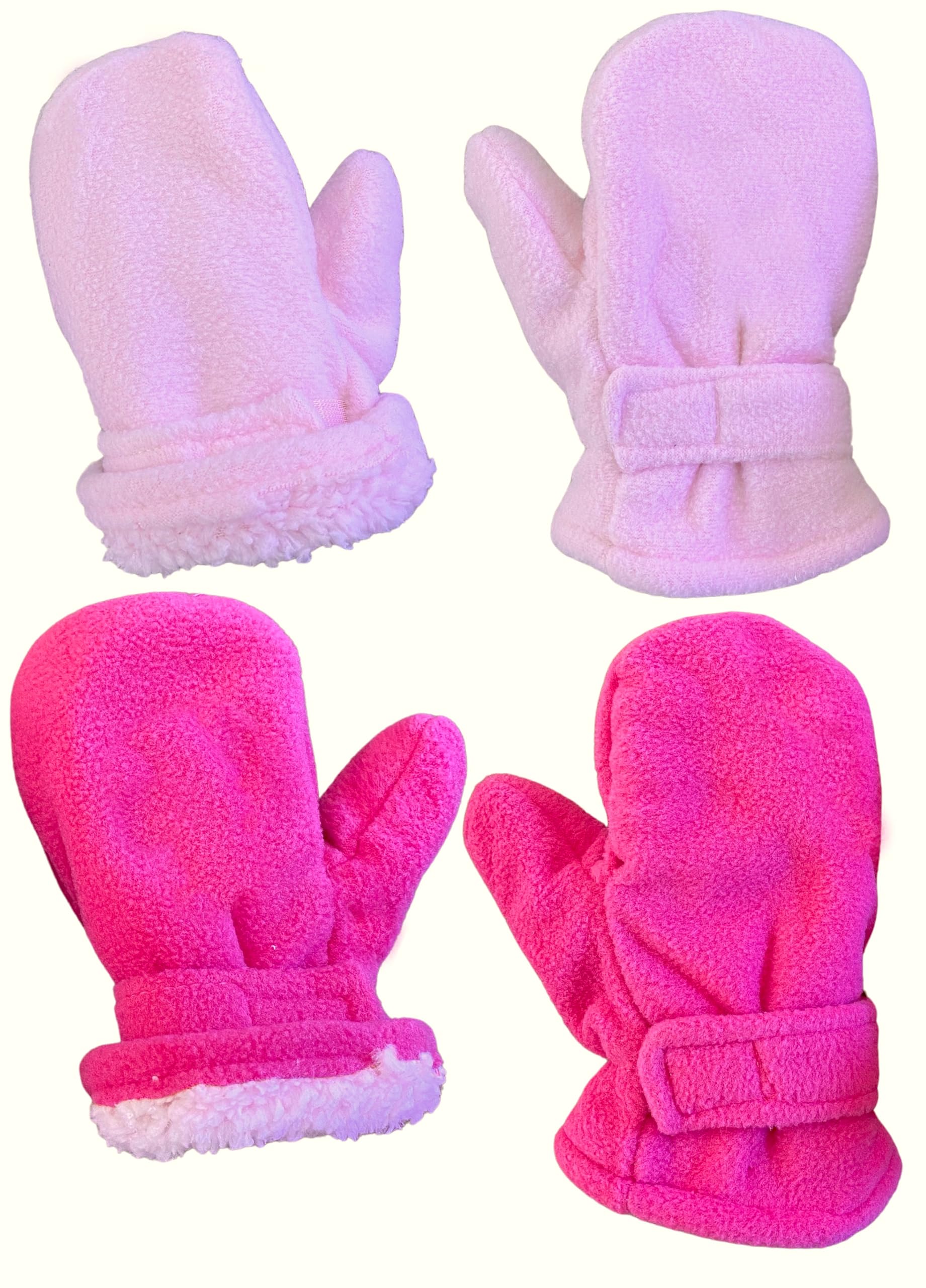
N’Ice Caps Fleece Mittens (2 Pairs)
Key Features
- Pack: 2 pairs
- Design: Thumbless
- Lining: Sherpa fleece
- Closure: Adjustable wrist strap
- Price: Midrange
There is no thumb to find, no fingers to line up, and nothing narrow to negotiate: you open the cuff, slide a small hand in, and close the strap. It is the design that ends the dressing fight, and the reason a 1-year-old can be out the door in seconds instead of minutes.
The warmth is real for something this soft. A sherpa fleece lining sits against the hand, and on a cold bus-stop morning that is plenty; the mittens come two to a pack, which is the right number, because one is always damp or missing. What they are not is snow gear. The fleece soaks through and stops being warm once it is wet.
The strap is the part to know about. On a very small wrist it does not cinch down far, so the mitten can work loose under a sleeve; we pull the jacket cuff over the top of the mitten rather than tucking the mitten inside, and that solves it. Around age 2 and up the same design still works fine, though a kid who wants to grip things gets more from a mitten with a thumb.
Pros
- Nothing to line up; fastest pair to get on
- Sherpa fleece lining is genuinely warm
- Strap keeps them on, two pairs per pack
Cons
- Not water resistant, so no snow play
For a baby or a toddler who fights every mitten, this thumbless sherpa-lined pair goes on without a fight, and it comes two to a pack.
Best for Budget Backups
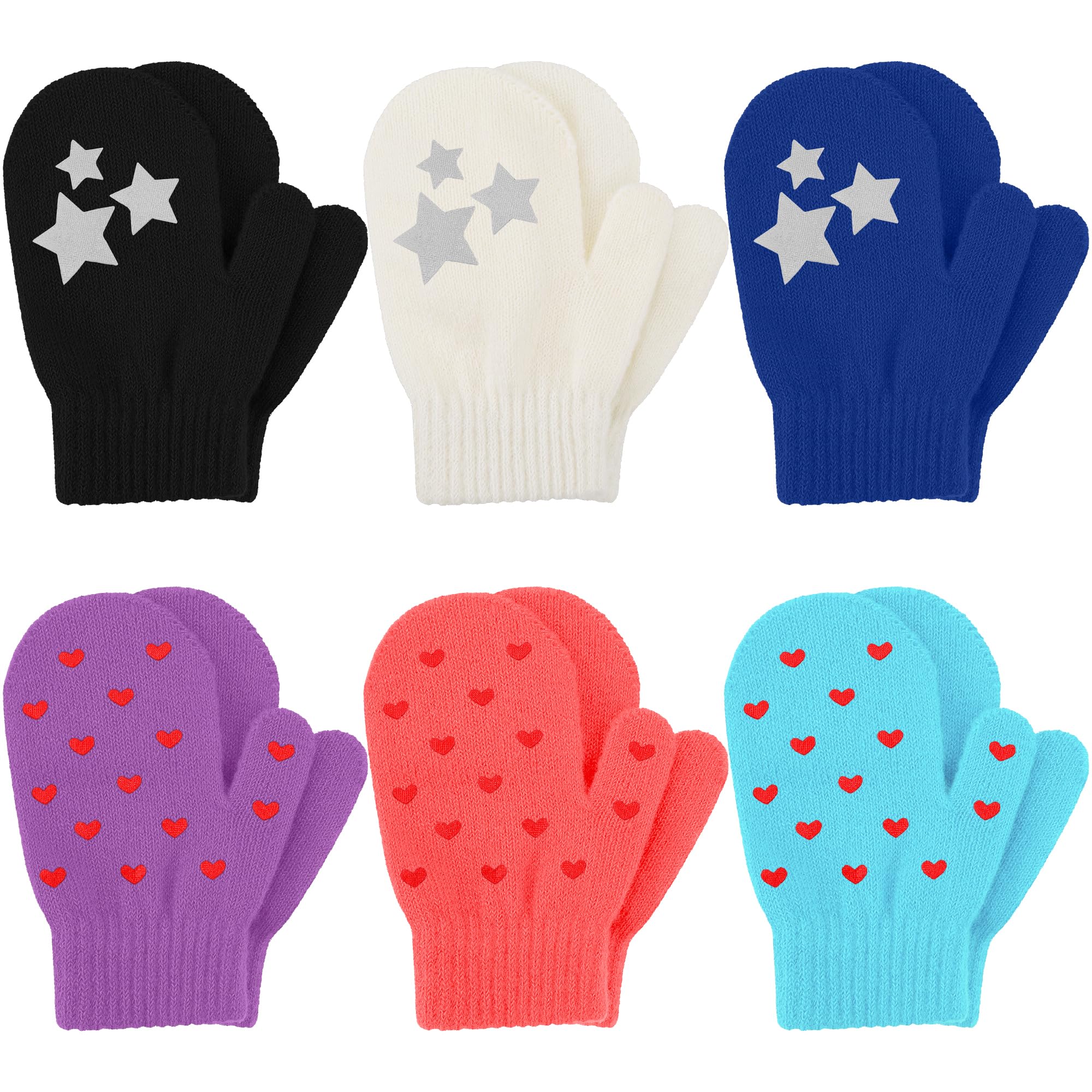
Cooraby Magic Stretch Mittens (6 Pairs)
Key Features
- Pack: 6 pairs
- Sizing: 1-3 years
- Material: Stretch knit
- Price: Budget
Six pairs is the entire pitch. One lives in the coat pocket, one in the backpack, one at grandma’s, and three wait in a drawer for the morning when two of the first three have vanished, which with a toddler is not a hypothetical.
The knit is the other half of why these work. It stretches over a hand instead of needing to be lined up, so a squirming 18-month-old is a five-second job rather than a negotiation. Fit is the strongest thing about them in this group, with room to grow through a season and a cuff that stays on a small wrist.
They are the type sold as magic stretch mittens, and the stretch really is the feature: it goes over a hand without a fight and forgives a wrong guess on size, which is more than the structured pairs manage. Pull one out of a coat pocket in February and it still slides on.
We buy these as insurance rather than as the main pair. Put the money into a waterproof snow mitten for the yard, and keep the six-pack for everything that happens between the door and the car, including the mornings when one goes missing and nobody has time to look.
Pros
- Six pairs solve the lost-mitten problem
- Stretchy knit slips onto small hands
- Room to grow through a season
Cons
- Too thin for real cold or snow
Six pairs, easy on, and the cheapest route here to making sure there is always a dry pair within reach.
Best for Thick Knit Warmth
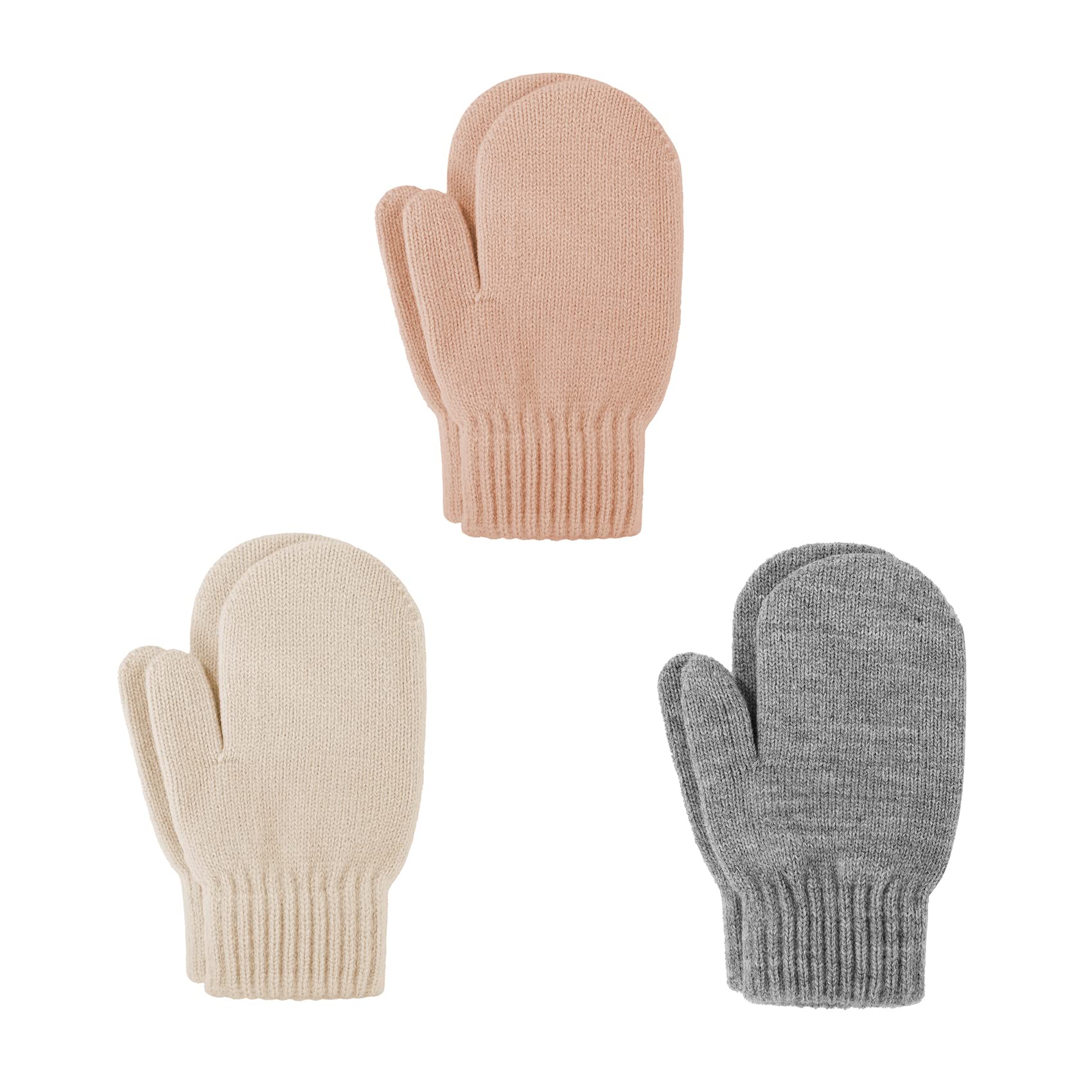
Durio Toddler Knit Mittens
Key Features
- Cuff: Stretchy ribbed
- Design: Separate thumb
- Lining: Fleece
- Sizing: Ages 1-3
- Price: Midrange
A separate thumb on a knit mitten is a small change that alters how it wears, and it is why we rate these above the other knit pairs in this group: the hand sits the way a hand sits, the fleece lining stays against the skin instead of bunching in the palm, and the ribbed cuff grips the wrist rather than hanging loose.
They are also the thickest of the knit bunch, close enough to a real mitten that a cold walk is comfortable in them, and soft enough that a kid who objects to scratchy wool will leave them alone. Sizing is the catch. It is generous even for a 1-3 label, so a small 2-year-old swims in them, and they suit the older end of that range or a child who has already outgrown toddler sizing everywhere else.
Pros
- Separate thumb keeps the hand seated properly
- Fleece lining and thick knit for warmth
- Ribbed cuffs stay put at the wrist
Cons
- Knit shell gives no protection from wet snow
The thickest knit pair here, with a real thumb and a fleece lining, and the one to pick when you want knit softness with proper coverage.
Best for Layering
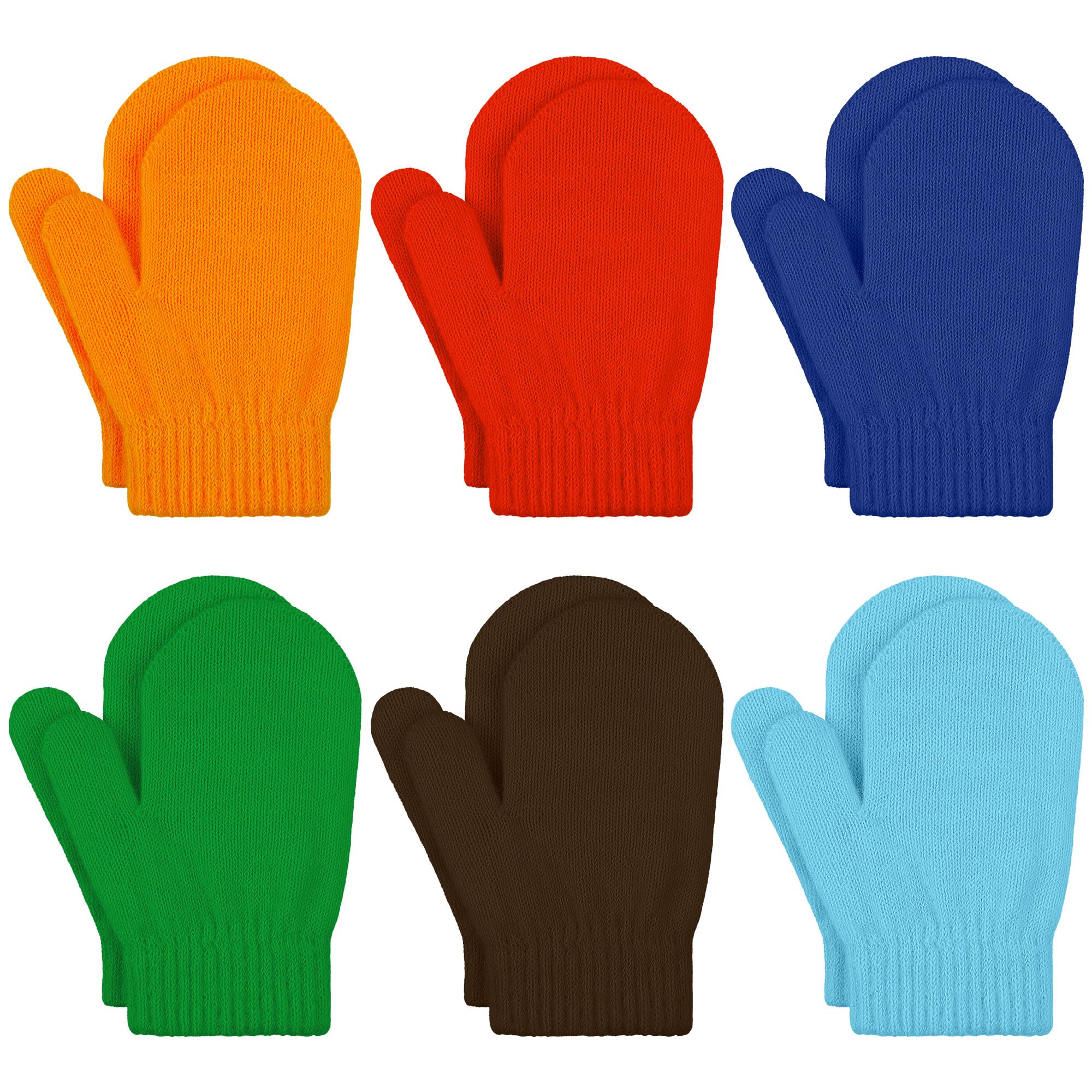
URATOT Knitted Toddler Mittens
Key Features
- Style: Magic stretch
- Material: Knitted
- Quantity: 6 mittens
- Price: Budget
Thin, soft, and stretchy, these are the pair that goes under something else. A pair slides inside a waterproof shell as a liner when the temperature really drops, and on their own they are the mitten for the car, the store, and the walk between, soft enough that a toddler leaves them alone instead of working them off.
They earn their place on volume and price: six mittens means a pair in every bag and no crisis when one disappears, and the colors are cheerful enough that a 2-year-old picks a favorite. Several pairs also wash without any ceremony, which is more than you can say for a structured mitten with a strap. If you want one pair to do everything, this is not it, but as the layer that lives in the jacket, they are the ones we keep coming back to.
Pros
- Thin enough to wear as a liner
- Stretchy and easy on a small hand
- Six mittens for a backup everywhere
Cons
- Too thin for freezing weather on its own
Buy them as liners or car mittens rather than snow gear: six thin stretch mittens that fit a small toddler and cost almost nothing.
Best for Preschool Spares
ONESING Toddler Mittens (5 Pairs)

A mitten a 3-year-old can put on by herself is worth more than any spec on this page. These are soft, stretchy, and loose enough at the wrist that a small hand slides in without help, and they stay there. No strap to fasten, nothing to line up, no reason to call for an adult.
Five pairs is the practical half of the pitch. One in the coat, one in the daycare cubby, one in the car, two in the wash, and losing one stops being an event. They are plain enough to go with anything and cheap enough that a missing mitten is an annoyance rather than a line in the budget.
The sizing is a small cut, though, and that is the thing to check before you order. A 5-year-old barely gets in, and the sweet spot is 2 to 4. For a preschooler who wants to dress herself and a parent who is tired of the morning search, that is a fair trade.
Pros
- Easy enough for a 3-year-old to do alone
- Five pairs cover coat, cubby, and car
- Soft knit stays on without falling off
Cons
- Cut small; best for ages 2 to 4
Small, soft, and easy enough that a 2- or 3-year-old can pull them on alone, and a five-pair pack means a lost one is no disaster.
Best for Dry Cold Days
YMYDYFC Toddler Mittens (3-Pack)

The hook-and-loop strap is the detail that decides how you live with these. On a wriggling hand it is a genuine convenience: open, slide, close, done. In the laundry it is a menace, and we close the strap before these go anywhere near the machine, or it finds a sleeve, a fleece, anything loose in the drum, and holds on.
Inside, a fleece lining that reads cozy rather than technical, and enough of it that a cold dry morning is comfortable. Three pairs to a pack is a sensible number for a coat, a backup, and one in the wash, and the colors are cute enough that a toddler has an opinion about which goes on.
Where these sit is the middle of this group: warmer and softer than the thin knit packs, nowhere near the waterproof snow mittens for a wet afternoon. For dry cold and a kid who will not tolerate anything stiff, that is a good trade. Just buy the strap-closed habit along with them.
Pros
- Soft fleece lining keeps a fussy kid cozy
- Adjustable strap snugs the fit
- Three pairs in one pack
Cons
- Not waterproof, so wet snow soaks through
- Oversized thumbs on smaller toddlers
A cozy fleece three-pack for dry cold days, with an adjustable strap and a soft lining that suits a toddler who will not wear anything stiff.
How We Chose and Tested Kids Mittens
We started by pulling together a shortlist from single pairs and multi-packs, then filtered for listed size ranges, insulation, water-resistant shells, and easy-on openings. We ruled out vague sizing and delicate trims that seemed likely to fail in a sandbox. The final set was 16 pairs, tested over three months.
Testing happened where mittens actually live: the bus stop, backyard snow forts, sledding hills, and the walk home from school. On cold mornings, kids went out for 20-minute stretches and we checked hands for cold fingertips or clamminess when they came in. For water resistance, we packed snowballs by hand and watched whether the shell soaked through or the fleece lining stayed dry; after snow play, we checked cuffs and seams for wet spots. Fit got checked against actual hand measurements and by seeing whether cuffs stayed over jacket sleeves after a few minutes of running.
Ease of use was timed: how long it took to get both mittens onto a wiggly 2-year-old, and whether an older kid could do it alone with one hand already in a coat sleeve. Thickness was judged against dexterity—could a kid still pick up a small toy or hold a sled rope?—and warmth after outdoor play. Durability and quality came down to seams, linings, and cuffs after repeated wear and a few wash cycles; we pulled gently at stress points and noted loose stitching or matted fleece. Value was a final check across single pairs and multi-packs, based on whether the spare pairs actually held up or just padded the count.
How to Choose Kids Mittens
The mitten that works is the one your kid keeps on, and that comes down to three things: the weather you actually go out in, how the mitten goes on, and whether it stays there.
Snow mittens versus knit mittens
A waterproof shell with real insulation is the only thing that holds up to snow play. Our top pick carries 100 grams of 3M Thinsulate behind a waterproof shell, and that pairing of shell plus insulation is the standard to hold a snow mitten to. A knit or fleece mitten is warmer than it looks on a dry cold day and far easier to get on, but wet knit stops insulating, so a thin stretch mitten in slush leaves a kid worse off than no mitten at all.
Most families end up needing both: one snow pair for the yard and the sledding hill, plus two or three cheap knit pairs for the car, the store, and the walk between. If you buy only one, buy for the coldest, wettest thing you actually do.
Fit the hand, not the age on the label
Sizing on kids mittens is closer to a suggestion than a measurement. In this group alone, the waterproof snow mittens ran large enough for a 2-year-old to swim in the labeled size, while a five-pair knit pack ran small enough to pinch a 5-year-old. Measure from the base of the wrist to the tip of the longest finger, then check the cuff: it should overlap the jacket sleeve, and there should be room to curl fingers without the mitten spinning on the hand.
The strap does the rest. A hook-and-loop or elastic strap takes up slack on a narrow wrist, and a long cuff closes the gap at the sleeve where snow gets in. If a mitten leaves bare skin between cuff and coat, it is the wrong mitten whatever the label says.
How easily does it go on?
A wide opening with no thumb is the fastest thing to put on a baby, which is why the thumbless N’Ice Caps fleece pair is the one we hand a wriggling 1-year-old. Once a child starts dressing themselves, usually around 3, the extra-wide flap on a snow mitten does the same job outdoors, because the whole mitten opens instead of holding a narrow cuff shape. A separate thumb, like the Durio pair, is the next step: slower to get on, but the hand sits properly inside.
If your kid fights mittens, drop back to the simplest design you can find rather than the warmest one. A mitten that takes half a minute and a wrestling match ends up in a pocket.
Staying on, and what happens when one goes
Straps and long cuffs help, but the reliable fix is volume. A pack of five or six knit mittens means a lost one never ends the morning, and a spare can live in the car, the coat, and the daycare cubby at the same time. Rotating pairs also gives a soaked one time to dry, which matters more than most parents expect, since a wet mitten is a cold hand an hour later.
For the snow pair, two is the number worth having. One dries by the door while the other is on the sled, and the second pair costs less than cutting an afternoon outside short.
Frequently Asked Questions
Are mittens warmer than gloves for kids?
For most kids under 5, yes. Fingers in a mitten share one warm pocket, with no gaps between them for cold air to reach, while gloves only win when a child needs to work a zipper, a buckle, or a ski pole. Keep gloves for the one activity that genuinely needs fingers, and mittens for everything else, including the walk to school.
How do I wash kids’ mittens?
Knit and fleece pairs go through a cold machine wash and dry flat, which is usually enough to reset a week of playground duty. Close every hook-and-loop strap before anything goes in the drum, because an open tab grabs sleeves and fleece and holds on. Keep waterproof shells out of the dryer; heat is hard on the coating, and air drying preserves the water resistance you paid for.
Are expensive kids’ mittens worth it?
For the pair that goes into snow, yes. A waterproof shell and real insulation are what keep a kid outside for an hour instead of ten minutes, and that costs more than knit does. For the car, the store, and the backup in the backpack, cheap knit pairs do the job, and owning several matters more than owning good ones.
Final Verdict
Buy the Wildbreakers pair for anything that involves snow. The waterproof shell and the 100 grams of 3M Thinsulate are why it is our top pick, and the long cuff and wrist strap mean a kid comes in dry after an afternoon that would soak a knit mitten in minutes.
If your child insists on dressing alone, the wide-flap N’Ice Caps snow mitten is the better buy: the same wet-weather job, easier to get on. And if you are outfitting a baby under 2, start with the thumbless fleece pair instead, which goes on without a fight.
