This post contains affiliate links. We may earn a small commission when you buy through our links — at no extra cost to you.
Many folding foam beams advertise “extra firm” but soften under real use, leaving parents with a wobbling surface that undermines practice. The gap between marketing claims and actual performance is especially frustrating when a child quickly outgrows a beam that felt sturdy at first. This guide focuses on construction—foam density, wood cores, and stability mechanisms—to separate beams that support real training from those that only work for light toddler play.
The right beam depends on your child’s weight, practice intensity, and floor type. A soft foam beam that works for a 20‑pound toddler will collapse under a 60‑pound beginner. Likewise, a wood‑core beam that feels solid on hardwood may wobble on carpet. We’ve organized picks by these trade‑offs so you can match the beam to your child’s actual needs without guessing.


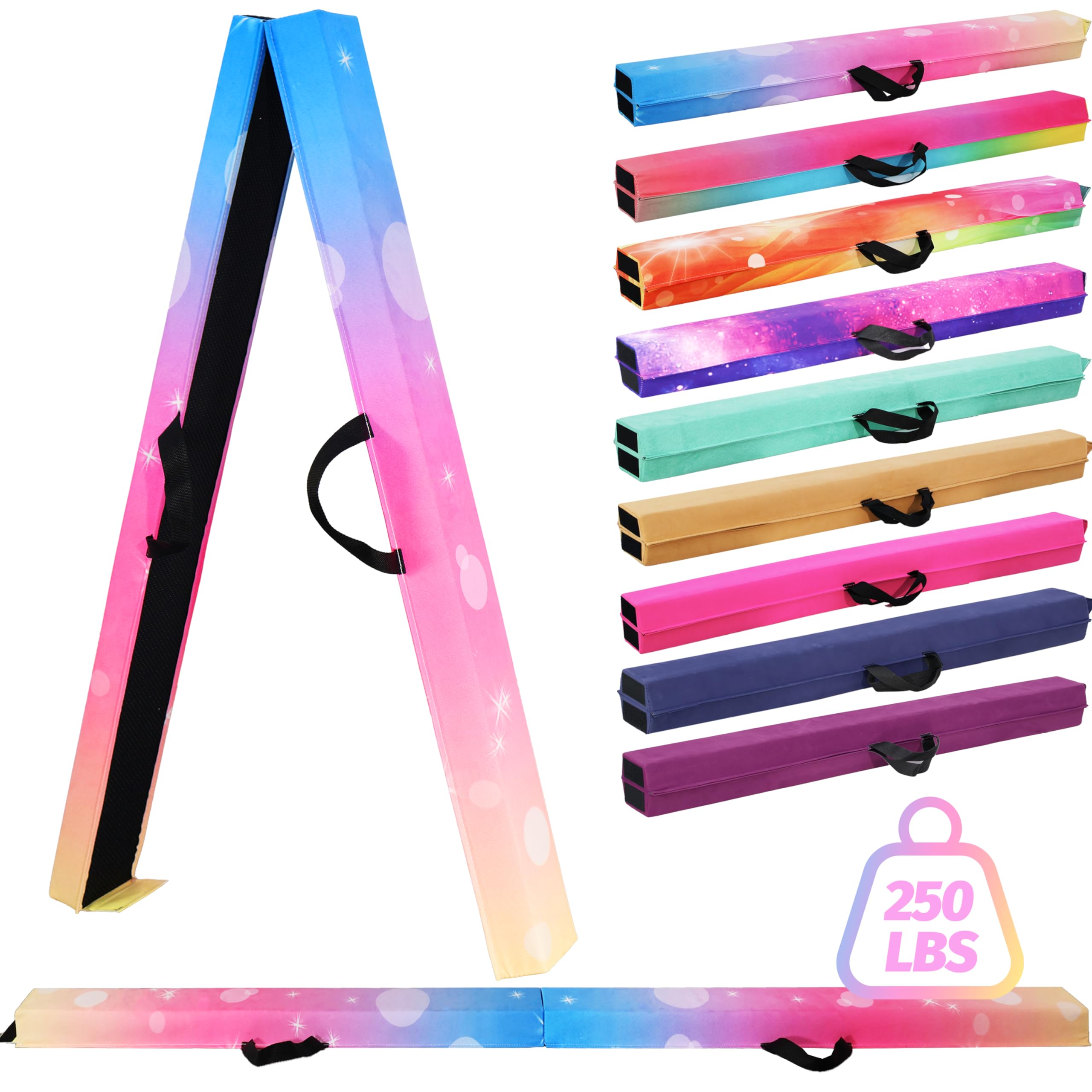


Marfula Folding Foam Beam
MARFULA Folding Foam Beam
Key Features
- Length: 6/8/9 ft
- Firmness: Extra firm EVA foam
- Portability: Lightweight, foldable, bag
- Price: Mid-Range
The MARFULA beam uses extra-firm EVA foam that maintains its shape through daily practice, avoiding the sagging common in cheaper alternatives. Three size options and a lightweight 3.4 lb design that folds into the included carry bag make it easy to store and transport. Owners consistently report the suede cover provides good grip and the anti-slip bottom holds well on hard floors.
This beam is best suited for beginners ages 3–12 practicing on hard floors — a safe, low-to-ground option for learning balance. The foam compresses enough under children over 100 lbs that stability decreases, and thick carpet can allow the beam to shift. For those needing a raised beam or heavier training, consider a wood-core alternative.
Pros
- Firm foam holds up to daily use without sagging.
- Lightweight and folds into carry bag for easy storage.
- Stable on hard floors for beginner balance training.
Cons
- Less stable for children over 100 lbs or on thick carpet.
- Not designed for raised beam use; limited to floor-level practice.
Buy this if you need a stable, portable floor beam for kids under 100 lbs on hard floors. Skip it if your child requires a raised beam or weighs over 100 lbs.
Zelus Folding Beam
ZELUS Folding Beam
Key Features
- Length: 8 ft
- Firmness: Wood core with EVA
- Portability: Foldable, 11 lbs, handles
- Price: Mid-Range
Unlike foam beams that soften under weight, the ZELUS uses a solid wood core wrapped in high-density EVA – the same feel as a competition beam. It stays firm and stable on hardwood or tile, supporting advancing gymnasts through drills and routines. The suede cover adds grip, and the folding design with carry handles makes storage manageable despite the 11-pound build. However, this beam relies on a hard surface for stability; on carpet it wobbles and loses its advantage. Best for families with hardwood floors who want a durable, regulation-like training tool for kids progressing beyond basic balance.
Pros
- Stays solid on hardwood and tile, no wobble during practice
- Wood-core construction feels like a real competition beam
- Ideal for young gymnasts transitioning from foam to regulation
Cons
- Unstable on carpet; requires hard flooring for proper use
Buy this if you want a wood-core beam that mimics competition stability for serious practice on hard floors. Skip it if your floors are carpeted or you need a lightweight portable beam.
Marfula Adjustable Balance Beam 8 Ft
MARFULA Adjustable Beam
Key Features
- Length: 8 ft
- Firmness: Wood core with suede
- Portability: Heavy, requires assembly
- Weight Capacity: 330 lbs
- Price: Premium
This beam’s height adjustability sets it apart from fixed floor beams: it can sit flush on the floor or raise up to 17 inches, accommodating beginners through more advanced practice. The steel frame supports users up to 330 lbs, making it suitable for teens and light adult practice. However, it demands a flat, level surface—on carpet or uneven floors, the higher settings can wobble. Assembly requires care, as a few units have arrived with missing or broken screws (customer service resolves it, but it’s an inconvenience). Best for families with permanent space who need a single beam that adapts as skills progress.
Pros
- Adjustable height from floor to 17 inches allows progression without buying another beam.
- Steel frame and wood construction hold up to regular practice, rated to 330 lbs.
- Assembly takes under 30 minutes with clear instructions.
Cons
- Stability decreases on carpet or uneven floors, especially at higher settings.
- Occasional missing or broken screws upon arrival require contacting support.
Buy this if you need a single adjustable beam that grows with your young gymnast and you have a level hard floor surface.
Fc Funcheer Foam Beam
FC FUNCHEER Foam Beam
Key Features
- Length: 6/9 ft
- Firmness: EVA foam
- Portability: Foldable, carry bag, ~3 lbs
- Weight Capacity: 150 lbs claimed
- Price: Budget
The FC FUNCHEER beam delivers a firm, non-sinking surface that holds up to daily use by young beginners, matching the top pick’s core performance at a lower price. It includes a carrying bag for portability and has garnered strong positive feedback for durability and balance practice. However, a small percentage of units arrive with stitching or damage issues, so inspection upon delivery is wise. This beam is best for budget-conscious families with children ages 3-8 who are just starting balance training; it is not designed for heavy practice with children over 100 lbs.
Pros
- Holds up well to daily practice for young beginners
- Provides a firm, non-sinking surface that supports balance training
Cons
- Occasional quality control issues with stitching or damage upon arrival
Buy this if you’re on a budget and have a young beginner (ages 3-8) who needs a firm foam beam for daily practice. Skip it if you need a beam for heavy training or want guaranteed defect-free delivery.
Fbsport Foam Beam
FBSPORT Foam Beam
Key Features
- Length: 6/8 ft
- Firmness: Soft EVA+EPE foam
- Portability: Ultra-light, 2.75 lbs, bag
- Weight Capacity: ~50 lbs
- Price: Mid-Range
Weighing just 2.75 lbs and folding into a compact package with a carrying bag, this beam is the most portable option in the roundup – ideal for travel or small apartments. The suede-covered foam (4-inch top width) sinks under children over 50 lbs and feels wobbly on carpet, limiting its use to toddlers and young children under 50 lbs exploring balance basics. It’s not suited for serious gymnastics practice or older kids who need firm support, but for lightweight portability it’s a practical choice.
Pros
- Lightweight at 2.75 lbs – easy for parents to carry anywhere.
- Folds compact with carrying bag – stores in a closet or car trunk.
- Portable design ideal for travel or small apartments.
Cons
- Foam too soft for children over 50 lbs – causes instability during exercises.
Buy this if you need the lightest portable beam for toddlers under 50 lbs and have limited storage. Skip it if your child is over 50 lbs or needs a firmer surface for real practice.
Oteymart Foam Beam
Oteymart Foam Beam
Key Features
- Length: 6/9 ft
- Firmness: Very soft EPE foam
- Portability: Ultra-light, 1.87 lbs, bag
- Weight Capacity: ~20 lbs
- Price: Budget
At this price, no other beam costs less, but the extreme foam softness is the trade-off. Multiple customers report the beam collapses under the weight of a 2–3 year old, so it’s limited to lightest toddlers. The foldable design stores easily, making it a cheap intro to balance for very young children. Compared to the best value budget beam in this roundup, the Oteymart gives up firmness and usability for the lowest possible entry cost. Parents seeking a real gymnastics practice beam should look elsewhere.
Pros
- Folds compactly for storage; easy to tuck away.
- Entry-level price makes it the cheapest beam option.
Cons
- Foam too soft to support children over 20 lbs; collapses under typical toddler weight.
- Only works for the lightest toddlers; useless for any real balance practice.
Buy this if you need the cheapest possible beam for a toddler under 20 lbs to take first steps on.
How to Choose
Firmness is the single most important spec, yet it’s the most misleading in product descriptions.
Length
A beam that is too short limits practice (walkovers, cartwheels) while a 9‑footer may not fit small rooms. 8 feet is the standard for home use and fits most hallways or playrooms. For toddlers just learning to walk, a 6‑foot beam is often enough.
Firmness
Foam density determines how much support the beam provides. Many budget beams use soft EPE foam that collapses under 30‑40 lbs. Look for “high‑density EVA” or wood‑core construction if your child weighs more than 50 lbs or practices jumps and handstands.
Stability on Floors
Non‑slip bottoms help on hard floors, but most foam beams wobble on carpet. Wood‑core beams with a flat base are more stable on carpet, though some still shift. A gym mat underneath improves grip for any beam.
Portability
Foam beams under 5 lbs are easy to carry to the park or store in a closet. However, lighter beams often sacrifice firmness. If you need a beam that stays in one place, a heavier wood‑core model (10–12 lbs) offers better stability for serious practice.
Weight Capacity
Manufacturer weight limits are sometimes inflated. For children over 60 lbs, choose a wood‑core beam or the thickest foam option available. Lightweight foam beams typically support only toddlers and may buckle under older kids.
FAQ
Why does my balance beam wobble on carpet?
Most foam beams rely on a flat bottom that doesn’t grip carpet fibers. Wood‑core beams with a solid base perform better, but even those can shift on thick pile. Placing a thin rubber mat or plywood sheet under the beam eliminates wobble on carpet.
How firm should a kids balance beam be for proper training?
For basic walking and balance practice, a firm foam beam (high‑density EVA) works well for kids up to 80 lbs. Once they start jumps, cartwheels, or walkovers, a wood‑core beam provides the rigid surface needed to build real skill. Foam that sinks under weight misleads the body’s balance feedback.
Can a folding foam balance beam support a 100 pound child?
Very few foam beams listed as “extra firm” actually support 100 lbs without significant sagging or instability. Wood‑core folding beams like the ZELUS or adjustable beams with steel frames are the reliable choice for children over 60 lbs. Always verify with user reviews featuring kids of that weight.
What is the best length for a home gymnastics balance beam?
8 feet is the standard for gymnastics practice—long enough for forward rolls, cartwheels, and walkovers. A 6‑foot beam is sufficient for toddlers and confined spaces. 9‑foot beams offer extra room but require a longer floor area.