This post contains affiliate links. We may earn a small commission when you buy through our links — at no extra cost to you.
The snack aisle promises a lot: whole grains, no added sugar, a full serving of fruit. What it can’t promise is that your kid will actually eat any of it, and a snack that comes home untouched in the lunchbox is neither healthy nor good value. The bar I hold these to is simple: it has to taste good enough to get finished, survive a backpack from 8 a.m. to 3 p.m., and deliver more than air and food dye. Get those three right and snack time stops being a negotiation.
Over the past four months, my team and I have eaten our way through 18 of them — in lunchboxes, in the car on the way to practice, and straight from the pantry at 4 p.m. when dinner still feels far away. One thing I’ve learned: "healthy" on a kids’ snack label is doing a lot of work, so the fine print matters as much as the front of the box. The picks below earned their spot the only way that counts — they got eaten.


Best for Toddlers and Lunchboxes
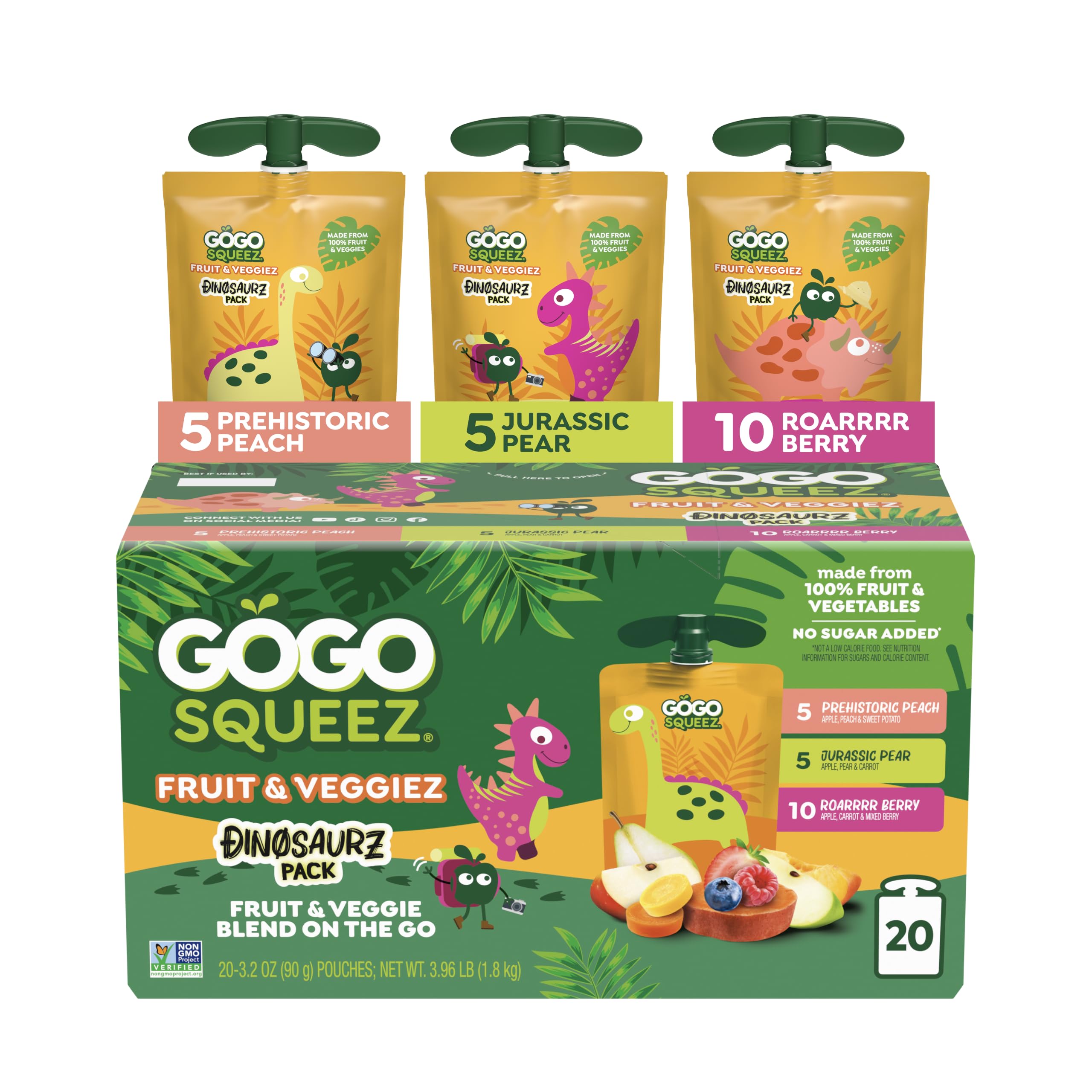
GoGo squeeZ Fruit & veggieZ
Key Features
- Dietary: Gluten-free, dairy-free, nut-free, kosher, non-GMO
- Fruit per pouch: ½ serving
- Pouches per box: 20
- Price: Budget
A snack that sits in a pantry for months, needs no cooler, and still counts as produce is a rare combination, and it is why this is the box we restock without thinking about it. Each pouch blends apples, pears, peaches, carrots and berries, with no high-fructose corn syrup, no added sugar and no artificial ingredients, and every pouch delivers half a serving of fruit.
The Jurassic names — Roarrrr Berry, Jurassic Pear, Prehistoric Peach — do more work than they get credit for. A four-year-old gets something to argue about and a reason to finish the pouch, and the spout suits small hands without a spoon or a bowl anywhere in sight. We handed these out at snack time and watched the box empty itself; the pouches also came through a bag full of water bottles, which is more than a bar manages.
What you are buying is convenience with a decent ingredient list, not a replacement for the fruit bowl. Purée loses the skin and some of the fiber of a whole apple, and a pouch is gone in under a minute — a trade we take for a snack that actually gets eaten in the back seat. Twenty to a box, and they go faster than the count suggests.
Pros
- No added sugar or artificial ingredients
- Fruit and vegetables in one pouch
- Shelf-stable until opened
- Pouch shape suits toddler hands
Cons
- Less fiber than a whole piece of fruit
Our default kids snack: real fruit and vegetables, no added sugar, and a pouch that lives in the pantry until you need it.
Best for Breakfast and Outings
Nature’s Bakery Whole Wheat Fig Bars
Key Features
- Dietary: Vegan, non-GMO, no high-fructose corn syrup
- Bar size: 1 oz each
- Twin packs: 12 (24 bars)
- Main ingredients: Whole wheat and real fruit
- Price: Budget
A one-ounce bar and a one-ounce pouch are not the same snack. Each twin pack holds two soft-baked bars, the recipe is built on whole wheat and real blueberry and fig rather than jam with a fruit picture on the front, and it is vegan and non-GMO with no high-fructose corn syrup. For a morning when breakfast got skipped, that is the difference between a snack and a stopgap.
We keep coming back to these because they do not eat like a health-food penance. They are sweet enough to register as a treat without tipping into dessert, soft with the slight grain whole wheat brings, and sturdy enough that they do not shatter in a backpack.
The twin pack is the detail we appreciate most: one wrapper, two bars, so two kids split a pack or one kid gets half before the playground and half after. The bars are dense, though, and a toddler still working on molars needs help with the chew — this is a school-age snack as much as a family one.
Pros
- Whole wheat and real fruit, not just sugar
- Two bars per wrapper for splitting
- Soft-baked and sturdy in a bag
Cons
- Some boxes arrive dry or stale
These are the bars we reach for when a pouch will not hold a kid until dinner — whole wheat, real fruit, and two bars in every wrapper.
Best for School and Parties
SkinnyPop Original Popcorn
Key Features
- Dietary: Vegan, gluten-free, kosher, non-GMO
- Bag size: 0.65 oz
- Allergens: Peanut- and tree-nut-free
- Bags per case: 30
- Price: Midrange
Classroom allergy lists have a way of striking every snack a kid actually likes. SkinnyPop clears most of them: peanut free, tree nut free, gluten free, vegan, kosher and non-GMO, in 0.65-ounce bags that are easy to hand to a teacher or drop in a lunch sack. Thirty bags to a case.
It is popcorn, and that is the whole point. Light, crisp and seasoned with salt rather than butter, so it answers the crunchy-salty urge without turning into a meal. Where it earns its place in our rotation is the party table and the after-school gap, when a bag of something plain and shareable settles a room faster than a bar does.
Freshness is the thing to manage. Popcorn goes chewy long before it goes bad, so open a bag from the middle of the case the day it lands and buy a term’s worth rather than a year’s. Kept sealed and cool, the rest holds up.
Pros
- Peanut- and tree-nut-free
- Single-serve 0.65 oz bags
- Vegan, gluten-free and non-GMO
Cons
- Light seasoning may disappoint butter-loving kids
Our answer to a nut-free classroom: light, salted popcorn in single bags, gluten-free and vegan, so it can go to school and to the party table.
Best for Picky Eaters
Annie’s Organic Snack Variety Pack
Key Features
- Pouches: 12
- Includes: Cheddar Bunnies, Bunny Grahams, Cheddar Squares
- Net weight: 11 oz
- Certification: Certified organic
- Price: Budget
Every lunchbox has a small politics to it, and a snack a kid will eat beats a worthier one that comes home untouched. Annie’s stacks the odds with three familiar shapes — Cheddar Bunnies, Cheddar Squares and Bunny Grahams — all certified organic and made without artificial flavors or synthetic colors, in 12 pouches small enough for a toddler to grip.
It covers both cravings, the cheesy-salty one and the sweet one, which is why a box lives in our pantry rather than in a cupboard we forget about. The pouches flatten into a lunch sack, the shapes are easy for small hands, and the same box works on a party table. It has also proved useful as the familiar item next to a new food, which is how a cautious eater gets through dinner.
The grahams are the sweetest of the three, worth knowing if you are counting sugar across a day, and the box works best as the dependable half of the snack drawer rather than the nutritious one. Pair a pouch with something from the fruit bowl and it does exactly what it should. It is also the box we hand a babysitter, because nobody has to negotiate with it.
Pros
- Certified organic, no synthetic colors
- Cheesy and sweet cravings in one box
- Pouches sized for toddlers and lunch sacks
Cons
- Crackers only — no fruit or vegetable
The box we trust to get eaten rather than traded: three familiar cheese and graham snacks, certified organic, in pouches sized for small hands.
Best for Chip Replacement
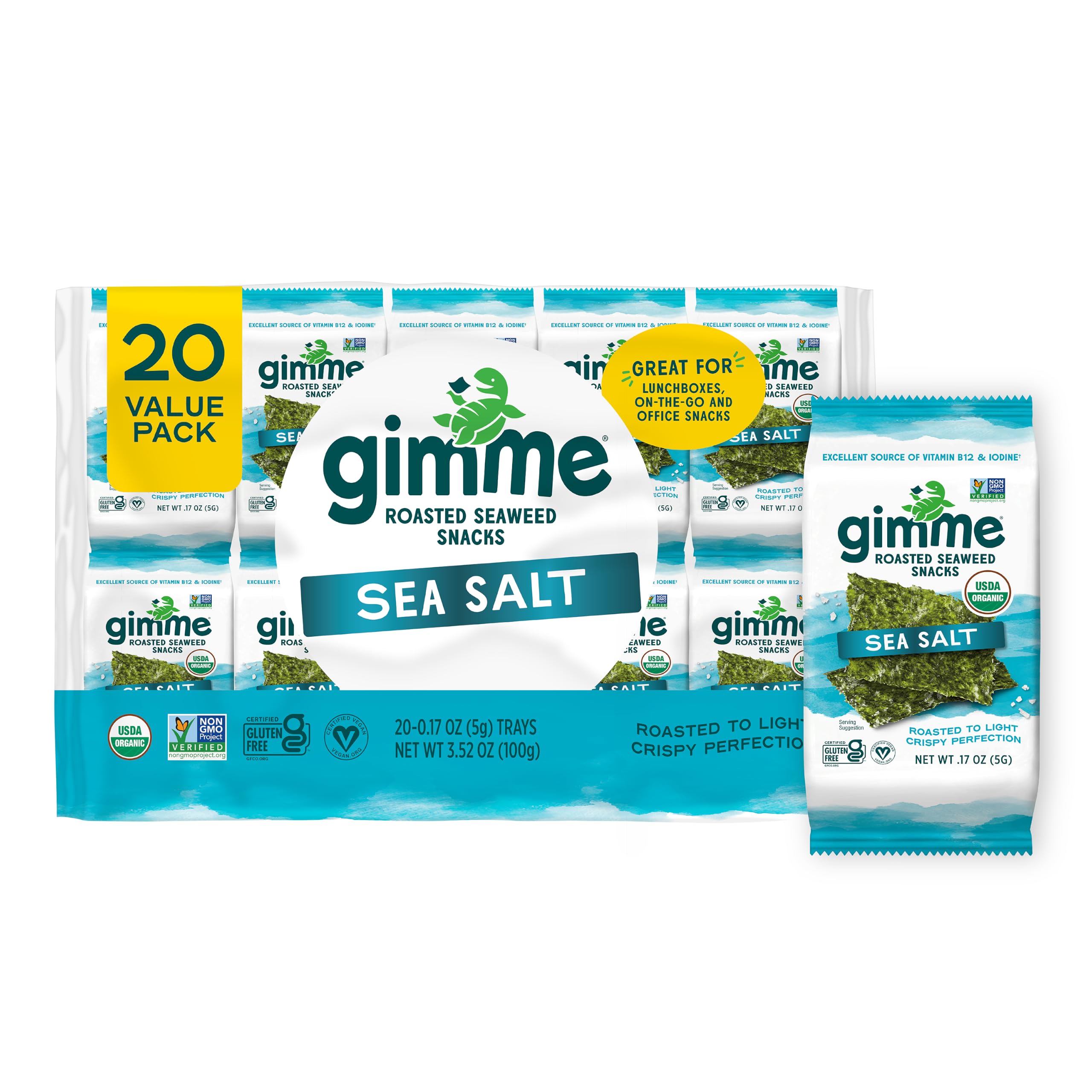
gimMe Organic Roasted Seaweed
Key Features
- Packs: 20
- Dietary: Organic, vegan, gluten-free, keto-friendly
- Calories: 30 per pack
- Pack size: 0.17 oz (5 g)
- Price: Premium
Twenty packs of organic roasted seaweed, sea salt, five grams and 30 calories apiece. Per ounce it is the most expensive thing in this lineup by a wide margin, and it is the only snack here that tastes like the sea.
Kids split hard on seaweed. Those who like it eat a pack the way they eat a bag of chips — thin, salty, crisp, gone in four bites — and those who do not will hand back the first sheet. Buy one 20-pack before committing to a case, and do not build a lunch around it until you know which kid you have.
Where it lands, nothing else here does the same job. It is a savory snack with protein, fiber, vitamins and minerals behind it rather than salt and starch alone, and the sheets crumble over rice or noodles for a kid who prefers not to eat them straight. We keep a pack in the bag for the drive home, when the request is chips and the answer needs to come close.
Pros
- 30 calories in a 5 g pack
- Savory crunch with protein and fiber
- Organic, gluten-free and vegan
Cons
- Sheets leave fingers greasy
- Crispness varies from pack to pack
The chip stand-in we hand a kid who wants something salty: 30-calorie seaweed packs with real crunch and more behind them than salt and oil.
Best for Bulk Snacking
Black Forest Stretch Island Fruit Strips

Key Features
- Strips: 48
- Flavors: 6
- Strip size: 0.5 oz
- Added sugar: 0 g
- Price: Midrange
Fruit leather is usually candy in a fruit costume. These strips differ where it counts: zero grams of added sugar, fruit purée and juice concentrates doing the sweetening, colors and flavors from real sources, and a gram of fiber. Forty-eight half-ounce strips across six flavors — cherry, apple, raspberry, grape, strawberry and apricot.
Individually wrapped and pocket-sized, they are the snack that lives in a backpack pocket or the bottom of a stroller basket without complaining, and six flavors in one box means nobody is bored by week three. Cherry and grape went first in ours.
School-age kids are the right audience here; a toddler is better served by a pouch and its easier texture. The 48-count box is a commitment, so split it with another family if your kids are fickle about flavors, and keep the strips sealed and cool so they do not dry out further.
Pros
- Zero grams of added sugar
- 48 wrapped strips across six flavors
- Colors and flavors from real sources
Cons
- Texture swings from soft to hard and grainy
- Strips run small for older kids
We buy these for the zero grams of added sugar and the six-flavor box — the better fruit-leather pick, provided your kid is happy with a chewier strip.
How We Chose and Tested the Best Healthy Snacks for Kids
We built the shortlist from the back of the box, not the front. Anything with a long added-sugar number, a paragraph of ingredients, or a habit of being sold in bulk bags that go stale before they’re finished got cut early. We also weighed cost per snack against how much actually gets eaten, since a giant box is no bargain if half of it comes home. That left 18 snacks that were widely available, reasonably priced per serving, and built on ingredients a parent can recognize.
For four months, those 18 lived where snacks actually live: packed into lunchboxes at 6:45 in the morning, stuffed into backpacks, rattled around in the car on the way to practice, and pulled from the pantry at 4 p.m. while dinner was still an hour off. A rotating panel of kids from 4 to 11 did the eating, and I logged what came back. Freshness got its own test — one of each snack sat in an open bag on the counter for a week, and another was packed beside a chilled juice box to see whether it went soft or soggy by lunch.
Texture and size mattered more than I expected. I noted whether a bar shattered into crumbs in a backpack, whether a cracker needed two hands, and whether a kindergartner could finish a piece in a normal number of bites. For chewiness, we watched how long a bite took to clear and whether anything ended up scraped off molars. For oiliness, each snack spent a minute pressed between paper towels — the ring it left told the story — and then went into real hands, because greasy fingerprints on a car seat count against a snack. Portion size and portability we judged by whether one package was a snack or quietly two, whether it fit a lunchbox compartment without getting crushed, and how many came home half-eaten.
How to Choose Healthy Snacks for Kids
The front of a snack box tells you what it wants to be; the nutrition panel and the ingredient list tell you what it actually is, and that is where we start.
Read the sugar line, not the fruit picture
Fruit snacks get their sweetness from somewhere, and the panel is where you find out whether it comes from the fruit or from something added. ‘No added sugar’ and ‘no sugar’ are different promises: a strip sweetened with juice concentrate can carry zero added sugar and still be concentrated sweetness, while a whole-wheat fig bar with a little sweetness is simply a bigger snack.
Compare grams of added sugars per pouch or bar rather than per 100 grams, because nobody eats 100 grams. Then check what is doing the work — real purée, whole grain, seaweed, popcorn — and whether the colors and flavors are ones you want in a lunchbox. Our picks run from zero added sugar to lightly sweet, so decide where your household’s line sits before you buy a case.
Match the format to the moment
A snack that fails is usually the right food in the wrong package. Pouches win in the car and the diaper bag because they are shelf-stable and need no hands or bowl; a soft-baked bar is what bridges a skipped breakfast to lunch; a single-serve popcorn bag is what you send to a classroom party; strips and seaweed packs are pocket food that survives being sat on.
We buy two formats rather than five: one that lives in the bag and one that lives in the pantry. A big resealable bag is cheaper per ounce, but a kid holding an open bag does not portion, and half of it ends up at the bottom of the stroller.
Allergen lists beat marketing every time
Before a box goes into a lunch sack, the classroom policy decides more than any claim on the front. Nut-free rules are the common one and they eliminate most snack bars; gluten-free and dye-free requests turn up too. Peanut- and tree-nut-free popcorn, fruit pouches and seaweed clear those rules most easily, and a bar built on whole wheat and fruit is simpler to approve than anything with a coating.
Read the facility line as well as the allergen row. A snack can contain none of an ingredient and still be packed somewhere that handles it, and that is the sentence a teacher will look for.
Buy the case, but taste it when it lands
Bulk boxes bring the cost per snack down and the risk up: the bigger the case, the longer it sits in storage and the more likely a few bags arrive past their best. Popcorn is the most fragile, seaweed loses its snap, bars dry out, and pouches get crushed in transit.
Open a bag from the middle of the case the day it arrives, store the rest sealed and cool, and buy a term’s worth rather than a year’s. Value is only value if the last bag tastes like the first.
Frequently Asked Questions
Do fruit pouches count as a serving of fruit?
Partly. Our top pick delivers half a serving of fruit per pouch, but purée loses the skin and some of the fiber of a whole apple, and it gives a child no practice at chewing. Treat one pouch as one snack that travels well and keep whole fruit for the table — not as a straight swap for the fruit bowl.
Is popcorn safe for toddlers?
Whole-kernel popcorn is a well-known choking hazard for children under about four, so it is a snack for older kids and adults. For toddlers, pack a fruit or vegetable pouch, a soft-baked bar torn into pieces, or another snack that dissolves or mashes. For a mixed-age group, send the popcorn for the big kids and something softer for the little ones.
Do these snacks need to be refrigerated?
No — every pick here is shelf-stable in the pantry. The pouches stay that way until opened, so chill whatever is left of an unfinished one. Bars, strips and popcorn keep best sealed in a cool, dry cupboard, and heat is the enemy: a hot car turns a soft bar sticky and takes the snap out of seaweed.
Final Verdict
If we are packing one snack tomorrow morning, it is the GoGo squeeZ fruit and veggie pouches: real produce, no added sugar, and a package that survives a backpack, a car seat and a picky week. When the gap between meals is longer, the whole-wheat fig bars carry more weight, and when the classroom is nut-free, SkinnyPop is the case to buy.
The rest of the list is specialist work — the seaweed for a kid who wants something salty, the fruit strips for one who wants something to chew on the bus. Start with the box that covers the most mornings.
