This post contains affiliate links. We may earn a small commission when you buy through our links — at no extra cost to you.
Somewhere around the second trimester, calcium turns into a real conversation. Prenatal vitamins are bulky, so most carry only a token amount of calcium, and the bottles your OB points you toward tend to hold pills the size of a small boat.
The form matters as much as the number on the label. Citrate dissolves fine on an empty stomach and sits easier if heartburn has become your baseline; carbonate needs a meal but usually costs less. Your body absorbs only so much at a time — around 500 milligrams — so a tablet you can split or a chewable you take twice a day beats one giant dose. It’s also worth taking calcium well away from the iron in your prenatal.
We spent four months with 14 calcium supplements — tablets, capsules, softgels, gummies, and chews — judging what actually decides whether a bottle gets finished: taste, quality, ease of use, calcium content, and value. The picks below are the ones I’d hand to a friend texting me from the pharmacy aisle.



Best for Gentle Daily Calcium
Citracal Petites Calcium Citrate
Key Features
- Form: Calcium citrate
- Count: 375 caplets
- Calcium per serving: 400 mg
- Vitamin D3 per serving: 500 IU
- Price: Midrange
Pregnancy can turn a simple pill schedule into a negotiation with nausea, meals, and the clock. Citracal Petites starts with an advantage there: it uses calcium citrate, which can be taken with or without food. That matters when breakfast is a cracker at 10 a.m. or when a prenatal already has your stomach feeling delicate. The caplet is coated and marketed as smaller than Citracal Maximum Plus, and each serving provides 400 mg calcium with 500 IU vitamin D3.
The 400 mg serving is the part we like most. It lets you add calcium in smaller increments instead of taking one large dose and hoping it fits your total. If your clinician wants you around 1,000 mg from food and supplements combined, a 400 mg serving is easier to slide in than a 1,200 mg product. You can take one serving with a meal and another later if needed, which is a more flexible way to build a daily routine.
The trade-off is pill count. A 400 mg serving may mean more than one caplet, and reaching a higher supplemental target can take several servings a day. That is the price of flexibility: you get smaller increments, but you may be opening the bottle more often. If you want a one-and-done tablet, a 600 mg product is simpler.
What keeps this at the top is the combination of citrate and a coated caplet. Calcium carbonate is cheaper and more compact, but it needs food; citrate gives you more room to work around a queasy stomach and an unpredictable day. The vitamin D3 is already there, so you are not adding a second bottle just to help absorption. The formula is simple, which is what we want when the rest of the prenatal stack is already complicated.
For most pregnant readers adding a standalone calcium supplement, this is the one we recommend first. It is not a prenatal replacement, and it does not erase the need to check your total calcium with your OB or midwife. But as a flexible, gentle-on-the-stomach default, it earns the top spot in this group.
Pros
- Can be taken with or without food
- Coated caplet is smaller than Citracal Maximum
- 400 mg serving lets you split the dose
- Includes 500 IU vitamin D3
Cons
- Not truly petite for every swallower
Our top pick for most pregnant readers: a coated calcium citrate caplet with 400 mg calcium and vitamin D3 per serving, taken with or without food.
Best for Usp-Verified Basics
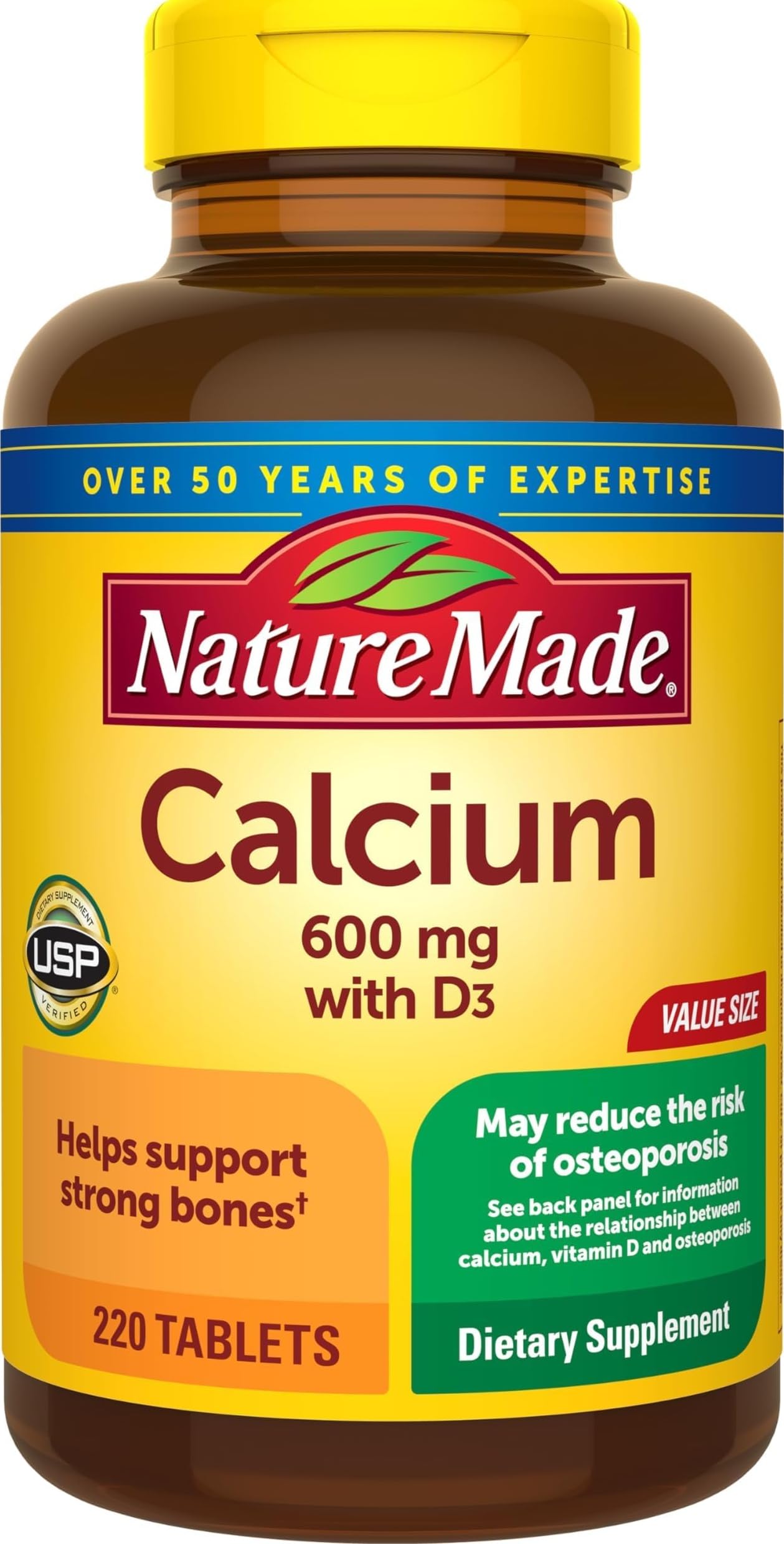
Nature Made Calcium 600 + D3
Key Features
- Count: 220 tablets
- Vitamin D3: Included
- Verification: USP Verified
- Calcium per tablet: 600 mg
- Price: Budget
USP verification is the detail that makes Nature Made Calcium 600 + D3 the tablet we trust most in this group. The 600 mg dose is easy to pair with a prenatal and diet, and the bottle is a straightforward, affordable way to add calcium and vitamin D3. That third-party check matters more to us than a fancy formula when the goal is a simple daily supplement.
The catch is food timing. This is calcium carbonate, so it needs a meal to dissolve well. If morning sickness hits before breakfast, that is a real scheduling issue, and it is the main reason we do not make it the top pick for every reader. A cracker or a piece of toast is enough to satisfy the instruction, but it is still a step you have to plan around.
Where it wins is value and transparency: 220 tablets, a clear 600 mg dose, and USP verification. Compared with Citracal Petites, it is less flexible on food timing, but it is the simpler choice if one tablet with a meal fits your day. For a reader who wants a no-nonsense calcium with D3 and can swallow a standard calcium tablet, it is an easy recommendation. That combination of price, dose, and verification is hard to beat for a basic tablet.
Pros
- USP-verified quality check
- 600 mg calcium with vitamin D3
- Affordable 220-tablet bottle
Cons
- Large tablet is hard for pill-averse readers
A USP-verified 600 mg calcium tablet with vitamin D3 for readers who want a simple, affordable daily supplement and can handle a large pill.
Best for Easy-To-Swallow Softgels
Nature’s Bounty Calcium 1200 Softgels
Key Features
- Form: Softgel
- Count: 120 softgels
- Calcium per serving: 1200 mg
- Vitamin D3 per serving: 1000 IU
- Price: Midrange
If the tablet is the obstacle, the softgel is the workaround. Nature’s Bounty Calcium 1200 packs 1200 mg calcium and 1000 IU vitamin D3 into a two-softgel serving, and the softgel goes down with less friction than a dense calcium tablet. That makes it a useful option for readers who have already discovered that big chalky pills are not happening.
The formula is simple: calcium and vitamin D3, no magnesium or zinc to complicate the math. We like that for a reader who wants one bottle and a clear serving. The serving is two softgels, not one, so it is not a one-pill habit. Check the bottle against your total intake before you buy. Our pick for a softgel is this one, because the format is the point.
For a reader whose clinician has okayed this dose, or who wants one serving a day and is not getting much calcium elsewhere, it is the easiest swallow in the group. For most pregnant readers starting from scratch, we still point to a lower-dose citrate or a 600 mg tablet first. The softgel is the appeal; the serving size is the trade-off.
Pros
- Softgel is easier to swallow than a tablet
- 1200 mg calcium and 1000 IU D3 per serving
- Simple calcium-and-D3 formula
Cons
- High 1200 mg serving may exceed some totals
- Serving is two softgels
A high-dose calcium and vitamin D3 softgel for readers who want an easy-to-swallow serving and have confirmed the 1200 mg dose fits their total intake.
Best for Pill-Free Routine
Vitafusion Calcium Gummies
Key Features
- Form: Gummy
- Count: 100 gummies
- Vitamin D3: Included
- Calcium per serving: 500 mg
- Price: Midrange
The gummy is not the most serious-looking supplement in the group, but it is the one that gets taken. Vitafusion Calcium Gummies deliver 500 mg calcium and vitamin D3 per two-gummy serving, and the fruit-and-cream flavor makes a daily calcium dose feel less like a chore. For a reader whose prenatal routine already feels like a handful of pills, that matters.
The texture can go either way: soft and pleasant for one person, chalkier for the next. The sugar coating is the bigger issue for us. It is not a reason to rule the product out, but it is a reason to read the label and decide whether the carbohydrate load fits your day, especially if you are watching sugar intake during pregnancy.
Our take is that the format earns its place for the right reader. You need two gummies for the 500 mg serving, so a higher target means more chews, but that is the trade-off for a dose you will actually take. If you want one pill and a fixed number, a tablet or softgel is more efficient; if pills are the barrier, this is a practical solution.
What we keep coming back to is the adherence story. A supplement you actually take beats a stronger tablet that sits in the cabinet. It is a good fit for pill-averse readers, as long as the 500 mg serving and the sugar fit their plan. We keep it in the roundup for the reader who has already tried tablets and knows they need a different format.
Pros
- Easy to chew and swallow
- 500 mg calcium and D3 per serving
- Taste makes the routine easier
Cons
- Sugar coating adds carbohydrate
- Two gummies per serving
A tasty, easy-to-chew 500 mg calcium gummy with vitamin D3 for pill-averse readers who will actually keep up the routine.
Best for Chocolate Chew
Viactiv Calcium Chews
Key Features
- Form: Soft chew
- Count: 60 chews
- Sugar per serving: 0.04 oz
- Calcium per serving: 650 mg
- Price: Premium
A chocolate chew that delivers calcium sounds like a dessert workaround, and that is exactly why it earns a spot. Viactiv packs 650 mg calcium plus vitamins D and K into two soft chews, with 1 gram of sugar per serving. For anyone who has gagged on a calcium tablet, the format is the whole point.
We like that the chews are individually wrapped, so they can go in a bag or a desk drawer without a pill bottle. The chocolate flavor is pleasant enough that it does not feel like medicine, and the low sugar number is a real advantage over sugary gummies.
The serving is two chews, so it is not a one-and-done dose. It is also not a high-dose supplement, which means it works best alongside diet and a prenatal rather than as the only calcium source. That is easy to plan around if you are already taking a prenatal and just need a top-off.
For a reader who wants a chew and will not tolerate pills, this is the best-tasting option here. It earns a spot as the chew in this group, not as the highest-dose calcium source. The format is the reason to buy, and the low sugar number makes it easier to fit a daily routine.
Pros
- Chocolate flavor feels like a treat
- Only 1 g sugar per serving
- Individually wrapped for travel
Cons
- Chews can stick to the wrapper
- Serving is two chews
A chocolate soft chew with 650 mg calcium and vitamins D and K for readers who want a low-sugar, pill-free daily option.
Best for Plant-Based Option
Garden of Life Raw Calcium
Key Features
- Count: 120 capsules
- Vitamins: D3 and K2
- Calcium per serving: 1100 mg
- Magnesium per serving: 357 mg
- Price: Premium
Plant-based calcium is a small niche, and this is the most complete version of it in the group. Garden of Life Vitamin Code Raw Calcium uses algae-derived calcium, with 1100 mg calcium and 357 mg magnesium per serving, plus vitamins D3 and K2 and probiotics. For a reader who wants a whole-food, non-GMO option and is willing to take four capsules, it is the one to look at.
The formula is busy: magnesium, K2, probiotics, and a blend of cofactors. That is appealing if you want an all-in-one bone-support formula, but it is more than some readers need alongside a prenatal. We recommend it for the reader who has already decided on a plant-based supplement and wants the extras. The four-capsule serving is the practical hurdle, and it is the first thing to weigh against the convenience of a single tablet.
If you just need calcium and vitamin D, a simpler tablet or citrate capsule asks less of your routine. The Garden of Life is the plant-based choice in this group, and it earns its place for that specific buyer. The capsules can also be opened and mixed with water or juice, which is useful if swallowing is the issue. It is not the default for most pregnant readers, but it is a strong option for the right one.
Pros
- Plant-based algae calcium
- 1100 mg calcium and 357 mg magnesium per serving
- Includes D3, K2, and probiotics
Cons
- Four-capsule serving
- Premium price
A plant-based, algae-calcium capsule with magnesium, D3, K2, and probiotics for readers who want a whole-food formula and do not mind four capsules daily.
Best for Premium Citrate Capsules
Pure Encapsulations Calcium Citrate
Key Features
- Form: Capsule
- Count: 180 capsules
- Free from: Common allergens and GMOs
- Calcium form: Citrate
- Price: Premium
Capsules are the quiet luxury of the calcium aisle: no chalk, no giant tablet, no flavor. Pure Encapsulations Calcium (Citrate) is the premium version of that idea, a calcium citrate capsule in a 180-count bottle. For a reader who wants a simple citrate supplement and prefers capsules to tablets, it is a clean fit.
The formula is deliberately bare, and we think that is the right call for a custom stack. It is calcium citrate and nothing else, so you need to get vitamin D from your prenatal or another supplement. The capsule count is generous, and the brand’s purity standards are the selling point. For a reader who wants a simple citrate capsule, this is the premium way to do it.
The premium price is the main trade-off. You are paying for the capsule format and the brand’s standards, not for extras. If you want one-and-done, Citracal Petites or Nature Made 600 is easier.
One practical note: the calcium amount per capsule is not on the front of the label, so check the bottle before you set your daily target. That is not a dealbreaker, but it matters when you are counting total calcium against a prenatal. For the right reader, the simplicity is worth the premium.
Pros
- Calcium citrate in a capsule
- Simple formula for custom stacks
- 180 capsules per bottle
Cons
- No vitamin D included
- Premium price
A premium calcium citrate capsule for readers who prefer capsules, already have vitamin D covered, and want a simple, focused supplement.
Best for Calcium Plus Minerals
Nature Made Calcium Magnesium Zinc

Key Features
- Count: 300 tablets
- Minerals: Calcium, magnesium, zinc
- Vitamin D3: Included
- Verification: USP Verified
- Price: Budget
Sometimes you want calcium to bring friends. Nature Made Calcium Magnesium Zinc with D3 combines three minerals and vitamin D in one tablet, with USP verification and a 300-count bottle. For a reader whose clinician has okayed magnesium and zinc in addition to calcium, it simplifies the daily stack.
The convenience is real: one tablet up to three times daily, with a formula that covers calcium, magnesium, and zinc. We like it for someone who has been told to get all three and does not want three separate bottles. The trade-off is flexibility. You cannot adjust the calcium without also adjusting the magnesium and zinc, and that is the main reason we do not make it the default for every pregnant reader.
For the right reader, the USP mark is the deciding detail. It is the version of a calcium-magnesium-zinc combo we trust most in this group, and it earns a place for convenience. It is not our first pick for a straightforward calcium supplement, but it is a strong choice when a clinician has recommended all three minerals.
If your prenatal already has magnesium or zinc, check the totals before adding this one. The combination is only convenient when the extra minerals are part of the plan rather than an afterthought. It is not a product to stack blindly.
Pros
- Combines calcium, magnesium, and zinc
- USP-verified
- 300 tablets per bottle
Cons
- Large tablet
A USP-verified calcium, magnesium, and zinc tablet for readers whose clinician has recommended all three minerals and who want one simplified daily supplement.
Best for Budget Tablet
Nature’s Bounty Calcium 600 + D3

Key Features
- Form: Tablet
- Count: 250 tablets
- Calcium: 600 mg
- Vitamin D3: 800 IU
- Price: Budget
This is the value play: a simple 600 mg calcium tablet with 800 IU vitamin D3 at a budget price. Nature’s Bounty Calcium Carbonate & Vitamin D gives you 250 tablets, a straightforward dose, and a brand that has been around long enough to feel familiar. For a reader who wants to spend less and does not need a fancy format, it is an easy add to the cart.
The catch is food timing. This is calcium carbonate, so it needs a meal. If morning sickness hits before breakfast, that is a real scheduling issue. A piece of toast or a morning snack is enough to satisfy the instruction, but it is still a step you have to plan around.
The dose is sensible, though. One tablet gives 600 mg calcium and 800 IU vitamin D3, which is a practical amount to pair with a prenatal and diet. You are not locked into a high-dose serving or a complicated combo. For a reader who can swallow the tablet, the simplicity is the appeal.
For the reader who can handle the tablet and wants a no-frills backup bottle, this is a solid budget choice. If you need a gentler format, Citracal Petites or a softgel is easier; this one is about value, not comfort. It earns a place as the budget tablet in this group, not as the default for every pregnancy.
Pros
- Budget-friendly 250-tablet bottle
- 600 mg calcium with 800 IU D3
- Simple one-tablet dose
Cons
- Large tablet is hard to swallow
A budget-friendly 600 mg calcium tablet with vitamin D3 for readers who can handle a large pill and want a simple, low-cost daily supplement.
How We Chose and Tested Calcium Supplements for Pregnancy
Before anything went into our mouths, we read a lot of labels: how much elemental calcium each serving delivers, whether the source was citrate or carbonate, which co-factors came along (D3 in nearly all of them, K2 or magnesium in a handful), how many pills make a full serving, grams of added sugar, whether the label carried a third-party testing seal, and cost per serving rather than per bottle. That narrowed the field to 14, tested over four months.
The bottles lived where they would in real life: on the kitchen counter beside the prenatal vitamins, in a bedside drawer, and in a tote bag for mornings that start before dawn. Testers took their supplement daily for at least two weeks each — some before pregnancy, some in the second or third trimester, some while nursing. Chewables and gummies got chewed at the table and rated for chalkiness, lingering aftertaste, and whether they clung to molars; we read sugar grams straight off the panel. Every tablet and capsule was measured against a pencil eraser, swallowed with a four-ounce sip, and checked for scratching, lodging, or coming back up.
No at-home test can read your blood levels, so we judged what the label and the dosing schedule would let your body use: citrate (fine on an empty stomach) versus carbonate (needs food), a serving split into two smaller doses versus one 600 mg wallop, and vitamin D included for absorption. Doses were also timed against the iron in a prenatal vitamin, and we counted how much hassle each bottle made of that spacing.
Ease of use came down to small things — a scored tablet that splits cleanly, a softgel that goes down without water, a cap we could manage one-handed. For value, we divided cost by the number of full servings, not the count on the bottle. The ones that made the list are the ones testers were still reaching for in week three, after the novelty wore off.
How to Choose a Calcium Supplement for Pregnancy
The first decision is not the brand; it is how much calcium you actually need to add after your prenatal and diet are counted.
Citrate or Carbonate?
Calcium citrate can be taken with or without food, which is why we point to it for anyone whose mornings are unpredictable or who has felt queasy taking pills on an empty stomach. Calcium carbonate is usually cheaper and more compact, but it needs a meal to dissolve well. If you eat regularly and tolerate tablets, carbonate is fine; if food timing is a struggle, citrate is the gentler default. Citracal Petites is the citrate option we recommend first for that reason.
Read the Serving Size, Not Just the Front Label
Front labels shout the calcium number, but the serving size tells you what it takes to get there. A 400 mg serving may mean two caplets; a 600 mg tablet is one pill. Absorption is generally better when calcium is spread across smaller doses rather than taken all at once, so a product with flexible servings can be easier to fit around meals. Check how many pills a day your target requires, then compare the bottle count. That math matters more than the headline milligram number.
Choose a Format You Will Actually Take
Pill size is the most common practical complaint in this category, and pregnancy can make a big tablet feel even bigger. If swallowing is hard, a softgel, chew, or gummy can keep the routine going. Softgels are the easiest swallow; chews and gummies are the most enjoyable but may add sugar or stick to the wrapper. We like Viactiv for a low-sugar chew and Vitafusion for a gummy, as long as the serving size fits your calcium target.
Check the Rest of Your Stack
Calcium is only one part of the prenatal picture. Many prenatal vitamins already contain calcium and vitamin D, and added magnesium or zinc in a combo supplement can push you past what you need. We prefer a simple calcium plus D3 product unless your clinician has recommended a combo. Read every label in your stack, add up the calcium, and ask your OB or midwife before adding a standalone supplement. That conversation is more useful than any single bottle’s marketing.
Look for Verification and Compare Cost per Serving
USP verification is the easiest quality signal to spot; Nature Made’s 600 mg tablet and calcium-magnesium-zinc formula both carry it. It is not the only mark that matters, but it tells you the product has been checked for identity, potency, and manufacturing. Then compare cost per serving, not just the bottle price: a 400 mg citrate serving and a 600 mg tablet are not the same dose. A bigger bottle is only a better value if you will take the serving it requires.
Frequently Asked Questions
Can I take calcium with my iron supplement?
Calcium and iron can compete for absorption, so many clinicians suggest separating them by a couple of hours. If your prenatal contains iron, ask your OB or midwife how to time your calcium dose. Do not skip your prenatal or double up on calcium to make up for it; a simple schedule change is usually the better fix.
Can I split or crush a calcium tablet?
Some tablets are scored and can be split, but do not crush slow-release or extended-release tablets. If swallowing is the issue, a smaller citrate caplet, softgel, chew, or gummy is a better solution than forcing a tablet. Check the label for splitting instructions, and ask your pharmacist if you are unsure.
What if I miss a calcium dose?
Take it when you remember unless it is almost time for the next dose, then skip the missed one. Do not double up. If you miss doses often, a once-daily product or a format you enjoy may fit your routine better. The best supplement is the one you actually take consistently.
Final Verdict
Citracal Petites is the calcium supplement we recommend first for most pregnant readers because it pairs calcium citrate with a coating that is easier to swallow than a big carbonate tablet, and it can be taken with or without food. The 400 mg serving is flexible, though you may need more than one serving to hit your target. If you want a USP-verified single tablet and can handle a larger pill, Nature Made Calcium 600 + D3 is the simpler, lower-cost alternative. For a pill-free routine, Viactiv is the chew we reach for.
