This post contains affiliate links. We may earn a small commission when you buy through our links — at no extra cost to you.
It’s 2 a.m., the baby is finally latched, and you’re one-handed rummaging through a tote trying to find a bottle that isn’t buried under a laptop charger. Most of us start with whatever bag the pump came with, then spend months wedging cold packs, flanges, and a spare shirt into something that never quite zips. A good breast pump bag solves exactly that: it keeps milk cold for a full shift, holds the pump and bottles upright instead of sideways, and looks enough like a normal bag that you’ll carry it into a meeting without apologizing for it.
Over eight months I packed 12 of these bags for workdays, overnight feeds, and a couple of road trips, and the lesson that stuck is that the liter count on the hangtag tells you almost nothing. What matters is the interior layout — whether the cooler pocket has a real wall between it and your laptop, whether the bottles stand up on their own, whether you can reach the wipes without unpacking the whole thing. The picks below cover the different ways people pump; the right one for you depends on how much gear you leave the house with.




Best for All-In-One Pumping
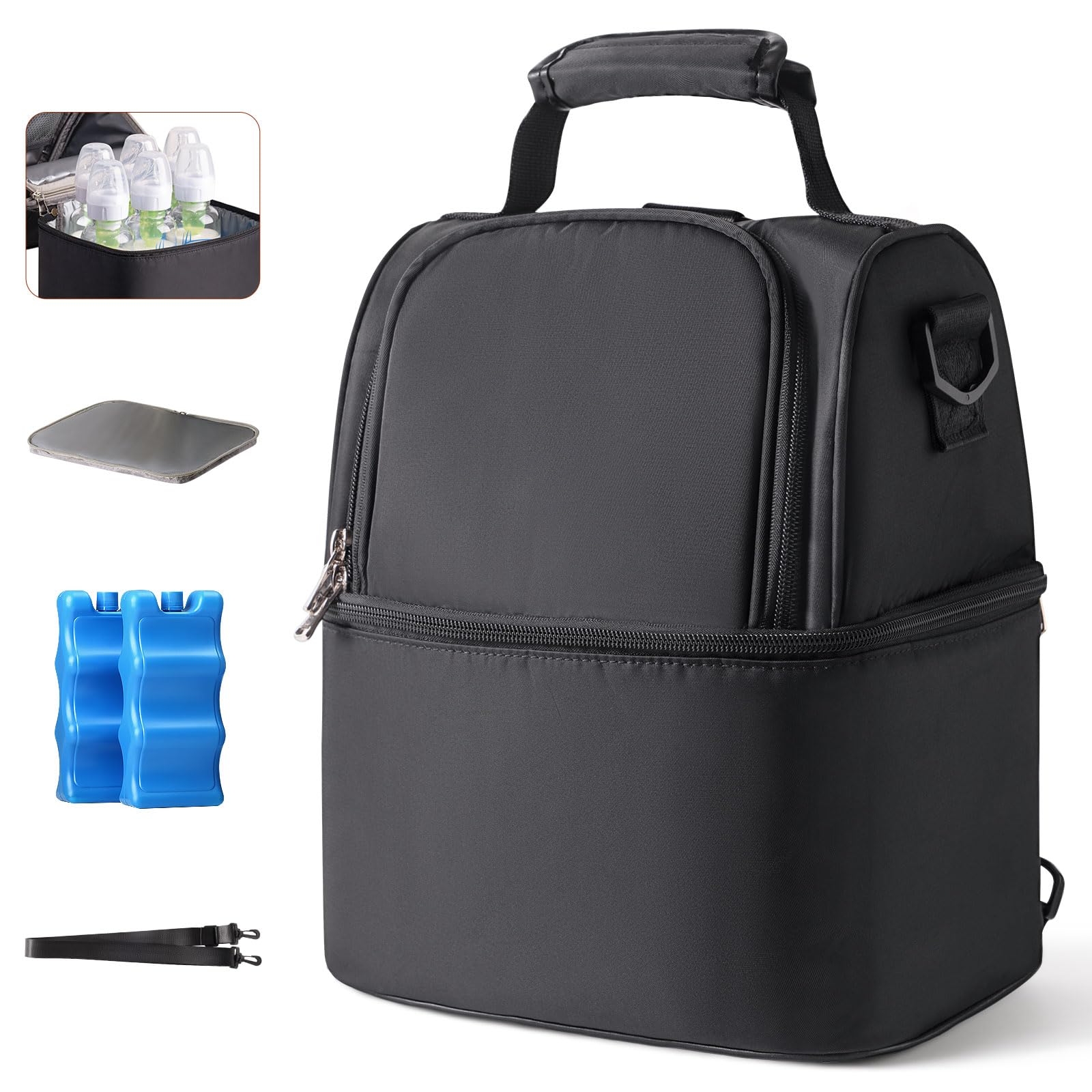
NCVI Breast Pump Backpack
Key Features
- Pump fit: Spectra and Medela
- Carry options: Backpack, shoulder, hand
- Main compartment: Removable divider
- Included ice packs: 2
- Price: Midrange
The removable middle divider is the detail that makes the NCVI more than a cooler with straps. It lets you split the bag into a pump-and-parts zone up top and a bottle zone below, or pull the divider out when you need one deep compartment for a long day. Two ice packs are included, and the PEVA lining wipes clean after a leak. At 9 by 7 by 11 inches and 0.35 kg, it is compact for a backpack, but the layout is thoughtful enough to carry a full pump setup.
The flexibility is what sells it. The backpack straps make a loaded bag easier on the shoulders, and the stroller hang gives it a second life on walks. We also like that the divider comes out, so the bag can shift from a workday setup to a daycare drop without becoming two separate bags. It is not the roomiest option here, but it is the most adaptable one, and that is why it earns the top spot.
A full-size Spectra or Medela and a day’s bottles are the use case it handles best. Wearable-pump users can go smaller, and anyone packing a laptop and lunch may prefer the mommore tote. The NCVI’s advantage is that it keeps the pump and the milk in separate zones without making you carry two bags.
Pros
- Two carry styles plus stroller hang
- Removable divider adapts the main space
- Two ice packs included for milk transport
- Fits Spectra and Medela pumps
Cons
- Zipper can jam or bind
The NCVI is the one we recommend first overall: it carries a full-size pump, bottles, and ice packs in one backpack and adapts when your day changes.
Best for Workday Tote
mommore Breast Pump Tote
Key Features
- Weight: 1.78 lb
- Pump fit: Spectra S1 and S2
- Dimensions: 15.75 x 11.81 x 7.87 in
- Carry style: Tote
- Price: Premium
The mommore tote is the bag that doesn’t announce itself as a pump bag. From the outside it reads like a roomy work tote, with a side compartment that swallows a Spectra S1 or S2 and enough pockets inside for flanges, bottles, a wallet, and a laptop. That disguise is the point: we like it for an office where you don’t want to carry a second bag or explain the backpack. It is the most discreet option here.
At 15.75 by 11.81 by 7.87 inches, it is the roomiest bag here, and the 1.78-pound weight is reasonable for the size. The insulated pockets are a useful touch for the trip home, though this is not a full cooler bag with a dedicated ice-pack compartment. The inside is soft and unstructured, which keeps the bag from feeling boxy.
Compared with the NCVI, the mommore is less of a cooler and more of a work bag. The side compartment keeps the pump upright, and the main space is wide enough for a laptop and a lunch. The soft body is the price of a tote that can fold behind a desk chair; it slouches when set down, so it is not the bag to choose if you want it to stand upright on its own. That is a fair trade for a bag that slips under a desk at the end of the day.
Pros
- Looks like a normal work tote
- Side compartment fits Spectra S1/S2
- Room for pump, laptop, and daily items
- Insulated pockets for the trip home
Cons
- Seams and zippers can fail with use
The mommore is our workday tote pick, and the reason is simple: it fits a Spectra and a laptop without looking like a pump bag.
Best for Organized Pump Gear
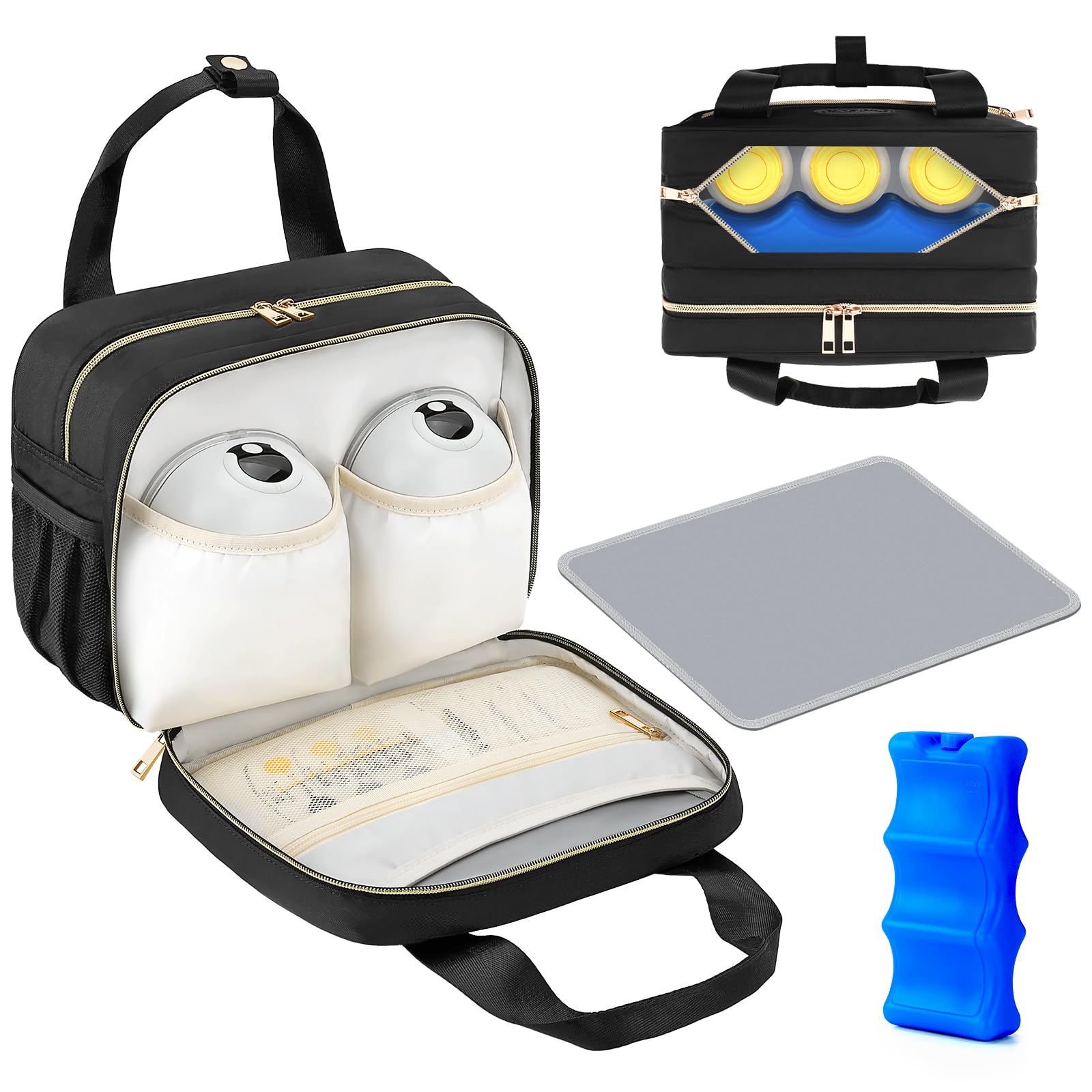
GDNasist Pump Carrying Case
Key Features
- Pockets: 7 plus main compartment
- Pump fit: Spectra S1 and S2
- Included mat: Waterproof pad
- Carry options: Hand, shoulder, crossbody
- Price: Midrange
Seven pockets and a removable partition make the GDNasist feel more organized than its simple lunchbox shape suggests. The main compartment takes a Spectra S1 or S2 with room for three bottles, and the front mesh pocket and elastic loops give brushes, tubing, and valves a place to live instead of rolling around in the bottom. A waterproof pad is included for setting parts down on a counter or changing table.
The outside is nylon with a wipeable lining, and the bag converts from a hand carry to a shoulder or crossbody bag with the detachable strap. At 9 by 8.8 by 14 inches and 0.58 kg, it is taller than a lunch bag but still easy to tuck beside a desk. It isn’t a cooler: there’s no ice pack or insulated compartment, so pair it with a separate milk bag if you need to transport bottles.
Organization is the reason to choose the GDNasist over the cooler bags here. It is the easiest bag to keep clean, thanks to the wipeable lining and the included mat, and the crossbody strap keeps your hands free on a commute. The seven pockets are what make it worth the space: each small part has a home, so you are not unpacking the whole bag to find a valve. For a Spectra and the daily parts, it is the neatest small case here.
Pros
- Seven pockets keep parts separated
- Removable divider customizes the main space
- Waterproof mat included
- Hand, shoulder, or crossbody carry
Cons
- Tight fit with a full flange set
The GDNasist is our pick for a pump-only case: seven pockets and a removable divider keep a Spectra and its small parts sorted without a bulky layout.
Best for Wearable Pump Users
PIIOSER Wearable Pump Cooler
Key Features
- Capacity: 8 liters
- Bottle fit: 3 bottles up to 9 oz
- Included ice pack: 1 reusable
- Wearable pump slots: 2 padded pouches
- Price: Budget
The PIIOSER’s two padded elastic pouches are the reason it earns a spot: they hold wearable pumps upright and separate from the milk, so you are not digging a Momcozy or Elvie out of a jumble of bottles. With an 8-liter body, nine compartments, and a reusable ice pack, it is a compact cooler for the wearable-pump commute. The shape is closer to a lunch tote than a backpack, which makes it easy to carry by the top handle.
The main cooler room is sized for three bottles up to 9 ounces, and the EVA lining wipes clean after a leak. We like the internal mesh pocket for a charger or milk bags, and the exterior pockets keep small things from disappearing. The bag does its best work when you are carrying a wearable pump and a day’s milk, not a full-size Spectra and a laptop.
Compared with the BABEYER, the PIIOSER is smaller and more wearable-pump-specific; the BABEYER holds more bottles. If your pump is a full-size Spectra S1 or S2, the NCVI or mommore is the safer shape. The two shaped slots are the difference: they keep a wearable pump from tipping into the bottle space, so the cooler stays a cooler instead of becoming a puzzle.
Pros
- Two padded slots for wearable pumps
- 8-liter cooler with reusable ice pack
- Nine compartments keep gear separate
- Wipeable EVA lining
Cons
- Tight once ice pack and bottles are in
- Wearable slots fit only some pump models
We keep the PIIOSER on our wearable-pump shortlist because it holds a compact pump upright and a day’s milk cold in one small bag.
Best for Bottle-Heavy Days
BABEYER Breastmilk Cooler Bag
Key Features
- Cooling: Up to 8 hours
- Carry options: Shoulder strap, stroller buckle
- Bottle capacity: 6 bottles up to 9 oz
- Wearable pump pouches: 2 elastic
- Price: Budget
Six bottles up to 9 ounces is a lot of milk for a bag this size. The BABEYER’s cooler compartment swallows a full day’s bottles plus the included ice pack, and the two elastic pouches in front keep wearable pumps from sliding around. At 11 by 6.5 by 8.5 inches and 8.6 liters, it is a shoulder bag rather than a backpack, with a detachable stroller buckle for the days you are pushing rather than carrying.
The capacity is the reason to choose it. The insulation is rated to hold temperature for up to eight hours, which covers a workday or a daycare run, and the main compartment is roomy enough for tall Dr. Brown bottles. The shoulder strap adjusts from 28 to 57 inches, so it works cross-body on a taller frame too. We like that the front pouches are separate from the cooler, so used pump parts do not have to share space with clean bottles.
The trade-off is that it is a single-purpose cooler, not a work tote: there is no laptop sleeve or big personal-item section. That is fine if you are packing milk and pump gear, and it is why the BABEYER holds more bottles than the tote-style bags here. The six-bottle layout is what separates it from the smaller wearable cases: you can pack a full day without adding a second milk bag.
Pros
- Fits six bottles up to 9 oz
- Insulation rated up to eight hours
- Two elastic pouches hold wearable pumps
- Shoulder strap and stroller buckle
Cons
- Zipper is the weak point
If bottle capacity is your deciding factor, the BABEYER is the one we point to: six 9-ounce bottles fit alongside the ice pack.
Best for Compact Wearable Kit
LUXJA Wearable Pump Bag
Key Features
- Carry style: Top handle
- Included mat: Waterproof, 12.75 x 11 in
- Insulated pouches: 2
- Wearable pump fit: Elvie and Momcozy
- Price: Budget
The LUXJA is the smallest bag here, about lunchbox-sized, and that is exactly why it earns a place. Two insulated pouches in the main compartment hold wearable pumps such as the Elvie or Momcozy, and the padded nylon body keeps the pump and parts from knocking together. A 12.75-by-11-inch waterproof mat is included for setting parts down, and the exterior zip pocket takes nursing pads or a phone.
At 0.29 kg, it is light enough to carry by the top handle all day, and the bag keeps its shape when empty, which is more than we can say for the soft totes here. The compact size means it slides into a diaper bag or sits on a desk without taking over. The two insulated pouches are sized for the pump bodies, with a mesh pocket for a charger or a few milk bags.
We recommend the LUXJA when the job is simply moving a wearable pump and its parts. It is also the neatest option for a shared desk or a small apartment where a big backpack would be overkill. If you need cooling, the PIIOSER adds an ice pack and more bottle space for a similar footprint.
Pros
- Fits Elvie and Momcozy pumps
- Two insulated pump pouches
- Waterproof mat included
- Keeps its shape when empty
Cons
The LUXJA is our compact wearable-pump case: light, structured, and happy with an Elvie or Momcozy, though it is not a milk cooler.
Best for Backpack Cooler Carry
Derbiedersinn Pump Backpack

Key Features
- Cooler: Dedicated compartment
- Weight: 2.62 lb
- Pump fit: Spectra S1 and S2
- Carry options: Backpack, hand, stroller
- Price: Midrange
The Derbiedersinn combines two things we like in a pump bag: backpack straps that leave your hands free and a dedicated insulated cooler compartment for milk. The main section is sized for a Spectra S1 or S2 and its parts, while the cooler keeps bottles separate from the pump and dirty flanges. It is a more structured bag than the NCVI, with a boxier shape and multiple carry options: backpack, hand carry, or stroller attachment.
The three-compartment layout gives you a place for the pump, the milk, and the small stuff, and the pink exterior is a nice change from the usual black. The bag looks more professional than a lunch cooler, which matters if you are carrying it into an office. The separate cooler is the real advantage: you are not stuffing milk bags into the same space as the pump and hoping nothing leaks.
At 1.19 kg, it is the heaviest bag here, and that is the trade-off for the structured backpack and cooler. The weight is noticeable when you are carrying a full pump and bottles, but the backpack straps distribute it better than a top-handle case. It is still a reasonable commute bag if you are driving or taking a short train; for a long walk, the lighter NCVI is easier.
The separate cooler is what earns it a place over the NCVI: you can pack a Spectra, bottles, and ice in one bag without mixing clean and used parts. The backpack straps and stroller attachment make it flexible for daycare and work, and the pink exterior is easier to spot in a crowded cubby. It is a more structured bag than the soft totes here, which is exactly what you want when the cooler is full.
Pros
- Dedicated cooler compartment
- Backpack, hand, and stroller carry
- Fits Spectra S1/S2
- Separate pump and milk sections
Cons
- Zippers and lining can fail with heavy use
We like the Derbiedersinn for a structured backpack with a true cooler: separate zones keep a Spectra and milk from mixing.
How We Tested 12 Breast Pump Bags Over Eight Months
We started with a pool of more than 40 bags and cut it down by reading spec sheets for interior dimensions and insulated pocket volume, checking which pumps each one was designed around, and crossing off anything that couldn’t hold a double electric pump upright or that put the cooler pocket directly against the laptop sleeve. That left 12 bags, which we bought ourselves and used for eight months.
Fit and storage capacity got judged the way you’d actually judge them. We packed each bag for a 10-hour workday with a double electric pump, two 5-ounce bottles, a flange set, an ice pack, a laptop, and a wallet, then noted what had to be left behind and whether the bottles stood up on their own once the bag was zipped. We repeated the pack-out with a wearable pump and a manual pump to see how each layout adapted. When milk leaked, we wiped the lining and checked at the end of testing whether the fabric had stained or the seams had gone soft.
For temperature retention, we packed a chilled ice pack and a bottle of chilled water into each insulated compartment and took thermometer readings at four, eight, and ten hours in a 72-degree room, plus a two-hour stretch in a hot car. Zipper quality got its own drill: opening and closing the main compartment one-handed with a baby in the other arm, checking the corners for snagging, and working each zip dozens of times a day for eight months. Bags were hung loaded from stroller handles and carried on 30-minute walks to see how the straps held up.
The ones that made the list came through without a frayed strap, a stuck zipper, or a puddle in the bottom of the cooler pocket.
How to Choose a Breast Pump Bag
The right bag depends less on a single perfect layout than on your pump, your commute, and how much milk you need to bring home.
Start With Your Pump, Not the Pockets
A bag that fits a Spectra S1 or S2 is not automatically right for a wearable pump, and a compact wearable case will not swallow a full-size pump with flanges attached. Measure the pump’s footprint and the height of your tallest bottle before you choose. Full-size pump users should look for a wide main compartment or a dedicated side pocket; several bags here, including the NCVI, mommore, GDNasist, and Derbiedersinn, are built around Spectra S1/S2 dimensions. Wearable-pump users can choose a smaller case with shaped pouches, but check that the pouch is sized for your model rather than assuming every wearable pump fits.
Decide How Much Cooling You Need
An insulated pocket is not the same as a cooler. If you pump at work and carry milk home, look for a dedicated cooler compartment, a reusable ice pack, and a lining you can wipe. The NCVI and BABEYER include ice packs; the PIIOSER is built around a small cooler; the LUXJA and GDNasist are pump-and-parts cases that need a separate milk bag. More insulation usually means more bulk, so match the cooler to your commute: a short trip needs less than an all-day shift. And remember that an ice pack does not extend safe milk-storage limits beyond the guidance you already follow.
Choose a Carry Style You Will Actually Use
Backpacks are the easiest loaded carry for a commute, especially when you are also managing a baby bag or a coffee. Totes look more professional and are easier to set down at a desk, but a soft tote can slouch when full. Top-handle cases are the lightest and most compact, which suits wearable-pump users who move between meetings. If you use a stroller, a detachable strap or buckle is worth having. Try to picture the bag loaded, not empty: a 1.78-pound tote with a pump and bottles feels different from a 0.29-kg case.
Check the Details That Wear Out
Zippers and seams are the parts that fail first on a pump bag, so look at the zipper pulls and the stitching around the side compartment before you buy. A wipeable lining and a waterproof mat make cleanup easier after a leak, and a removable divider lets you adapt the space as your pump or bottle count changes. A stated warranty is a useful tiebreaker, but it does not replace a careful look at the zipper and the seams. If you pack the bag full every day, choose a slightly larger bag rather than forcing a tight zipper.
Frequently Asked Questions
Can I use a breast pump bag as my personal item on a plane?
Often yes, but it depends on the airline. A soft tote or backpack is easier to slide under the seat than a structured cooler, and some carriers allow a pump bag in addition to your carry-on. Check the airline’s personal-item dimensions and its breast-milk policy before you fly, and keep milk in a leakproof cooler if the bag is not insulated.
How do I clean a breast pump bag?
Wipe the lining with a damp cloth and mild soap, then air-dry it completely before packing pump parts again. Do not put a structured bag in the washing machine, because the padding and insulation can lose their shape. A waterproof mat or wipeable pouch gives you a clean surface for flanges and bottles, and it is easier to wash than the bag itself. Check the manufacturer’s care instructions for your specific model.
How many bottles should a pump bag hold?
There is no standard. Compact wearable cases often fit three 9-ounce bottles, while cooler bags like the BABEYER are built around six. Your pump’s flange size and bottle height matter as much as the count, so measure the tallest bottle you use and check whether the ice pack takes up part of that space. If you pump twice a day, a three-bottle cooler may be enough; for a 12-hour shift, choose the larger capacity.
Final Verdict
The NCVI Breast Pump Backpack is the bag we recommend first for most pumping parents. It carries a full-size Spectra or Medela pump, keeps bottles and ice packs in a separate lower zone, and converts from backpack to shoulder bag or stroller hang when your day changes. That flexibility is why it wins over the more specialized bags here.
If you use wearable pumps and want a smaller cooler, choose the PIIOSER; if you want a work tote that fits a laptop, choose the mommore. But start with the NCVI unless one of those specific needs is yours.
