This post contains affiliate links. We may earn a small commission when you buy through our links — at no extra cost to you.
Shopping for a kids’ puzzle seems simple until you experience the reality of toddler play. That “indestructible” wooden puzzle may start chipping paint after a few enthusiastic chews, and the vibrant floor puzzle can peel at its corners after a week of daily use. Parents quickly learn that the marketing claims don’t always match what happens on the playroom floor.
This guide focuses on puzzles built to survive real-life handling. Whether you need a first chunky puzzle for a mouthy 18-month-old or a travel-friendly magnetic set for road trips, the picks below balance materials, piece size, and theme to match your child’s developmental stage—so the puzzle actually gets used, not discarded after the first battle.



Best for Toddler First Puzzle
Safari Chunky Puzzle
Key Features
- Number of Pieces: 8
- Material: Engineered wood
- Age Range: 2+ years
- Theme: Safari animals
- Price: Budget
Eight chunky wooden animals, each with a thick peg, sit in a 12-by-11-inch board decorated with matching jungle scenery. The pieces are over 3 inches tall and easy for a toddler’s whole hand to grip, while the pictures underneath help early puzzle solvers learn where each one belongs. The safari theme — lion, elephant, zebra, giraffe, and more — gives you a natural way to introduce animal names and sounds during play. The engineered wood holds up to drops, tosses, and daily handling far longer than paper-board puzzles.
A toddler who gnaws on the giraffe’s nose may eventually wear away a patch of paint after months of hard use; that’s expected for any painted wooden toy. The pigments stay non-toxic, and the puzzle still works. This suits families with kids 18 months to about 3 years who need a low-pressure, screen-free activity that won’t frustrate. Parents looking for a toy that fits in a diaper bag for travel will want a set with a storage case — this one doesn’t include one.
Pros
- Thick wooden pieces with oversized knobs — perfectly sized for a toddler’s whole-hand grip from 18 months onward.
- Vibrant, non-toxic painted animals that help teach animal recognition and language.
- Withstands drops, throws, and mouthing — far tougher than cardboard puzzles.
Cons
- Repeated chewing or rough play can cause paint to chip over time, though the exposed wood is non-toxic and the puzzle remains usable.
A simple, sturdy first puzzle that builds confidence — and outlasts toddler enthusiasm better than any cardboard version.
Best for Interactive Floor Play
Search & Find Ocean
Key Features
- Number of Pieces: 48
- Material: 100% card stock
- Age Range: 4-7 years
- Theme: Search-and-find ocean wildlife
- Price: Mid-Range
The 48-piece puzzle assembles into a 4-foot-long underwater scene with thick, easy-handling pieces and a search-and-find activity card. Children can complete it with minimal frustration, which builds confidence, and then the real fun begins with the seek-and-find cards. It suits preschoolers and kindergarteners who enjoy hidden picture challenges and families seeking a collaborative, screen-free activity. The 4-foot length can feel modest if you expect a larger floor puzzle; checking dimensions beforehand sets the right expectation.
Pros
- Thick, durable pieces hold up to repeated assembly and link smoothly.
- The seek-and-find game extends playtime beyond the puzzle itself.
- The underwater scene’s vibrant artwork keeps kids engaged.
Cons
- Assembled length may feel shorter than anticipated; measure your space before buying.
The built-in seek-and-find game adds replay value, and the sturdy pieces stand up to enthusiastic handling. This is a smart pick for families who want more than a quick puzzle session.
Best for Travel On-The-Go
Magnetic Travel Puzzles
Key Features
- Number of Pieces: 3 puzzles, 20 pcs each
- Material: Cardboard, magnetic
- Age Range: 3+ years
- Theme: Princess, mermaid, unicorn
- Price: Budget
Three magnetic princess-themed puzzles in a book that keeps pieces in place during car rides. Unlike stationary floor puzzles, this set folds into a compact, self-contained activity — the magnetic board holds pieces enough to prevent losing them under seats, though a sharp bump can still dislodge a piece.
Best for parents who need quiet entertainment for toddlers 3–5 in restaurants, airplanes, or waiting rooms. The designs — princess, mermaid, unicorn — appeal to little ones, and the 20-piece count lets them complete puzzles independently. Magnet strength varies; on smooth roads it’s fine, but for bumpy car rides, pack a backup activity.
Pros
- Compact magnetic book design keeps pieces from getting lost during travel.
- Keeps toddlers entertained for hours on car or airplane rides.
- Cute unicorn, mermaid, and princess themes that delight little ones.
Cons
- Magnet strength can be inconsistent; pieces can slide or fall off if the book is tilted or bumped.
For families needing a quiet, mess-free activity that keeps toddlers busy during car rides and waits, this magnetic puzzle set is a budget-friendly travel companion. Just have a backup plan for rough roads.
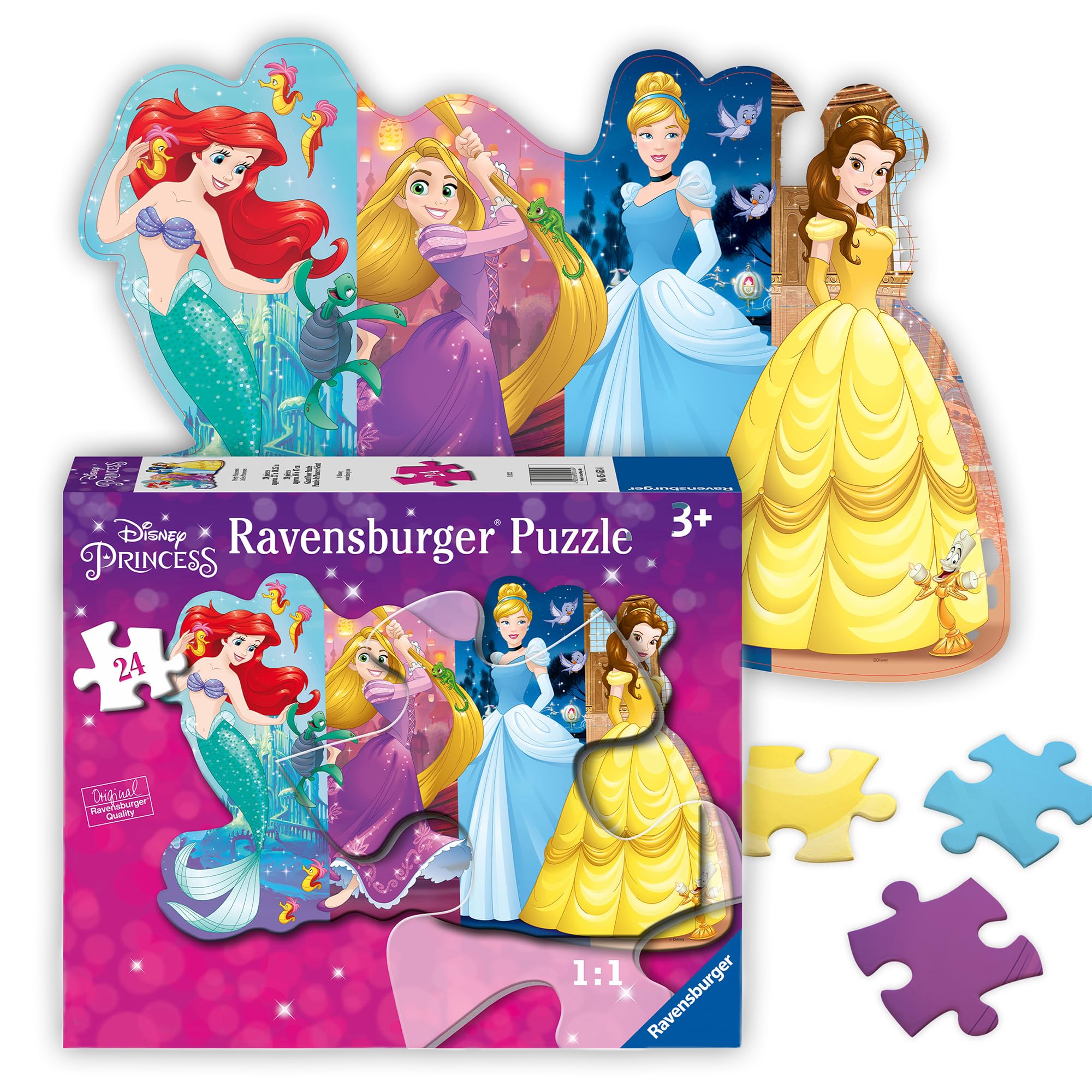
Best for Disney Princess Toddlers
Princess Floor Puzzle
Key Features
- Number of Pieces: 24
- Material: Cardboard
- Age Range: 3+ years
- Theme: Disney Princesses
- Price: Premium
Ravensburger’s oversized pieces are thick enough to withstand daily toddler use without bending, and the 19×27-inch assembled size keeps the jigsaw contained on the floor. Fade-resistant colors keep the princess artwork vivid after months of play. For a 3-year-old who adores princesses, the 24-piece count lets them complete the puzzle independently. Children who already tackle 50-piece puzzles will find it too simple — this is a starter puzzle best used before moving up to the 60-piece glitter version.
Pros
- Large, thick pieces resist bending and are easy for small hands to manipulate.
- Durable construction survives rough toddler handling and still looks new.
- Bright, fade-resistant artwork delights princess-obsessed toddlers.
Cons
This puzzle is the right first step for a princess-loving toddler, but expect it to be outgrown within a few months.
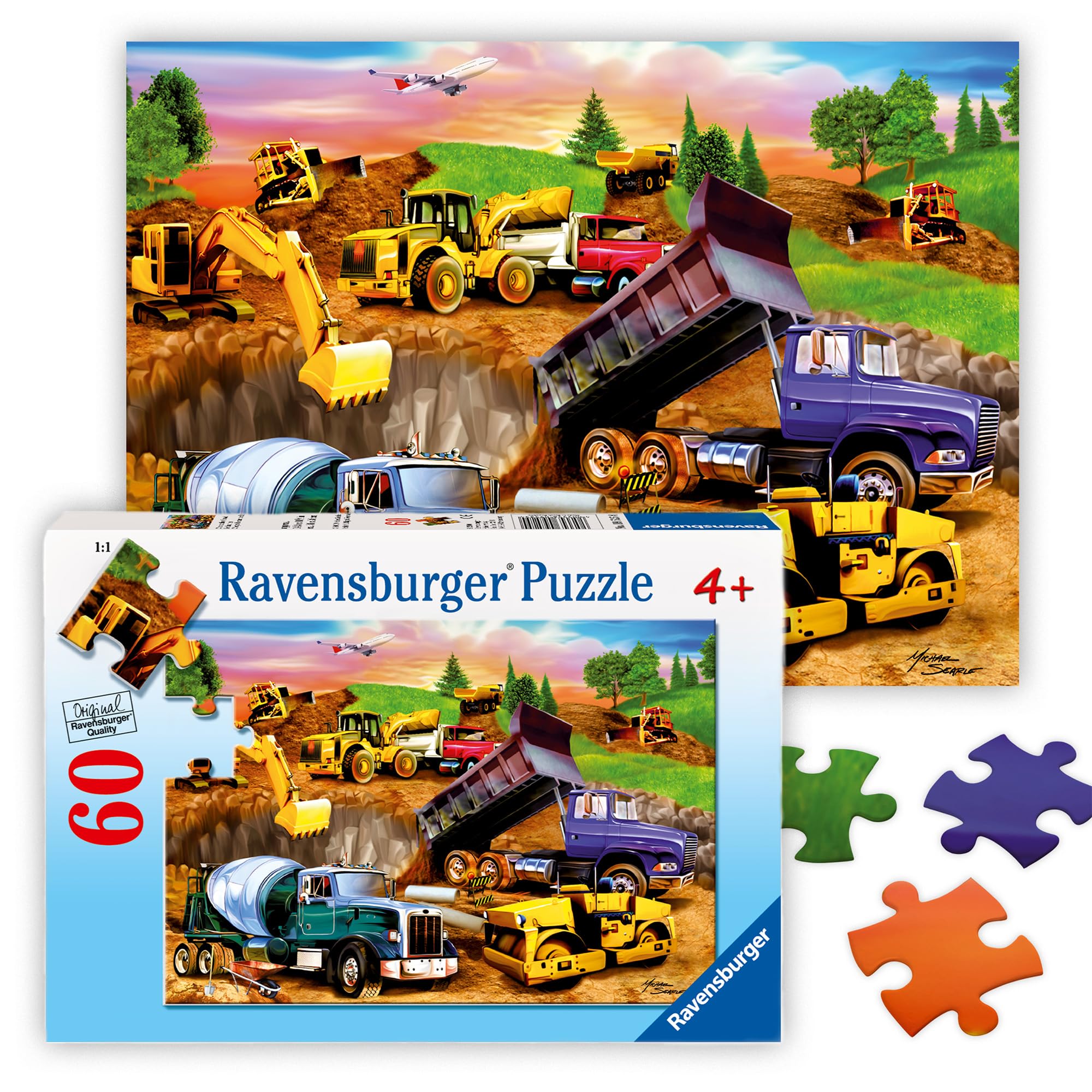
Best for Construction-Loving Preschoolers
Construction Crowd
Key Features
- Number of Pieces: 60
- Material: Cardboard
- Age Range: 5+ years
- Theme: Construction vehicles
- Price: Budget
For kids who have outgrown oversized beginner puzzles, this 60-piece tabletop jigsaw offers a smart step up with a bustling construction scene that vehicle-loving 4–5-year-olds find irresistible. The thick cardboard pieces fit together cleanly and survive dozens of enthusiastic assemblies. Edges may show some fraying or bending after heavy use, but the puzzle remains fully functional and engaging. The piece size is tailor-made for small hands, encouraging independent play without frustration.
Pros
- Exceptionally well-made with clean-fitting pieces that won’t frustrate little builders.
- Piece size is ideal for small hands, allowing independent assembly without adult help.
- Durable cardboard holds up to enthusiastic, repeated play without losing its snap.
Cons
- Edges may fray or corners may bend after repeated heavy use, though the puzzle stays playable.
A practical pick for construction-obsessed 4-year-olds who’ve mastered larger pieces and need a durable, affordable 60-piece challenge with only minor cosmetic wear over time.
Best for Brain Teaser 7+
Kanoodle
Key Features
- Number of Pieces: 12
- Material: Plastic
- Age Range: 7+ years
- Theme: 3D brain teaser
- Price: Budget
With 228 challenges packed into a case the size of a pencil box, Kanoodle turns car rides and restaurant waits into quiet logic sessions. It’s a natural fit for puzzle-loving kids 7 and up, adults seeking a mental challenge, and families wanting a shared activity. The progressive puzzles keep the whole group engaged, and the case doubles as the game board—no loose parts to lose. Small pieces are a choking hazard for babies and toddlers, and some 7-year-olds may hit a wall around level 6 without an adult partner.
Pros
- Addictive screen-free fun that travels well—turns any waiting moment into a brain workout.
- Case doubles as the game board, making it easy to pack and play anywhere.
- Gradually increasing difficulty engages all ages, from kids to adults.
Cons
- Levels beyond 6 can frustrate younger puzzle-solvers without adult guidance.
- Small pieces are a choking hazard for children under 3—keep away from younger siblings.
For families with kids 7 and up who want a mess-free travel game that sharpens spatial reasoning, Kanoodle delivers hundreds of hours of challenge in a tiny footprint.
How to Choose
The single factor that matters most is matching the puzzle’s piece count and material to your child’s current developmental ability, not just their age.
Number of Pieces
Piece count determines how long a child stays engaged before frustration sets in. Fewer pieces (8–24) build confidence for beginners, while 48–100 pieces challenge preschoolers to follow edge, color, and image patterns.
A common hidden trade-off: a higher piece count forces precise fine motor control and spatial reasoning that younger children may lack, leading to abandonment. Start with puzzles where the child can succeed within 10-15 minutes, then gradually increase complexity.
Material
Wood, cardboard, and plastic each bring different physical properties. Chunky wooden pieces resist bending but can chip or splinter under aggressive chewing. Cardboard is lightweight and inexpensive, but moisture and rough handling cause peeling and delamination.
The material directly influences how a puzzle survives daily play. Wooden puzzles work best for mouthy toddlers who need thick, graspable shapes; cardboard jigsaws are ideal for older children who handle pieces gently and assemble on flat surfaces.
Recommended Age Range
Manufacturer age ranges are a starting point, but they often overlook grip strength, attention span, and mouthing habits. A 3+ label doesn’t guarantee a 3-year-old can complete the puzzle independently.
Match the puzzle to what your child can do, not the box label. A 2-year-old who still mouths objects needs chunky wooden puzzles under supervision; a 5-year-old with strong finger dexterity can tackle 100-piece jigsaws. Adjust expectations based on observed fine motor skills.
Theme/Character Appeal
A puzzle only works if the child wants to finish it. Familiar themes—safari animals, Disney princesses, construction vehicles, Minecraft—create intrinsic motivation to sort and assemble pieces.
However, a beloved theme can mask difficulty. A 6-year-old obsessed with Mario may still struggle with a 100-piece puzzle if the artwork is too busy. Choose a theme that pulls them in, but verify the complexity matches their skill level.
Portability
For car trips, restaurants, or airplanes, magnetic puzzles with fold-out boards prevent lost pieces. The magnetic strength varies: weaker magnets let pieces slide on bumpy roads, while strong ones hold securely but may be harder for little fingers to separate.
If travel is a priority, look for puzzles with a rigid board and a zip-closure case. Test the magnet grip before relying on it in a moving car, and consider a dedicated travel puzzle that packs flat rather than a standard box that can spill.
FAQ
Why do wooden puzzle pieces chip even though they’re supposed to be durable?
Wooden puzzles are painted, and even high-quality paint can chip when exposed to moisture from teething or rough impacts. This is normal wear, not a safety hazard. Choose puzzles with thick, non-toxic paint and wipe pieces dry after play to minimize chipping.
Can a 2-year-old do a 12-piece wooden jigsaw puzzle?
Yes, many 2-year-olds can handle a 12-piece jigsaw with guidance, but success depends on the puzzle’s construction. Look for jigsaws with thick wooden pieces and simple images that are easy to frame-match; avoid cardboard puzzles with small interlocking nubs until age 3.
Why does my magnetic puzzle keep falling apart during car rides?
Magnetic travel puzzles vary widely in magnet strength. If pieces slide, check that the board is completely flat and the surface is clean, as even slight curves can weaken the magnetic grip. For persistent issues, choose a puzzle with a snap-tight case or consider a non-magnetic travel puzzle with a zippered pouch.
How do I stop floor puzzle pieces from peeling?
Peeling corners on cardboard floor puzzles happen when pieces are forced apart or stored loosely in a bag, causing edges to fray. Store puzzles flat, preferably in a sealed box, and avoid assembling them on rough surfaces like carpet that can snag the paper layer.