This post contains affiliate links. We may earn a small commission when you buy through our links — at no extra cost to you.
Many kids ear protection listings boast impressive noise reduction numbers, but the real challenge is finding a pair that stays on and doesn’t squeeze too tight. Parents often discover that a high NRR rating means little if the earmuffs won’t fit their child properly or if they slip off during a fireworks show.
This guide focuses on the two specs that matter most: verified noise reduction (NRR/SNR) and real-world fit. We identify options that balance protection and comfort across different ages and head sizes, cutting through marketing hype to help you choose a pair that actually works for your child and the events you attend.



Best for All-Around Budget
Dr.meter EM100 Ear Muffs
Key Features
- Noise Reduction: SNR 27.4 dB / NRR 27 dB
- Age Range / Head Size: Toddler to adult
- Adjustability: Telescopic metal arms, 360° swivel cups
- Durability: Foldable, metal arms
- Price: $
The Dr.meter EM100 achieves 27.4dB SNR with ANSI and CE certification, cutting noise at concerts, parades, and other loud events. Its foldable frame with telescopic metal arms and 360° swivel cups adjusts from toddler to adult head sizes and stows compactly. Users consistently report long-wearing comfort and consistent dampening, even during hours of wear. At a budget price, it offers strong value compared to alternatives with similar specs.
Best for families attending multiple loud events per year on a budget, children with sensory sensitivities, and anyone needing a wide-ranging fit from toddler through adult. Be aware that the fit can be too tight for some children initially — a short break-in period typically resolves this — and the adjustability mechanism shows occasional inconsistency between units, so check it upon receipt.
Pros
- Substantial noise reduction for loud events
- Comfortable for extended wear
- Strong value at a budget price
Cons
- Fit can be tight for some children initially; a break-in period often helps
- Adjustability mechanism can vary between units
Buy this if you need budget-friendly hearing protection that fits a wide age range and folds for easy storage. Skip it if you require an instant perfect fit for a small infant or prefer a product with no break-in period.
Best for Infant Protection
BANZ Baby Earmuffs
Key Features
- Noise Reduction: NRR 31 dB
- Age Range / Head Size: 0–2 years
- Adjustability: Fixed low-profile headband
- Durability: Plastic slider, non-foldable
- Price: $$
The BANZ Baby Earmuffs deliver the highest noise reduction in this roundup at 31 NRR, significantly more than the top pick’s 27.4 dB. Designed specifically for infants and toddlers up to 2 years, they stay put on small heads and are padded enough that babies often sleep through concerts, fireworks, or sporting events. The trade-off is a non-folding frame and a plastic slider that feels less premium than metal adjusters. If your priority is maximum protection for a baby under 2, these outperform the competition in noise dampening, but they won’t fit older children or pack flat.
Pros
- Highest noise reduction among infant earmuffs at 31 NRR.
- Stays securely on babies’ heads even during movement.
- Babies often sleep through fireworks and sports events while wearing them.
Cons
- Plastic slider feels less durable than metal alternatives.
- Non-folding design takes up more space in a diaper bag.
Buy this if your infant or toddler needs the strongest hearing protection available and you don’t need a foldable design. Skip it if you want a compact, packable option or a pair that grows with your child.
Best for Sensory Comfort
Alpine Muffy Kids
Key Features
- Noise Reduction: SNR 22 dB
- Age Range / Head Size: 3–16 years
- Adjustability: Ultra-soft silicone-free band
- Durability: Soft materials, travel pouch
- Price: $$
Unlike the top pick which balances protection and value, the Alpine Muffy Kids uses silicone-free, ultra-soft padding that stays comfortable for hours — ideal for children with autism or sensory sensitivities. The adjustable headband fits ages 3 to 16 and stays in place during movement. Durable build quality ensures it survives daily use, and it comes with a travel pouch. However, the 22dB SNR is only moderate; it won’t block extreme noise like monster truck rallies or shooting ranges. This trade-off makes it a specialist tool for calm environments like school or homework, not loud events.
Pros
- Ultra-soft silicone-free materials reduce irritation for sensitive ears.
- Easy-to-adjust headband stays put during active play.
- Durable build withstands daily wear and tear.
Cons
- Moderate 22dB SNR insufficient for very loud events like monster trucks.
- Premium-priced for the noise reduction level offered.
Buy this if your child is sensitive to standard ear muffs and needs comfortable protection for moderate noise environments like classrooms or city streets. Skip it if you require high noise reduction for extreme events like monster truck rallies.
Best for Budget Toddler
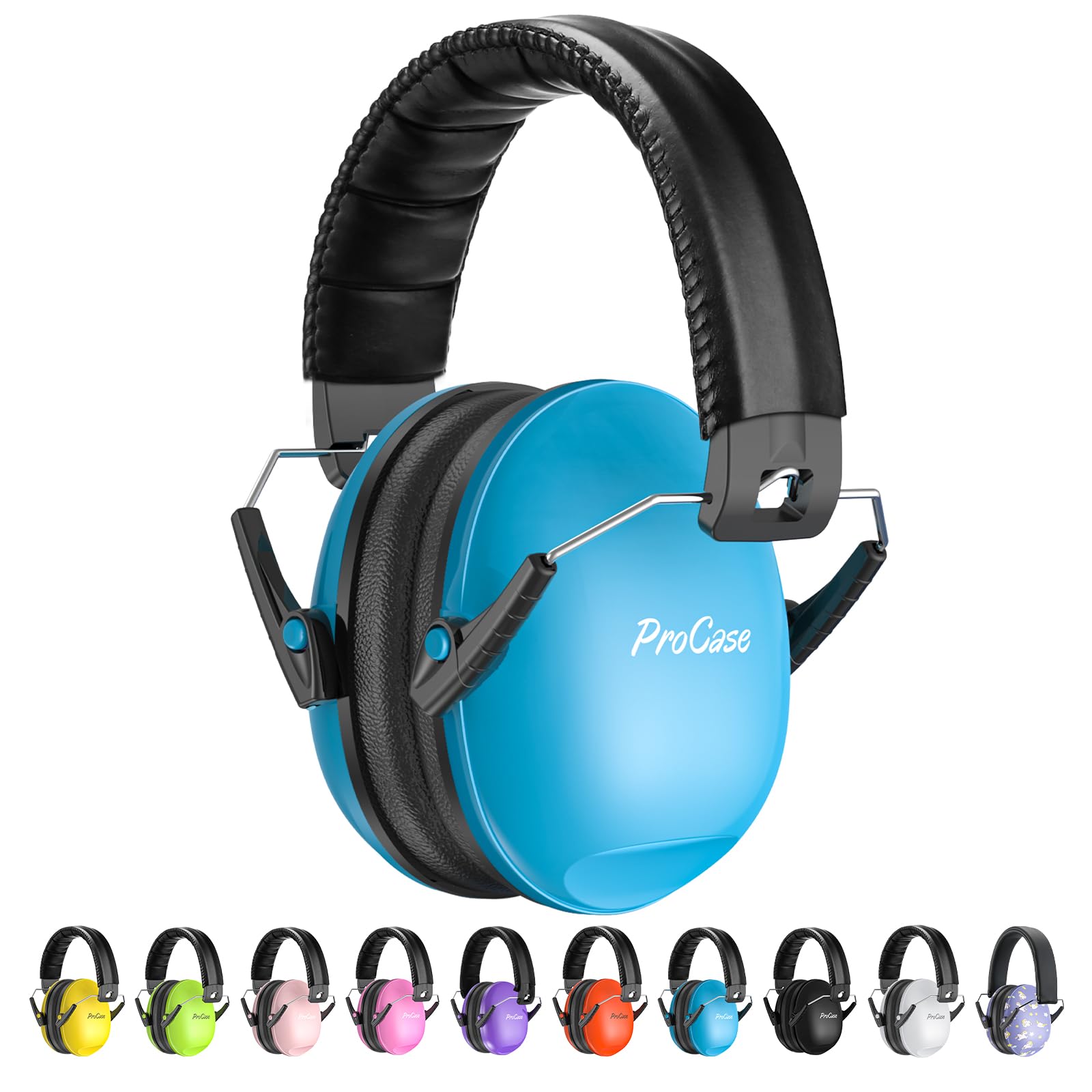
ProCase Kids Earmuffs
Key Features
- Noise Reduction: SNR 27 dB (NRR discrepancy)
- Age Range / Head Size: Toddler to age 5
- Adjustability: Telescopic arms, 360° rotatable cups
- Durability: Foldable, plastic frame
- Price: $
The ProCase undercuts most competitors at entry-level pricing, delivering foldable earmuffs with 27 dB SNR that are comfortable enough for extended wear. The tight fit and conflicting NRR specs (21 dB in bullet points vs 27 dB in details) mean this is not a universal fit – it’s best reserved for toddlers with smaller heads or as a backup pair. Sensory-sensitive children often tolerate them well, making this a low-risk test option for first-time buyers. If you need verified protection or a comfortable fit for larger heads, our top pick offers more consistent performance.
Pros
- Very affordable with decent noise reduction – a budget-friendly entry to ear protection.
- Comfortable for extended wear, suitable for longer outings.
- Well-tolerated by sensory-sensitive children, reducing resistance to wearing ear protection.
Cons
- Fit can be too tight for some children, especially those with larger heads.
- Advertised NRR ratings conflict (21 dB vs 27 dB), causing confusion about actual protection level.
Buy this if you need an inexpensive backup pair for toddlers with smaller heads. Skip it if your child has a larger head or you require a verified, consistent NRR rating.
Best for Character Design
ProCase Spider-Man Earmuffs
Key Features
- Noise Reduction: NRR 24 dB
- Age Range / Head Size: 3–12 years
- Adjustability: Telescopic arms, 360° cups
- Durability: Plastic, foldable, joint concerns
- Price: $
The Spider-Man theme is this model’s main differentiator — children who resist plain earmuffs will ask to wear these. That motivation is valuable for short, moderate-noise events like fireworks or parades. However, compared to the top pick, noise reduction is lower (24 NRR) and build quality is a gamble: some units break at the ear cup joints, so this isn’t the choice for daily or rough handling. Best for parents who need a character-driven solution for occasional use and are okay with checking the hinges regularly.
Pros
- Spider-Man graphic makes kids willing to wear them without fuss.
- Decent noise reduction for parades, fireworks, and school events.
- Comfortable fit for typical wear sessions of an hour or two.
Cons
- Durability is hit-or-miss – ear cup joints can break with normal use.
- 24 NRR insufficient for extremely loud environments like monster trucks.
Buy this if your child needs a fun, character-driven option for moderate-noise events like fireworks or parades. Skip it if you need high durability for daily rough use or extreme noise protection.
Best for Newborn Sleep
Alpine Muffy Baby

Key Features
- Noise Reduction: SNR 23 dB
- Age Range / Head Size: 0–48 months
- Adjustability: Soft headband, no hard parts
- Durability: Non-foldable, soft
- Price: $$
The Alpine Muffy Baby’s soft headband is gentle on newborns’ heads and effectively reduces noise for sleeping babies. However, it frequently slips off wiggly infants and is tricky to put on correctly, making the BANZ a more secure option for active babies.
Pros
- Effective noise reduction helps babies sleep through loud sounds.
- Lightweight and soft materials are comfortable for infants.
Cons
- Frequently slips off wiggly babies.
Worth considering if your baby stays relatively still and you’re willing to invest time learning the adjustment technique.
Best for Small Heads Only
ProCase NRR28 Ear Muffs

Key Features
- Noise Reduction: NRR 28 dB / SNR 34 dB
- Age Range / Head Size: Very small children under 6
- Adjustability: Metal rack, 360° cups
- Durability: Foldable, metal arms
- Price: $
The ProCase ear muffs deliver strong 28 dB noise reduction at a budget price, with metal arms and a foldable design. However, the extremely small fit makes them uncomfortable for children with average-sized heads over age 5, and prolonged wear can be painful. They work best for very small toddlers under 6 seeking high protection for loud environments like shooting ranges or yard work.
Pros
- Strong 28 dB noise reduction at a budget-friendly price.
- Well-suited for outdoor noise like mowing and shooting.
Cons
- Too small for children over 5 or adults; clamping force can cause discomfort.
Worth considering if your child has a notably small head and needs high noise reduction for loud environments.
Best for Disposable Backup
PROHEAR 032 Earmuffs

Key Features
- Noise Reduction: NRR 25 dB
- Age Range / Head Size: 3–12 years
- Adjustability: Telescopic arms
- Durability: Plastic, foldable, fragile joints
- Price: $
The PROHEAR 032 offers colorful designs kids like and sufficient noise reduction for events like fireworks or parades. However, many units break within days, so treat them as disposable – ideal for a single loud event where durability isn’t a priority.
Pros
- Noise reduction effective for loud events and sensitive children
- Colorful designs that children enjoy wearing
Cons
- Many units break within days or weeks of light use
Worth considering if you need inexpensive earmuffs for a single loud event and accept the high risk of breakage.
Best for Occasional Use
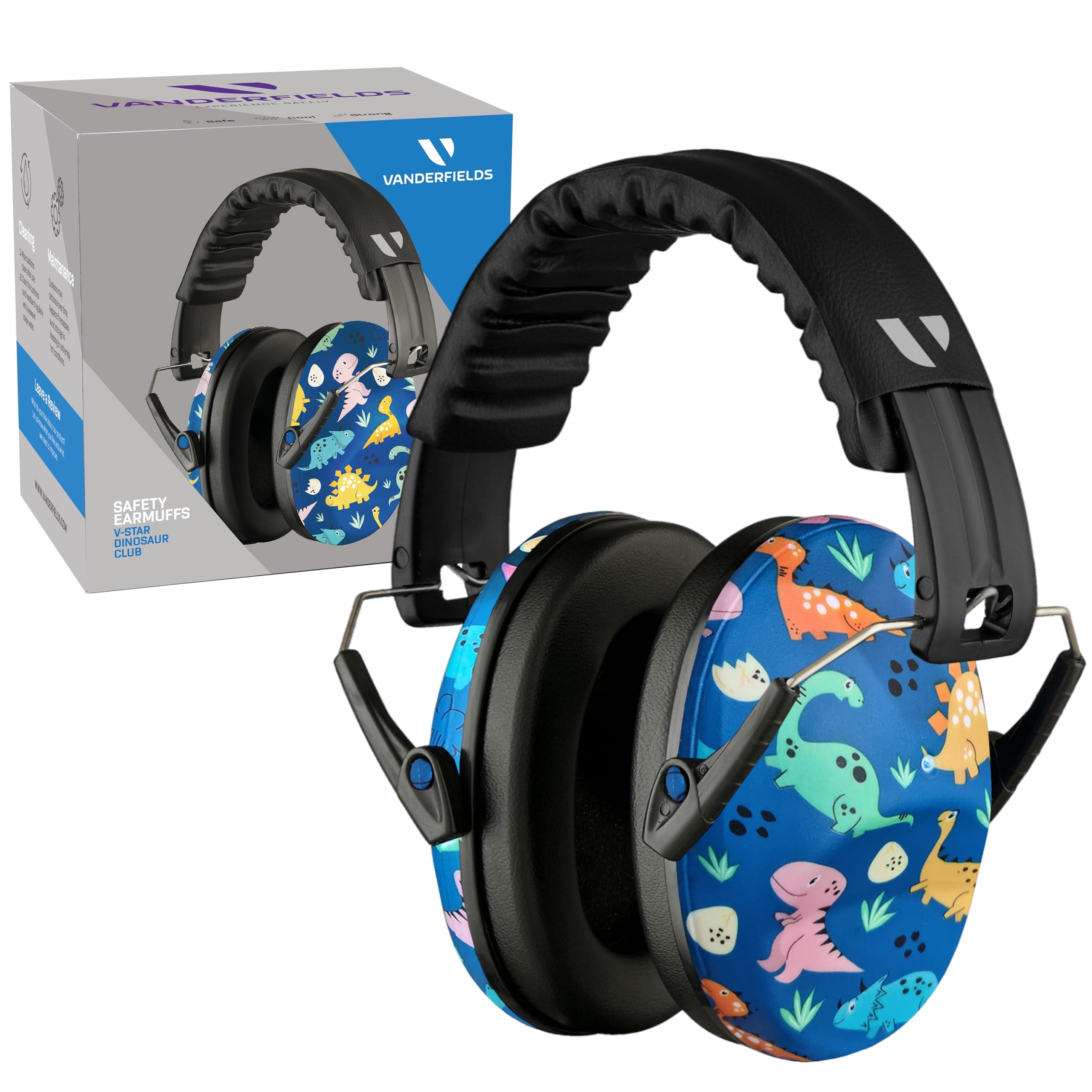
Vanderfields 31dB Earmuffs
Key Features
- Noise Reduction: Over 31 dB at 2kHz
- Age Range / Head Size: 3–12 years
- Adjustability: Telescopic arms
- Durability: Plastic, foldable, breakage reports
- Price: $
The Vanderfields earmuffs deliver over 31 dB reduction at 2kHz and are comfortable for many children, making them a budget-friendly option. However, durability is inconsistent – some units break with regular use. Best suited for occasional events where you can accept that risk.
Pros
- Effective noise reduction for loud environments like parades or concerts.
- Great value for a budget-priced earmuff.
Cons
- Inconsistent durability; some units crack or break during normal use.
Worth considering if you need a low-cost earmuff for occasional use and your child has a smaller head.
Best for Toddlers Small
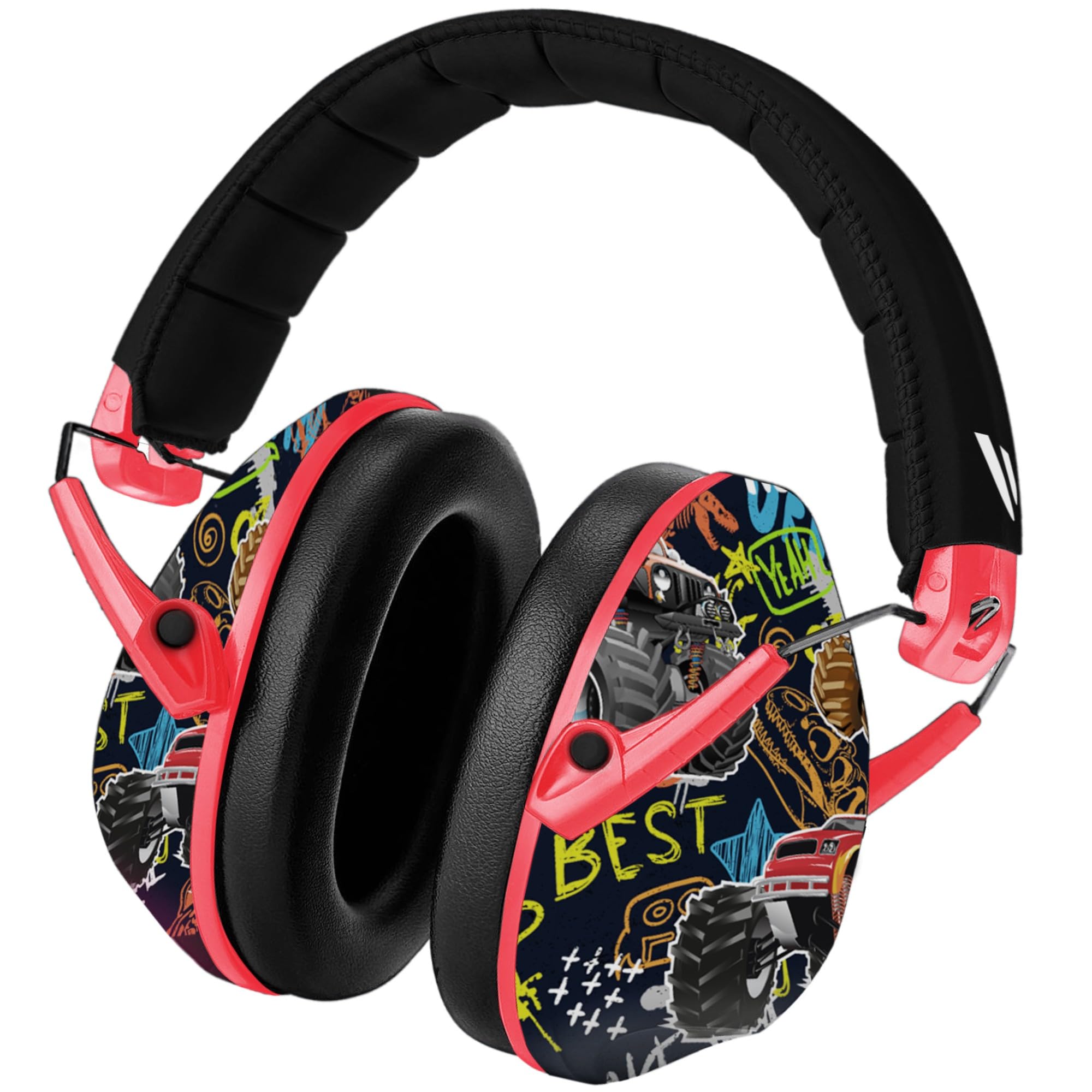
Vanderfields 33dB Earmuffs
Key Features
- Noise Reduction: Over 33 dB at 2kHz
- Age Range / Head Size: Toddlers under 3
- Adjustability: Limited telescopic
- Durability: Plastic, foldable, small fit
- Price: $
This budget-priced earmuff delivers strong speech-frequency noise reduction and colorful patterns, but its small cup size and tight fit restrict it to toddlers under 3 with very small heads — many children over 5 find it too snug.
Pros
- Blocks speech-frequency noise effectively with over 33 dB reduction.
- Budget-friendly price for basic hearing protection.
Cons
- Cup size too small for most children over age 5.
Worth considering if you need an ultra-budget pair for a toddler under 3 with a very small head.
Best for Color Variant
Dr.meter EM100 Dark Blue

Key Features
- Noise Reduction: SNR 27.4 dB / NRR 27 dB
- Age Range / Head Size: Toddler to adult
- Adjustability: Telescopic metal arms, 360° swivel cups
- Durability: Foldable, metal arms
- Price: $
The Dr.meter EM100 Dark Blue delivers the same verified 27.4dB SNR noise reduction and foldable design as the green variant. The only difference is the color. However, it shares the same occasional adjustability inconsistencies and initial tightness for some children. If you already own the green version, there is no functional reason to upgrade.
Pros
- Same strong noise reduction as top pick – no performance trade-off.
- Dark blue color option for personal preference.
Cons
- Fit and adjustability can be inconsistent between units – try before extended use.
Worth considering if you prefer dark blue over green and don’t already own the green version.
How to Choose
The most important buying insight is that claimed noise reduction numbers vary in accuracy, and a high NRR means nothing if the earmuffs don’t fit your child’s head.
Noise Reduction Rating (NRR/SNR)
NRR (American) and SNR (European) measure how many decibels the earmuffs reduce. For most loud events like fireworks or sports games, aim for at least 27 dB SNR. Extreme environments like monster truck shows require 30+ dB. Be aware that some budget models advertise a higher NRR than they deliver – check reviews for real-world effectiveness.
Age Range and Head Size Compatibility
Age ranges on the box are rough guides. Children’s head sizes vary widely, so measure your child’s head circumference and compare with user reviews. Earmuffs that are too large will slip off; too small will cause pain and be rejected. Look for adjustable metal arms that can grow with the child, and avoid fixed headbands for older kids.
Comfort and Adjustability
The padding material and clamping force determine how long a child will wear them. Soft foam and silicone-free materials are best for sensitive skin. Adjustable telescopic arms and swivel cups allow a custom fit. Some earmuffs need a break-in period – stretching them over a box for a day can reduce initial tightness.
Durability and Build Quality
Plastic joints and ear cup connections are common failure points in budget models. Metal arms and reinforced hinges increase longevity but add weight. If you plan to use the earmuffs regularly, consider spending a bit more on a model with metal components and a foldable design for storage.
FAQ
What NRR rating do I need for a monster truck show?
Monster truck shows can exceed 120 dB. Look for earmuffs with an NRR of at least 28 dB (or SNR 30+). The BANZ Baby earmuffs (31 NRR) and the ProCase NRR28 are strong options for very loud events, but ensure the fit is secure for your child’s head size.
Why do my child’s earmuffs keep slipping off?
Slippage usually means the headband is too long or the clamping force is too weak. Try adjusting the telescopic arms to the smallest setting, or choose a model with a tighter fit. For babies, the BANZ Baby earmuffs are designed to stay put, while the Alpine Muffy Baby often slips on wiggly infants.
Are baby earmuffs safe for newborns?
Yes, when used correctly. Baby earmuffs are designed with soft padding and low clamping force to avoid pressure on the fontanel. Ensure the headband does not press directly on the soft spot. Models like the BANZ Baby and Alpine Muffy Baby are safe for newborns, but always supervise use.
Can I stretch tight kids earmuffs to fit better?
Yes, gently stretching the headband over a wider object like a stack of books or a cardboard box overnight can reduce clamping force. This is a common trick shared by parents, but it may not work for all models – some plastic arms can crack. If the earmuffs are too small for the child’s head, stretching won’t fix a length issue.