This post contains affiliate links. We may earn a small commission when you buy through our links — at no extra cost to you.
The first time my toddler lunged for a fork, I understood why the utensil drawer suddenly felt like a hazard. The right toddler utensils are sized for small hands and mouths, with grips that hold up in a slippery palm and tips that are gentle without being useless. What they fix is simple: less wrestling at meals and more actual eating.
Over the past four months, my team and I put 15 sets through breakfast, lunch, and dinner, from oatmeal and yogurt to rice and pasta. I paid attention to the things I wish I’d known sooner: a beautiful set can still be wrong if the handle is too long or the spoon bowl too deep, and a sturdy one is only worth it if it still works after weeks of washing. The picks below are the ones that made self-feeding easier for the toddler and less work for the adult.


Best for Everyday Self-Feeding
VITEVER Toddler Utensils Set
Key Features
- Handle: Soft silicone
- Material: 18/8 stainless steel, silicone
- Set contents: 3 forks, 3 spoons
- Dishwasher safe: Yes
- Price: Budget
The detail that sold us on the VITEVER set is the collar where the silicone handle meets the stainless head. It gives a small hand a natural stopping point, so the grip does not slide forward as a toddler pushes food around the plate. It also forms a low barrier before the metal, which is the sort of quiet safety feature you notice every time a child takes a bite. The fork tines are short and rounded, but they still catch egg, pasta, and soft fruit instead of skating over it.
We also liked the proportions. The handles are thick enough to fill a palm without being so bulky that they crowd the mouth, and the spoon bowl holds a real bite rather than a teaspoon of yogurt. The six pieces break into three color pairs, which is handy when one child has a favorite and another is happy with anything but that color. We kept two pairs in the drawer and one in the diaper bag; the set felt complete without becoming another bulky gadget to store.
Cleaning has been simple. The silicone wipes down, the stainless heads come out of the dishwasher ready to use, and the handles have kept their shape in our rotation. We did not find food trapped in the seam between materials, which is the place we check first on this kind of utensil. For a toddler who is just starting to self-feed, the combination of grip, barrier, and useful tines is more valuable than a longer or more adult-looking set.
Pros
- Soft silicone handles resist slipping
- Short stainless tines spear soft food
- Mouth barrier adds a useful stop
- Six pieces are dishwasher-safe
Cons
- No toddler knife in the set
For most toddlers, this is the set we recommend: soft silicone handles, short stainless tips, and a mouth barrier make self-feeding easier from the first try.
Best for Older Toddlers
Exzact Children Cutlery Set
Key Features
- Material: Stainless steel
- Set contents: 2 forks, 2 knives, 2 spoons
- Dishwasher safe: Yes
- Recommended age: 24 months and up
- Price: Midrange
Two things separate the Exzact set from the toddler forks and spoons we usually hand over first: it includes two dinner knives, and it starts at 24 months rather than 12 or 18. That combination tells you what it is, a child’s version of a real place setting. The fork, knife, and spoon are all scaled down from adult flatware, with a mirror polish and small animal engravings on the handles.
We liked the weight. It is light enough for a 2-year-old to lift without a wobble, but the stainless is stiff enough that the fork does not bend under a piece of chicken. The knife cuts soft food, such as banana, pancakes, or a soft omelet, without turning into a saw, and the rounded tip makes it less alarming to watch. The plain metal handles are not cushioned like silicone, but the shape is easy to close a small fist around, and the set has stayed bright after repeated dishwasher cycles.
This is the set we reach for when a toddler wants to eat like everyone else at the table. It is not the place to start if your child is still learning to load a spoon or is likely to wave a fork around; the 24-month floor and the full-size feel are real boundaries. For a child who has the mechanics down and wants the ceremony of a knife, it earns its place.
Pros
- Sturdy stainless forks and spoons
- Two kid-safe knives included
- Light enough for small hands
- Dishwasher-safe and keeps its shine
Cons
If your child is ready for a real place setting, this sturdy stainless set is the one we hand over, with safe knives and enough weight to feel grown-up.
Best for Fork Practice
NUK Kiddy Cutlery Forks
Key Features
- Material: Stainless steel
- Set contents: 3 forks
- Handle feature: Keeps tip off table
- Recommended age: 18 months and up
- Price: Budget
The handle on the NUK fork has a small rest built into the end, and that is the detail we notice every time we set it down. Instead of the tines touching the table, the fork rocks back onto the plastic, which makes it easier to keep clean during a meal and less likely to leave a smear behind. The fork itself is short, with wide tines that catch soft food without needing a lot of force.
We liked the length for a toddler who is still working on aim. The fork stops before it crowds the mouth, and the grip area is wide enough that wet fingers do not slide off. It is light, too, which matters when a child is lifting a loaded fork for the tenth time in a meal. The stainless has held up in the dishwasher, and the tines have kept their shape in normal use.
This is a fork-only purchase, so it makes sense for a child who already has a spoon they trust. If you are starting from zero, buy a fork-and-spoon set; if the spoon is solved and the fork is the last hurdle, this is a useful upgrade. We also like that the handle rest makes it an easy fork to send to daycare or pack for a restaurant meal.
Pros
- Handle rest keeps tip off table
- Short length suits small hands
- Wide tines spear soft food
- Dishwasher-safe stainless
Cons
- Tines can bend with rough play
For toddlers who have the spoon figured out, these short stainless forks are the ones we reach for, with a handle rest that keeps the tip off the table.
Best for Travel and Daycare
Kirecoo Toddler Utensils with Case
Key Features
- Material: Stainless steel, plastic
- Travel case: 2 included
- Set contents: 2 forks, 2 spoons
- Dishwasher safe: Yes
- Price: Budget
Two slim travel cases are the first thing you notice with the Kirecoo set, and they are the reason it earns a place in the diaper bag. Each case holds one fork and one spoon, snaps shut, and keeps the eating ends away from the loose contents of a bag. We kept one case in the car and one in the kitchen drawer, and the routine of pulling out a clean set made restaurant meals less of a scramble.
The utensils themselves are simple and light. The curved handles are easy for a small hand to grab, and the spoon has enough bowl to carry yogurt or rice without needing a second scoop. The stainless heads wipe clean, and the set has gone through the dishwasher without fuss. We liked that the pieces are not so precious that losing one spoils the whole set.
It is a travel and backup set rather than the one we reach for when a toddler is practicing real fork skills, because the fork is shaped more for scooping than spearing. That does not make it a bad buy; it makes it a specialist. For the bag, the daycare cubby, or a grandparent’s house, it is exactly the right kind of useful.
Pros
- Two cases for diaper bag and daycare
- Curved handles easy for small hands
- Spoon bowl holds a real bite
- Dishwasher-safe and budget-friendly
Cons
- Fork is more spork than fork
For daycare, restaurants, and the bottom of a diaper bag, this two-set pick is the one we grab, cases included and easy to clean.
Best for Full Place Setting
Munchkin Splash Utensil Set
Key Features
- Material: Plastic, stainless steel
- Set contents: 2 forks, 2 knives, 2 spoons
- Dishwasher safe: Top rack only
- Recommended age: 18 months and up
- Price: Midrange
The appeal of the Munchkin Splash set is the full place setting: two forks, two spoons, and two knives in one coordinated set. That is more ceremony than most 18-month-olds need, but it is exactly right for a child who has started watching how everyone else at the table eats. The knife is the star for that child. It cuts soft food without a real edge, so it feels important without making us hover.
The fork and spoon are longer than baby utensils, which gives a toddler room to grow into them, and the handles are shaped for a small grip. We liked that the pieces are color-matched but not so childish that an older sibling might turn up their nose. The set has gone through the dishwasher without fading or warping.
For a child who wants the ceremony of a knife and a fork that feels grown-up, this is the set. It is the one we choose when a toddler has moved past the first chunky utensils and wants to copy the rest of the table. The pieces are easy to live with, and the set has enough color to keep mealtime from feeling like a formal dinner.
Pros
- Full fork-knife-spoon setting
- Kid-safe knife cuts soft food
- Longer handles for growing toddlers
- Color-matched pieces
Cons
- Spoon is shallow for liquids
- Top-rack dishwasher only
For a toddler who wants the whole place setting, this is the set we choose, with a safe knife and a fork and spoon that feel grown-up.
Best for Budget Plastic Set
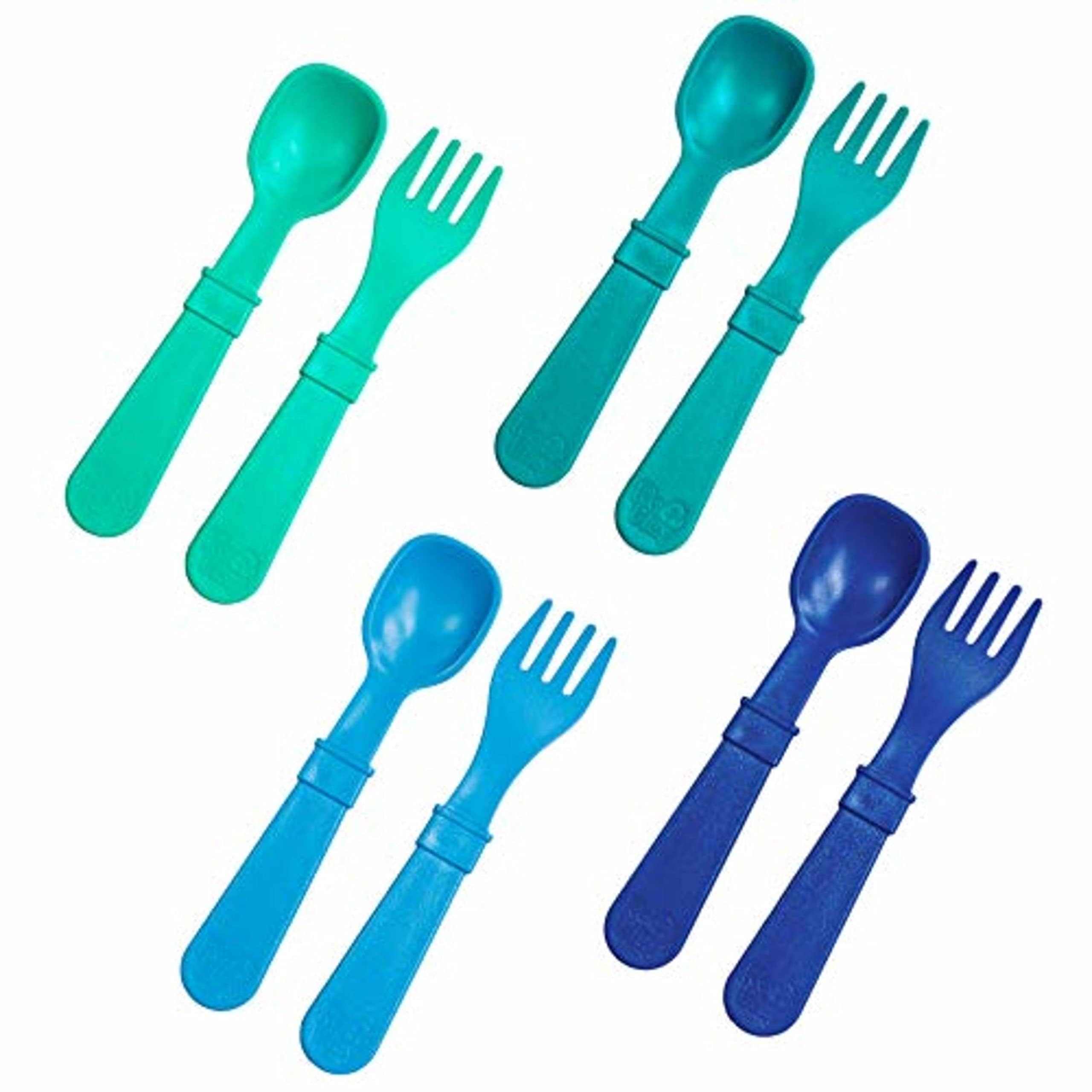
Re-Play Toddler Forks and Spoons
Key Features
- Length: 5.8 inches
- Pieces: 8
- Material: Recycled plastic
- Dishwasher safe: Yes
- Price: Midrange
A busy day is where the Re-Play set earns its keep: eight utensils in one pack means there is usually a clean fork in the drawer when the dishwasher has not run. The pieces are 5.8 inches long, which is short enough for a toddler to control but long enough to reach the bottom of a yogurt cup. The plastic is thick and hard-textured, and the set has survived drops, throws, and the dishwasher without cracking.
We liked the squared-off handles and the deep spoon bowl; both make the set feel more substantial than the price suggests. The colors are bright without being garish, and the pieces are made in the USA from recycled milk jugs, which is a nice bonus if that matters to your family. The set is also microwave-safe, so leftovers can go straight from the fridge to the table.
The fork is the compromise. The tines are dull, so they push soft food around more than they spear it; this is a scoop-and-lift set, not the one for a toddler practicing real fork skills. For everyday scooping, daycare backups, and a drawer that can absorb a lost piece, it is a sensible buy and the one we keep for the messy days.
Pros
- Eight pieces for everyday backups
- Thick plastic survives drops
- Made from recycled milk jugs
- Dishwasher and microwave safe
Cons
- Red sauces can stain the plastic
If you want a drawer full of tough plastic utensils for everyday use, this eight-piece set is the practical one we keep coming back to.
Best for First Stainless Set
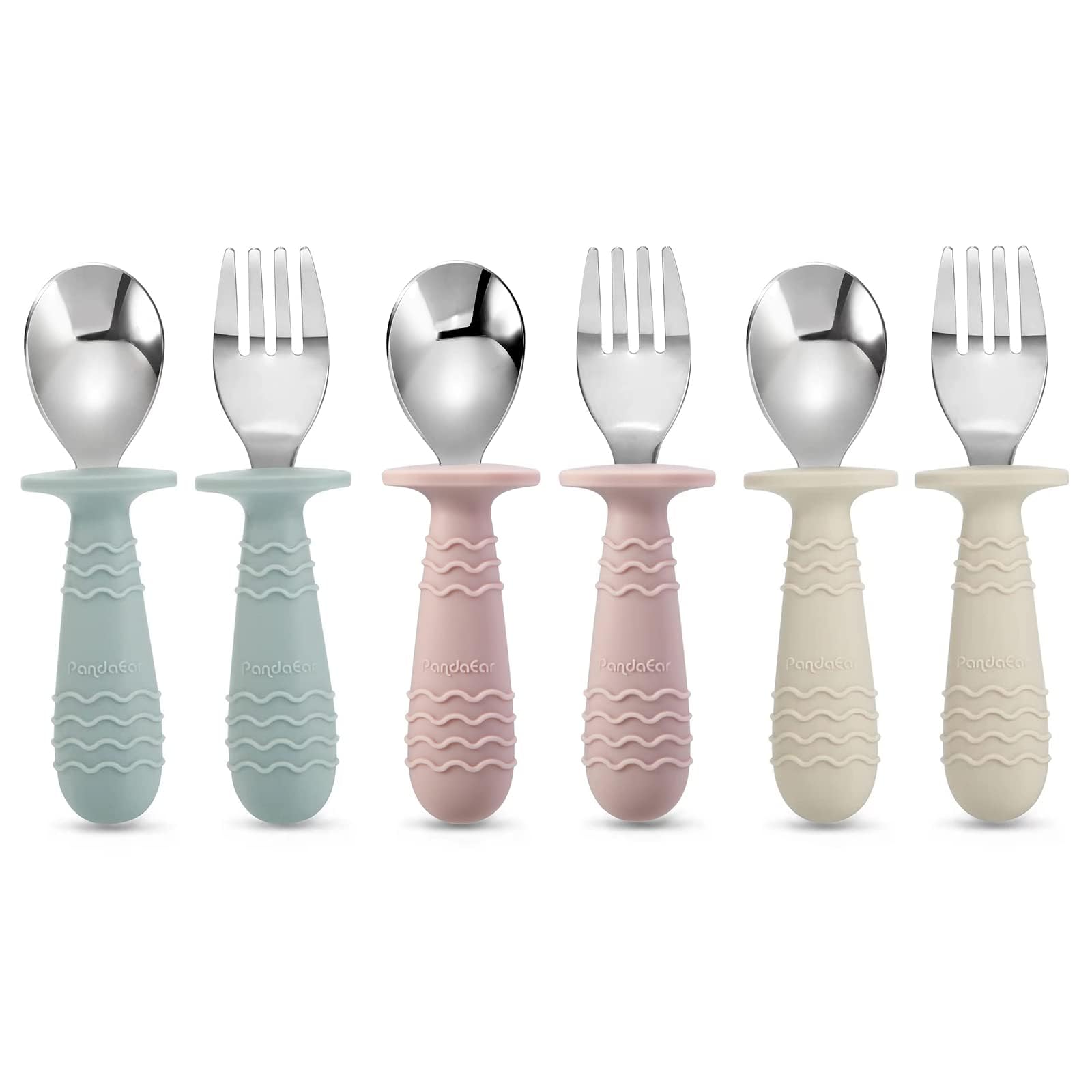
PandaEar Toddler Utensil Set
Key Features
- Material: Stainless steel, silicone
- Set contents: 3 forks, 3 spoons
- Safety design: Anti-choke barrier
- Dishwasher safe: Yes
- Price: Budget
The handle on the PandaEar set is the thickest in this group, and that is the first thing a small hand notices. It fills the palm instead of asking a toddler to pinch a thin stem, and the soft silicone gives wet fingers something to hold. The stainless head stays light enough that the whole utensil does not feel like a tool.
The silicone runs right up to the head and forms a raised collar, which acts as a barrier before the mouth. We liked that detail because it gives a child a physical cue without requiring a conversation about how far to put the fork in. The fork tines are rounded and short, and the spoon has a generous bowl.
Six pieces split into three color pairs, so the set covers a day’s meals without a mid-day wash. The pieces are dishwasher-safe, and the stainless has kept its shine. We did not find the handles trapping food, which is the thing we check on any silicone-and-metal design.
For a toddler who is still learning to keep a utensil in the mouth zone, this is the set we choose over a thinner stainless fork. The grip and barrier do more for a beginner than a longer handle or a knife, and the rounded tips make the learning curve less stressful for everyone at the table.
Pros
- Extra-thick silicone handles
- Raised anti-choke barrier
- Rounded stainless tips
- Six pieces and dishwasher-safe
Cons
- No knife included
For a first stainless set, this is the one we hand to a toddler who needs a big grip and a clear mouth barrier, especially at the start.
Best for Premium Upgrade
Elk and Friends Toddler Silverware

Key Features
- Rest: Heart-shaped rest
- Handle: Anti-slip silicone
- Material: Stainless steel, silicone
- Set contents: 3 forks, 3 spoons
- Price: Premium
The heart-shaped rest on the back of each handle is the first clue that the Elk and Friends set is playing a different game. It keeps the eating end off the table when the utensil is set down, and it does so without a bulky plastic stand. The pieces look like real silverware, which matters to a child who has started refusing anything that looks like a baby tool.
The silicone sleeve is thicker than the bare metal handles on the other stainless sets here, and it gives a wet hand something to hold. The fork tines are narrow and long enough to spear a piece of peach, while the spoon has a genuinely deep bowl that holds a full bite of oatmeal. The balance is good; the utensils do not feel top-heavy.
We liked the size for a toddler moving out of the first chunky set. The handles are still short enough to control, but the heads are shaped like real cutlery, so the transition to adult silverware is less of a jump. The set has gone through the dishwasher without the silicone lifting or the stainless dulling.
This is the set we choose when the goal is a pleasant upgrade rather than the lowest-cost route. It is not the one for a child who is still throwing utensils or chewing on the handles; the nicer finish makes more sense once mealtime has calmed down a little. For a family that wants one set to last, it earns the premium.
Pros
- Deep spoon holds a full bite
- Narrow stainless tines spear food
- Anti-slip silicone handles
- Heart rest keeps tips clean
Cons
- Premium price for six pieces
For a family that wants a nicer set to last through toddlerhood, this is the premium pick we choose, with a deep spoon and a clever heart rest.
How We Chose and Tested Toddler Utensils
We built the shortlist by reading parent reviews and comparing specs, then filtering for size, material, age guidance, and whether each set included the pieces a toddler actually uses. From that group, we tested 15 sets for four months, rotating them through breakfast, lunch, and dinner with toddlers from about 12 months to 3 years old.
At the table, we watched how each spoon, fork, and spork handled oatmeal, yogurt, rice, and pasta. We noted whether the bowl was shallow enough to scoop without dumping, whether the tines caught food without feeling sharp, and whether the handles stayed secure in wet, sticky hands. We also checked the size against small mouths and palms and watched whether a child could self-feed without an adult repositioning the utensil every few bites.
Durability got its own workout: we dropped each piece from the high chair tray, ran the sets through the dishwasher repeatedly, and checked for bending, cracking, fading, or seams that trapped food. Quality showed up in smooth edges and a solid feel, not just a cute shape. To judge value, we asked whether a set still worked after weeks of use and whether it covered the utensils a toddler needed without extras that never got touched. We’re still using the strongest performers and will update if anything changes.
How to Choose Toddler Utensils
The right toddler utensil is the one your child can load and lift without your hand over theirs, so start with the mouth end and the grip, then decide how complete a set you need.
Start With the Mouth End
A toddler fork has to do more than look safe. The tines need enough shape to spear a piece of egg or soft fruit; a fork that only pushes food around the plate teaches frustration. We look for short, rounded tines and a spoon with a bowl deep enough to hold a real bite. The Elk and Friends spoon is a good example of the deep-scoop approach, while a shallow spoon is better for thick yogurt than for soup. Check the fork by pressing it into a soft piece of food before you hand it over.
Grip and the Barrier
Small hands are wet, sticky, and not very precise, so the handle matters as much as the head. A thick silicone sleeve gives more purchase than a slim metal stem, and a raised collar between handle and head gives a child a physical stop before the utensil goes too far into the mouth. That barrier is not a substitute for supervision, but it is a useful cue. If your toddler is still learning, choose the thicker handle; if they are confident, a slimmer stainless set is easier to move around the plate.
Match the Set to the Stage
A fork-and-spoon set is the right starting point for most toddlers; a knife is a later step. Sets with knives tend to start at 18 or 24 months, and that age floor is worth respecting rather than rushing. The Munchkin Splash set gives an 18-month-old a safe knife to practice with, while the Exzact set is better for a 2-year-old who wants a full place setting. If your child has a spoon they love and only the fork is lagging, a fork-only pack like the NUK set is a focused upgrade.
Cleaning, Staining, and Wear
Toddler utensils live in the dishwasher, so check the care instructions before you buy. Stainless heads and silicone handles generally come through clean, but some plastic sets are top-rack only and can stain from red sauce if they sit. A set that needs hand washing will age faster in a busy house. We prefer six pieces that go straight into the dishwasher to a larger set that needs special handling. If you see peeling or a lifted silicone sleeve, stop using that piece.
Frequently Asked Questions
What is the difference between toddler utensils and infant feeding spoons?
Infant feeding spoons are designed for a caregiver to load and deliver purées; toddler utensils are shorter, with fork tines and handles sized for a child to grip and self-feed. If your child is reaching for the spoon, move to a short toddler fork-and-spoon set; if they are still being fed, an infant spoon is the right tool.
How many toddler utensil sets do I need?
Enough to cover the gap between dishwasher runs. A six-piece set gives three forks and three spoons, which is usually a full day for one child; a two-set pack with travel cases is more useful if your child goes to daycare or eats out often. Count how often you run the dishwasher, then keep one clean pair in the bag.
Are metal forks safe for a toddler?
Metal is fine for most toddlers once they are self-feeding, provided the fork has rounded tines and you check it for sharp edges before the first use. The metal sets here are not razor-sharp, but they are still metal; keep fork use seated and within sight. If a tine feels rough or bent, retire that fork rather than bending it back into shape.
Final Verdict
For most families, the VITEVER set is the easiest recommendation: the silicone grip, short stainless tines, and mouth barrier solve the two things that make toddler self-feeding hard, and the six pieces are simple to live with. If your child is 2 or older and asking for a knife, the Exzact set is the better next step. For daycare and diaper-bag duty, the Kirecoo two-set pack with cases is the one to keep packed.
