This post contains affiliate links. We may earn a small commission when you buy through our links — at no extra cost to you.
Convenience and decent ingredients don’t always share a pouch. Over four months, my daughter and I worked through 18 varieties, from single-vegetable jars to thicker pouch blends, and the differences were not subtle. The best baby purees get you through a 6 a.m. breakfast, a diaper-bag emergency, and a first bite that stays in the mouth — without making you squint at a label full of unpronounceables. A good one buys back time and peace of mind; a bad one ends up on the bib after one spoonful.
Texture and consistency separate contenders faster than marketing claims. I looked for purees that held together on a spoon, flowed at a pace a new eater could manage, and tasted like the vegetable or fruit on the label, not sweet filler. Portion size and value matter too, especially at three or four a day, and a leaking pouch in the diaper bag is a hard no. I also noted how she digested each one; anything that sat heavily didn’t make the cut, and the picks below earned a place in our rotation.

Best for Veggie-First Stage 2
Beech-Nut Stage 2 Veggie Pouches
Key Features
- Pack: 18 pouches, 3.5 oz each
- Stage: Stage 2
- Blends: 3 veggie varieties
- Price: Midrange
Most of the fruit pouches here lead with apple or pear, because babies will eat them. Beech-Nut’s veggie trio runs the other way: squash with peas and pears, zucchini with spinach and banana, pumpkin with zucchini and apple. Each blend puts a vegetable in front of the fruit, and that ordering is why this is the box we recommend — a baby meets squash and spinach while everything still tastes new, instead of learning that sweet is the default. Eighteen 3.5-ounce pouches, three recipes, six of each.
Nothing is added beyond the fruit and vegetables: no sweeteners, no preservatives, no artificial colors, and the blends are non-GMO, dairy-free and gluten-free. Three and a half ounces is right for a mid-morning or afternoon feed, and the spout flows without much work. Expect a small squirt the first time you crack the cap — open it away from your shirt. The texture is smooth and even, closer to a thick applesauce than the looser starter tubs, which is what you want once a baby has the spoon sorted.
The gap is certification. These aren’t organic, and that’s the one thing a shopper buying organic has to work around; the Gerber organic pouches further down cover that ground at a higher cost per pouch. Everything else about the box — the count, the vegetable-first recipes, the price against the rest of this group — lands where we want it.
Pros
- Vegetable-first blends, not just fruit
- No added sweeteners, preservatives or colors
- Pouches open and flow without much work
- Good value across 18 pouches
Cons
- Only three recipes in the box
- Not certified organic
We recommend starting here: three vegetable-first blends with nothing added, and eighteen pouches that open and flow without a fight.
Best for First Solids
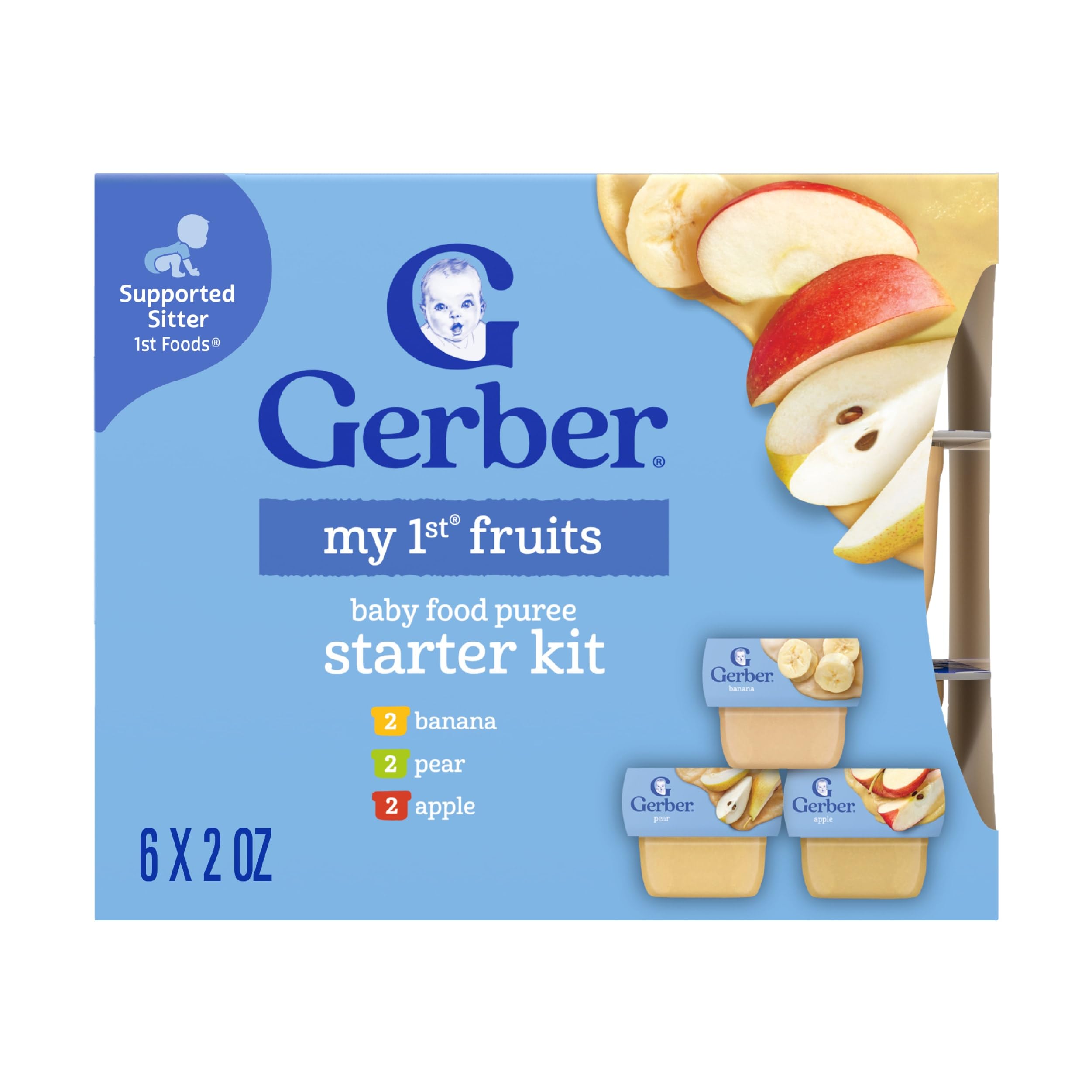
Gerber Stage 1 My 1st Fruits
Key Features
- Pack: 12 tubs, 2 oz each
- Stage: Stage 1
- Fruits: Banana, pear, apple
- Price: Budget
Two ounces is barely half a pouch, and that’s exactly the point of these tubs. Gerber’s Stage 1 set gives you a dozen small cups of banana, pear and apple — one fruit at a time, in a portion a baby can finish in a sitting. If solids start this week, the size is the useful part: nothing is wasted while a baby is still deciding whether food is a good idea, and a single-fruit tub tells you which of the three agrees with them.
We buy these for the first weeks, not the whole year. The puree is smooth and thin, close to applesauce, which is right for a first spoon and easy to read on it. What we don’t love is the seal: peel the foil and there’s no lid, so a half-finished tub needs its own small container or a compatible lid. That’s why these live at home rather than in the diaper bag, and why they’re the least expensive box here — a starter, priced like one, that hands off to a Stage 2 pouch once a baby is putting away four ounces in a sitting.
Pros
- Single-fruit tubs for one-at-a-time introduction
- Two-ounce portions, minimal waste
- Smooth, thin texture for first spoons
- Least expensive way to start
Cons
- Foil seal only, no lid for a half-eaten tub
For the first weeks of solids, this is the box we reach for: single-fruit two-ounce tubs, almost no waste, and cleanup that’s one spoon.
Best for Keeping Baby Regular
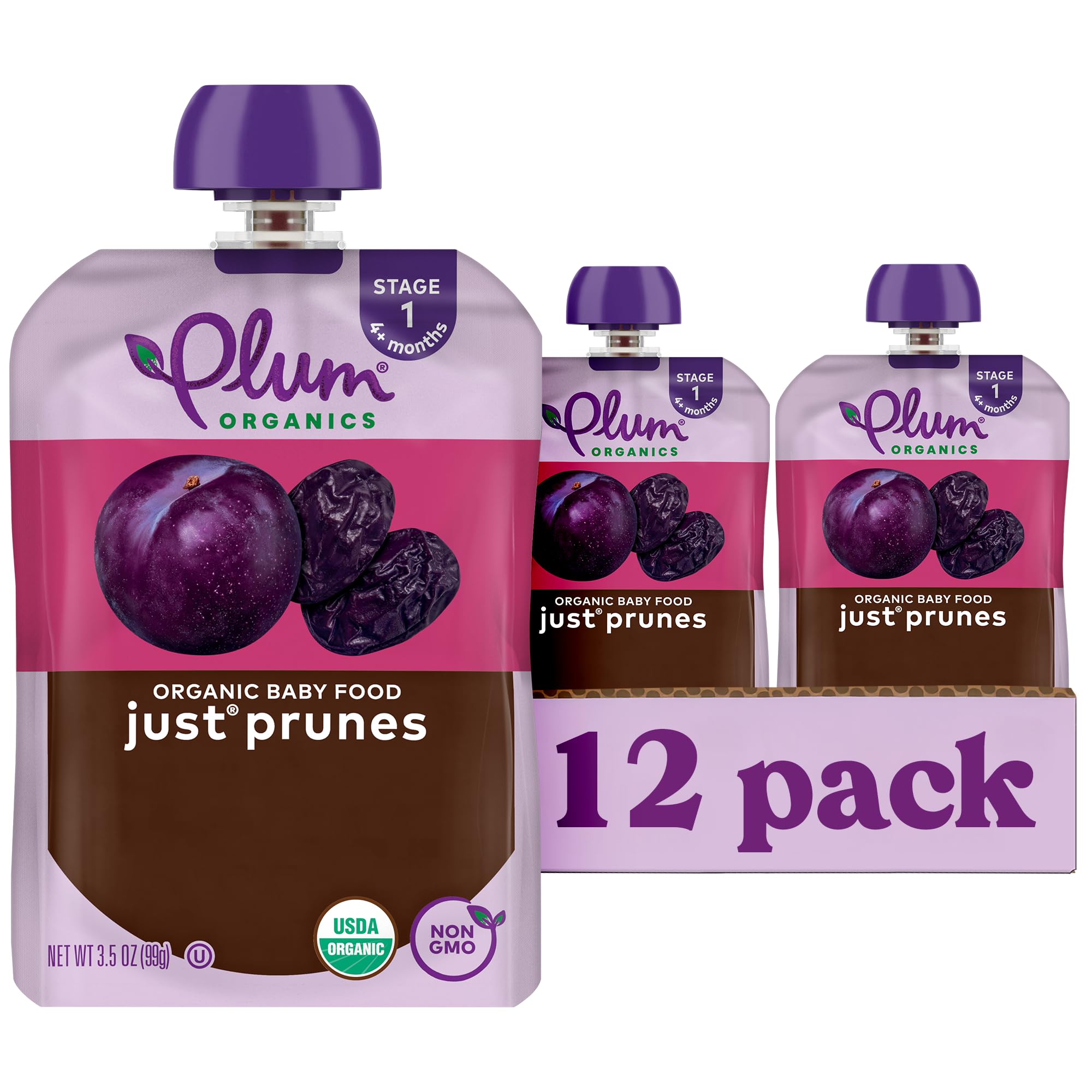
Plum Organics Just Prunes
Key Features
- Pack: 12 pouches, 3.5 oz each
- Stage: Stage 1
- Ingredients: Organic prunes and water
- Certification: Certified organic, Non-GMO Project Verified
- Price: Midrange
This is the one pick here bought for a job rather than a meal. Prune puree is what you keep on hand for the days a baby hasn’t gone in a while, and Plum’s is the plainest version of it: organic prunes and water, unsweetened and unsalted, kosher, in a resealable 3.5-ounce pouch with a recyclable cap. We like a box of them in the cupboard the way you keep a spare fuse — pointless until the evening you need one.
What we appreciate beyond the job is how little there is to argue with: certified organic, Non-GMO Project Verified, and no added anything. The cap reseals, so a toddler can finish a pouch over two goes without a bowl. The texture runs thin — thinner than a spoon-fed puree, which is why it works straight from the pouch and gets awkward when you dollop it into a bowl.
It’s a single flavor, so it isn’t a food you build meals around, and a baby who doesn’t take to prunes won’t be talked into them. Buy it as the backup, in a box small enough to use before it dates out.
Pros
- Just organic prunes and water
- Resealable pouch that travels
- Unsweetened, unsalted and kosher
Cons
- Thin enough to be awkward from a bowl
- One flavor — a backup, not a meal
We keep a box of these for the days nothing has moved — organic prunes and water, resealable, and thin enough to take straight from the pouch.
Best for Organic Everyday Pouches
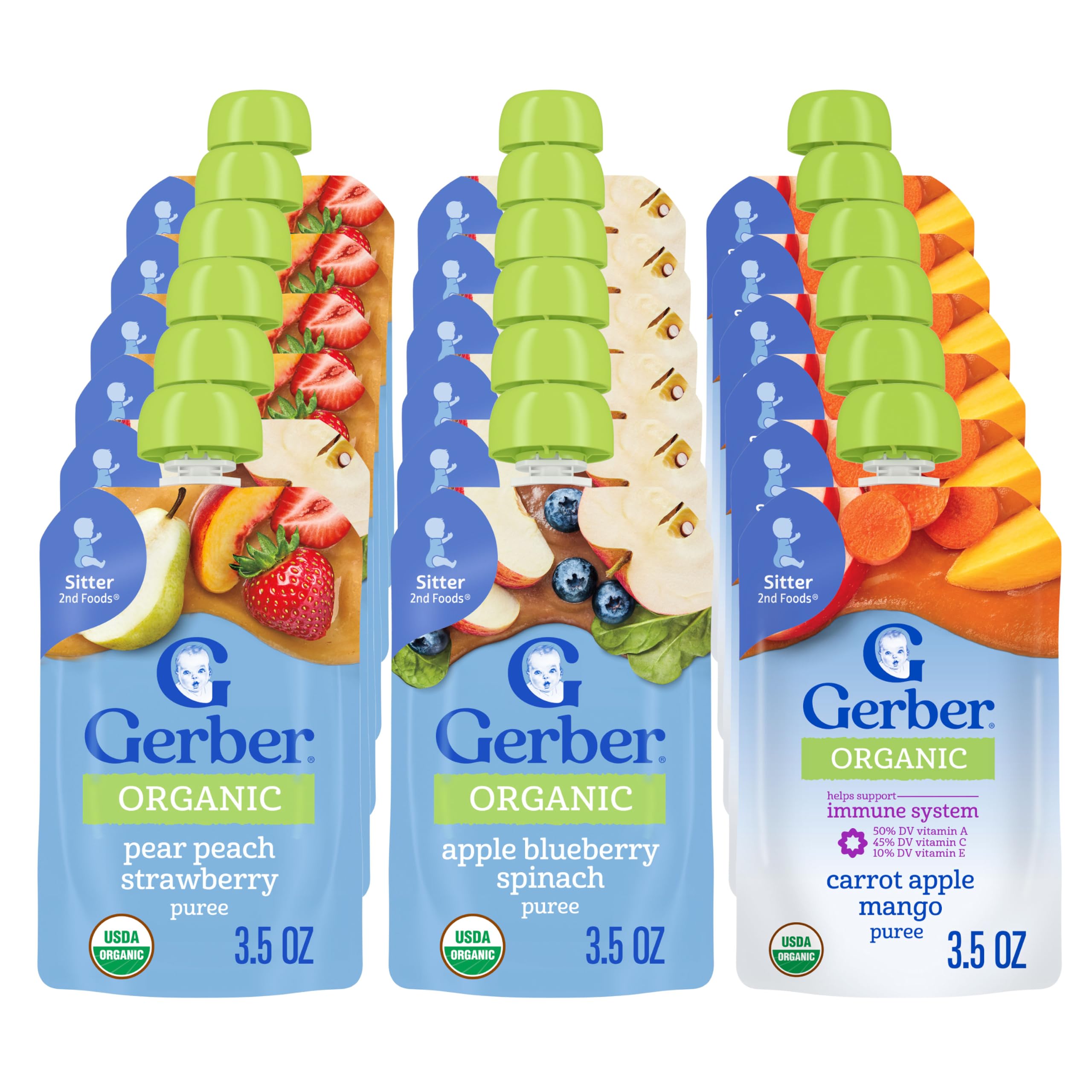
Gerber Organic 2nd Foods Pouches
Key Features
- Pack: 18 pouches, 3.5 oz each
- Stage: Stage 2
- Blends: Apple blueberry spinach, peach pear strawberry, carrot apple mango
- Certification: USDA organic
- Price: Midrange
Spinach inside an apple-blueberry pouch is a trick a baby won’t notice, and Gerber’s organic Stage 2 line leans on it. The 18-pack mixes three blends: apple blueberry spinach, peach pear strawberry, and carrot apple mango. Two of the three carry 45% of a baby’s daily vitamin C, and the carrot mango blend brings a full serving of superfoods and a quarter of the day’s potassium.
The pouch is the format we reach for away from the kitchen: a cap that closes, 3.5 ounces, no spoon, and a shape that fits a diaper-bag pocket. Organic certification at this money is the reason it earns a place — against the rest of this group it sits in the middle on cost per pouch, well under the premium picks and above the cheapest starter tubs.
Our reservation is flow. The thicker blends can clump near the spout, and massaging the pouch before the cap comes off is the difference between a smooth stream and a splutter down a bib. It’s a small thing that stops being small at six in the evening.
Pros
- Organic blends with spinach and carrot
- Vitamin C and potassium stated per pouch
- Resealable pouch for outings
Cons
- Thicker blends clump at the spout
The organic pouch we hand a sitter: spinach and carrot folded into fruit, a cap that closes, and a middle-of-the-group price.
Best for Savory Protein Meals
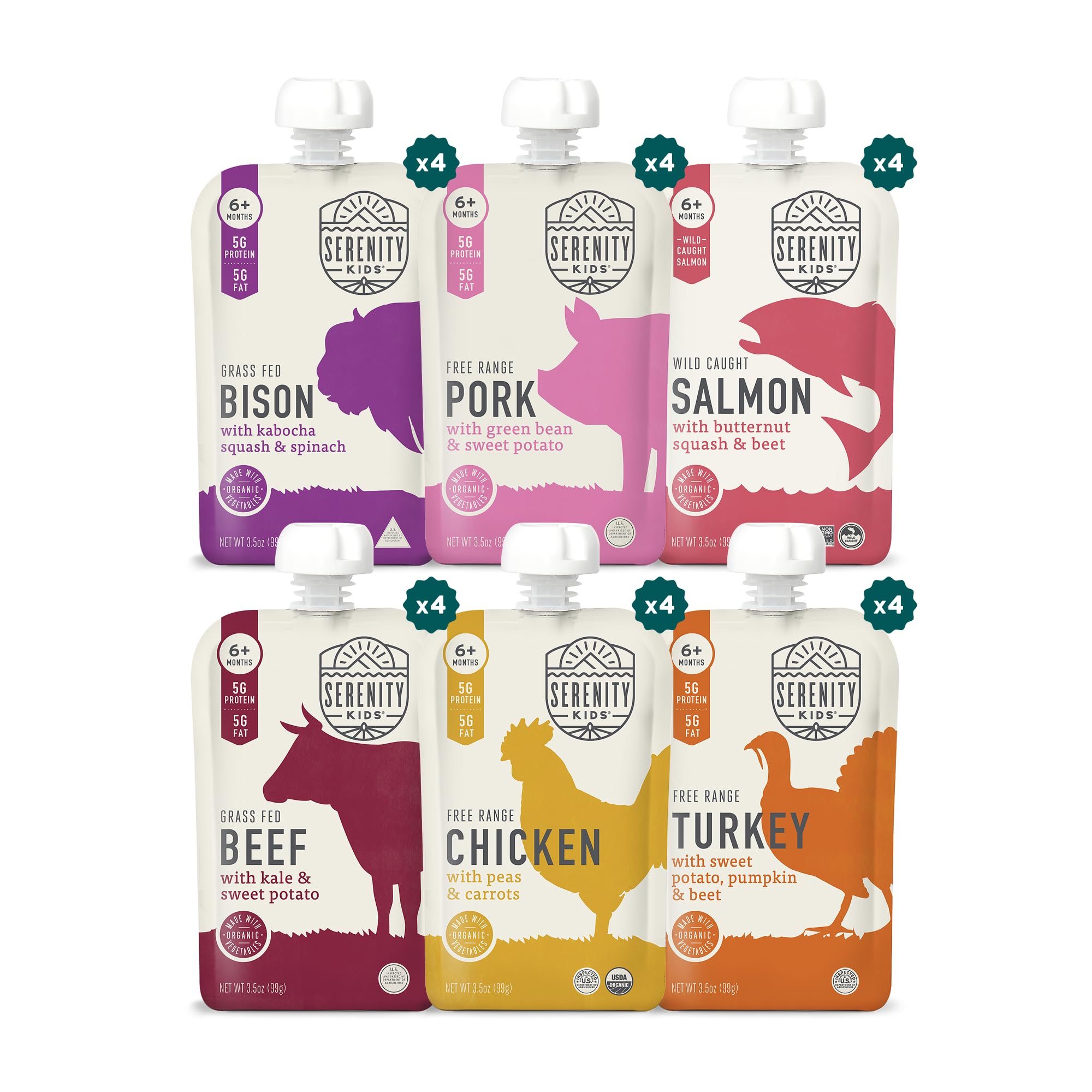
Serenity Kids Protein Pouches
Key Features
- Base: Grass-fed beef and organic veggies
- Pack: 24 pouches, 3.5 oz each
- Protein: 5 g per pouch
- Price: Premium
Nothing in these pouches tastes like fruit. Serenity Kids packs meat and vegetables — grass-fed beef, organic veg — into 3.5-ounce pouches with five grams of protein each and no added sugar, so a baby who has only known apple and pear gets a savory meal instead of another snack. Six flavors rotate through a 24-pack, and the packaging is the same squeeze-and-go pouch as everything else here, which makes the swap easy mid-week.
The trade is cost, and it’s steep: per pouch these are the most expensive thing in this guide by a wide margin. Whether that’s worth it depends on the problem you’re solving. If a baby eats fruit pouches happily all day and then refuses the spoon at dinner, a savory pouch does something a fruit one can’t, and the protein is what makes the meal hold. If your kid already eats meat off your plate, you’re paying for convenience.
The heavier blends deserve a little care. Beef and salmon sit harder than squash, and a baby new to meat may burp more or bring a bit back up; offer them earlier in the day, alongside something familiar, rather than as the last feed before bed.
Pros
- 5 g of protein in every pouch
- Savory blends with no fruit or added sugar
- Grass-fed beef and organic vegetables
Cons
- Most expensive per pouch in this guide
- Heavier meat blends can be hard on new digestion
We think it’s worth the money when savory food is the gap — five grams of protein, no fruit, no added sugar, and the highest cost per pouch here.
Best for Seeing the Food
Happy Baby Clearly Crafted
Key Features
- Pack: 10 pouches, 4 oz each
- Stage: Stage 2
- Packaging: Clear pouch
- Certification: USDA organic
- Price: Premium
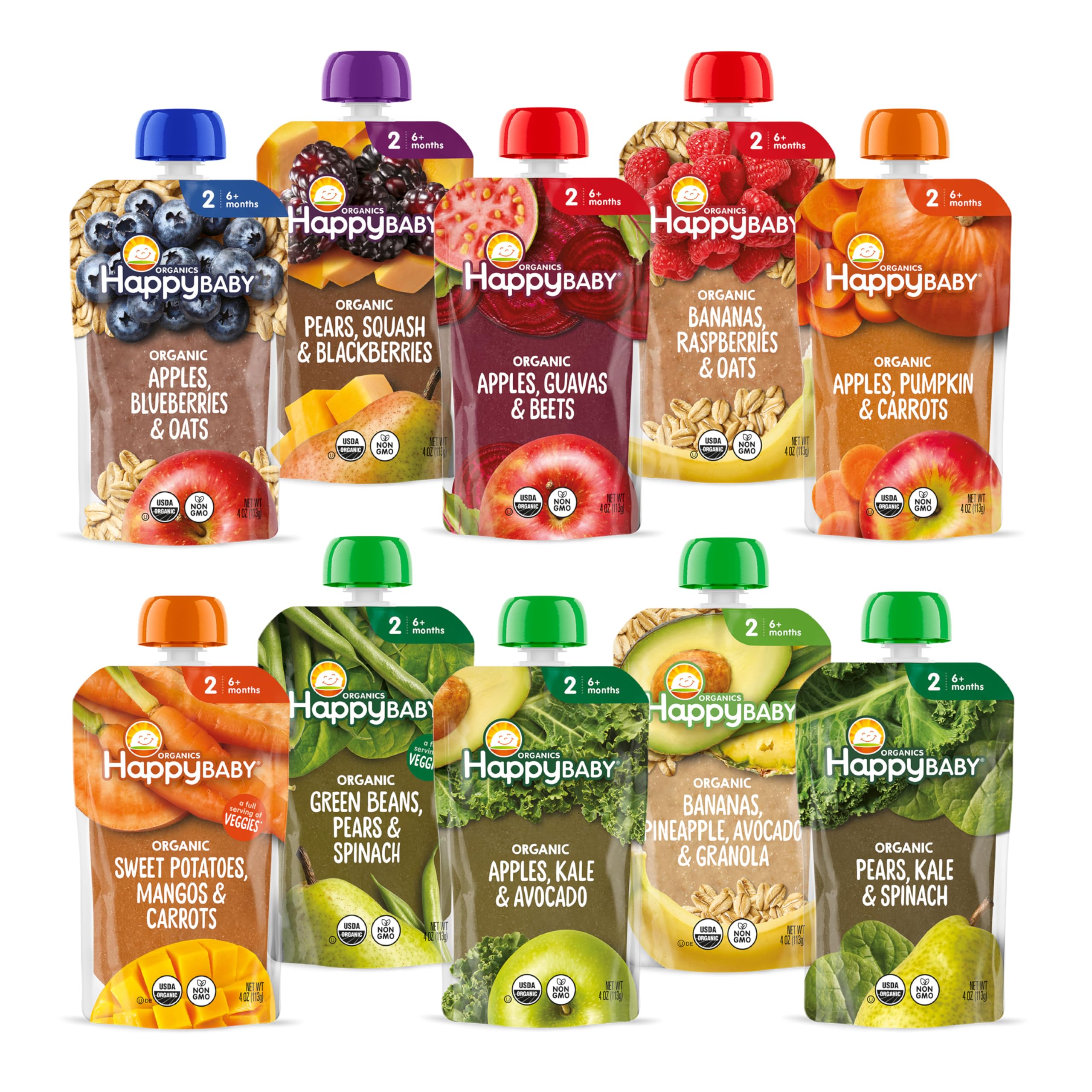
You can see the puree through this pouch, which sounds like a gimmick until you care about what’s actually inside. Happy Baby’s clear window is the whole pitch, and it’s the reason to pick this over the other organic pouches here: nothing is hidden behind foil.
Ten 4-ounce pouches, Stage 2, certified organic and grown without persistent pesticides, with fruit, vegetable and grain blends in the mix. Four ounces is a bigger serving than most of this group, which suits a baby with an appetite and wastes more if you’re still tipping half away.
Get the count right before you order. The 2 printed on each pouch is the stage, not a quantity — ten is what arrives, and ten goes quickly at one a day. We pick it when transparency and organic certification matter more than stretching a budget, and we hand the value question to the Beech-Nut box instead.
Pros
- Clear pouch shows the puree
- Certified organic, no persistent pesticides
- 4-ounce serving suits bigger appetites
Cons
- Premium price for only ten pouches
We choose it when seeing what’s in the pouch matters as much as the organic certification, and accept that ten of them don’t last long.
Best for Toddler Snacks
Happy Tot Stage 4 Pouches
Key Features
- Pack: 16 pouches, 4.22 oz each
- Added: Chia for omega-3 ALA and fiber
- Stage: Stage 4
- Certification: USDA organic
- Price: Midrange
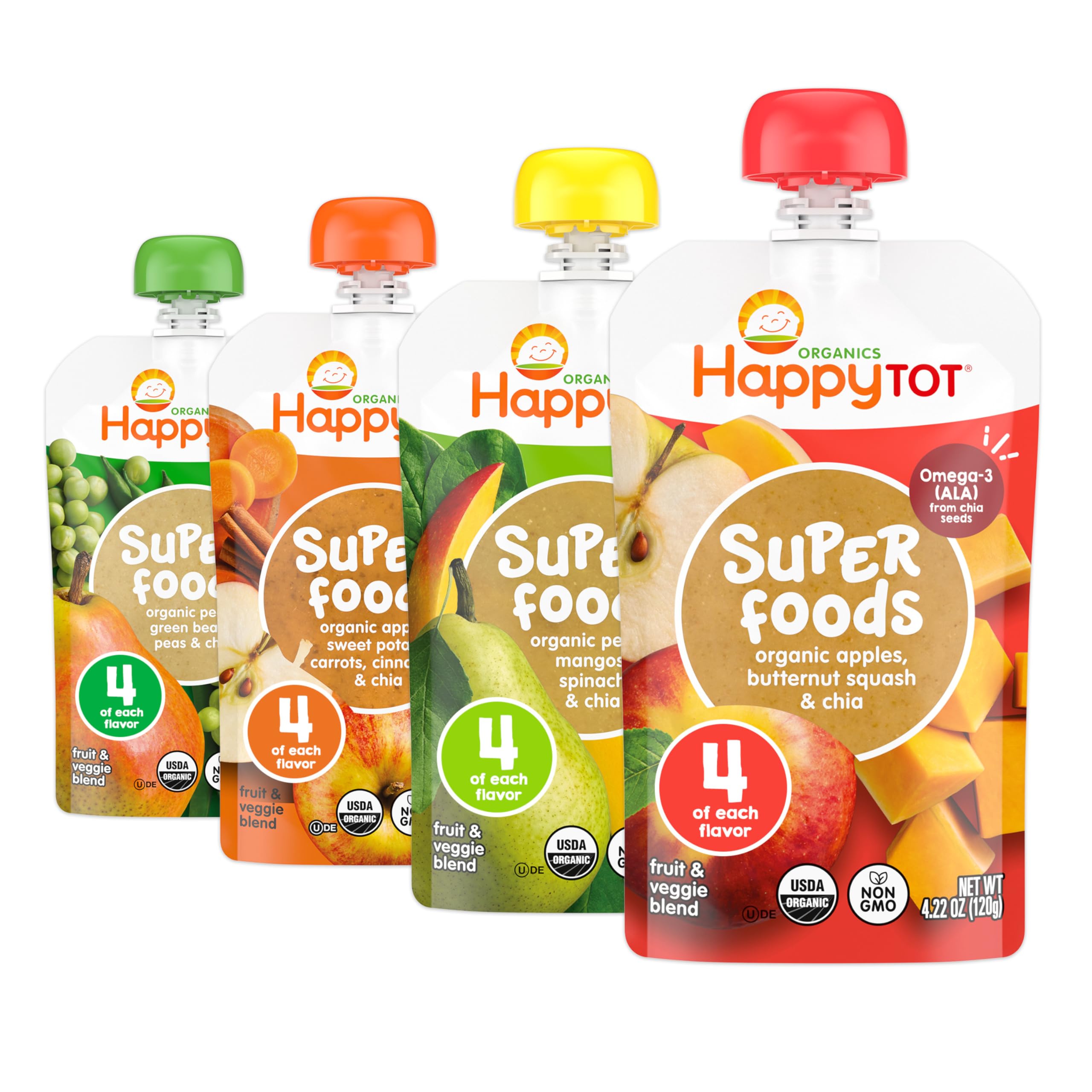
Chia is what separates these from every other pouch here. Happy Tot stirs it into fruit-and-vegetable blends for omega-3 ALA and fiber, and it changes the body of the puree — slightly seeded, a little thicker than a smooth Stage 2. A toddler already eating lumps won’t care; a texture-sensitive one will.
Sixteen 4.22-ounce pouches, Stage 4, certified organic, vegan and gluten-free, built for toddlers rather than babies. The stage label is doing real work: bigger portions and blends designed for a kid who eats table food and needs a snack that survives a bag.
The flavors run earthy — vegetables aren’t hiding behind apple in every blend — and that’s the risk in a 16-pack. If your toddler expects applesauce, one of these comes back half-eaten, and you have fifteen more to get through.
We treat it as the snack drawer rather than the meal: the fiber and ALA are additions no other pick here makes, and 4.22 ounces covers a hungry three-year-old better than a 3.5-ounce pouch. Wait until your kid is past smooth purees before committing to a case this size.
Pros
- Chia adds fiber and omega-3 ALA
- Bigger 4.22-ounce pouches for toddlers
- Certified organic, vegan and gluten-free
Cons
- Chia gives it a grainy texture
We treat it as a toddler snack drawer: chia for fiber and omega-3 in a bigger pouch, once your kid is past smooth purees.
Best for Fresh Single Pouch
Once Upon A Farm Kale & Apples
Key Features
- Pack: 1 pouch, 3.2 oz
- Storage: Refrigerated
- Ingredients: Organic kale, apples, hemp seeds
- Certification: Certified organic, Non-GMO Project Verified
- Price: Premium
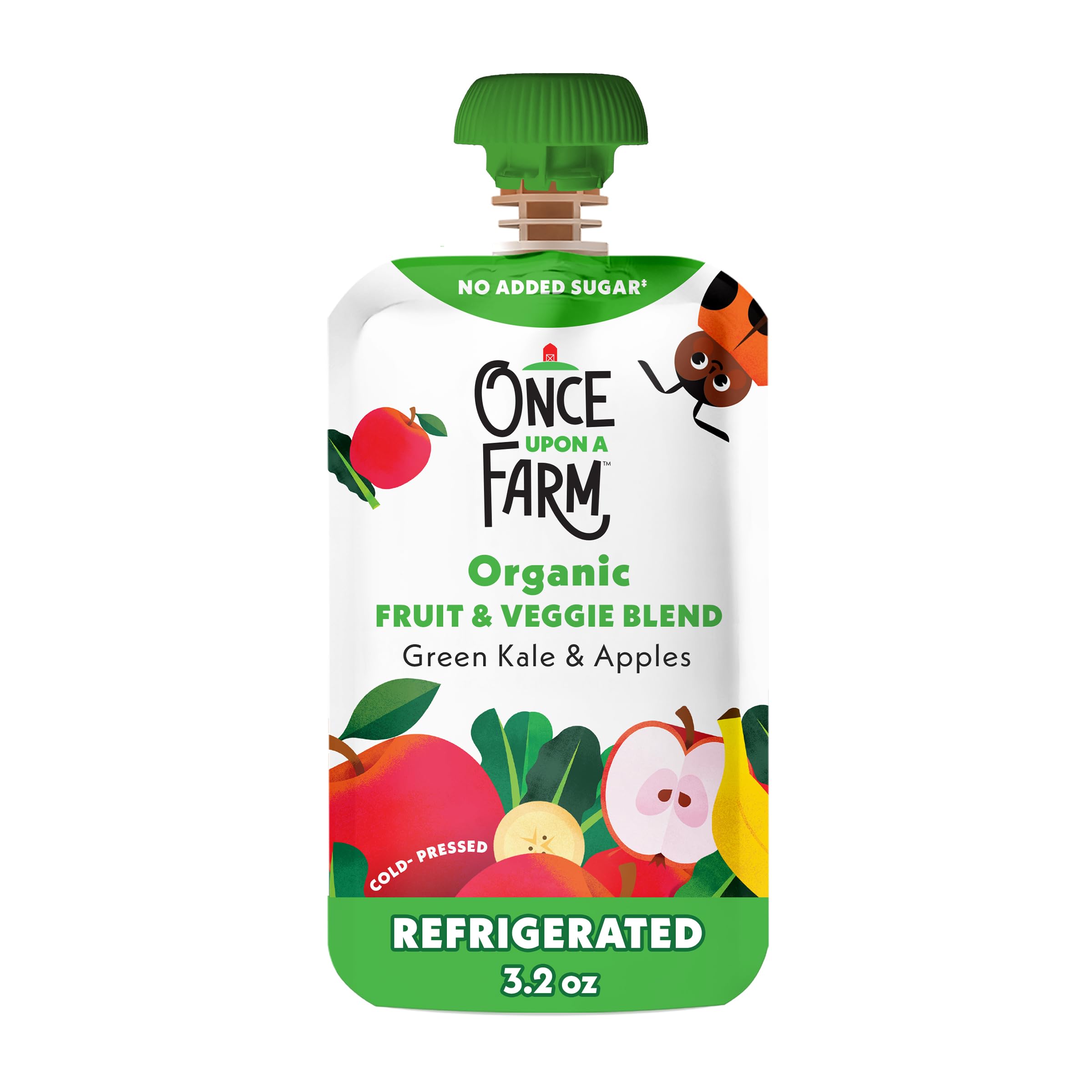
This one lives in the fridge, not the pantry, and it arrives one pouch at a time. Once Upon A Farm cold-presses organic kale and apples with hemp seeds and stops there — no added sugar, no preservatives, no concentrate.
The hemp seeds aren’t decoration. They bring protein and key amino acids to a pouch that would otherwise be fruit and a leafy green, and kale with apple is naturally sweet without any sugar added. At 3.2 ounces it’s a snack rather than a meal, which is the right expectation for the format.
The format is also the cost. A refrigerated pouch can’t sit in the diaper bag for a month, and buying one at a time means the highest per-ounce rate here outside the meat pouches. It’s a fridge-space decision as much as a money one.
We pick it when we want to know exactly what’s in a single pouch and don’t mind the shelf it takes, or as a weekend pouch alongside a cheaper box. As a daily habit for a hungry baby, the per-ounce price and the cold chain wear thin faster than a shelf-stable case does.
Pros
- Kale, apples and hemp seeds, nothing else
- Certified organic and Non-GMO verified
- Cold-pressed and refrigerated
Cons
- Sold singly, at a high cost per ounce
- Needs refrigerator space
We buy one when clean ingredients and a fresh, refrigerated puree matter more than cost per ounce or a pantry shelf.
How We Tested 18 Baby Purees
We started with a long list of pouches, jars, and squeeze packs sold at major retailers, then narrowed it by stage (4+ months, 6+ months, 9+ months), ingredient lists we could read without a glossary, and price per ounce. We ruled out anything with added sugar or salt, and anything that only came in a variety pack where one flavor would sit unused. That left 18 varieties, which I tested with my daughter over four months, from her first spoonfuls to her more opinionated phase.
Testing happened where purees actually get used: at the high chair before daycare, on the living room floor during a diaper change, and in the diaper bag on weekend errands. I squeezed each pouch into a bowl and spoon-fed her, then let her try the pouch directly to see how the flow worked. I watched whether the puree held its shape on the spoon, dripped, or needed a stir, and noted how much she swallowed versus wore. I also tasted every one myself, because flavor matters and a puree that tastes like nothing but sweet potato water does not encourage a baby to explore.
Portability got its own test: each pouch went into the diaper bag for a full day, and I checked the cap and seam for leaks. Value came down to cost per ounce and whether a pouch was a full meal or a snack; a 4-ounce pouch that only half-filled her up was not a bargain. After each feeding, I tracked how she digested it, including whether it sat heavily or led to a restless nap. The ones that moved forward were the ones she finished, tolerated well, and did not make me wince at the price.
How to Choose Baby Purees
The decision comes down to three things: the texture your baby is ready for, what else sits in the blend besides fruit, and whether the package survives the trip you’re taking it on.
Stage is a texture guide, not an age
Stage numbers don’t line up cleanly between brands — one company’s Stage 2 is a smooth blend for a baby new to solids, another’s Stage 2 label sits on a pouch aimed at toddlers. Read the description instead. Stage 1 is thin and usually single-ingredient, Stage 2 is a smooth blend of two or more foods, and Stage 4 is thicker, seeded or chunky enough for a toddler already chewing table food.
Buy a small pack at each move rather than a case. Texture changes faster than a 24-pack disappears, and a box of thin puree outlasts the stage it was bought for.
What’s in the blend matters more than the front of the pouch
‘No added sugar’ describes the recipe, not the sweetness: apple and pear are sweet because fruit is sweet, and a pouch that leads with them tastes like dessert whatever the label says. Look at the ingredient order. If apple leads everything you buy, a baby learns sweet first and treats vegetables as a negotiation.
Aim for two or three vegetable-forward blends in the rotation — the Beech-Nut box puts squash, spinach and pumpkin ahead of the fruit for exactly that reason — and keep the all-fruit pouches for snacks.
Tubs, jars or pouches: buy for where you feed
A tub is a high-chair tool. You can see how much is left, spoon it out, and stop when the baby does. Check whether it has a lid, though: several foil-sealed tubs are single-use, so an opened one needs a small container or a compatible lid to go back in the fridge.
Pouches are for the bag — resealable cap, no spoon, no bowl. Thicker blends can clump near the spout, so squeeze the pouch before opening the cap to get an even stream. Most families end up with both: tubs or a bowl at home, a couple of pouches in the diaper bag.
Buying in bulk: check the count, then the cost per ounce
A big box is where the value sits and where the surprises hide. The number printed on a pouch is usually the stage, not the quantity, so confirm the count before ordering a case. When a bulk pack lands, check the dates before it goes in the pantry — a case with a few months left is fine if you’ll use it, less so if it’s meant to last a year.
Compare cost per ounce rather than pack price. A small tub and a large pouch can look similar at checkout and differ by half once you divide it out.
Where protein and savory purees fit
Meat purees are the least-picked shelf and the one most likely to solve a problem. A baby who has had fruit pouches all day will often take a savory blend at dinner, and the protein is what makes the meal hold. They’re heavier than vegetables — offer them earlier in the day, next to something familiar, rather than as a last feed before bed.
You don’t need them daily. Two or three a week keeps savory flavors in the rotation without turning dinner into a standoff.
Frequently Asked Questions
Can I give my baby pouches every day?
Yes, as part of the diet rather than the whole of it. Squeeze the pouch onto a spoon for most feeds — that keeps a baby practicing the spoon and lets you see how much actually went in. Sucking straight from the spout is fine on the move, but it skips that practice and makes it easy to over-feed.
Do baby food pouches need to be refrigerated?
Shelf-stable pouches and tubs stay in the pantry until they’re opened; after that they need the fridge and a lid or cap, and are best used within a day or two. The Once Upon A Farm pouch in this guide is the exception — it’s refrigerated from the moment it arrives, so plan fridge space before you order one.
Is organic baby food worth the extra money?
Organic certification tells you how the produce was grown; it says nothing about whether the pouch is mostly apple. If you’re choosing where to spend, put stage-appropriate texture and a vegetable-forward recipe first, then go organic on the one or two pouches your baby eats most often.
Final Verdict
If you want one box to start with, take the Beech-Nut veggie variety pack. Three blends put squash, spinach and pumpkin in front of the fruit, nothing is added, and eighteen pouches open and flow without a fight — it’s the box we hand anyone moving past single-ingredient jars.
Change the pick when the job changes. Starting solids this week? The Gerber Stage 1 two-ounce tubs. Baby backed up? Plum’s prune pouch. Dinner refusing to happen? Serenity Kids’ meat pouches. That’s the whole decision.
