This post contains affiliate links. We may earn a small commission when you buy through our links — at no extra cost to you.
Many educational toys lose their magic when buttons need a grown-up’s thumb pressure or puzzle pieces vanish within days. Parents know the frustration of a toy that promises hours of learning but delivers minutes of fiddling. The real challenge isn’t finding a toy labeled ‘educational’ — it’s finding one that holds up to real toddler use and actually teaches something.
The picks here prioritize consistent quality control, intuitive interaction for little hands, and materials that survive being dropped, thrown, and chewed. Whether you need a first words book, a logic puzzle for travel, or a creative outlet without the cleanup, the options below balance educational value with the durability that makes a toy worth the shelf space.


Best for Toddler Vocabulary
LeapFrog 100 Words Book
Key Features
- Age Range: 18-48 months
- Durability: Durable hardboard
- Interactivity: Sound buttons
- Educational Value: Vocabulary, bilingual
- Portability: Lightweight, 10x10in
- Price: $
This interactive book teaches 100+ words in English and Spanish across categories like animals, colors, and the alphabet. Its sturdy construction holds up to daily toddler handling, and the touch-sensitive pages respond with clear audio. A small number of units have non-responsive pages, so it’s wise to test functionality upon receipt.
Best for toddlers aged 18–48 months who are building first words, especially in bilingual households. Not ideal for children over 4 who need more advanced content or families seeking a digital tablet experience. The screen-free design is a deliberate trade-off that aligns with developmental goals, not a missing feature.
Pros
- Teaches foundational vocabulary in two languages
- Built to withstand drops and rough play
- Engages toddlers without screens or internet
Cons
- Occasional quality variances in page and speaker response
Buy this if you want a durable, screen-free bilingual learning toy for a toddler’s first words. Skip it if you need advanced content for older children or a digital interactive experience.
Best for Stem Enthusiasts
Snap Circuits SC-300
Key Features
- Age Range: 8+ years
- Durability: Hard plastic
- Interactivity: Snap circuits
- Educational Value: STEM electronics
- Portability: Stores in box
- Price: $$
Unlike the basic vocabulary book that tops our list, the Snap Circuits SC-300 targets older children (8+) who want to understand how electronics actually work. With over 300 projects and 60+ color-coded pieces, kids learn about switches, motors, lights, and sound by connecting real components — no soldering required. The full-color manual walks through each project step by step, making it genuinely self-directed for most 8-year-olds. That said, a few pieces can feel less secure when snapped together, so rough handling may cause connections to pop loose. This is best suited for homeschooling families or gift-givers whose child is already curious about how gadgets function and can treat the parts with reasonable care.
Pros
- Teaches real electronics through hands-on circuit building.
- Engaging for both kids and adults to explore together.
- Over 300 projects provide strong value for the price.
Cons
- Some snap connections can feel loose; handle gently.
Buy this if your child is 8+ and eager to learn how circuits work through guided play. Skip it if they prefer fully assembled toys or tend to mishandle delicate pieces.
Best for Logic Puzzles
Educational Insights Kanoodle
Key Features
- Age Range: 7+ years
- Durability: Hard plastic
- Interactivity: Puzzle challenges
- Educational Value: Logic, spatial
- Portability: Pocket-sized
- Price: $
Unlike the top pick focused on bilingual vocabulary, Kanoodle zeroes in on logic and spatial reasoning with 228 puzzles in both 2D and 3D. At a budget-friendly price, it delivers near-endless replayability for travel, waiting rooms, or quiet time. Best suited for solo players ages 7+ who enjoy a compact challenge; the small pieces mean it’s not for homes with children under 3.
Pros
- Addictive single-player puzzle that keeps minds engaged during travel or downtime.
- Durable build and educational value that withstands repeated use.
- Compact, travel-friendly design fits easily in a bag or pocket.
Cons
- Small pieces pose a choking risk for children under 3; keep out of reach.
- Puzzle booklet is not replaceable if lost.
Buy this if you want a durable, travel-friendly logic puzzle for solo play that offers hundreds of challenges. Skip it if you need a multi-player game or have children under 3 in the home.
Best for Creative Building
Soyee Magnetic Tiles
Key Features
- Age Range: 3-12 years
- Durability: ABS plastic + magnets
- Interactivity: Magnetic building
- Educational Value: STEM, creativity
- Portability: Tub storage
- Price: $
Unlike the top pick that focuses on language, the Soyee Magnetic Tiles offer hands-on spatial play at a budget-friendly price. The strong magnets and vivid colors keep toddlers and preschoolers engaged in open-ended building, supporting early STEM learning. However, the 32-piece set is modest; children who want to build large structures will need an expansion pack. Occasional piece-to-piece magnet variance is minor but worth noting. This set is best for families starting out with magnetic tiles or for classroom STEM centers where multiple sets can be combined.
Pros
- Strong magnets keep creations stable during play
- Keeps kids engaged with open-ended building
- Sparks creativity and early STEM skills
Cons
- 32-piece set limits the size of possible builds
- Occasional weak magnet in a piece
Buy this if you want an affordable entry into magnetic tile play for young children. Skip it if your child already has a large collection or needs big builds from the start.
Best for Pretend Math
Learning Resources Cash Register
Key Features
- Age Range: 3-6 years
- Durability: Plastic, spring drawer
- Interactivity: Pretend play sounds
- Educational Value: Math, money
- Portability: Bulky
- Price: $$
The solar-powered calculator and play money set this cash register apart for real-world math learning through pretend play. It’s a favorite in preschool classrooms for teaching money recognition and simple addition. With 73 pieces including a credit card, it offers plenty of interactive props. The spring-loaded drawer can launch coins if opened carelessly, and some units may develop calculator or sound issues over time. For patient children or supervised play, it delivers strong educational value and hours of fun.
Pros
- Realistic pretend play with solar-powered calculator and play money
- Teaches math and money skills through hands-on interaction
- Engaging fun that sparks imaginative store play
Cons
- Spring-loaded drawer opens forcefully, scattering coins
- Calculator and sound may stop working over time in some units
Buy this if you want a fun, educational toy that teaches foundational math concepts through interactive role-play. Skip it if you need a toy that can endure rough daily use without drawer mishaps or potential electronic hiccups.
Best for Mess-Free Art
Toyk Water Doodle Mat
Key Features
- Age Range: 3+ years
- Durability: Fabric mat
- Interactivity: Water pens
- Educational Value: Art, fine motor
- Portability: Rollable
- Price: $$
The Toyk Water Doodle Mat delivers on its core promise: kids can draw with water pens and the mat dries clear, leaving no stains. At 40×28 inches, it’s compact enough for restaurant tables and car rides, but the product photos make it appear larger. The water pens work well initially, though some units have reported leaks or retracting tips. Still, the mess-free appeal is strong: 97% of reviewers confirm easy cleanup, and 99% say it keeps toddlers entertained for stretches. This mat fits best for families who want a no-fuss creative outlet for a single child, not a group activity mat.
Pros
- Mess-free drawing with no cleanup
- Keeps toddlers engaged for hours
Cons
- Mat size is modest; best for individual play
- Pens may leak or retract; consider buying extras
Buy this if your toddler loves drawing without mess and you need a portable activity for travel or restaurants. Skip it if you expect a large group drawing surface or worry about pen durability.
Best for Pretend Laptop
LeapFrog LeapTop Touch

Key Features
- Age Range: 2-5 years
- Durability: Plastic
- Interactivity: Touchscreen + keyboard
- Educational Value: Letters, numbers
- Portability: Compact
- Price: $$
This interactive pretend laptop lets toddlers mimic parents with a touchscreen and keyboard, featuring five learning modes for letters, numbers, and games. While engaging and age-appropriate, some units develop keyboard or device failures within months—a quality variance that prevents it from being the top recommendation for families seeking long-term use.
Pros
- Engaging pretend-play laptop with multiple learning modes
- Introduces letters and numbers through fun interactive activities
Cons
- Occasional quality issues: keyboard or device may stop working after a few months
Worth considering if your toddler wants a laptop-like toy and you’re prepared for possible replacement within a year.
Best for Logic Puzzles
ThinkFun Gravity Maze

Key Features
- Age Range: 8+ years
- Durability: Plastic towers
- Interactivity: Marble maze
- Educational Value: Logic, problem-solving
- Portability: Box storage
- Price: $$
ThinkFun Gravity Maze delivers 60 gravity-based logic puzzles that challenge spatial thinking and add tactile feedback via rolling marbles. Some families find the price high for the number of challenges, and the towers can shift during assembly — a minor frustration that requires a steady hand.
Pros
- Engaging marble maze game keeps kids focused
- Builds problem-solving and critical thinking skills
Cons
- Towers can fall out during building, requiring patience
Worth considering if you have a child 8+ who enjoys logic puzzles and marble runs, and you’re comfortable with a moderate price for 60 challenges.
Best for Science Experiments
Nat Geo Earth Science Kit

Key Features
- Age Range: 8+ years
- Durability: Plastic, rock kit
- Interactivity: Crystal growing, volcano
- Educational Value: Earth science
- Portability: Kit box
- Price: $$
15+ earth science activities (crystal growing, volcano, dig kits) keep kids engaged. But vague instructions require adult guidance, and value perception is mixed at this price point. Best for parent-child collaboration.
Pros
- Kids find the experiments highly engaging and fun.
- Teaches real earth science concepts effectively.
Cons
- Instructions lack clarity; adult help is essential for most experiments.
Worth considering if you’re a parent willing to guide experiments and want a broad introduction to earth science for kids 8+.
Best for Toddler Sounds
Eric Carle Farm Sound Book

Key Features
- Age Range: 1-2 years
- Durability: Paper pages
- Interactivity: Sound buttons
- Educational Value: Animal sounds
- Portability: Small book
- Price: $
Eric Carle’s iconic illustrations and 30 distinct animal sounds make this an engaging first book for toddlers exploring language. However, the paper pages are prone to tearing with enthusiastic handling, and the buttons require more finger strength than many 1-2 year olds can muster — a common frustration that keeps it from being a universal top pick.
Pros
- Beautiful Eric Carle illustrations that captivate toddlers
- Educational animal sounds support early word learning
Cons
- Buttons require firm pressing, challenging for younger toddlers
Worth considering if your toddler enjoys animal sounds and you’re comfortable with paper pages and firmer button presses.
Best for Light Art
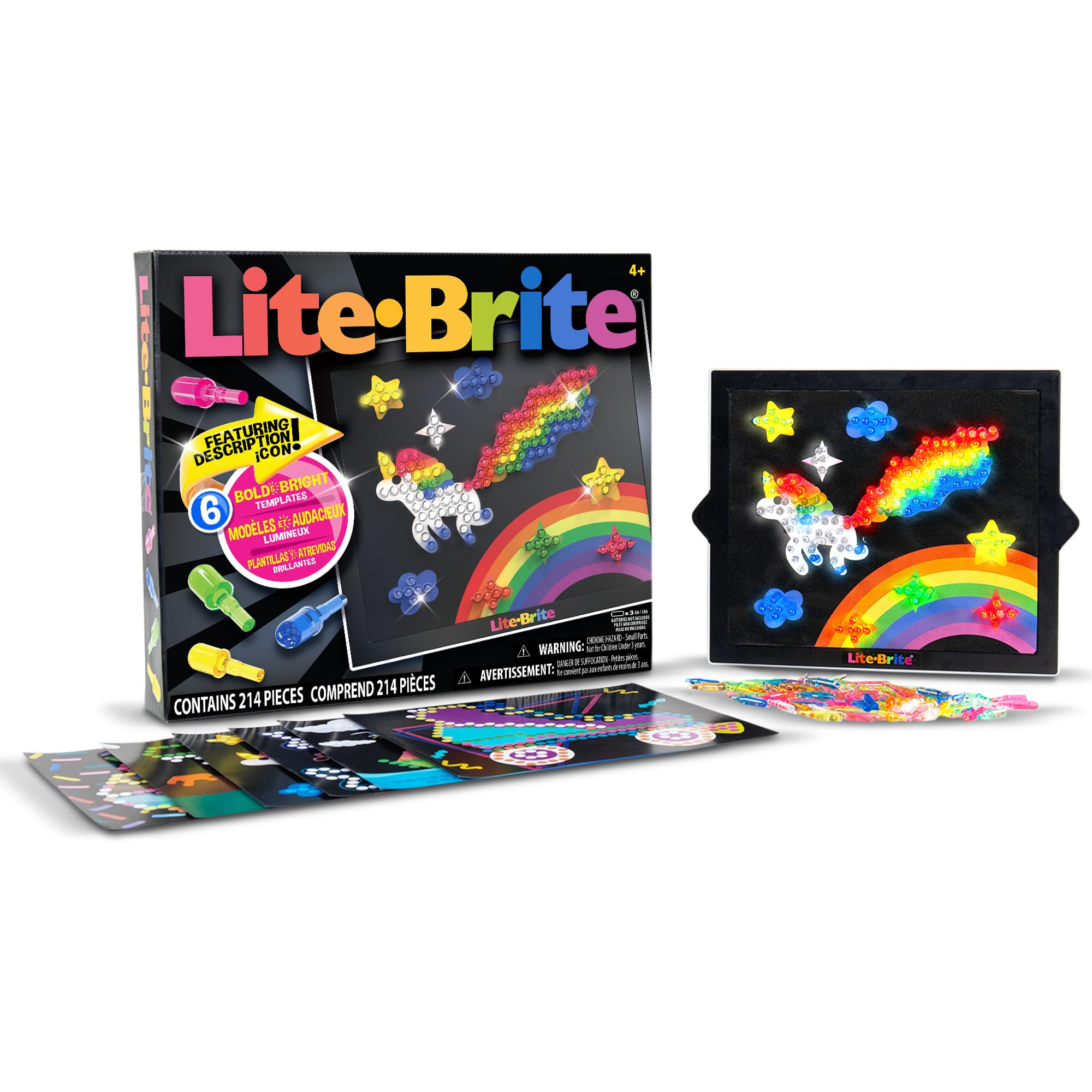
Lite Brite Classic
Key Features
- Age Range: 4+ years
- Durability: Plastic pegboard
- Interactivity: Light peg art
- Educational Value: Color recognition
- Portability: Medium
- Price: $
The Lite Brite Classic delivers the same peg-and-light creativity that made the original a staple, with 206 pegs in six colors and four light modes. However, the modern version introduces an auto-shutoff after three minutes—a design choice that interrupts play—and the light distribution is uneven. These compromises make it better suited for quick creative bursts than extended sessions.
Pros
- Fosters creativity and fine motor skills through hands-on peg design.
- Retro appeal that engages both children and nostalgic adults.
Cons
- Auto-shutoff after 3 minutes interrupts extended play sessions.
- Uneven light distribution and plastic construction feel less robust.
Worth considering for preschoolers who enjoy light art and parents seeking a budget-friendly screen-free activity.
Best for Outdoor Exploration
Educational Insights Kidnoculars

Key Features
- Age Range: 3+ years
- Durability: Plastic, breakaway strap
- Interactivity: Fixed focus binoculars
- Educational Value: Nature exploration
- Portability: Small
- Price: $
Designed for preschoolers, these lightweight Kidnoculars are focus-free and easy for small hands to use. They encourage backyard nature exploration. However, the 2x magnification is too weak for older children, and the strap and lens mounting have reported durability concerns. This makes them a suitable first pair for toddlers aged 3-5 but not for serious bird watching or rough play.
Pros
- Great first binoculars for toddlers exploring nature
- Focus-free design for instant use by small hands
Cons
- 2x magnification limits viewing to nearby objects only
- Occasional quality variances with strap and lens durability
Worth considering if your preschooler wants a simple, focus-free binocular for backyard exploration and close-up nature viewing.
Best for Shape Puzzles
LiKee Wooden Shape Puzzles

Key Features
- Age Range: 3+ years
- Durability: Wooden blocks
- Interactivity: Shape matching
- Educational Value: Shape recognition
- Portability: Tin boxes
- Price: $
Young children enjoy matching shapes to the pattern cards, and the wooden pieces hold up well to daily play. The real drawback is quality control: some sets arrive missing a block or card, and the thin tin boxes dent easily. If you’re willing to check the contents on arrival, this is a low-cost way to build shape recognition and problem-solving skills during travel or quiet time.
Pros
- Engaging matching activity for preschoolers
- Wooden pieces and cards hold up under regular use
Cons
- Occasional missing pieces due to quality control
Worth considering if you want an inexpensive shape puzzle for travel or preschool practice and are okay verifying the set is complete upon arrival.
How to Choose
A toy’s educational value is only as good as its ability to survive daily toddler play and keep a child’s attention long after the box is opened.
Age Range Appropriateness
Choosing a toy that matches your child’s developmental stage prevents frustration. A toy meant for older kids may have small parts or require fine motor skills beyond a toddler’s ability, while a toy that’s too simple will bore a preschooler. Look for age recommendations on the box, but also consider your child’s individual skill level.
Durability and Build Quality
Many educational toys fail within months due to flimsy electronics or weak materials. Sound books often have buttons that require more force than a toddler can muster, and puzzle pieces can splinter or go missing. Prioritize sturdy construction like hardboard or high-quality plastic, and check reviews for recurring complaints about breakage.
Interactivity and Engagement
Interactivity keeps a child engaged, but not all interactivity is equal. Buttons that are hard to press or sounds that are too quiet will quickly lead to abandonment. Look for toys that respond intuitively to a child’s natural actions, like touch-sensitive pages or magnetic pieces that snap together easily.
Educational Value
The best educational toys teach specific skills like letters, numbers, or logic through play. Avoid toys that claim to teach everything but deliver shallow interaction. Focus on a toy’s core learning objective — a cash register that reinforces counting is more effective than a busy toy with dozens of unrelated modes.
Portability and Storage
Portability matters for families on the go. Compact puzzles and drawing mats are great for restaurants and trips, but beware of small sets that lose pieces easily. A toy that stores neatly in its own box or folds flat will get used more often.
FAQ
Why do my toddler’s sound book buttons not work?
Many sound books have buttons that require more pressure than small fingers can apply. Try pressing the button directly with your thumb to test responsiveness. If the button works with adult pressure but not toddler, consider a touch-sensitive alternative. For persistent issues, contact the manufacturer for a replacement.
Are magnetic tiles safe for 2 year olds?
Magnetic tiles are generally safe for children 3 and up due to small parts that pose a choking hazard. For 2-year-olds, look for magnetic sets labeled for ages 2+ that have larger pieces and encased magnets. Always supervise play and check that magnets are securely sealed.
Which educational toy is best for teaching letters to a 3 year old?
For a 3-year-old, a simple wooden alphabet puzzle with self-correcting pieces or a sound book that says letter names and sounds works well. Avoid electronic toys with many modes that can be distracting. The LeapFrog 100 Words Book is a strong choice for building vocabulary through images and sounds.