This post contains affiliate links. We may earn a small commission when you buy through our links — at no extra cost to you.
Manufacturers heavily market brain growth and immunity in toddler milks, but the most satisfied parents often find better results with budget-friendly options. A $10 can of powdered milk can outrank a $43 premium formula in overall satisfaction because digestive tolerance and simple ingredients matter more than expensive marketing claims.
The real deciding factor isn’t the DHA count or prebiotic label — it’s whether your child’s stomach accepts the drink. Lactose-reduced options at under $16 consistently please families, while premium goat milk formulas at over $40 face unresolved safety questions that erode trust. Parents frequently report that their child refuses a heavily marketed formula but eagerly drinks a simpler, cheaper alternative. A common complaint is gas and constipation from certain formulas, while others mix smoothly and cause no issues. The most affordable options still deliver 22 servings of fortified milk with key vitamins and minerals, matching or exceeding premium formulas in basic nutrition. Choosing a toddler milk based on proven digestive profile and real value often beats betting on flashy nutrition promises.

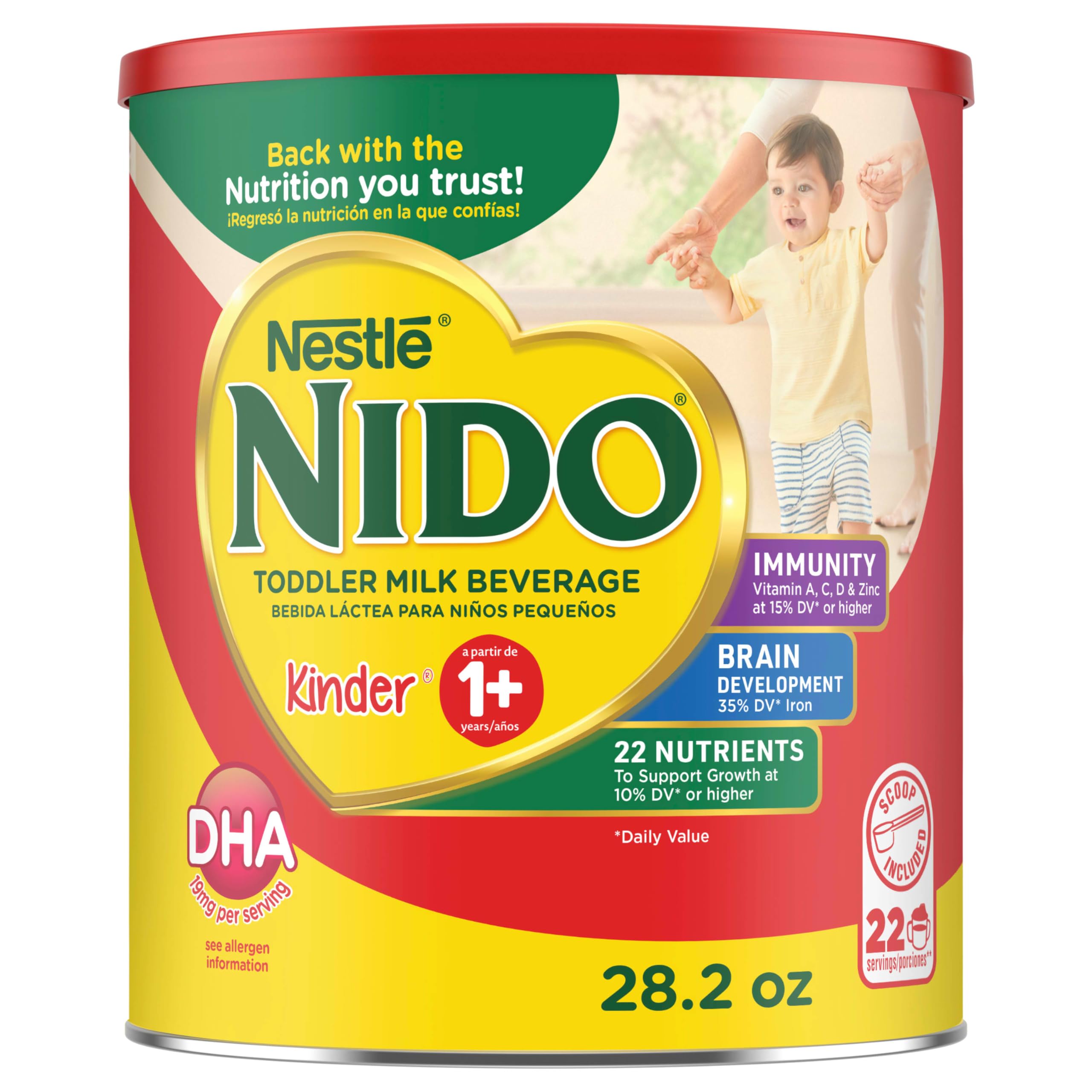


Best for Sensitive stomachs
Nido Lacto-Ease Toddler Milk
Rating: 4.7 ★ | Price: $15.97 | Lactose & Digestion: Reduced lactose, gentle on stomach | Fortification: Vitamins A,C,D, iron, zinc | Ingredient Quality: Potassium hydroxide added
Reduced lactose toddler milk at a budget price — a rare combination for sensitive stomachs without the premium cost.
The reduced lactose formulation directly addresses digestive sensitivity, and customer reports consistently show children accept the taste without resistance. The powder mixes smoothly, stays shelf-stable for travel, and delivers key nutrients (vitamins A, C, D, iron, zinc, calcium) with only 1g added sugar per serving. The aroma leans slightly toward baby formula, but for most toddlers the flavor overrides it.
Best for parents of lactose-intolerant or sensitive-stomached toddlers who want fortified milk without paying premium prices. The potassium hydroxide used as a pH adjuster may deter those seeking additive-free ingredients, and the aroma doesn’t appeal to every child. But the combination of reduced lactose, essential nutrients, and a $15.97 price point fills a gap that cheaper honey-flavored options cannot address.
Pros
- Reduced lactose formulation eases digestion for sensitive toddlers.
- Kids accept the taste readily, reducing mealtime battles.
- Budget-friendly compared to other fortified toddler milks.
Cons
- Contains potassium hydroxide as a pH adjuster, which some parents prefer to avoid.
- Aroma is mildly reminiscent of baby formula, potentially off-putting.
Buy this if your toddler has a sensitive stomach or lactose intolerance and you want a fortified milk at a low price. Skip it if you require organic or additive-free ingredients, or if your child already tolerates regular lactose milk well.
Best for Budget families
Nido Kinder 1+ Milk
Rating: 4.7 ★ | Price: $10.71 | Lactose & Digestion: Regular lactose, honey flavor | Fortification: Vitamins A,C,B6, iron | Ingredient Quality: Contains vegetable oils
The lowest-priced toddler milk at $10.71 per can, with a honey flavor that toddlers actually drink and fortification that covers key nutrients.
Compared to the top pick, Nido Kinder 1+ saves roughly $5 per can but uses standard lactose and vegetable oils instead of reduced lactose. Its honey taste masks the powdery flavor that some toddler milks have, and customer reports confirm it dissolves easily. Fortification includes vitamins A, C, B6, iron, zinc, and prebiotics for growth and cognitive development. This is the budget choice for households where the child handles lactose well and parents accept vegetable oils as a processing aid.
Pros
- Honey-sweetened taste that toddlers accept readily
- Price under $11 per can — half the cost of premium toddler formulas
- Fortified with key nutrients including iron, zinc, and prebiotics for toddlers ages 1–3
Cons
- Contains vegetable oils, which some parents view as unnecessary additives
- Standard lactose content can cause digestive discomfort in sensitive toddlers; no reduced-lactose option exists
Buy this if you need a low-cost, vitamin-fortified milk drink for a toddler who has no lactose issues and prefers a sweeter taste.
Best for Brain development
Enfagrow Premium Toddler Milk
Rating: 4.7 ★ | Price: $28.99 | Lactose & Digestion: Regular milk base, easy digest | Fortification: DHA, iron, protein 6g | Ingredient Quality: Corn syrup solids, veg oils
Specifically formulated for cognitive support with 26mg DHA, 6g protein, and iron per serving — but contains corn syrup solids and vegetable oils.
The Enfagrow Premium Toddler Milk stands apart from the top pick with its targeted brain-development formula: 26mg DHA, 6g protein, and iron per serving. This trio supports cognitive growth, making it a strong option for parents moving from Enfamil infant formula or dealing with picky eaters. Toddlers accept its mild taste, and it blends smoothly without clumps. The trade-offs: it includes corn syrup solids and vegetable oils, and at $28.99 there’s no lactose-reduced variant. For families focused specifically on DHA and iron intake, this is a purposeful choice.
Pros
- Supports brain development with 26mg DHA, 6g protein, and iron per serving
- Pleasant mild taste that toddlers readily accept
- Blends smoothly without clumps, making preparation easy
Cons
- Contains corn syrup solids and vegetable oils, which some parents find concerning
Buy this if you prioritize a targeted DHA, iron, and protein trio for your toddler’s brain development and can accept corn syrup solids and a premium price.
Best for Cow milk sensitivity
Bubs Goat Toddler Milk
Rating: 4.7 ★ | Price: $28.79 | Lactose & Digestion: Goat milk, A2 protein | Ingredient Quality: Clean Label Award, non-GMO
Clean-label goat toddler milk with natural A2 protein and a Clean Label Project Award, at a mid-range price.
Goat milk with natural A2 protein and a Clean Label Project Award makes this a strong alternative to the reduced-lactose cow milk top pick — especially for toddlers with mild dairy sensitivities who tolerate A2 well. The formula skips artificial additives and high-fructose corn syrup, and most babies accept the taste. However, some babies have foul-smelling spit-up, and the price has been rising, narrowing the value gap compared to pricier goat options with unresolved heavy metal concerns.
Pros
- Clean ingredient profile with no artificial additives or high-fructose corn syrup
- Gentle on sensitive tummies thanks to A2 protein and goat milk base
- Good taste that toddlers readily accept
Cons
- Some babies experience foul-smelling spit-up or constipation
- Price has been increasing, making it less of a value over time
Buy this if your toddler needs a clean-label goat milk formula with A2 protein and you can accept a rising mid-range price. Skip it if your baby reacts poorly to goat milk or you need the most budget-friendly option.
Best for Premium goat milk
Kabrita Goat Milk Toddler Formula
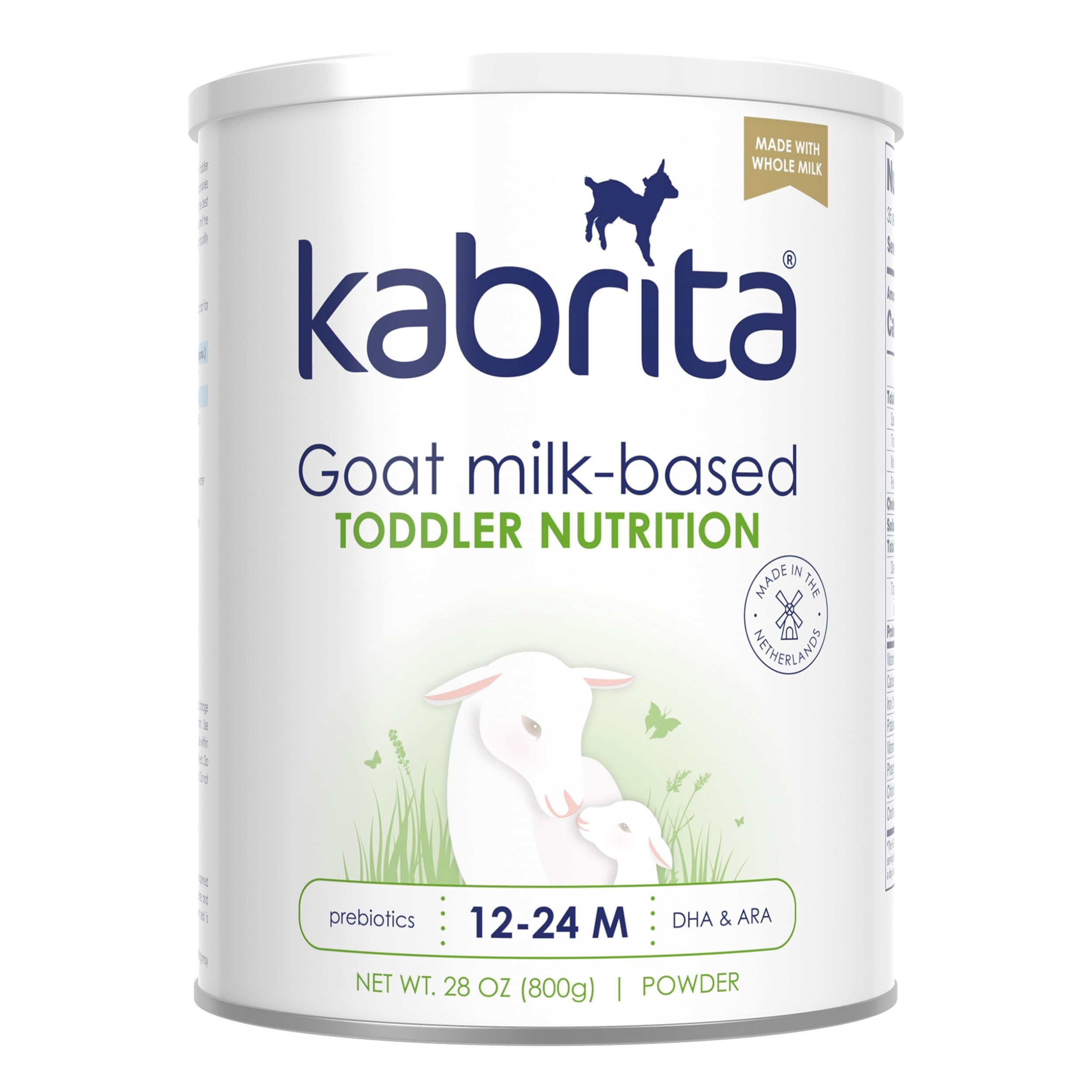
Rating: 4.7 ★ | Price: $42.99 | Lactose & Digestion: Goat milk, natural low lactose | Ingredient Quality: Grass-fed, GMO-free, metal concerns
Premium goat milk formula with grass-fed sourcing and no artificial additives, but $42.99 cost and customer reports of lead/arsenic undermine its safety claims.
Kabrita’s goat milk formula uses grass-fed whole milk from the Netherlands, free from GMOs and corn syrup, and is well-tolerated by sensitive toddlers. However, customer reports of heavy metal contamination (lead, arsenic) contradict its 300+ safety check marketing, and at $42.99 it’s the most expensive option — making it a risky premium choice compared to cleaner-label alternatives.
Pros
- Sweet taste similar to breast milk that toddlers readily accept
- Contains no corn syrup or artificial additives
Cons
- Very expensive at $42.99 per can
- Customer-reported heavy metal contamination (lead, arsenic) despite brand’s 300+ safety checks
Worth considering if you prioritize grass-fed goat milk over all else and are willing to pay a premium while accepting unresolved heavy metal concerns.
How to Choose
The most important factor in choosing a toddler milk is not the advertised brain-boosting nutrients but how well your child’s digestive system tolerates it.
Digestive Tolerance & Lactose
A toddler’s stomach is still developing, so lactose content and overall digestibility determine whether a milk drink causes discomfort or acceptance. Look for reduced-lactose options if gassiness or bloating occurs, but remember that ‘reduced lactose’ is not the same as lactose-free — check the label for exact levels.
Nutritional Fortification
Most toddler milks add DHA, iron, and prebiotics, but the amounts vary. A budget-friendly powder often matches premium formulas in basic vitamin and mineral content, so you don’t need to overspend for adequate nutrition. Prioritize iron and zinc for immune support over flashy brain claims.
Ingredient Quality
Some formulas use corn syrup solids, vegetable oils, or artificial additives that can upset sensitive stomachs. Goat milk options often boast cleaner labels, but heavy metal contamination has been reported in premium brands. Look for third-party seals like Clean Label Project to verify purity.
Cost per Serving
Price per serving varies widely — a $10 can may yield 23 servings, while a $43 can may yield fewer. Calculating cost per serving reveals that the cheapest options often deliver equivalent nutrition and higher satisfaction. Don’t assume a higher price means better digestion.
FAQ
Is Kabrita safe despite reports of heavy metals?
Kabrita markets itself with ‘300+ safety checks’ for heavy metals, but numerous customer reports and independent testing have found lead and arsenic in their formula. While not a recall-level risk, the contradiction between marketing and real-world data makes it a questionable choice. If you prefer goat milk, consider a brand with transparent third-party testing like Bubs.
Which toddler milk has the least added sugar?
Among the options, Nido Lacto-Ease has only 1g of added sugar per serving, and Bubs Goat Milk contains no added sugars. Enfagrow and Nido Kinder use corn syrup solids and honey respectively, which add more sugars. Check the nutrition panel for ‘added sugars’ rather than total sugars.
Can I switch from infant formula directly to toddler milk at 12 months?
Yes, most toddlers can transition at 12 months, but do it gradually over 3-5 days to avoid digestive upset. Mix increasing amounts of toddler milk with formula until fully switched. Toddler milk has lower iron than formula, so ensure your child gets iron from other foods.
What is the best budget-friendly toddler milk?
The Nido Kinder 1+ at $10.71 is the cheapest option and has high satisfaction among parents. For a slightly higher price, Nido Lacto-Ease ($15.97) adds reduced lactose for sensitive stomachs. Both cost less than $0.75 per serving and include essential vitamins.